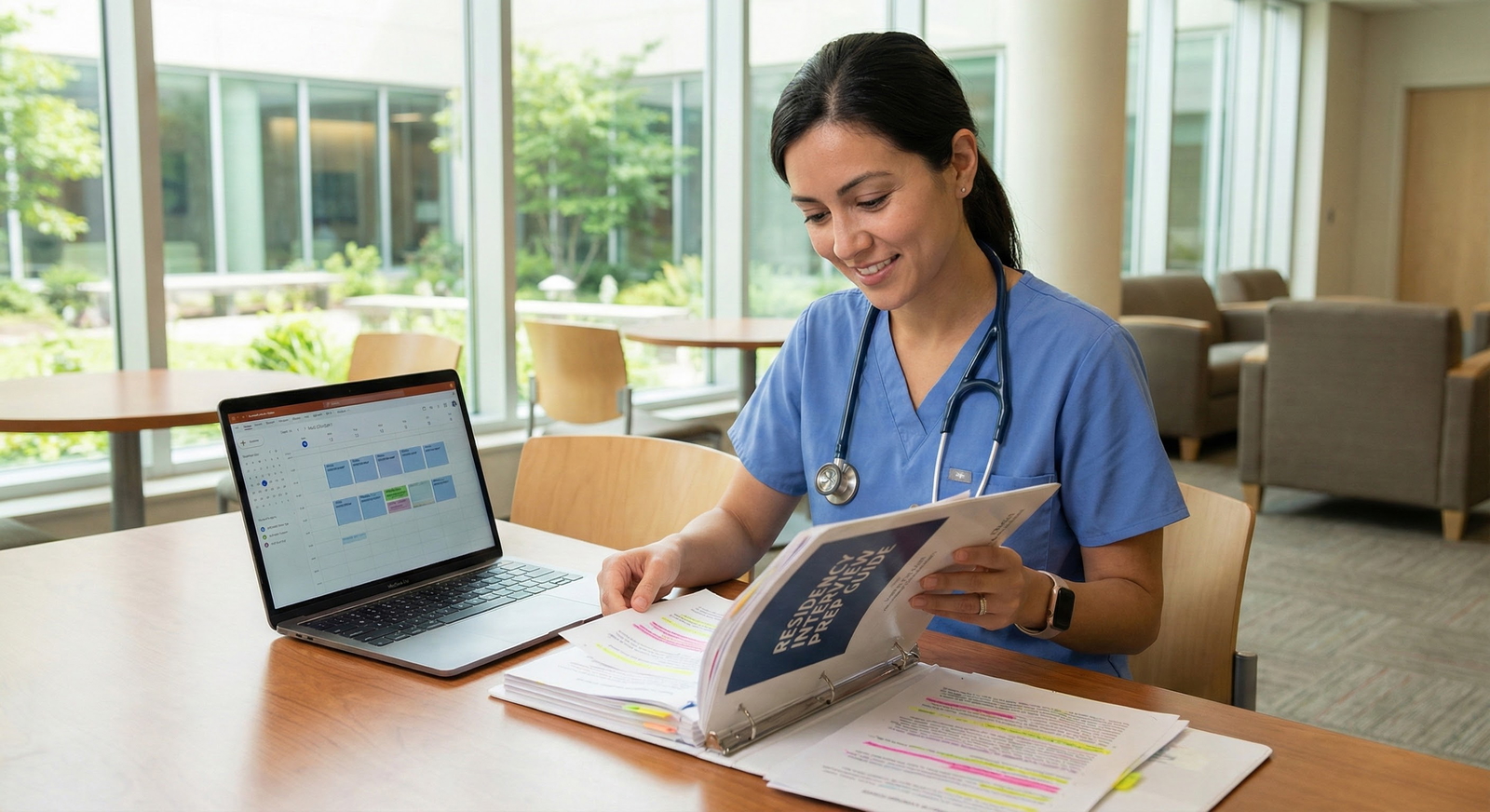
Understanding the Landscape: Preliminary Medicine for Caribbean IMGs
Pre-interview preparation for a Caribbean IMG applying to Preliminary Medicine (prelim IM) is different from categorical internal medicine or other specialties. Knowing this landscape is your foundation before you practice a single interview question.
What is a Preliminary Medicine Year?
A Preliminary Medicine year is a 1-year internal medicine program. Common pathways:
- Transitional to another specialty:
- Neurology
- Anesthesiology
- Radiology
- PM&R
- Ophthalmology
- Dermatology (more rare for IMGs)
- Standalone clinical year for experience, visas, or strengthening application
Program directors understand prelim residents will often move on after one year, but they still need dependable, hard-working interns who will contribute to the team.
How This Affects Your Interview Strategy
Because prelim IM is usually 1 year, faculty will focus on:
- Reliability and work ethic:
“Can we trust this resident on nights, weekends, and during July chaos?” - Adaptability:
“Can this Caribbean IMG adjust quickly to U.S. hospital systems?” - Communication and teamwork:
“Will this person work well with categorical residents and ancillary staff?” - Fit with the department’s needs:
“Will this applicant help cover critical services without drama or burnout?” - Future plans:
“How does this prelim year fit into a logical long-term pathway?”
You must be crystal clear in articulating:
- Why you, as a Caribbean IMG, are pursuing Preliminary Medicine, and
- How this year will fit into your bigger career story (even if you’re still exploring).
Step 1: Clarify Your Story and Career Narrative
Before you worry about “how to prepare for interviews,” you need to understand what you’re actually selling: your professional narrative. Caribbean medical school residency applicants often underestimate how crucial a coherent story is.
Build a Clear, Honest Narrative
Your story should answer four core questions:
Who are you?
- Caribbean IMG (e.g., SGU, AUC, Ross, Saba, etc.) with a specific clinical and personal background.
- Any prior degrees, careers, or unique life experiences.
Why medicine? Why internal medicine exposure?
- Emphasize curiosity, complexity of adult disease, continuity of care.
- Even if your final goal is another specialty, you should still respect internal medicine as a foundation.
Why a Preliminary Medicine year specifically?
Some honest, acceptable reasons:- Required clinical year for advanced specialty (e.g., Neurology, Anesthesia).
- Strengthening U.S. clinical experience and building strong new LORs.
- Addressing a non-linear path (e.g., prior exam delays, transfers) by showing reliability in a structured program.
Why you are a good fit despite being a Caribbean IMG?
- Exposure to diverse patient populations and limited-resource settings.
- Resilience through relocation, adjustment to new systems, and self-directed learning.
- Strong USMLE scores (if applicable), or clear improvement trajectory and explanation.
Aim to summarize your narrative in 3–4 sentences. This becomes the foundation for answers to:
- “Tell me about yourself.”
- “Walk me through your journey to medicine.”
- “Why are you applying to a preliminary medicine year?”
Example: Strong Narrative for a Caribbean IMG in Prelim IM
I completed my medical education at SGU, where I was drawn to internal medicine for its diagnostic complexity and the longitudinal relationships with adult patients. Long-term, I plan to pursue Neurology, and I see a rigorous Preliminary Medicine year as essential for building my clinical foundation, comfort with acutely ill patients, and team-based care in the U.S. system. As a Caribbean IMG who has already adapted to multiple clinical sites and healthcare systems, I bring resilience, cultural humility, and strong communication skills that I believe will translate to being a dependable intern on day one.

Step 2: Research Programs Strategically and Thoroughly
Pre-interview preparation isn’t only about practicing answers. You must also understand the specific programs you’re interviewing at, especially as a Caribbean IMG where you may need to address concerns proactively.
Why Program Research Matters More for Prelim IM
As a prelim candidate, programs want to know:
- Are you serious about their program, or is it just “backup”?
- Have you thought about your year there in concrete terms?
- Will your goals align with what they can offer (e.g., ICU exposure, teaching, schedule structure)?
What to Research for Each Program
Build a one-page “program sheet” for every interview:
Basic program profile
- Location (city, cost of living, public transport vs. car needed).
- Hospital type: county, academic, community, hybrid.
- Program size: number of prelim vs categorical residents.
Curriculum structure
- ICU months, floor months, electives for prelims.
- Night float vs traditional call.
- Prelim vs categorical responsibilities (are prelims often in ICU or mostly floor?).
Support for IMGs
- % of residents who are IMGs or Caribbean IMGs.
- Visa sponsorship policies (J-1, H-1B).
- Any SGU residency match data or Caribbean medical school residency match statistics you can find online.
Culture and reputation
- Glassdoor, Reddit, SDN, and alumni feedback.
- Are prelims integrated or treated separately?
- Any mention of education quality, wellness, or “service-heavy” critiques.
Fit with your goals
- If pursuing advanced specialty: do they have that department on-site?
- Are there mentors in your field of interest?
- Are there opportunities for research or quality-improvement projects, even in a one-year program?
How to Use This Research in the Interview
In pre-interview preparation, convert your research into:
Specific compliments:
“I appreciate that your prelim residents rotate in the MICU and not only on floor services.”Informed questions:
“I saw prelims do two ICU months here. How has that shaped their confidence in managing unstable patients by the end of the year?”Signals of genuine interest:
“Coming from a Caribbean medical school background where I rotated across multiple hospitals, I value how your program seems to offer structured teaching within a busy service environment.”
Step 3: Master Core Interview Questions for Prelim IM
Most residency interview preparation guides give generic lists; you need specialized prep for Preliminary Medicine as a Caribbean IMG. Build a bank of answers for the most predictable interview questions residency programs will ask.
High-Yield General Questions
Prepare structured answers (using 2–3 key points each) for the following:
“Tell me about yourself.”
- Brief background (where you grew up, where you studied).
- Your path to Caribbean medical school.
- Your key clinical interests and what brought you to internal medicine exposure.
- One personal detail (hobby, value, or trait).
“Why Preliminary Medicine instead of categorical?”
Possible frames:- “My ultimate goal is Neurology, and I’m seeking a strong foundation in internal medicine to manage complex comorbidities.”
- “I’m still exploring between IM and another specialty, and I want a rigorous year to refine that decision.”
- Avoid sounding like you don’t care about internal medicine; show respect for the discipline.
“Why this program?” Connect at least three specific things:
- Curriculum features.
- Patient population.
- IMG-friendliness.
- Location and personal reasons.
“Tell me about your strengths and weaknesses.”
- Strengths: work ethic, adaptability, communication, reliability on call.
- Weaknesses: frame as a real issue you’ve actively worked on (e.g., over-documentation, delegating tasks, speaking up in large groups).
“How do you handle stress or long hours?”
- Reference concrete strategies: sleep hygiene, exercise, peer support, time management, setting small goals on busy shifts.
Prelim-Specific Questions You Must Be Ready For
“What are your plans after this Preliminary Medicine year?”
- Programs want to see a thoughtful plan, not vague hope.
- Example:
After a solid Preliminary Medicine year, I plan to apply for a categorical Neurology position. I’m especially interested in programs with strong stroke services, as I’d like to develop expertise in acute neurologic emergencies. I also see this year as critical to building my confidence in managing diabetes, hypertension, and cardiac disease—issues that strongly affect neurology patients.
“If you do not match into your preferred advanced specialty, what is your plan?”
- Demonstrate maturity and realistic thinking.
- Possible answer:
I recognize that matching into an advanced specialty can be competitive, especially as a Caribbean IMG. During my Preliminary Medicine year, I plan to work closely with mentors in both Internal Medicine and my advanced field of interest. If I don’t match right away, I would continue to build my profile through clinical work, research, and possibly consider applying to categorical Internal Medicine as well. My priority is to remain active clinically and continue progressing, rather than stepping away from medicine.
“Will you be fully committed to our program or mostly focused on your next match?”
- Reassure them your primary focus is patient care and being a strong intern.
- Emphasize time-blocking for ERAS tasks outside of clinical hours.
IMG-Specific and Caribbean-Specific Questions
Be prepared for subtle or direct versions of:
- “Why did you choose a Caribbean medical school?”
- “How did your Caribbean medical education prepare you for residency?”
- “Can you explain this exam attempt/leave/gap on your transcript?”
Answer with:
- Ownership: no defensiveness; acknowledge challenges.
- Growth: what you learned, how you improved.
- Current readiness: evidence you’re now functioning at a resident level.
Example for exam gap:
During my Step 1 preparation, I initially struggled with time management and test anxiety, which contributed to a delay in my exam date. I sought guidance from faculty, adjusted my study schedule, and began using timed question blocks to simulate the exam experience. The improvement is reflected in my Step 2 score and in my clinical performance during core rotations, where I received strong evaluations for my knowledge and reliability. This experience taught me how to recognize when I need help and how to adjust effectively—skills I bring with me to residency.

Step 4: Practice Delivery – Not Just Content
Residency interview preparation is not only about what you say; it’s how you say it. Caribbean IMGs sometimes struggle with nervousness, accent clarity, or over-explaining. Pre-interview preparation should therefore prioritize delivery practice.
Use Mock Interviews Effectively
Aim for at least 3–5 full mock interviews before your first real one:
- With peers:
Practice common questions and behavioral scenarios. - With mentors or advisors:
Ask for blunt feedback on clarity, confidence, and professionalism. - With alumni (e.g., SGU residency match mentors):
Former Caribbean medical school residency graduates who matched into U.S. programs often give direct, high-yield feedback.
Record at least one video session of yourself. Review:
- Eye contact with the camera.
- Overuse of filler words (“um,” “like,” “you know”).
- Rambling vs. concise answers.
Structure Your Answers
Use frameworks to keep responses concise and focused:
STAR method (for behavioral questions):
- Situation
- Task
- Action
- Result
2–3 bullet rule:
For “strengths,” “why this program,” or “why prelim IM,” give 2–3 key points, not 7.
Language and Accent Considerations
Many Caribbean IMGs have strong English skills but may:
- Speak too quickly under stress.
- Use colloquialisms unfamiliar to U.S. faculty.
- Drop volume at the end of sentences.
Practical tips:
- Slow down slightly and consciously pause between thoughts.
- Use clean, professional phrases: “I learned that…”, “I found that…”, “Looking forward…”
- Ask a non-Caribbean listener (e.g., mentor in the U.S.) to flag words or phrases that are confusing.
Step 5: Behavioral and Clinical Scenario Preparation
Preliminary Medicine interviews may not be as heavily academic as some subspecialties, but programs still probe professionalism, ethics, and basic clinical reasoning.
Common Behavioral Questions
Prepare 2–3 examples for each:
Conflict with a team member:
A disagreement with a nurse, co-student, or attending. Focus on respect and patient safety.A time you made a mistake:
Own it, explain what you did to fix it, and what changed in your practice afterward.Handling a heavy workload:
Show how you prioritize tasks, communicate, and stay calm on busy call days.Working with a difficult patient or family:
Emphasize empathy, listening, and clear communication.
Clinical Reasoning Questions
Some programs may ask basic clinical questions (especially in prelim IM):
- “How would you work up chest pain in the ED?”
- “What is your approach to a patient with new-onset shortness of breath?”
You don’t have to be perfect, but show systematic thinking:
- Start with ABC (airway, breathing, circulation) and stabilization.
- Ask focused history and exam questions.
- Mention initial investigations (e.g., EKG, troponin, CXR, labs).
- Avoid overconfidence; say, “I would also discuss the case with my senior resident/attending.”
Step 6: Logistics, Technology, and Professional Image
Many residency interviews remain virtual or hybrid. Your pre-interview preparation must include technical and professional setup.
Technology Checklist (for Virtual Interviews)
- Reliable computer with webcam and microphone.
- Stable internet (test speed on Zoom/Teams).
- Quiet location with neutral background (no clutter, no bright backlighting).
- Back-up plan: phone hotspot, second device if your main device fails.
Do at least one full test call with:
- Same platform (Zoom, Thalamus, Teams) as your interview.
- Full suit or professional outfit to check camera framing.
- Microphone sound level and clarity.
Professional Appearance
- Attire:
- Business formal: suit jacket, dress shirt/blouse, conservative colors.
- Minimal accessories, professional grooming.
- Body language:
- Sit upright.
- Look into the camera when speaking (not at your own video).
- Nod occasionally to show engagement.
Organizing Your Interview Day
Before each interview:
Print or keep digitally:
- Program sheet (from Step 2).
- Your CV and personal statement.
- List of key points you want to highlight (e.g., specific rotations, research, leadership).
Prepare 3–5 questions to ask each interviewer:
- About prelim rotations, supervision, wellness, and advanced specialty exposure.
- Avoid questions easily answered on the website.
During a multi-interview day:
- Keep a notepad to jot down:
- Names and roles of interviewers.
- Unique features of the program.
- How you felt about the culture and residents.
This will be vital when building your rank list later.
Step 7: Mentally Preparing as a Caribbean IMG
As a Caribbean IMG applying for a Caribbean medical school residency pathway into Preliminary Medicine, mindset matters as much as tactics.
Addressing Common Insecurities
Common internal narratives:
- “Programs won’t take me seriously because I’m from a Caribbean school.”
- “My exam score isn’t as high as others.”
- “I’m only applying prelim, maybe they think I’m not committed.”
Counter these with:
- Evidence of your success: strong clinical evaluations, good Step 2 scores, meaningful letters of recommendation.
- Awareness of your growth areas and a concrete plan to keep improving.
- Recognition that many SGU residency match and other Caribbean IMG matches happen every year—including into demanding prelim IM programs.
Building Confidence
- Rehearse a positive, grounded self-introduction until it feels natural.
- Remind yourself: they invited you because your application was competitive.
- Visualize successful interactions—not perfection, but calm, respectful, and professional conversations.
Frequently Asked Questions (FAQ)
1. As a Caribbean IMG, how can I stand out in a Preliminary Medicine interview?
- Have a clear, specific narrative about why you’re pursuing a prelim IM year and how it fits into your long-term goals.
- Show that you understand the demands of an intern year and are ready to work hard.
- Highlight unique strengths from your Caribbean experience—adaptability, exposure to different healthcare systems, and resilience.
- Demonstrate that you’ve done thorough program-specific research and are genuinely interested in that program, not just any prelim spot.
2. How should I discuss my advanced specialty plans without sounding uninterested in Internal Medicine?
Acknowledge:
- You respect Internal Medicine as a core discipline.
- You understand that a strong prelim year is crucial for any advanced specialty.
- You are committed to providing excellent care during this year, independent of your future match.
Phrase it as: “Internal Medicine is the clinical foundation for the type of physician I want to be, even though my ultimate focus will be in [Neurology/Radiology/etc.].”
3. What if I’m asked about lower USMLE scores or repeated exams as a Caribbean IMG?
- Be honest and concise about what happened.
- Emphasize the specific steps you took to improve (study methods, time management, test-taking strategies).
- Highlight improved performance later (Step 2, clinical grades, sub-internships).
- Make it clear that the issue is in the past and that you now have reliable systems in place to succeed under pressure.
4. How far in advance should I start my residency interview preparation?
Ideally:
Begin 2–3 months before interviews:
- Clarify your narrative.
- Draft answers to common questions.
- Start mock interviews.
At least 2–3 weeks before your first interview:
- Research each program and create program sheets.
- Finalize your technology setup and interview attire.
- Refine behavioral and scenario-based answers.
Starting early allows you to turn anxiety into deliberate, structured preparation—especially important for Caribbean IMGs aiming to maximize every Preliminary Medicine interview opportunity.