Understanding the Unique Nature of a Preliminary Medicine Year
A preliminary medicine year (prelim IM) is often a one-year internship used as the clinical base for advanced specialties (neurology, dermatology, anesthesiology, radiology, PM&R, etc.). Because it’s just one year and you’ll move on afterward, programs have specific expectations that shape how you should prepare for interviews.
What Makes Prelim IM Different from Categorical IM?
Duration and trajectory
- Prelim IM: 1-year internship, then move to an advanced program.
- Categorical IM: 3-year internal medicine training, leading to board eligibility.
Program priorities
Prelim programs want interns who:- Are clinically safe and reliable from day one.
- Are good team players and low-drama.
- Understand that this is a demanding, service-heavy year.
- Will represent the program well when they move into their advanced specialty.
Your narrative focus
You must articulate:- Why you are pursuing your advanced specialty.
- Why you need a strong medicine-based clinical year to become a better specialist.
- Why you are choosing this prelim IM program (and how it fits your bigger career plan).
Understanding these differences will guide how to prepare for interviews in a way that feels coherent and convincing, rather than generic.
Step 1: Strategic Self-Assessment Before Interview Season
High-yield residency interview preparation starts with a clear understanding of who you are, what you bring, and what you need from a prelim year.
Clarify Your Career Story
Your story should make sense in three parts:
- Why medicine; why patient care?
Short, authentic, and grounded in experiences (not clichés). - Why your advanced specialty?
For example, if you are entering neurology:- Describe specific neurology experiences, mentors, or research.
- Highlight the aspects (neuroanatomy, continuity of care, acute decision-making) that drew you in.
- Why a preliminary medicine year?
Emphasize that:- A strong IM year will solidify your skills in managing complex inpatients.
- You want to be a better neurologist/anesthesiologist/radiologist/etc. by first becoming a solid internist.
- You value learning from internists’ systematic approach to differential diagnosis and acute management.
Action step: Write a 3–5 sentence summary that ties these three pieces together. Use this as the backbone for many interview questions.
Identify Your Strengths and Gaps
Reflect on:
- Clinical strengths (e.g., strong in acute care, good procedural skills, excellent communication).
- Academic strengths (honors in medicine, strong Step scores, research output).
- Professionalism and teamwork examples.
- Any potential red flags:
- USMLE/COMLEX failures or low scores
- Extended time in medical school
- Major gaps in training
- Disciplinary issues
Action step: For each red flag:
- Write a 2–3 sentence, non-defensive explanation.
- Emphasize what you learned and how you have improved.
- Practice saying it aloud until you can deliver it calmly and confidently.

Step 2: Mastering Core Content for Prelim Medicine Interviews
While prelim IM interviews are often more conversational than categorical IM, you still need a working familiarity with several key content areas.
Know Your Application Inside and Out
Expect detailed questions on anything you list:
CV highlights
- Research projects: be ready to explain your hypothesis, methods, main findings, and your role.
- Leadership roles: what you actually did, obstacles you faced, and what you learned.
- Volunteer work: why you chose it and how it affected you or your career goals.
Personal statement
- Know the stories you used—be ready for follow-ups like:
- “Tell me more about this patient you mentioned.”
- “You said you value teamwork—can you give a specific recent example?”
- Know the stories you used—be ready for follow-ups like:
Action step: Print your ERAS application and highlight:
- 3–4 experiences you want to emphasize.
- 2–3 stories you are comfortable expanding upon under stress.
Anticipate Common Preliminary Medicine–Specific Questions
You’ll encounter many interview questions residency applicants are asked in general, but tailored to a prelim context. Practice short, structured answers to:
“Tell me about yourself.”
Framework (60–90 seconds):- Past: where you’re from, medical school, brief background.
- Present: your current focus (e.g., fourth-year student applying neurology with interest in stroke care).
- Future: your advanced specialty and how a prelim IM year fits your path.
“Why are you pursuing [your advanced specialty]?”
Focus on:- 1–2 formative experiences.
- Specific qualities of the field that resonate with your strengths.
- How internal medicine groundwork will make you better in that field.
“Why a preliminary medicine year rather than a transitional year?” (if applicable)
Emphasize:- Desire for strong inpatient experience.
- Value of exposure to multiple subspecialties (cards, pulm/crit, Heme/Onc, etc.).
- Commitment to gaining confidence managing sick patients overnight.
“Why this prelim program?”
Show you did your homework:- Specific rotations (e.g., MICU, CCU, night float structure).
- Program culture or call schedule that fits your learning style.
- Proximity to your advanced program (if already matched or likely).
“What are you hoping to gain from your preliminary medicine year?”
Be concrete:- Effective cross-cover and triage skills.
- Comfort managing common inpatient issues independently.
- Communication skills with consultants and nursing staff.
- Exposure to the patient population relevant to your advanced field.
“How will you balance commitment to this program with your focus on an advanced specialty?”
Programs worry prelims are “checked out.” Address this directly:- “I see this year as foundational, not a box to check.”
- “My goal is to function as a reliable internist so I can better care for complex patients in [specialty].”
- Emphasize team-first mentality.
Action step: Record yourself answering these questions. Aim for 60–90 seconds per answer, clear and structured, without sounding memorized.
Prepare for Behavioral and Situational Questions
Prelim interns are on the front lines. Programs test your judgment, professionalism, and teamwork.
Common themes:
- Handling conflict with a nurse or co-resident.
- Managing an overwhelming cross-cover night.
- Dealing with an error or near-miss.
- Prioritizing tasks when multiple sick patients need you.
Use the STAR method (Situation, Task, Action, Result):
- Situation: Brief context.
- Task: Your responsibility.
- Action: What you did, specifically.
- Result: What happened and what you learned.
Example:
“Tell me about a time you were overwhelmed on a rotation.”
- Situation: Busy ward month with high census.
- Task: Manage several sick patients while still presenting on rounds.
- Action: Prioritized tasks, communicated with seniors, used checklists, sought help early.
- Result: Patients remained safe, you learned to escalate early and delegate appropriately.
Action step: Prepare at least:
- 1 conflict resolution story.
- 1 time-you-failed or made-a-mistake story.
- 1 leadership or initiative story.
- 1 resilience or burnout-prevention strategy story.
Step 3: Researching Programs and Crafting Program-Specific Talking Points
Strong residency interview preparation isn’t just about what you say—it’s about what you know about each program.
How to Efficiently Research Prelim IM Programs
Use multiple sources:
Official website
- Rotations: MICU, CCU, electives, night float.
- Call schedule: frequency, type of nights, weekend coverage.
- Size of intern class and presence of other prelims (neurology, radiology, etc.).
- Educational structure: morning report, noon conference, simulation, ultrasound curriculum.
FREIDA / AAMC / program PDFs
- Number of positions (categorical vs prelim).
- Board pass rates (if available).
- Patient population and hospital type (county, VA, academic, community).
Word of mouth and alumni
- Ask prior graduates, advanced specialty mentors, or seniors who rotated there.
- Focus on culture: Are prelims integrated or treated separately? Is there hierarchy or support?
Translate Research into Talking Points
For each program, prepare 3–5 bullet points:
1–2 educational or structural features you like:
- “I’m particularly interested in your MICU rotation structure and early responsibility.”
- “I value that prelims participate fully in morning report alongside categorical residents.”
1 patient population or setting feature:
- “I’m excited about the county hospital experience and working with underserved populations.”
- “The combination of VA and university hospitals mirrors the practice environment I hope to work in.”
1 personal fit or geography point:
- “My advanced program is across town; I see real potential for continuity across both years.”
- “I have family support in this city, which I know will help me handle a demanding intern year.”
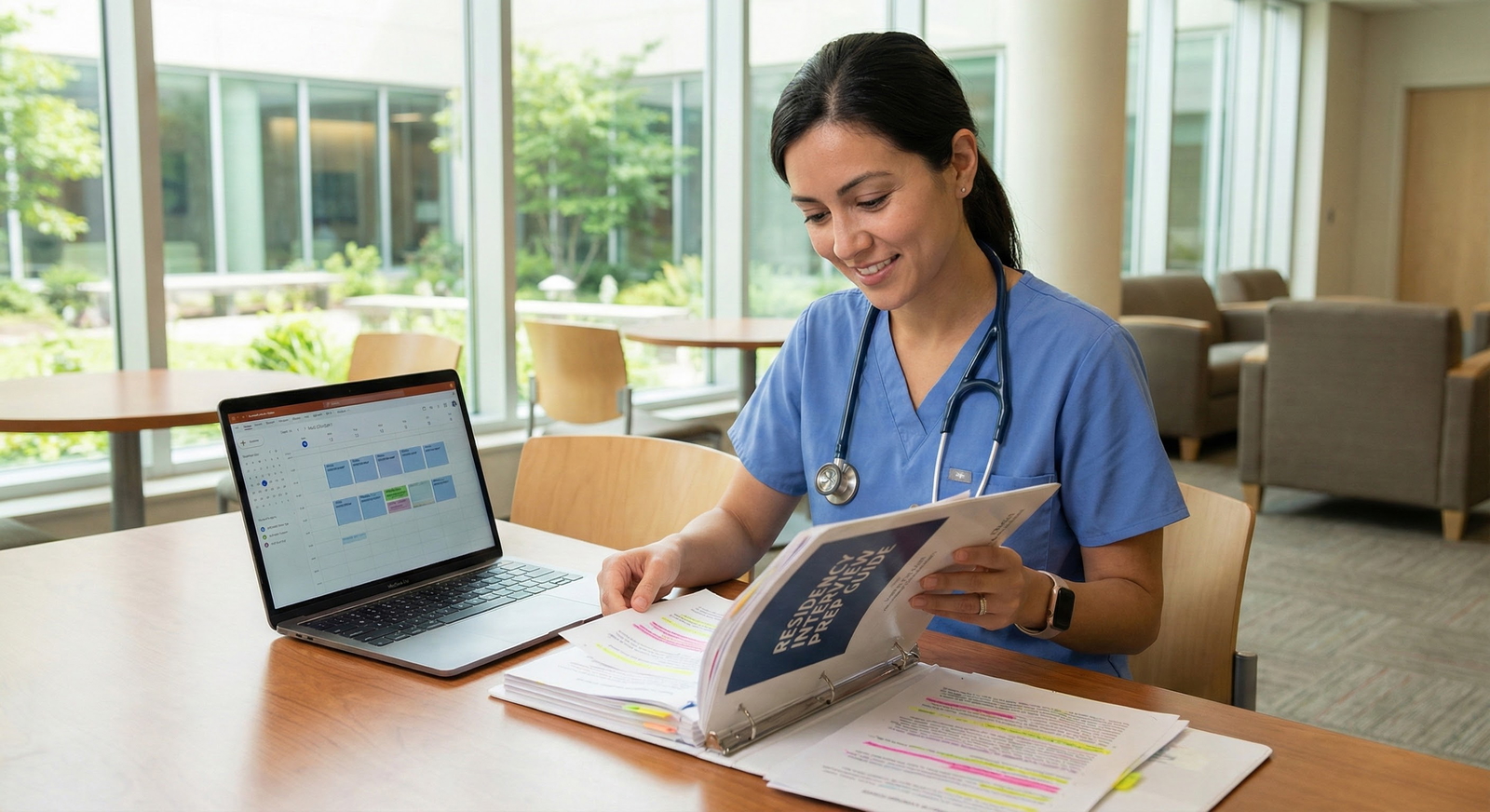
Action step: Create a simple spreadsheet or document:
- Columns: Program name, key rotations, culture notes, prelim vs categorical structure, your talking points, and questions you plan to ask.

Step 4: Logistics and Professional Presentation (Especially for Virtual Interviews)
Good content can be undermined by poor logistics. Plan your environment and professional image well before interview day.
Technology and Environment Checklist
Most prelim IM interviews are now virtual or hybrid. Prepare like this:
Internet
- Use wired connection if possible.
- Test from the exact location and time of your upcoming interviews.
Hardware
- Laptop or desktop (preferable to phone).
- External webcam and microphone if your built-in ones are poor.
- Headphones/earbuds to reduce echo.
Software
- Install/Update Zoom, Teams, Webex, or platform specified by the program.
- Make a professional username (avoid nicknames or shared family accounts).
Background and lighting
- Simple, neutral background: blank wall, bookshelves, tidy room.
- Avoid backlighting (windows behind you); position light in front of you.
- Test how you appear on camera: is your face well lit and centered?
Action step: Do at least one full mock interview over video with:
- Your planned setup.
- Your planned outfit.
- A friend/mentor playing the interviewer.
Professional Attire and Nonverbal Communication
Attire
- Business formal: suit jacket or blazer, dress shirt or blouse.
- Solid or subtle patterns; avoid loud prints.
- For virtual interviews, dress fully; you may need to stand at some point.
Nonverbal cues
- Look into the camera when speaking (not just at faces on the screen).
- Nod and react naturally to show engagement.
- Maintain good posture; avoid fidgeting with pens or hair.
Action step: Record a 2–3 minute practice introduction and watch:
- Are you speaking too fast?
- Are your hands distracting?
- Do you look engaged or flat?
Step 5: Constructing a High-Yield Interview Question Bank
Knowing how to prepare for interviews means having both answers and good questions ready. Asking thoughtful questions shows genuine interest and maturity.
Questions You Should Be Prepared to Answer
Here is a focused list tailored to preliminary medicine:
- “Why did you choose to apply for a preliminary medicine year at our institution?”
- “What do you think will be the biggest challenge for you as an intern?”
- “Tell me about a time you made a clinical decision that changed a patient’s course.”
- “How do you handle stress and prevent burnout?”
- “Have you ever worked with someone difficult on your team? How did you handle it?”
- “How do you see your relationship with categorical residents and your advanced specialty during your prelim year?”
- “Where do you see yourself in 5–10 years?” (Link advanced specialty + type of practice.)
Questions You Can Ask the Program
Prepare 4–6 solid questions and rotate among programs, adjusting as appropriate:
Clinical and educational structure
- “How are preliminary residents integrated with categorical residents on ward teams?”
- “What does supervision look like on nights, especially early in the year?”
- “Can you describe the balance between service and education on the busiest rotations?”
Culture and support
- “How does the program support intern wellness during heavy rotations?”
- “What qualities make a prelim intern particularly successful here?”
- “How often do attendings or seniors offer feedback to prelim interns?”
Outcomes for prelims
- “Where do your previous prelim graduates typically match or continue their advanced training?”
- “Are there opportunities for prelims to participate in quality improvement or teaching if they are interested?”
Avoid questions that:
- Are easily answered on the website.
- Focus only on schedule perks without mentioning educational value.
- Suggest you see this year as something to “get over with.”
Step 6: Building a Personal Practice Plan in the Weeks Before Interviews
Instead of vague plans like “I’ll prepare later,” schedule concrete tasks.
Four-Week Sample Preparation Timeline
4 weeks out: Foundation
- Re-read your entire ERAS application and personal statement.
- Draft your major answers:
- Tell me about yourself.
- Why your advanced specialty?
- Why a preliminary medicine year?
- Identify 4–6 key stories using STAR format.
- Begin program research and build your spreadsheet.
3 weeks out: Content Practice
- Do 1–2 mock interviews (ideally with residents or faculty in IM or your advanced specialty).
- Refine your answers based on feedback:
- Tighten long responses.
- Clarify any confusing explanations of red flags.
- Continue adding program-specific talking points and questions.
2 weeks out: Technical and Behavioral Rehearsal
- Set up and test your full virtual setup.
- Practice 2–3 times on-camera:
- Record and review your posture, eye contact, and pace.
- Finalize your question bank for programs.
- Confirm all interview dates, times, and time zones.
1 week out: Polishing and Rest
- Skim recent news, if applicable, about major hospitals you’ll interview with (mergers, new ICUs, academic awards).
- Light review of core internal medicine topics to maintain confidence.
- Prepare your interview-day cheat sheet:
- Names of program leadership.
- Your 3–5 talking points.
- 3–4 questions to ask.
- Prioritize sleep, exercise, and regular meals.
The 24-Hour Pre-Interview Checklist
- Confirm:
- Interview link.
- Start time (and time zone).
- Contact email or phone for technical issues.
- Lay out outfit and test camera one more time.
- Print or have on-screen:
- ERAS application.
- Program notes.
- Questions list.
- Plan:
- Quiet location.
- Backup device.
- Water and light snack nearby.
Step 7: Prelim Medicine–Specific Mindset and Professionalism
Programs often worry about prelim interns who:
- Are disengaged because they already “have their real residency.”
- Prioritize future specialty networking over current patient care.
- Burn out quickly and become unreliable on busy services.
Your preparation should address this implicitly and explicitly.
How to Convey the Right Mindset
Throughout your answers and demeanor, show that you:
- Take patient care seriously regardless of specialty.
- Are committed to team-based medicine.
- Understand the intensity of intern year and are ready to work hard.
- Value feedback and continuous learning.
Phrases that help communicate this:
- “Even though my long-term path is [specialty], I see this as my only chance to be a true internist-in-training, and I want to make the most of it.”
- “My goal is to be the kind of prelim who adds value to the team—reliable, prepared, and willing to help.”
- “I believe skills like triage, acute management, and effective communication are universal, and this year is where I’ll build them.”
Avoiding Common Pitfalls in Interviews
- Overemphasizing your advanced specialty to the point that IM sounds like an afterthought.
- Speaking negatively about internal medicine or calling it “just prelim.”
- Acting entitled (e.g., assuming lighter schedules because you’re “only here one year”).
- Badmouthing other programs, schools, or past supervisors.
Frequently Asked Questions (FAQ)
1. How is interview preparation different for a preliminary medicine year compared to categorical internal medicine?
For a preliminary medicine year, you must clearly link your preparation and goals to your advanced specialty, while simultaneously showing genuine respect for internal medicine. Programs want to see:
- A coherent narrative: how prelim IM strengthens you as a future neurologist/dermatologist/etc.
- Commitment to teamwork and service in a demanding year.
- Willingness to function like any other intern, not as a temporary visitor.
Categorical IM interviews lean more heavily on long-term commitment to internal medicine itself, potential fellowship interests, and 3-year fit with the program.
2. How much internal medicine clinical knowledge should I review before interviews?
Interviews typically do not test detailed clinical minutiae. However, you should be comfortable discussing:
- Rotations you’ve done (especially medicine, ICU, and relevant electives).
- A few representative patient cases and what you learned.
- Basic management principles for common inpatient problems.
A focused review of internal medicine rotations and reflection on key cases is more important than cramming guidelines. Programs mainly assess your judgment, communication, and teachability, not your ability to recite protocols.
3. What if I don’t yet know where I’ll match for my advanced specialty during prelim interviews?
Be honest but thoughtful. Many applicants apply to prelim IM and advanced specialties simultaneously. You can say:
- You are applying to [specialty] and are eager for a strong medicine foundation regardless of the exact site.
- You value a prelim program that will prepare you broadly and rigorously.
- If there are advanced programs in the same city or institution, mention that you see potential synergy but avoid implying you “expect” or “deserve” a spot there.
Programs mainly want reassurance that you will be committed and reliable wherever you end up.
4. How many questions should I ask during a prelim IM interview?
Typically, you’ll have time for 2–4 questions per interviewer. Quality matters more than quantity. Focus on:
- How prelims are integrated into the residency structure.
- Supervision, support, and feedback mechanisms.
- The culture of the program and characteristics of successful prelims.
- Any specific rotations or features that genuinely interest you.
Avoid repeating the same generic question with multiple interviewers unless you’re seeking different perspectives.
Effective residency interview preparation for a preliminary medicine year means combining strategic self-reflection, clear storytelling, targeted program research, and professional logistics. By planning your preparation in advance and tailoring your narrative to the unique nature of prelim IM, you’ll be ready to present yourself as the kind of intern every program wants: clinically solid, team-oriented, and fully committed to making the most of a critical foundational year.