Understanding the Medicine-Pediatrics Residency Landscape as a Caribbean IMG
Medicine-Pediatrics (Med-Peds) is a combined, four-year residency that trains you to be board-eligible in both Internal Medicine and Pediatrics. For a Caribbean medical school graduate, this path can be immensely rewarding—but also highly competitive. Thoughtful pre-interview preparation is crucial to stand out.
Why Med-Peds Programs Care About Preparation
Program directors in Med-Peds consistently emphasize:
- Intellectual curiosity and strong clinical reasoning
- Genuine commitment to caring for patients across the lifespan
- Adaptability and resilience (especially important for Caribbean IMGs)
- Teamwork and communication skills
- Evidence that you understand what Med-Peds is—and what it is not
Pre-interview preparation lets you demonstrate these qualities clearly. As a Caribbean IMG, you may face added scrutiny regarding training background, US clinical exposure, and visa needs. A polished interview performance can strongly counterbalance those concerns.
Unique Considerations for Caribbean IMGs
As you prepare, keep in mind how your profile will be viewed:
- Training background: Program directors know SGU, AUC, Saba, and other Caribbean schools well. They look closely at clinical evaluations and letters to gauge your readiness.
- Residency match data: Many successful Caribbean medical school residency applicants—especially from schools like SGU—match into primary care and Med-Peds. Pay attention to SGU residency match and similar data from your school to identify Med-Peds programs IMG-friendly.
- Perceptions and bias: Some programs may worry about gaps in training, exam performance, or readiness for US systems. Your interview is where you show you’re as strong as any US grad—prepared, reflective, and effective in communication.
- Visa issues: If you need a visa, you must be prepared to address this confidently and succinctly without letting it dominate the conversation.
Your goal: before you step into any interview, you should be ready to present yourself as a well-trained, highly motivated future Med-Peds physician who has done the work to understand the specialty and the program.
Step 1: Clarify Your Med-Peds Identity and Story
Your “professional story” is the backbone of your residency interview preparation. It should explain why Med-Peds, why you as a Caribbean IMG, and why now.
Build a Clear Med-Peds Narrative
Use these questions to shape your story:
Why Med-Peds instead of only Internal Medicine or Pediatrics?
- What about caring for both adults and children appeals to you?
- Do you like longitudinal care across the lifespan?
- Are you drawn to complex chronic conditions that start in childhood and persist into adulthood (e.g., cystic fibrosis, congenital heart disease, sickle cell disease, childhood cancer survivors)?
What clinical experiences solidified your interest?
- A continuity clinic where you saw both parent and child.
- Transitions-of-care clinics (e.g., pediatric to adult diabetes or congenital heart disease).
- Global health or community health projects addressing families or entire communities.
How does Med-Peds link to your long-term goals?
- Underserved and rural medicine
- Hospitalist work with both adult and pediatric responsibilities
- Academic medicine and teaching
- Global or immigrant health, where whole-family care is often needed
Craft a 60–90 second “Med-Peds elevator pitch” that ties these components together. You should be able to deliver it smoothly when asked any version of “Tell me about yourself” or “Why Med-Peds?”
Integrate Your Caribbean Training Into the Story
Don’t treat your Caribbean education as something to “overcome”; instead, make it part of your unique background:
- Highlight strengths: diagnostic skills in resource-limited settings, adaptability, cultural humility, exposure to diverse pathology.
- Connect these strengths to Med-Peds:
- Caring for multigenerational families in the Caribbean
- Managing broad-spectrum conditions without immediate subspecialty support
- Learning to communicate across languages and cultures
Example narrative snippet:
“Completing my basic sciences at a Caribbean medical school and my clinical rotations in both the Caribbean and the US gave me a broad perspective on health across the lifespan. On pediatrics in Grenada, I cared for children with chronic conditions whose parents had limited resources; on internal medicine in New York, I saw those same conditions years later in adults. That experience drew me toward Medicine-Pediatrics, where I can bridge that entire spectrum of care.”
Prepare this narrative in advance, then practice until it feels natural, not memorized.

Step 2: Research Programs Strategically—Especially as an IMG
Before you can prepare for interviews, you need to know your audience. For Med-Peds, this means understanding both the specialty and each specific program.
Analyze Med-Peds Programs with an IMG Lens
For each program that offers you an interview, research:
IMG-friendliness
- How many current residents or recent graduates are IMGs?
- Check program websites and resident bios.
- Ask current residents (via email or social media) if they trained internationally.
Visa policies
- Does the program sponsor J-1, H-1B, or neither?
- If not clearly stated, politely confirm with the program coordinator before interview season.
Program structure and curriculum
- Rotational balance: How are medicine and pediatrics months interwoven?
- Special tracks: global health, primary care, hospitalist, advocacy.
- Transition-of-care or Med-Peds–specific clinics.
Clinical environment
- Academic center vs. community vs. hybrid
- Patient population: underserved, urban, rural, immigrant communities, medically complex children, etc.
- Level of autonomy and supervision.
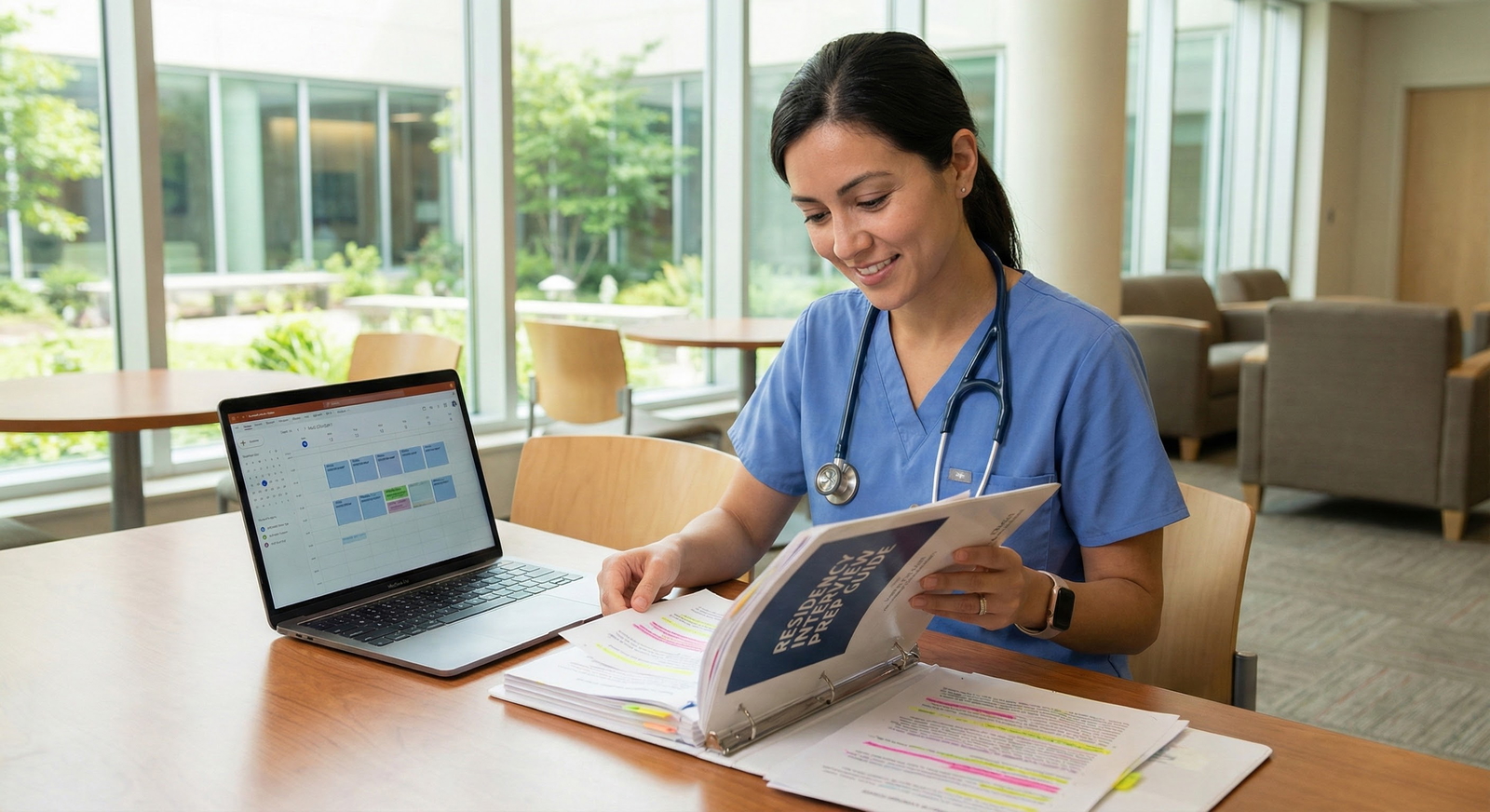
Keep a spreadsheet summarizing this information for all programs that invite you for a medicine pediatrics match interview. This will help you tailor your talking points and questions.
Preparing Program-Specific Talking Points
Before each interview day, prepare:
3 reasons you’re specifically interested in that program
Example: “strong Med-Peds continuity clinic,” “robust advocacy track,” “high volume of medically complex pediatric patients,” “diverse patient population,” “history of successful IMGs.”1–2 experiences from your background that align with the program’s strengths
Example: If a program emphasizes urban underserved care, highlight your work with low-resource communities in the Caribbean or US inner-city rotations.A shortlist of 5–7 thoughtful questions tailored to the program.
You can use these during sessions when asked, “Do you have any questions for us?”
This level of preparation signals maturity and professionalism—qualities Med-Peds program directors value highly.
Step 3: Master the Core Residency Interview Questions
Med-Peds interviews include both standard residency questions and specialty-specific questions. As a Caribbean IMG, you should prepare answers that also address your unique training pathway.
Foundational “Core” Questions
Expect multiple variations of these:
“Tell me about yourself.”
- Structure: 1) Brief background, 2) Clinical interests and Med-Peds motivation, 3) Future goals.
- Keep it to ~90 seconds, conversational, and clearly Med-Peds oriented.
“Why Medicine-Pediatrics?”
- Highlight the dual appeal of adult and pediatric care.
- Emphasize continuity, transitions of care, and complex chronic illness management.
- Tie in concrete experiences from both internal medicine and pediatrics.
“Why our program?”
- Use your program research: unique curriculum features, patient population, Med-Peds culture.
- Connect those features to your goals and experiences.
“What are your strengths and weaknesses?”
- Provide specific examples.
- For weaknesses, show insight and active improvement (e.g., “I used to struggle with time management on busy ward days, but here’s what I implemented and how my feedback changed.”).
“Tell me about a challenging case” (adult or pediatric)
- Use a structured approach (Situation, Task, Action, Result, Reflection).
- Highlight clinical reasoning, communication, and teamwork.
“Where do you see yourself in 5–10 years?”
- Show that you understand Med-Peds career paths: primary care, hospitalist, academic, subspecialty, global health.
- It’s fine if you are undecided, but explain your interests and openness.
Med-Peds–Specific Questions
Programs will assess whether you truly understand this specialty:
Potential interview questions residency programs might ask include:
- “What does a Med-Peds physician offer that is unique compared to a dually trained IM and Peds physician?”
- “Tell me about a time you cared for a patient where Med-Peds training would have been ideal.”
- “How would you explain Med-Peds to a patient or family member?”
- “What populations do you envision serving as a Med-Peds physician?”
- “How do you see yourself balancing adult and pediatric responsibilities in your future career?”
Prepare 2–3 concrete clinical examples that naturally illustrate your Med-Peds mindset—for instance, a teen with congenital heart disease transitioning to adult care, or a family where both parent and child have poorly controlled asthma.
IMGs: Anticipating Sensitive or Difficult Questions
As a Caribbean IMG, you may also encounter:
- “Why did you choose to attend a Caribbean medical school?”
- “How have you adapted to the US healthcare system?”
- “Can you tell me about any gaps or repeats in your education?”
- “Do you require visa sponsorship?”
Prepare brief, honest, and non-defensive responses:
- Focus on the positive aspects of your path (resilience, maturity, resourcefulness).
- Demonstrate growth and reflection (especially for exam retakes or leaves).
- For visas: answer clearly (“Yes, I will require J-1 sponsorship”) and then return focus to your qualifications.
Write out bullet-point responses ahead of time. Practice saying them out loud until they sound confident but natural.

Step 4: Practice, Simulation, and Behavioral Skills
Knowing how to prepare for interviews goes beyond memorizing answers. You must rehearse the behaviors and communication style that programs are evaluating.
Build a Mock Interview Routine
Arrange multiple practice sessions:
- With Med-Peds faculty or residents (if available)
- With your school’s career or residency office
- With peers—especially other Caribbean IMGs also aiming for a medicine pediatrics match
Simulate the real environment:
- Wear your planned interview attire.
- Use the same device, camera, microphone, and platform (Zoom, Thalamus, Teams) you’ll use on interview day.
- Record at least one full mock interview and review your nonverbal communication: eye contact, posture, facial expressions, filler words.
Ask your mock interviewer to focus on:
- Clarity and conciseness of answers
- Evidence of true Med-Peds understanding
- How naturally you integrate your Caribbean training background
- Professionalism and warmth
Practice Behavioral and Scenario-Based Questions
Behavioral questions are commonly used to assess how you think and react:
- “Tell me about a time you made a mistake.”
- “Describe a conflict with a colleague and how you handled it.”
- “Tell me about a time you advocated for a patient.”
- “Describe a situation where you had to learn something quickly under pressure.”
Use the STAR method (Situation, Task, Action, Result), plus Reflection:
- Situation – Briefly set the scene.
- Task – What was your specific role/responsibility?
- Action – What did you do?
- Result – Outcome; include objective effects if possible.
- Reflection – What did you learn and how did you change?
Make sure at least some scenarios involve children, families, or transitions of care, reinforcing your Med-Peds focus.
Fine-Tune Nonverbal Communication
Programs will form an impression within minutes. Pre-interview preparation should include:
- Posture: Sit upright, relaxed but attentive.
- Eye contact: Look at the camera, not the screen, especially when speaking.
- Facial expression: Neutral-to-positive, engaged, not overly serious or flat.
- Pacing: Avoid speaking too quickly; pause briefly to think when needed.
- Tone: Warm, confident, and respectful.
Practice these consciously during mock interviews until they become more automatic.
Step 5: Logistics, Documents, and Professional Presentation
Interview success can be undermined by poor logistics. Systematic preparation weeks ahead is essential.
Organize Your Materials
Before interviews begin, ensure:
- Personal Statement familiarity: Know your own personal statement thoroughly; anything you wrote can generate questions.
- CV mastery: Be prepared to discuss each activity, research project, and leadership role listed.
- Clinical cases: Have 3–4 adult and 3–4 pediatric cases ready to discuss in detail.
- Letters of recommendation: Know who wrote them and what aspects they likely highlighted.
Create a digital “interview folder” containing:
- PDFs of your CV and personal statement
- A list of key experiences and stories
- Each program’s research summary and your tailored notes
- Your rank-order priority list criteria (for yourself)
Technology and Environment for Virtual Interviews
Most residency interviews are now virtual. Prepare your setup meticulously:
- Internet: Use a wired connection if possible; test at the same time of day as your interviews.
- Device: Prefer a laptop or desktop with a stable camera; avoid using a phone or tablet unless necessary.
- Audio: Use headphones or a dedicated microphone to reduce echo and noise.
- Lighting: Place a light source in front of you; avoid strong backlighting from windows.
- Background: Neutral, tidy, and professional (plain wall, bookshelf, or simple decor).
- Notifications: Silence phone, messaging apps, and email alerts.
Do a full test call with a friend in another location and adjust until your audio and video are clear and professional.
Professional Appearance and Cultural Considerations
For Med-Peds, attire can be slightly more relaxed than for corporate interviews but must remain professional:
- Men: Neutral-colored suit jacket, dress shirt, conservative tie, well-groomed facial hair if applicable.
- Women: Suit (pants or skirt) or professional dress with blazer; avoid overly bright patterns; minimal jewelry.
- Regardless of gender: Clean, neat hairstyle; avoid noisy accessories; ensure comfort to prevent fidgeting.
As a Caribbean IMG, be mindful of:
- Accent clarity: Speak slightly slower than normal, enunciate clearly, and confirm understanding when needed (“Does that answer your question, or would you like me to clarify further?”).
- Cultural communication differences: In some Caribbean cultures, being very direct may feel impolite; in US interviews, clarity and directness are appreciated—practice adjusting your style while staying authentic.
Day-Before and Day-Of Checklists
The day before:
- Confirm interview times and time zones.
- Re-test technology.
- Re-review your notes for that specific program.
- Choose your outfit and check for wrinkles or stains.
- Plan meals and hydration.
The day of:
- Eat a light meal; avoid excessive caffeine.
- Log in 15–20 minutes early to handle any technical surprises.
- Have water nearby, plus printed notes with key points and questions (but don’t read off them directly).
- Take a few deep breaths before each session; visualize a successful conversation, not an exam.
Step 6: Questions to Ask Programs and Post-Interview Strategy
Your questions and follow-up behavior also demonstrate professionalism and fit.
High-Quality Questions for Med-Peds Programs
When asked if you have questions, avoid basic information easily found online. Focus on aspects that matter for your growth as a Med-Peds resident:
Examples:
- “How does your program support residents interested in transitions-of-care clinics or caring for adolescents with chronic conditions as they move into adult care?”
- “What opportunities exist for Med-Peds residents to engage in advocacy or community outreach for underserved families?”
- “Can you describe how Med-Peds residents are integrated into both adult and pediatric hospitalist teams?”
- “How have recent Med-Peds graduates from your program shaped their careers—primary care, hospitalist, fellowship?”
- “As an IMG, I’m particularly interested in mentorship. Are there faculty or senior residents who have non-traditional paths or international backgrounds who mentor Med-Peds residents?”
Prepare a shortlist and adapt based on the flow of the conversation.
Evaluating Programs as a Caribbean IMG
After each interview, immediately jot down:
- Your overall feeling about the program culture.
- How welcoming they seemed toward IMGs and diverse backgrounds.
- Evidence that they successfully train Med-Peds residents in your areas of interest.
- Any concerns about support, supervision, workload, or location.
This will be important later when building your rank list for the medicine pediatrics match.
Thoughtful Follow-Up
- Send brief, personalized thank-you emails within 24–48 hours to your main interviewers.
- Reference specific points from your conversation (e.g., a case discussion or shared interest in global health).
- Keep it professional; avoid implying that you’ll rank them first unless you truly mean it and only when appropriate later in the season.
Your pre-interview and post-interview behaviors together give program directors a sense of how you will function as a resident—organized, communicative, and respectful.
FAQs: Pre-Interview Preparation for Caribbean IMGs in Med-Peds
1. How can I best highlight my Caribbean medical school background during Med-Peds interviews?
Frame your Caribbean training as an asset. Emphasize:
- Exposure to a wide range of pathology and resource-limited settings.
- Experience caring for multigenerational families and diverse populations.
- Adaptability in transitioning between Caribbean and US clinical environments.
Link these strengths directly to Med-Peds: comfort managing broad-spectrum medicine, cultural humility, and readiness for complex, underserved patient populations. Be honest about challenges you faced, but focus on growth and resilience.
2. What specific interview questions residency programs often ask IMGs?
For Caribbean IMGs, you’re likely to be asked:
- Why did you choose a Caribbean medical school?
- How have you adapted to the US healthcare system?
- Have you faced any challenges in exams or training, and what did you learn from them?
- Do you need visa sponsorship, and what type?
Prepare concise answers that:
- Avoid blaming others or sounding defensive.
- Emphasize your proactive efforts (US clinical experience, extra studying, feedback-seeking).
- Return the focus to your readiness for Med-Peds residency and your contributions to the program.
3. How important is program research for Caribbean medical school residency applicants in Med-Peds?
Program research is extremely important, especially for Caribbean IMGs. It helps you:
- Prioritize Med-Peds programs that are more welcoming to IMGs.
- Tailor your “Why this program?” answers with concrete details.
- Ask insightful questions that show real interest rather than desperation.
- Avoid programs that don’t sponsor your required visa or lack support structures you need.
Thorough research also signals maturity and professionalism—traits that can strongly influence a SGU residency match or any Caribbean medical school residency outcome.
4. How early should I start residency interview preparation for a Med-Peds match as a Caribbean IMG?
Ideally, begin 2–3 months before interview invitations typically go out:
- 2–3 months before: Draft your Med-Peds narrative, review your CV and personal statement, and list key clinical cases.
- 1–2 months before: Begin mock interviews, especially focusing on Med-Peds–specific and IMG-related questions.
- 2–3 weeks before interviews: Finalize program research, technology setup, wardrobe, and create tailored notes for each program.
Starting early gives you time to refine your answers, improve your nonverbal communication, and handle logistical details without last-minute stress—allowing you to present your best self when interview day arrives.
By approaching your Med-Peds residency interviews with this level of structured, thoughtful preparation, you transform from a “Caribbean IMG applicant” into a compelling future colleague—someone who clearly understands the specialty, values the dual nature of Medicine-Pediatrics, and is fully ready to contribute on day one of residency.