
Understanding Your Unique Profile as a US Citizen IMG in Global Health
As a US citizen IMG and American studying abroad, you occupy a unique intersection: you are culturally and legally connected to the US system, yet your medical training is international. That dual identity can be a powerful asset in global health–or a liability–depending on how well you prepare before interview day.
Pre-interview preparation for global health–oriented residency programs is not just about memorizing answers. It is about aligning three elements:
- Your personal story (US citizen IMG with international training)
- Your professional narrative (commitment to global health, international medicine, and health equity)
- The program’s mission (how their global health residency track works and what kind of resident they want)
Before you rehearse a single answer, you should understand:
- Why programs may be cautious about IMGs
- Why they are interested in applicants with true global health experience
- How to bridge any perceived “risk” by showing maturity, reliability, and alignment with their mission
Common Concerns Programs Have About US Citizen IMGs
Be aware of typical questions committees may have (even if they never say them aloud):
- Did you train in a system with strong clinical rigor and supervision?
- Can you transition smoothly into US healthcare workflows and documentation?
- Is your interest in global health sustained and realistic, or is it short-term “voluntourism”?
- Do you understand the realities of global health (long-term partnerships, ethics, sustainability), not just the “adventure”?
- Are you committed to a career in global health or just a residency experience?
Your pre-interview preparation is about proactively answering these questions through your research, your stories, and your professionalism.
Deep-Dive Program Research: Targeted to Global Health Tracks
Generic program research is not enough. As someone pursuing global health, you must demonstrate competence and a sophisticated understanding of what “global health” actually looks like in residency.
Step 1: Identify the Global Health Opportunities Within Each Program
Many programs will use similar labels but offer very different experiences. Before interviews, create a spreadsheet for each program with:
- Type of track
- Designated global health residency track
- Certificate, pathway, concentration, or elective emphasis
- Structure
- Longitudinal track over 3–4 years
- Elective blocks (e.g., 4–12 weeks abroad or domestically underserved)
- Formal curriculum (journal clubs, seminars, capstone projects)
- Sites and partnerships
- Which countries or domestic underserved settings?
- Longstanding institutional partnerships vs. short-term or sporadic rotations
- Type of work: inpatient, primary care, research, community health, systems strengthening
- Funding and logistics
- Is travel funded? Is housing supported?
- Are there scholarships or stipends?
- Faculty leadership
- Who directs the global health residency track or international medicine initiatives?
- What are their research and clinical interests?
This lets you ask precise questions and speak credibly about why that program matches your global health goals.
Step 2: Study Their Mission, Not Just Their Website
Look beyond the residency homepage:
- Read recent publications from program faculty in global health, health systems, health equity, or implementation science.
- Search for program name + ‘global health’ + ‘residency’ in Google Scholar and PubMed.
- Check conference abstracts (e.g., CUGH, APHA, ASTMH) where their faculty may present.
- Look up hospital community benefit reports and any local public health partnerships.
As a US citizen IMG, you can leverage your international training by explicitly tying what you’ve seen abroad to their stated mission. For example:
“During my rotations in [Country], I saw [specific systems challenge], and I’m especially drawn to your partnership with [Site] because your work on [topic] addresses similar issues in a sustainable way.”
Step 3: Understand the Program’s Expectations of Global Health Residents
Before the interview, clarify:
- Are global health track residents expected to do:
- A formal research project?
- A QI initiative related to global or local health equity?
- Language development (e.g., Spanish, French, Portuguese, Swahili)?
- How many residents per year enter the global health track?
- How time-intensive is the track, and does it affect elective time or fellowship competitiveness?
Preparing around these details allows you to ask high-level questions that show you’re thinking about commitments and feasibility—not just the “headline” of international medicine.

Crafting Your Global Health Narrative as a US Citizen IMG
Your narrative needs to be clear, honest, and cumulative: what led you to global health, how your international medical education shaped you, and where you realistically see your career going.
Step 1: Clarify Your “Why Global Health?” in Writing
Before any interview, write out:
- The first time you became aware of global health disparities
- The most formative experiences you’ve had abroad or with underserved populations
- A moment that complicated your view (e.g., ethical dilemmas, health system limitations)
- A moment that confirmed your long-term commitment
Avoid generic phrases (“I want to help underserved populations”). Instead, aim for specific, reflective statements:
“As an American studying abroad, I joined a longitudinal hypertension clinic in a semi-rural region where consistent medication supply was uncertain. This forced me to shift from an individual-patient focus to a systems perspective—how supply chain, financing, and local leadership affect care. That experience solidified my interest in health systems strengthening.”
Having these stories clearly in your mind will make your responses more natural, vivid, and convincing.
Step 2: Integrate Your US Citizen IMG Identity
Programs will be thinking about your IMG status. Address it head-on by framing it as an advantage:
- Cultural flexibility – you’ve navigated different education systems, clinical cultures, and likely multiple languages.
- Adaptability – you adjusted to a new country, new clinical structures, and diverse patient populations.
- Perspective – you can compare health systems, workflows, and patient experiences across countries.
When asked about your training, you might say:
“Training as an American studying abroad has given me two perspectives—on the US health system through my background and US rotations, and on a different health system through my medical school. That dual exposure has made me more adaptable and has also sparked my interest in international medicine and comparative health systems.”
Step 3: Distinguish Global Health from Short-Term Medical Tourism
Programs in global health are wary of applicants whose international experiences are limited to:
- One short-term mission trip with limited follow-up
- Experiences marketed as “medical brigades” without clear supervision or sustainability
If that’s part of your background, frame it honestly and show growth:
- Acknowledge what you learned and what you realized were limitations of that model.
- Highlight any later experiences that were more longitudinal, partnership-based, or systems-focused.
- Articulate your current understanding of ethical global health practice.
For instance:
“My first exposure to international medicine was a short-term brigade in [Country]. While it was eye-opening, I later understood the limitations of such trips. That realization led me to seek more sustainable experiences, like my year-long work with a community-led hypertension program where local leadership and continuity of care were central.”
Mastering Residency Interview Preparation: Techniques and Common Questions
You should treat residency interview preparation as a distinct skill set. As a US citizen IMG, you may be judged more heavily on communication, professionalism, and understanding of US healthcare expectations—especially if part of your training was in a very different system.
Step 1: Build a Question Bank Tailored to Global Health
Go beyond generic “tell me about yourself” and “strengths and weaknesses.” Prepare for:
Core residency interview questions:
- “Walk me through your CV.”
- “Why this specialty?” (e.g., Internal Medicine, Family Medicine, Pediatrics with a global health focus)
- “Why our program?”
- “Tell me about a time you faced a conflict with a team member.”
- “Describe a clinical challenge and how you handled it.”
- “What are your long-term career goals?”
Global health–specific and international medicine questions:
- “What does global health mean to you?”
- “Tell me about a global health experience that changed how you think about medicine.”
- “How do you see yourself balancing domestic clinical work with global health in the future?”
- “What ethical dilemmas have you encountered in global health work?”
- “How would you avoid perpetuating dependency or ‘voluntourism’ in global health practice?”
- “Our global health residency track requires additional work on top of residency—how will you manage your time?”
US citizen IMG–specific questions:
- “Why did you choose to study medicine abroad as an American?”
- “What did you gain from your international medical education that you couldn’t have gained in the US?”
- “How have you adapted to the US clinical environment during your rotations?”
- “Can you describe differences between your medical school’s health system and the US system, and what you learned from them?”
Create a living document for residency interview preparation where you list these questions and write bullet-point responses (not full scripts) under each.
Step 2: Practice Structured Responses (Especially for Behavioral Questions)
For behavioral questions (“tell me about a time when…”), use the STAR format:
- Situation: Brief context
- Task: What needed to be done / your role
- Action: What you did (focus here)
- Result/Reflection: Outcome and what you learned
Example: Ethical challenge abroad
- S: You were in a rural clinic where colleagues suggested procedures outside your scope.
- T: Maintain ethical practice while preserving relationships.
- A: You clarified your training level, engaged local supervisors, and focused on tasks aligned with your competence.
- R: Maintained trust, ensured patient safety, and learned about the importance of clear role definition in cross-cultural clinical work.
Practice saying these aloud until you’re comfortable but not robotic.
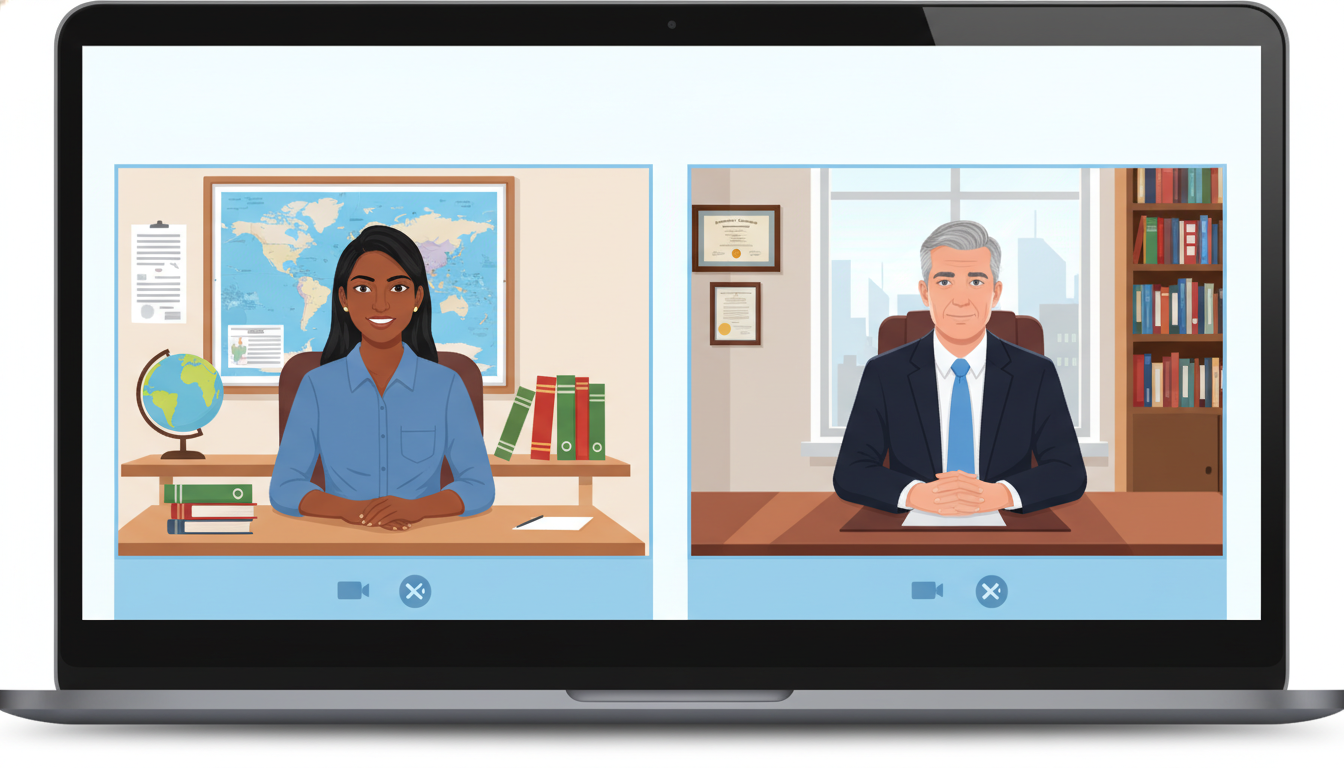
Step 3: Simulate US-Style Video and In-Person Interviews
If you trained abroad, norms around hierarchy, eye contact, and self-promotion may differ from typical US expectations.
- Record yourself answering 5–7 key questions. Evaluate:
- Eye contact with the camera (for video interviews)
- Tone (confident but not arrogant)
- Clarity and conciseness (avoid very long answers)
- Filler words (“um,” “like,” “you know”)
- Ask a US-trained physician or resident—preferably one familiar with global health—to run a mock interview with:
- Standard questions
- Global health–specific scenarios
- Questions on your IMG background
Ask for direct feedback on whether you sound:
- Over-rehearsed vs. thoughtful
- Too modest vs. appropriately confident
- Too vague vs. concrete and specific
Logistics, Materials, and Strategy Before Interview Day
Beyond content, strong preparation includes meticulous attention to logistics and your overall impression as a future resident representing a global health program.
Step 1: Optimize Your Interview Schedule and Energy
If you’re interviewing across time zones (not uncommon for Americans studying abroad):
- Block your calendar to avoid early-morning interviews right after overnight calls or exams.
- If the interview is at 8:00 AM Eastern and you’re abroad, rehearse at that time at least once to adjust your rhythm.
- Avoid scheduling your highest-priority programs on your first 1–2 interview days to allow for a “warm-up” period.
Step 2: Prepare a Concise “Residency Story” for Openers
Most interviews start with some version of:
- “Tell me about yourself.”
- “Walk me through your journey in medicine.”
Have a 90-second, high-level narrative that includes:
- Where you’re from (US connection)
- Why you chose to study medicine abroad
- Key clinical and global health experiences
- What type of physician you hope to become (including global health focus)
Example outline:
“I grew up in [City/State], did my undergrad in [Field], and chose to study medicine at [School] in [Country] to gain exposure to a different health system and patient population. During my training, I became particularly interested in [specific global health area]. This led me to [specific experience(s)], where I saw how [key insight]. Now I’m looking for a residency with a strong global health residency track that combines rigorous clinical training with opportunities to engage in sustainable partnerships and health systems work, particularly in [regional or thematic interest].”
Step 3: Prepare Your Questions for Programs (Especially Global Health–Focused)
Coming prepared with thoughtful questions is a core part of how to prepare for interviews. It shows initiative and sincere interest. Prepare 6–10 questions, including:
Global health track–specific:
- “Could you describe how the global health residency track is integrated into the 3–4 years of training?”
- “How do residents balance service requirements at the home institution with time spent at partner sites?”
- “What kind of mentorship structure is in place for global health projects?”
- “How have your partnerships evolved over time, and what measures do you use to ensure they are equitable and sustainable?”
US citizen IMG–relevant:
- “How have previous IMGs integrated into your program, particularly those with international training paths?”
- “Are there institutional supports for residents pursuing careers that bridge US and international practice, such as mentorship, networking, or protected time?”
Career and mentorship:
- “Among recent graduates from the global health track, what kind of careers have they pursued—academia, NGOs, domestic safety-net practice, a mix?”
- “What proportion of your residents stay engaged in global health 5–10 years after graduation, and how does the program support that?”
Have at least one or two tailored questions ready for each individual faculty interviewer based on their interests (e.g., maternal health, HIV, primary care, health systems).
Presenting Professionalism and Cultural Competence
For global health–oriented residencies, professionalism also includes your stance on culture, ethics, and humility.
Step 1: Be Ready to Discuss Ethical and Cultural Scenarios
You may be asked scenario-based questions like:
- “What would you do if asked to perform procedures abroad that you are not yet competent to do?”
- “How would you respond if local partners disagreed with an approach you believed was best for patient care?”
- “How would you navigate power imbalances when working in low-resource settings as a US-based trainee?”
Prepare responses that emphasize:
- Respect for local expertise
- Clear understanding of your scope of practice
- Commitment to sustainability and capacity building
- Humility and partnership—not paternalism
Step 2: Show Awareness of Power and Privilege
As a US citizen IMG pursuing international medicine, you should demonstrate awareness that:
- US-based institutions and trainees often hold disproportionate power in global partnerships.
- Ethical global health requires shared decision-making, bidirectional exchange, and responsiveness to local priorities.
You might say:
“I see global health not as ‘bringing solutions’ from the US, but as working alongside local colleagues to strengthen existing systems. As a US citizen and trainee, I’m very conscious of the power and resource imbalances, and I view my role as a learner and partner first.”
Step 3: Align Your Future Plans with Reality
Programs may probe whether your career goals are realistic:
- Do you understand that most global health–oriented physicians maintain a domestic practice base?
- Are you aware of the need for visas, funding, institutional partnerships, and long-term commitments?
Be ready to outline a plausible career vision, for example:
“Long-term, I see myself as a clinician-educator based in the US at an academic institution with strong global health partnerships. I’d like to split my time between domestic safety-net practice and 2–3 months per year at a partner site, focusing on capacity building and health systems QI.”
Final Pre-Interview Checklist for US Citizen IMGs in Global Health
Use this as your 1–2 week pre-interview and 24–48 hour pre-interview checklist.
1–2 Weeks Before Each Interview
- Create or update a program-specific one-pager:
- Key strengths
- Global health opportunities
- Faculty of interest
- Questions you plan to ask
- Review your ERAS application and personal statement—know every detail you wrote.
- Build out your interview questions residency bank and STAR stories:
- 3–4 patient care stories
- 2–3 conflict/teamwork stories
- 1–2 leadership/initiative stories
- 1–2 stories addressing global health ethics or systems challenges
- Do at least one full mock interview focused on global health and IMG questions.
- Confirm time zones, platform (Zoom, Thalamus, etc.), and tech setup.
24–48 Hours Before
- Revisit the program website and any recent news (e.g., new partnerships or initiatives).
- Print or open your program one-pager and interview schedule.
- Prepare your introduction and 3–4 key points you want interviewers to remember:
- US citizen IMG with international training
- Demonstrated, thoughtful global health engagement
- Clear, realistic career vision
- Fit with the program’s global health residency track
- Test your audio, video, lighting, and background (for virtual).
- Lay out professional attire appropriate for video or in-person.
- Plan logistics for travel, parking, and timing if in-person.
FAQs: Pre-Interview Preparation for US Citizen IMGs in Global Health
1. As a US citizen IMG, should I proactively bring up my IMG status in interviews?
Yes. Do not avoid it. Frame your path as an intentional choice that gave you valuable experience and perspective. Briefly explain why you chose to train abroad, what you gained, and how you’ve ensured strong US clinical exposure (e.g., US rotations, observerships, research). Then pivot to how those experiences prepare you for a career that includes global health and international medicine.
2. How can I show genuine commitment to global health without extensive long-term overseas experience?
Focus on the depth and reflection behind what you do have:
- Longitudinal engagement with underserved communities (domestic or abroad)
- Global health courses, certificates, or research
- Reflection on ethical, structural, and systems aspects of care
- Plans to engage further during residency (e.g., through a global health residency track)
Programs value thoughtful, sustainable commitment more than a long list of brief trips.
3. What’s the best way to prepare for interview questions about global health ethics and “voluntourism”?
Start by reading a few key articles or position papers on ethical global health engagement, short-term experiences, and partnership principles. Then:
- Reflect on your past experiences honestly.
- Identify at least one scenario where you recognized an ethical tension.
- Prepare a structured response showing how your thinking evolved and how you would act differently now.
4. How different is residency interview preparation for global health–focused programs compared with standard programs?
The core skills—professionalism, communication, and self-awareness—are the same. What’s different is:
- You’ll be expected to discuss global health with nuance: ethics, sustainability, partnerships, and systems.
- Your international experiences will be scrutinized more carefully for depth and reflection.
- Programs will assess whether your global health interests are aligned with their structure, capacity, and mission.
By approaching pre-interview preparation with clarity, intentionality, and humility, you can turn your US citizen IMG background and global health interests into a coherent and compelling story—one that resonates with programs and sets a strong foundation for your residency and future career.