
Understanding the Neurology Residency Interview Landscape as a Non‑US Citizen IMG
Preparing for neurology residency interviews as a non-US citizen IMG is both exciting and complex. You are navigating not only a competitive specialty, but also additional layers: visa status, perceived training differences, and cultural/communication gaps. Thoughtful pre-interview preparation can transform these challenges into strengths and help you stand out positively in the neuro match.
Neurology has grown in popularity due to advances in stroke care, neuroimmunology, neurocritical care, and neuroimaging. Programs expect candidates to:
- Demonstrate strong clinical reasoning and localization skills
- Show genuine interest and longitudinal commitment to neurology
- Communicate clearly and professionally, often with patients who have complex cognitive or language deficits
- Understand the US healthcare system and teamwork culture
For a foreign national medical graduate, pre-interview work must include not only standard residency interview preparation, but also strategic planning around visas, documentation, and narrative building. The goal is to arrive at every interview with:
- A clear, confident personal story
- Evidence of neurologic engagement (rotations, research, electives)
- Prepared answers to common interview questions residency programs will ask
- Insightful questions of your own, tailored to neurology and to each program
The rest of this article is a step-by-step guide focusing on how to prepare for interviews specifically as a non-US citizen IMG applying to neurology.
Step 1: Clarify Your Neurology Story and Career Vision
Before you practice any answers, you need a coherent personal and professional narrative. Programs will quickly sense if your story is unclear or generic.
1. Build Your “Why Neurology?” Core Narrative
Almost every interviewer will ask some version of “Why neurology?” or “Why did you choose neurology over other specialties?” To prepare:
Identify 2–3 key influences:
- A formative patient encounter (e.g., stroke, epilepsy, neurodegenerative disease)
- A mentor or neurology attending who shaped your path
- A research experience that exposed you to the brain and nervous system
- Personal or family experiences with neurologic disease
Connect these to specific neurology values:
- Desire to understand complex clinical reasoning and localization
- Interest in longitudinal relationships with patients with chronic disease
- Enthusiasm for rapidly evolving fields like neuroimmunology or neurogenetics
- Appreciation for the mix of inpatient emergencies (stroke, status epilepticus) and outpatient cognitive/neuromuscular care
Practice a 1–2 minute answer, structured as:
- Brief background (who you are, where you trained)
- One compelling story or experience
- A clear link to neurology skills and values
- How this translates into your future as a neurologist in the US
Example (condensed):
“During my internal medicine rotation, I followed a middle-aged patient with rapidly progressive weakness. The neurology team invited me to observe the exam and localization discussion, and I was fascinated by how subtle findings led to a precise diagnosis. Over weeks of follow-up, I saw how they communicated complex information to the family and helped the patient adapt to his new limitations. That combination of detailed reasoning, longitudinal care, and the impact on quality of life is what drew me to neurology…”
2. Integrate Your IMG Background into the Story
As a non-US citizen IMG, don’t hide your background—strategically frame it as a strength:
- Highlight unique clinical exposure from your home country (e.g., infectious or nutritional neurologic diseases, high stroke burden, limited-resource care).
- Emphasize resilience and adaptability: new system, new culture, often new language.
- Connect your international perspective to neurology:
- Managing stroke with limited imaging
- Dealing with late presentations of epilepsy or multiple sclerosis
- Advocating for neurologic patients in under-resourced settings
Programs value global perspectives, especially in neurology, where diseases, risk factors, and access differ widely. Prepare 1–2 concrete examples from your home setting that show maturity and insight rather than pity or complaint.
3. Articulate a Realistic Long-Term Career Goal
Interviewers often ask: “Where do you see yourself in 5–10 years?” or “What are your career goals in neurology?”
Pre-interview, define:
- Your tentative career direction: general neurology, stroke, epilepsy, movement disorders, neuromuscular, neuroimmunology, neurocritical care, behavioral neurology, etc.
- What attracts you to that field: specific patient populations, procedures (EEG, EMG, botulinum toxin injections, thrombolysis), research questions, public health aspects.
- A flexible attitude: you have interests, but you’re open to exploration as a resident.
Example framing: “Currently, I’m very interested in vascular neurology because of the high stroke burden I saw in my home country and my research on stroke outcomes. I can see myself pursuing fellowship training, but I also want broad exposure in residency before I commit.”
Step 2: Master Common Neurology Residency Interview Questions
While no two interviews are identical, there is a clear pattern of interview questions residency programs ask, especially in neurology. Pre-interview preparation should include scripts and talking points for each category.
1. Core Personal and Motivation Questions
Prepare concise, well-structured responses for:
- “Tell me about yourself.”
- “Why neurology?”
- “Why did you train in [country] and then decide to come to the US?”
- “What are your strengths and weaknesses?”
- “What makes you unique as a candidate?”
For each:
- Keep answers to 1–2 minutes.
- Use structure: beginning (context), middle (examples), end (link to neurology/residency).
- Avoid overly personal or emotional detail; stay professional but human.
IMG-specific tip:
For “Tell me about yourself,” briefly include: medical school, major clinical/neurology experiences, your path to the US (USMLEs, observerships/externships), and 1–2 personal interests that humanize you.
2. Neurology-Specific Clinical Reasoning Questions
Programs may test your ability to think like a neurologist. Pre-interview, review:
- Approach to common complaints: weakness, headache, seizures, numbness, confusion, vision changes.
- Basic localization (central vs peripheral, brain vs spinal cord vs nerve vs muscle).
- Initial workup for: stroke/TIA, first seizure, acute confusional state, Guillain–Barré, myasthenia gravis.
You’re not expected to be a board-certified neurologist, but you should:
- Stay systematic: “I would start with a thorough history and focused neurologic exam to localize…”
- Mention red flags and urgent situations (e.g., hemiparesis with aphasia → emergent stroke protocol).
- Know basic imaging and tests: CT vs MRI, EEG, EMG/NCS, lumbar puncture indications.
Common neurology-style questions include:
- “How would you approach a patient with new-onset seizures?”
- “A 70-year-old presents with sudden right-sided weakness and aphasia. What is your initial management?”
- “How do you distinguish central from peripheral facial palsy?”
You don’t need perfect textbook answers, but you should show logical thinking, safety awareness, and familiarity with US-style care (e.g., calling stroke code, checking tPA eligibility, involving multidisciplinary teams).
3. Behavioral and Situational Questions
Residency is about teamwork and professionalism. Programs want to see how you handle conflict, errors, and stress.
Common prompts:
- “Tell me about a time you had a conflict with a colleague or supervisor. How did you handle it?”
- “Tell me about a time you made a mistake.”
- “Describe a difficult patient or family encounter and what you learned.”
- “How do you handle stress or burnout?”
Use the STAR method:
- Situation – brief context
- Task – your role
- Action – what you did (focus here)
- Result – outcome and what you learned
As a foreign national medical graduate, be ready for:
- Cultural or communication misunderstandings with team members or patients
- Working in resource-limited environments
- Adapting to US-style communication that emphasizes autonomy, consent, and shared decisions
Choose examples that show growth, humility, and maturity—avoid blaming others or portraying yourself as a victim.
4. Application-Specific and Red-Flag Questions
Interviewers will often probe your ERAS application. Review your own file in detail before every interview:
- Personal statement
- CV (gaps, low exam scores, attempt history)
- Research projects and publications
- Neurology electives, observerships, US clinical experience
Prepare to address:
- Gaps in training: “What were you doing between 2020–2022?”
- Exam retakes or low scores: explain briefly, then shift to what changed and your subsequent success.
- Changing specialties (if applicable): from internal medicine, psychiatry, etc., to neurology — highlight the logical evolution.
Be honest but concise, avoid over-explaining, and always redirect to your current strengths and readiness.
Step 3: Researching Programs Strategically for the Neuro Match
For neurology, generic program research is not enough. Thoughtful investigation will help you tailor answers, choose where to rank, and craft insightful questions.
1. Core Program Information to Know
Before every interview, investigate:
- Program structure:
- Number of residents per year
- Categorical vs advanced (with prelim year)
- Main teaching hospitals and affiliated sites
- Subspecialty strengths:
- Stroke center designation
- Epilepsy monitoring unit
- Multiple sclerosis center, movement disorders clinic, neuromuscular labs, neurocritical care
- Educational features:
- Morning report, noon conference, grand rounds
- Simulation labs, ultrasound training, neuroimaging teaching
- Research and academic environment:
- Resident publications/posters
- Ongoing clinical trials, research tracks, mentorship structures
This allows you to answer “Why our program?” with specifics rather than generic praise.
2. Visa and IMG-Friendliness: Critical for Non-US Citizen IMGs
As a non-US citizen IMG, you must thoroughly understand each program’s visa policy and track record.
Research:
- Which visas they sponsor:
- J-1 only
- J-1 and H-1B
- Any historical flexibility noted by current residents
- Proportion of IMG vs US graduates in the program
- Presence of current foreign national medical graduates—especially in neurology
Sources:
- Program website (sometimes outdated but a starting point)
- FREIDA database
- Program Q&A webinars
- Social media and resident-run accounts
- Networking: current residents, alumni, mentors who know the program
Prepare polite, focused questions when unclear, such as:
“Could you please clarify the current visa sponsorship policy, particularly for H-1B versus J-1, for incoming residents?”
Do NOT assume visa policies are negotiable, but you can ask for clarification to plan your neuro match strategy realistically.
3. Prepare Program-Specific Talking Points and Questions
For each interview:
- List 3–5 program-specific strengths that match your interests (e.g., strong stroke program, robust epilepsy fellowship, early exposure to outpatient neurology).
- Prepare 2–3 tailored questions reflecting your neurology interests and career goals. Examples:
- “How are residents involved in acute stroke codes and decision-making for thrombolysis or thrombectomy?”
- “What opportunities exist for residents interested in epilepsy research or EEG interpretation training?”
- “How does the program support non-US citizen IMGs in adapting to the US healthcare system?”
Keep a spreadsheet or document with notes per program; review it the night before each interview so your conversation feels fresh and personalized.

Step 4: Communication, Culture, and Professionalism for Non-US Citizen IMGs
Excellent clinical skills are necessary but not sufficient. For a foreign national medical graduate, your success often hinges on how confidently and clearly you communicate in a US context.
1. Refine Your Spoken English and Interview Presence
Even if you are fluent, interview stress can impact clarity. Pre-interview:
- Practice with mock interviews:
- With mentors, friends, or other IMGs
- Using school or hospital career services
- Recording yourself on video and reviewing body language and clarity
- Focus on:
- Speaking slightly slower than usual
- Enunciating key medical terms
- Maintaining eye contact and an open, engaged posture
- Avoiding filler words (“like,” “you know,” “uh”)
If you have a strong accent, that is not a problem as long as your speech is comprehensible and confident. If needed, get feedback from a native speaker or language tutor.
2. Understand US Professional Norms and Boundaries
US residency culture has some distinct expectations:
- Hierarchical but collaborative: respect for attendings and seniors, but open to questions and feedback.
- Patient autonomy and informed consent: avoid paternalistic language; emphasize shared decision-making.
- Professional boundaries:
- Avoid discussing sensitive political or religious topics.
- Be cautious when describing personal hardship—keep it relevant and professional.
When describing your home country’s healthcare system, avoid negative comparison or emotional complaints. Instead, frame differences as learning experiences that prepared you for neurology in a variety of settings.
3. Addressing the “IMG” and “Non-US Citizen” Factor During Interviews
You may be asked directly or indirectly about being a non-US citizen IMG:
- “How do you think your international background will affect you as a neurology resident here?”
- “What challenges do you anticipate as a foreign national medical graduate in the US?”
Prepare balanced, honest answers:
- Acknowledge real challenges: adapting to the system, documentation, cultural communication nuances.
- Emphasize your track record of adaptation: passed USMLEs, completed US electives/observerships, worked in diverse environments.
- Highlight advantages: global neurology perspective, resilience, multilingual skills, empathy for immigrant communities.
Step 5: Practical Logistics and Mental Preparation Before Interview Day
Even a well-prepared candidate can be derailed by logistics, especially across time zones and virtual platforms.
1. Technical and Environmental Setup (for Virtual Interviews)
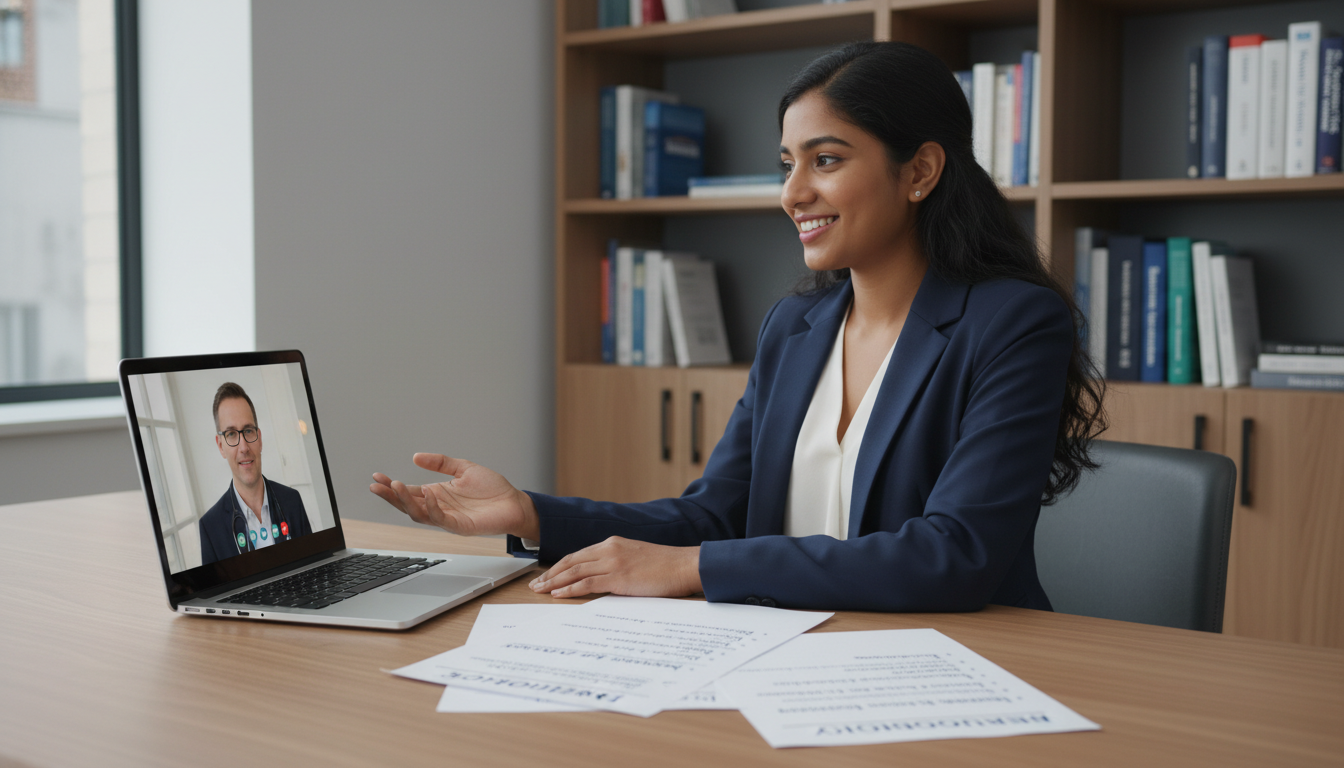
Many neurology programs now use virtual or hybrid formats. At least a week before:
- Test internet stability, camera, and microphone.
- Use a neutral background: plain wall or tidy bookshelf; avoid clutter.
- Ensure good lighting: light source in front of you, not behind.
- Position your camera at eye level and practice looking at the camera, not the screen.
Have ready:
- Printed or digital copy of your CV and personal statement
- Program notes and your pre-written questions
- Pen, notebook, and a glass of water
Plan for time zone differences and log in 10–15 minutes early.
2. Professional Attire and Non-Verbal Communication
Dress as you would for an in-person interview:
- Suit or blazer in neutral colors (navy, black, gray)
- Simple shirt or blouse; avoid loud patterns or excessive jewelry
- Clean, tidy appearance; minimal perfume or cologne
Practice:
- Sitting upright but relaxed
- Nod occasionally and show engagement
- Smile naturally—but don’t force it
For in-person interviews, confirm:
- Exact address and parking/public transport options
- Travel times (consider US traffic patterns if you are unfamiliar)
- Weather-appropriate clothing (coat, umbrella, comfortable shoes for hospital tours)
3. Handling Stress and Maintaining Performance Across Many Interviews
Pre-interview season can be exhausting. To sustain performance:
- Create a routine:
- Sleep schedule that respects your interview time zones
- Light exercise to reduce anxiety
- Short breathing or mindfulness exercises before each interview
- Schedule realistically: avoid booking two high-stakes interviews back-to-back on the same day if possible.
- After each interview:
- Take brief notes on impressions, strengths/weaknesses of the program, and key people you met.
- Reflect on which answers went well and which you want to refine.
Avoid excessive post-interview rumination. Focus instead on improving for the next one.
Step 6: Ethical Follow-Up and Ranking Strategy
While not strictly “pre-interview,” planning your post-interview strategy ahead of time reduces anxiety and keeps you focused.
1. Thank-You Emails and Professional Communication
Most neurology programs do not require thank-you notes, but polite, concise messages are acceptable if you feel they add value.
If you choose to send them:
- Within 24–72 hours
- Keep to 1–2 short paragraphs
- Mention a specific conversation or program feature you appreciated
- Avoid making unrealistic promises (“I will rank you #1”)
Never pressure programs for ranking information. Respect NRMP rules and US norms.
2. Ranking with the Perspective of a Non-US Citizen IMG
As you approach your neuro match list:
- Consider visa support as a major factor; a program that cannot sponsor the visa you need is not viable.
- Weigh:
- Clinical volume and diversity of cases
- Subspecialty exposure in your areas of interest
- Supportive culture and evidence of success for other IMGs
- Geographic preferences, but only after training and visa considerations
Rank in order of your true preference, not where you think you are most likely to match; the algorithm favors applicant preference. However, do not rank programs you cannot or will not attend (e.g., visa incompatibility, major personal constraints).
FAQs: Neurology Residency Pre-Interview Preparation for Non-US Citizen IMGs
1. As a non-US citizen IMG, will programs ask about my visa status during the interview?
Yes, many will. It’s appropriate and common. Prepare a clear, succinct explanation of:
- Your current status (e.g., outside the US, on B1/B2, F-1, etc.)
- What visa you are eligible for (often J-1 via ECFMG; sometimes H-1B if you meet requirements)
- Any previous visa experience in the US
You don’t need to be an immigration expert, but you should demonstrate that you understand the basics and are proactive about your situation. Avoid asking programs to bend rules; instead, ask them to clarify their standard policy.
2. How much neurology knowledge do I need to show during the residency interview?
You should demonstrate:
- Solid understanding of common neurologic presentations and diagnostic approaches
- Ability to localize lesions at a basic level
- Familiarity with key emergencies (stroke, status epilepticus, acute confusion, neuromuscular respiratory failure)
You are not expected to recite guidelines in detail, but talking through a logical approach is crucial. Reviewing a good neurology handbook and your clinical notes in the weeks before interviews is highly recommended.
3. What if my US clinical experience in neurology is limited?
Many foreign national medical graduates face this. Focus on:
- Maximizing and clearly describing the neurology exposure you do have: home-country rotations, electives, observerships, tele-rotations, research.
- Showing self-directed learning: online neurology courses, conferences, journal clubs.
- Demonstrating that you have seen enough neurology to make an informed decision and that you are committed to staying in the field long term.
During interviews, avoid sounding apologetic. Instead, emphasize your eagerness to learn and your proven ability to adapt quickly.
4. How can I stand out positively as a non-US citizen IMG during neurology interviews?
You stand out by combining:
- A compelling, coherent narrative about your path to neurology and to the US
- Evidence of longitudinal commitment to neurology (research, electives, clinical experiences)
- Excellent communication skills and professionalism, adapted to US norms
- Thoughtful, program-specific questions that show you did your homework
- A clear understanding of your visa reality and a realistic, mature plan for your neurology career
When your story, preparation, and presentation align, you move from being “an IMG applicant” to “a strong neurology candidate who happens to be a non-US citizen IMG”—and that is exactly where you want to be for a successful neuro match.