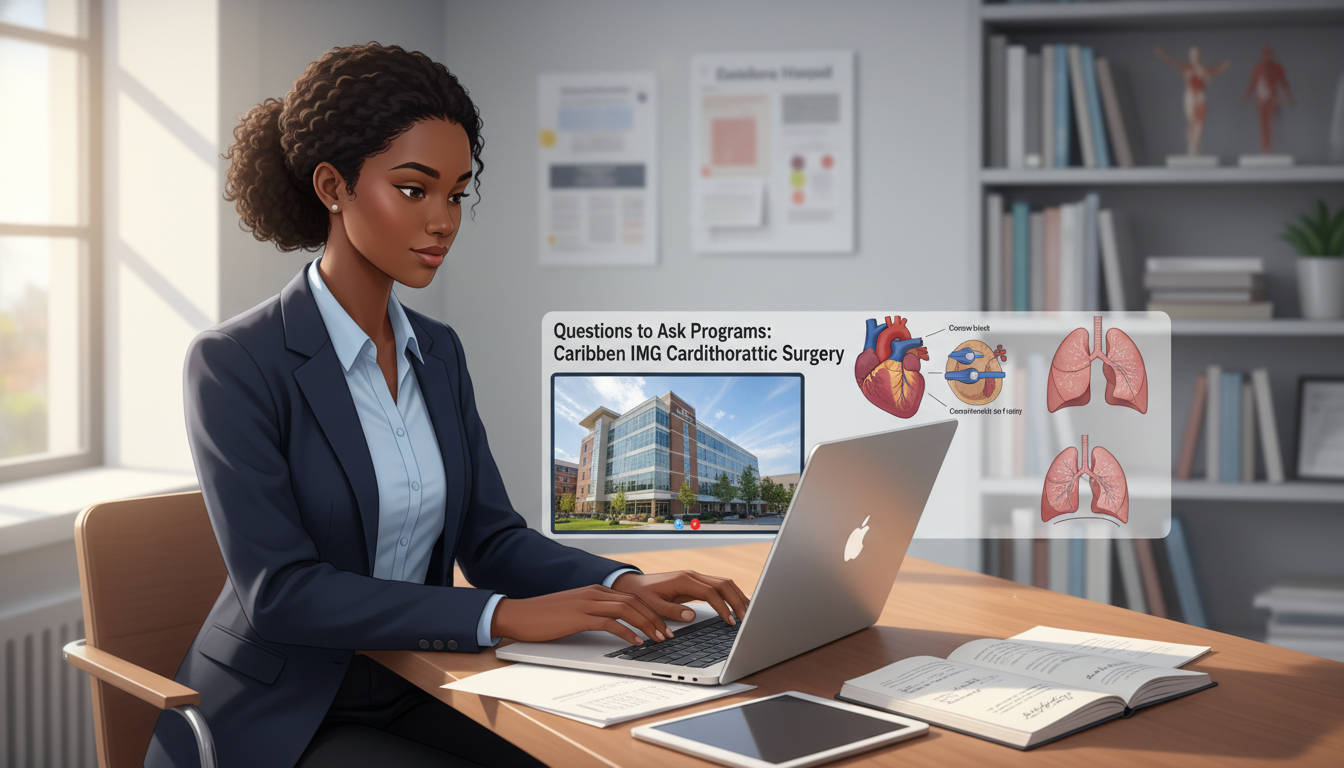
Why Your Questions Matter as a Caribbean IMG in Cardiothoracic Surgery
As a Caribbean IMG pursuing cardiothoracic surgery, the questions you ask during interviews can significantly influence how programs perceive you—and how you decide which program is right for you.
Programs will assume you know how competitive cardiothoracic surgery and heart surgery training are. What distinguishes you is how thoughtfully you explore:
- How they train surgeons (depth of operative exposure, autonomy, outcomes)
- How they support IMG success (especially Caribbean graduates)
- How you will be prepared for fellowships, boards, and academic careers
- How you will be integrated into the team and protected from bias
Thoughtful, specific questions signal maturity, insight into the specialty, and genuine interest in that program—not just “any” cardiothoracic surgery residency.
This guide focuses on questions to ask programs as a Caribbean IMG interested in cardiothoracic surgery. Use it to construct your own personalized list, not as a verbatim script.
Strategy: How to Approach Asking Questions
Before we dive into specific questions, you need a strategy. Strong questions are:
- Specific to cardiothoracic surgery
- Tailored to the program
- Insightful about IMG realities and challenges
- Forward-looking toward your long-term goals (fellowship, research, academic vs. community practice)
When You’ll Use These Questions
You’ll get multiple opportunities:
- Residency interview day Q&A (faculty, current residents, program director)
- Meet-and-greet sessions (pre- or post-interview)
- Virtual second looks or open houses
- Email follow-ups with program coordinators or faculty
Prioritize different question types for different people:
- Program Director (PD): Vision, support for IMGs, training structure, major outcomes.
- Cardiothoracic faculty: Operative exposure, complexity of cases, mentorship, fellowships.
- Residents/fellows: Day-to-day culture, workload, reality of call, “hidden curriculum.”
- Program coordinator: Logistics, visa issues, onboarding, housing, scheduling details.
General Principles for Caribbean IMGs
As a Caribbean graduate, you should deliberately clarify:
IMG Track Record
- Do they routinely rank and match IMGs?
- How do their Caribbean medical school residency outcomes look, especially in surgery?
Visa & Licensing Support
- J-1 or H-1B availability
- Help with state licenses, ECFMG-related timing, and paperwork.
Preparation for Highly Competitive Fellowships
- Thoracic, congenital, and advanced cardiac fellowships
- How the program helps IMGs overcome “pedigree bias.”

Core Questions for Program Directors (and How to Use Them)
The PD conversation is where you align your goals with the program’s mission. Approach this as a professional dialogue, not an interrogation. Choose a handful (4–6) that fit your priorities and adjust based on how the conversation flows.
1. Program Philosophy, Case Mix, and Training Model
Questions to ask:
- “How would you describe the philosophy of your heart surgery training? Is the focus more on high-volume cardiac cases, broader thoracic exposure, or balanced cardiothoracic training?”
- “What does a typical operative case mix look like for residents across PGY years—coronary, valve, aortic, congenital, ECMO, lung resections?”
- “How early in training do residents start performing meaningful parts of cardiothoracic operations, and how is autonomy progressed and assessed?”
Why this matters (especially for Caribbean IMGs):
You need programs that will genuinely train you as an independent surgeon, not treat you as extra labor. Programs differ: some emphasize cardiac, some thoracic, some aortic/structural heart, and some strongly integrate critical care.
Red flags:
- Vague answer about how autonomy increases
- No clear structure to progressive responsibility
- “Our fellows do most of the big cases” without clarifying resident role
2. Track Record with Caribbean IMGs and Visa Support
Questions to ask:
- “Can you share examples of recent graduates who were international medical graduates, particularly from Caribbean schools? How have they fared in fellowships and early careers?”
- “What has been the experience specifically with SGU residency match applicants or other Caribbean medical school residency candidates in your program?”
- “What types of visas do you typically sponsor (J-1, H-1B), and are there any institutional limitations I should be aware of?”
Why this matters:
As a Caribbean IMG, you must ensure that:
- The program is genuinely IMG-friendly and not interviewing you to “fill the list.”
- Visa constraints won’t prevent your ranking or contract.
- There’s a proven pipeline of IMGs who have moved on to competitive cardiothoracic surgery residency and fellowship positions.
Green flags:
- PD can name specific IMG graduates and their advanced training or jobs.
- Clear, consistent processes for J-1/H-1B with institutional support.
3. Outcomes: Boards, Fellowships, and Career Support
You’re not just training to be a competent surgeon—you’re also aiming at an elite, highly competitive subspecialty.
Questions to ask:
- “How do your graduates typically distribute between academic versus community practice, and between cardiac, thoracic, and congenital paths?”
- “What has been your recent match rate into cardiothoracic surgery fellowships or advanced heart surgery training programs, and do IMGs achieve similar outcomes to U.S. grads?”
- “Can you describe the support residents receive for fellowship applications (letters, networking, mentorship, dedicated time)?”
Follow-up:
If they mention successful outcomes, ask: “What do you think your program does particularly well that helps residents secure strong fellowships?”
Why this matters:
Programs that are proud of their outcomes will have data, not anecdotes. For a Caribbean IMG, knowing that prior IMGs have successfully entered cardiothoracic fellowships is extremely reassuring.
4. Operative Autonomy and Critical Care Experience
Cardiothoracic surgery residents must become both technically skilled surgeons and sophisticated intensivists.
Questions to ask:
- “How is critical care training structured—do residents meaningfully manage postoperative hearts, ECMO, and mechanical circulatory support, or is that mostly intensivist-driven?”
- “By graduation, what key index cardiac and thoracic operations do residents typically perform as primary surgeon, and how is this tracked?”
- “How do you reconcile operative autonomy with patient safety and attending oversight in complex heart surgery cases?”
Why this matters:
You want both volume and real responsibility. Some programs “advertise” high case logs, but the trainee’s actual role is limited.
5. Program Culture, Wellness, and Addressing Bias
As a Caribbean IMG, you may face unconscious bias related to where you trained.
Questions to ask:
- “How would you describe the culture here, especially in terms of supporting diversity—educational background, nationality, and gender—in a demanding surgical environment?”
- “How does the program address concerns when residents feel they’re treated differently based on background or are struggling with bias or microaggressions?”
- “What are the most common challenges residents face here, and how does the program help them navigate those challenges?”
Why this matters:
You need to know if this is a place where you will be treated as a valued colleague, not an outsider from ‘a Caribbean school.’
Questions for Cardiothoracic Faculty: Digging into the Heart of Training
Faculty give crucial insight into real operative training, innovation, and mentorship. Tailor questions to their expertise (aortic, congenital, thoracic, transplant).
1. Subspecialty Exposure and High-Complexity Cases
Questions to ask:
- “For residents interested in advanced heart surgery training—such as transplant, mechanical circulatory support, and complex aortic surgery—what opportunities exist to be involved in those cases as primary operators or first assistants?”
- “How much exposure do residents get to minimally invasive and structural heart procedures, such as TAVR, MitraClip, robotic CABG or lung resections, and hybrid procedures?”
- “Are there protected rotations on specific services (transplant, congenital, thoracic oncology), and how do residents compete for those experiences?”
Why this matters:
If you aim for a top-tier cardiothoracic surgery residency or fellowship, depth in modern techniques (structural, minimally invasive, transplant) is a major advantage.
2. Mentorship, Research, and Academic Development
Questions to ask:
- “How are residents paired with mentors, especially those interested in cardiothoracic surgery early on?”
- “What types of research projects are residents commonly involved in—clinical outcomes, basic science, translational, database studies—and how productive are they in terms of abstracts and publications?”
- “For an IMG with fewer initial connections in U.S. academic medicine, how do you help them integrate into research networks, conferences, and professional societies?”
Why this matters:
As a Caribbean IMG, you may start with fewer preexisting connections than U.S. MDs. You want a program that is comfortable actively integrating you into its academic ecosystem.
3. Feedback, Evaluation, and Resident Development
Questions to ask:
- “How do you provide constructive feedback in the OR to help residents grow technically in cardiothoracic surgery?”
- “Are there structured technical skills assessments (sim labs, wet labs, or simulation sessions) specific to cardiac and thoracic procedures?”
- “How does the faculty help a resident who might be struggling with a particular technical skill or knowledge gap—what does remediation look like in this program?”
Why this matters:
A supportive learning environment is critical, especially if your early training came from a Caribbean setting with different resource levels or case exposure.
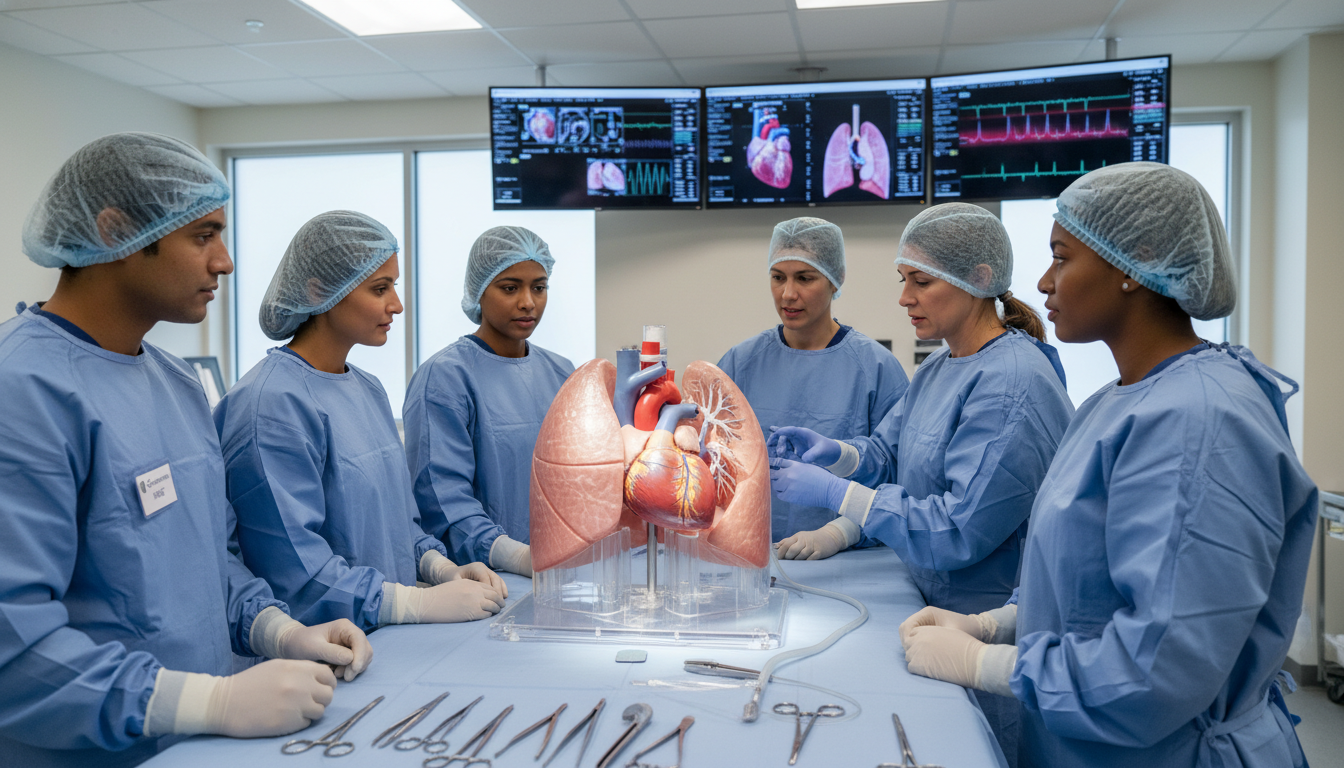
Questions for Residents and Fellows: The Unfiltered Reality
Residents and fellows will give you your most honest look at the program. This is where you confirm whether what you heard from leadership matches daily life.
1. Daily Workflow, Call, and Operative Time
Questions to ask:
- “Can you walk me through a typical day on the cardiothoracic service for a junior vs. senior resident?”
- “How is call structured—home vs. in-house, frequency, and typical overnight workload in the ICU and OR?”
- “How much of your week is actually spent in the OR vs. ICU vs. floor/clinic, and does that match what you expected when you matched here?”
For a Caribbean IMG perspective:
- “As someone who may be newer to the U.S. hospital system, do you feel there is enough support early on to get comfortable with workflows, electronic medical records, and expectations?”
2. Culture, Team Dynamics, and Treatment of IMGs
Questions to ask:
- “How would you describe the culture between attendings, fellows, and residents—more collaborative, or more hierarchical?”
- “Are there current or recent residents who are IMGs or from Caribbean schools? How have they been integrated and supported?”
- “Do you feel the program treats IMG residents differently in any way—positive or negative?”
Listen closely for hesitation, pauses, or “careful” answers. Consider following up with:
“What’s one thing you wish you had known about the program before you started?”
3. Autonomy and Graduating Competence
Questions to ask:
- “By the time chiefs graduate, do you feel they are truly ready to practice independently in cardiothoracic surgery, or do most feel they need extensive fellowship time?”
- “Can you share examples of cases where chiefs are the primary surgeon from incision to closure?”
- “Do you feel that fellows, if present, enhance or limit your operative experience?”
Why this matters:
Programs with many fellows may unintentionally limit resident primary surgeon opportunities—get concrete descriptions, not general reassurances.
4. Work-Life Integration and Wellness
Cardiothoracic surgery is demanding, but it should not be relentlessly toxic.
Questions to ask:
- “What does wellness support look like in practice, beyond what’s listed on the website?”
- “How does the program respond when residents are overwhelmed, burned out, or have personal emergencies?”
- “Are there any unspoken expectations about ‘face time’ or staying late even when work is done?”
As a Caribbean IMG, you might feel extra pressure to prove yourself. You need to understand if the system will support you when you need help.
Practical Tips: Customizing and Delivering Your Questions
1. Do Your Homework First
Before asking anything, review:
- Program website (rotations, case numbers, faculty interests)
- NRMP and FREIDA data (if available)
- Any publicly available data about their cardiothoracic surgery residency or fellowship
Avoid asking things that are clearly answered on the website; instead, build deeper questions from that information. For example:
Instead of:
“Do you have research opportunities?”
Ask:
“I saw on your website that your faculty publish extensively in aortic pathology and transplant outcomes. How are residents typically integrated into those research projects, and do IMGs participate at similar rates?”
2. Prioritize Based on Time
You may only get:
- 5–10 minutes with the PD
- 15–20 minutes with a faculty member
- 30–45 minutes with residents (group Q&A)
Prepare:
- Top 3–4 questions for PD
- Top 3 questions for faculty
- Top 4–5 questions for residents
Keep them concise but targeted. If they answer part of your question before you ask, pivot and ask a follow-up instead of repeating.
3. Ask Professional, Not Confrontational, Questions
Some important topics (like bias, workload, and IMG support) can be sensitive. Frame your questions as “seeking understanding,” not challenging:
- Instead of: “Do you treat IMGs differently here?”
Try: “How has the program supported IMG residents in navigating any unique challenges they might face, whether cultural, visa-related, or educational?”
4. Take Notes Immediately After
Right after each interview day:
- Write what you heard about:
- IMG support
- Case volume and autonomy
- Culture and wellness
- Fellowship outcomes
- Jot down specific phrases that made you feel positive or uneasy.
When it’s time to make your rank list, these notes will matter far more than generic impressions like “seemed nice.”
5. Sample “Interview Questions for Them” List
Here is a compact sample list that incorporates key themes—use this to build your personal document:
- “How do you view the role of IMGs, including Caribbean graduates, in your program’s mission and resident class composition?”
- “What distinguishes the cardiothoracic or heart surgery training residents receive here compared with other programs of similar size?”
- “What have your recent graduates gone on to do in terms of cardiothoracic surgery fellowships and academic versus community practice?”
- “How are residents’ operative responsibilities progressed, and how do you ensure they graduate as confident, independent surgeons?”
- “What mentorship structures are in place for residents interested in research, especially those who may not have U.S.-based mentors from medical school?”
- “From a resident’s perspective, what’s the most challenging part of working here—and what’s the best part?”
You can adapt these to highlight your interests in cardiothoracic surgery specifically.
Special Considerations for SGU and Other Caribbean Graduates
If you’re from a major Caribbean school like SGU, AUC, or Ross, you can strategically reference your background when asking about program experience with Caribbean IMGs.
1. Tying Your Background to Their History
You might say:
“As an SGU graduate, I know many of our alumni have successfully matched into surgery and subspecialties. What has been your experience with SGU residency match graduates or other Caribbean-trained residents in this program, especially in terms of performance and fellowship placement?”
This does several things:
- Shows you’re aware of the Caribbean medical school residency context.
- Signals pride in your background rather than defensiveness.
- Invites the PD or faculty to share concrete success stories.
2. Clarifying Any Concerns About Training Background
If you sense subtle concern about Caribbean training, you can proactively address it:
“Coming from a Caribbean school, I’m very aware that my clinical environments have varied. How do you evaluate and support residents from diverse training backgrounds to ensure they all reach the same high standard in cardiothoracic surgery?”
This shows self-awareness and positions you as someone committed to excellence, not just “hoping to get in.”
Frequently Asked Questions (FAQ)
1. How many questions should I ask each interviewer?
Aim for 3–4 well-crafted questions per interviewer, depending on time. It’s better to ask fewer, deeper questions than many superficial ones. If someone gives very long answers, ask 1–2 thoughtful follow-ups instead of rushing through a list.
2. Are there any questions I should avoid?
Avoid:
- Questions clearly answered on the website (“Do you have a CT fellowship?”)
- Salary/contract details in early interviews (save for coordinator or later if needed)
- Anything that suggests lack of commitment (“How easy is it to moonlight a lot?”)
- Overly aggressive questions (“Why is your board pass rate only X%?”). Instead, frame concerns as curiosity: “I noticed board pass rates have varied over the years; how has the program responded to that?”
3. When should I ask visa-related questions?
You can ask high-level visa questions with the PD or coordinator during or right after your interview:
- “Does the program routinely sponsor J-1/H-1B visas for residents?”
- “Are there any institutional constraints that could affect an IMG applicant being ranked?”
Detailed immigration logistics (forms, timing, fees) are best left for the program coordinator once you have an offer or are seriously considering ranking the program.
4. Can I email follow-up questions after the interview?
Yes, especially if they are:
- Clarifying questions about training structure, fellowship outcomes, or IMG support
- Brief and specific (1–3 questions per email)
- Directed to the appropriate person (PD vs. coordinator vs. faculty)
You might write:
“Thank you again for the opportunity to interview. I had two brief follow-up questions about resident involvement in transplant cases and IMG mentorship that I didn’t get to ask during the interview day…”
This demonstrates continued interest and professionalism.
By preparing thoughtful, targeted questions tailored to cardiothoracic surgery and your status as a Caribbean IMG, you transform interviews from one-sided evaluations into two-way conversations. That not only helps programs see you as a mature, insightful future colleague—it also helps you choose a training environment where you can truly become the cardiothoracic surgeon you aspire to be.