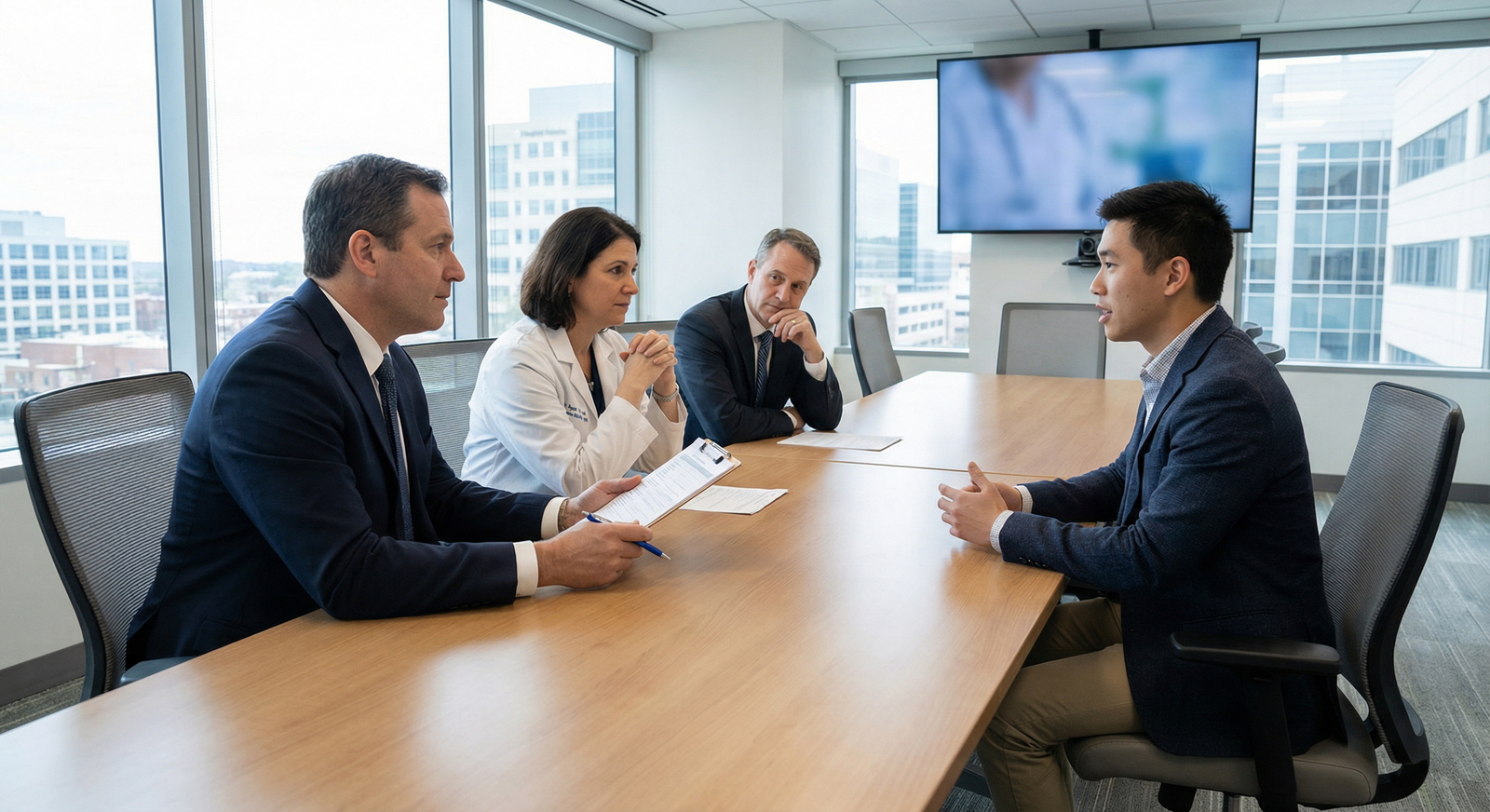
As a DO graduate aiming for neurosurgery, your interviews and pre‑/post‑interview communications are not just about answering questions well—they’re about asking smart, strategic questions yourself. Thoughtful questions signal maturity, insight into the demands of neurosurgery residency, and a clear understanding of what you need to thrive as an osteopathic trainee in a highly competitive, research‑intense specialty.
Below is a comprehensive guide to questions to ask programs—organized by whom you’re speaking with (program director, residents, faculty, etc.) and what you’re trying to learn (training quality, culture, support for DOs, fellowship prep, etc.). The intent is to help you move beyond generic “interview questions for them” and into focused, neurosurgery‑specific conversations that will meaningfully inform your rank list.
Understanding the Landscape as a DO Graduate in Neurosurgery
Competing for a neurosurgery residency as a DO graduate has become more feasible with the single accreditation system, but there are still unique factors you should probe during interviews:
- How programs view DO applicants (e.g., board score expectations, osteopathic letters, COMLEX vs USMLE)
- Whether DO graduates have matched and succeeded there in the past
- How supportive the institution is of osteopathic training and differences in background
- How well the program prepares its graduates for complex brain surgery residency cases and top fellowships
You should tailor your questions to ask residency programs to clarify these issues early and directly, while staying professional and confident.
Key principle:
Every question should have a purpose—either:
- To help you determine fit and training quality, or
- To demonstrate your insight, preparation, and authenticity as a future neurosurgeon.
Core Questions to Ask the Program Director (and Why They Matter)
Program directors (PDs) shape the program’s philosophy, resident selection, and culture. This is where you focus on training quality, expectations, outcomes, and how DO graduates fit into their system.
1. DO/MD Dynamics and Selection Philosophy
These questions directly address your status as a DO graduate without sounding defensive or insecure.
Questions to Ask the Program Director:
- “How have DO graduates historically performed in your neurosurgery residency, and what qualities have made them successful here?”
- “Do you view COMLEX and USMLE scores differently when evaluating DO applicants, and what benchmarks do you consider most predictive of success in neurosurgery training?”
- “Have prior DO graduates from your program gone on to competitive fellowships or academic positions? Could you share some examples?”
- “Are there any structural differences in how you onboard DO graduates—for instance, support in research methodology, transitioning from osteopathic to allopathic documentation systems, or EMR workflows?”
What you’re learning:
Whether they have real experience with DOs, whether that experience is positive, and how thoughtfully they’ve integrated DO trainees into the program. This is critical for any DO graduate residency applicant.
2. Program Structure, Case Volume, and Neurosurgical Breadth
Neurosurgery is a long, intense residency. You need to understand the nuts and bolts of how you will be trained.
Questions:
- “How is operative experience structured from PGY‑1 through PGY‑7, and how early do residents start taking lead in the operating room?”
- “What is your philosophy on graduated autonomy in complex brain surgery and spine surgery cases?”
- “How do you ensure residents get balanced exposure to cranial, spine, functional, endovascular, and pediatric neurosurgery?”
- “Are there dedicated rotations or partnerships for cases that are less common at your center, such as pediatric neurosurgery, skull base, or epilepsy surgery?”
- “Do residents meet or exceed ACGME minimum case requirements early, or does it come later in training?”
What you’re learning:
If you’ll graduate as a well-rounded neurosurgeon with strong operative skills, not just clinical knowledge.
3. Research Expectations and Support
Most neurosurgery programs expect substantial academic productivity. You need clarity, particularly if you’re still building your CV.
Questions:
- “What are the research expectations for residents by graduation—publications, presentations, or specific scholarly output?”
- “Is there a protected research year? If so, at which PGY level, and how structured is it?”
- “Can you describe the types of ongoing research projects residents participate in (e.g., basic science, clinical outcomes, translational, neuromodulation)?”
- “How are DO residents supported if they’re less experienced in research methods at the start of residency?”
- “What infrastructure is available—biostatisticians, research coordinators, IRB support—to help residents complete projects efficiently?”
What you’re learning:
Whether the program can realistically help you reach your academic goals and remain competitive for fellowships or academic positions.
4. Outcomes, Fellowships, and Career Trajectories
A strong neurosurgery residency should open doors across academia, private practice, and subspecialty fellowships.
Questions:
- “Where have your graduates matched for fellowship over the past 5–10 years, and what proportion pursue subspecialty training?”
- “How does the program support residents interested in complex spine, vascular/endovascular, functional, or pediatric neurosurgery?”
- “Do graduating residents feel well prepared to practice independently right after residency if they choose not to pursue fellowship?”
- “How do you help residents decide between academic and private practice paths?”
What you’re learning:
Concrete evidence of program strength through alumni outcomes.
5. Program Culture, Wellness, and Support
Neurosurgery is demanding everywhere, but culture can make or break your experience.
Questions:
- “How would you describe your program’s culture—what do you think sets it apart from other neurosurgery programs?”
- “In what ways does the program support resident wellness, particularly during intense stretches like chief year or high‑volume call rotations?”
- “How do you respond when a resident is struggling—operatively, academically, or personally?”
- “Have you had residents leave the program? What did you learn and change from those experiences?”
These are high‑yield interview questions for them that show you understand the rigors of neurosurgery without suggesting you’re avoiding hard work.

Smart Questions to Ask Residents: Real‑Life Training and Culture
Residents give you the clearest window into what life is actually like. This is where you drill into day‑to‑day reality, hidden curriculum, and DO‑specific dynamics.
1. Day‑to‑Day Life and Workload
Questions:
- “What does a typical day look like for a PGY‑1, PGY‑3, and chief resident here?”
- “How often do you stay beyond your scheduled hours, and what usually drives that—OR cases, consults, documentation?”
- “How manageable is the call schedule, and how does it change throughout the years?”
- “Do you feel you have enough time to read, rest, and maintain at least some life outside the hospital?”
What you’re learning:
True workload, call intensity, and whether duty hours are respected in practice.
2. OR Experience and Teaching
Residents will be honest about how much you really get to operate.
Questions:
- “At what point did you feel you were consistently primary surgeon on cases, especially for common brain and spine procedures?”
- “How do attendings balance teaching with efficiency in the OR—is there room for residents to struggle and learn?”
- “Are there particular attendings who are especially strong surgical teachers? How do residents maximize time with them?”
- “How is feedback on operative performance given—formally, informally, or only at evaluations?”
What you’re learning:
Whether this is a true brain surgery residency that will turn you into a confident operator, not just an observer.
3. DO Friendliness and Inclusion
As a DO graduate, you want an environment that values you equally.
Questions (especially if current or recent DO residents are present):
- “Have DO residents trained here? How has the program supported them?”
- “As a DO, did you feel you had to prove yourself more, or was the playing field fairly level once you started?”
- “Have there been any challenges related to board exams, credentialing, or perception from other departments as a DO?”
- “Would you, as a DO graduate, choose this program again knowing what you know now?”
If there are no current DO residents, ask MD residents:
- “Have you worked with DO residents or fellows in neurosurgery or other departments? How are they viewed here?”
What you’re learning:
The lived experience of DOs in that institution—crucial for assessing fit for an osteopathic residency match in neurosurgery.
4. Mentorship, Support, and Feedback
Questions:
- “How easy is it to find mentors who actively invest in your development?”
- “Are there formal mentoring systems pairing juniors with seniors or attendings?”
- “Do you feel the program leadership listens when residents have concerns?”
- “Have you ever seen a resident struggle here? How did the program handle it?”
What you’re learning:
Whether this is a place that coaches you to success or just expects you to survive.
5. Research and Fellowship Preparation
Questions:
- “How realistic is it to be productive in research while balancing service and call?”
- “Do residents get time blocked out for research projects or a dedicated year?”
- “What practical help do you get—data access, statisticians, mentorship in writing manuscripts?”
- “For graduates who matched top fellowships, what did they do differently here that helped them stand out?”
What you’re learning:
If the program’s research expectations are truly supported by time, infrastructure, and mentorship—or just lip service.
Targeted Questions for Faculty and Subspecialty Attendings
When meeting specific faculty—vascular, spine, functional, tumor, pediatrics—your questions should show subspecialty interest while gathering strategic intel.
1. Subspecialty Training and Autonomy
Questions:
- “How is resident involvement structured within your subspecialty—do residents primarily observe early on or get hands‑on experience quickly?”
- “For complex cases in your field, what kinds of responsibilities do senior residents typically have by PGY‑5 or PGY‑6?”
- “If I were to develop a strong interest in your subspecialty, how would you recommend I structure my research, electives, and mentorship here?”
What you’re learning:
How subspecialty skills are truly taught—not just advertised.
2. Academic and Career Development
Questions:
- “How do you help residents develop a focused academic niche—whether clinical outcomes, translational research, or basic science?”
- “What role do faculty play in connecting residents to national neurosurgical societies, committees, or visiting rotations?”
- “How supportive is the department if a resident wants an away rotation or external fellowship in a very specialized area?”
What you’re learning:
The seriousness of the department’s academic and networking support.
3. Faculty Expectations and Feedback Style
Questions:
- “What qualities do you value most in residents you enjoy working with in the OR and clinic?”
- “How do you typically give feedback—on the spot in the OR, after cases, or at defined intervals?”
- “What have your most successful recent graduates done differently during residency?”
What you’re learning:
How to thrive under their supervision—and whether this aligns with your learning style.
Tactical Question Lists by Setting: Before, During, and After Interview Day
To keep your questions organized, it’s helpful to build a small “question bank” you can adapt in real time.
Before the Interview: Clarifying Logistics and Preparation
Usually via email or coordinator:
- “Will there be opportunities to speak one‑on‑one with current residents, including any DO graduates, during the interview day?”
- “Will we receive a schedule or information packet about rotations, call structure, and research before interview day?”
- “Is there a pre‑ or post‑interview dinner with residents, and is this considered part of the formal evaluation?”
These ensure you show up prepared and know when you’ll get time for candid conversations.
During the Interview: High‑Yield, High‑Signal Questions
Focus here on questions that show insight and help you truly evaluate fit:
To the Program Director
- “If you could change one thing about the program today, what would it be and what are you doing to address it?”
- “What traits have you seen in residents who have thrived here, and what traits have struggled in this environment?”
To Residents
- “What surprised you most about this program after you started—good or bad?”
- “If you had to decide again today, would you still choose this neurosurgery residency, and why?”
To Faculty
- “How would you describe the relationship between faculty and residents—in the OR, in conferences, and socially?”
- “What recent changes has the department made to improve resident training or well‑being?”
After the Interview: Follow‑Up and Second‑Look Questions
If you’re strongly considering a program, a second‑look visit or follow‑up email is an opportunity to refine your understanding.
Good follow‑up questions:
- “You mentioned ongoing efforts to [X]. How has that changed resident experience this year?”
- “Could you share more details about the research infrastructure for [specific area you discussed] and how a resident would plug into that?”
- “I’m a DO graduate with a strong interest in [subspecialty]. Are there particular rotations or projects you’d recommend if I match here?”
These demonstrate continued, sincere interest and help you differentiate programs when creating your rank list.
How to Ask Questions Strategically (Not Just Reading a Script)
Knowing what to ask program directors and residents is only half the battle; how you ask matters just as much.
1. Prioritize Depth Over Quantity
You don’t need to ask every question above at every program. Instead:
- Choose 3–5 “must‑know” topics per program (e.g., DO support, operative autonomy, research year, culture).
- Ask follow‑up questions based on their responses to create a natural conversation.
- Skip questions that have already been clearly addressed in the info session or website.
2. Avoid Questions with Easy Online Answers
Do not ask:
- “What’s your board pass rate?” (Look it up first; if unclear, ask more nuanced versions like: “How do you support residents who are at risk of failing boards?”)
- “What’s the call schedule?” (If listed online, ask: “How has the call schedule changed recently, and how do residents feel about it?”)
Demonstrate that you’ve done your homework.
3. Show You’re a DO Graduate Who Knows Their Value
As a DO applicant in neurosurgery, you want to project quiet confidence:
Instead of:
- “Do you accept DOs?”
Try:
- “How have DO residents contributed to your program historically, and what qualities have made them stand out?”
You’re not asking for permission to belong—you’re asking for evidence that they recognize your potential and have a track record of supporting it.
4. Tailor Questions to the Conversation
If an attending just spent 10 minutes describing the new hybrid OR:
- “How has the hybrid OR changed resident involvement in endovascular or complex vascular cases? Are there specific milestones residents are expected to achieve there?”
This shows you listen, synthesize, and think like a future colleague.
Putting It All Together: Sample Question Sets by Priority
Below are example “packs” of questions tailored to specific goals. You can adapt them for each program.
A. If Your Priority Is Operative Experience
- “How early do residents start taking the lead in the OR for common cranial and spine cases?”
- “Have there been any concerns about residents achieving enough case volume in certain areas, and how have you addressed that?”
- “How do chiefs feel about their surgical readiness on graduation?”
- “For a DO graduate coming in, what can I do early on to position myself for robust operative experience?”
B. If Your Priority Is Academic/Research Career
- “What distinguishes residents here who match highly competitive academic fellowships?”
- “How is protected research time structured, and is there accountability for meeting academic goals?”
- “Are there established collaborations with basic science or engineering departments?”
- “Have DO graduates successfully built academic careers from this program, and what support did they receive?”
C. If Your Priority Is Support for DO Graduates
- “What has the experience been like for prior DO residents in your program?”
- “Are there any institutional or cultural barriers DO grads might face, and how do you mitigate them?”
- “How do you ensure that DO and MD residents have equal access to operative cases, research projects, and leadership roles?”
- “From your perspective, what advantages do DO graduates bring to neurosurgery training?”
FAQs: Questions to Ask Programs for DO Graduate in Neurosurgery
1. Is it appropriate to ask directly about DO acceptance and outcomes during interviews?
Yes. It is entirely appropriate—and important—to ask how DO graduates have performed in the program and where they’ve gone after residency. Phrase it in a forward, professional way: “How have DO residents historically done in your program, and what are some of their career paths?” This frames you as informed and confident, not insecure.
2. How many questions should I ask during a typical 15–20 minute interview?
Aim for 2–4 substantive questions per interviewer, depending on how much they talk. Prioritize depth: one thoughtful question with a follow‑up is better than five superficial ones. If you run out of time, you can always send a brief follow‑up email asking one additional, well‑targeted question.
3. Are there any questions I should avoid as a DO applicant to neurosurgery?
Avoid questions that:
- Sound defensive (“Will I be treated differently as a DO?”) rather than confident (“How have DO residents contributed here?”).
- Could imply you’re primarily focused on lifestyle over training (“How easy is it to get time off?”) without context.
- Are clearly answered on the website.
You can still ask about wellness and balance, but frame it as understanding how residents sustain performance in a demanding specialty.
4. How can I remember and organize my questions across multiple programs?
Create a simple spreadsheet or document with tabs for each program:
- Pre‑interview notes from website/research
- “Must‑ask” questions (3–5 per program)
- Space to jot down responses immediately after the interview
This will help when comparing programs during your osteopathic residency match decision process, especially when you’re ranking multiple neurosurgery residency programs that seem similar on paper.
By approaching interviews with purposefully crafted questions—especially tuned to your identity as a DO graduate and your aspirations in neurosurgery—you’ll not only gather the information you need, but also present yourself as the kind of thoughtful, self‑aware trainee programs want to invest in for seven demanding years of training and beyond.