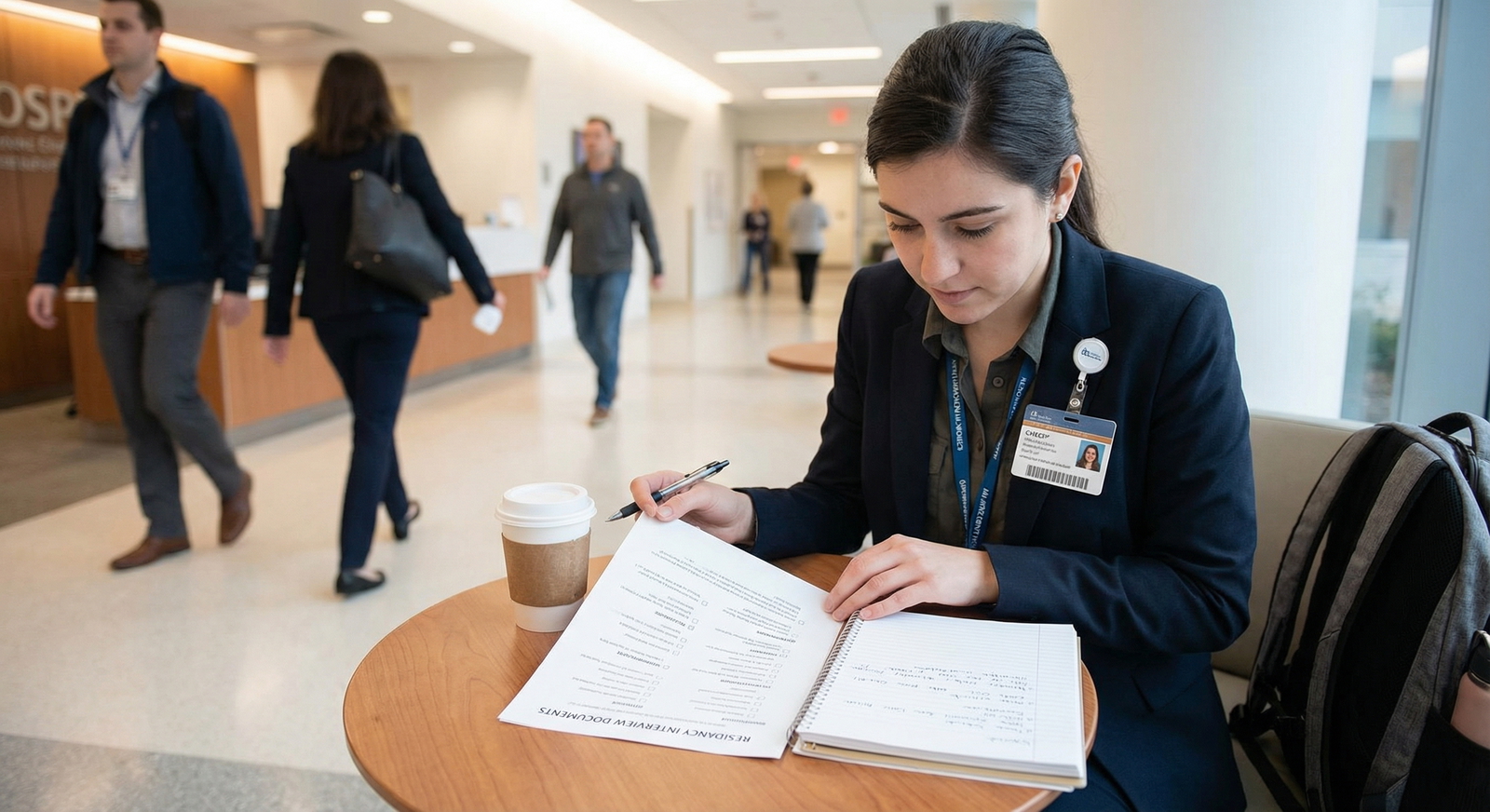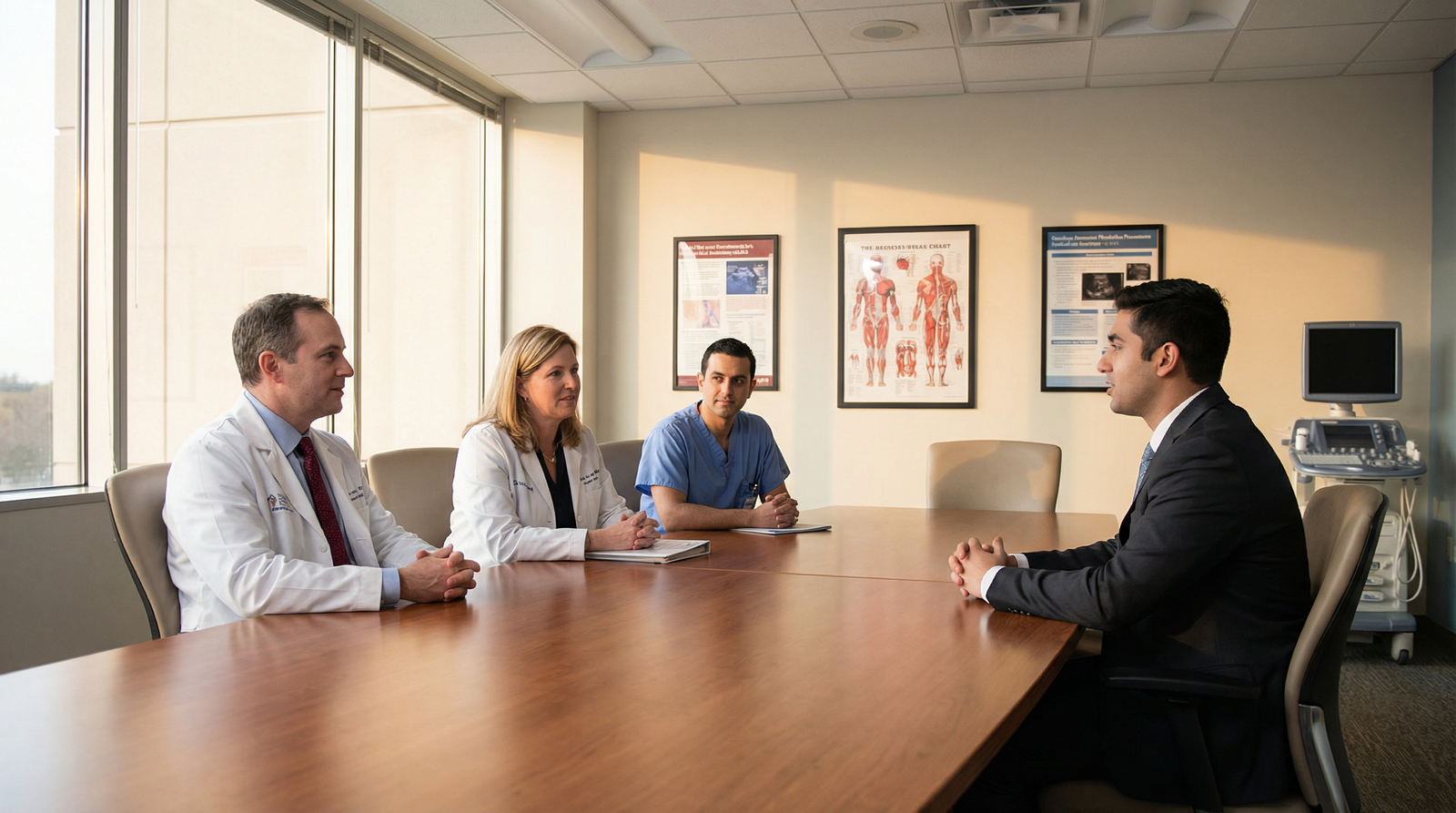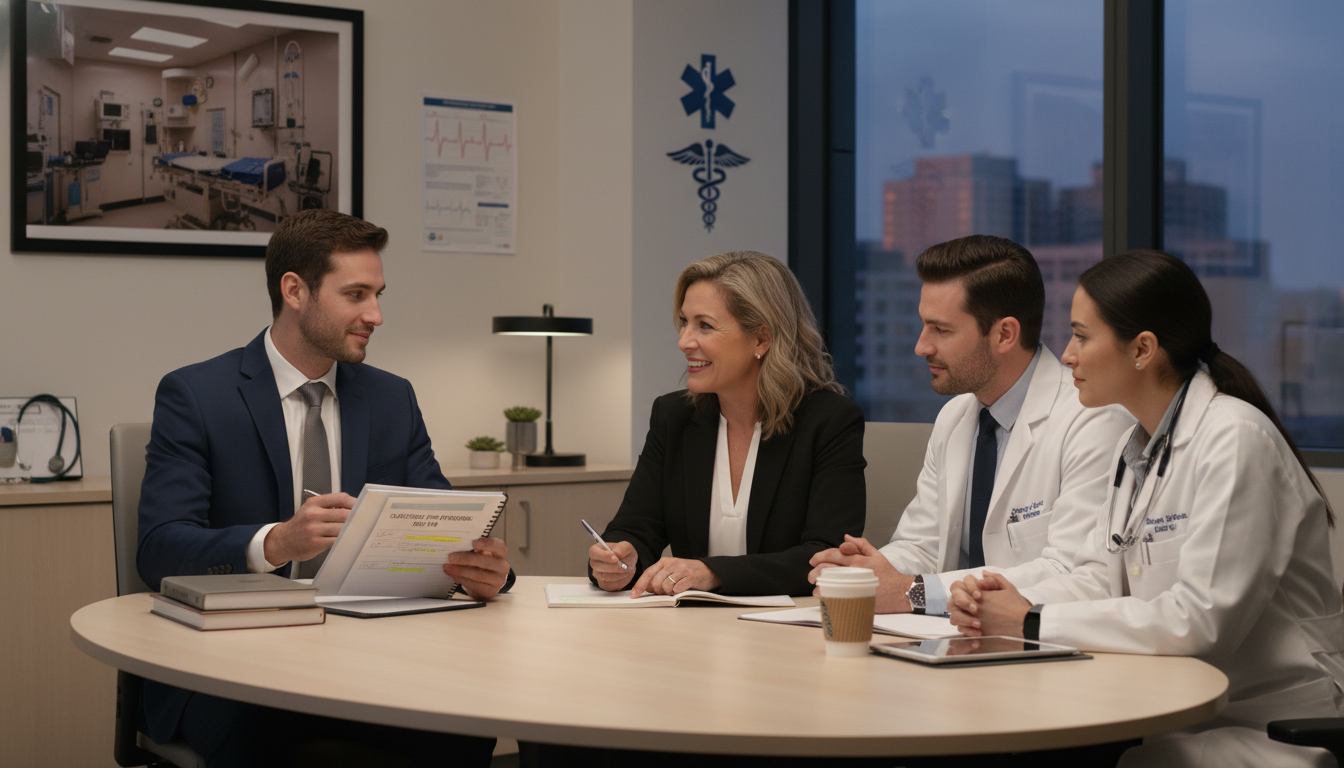
As an MD graduate interested in an Emergency Medicine–Internal Medicine (EM-IM) combined program, the questions you ask programs can be as revealing as anything on your application. Thoughtful, targeted questions show that you understand the unique nature of EM IM combined training and that you are actively assessing fit—not just trying to match anywhere.
This guide is designed to help you, as an allopathic MD graduate residency applicant, create a strategic list of questions to ask residency programs, faculty, residents, and program directors during interviews, open houses, and virtual visits. It also includes examples tailored specifically to Emergency Medicine-Internal Medicine training.
Why Your Questions Matter as an EM-IM MD Graduate
EM-IM combined programs are relatively small, intense, and highly structured. Compared with categorical EM or IM, you’ll need to think more carefully about:
- How the two departments integrate
- How schedules are built
- How dual-board eligibility is supported
- How graduates actually use both skill sets after residency
The questions you ask residency programs demonstrate:
- Maturity: You’re not just asking generic “tell me about your program” questions, but drilling into real training issues.
- Insight into EM-IM: You understand the complexity of five-year combined training and dual identity as an emergency physician and internist.
- Professionalism: You show up prepared, having researched the program and specialty.
- Long-term thinking: You are already considering career pathways, fellowships, and work-life balance in a five-year program.
You should prepare distinct lists of interview questions for them—including residents, faculty, and what to ask the program director specifically—so you can compare programs in a structured way and avoid walking away from an interview thinking, “I wish I had asked about that.”
Core Domains: What You Should Be Trying to Learn
Before writing specific questions, clarify what information actually matters for you as an MD graduate residency applicant to EM-IM combined programs. Most good questions fall into several broad domains:
- Program Structure & Curriculum
- Culture, Support, and Wellness
- Clinical Training & Autonomy
- Graduates’ Outcomes & Career Paths
- Logistics: Scheduling, Locations, and Finances
- Fit for Your Goals (Academic vs. Community, Fellowship, Leadership)
Every question you ask should help you answer at least one of the following for yourself:
- “Will this program train me into the emergency medicine internal medicine physician I want to be?”
- “Can I thrive here personally and professionally for five years?”
- “Will this program give me options, not just one narrow path?”
Key Questions to Ask About EM-IM Program Structure and Curriculum
Because EM IM combined training must satisfy two boards in five years, structure matters enormously. These are some of the most high-yield questions to ask residency leadership and residents.
General Structure and Philosophy
“How is the EM-IM program structured over the five years?”
Ask them to walk you through year by year. Look for clarity on:- Rotations by year
- How often you switch between EM and IM blocks
- Any dedicated EM-IM or ‘hybrid’ rotations (e.g., observation units, ED-based CDU, ED admissions).
“What is the program’s philosophy about combined training?”
You want to hear more than “we satisfy both boards.” Strong answers:- Emphasize building a truly dual-skilled clinician
- Describe how EM and IM both inform your practice
- Mention specific unique EM-IM opportunities
“Where do EM-IM residents fit in the larger residency ecosystem?”
Clarify:- Relationship with categorical EM residents
- Relationship with categorical IM residents
- Whether you are seen and treated as “one of us” in both departments
Board Eligibility, Requirements, and Integration
“How do you ensure EM-IM residents meet both ACGME and board requirements?”
Look for structured tracking:- Formalized curriculum maps
- Regular board prep
- Ongoing evaluation of milestones in both specialties
“How are board review and exam preparation handled for both EM and IM?”
Ask specifically:- Dedicated board review sessions or curricula
- Access to question banks (for both ABEM and ABIM)
- Time off or support around exam dates
“Can you describe any EM-IM–specific conferences, didactics, or journal clubs?”
Well-developed programs may have:- EM-IM case conferences
- Joint morbidity and mortality (M&M) sessions
- Integrated topics like sepsis pathways, resuscitation, or transitions of care

Schedule, Rotations, and Workload
For EM IM combined programs, schedule predictability and rotation design are critical for your sanity.
“How frequently do EM-IM residents switch between EM and IM rotations?”
Some programs alternate every 3–4 months; others have more frequent changes.**“What does a typical month look like on:
- An ED month for EM-IM residents?
- An inpatient IM month?
- ICU rotations?”**
“How are night shifts, weekends, and holidays distributed across the five years?”
Ask for:- Number of night blocks per year
- Holiday coverage patterns
- Specific expectations on EM vs. IM
“Do EM-IM residents ever feel like they are doing ‘extra’ work compared to categorical residents?”
This question is useful to ask current residents directly. Probe for:- Fairness in scheduling
- Expectations on committees, conferences, or “dual” responsibilities
Actionable tip: As you interview across multiple EM-IM programs, keep a simple comparison table (e.g., in Excel or a notebook) with rows for:
- EM vs. IM rotation time
- ICU exposure
- Night shifts/year
- EM/IM conferences
- Dedicated EM-IM experiences
Fill it in after each interview day while details are fresh.
Questions to Ask About Culture, Support, and Wellness
Five years is a long time. Even a strong allopathic medical school match does not guarantee that every program will be the right fit for you. EM IM combined training can be intense, so understanding culture is essential.
Resident Culture and Support
Ask these questions to both faculty and residents; compare their answers.
“How would you describe the culture of the EM-IM program?”
Follow-up:- “What kind of resident tends to thrive here?”
- “What kind of resident tends to struggle?”
“How do EM and IM departments view EM-IM residents?”
You’re listening for:- Mutual respect and appreciation
- Avoidance of “residency tug-of-war” between departments
- A sense that EM-IM residents are valued, not just filling service needs
“What support systems are in place when residents are struggling personally or academically?”
Look for:- Formal mentorship programs
- Wellness resources
- Access to mental health support
- Clear remediation pathways that are supportive, not punitive
“How approachable is leadership when issues arise?”
Ask residents:- “Can you give an example of a time leadership listened and made a change?”
Wellness and Work-Life Balance in a 5-Year Program
“How does the program promote wellness specifically for EM-IM residents?”
- Are there wellness days?
- Are there EM-IM retreats?
- Any protections around post-night-shift commitments?
“How do residents maintain life outside of work over five years?”
You might ask:- “Do many residents have families? Partners? Kids?”
- “How does the program support those with significant responsibilities outside work?”
“What do residents do for fun in this city, and how much time do they actually have for it?”
This helps you assess lifestyle realistically, not just the brochure version.
Questions to Ask About Clinical Training, Autonomy, and EM-IM Identity
You are not just training for two boards—you are forming an identity as an emergency medicine internal medicine physician. Ask detailed questions that reveal how your clinical skills will develop across settings.
Clinical Autonomy and Responsibility
“How does resident autonomy progress over the five years for EM-IM trainees?”
- Who makes admission decisions in the ED?
- How much responsibility do seniors have on ward or ICU teams?
- Are EM-IM residents allowed to lead codes regularly?
“Do EM-IM residents have any distinct clinical roles compared to categorical residents?” Examples might include:
- Leading transitions-of-care initiatives between ED and inpatient
- Involvement in observation units or step-down care
- Serving as a bridge on multidisciplinary sepsis or rapid response teams
“On EM rotations, are EM-IM residents scheduled similarly to categorical EM residents?”
You’re clarifying:- Patient volume expectations
- Acuity
- Procedure opportunities
“On IM rotations, are there any differences in expectations or experiences for EM-IM residents?”
Procedural and Critical Care Experience
“What are the expectations for procedural competency for EM-IM residents, and how is this tracked?” Ask specifically about:
- Intubations, central lines, arterial lines
- Ultrasound training (including POCUS and procedure guidance)
- Chest tubes, LPs, joint aspirations, etc.
“How much ICU exposure do EM-IM residents get across both EM and IM sides?” Clarify:
- MICU, CCU, surgical/trauma ICU
- ED-based resuscitation opportunities
“Are there opportunities for dedicated resuscitation rotations or ED-based critical care?”
Forming a Dual Identity
“How does the program support residents in integrating EM and IM into a coherent clinical identity, rather than feeling like two half-residencies?” Strong programs might mention:
- Longitudinal EM-IM mentorship
- Cross-departmental teaching roles
- Projects or electives that bridge both specialties
“Can you share examples of clinical situations where EM-IM training clearly benefits patient care in your hospitals?”
Their stories will tell you how EM-IM is valued at the bedside.

Questions About Graduates’ Outcomes, Careers, and Fellowships
You are investing five years of your life; you should clearly understand what graduates do with EM-IM training.
Career Paths and First Jobs
“What have your recent EM-IM graduates gone on to do?”
Ask for numbers if possible:- Percentage working primarily in ED, hospital medicine, or both
- Proportion in academic vs. community practice
- Leadership roles (ED director, hospitalist director, quality improvement, etc.)
“Can you share a few examples of current positions held by EM-IM alumni?”
Look for:- Dual practice settings (ED + inpatient)
- ED-based observation units
- Administrative or systems roles leveraging dual training
“Do graduates feel well-prepared to practice in their chosen settings?”
Ask residents or alumni directly if possible.
Fellowship and Subspecialty Opportunities
“What kinds of fellowships have EM-IM graduates matched into from this program?”
Examples might include:- Critical care
- Ultrasound
- Palliative care
- Toxicology
- Infectious disease
- Cardiology (in some programs with clear pathways)
“How does the program support residents interested in fellowship?”
- Timing of applications
- Mentorship and letter-writing
- Protected research or scholarly time
“Is there flexibility in the schedule, especially in PGY-4 and PGY-5, to accommodate fellowship interviews?”
Academics, Research, and Leadership Development
“What EM-IM–relevant research or quality improvement projects are available?” Ask for:
- Ongoing or recent EM-IM resident projects
- Access to data, statisticians, research mentorship
- EM-IM-related systems projects (e.g., ED admission processes, observation units)
“Are residents supported to present at regional or national EM/IM conferences?”
- Funding for travel
- Expectations for scholarly output
“How are EM-IM residents developed as leaders?”
- Chief resident roles (EM, IM, or EM-IM specific)
- Hospital or departmental committees
- Teaching responsibilities for students and juniors
Practical and Logistical Questions for EM-IM Applicants
Even the best training environment can be undermined by logistical issues that make your five years unnecessarily stressful. These questions address the practical side of an MD graduate residency experience.
Locations, Hospitals, and Commuting
“At how many hospital sites do EM-IM residents rotate, and what are the distances between them?” Ask:
- Typical commute times
- Whether you regularly switch sites mid-block
- Parking or transit support
“Are most EM and IM rotations at the same primary hospital, or are they separated geographically?” For EM IM combined training, too many far-flung sites can fragment your experience.
“Where do most residents live, and what is the realistic daily commute like?”
Scheduling and Administrative Details
“How far in advance are schedules released, especially EM shifts?”
Early schedule release = easier life.“Can residents request specific days off—for weddings, exams, family events—and how often are these honored?”
“How does the program handle vacation time across EM and IM?” Clarify:
- How many weeks per year
- Whether vacation is in one-week blocks or longer
- Whether EM-IM residents have any scheduling advantages or disadvantages
Salary, Benefits, and Financial Considerations
“Are there any financial or institutional supports that recognize the five-year commitment of EM-IM training?” Examples:
- CME funds
- Extra conference funding
- Moonlighting opportunities
“When, where, and how can residents moonlight, and do EM-IM residents typically do so?” Ask:
- At what PGY level moonlighting starts
- Requirements to qualify (licensure, exams, etc.)
- Typical hours and impact on wellness
“What is the resident salary scale across the five years, and are there differences for PGY-4 and PGY-5 compared with categorical colleagues?”
What to Ask Program Directors vs. Residents vs. Faculty
The same question asked of different people can give you deeper insight. Distinguish what to ask program directors from what to ask residents and other faculty.
What to Ask the Program Director
When you think specifically about what to ask the program director, aim for big-picture, strategy, and philosophy:
- “What are you most proud of about this EM-IM program, and what are you currently trying to improve?”
- “How have you adapted the curriculum in the last few years based on resident feedback or evolving board requirements?”
- “Where do you see this EM-IM program in five to ten years?”
- “What qualities do you value most in applicants who thrive here?”
- “How do you advocate for EM-IM residents within the larger GME and hospital leadership structure?”
These questions test how reflective and forward-thinking the leadership is, and how much they genuinely invest in EM-IM.
What to Ask Current Residents
Residents give you the ground truth. Prioritize pragmatic, experience-based questions:
- “What made you choose this EM-IM program over others?”
- “If you had to decide again, would you choose this program?” (and why/why not)
- “What’s the hardest part of being an EM-IM resident here?”
- “How do EM-IM residents’ lives differ from categorical EM or IM residents’ lives day to day?”
- “Have there been any major changes in the program during your time here, and how were they communicated/handled?”
- “Do you feel you have enough time for studying, relationships, hobbies, and rest?”
These questions can be especially revealing during virtual socials, resident-only Q&A, or informal chats.
What to Ask Faculty (Especially EM-IM Faculty, if Present)
Faculty—particularly those trained in EM-IM—can offer insight about long-term career paths:
- “How has your EM-IM training shaped your current clinical role and career?”
- “Do you feel the institution values EM-IM–trained physicians?”
- “What unique perspectives do you think EM-IM residents bring to teams?”
- “How do you mentor EM-IM residents who are uncertain exactly how they want to use both skill sets?”
How to Use Your Questions Strategically Across Interviews
As an MD graduate applying to EM-IM, you may interview at a mix of categorical EM, categorical IM, and EM-IM combined programs. Use your questions strategically to differentiate them and refine your rank list.
Before the Interview
- Research each program thoroughly: Review their EM-IM website, curriculum, rotation sites, and any posted resident/faculty profiles.
- Create a core list of 8–12 questions you will ask every EM-IM program about structure, culture, and outcomes so you can compare apples to apples.
- Prepare a separate list of 4–6 program-specific questions that reflect what you’ve learned from their website or open house.
During the Interview Day
- Tailor who you ask:
- Culture and workload → residents
- Philosophy, vision, and structure → program director/APDs
- Career trajectories and systems issues → EM-IM faculty or division chiefs
- Listen for themes:
- Do multiple people independently describe the same strengths/weaknesses?
- Are there inconsistencies between what leadership says and what residents experience?
After the Interview
- Within 24 hours, jot down:
- Three things you liked most about the program
- Three concerns or uncertainties
- Notable answers to specific questions (e.g., “strong ICU exposure,” “limited EM-IM identity,” “excellent alumni outcomes”)
This reflection will be crucial later as you finalize your allopathic medical school match rank list.
Frequently Asked Questions (FAQ)
1. How many questions should I ask each program?
Aim to ask 3–5 meaningful questions during each formal interview (with the PD, faculty, or residents) and a few more during informal sessions. Quality matters more than quantity. Avoid peppering interviewers with rapid-fire questions; choose the ones that truly help you decide whether the EM IM combined program is a good fit.
2. Are there any questions I should avoid?
Avoid:
- Questions easily answered by the website or brochure (e.g., basic rotation lists).
- Anything that suggests you haven’t researched EM-IM (e.g., “What is EM-IM?”).
- Overly aggressive questions about salary or moonlighting as your first topic.
It’s fine to ask about finances, but frame them professionally and later in the conversation.
3. Should I ask different questions on virtual vs. in-person interviews?
The content of your questions can be similar, but in virtual interviews you may want to ask more about:
- Resident cohesion and social life (harder to see virtually)
- How communication works across sites and services
- How they supported residents during recent disruptions (e.g., pandemics, EHR transitions)
In-person, you can ask more about the physical environment and flow of patients, since you’ll be able to see some of it yourself.
4. How can I make sure my questions don’t sound scripted?
Use these strategies:
- Customize questions with the program’s name or specific details:
“I saw that your EM-IM residents do a dedicated ED observation unit rotation—how has that experience shaped their career interests?” - Build off what they say: If they mention a unique ICU experience, follow with: “Can you tell me more about how EM-IM residents engage with that rotation?”
- Use your own goals as context:
“I’m particularly interested in critical care and ED-based resuscitation. How does your program support EM-IM residents interested in that path?”
By preparing deliberate, informed questions in advance, you position yourself not only as a strong MD graduate residency applicant, but as a future colleague who understands the complexity and opportunity of Emergency Medicine-Internal Medicine combined training. Use your questions to truly learn how each EM-IM program will shape your next five years—and, ultimately, your career.