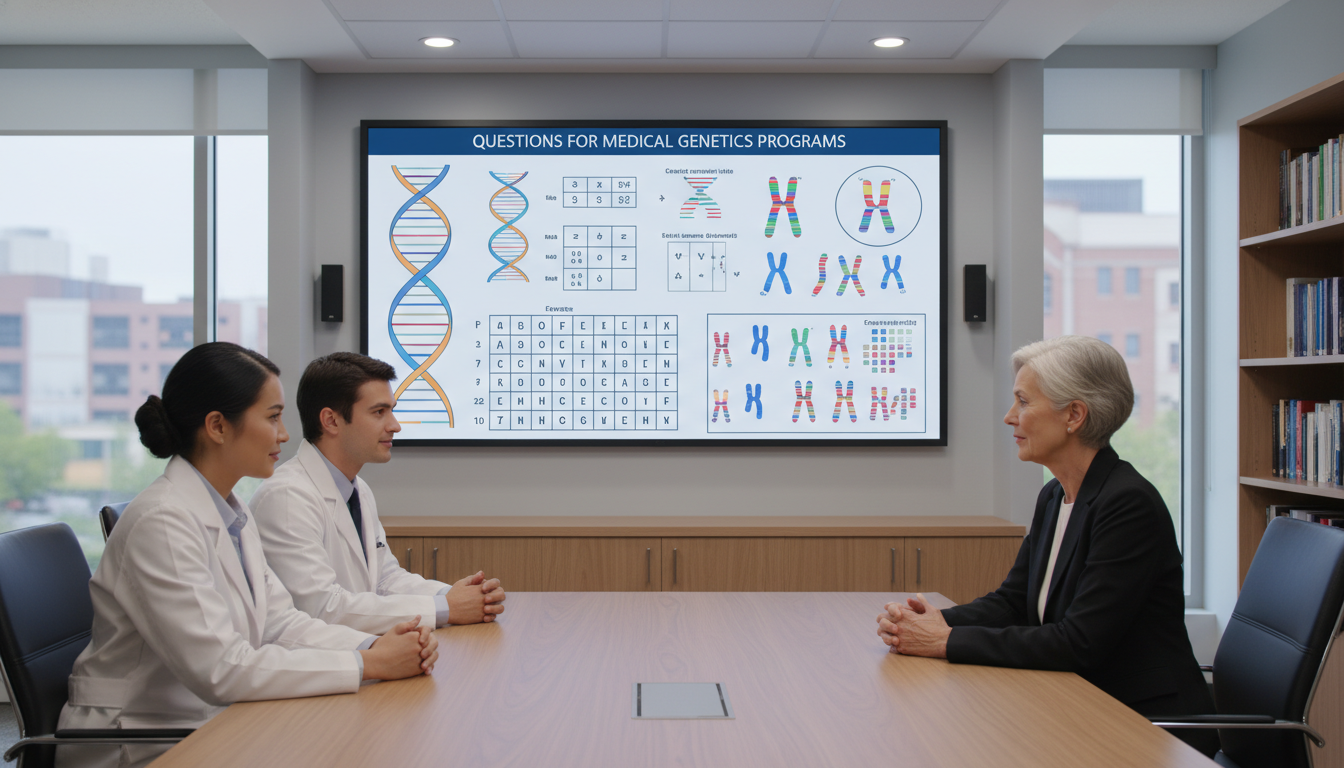
Why Your Questions Matter as an MD Graduate in Medical Genetics
As an MD graduate entering the genetics match, the questions you ask programs are almost as important as the answers you give. Medical genetics is a relatively small, rapidly evolving specialty. Programs vary widely in structure (categorical vs combined), exposure to subspecialties, research expectations, and how they integrate with other departments.
Thoughtful, well‑targeted questions help you:
- Evaluate program fit beyond the brochure and website
- Understand day-to-day reality of training
- Signal maturity, insight, and genuine interest
- Compare programs objectively when you build your rank list
This guide focuses on questions to ask residency programs in Medical Genetics—tailored to an MD graduate residency applicant from an allopathic medical school. You’ll find specific, ready-to-use questions and how to adapt them for program directors, faculty, and residents.
Strategy: How to Approach Questions During Genetics Interviews
Before we jump into lists, it helps to have a strategy:
1. Know your training pathway
Medical Genetics has several common structures:
- Categorical Medical Genetics (often 4 years)
- Combined Pediatrics–Medical Genetics (Peds/Genetics, usually 4–5 years)
- Combined Internal Medicine–Medical Genetics (IM/Genetics)
- Primary residency (Peds, IM, OB/GYN, etc.) followed by a separate Genetics fellowship
If you’re coming from an allopathic medical school match perspective, clarify whether you are applying:
- Directly to a medical genetics residency (categorical or combined)
- Or to a preliminary/primary residency now, with plans for genetics later
This will shape your questions about structure, board eligibility, and long‑term career support.
2. Aim for depth, not quantity
Instead of asking 15 superficial questions, pick 5–8 high‑yield ones per session that:
- Show you’ve done your homework on the program
- Reflect your specific interests (e.g., cancer genetics, metabolic disorders, precision medicine)
- Give you data you can compare across programs
3. Match questions to the right person
You’ll get better insight if you target your questions:
- Program Director (PD) – curriculum, evaluation, vision, institutional support
- Associate/Assistant PD, Core Faculty – teaching culture, clinical exposure, research
- Residents/Fellows – workload, culture, wellness, “hidden curriculum”
- Genetic Counselors & Lab Directors – interprofessional collaboration, lab exposure, test interpretation
Keep a list so you don’t repeat the same question to multiple people unless you’re deliberately looking for consistency.
Core Questions to Ask the Program Director and Leadership
When thinking about what to ask a program director in a medical genetics residency, focus on structure, expectations, and long-term outcomes.
A. Program Structure, Curriculum, and Clinical Exposure
Your goal is to understand exactly what your training will look like as an MD graduate in medical genetics.
Key questions:
Training Pathway & Board Eligibility
- “Can you walk me through the training pathway here for medical genetics and what board certifications I will be eligible for at graduation?”
- “For MD graduates, do you anticipate any changes to the structure of your medical genetics residency over the next 3–5 years?”
Clinical Rotations and Case Mix
- “How is the balance distributed among pediatric genetics, adult genetics, cancer genetics, prenatal genetics, and metabolic disorders?”
- “What proportion of my time will be in inpatient vs outpatient genetics?”
- “How often do residents rotate through metabolic ICUs, transplant services, or NICU consultations?”
Subspecialty Clinics & Breadth of Exposure
- “Which specialized genetics clinics are available (e.g., cancer genetics, neurogenetics, cardiogenetics, skeletal dysplasias, inborn errors of metabolism) and how much exposure do residents get to each?”
- “Are there opportunities or requirements to rotate at affiliated institutions or outreach clinics to see a different patient population?”
Integration with Other Departments
- “How integrated is medical genetics with other departments such as pediatrics, internal medicine, oncology, maternal-fetal medicine, neurology, and pathology?”
- “Do residents regularly participate in multidisciplinary clinics or tumor boards? Which ones?”

B. Education, Didactics, and Evaluation
You need clarity on how you’ll be taught, mentored, and assessed.
Key questions:
Didactic Structure
- “What does the formal didactic curriculum look like for genetics residents (lecture series, case conferences, journal clubs, board review sessions)?”
- “How are molecular genetics, cytogenetics, and biochemical genetics taught and reinforced during residency?”
Teaching Methods and Board Preparation
- “How do you prepare residents for the American Board of Medical Genetics and Genomics (ABMGG) exams?”
- “Do you provide protected time for board preparation or exam review series?”
Feedback and Evaluation
- “How frequently do residents receive formal feedback, and what does that process look like?”
- “How are concerns about resident performance handled, and what support structures are in place for remediation if needed?”
Integration of Genomic Technologies
- “How is next-generation sequencing, exome/genome interpretation, and variant curation incorporated into the training?”
- “Do residents have structured exposure to the clinical laboratory and variant classification processes?”
C. Research, Scholarly Work, and Career Development
For many MD graduates, medical genetics is appealing because of its strong connection to translational research and precision medicine.
Key questions:
Scholarly Requirements and Opportunities
- “What are the expectations for scholarly activity or research during training?”
- “What types of research projects have recent residents completed (clinical, translational, basic science, quality improvement)?”
Protected Time and Mentorship
- “Is there protected time for research or scholarly projects? If so, how much and in which years?”
- “How are research mentors assigned or identified for residents interested in specific areas, such as cancer genetics or metabolic disease?”
Funding and Presentation Support
- “Does the program provide financial support or protected time to present at national meetings (e.g., ACMG, ASHG)?”
- “What proportion of residents typically present abstracts or publish papers by graduation?”
Career Planning
- “How does the program support career development for residents—whether they are interested in academic practice, industry, or community-based genetics?”
- “Do you have formal guidance for residents considering further subspecialization or dual roles (e.g., clinical and lab-based positions)?”
D. Outcomes and Program Vision
This is where long‑term fit comes into play.
Key questions:
Graduate Outcomes
- “Where have your recent graduates gone after residency—academia, community practice, industry, lab medicine, or further fellowships?”
- “What kind of positions do your graduates typically hold 3–5 years out, and how well do you feel their training here prepared them?”
Program Identity and Future Direction
- “What would you say differentiates your medical genetics residency from other programs?”
- “Are there any major changes or growth initiatives planned for the next few years (e.g., new clinics, expanded sequencing capacity, new faculty recruitment)?”
Program Stability and Support
- “How is the program supported at the departmental and institutional levels?”
- “Have there been any significant changes in leadership, hospital affiliations, or funding that might affect resident training?”
Questions to Ask Residents and Fellows: Day-to-Day Reality and Culture
Current residents and fellows will give you the clearest sense of what the program truly feels like. These are your best source when thinking about interview questions for them and about the “lived experience” that rarely shows up in brochures.
A. Workload, Schedule, and Call
Key questions:
Typical Day and Week
- “Can you walk me through a typical day for a genetics resident here?”
- “How does your schedule vary across different rotations—clinic-heavy blocks versus inpatient consults or lab time?”
Call Responsibilities
- “What does call look like—frequency, in-house vs home call, and typical volume of consults?”
- “How manageable is call, and do you feel you receive adequate supervision and backup from attendings?”
Clinical Volume and Complexity
- “Do you feel the clinical volume is appropriate for your level—enough to learn but not overwhelming?”
- “How much exposure do you get to rare metabolic disorders or complex multisystem syndromes versus more common indications like abnormal NIPT, hereditary cancer risk, or developmental delay?”
B. Education Quality and Supervision
Key questions:
Teaching and Supervision
- “How available are attendings and genetic counselors when you need help with a challenging case or variant interpretation?”
- “Do you feel there is a strong teaching culture in clinics and on consults?”
Learning Environment
- “Do you feel comfortable asking questions or admitting when you don’t know something?”
- “How does the program handle mistakes—more ‘punitive’ or genuinely focused on learning and improvement?”
Preparation for Boards and Practice
- “Do you feel the program is adequately preparing you for board exams?”
- “Do you feel confident managing common genetic scenarios independently by the time you’re a senior resident?”

C. Culture, Wellness, and Support
This is where you distinguish a strong allopathic medical school match environment from one that looks good on paper but feels unsustainable.
Key questions:
Program Culture
- “How would you describe the overall culture of the program—collaborative, competitive, laid-back, high-pressure?”
- “How approachable are the program director and core faculty when issues arise?”
Resident Cohesion and Support
- “What is the relationship like among residents and fellows? Do people spend time together outside of work?”
- “Have there been any recent conflicts or issues among trainees, and how were they handled?”
Wellness and Work-Life Balance
- “Do you feel you have time for life outside of residency—family, hobbies, or personal health?”
- “When someone is struggling personally or academically, what kind of support systems are actually used—not just listed?”
Burnout and Morale
- “Have you ever felt burned out, and how did the program respond?”
- “What changes has the program made recently in response to resident feedback about workload or wellness?”
D. Logistics, Living, and Hidden Curriculum
These practical details heavily influence your day‑to‑day experience.
Key questions:
Scheduling and Administrative Load
- “How efficiently is the clinic run? Are you burdened by non-clinical administrative tasks?”
- “How is scheduling handled—do you have input? Are there frequent last-minute changes?”
EMR and Support Staff
- “How user-friendly is the EMR, especially for ordering and tracking genetic tests?”
- “Do you have adequate support from genetic counselors, nurses, and administrative staff when coordinating testing and follow-up?”
Living in the Area
- “What is it like living here on a resident salary in terms of housing, commuting, and safety?”
- “Do most residents live near the hospital or further out? Is a car necessary?”
What They Wish They’d Known
- “Looking back to when you were applying, what do you wish you had asked or known about this program?”
- “If you were applying again, would you choose this program, and why or why not?”
Specialized & High-Yield Questions Specific to Medical Genetics
Beyond the generic “questions to ask residency” lists, there are specialty-specific areas that matter greatly in medical genetics.
A. Laboratory and Genomics Infrastructure
Key questions:
- “What in-house genetic and genomic testing capabilities does your institution have (e.g., cytogenetics, microarray, targeted gene panels, exome, genome)?”
- “Do residents have structured rotations in the genetics labs, and what are their responsibilities there?”
- “How involved are residents in test selection, interpretation, and communicating results to patients and referring providers?”
- “Do you partner with external laboratories, and how is that experience integrated into resident education?”
B. Interprofessional Collaboration with Genetic Counselors
Genetic counselors are essential partners in modern genetics practice.
Key questions:
- “How closely do residents work with genetic counselors in clinic and on consults?”
- “Are there opportunities to co-manage cases, lead counseling sessions under supervision, and learn counseling techniques?”
- “How is responsibility divided between MD genetics residents and genetic counselors in your model of care?”
C. Diversity of Patient Population and Health Equity
With the growth of population genomics, you’ll want broad exposure.
Key questions:
- “What is the demographic and socioeconomic diversity of your patient population?”
- “How does the program address health disparities in access to genetic services (e.g., language barriers, insurance coverage, rural/urban differences)?”
- “Are there outreach initiatives or tele-genetics programs, and do residents participate in those?”
D. Innovation, Precision Medicine, and Data Science
If you’re interested in emerging areas, ask:
- “Is there a precision medicine or genomic medicine initiative at this institution, and what role do residents play in it?”
- “Do residents get exposure to polygenic risk scores, pharmacogenomics, or population-level genomic screening programs?”
- “Are there opportunities for training in bioinformatics or data science relevant to genetics?”
How to Use These Questions Strategically Across the Interview Season
You don’t need to ask every question at every program. Instead, use them to build a structured approach across your interviews in the genetics match.
1. Before the Interview
- Review each program’s website and available materials carefully.
- Note what’s already answered (e.g., rotation schedule, board pass rate).
- Prepare 5–7 core questions that are high priority for you personally (e.g., heavy exposure to cancer genetics, strong lab training, robust academic pathways).
- Tailor specific phrasing to the program:
- Instead of “What specialized clinics do you have?”
- Say: “I saw on your website that you have a neurogenetics and a cardiogenetics clinic. How much time do residents spend in each, and are there opportunities to focus more in one area if we’re interested?”
2. During the Interview Day
- Ask more big-picture and strategic questions to the PD and faculty (curriculum, vision, outcomes).
- Ask practical and culture-focused questions to residents (workload, morale, living situation).
- Space out questions so the conversation feels natural, not like a checklist.
3. After the Interview
- Immediately after each interview, write down:
- Specific answers
- Your personal impression (e.g., “PD very supportive,” “residents seemed tired but positive,” “limited lab exposure”)
- Use consistent categories (Curriculum, Research, Culture, Outcomes, Wellness) to compare programs.
- When building your rank list, review the answers to see which program aligns most with your priorities as an MD graduate entering medical genetics.
4. Second Looks and Post-Interview Communication
If you’re offered a second look or have lingering questions:
- Ask deeper or more specific follow-up questions, e.g.:
- “You mentioned upcoming expansion of your cancer genetics program. How do you anticipate this will impact resident training over the next 2–3 years?”
- When sending a follow‑up email, a short, focused question can demonstrate sustained interest without being burdensome.
Frequently Asked Questions (FAQ)
1. As an MD graduate from an allopathic medical school, do I need to ask different questions than DO or IMG applicants?
The core content of questions is similar, but your context differs:
- As an MD graduate from an allopathic medical school, you can usually assume the program is very familiar with your training background. You might focus less on eligibility and more on advanced opportunities (research, leadership, subspecialization).
- If you’re dual‑applying (e.g., to pediatrics or internal medicine plus future genetics), clarify how well the primary residency integrates with or supports later genetics training, and ask programs how often their residents successfully move into medical genetics.
2. What are the most important “must-ask” questions for a medical genetics residency?
If you can only ask a few, prioritize:
- “How is the curriculum structured across pediatric, adult, cancer, prenatal, and metabolic genetics, and where do residents spend most of their time?”
- “What are your recent graduate outcomes, and what types of positions do they hold now?”
- “How strong is the lab and genomic infrastructure here, and how much hands-on exposure do residents get to test interpretation and variant classification?”
- “How would you describe the culture of the program, and how does the program support resident wellness and work-life balance?”
These questions reveal clinical breadth, educational quality, outcomes, and culture—pillars of a high-quality MD graduate residency in medical genetics.
3. Is it acceptable to ask about work hours, call, and salary during residency interviews?
Yes—these are practical and appropriate questions, especially when framed professionally:
- Ask residents: “What is your typical weekly workload like?” rather than “Exactly how many hours do you work?”
- Most programs provide salary and benefits information online or in interview materials. If not, it’s reasonable to ask the coordinator or chief residents.
- For call structure, ask: “How often are you on call, and what does a typical call shift involve?”
Programs expect you to care about sustainability and wellness. Thoughtful questions about workload show maturity, not lack of dedication.
4. How can I avoid asking questions that are already on the program’s website?
- Before each interview, spend 15–20 minutes going through the website, resident handbook (if available), and any recruitment videos.
- If something is mentioned online but you want more depth, reference it explicitly:
- “I saw that your residents rotate through both the inborn errors of metabolism service and the cancer genetics clinic. Could you share how those experiences differ in terms of resident responsibilities and learning outcomes?”
- This shows you’ve done your homework and allows you to build on existing information instead of repeating basic facts.
By approaching your interviews with a clear strategy and targeted, thoughtful questions, you’ll gain a much more accurate understanding of each medical genetics residency program. Use these questions as a flexible toolkit—not a script—to help you find the environment where you’ll thrive as a future clinical geneticist and leader in genomic medicine.