Understanding Your Goals as a US Citizen IMG in Diagnostic Radiology
As a US citizen IMG or American studying abroad, you enter the diagnostic radiology match with a slightly different lens than US MD seniors. You’re not just trying to impress programs—you’re also carefully evaluating which residency will truly support your unique path, visa/credentialing nuances, and long-term career goals.
The questions you ask programs matter just as much as the answers you give.
Thoughtful, specific questions:
- Show you understand diagnostic radiology as a specialty
- Signal maturity and insight into the training process
- Help you identify programs that genuinely support IMGs
- Reveal red flags early—before you rank a program highly
This guide will walk you through what to ask (and how to ask it) as a US citizen IMG exploring diagnostic radiology residency, including questions to ask residency leadership, faculty, program directors, and residents. You’ll also see how to avoid generic “interview questions for them” and replace them with insightful, radiology-focused, IMG-aware questions.
Core Strategy: How to Approach Questions as a US Citizen IMG
Before memorizing a list, you need a framework. Your questions should be:
- Purposeful – Aligned with your priorities (IMG support, exam prep, case volume, fellowships)
- Specific – Tailored to diagnostic radiology, not generic to all specialties
- Open-ended – Encouraging narrative answers instead of yes/no
- Targeted – Different questions for program director, faculty, and residents
- Balanced – Professional, curious, and not confrontational
Clarify Your Priorities First
As a US citizen IMG, your top priorities might include:
- Training quality & board prep: Will you be strongly prepared for the CORE and Certifying exams?
- IMG track record: How have other IMGs, including US citizen IMG trainees, performed and matched into fellowships?
- Support & mentorship: Will you be seen, supported, and integrated—or left on the margins?
- Fellowship outcomes: What types of fellowships (IR, neuroradiology, MSK, body, breast, etc.) graduates obtain
- Location & lifestyle: Given the intensity of DR call and studying, what’s the realistic lifestyle?
- Technology & case mix: Is the program equipped with modern imaging, robust PACS, and high case diversity?
Once you know your “top 3” priorities, craft your questions to ask residency programs to explore those deeply.
Example priority-based translation
Priority: “I want strong fellowship options in the US.”
- Question: “For recent residents, especially IMGs, what types of fellowships have they matched into, and how did the program support them during that process?”
Priority: “I want to feel supported as a US citizen IMG.”
- Question: “Can you tell me about the experiences of recent US citizen IMG residents here—how have they been supported academically and professionally?”

High-Yield Questions for the Program Director and Leadership
When you think about what to ask program director specifically, focus on big-picture issues: training philosophy, outcomes, IMG integration, and program stability. The PD has the widest view of the program’s past, present, and future.
Below are structured categories of interview questions for them with examples tailored to a US citizen IMG aiming for diagnostic radiology.
1. Program Vision, Culture, and Education Philosophy
These questions help you understand how the program thinks about training radiologists—not just filling call schedules.
- “How would you describe the overall philosophy of this diagnostic radiology program? What makes your training environment distinct from other programs in the region?”
- “What are you most proud of about the residents who graduate from your program?”
- “How do you balance service needs with education, especially on busier rotations like ER/overnight call?”
Why this matters for US citizen IMG applicants:
You want a program that sees residents as future colleagues and not just manpower, especially if you might feel more vulnerable coming from a non-US school.
2. Support and Performance of IMGs and US Citizen IMGs
As an American studying abroad, you want to probe how IMGs have historically fit into—and thrived in—the program.
- “Over the last several years, how many of your residents have been IMGs or US citizen IMG graduates? How have they typically performed in the program?”
- “Are there any specific supports or resources in place that have been particularly helpful for IMGs adjusting to the US training environment?”
- “Have IMGs here had any challenges that the program has addressed over time? How did you respond?”
You’re not asking if they “like IMGs”—you’re asking for evidence of how IMGs have done and how the program has responded to their needs.
3. Board Preparation and Core Exam Success
For a radiology residency, board performance is central. As a US citizen IMG you may feel pressure to prove equivalence with US MD peers—this is where strong board support makes a difference.
- “What does your structured curriculum for the ABR Core exam look like—lectures, physics teaching, case conferences?”
- “What has your Core exam pass rate been in the last five years? Are there specific strategies the program uses to support anyone at risk?”
- “How do you integrate independent case reading and feedback to prepare us for real-world radiology and the ABR exams simultaneously?”
If they’re vague, defensive, or can’t quote approximate pass rates, that’s a soft red flag.
4. Case Mix, Technology, and Learning Environment
You’re training for a specialty that lives and dies by imaging quality, case volume, and feedback.
- “What types of cases are most common here? Are there particular strengths—neuro, MSK, trauma, oncology imaging?”
- “Can you describe the typical daily workflow for a PGY-2 on a core rotation, such as body CT or neuroradiology?”
- “What PACS and dictation systems do you use, and how is feedback on reports usually delivered—attending over-reads, structured templates, in-person teaching?”
Ask specifically about hands-on opportunities:
- “At what level of training do residents begin protocolling studies, performing minor procedures (like US-guided biopsies), or leading contrast decisions?”
5. Fellowship and Career Outcomes (Especially for IMGs)
For many radiology residents, fellowship is the norm. As a US citizen IMG, you may be particularly interested in prestigious or geographically targeted fellowships.
- “Where have your graduates gone for fellowship in the last 5 years, especially in subspecialties like IR, neuroradiology, MSK, and body?”
- “For your IMG or US citizen IMG graduates, have their fellowship and job outcomes been similar to your US MD graduates?”
- “What kind of dedicated mentorship is available for residents applying to competitive fellowships or academic positions?”
If they can list institutions and subspecialties confidently, that’s a positive sign.
6. Program Changes, Accreditation, and Stability
You want to ensure the program you match into will retain its quality across four years of training.
- “In the past 5 years, what significant changes has the program undergone, and what changes do you anticipate in the next few years?”
- “Have there been any recent ACGME citations or areas of concern, and how have you addressed them?”
- “How stable has the leadership and core faculty been over time?”
This can be awkward to ask, but done respectfully, it signals maturity and foresight.
Focused Questions for Residents: Day-to-Day Reality and IMG Experience
Residents are your most honest window into what life will actually feel like. This is where many of the best questions to ask residency programs come to life, because residents will answer with stories and details you won’t see on any website.
1. Culture, Camaraderie, and Support
US citizen IMG applicants often worry about “fitting in.” Ask directly but tactfully.
- “How would you describe the culture among residents—collaborative, competitive, more independent?”
- “Do residents spend time together outside of work, or is it more of a ‘show up, do your work, and go home’ environment?”
- “If someone is struggling—academically or personally—how does the program tend to respond?”
Pay attention not just to content but to tone. Are they hesitant? Enthusiastic? Neutral?
2. IMG Experience Specifically
If you meet an IMG resident, this is gold. If not, still ask.
- “Have there been US citizen IMG or other IMG residents in the program recently? How did they integrate into the group?”
- “Do you feel that IMGs are treated differently in any way—positively or negatively—by attendings, staff, or co-residents?”
- “Is there anything you wish IMGs knew before starting radiology residency here?”
The specifics can reveal subtle biases or, alternatively, a truly inclusive culture.
3. Workload, Call, and Wellness
Radiology can be intense, especially during night float, ED, and early independent call.
- “What does a typical day look like for you on a core rotation? How many studies do you read, and how much time is devoted to teaching?”
- “How is call structured—night float, home call, in-house? At what level of training do you start taking independent call?”
- “Do you feel your workload is reasonable enough to allow for studying for the Core exam and maintaining some life outside the hospital?”
Follow up with a reality check:
- “If you had to be candid, what are the toughest parts of training here?”
- “Have any residents left the program or changed specialties in recent years? Do you know why?”
4. Teaching Quality and Feedback
For a US citizen IMG coming from a non-US system, feedback and expectations can be very different.
- “How often do attendings give you direct feedback on your reads? Is it mostly in real time, at the workstation, or more during conferences?”
- “Which attendings or rotations are particularly strong for teaching? Any that you found especially challenging?”
- “Do you feel that your autonomy increases appropriately throughout the years?”
Specific names of great teachers and structured feedback systems are a good sign.
5. Career Guidance and Mentorship
Residents can reveal how mentorship actually plays out, not just what’s promised.
- “How easy is it to find a mentor in your field of interest—IR, neuro, MSK, etc.?”
- “During fellowship application season, what support did you receive with CVs, personal statements, and networking?”
- “Do you feel the program is well-connected with other institutions when it comes to fellowships or jobs?”
As a US citizen IMG, strong institutional connections and advocates can help counteract any subtle biases in the job and fellowship markets.
Smart Questions for Faculty Interviewers: Subspecialty Insight and Professionalism
Faculty interviews are a good time to demonstrate your insight into radiology as a field, while also gathering information about subspecialty training and faculty accessibility.
1. Subspecialty Exposure and Autonomy
Tailor your questions to the interviewer’s subspecialty.
For a neuroradiologist:
- “How early in training do residents rotate through neuroradiology, and what level of responsibility do they have in protocolling and reading cases?”
- “How much exposure do residents get to advanced neuroimaging (e.g., perfusion, spectroscopy, functional MRI)?”
For an interventional radiologist:
- “How integrated are DR residents with the IR service? What hands-on opportunities do DR residents have in IR if they’re not pursuing an ESIR track?”
- “Have DR residents from this program been successful in matching into IR fellowships, particularly those coming from IMG backgrounds?”
2. Faculty Accessibility and Teaching Style
- “From your perspective as an attending, what do you think residents here do particularly well? Where do they typically need more support?”
- “How accessible are faculty outside of scheduled conferences—for quick questions, case review, or career advice?”
- “Do faculty commonly involve residents in research projects or quality improvement initiatives?”
You’re looking for evidence of real investment in resident growth, not just “my door is always open.”
3. Research and Academic Opportunities
For some US citizen IMG applicants, research is a way to bolster their profile for academic or competitive fellowship tracks.
- “What types of ongoing research projects are available to residents, especially those starting with limited prior research experience?”
- “Is there formal protected time for research? How many residents typically present at national radiology meetings like RSNA or ARRS?”
- “Have IMG residents successfully gotten involved in research or presented at conferences from this program?”
Practical Tips: How and When to Ask Your Questions
Knowing what to ask is only half the equation. How you ask can significantly influence how you’re perceived.
1. Prepare a Prioritized List
Before each interview day, prepare:
- 3–4 must-ask questions for the program director
- 3–4 questions for residents
- 2–3 subspecialty-specific questions for faculty
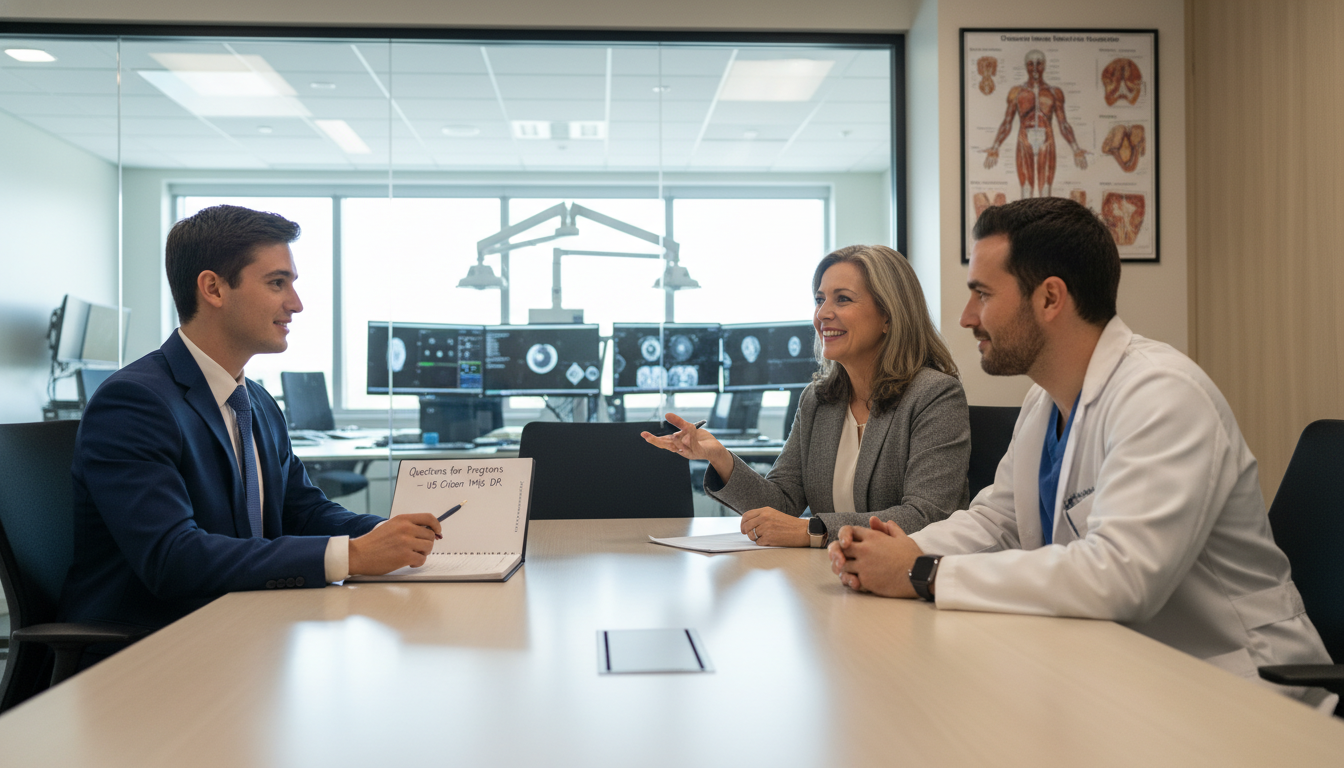
Keep them written down in a small notebook or your notes app. It’s completely acceptable—and often appreciated—to say, “I wrote down a few questions I didn’t want to forget; do you mind if I refer to them?”
2. Customize to the Program
Demonstrate that your questions are informed by actual research:
Instead of:
- “What makes your program unique?”
Try:
- “I noticed your program has a strong relationship with a Level 1 trauma center—how does that translate into the case mix for residents, especially on night float?”
This signals genuine interest and preparation.
3. Avoid Questions with Obvious Website Answers
Don’t burn valuable interview minutes on items clearly posted online (number of residents, rotation schedule, etc.). Instead, use those facts as a starting point:
- “I saw on your website that residents rotate at both the main hospital and the VA. How different is the case mix and teaching style between those sites?”
4. Ask About Challenges Professionally
You are allowed to ask about the downsides of a program—as long as the framing is respectful and curious, not accusatory.
Better:
- “Every program has areas it’s actively working on. What would you say are the main growth areas for this residency right now?”
Worse:
- “What’s wrong with your program?”
You’re seeking insight, not confrontation.
5. Take Notes Immediately After
Right after each interview block (or at the end of the day), quickly jot down:
- Key pros and cons
- Memorable quotes or stories
- Specific data points (Core pass rates, fellowship destinations, IMG numbers)
When it comes time to finalize your rank list, these notes will be far more helpful than vague impressions.
Examples of Well-Worded, High-Impact Questions (Ready to Use)
Here is a consolidated list of polished questions tailored for a US citizen IMG pursuing radiology residency and the diagnostic radiology match. You can adapt these verbatim or modify them based on your style and priorities.
To the Program Director
- “How have US citizen IMG and other IMG residents historically performed in your program—academically, clinically, and in terms of fellowship placement?”
- “Can you walk me through your approach to preparing residents for the ABR Core exam, and how you support someone who may be struggling?”
- “What changes or innovations are you most excited about implementing in the residency over the next few years?”
- “For residents interested in academic careers or competitive fellowships, what specific structures are in place to support them?”
To Residents
- “What aspects of this program exceeded your expectations, and what aspects have been more challenging than you anticipated?”
- “How would you describe the attendings’ teaching styles? Do you feel comfortable asking questions at the workstation?”
- “Have you worked with US citizen IMG or other IMG colleagues here? How has the program supported them?”
- “Do you feel like you have enough time to study for the Core exam while managing your clinical responsibilities and personal life?”
To Faculty
- “From your perspective, what are the strengths and weaknesses of the residents who graduate from this program?”
- “How much independence do residents have in reading studies and communicating results to referring clinicians by the end of training?”
- “Are there ongoing projects—clinical, research, or quality improvement—where residents can get involved, especially those coming from less research-heavy schools?”
Frequently Asked Questions (FAQ)
1. As a US citizen IMG, should I directly ask programs how they view IMGs?
Yes, but ask in a professional, specific manner. For example:
- “How have IMGs or US citizen IMG graduates done in your program historically, and what has helped them succeed here?”
This invites data and examples, not vague opinions. Avoid “Do you like IMGs?”—that’s too blunt and not very informative.
2. Is it okay to ask about fellowship match statistics during the interview?
Absolutely. In diagnostic radiology, fellowship outcomes are critical. You might say:
- “Where have your residents matched for fellowship over the last several years, especially in neuroradiology, MSK, and IR?”
This is a standard, high-yield question and reflects long-term thinking.
3. How many questions should I ask during each interview?
Aim for:
- Program director: 3–5 questions, depending on time
- Faculty: 2–3 thoughtful, subspecialty-relevant questions
- Residents: 4–6 questions, as these conversations are often more open-ended
Quality matters more than quantity. It’s better to ask fewer, deeper questions than many rapid-fire, generic ones.
4. Are there any questions I should avoid as a US citizen IMG?
Avoid:
- Questions that sound defensive or insecure about being an IMG (“Will I be treated worse because I’m an IMG?”)
- Overly aggressive questions about weaknesses or prior problems
- Very detailed salary/benefit questions as your first topic—those are better asked later in the season or confirmed via email if not clear
Instead, focus on performance, support, and outcomes. For example:
- “Can you share an example of how the program supported a resident going through academic or personal challenges?”
Thoughtful, targeted questions are one of your strongest tools as a US citizen IMG in the diagnostic radiology match. They help you showcase insight and maturity while also protecting your own interests—ensuring that the program you rank highly is prepared to train, support, and champion you through residency and beyond.