
Why Your Questions Matter as a US Citizen IMG in EM-IM
As a US citizen IMG and American studying abroad, your interview questions are not just “polite conversation.” They are a strategic tool. For an Emergency Medicine–Internal Medicine (EM IM combined) applicant, the questions you ask programs can:
- Show you understand the unique structure of a dual residency
- Signal that you’re ready for the workload and culture of combined training
- Help you judge whether a program is the right fit for your goals
- Distinguish you from other candidates who ask only generic questions
Programs will absolutely judge you by the quality of your questions to ask residency leadership, residents, and faculty. Thoughtful, specific questions say: “I’ve done my homework. I’m serious about EM–IM. I’m ready for this.”
This guide is tailored to the US citizen IMG applicant targeting combined Emergency Medicine–Internal Medicine, with a focus on practical, high‑yield questions you can actually use on interview day.
Core Strategy: How a US Citizen IMG Should Approach Questions
Before diving into lists, you need a framework. Otherwise, you’ll end up asking random questions that don’t help you make real decisions.
1. Know Your Top Priorities
As a US citizen IMG, your priorities may differ from US grads. Common themes include:
- Visa not an issue, but IMG perception is: You may want to understand how the program views IMGs, especially those who are Americans studying abroad.
- Need for strong foundational training: You may feel you need extra structure, feedback, and mentorship transitioning into the US system.
- Board performance and support: You’ll want reassurance that the program can prepare you well for EM and IM boards.
- Career direction clarity: Many EM–IM graduates go into critical care, administration, academics, or hospital leadership. You’ll want to see if the program supports your possible path—even if you’re still unsure.
Write down your top 3–5 priorities before interviews. Then target your questions to test those priorities at each program.
2. Aim for Specific, Open-Ended Questions
Programs hear generic questions nonstop:
- “How is your teaching?”
- “What are your strengths and weaknesses?”
These don’t help you or impress them. Instead, ask:
- “Can you walk me through what a typical EM–IM PGY3 month looks like in terms of responsibilities and supervision?”
- “What recent changes have you made based on resident feedback, especially from EM–IM residents?”
These reveal program culture, adaptability, and how they value resident voices.
3. Match the Question to the Person
Think of interview day as different “interview targets,” each with their own perspective:
- Program Director (PD) – EM, IM, or EM–IM combined PD
- Associate/Assistant PDs
- Chief residents
- Current EM–IM residents
- Core faculty (EM, IM, or dual-trained)
- Program coordinator
You should have different interview questions for them, tailored to what they actually control or experience.
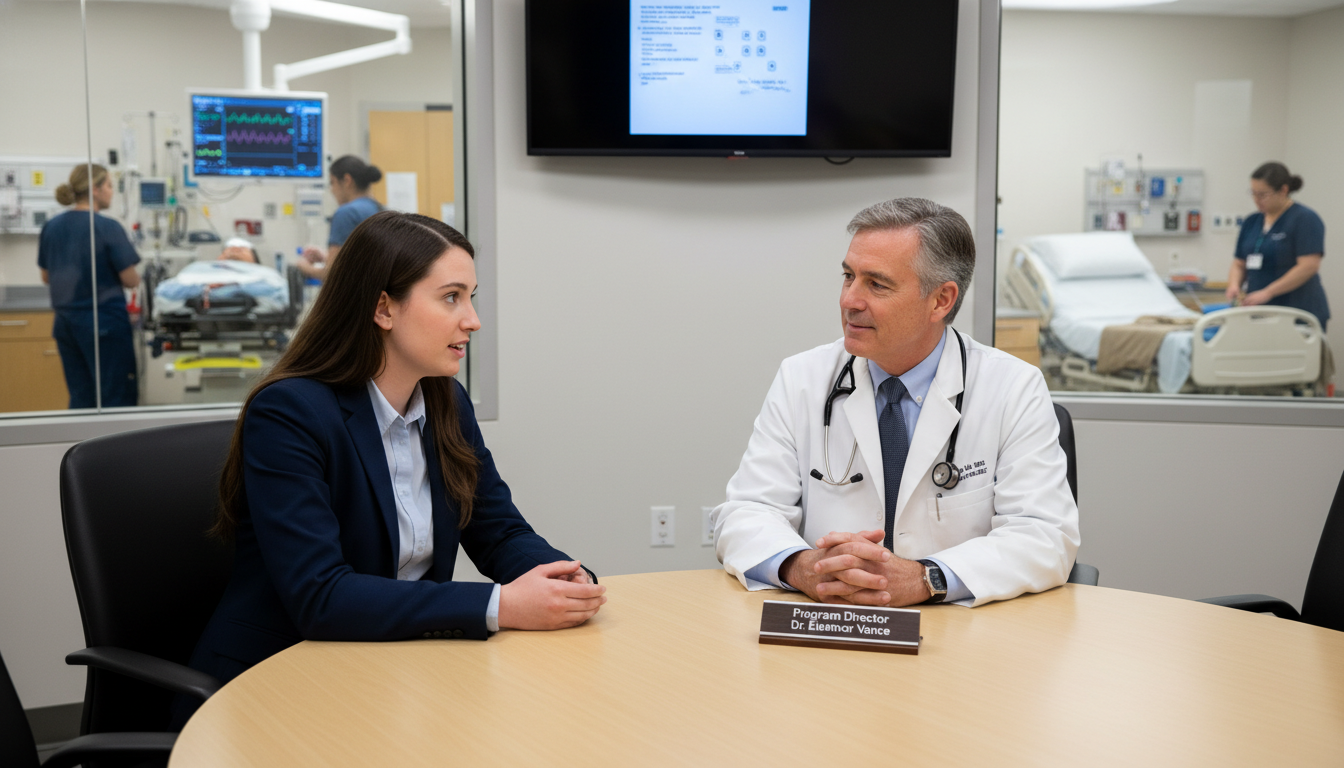
Questions to Ask the EM–IM Program Director (or Leadership)
This is where you drill into structure, philosophy, and long-term training outcomes. When you think “what to ask program director,” prioritize questions that:
- Show you understand combined training
- Ask about program evolution and outcomes
- Clarify support for IMGs and American students studying abroad
A. Program Structure, Culture, and Philosophy
1. Understanding the EM–IM Identity
- “How would you describe the ‘identity’ of your EM–IM residents compared to categorical EM or IM residents?”
- “What do you see as the main advantages and main challenges of EM IM combined training at your institution?”
- “How integrated are EM and IM experiences? For example, do EM–IM residents rotate with both EM and IM categorical residents equally, or is there a distinct track?”
Why this matters as a US citizen IMG:
You’re demonstrating that you know combined training is not just EM + IM, but a unique identity—and that you want to understand how that identity is supported.
2. Schedule and Rotation Details
- “Can you outline how time is split between EM and IM across the five years? Are there periods of heavy EM or heavy IM?”
- “How are critical care and elective months structured for EM–IM residents?”
- “Are there any EM–IM-specific rotations or innovations (e.g., observation medicine, ED-ICU, hospitalist-ED interface) unique to your program?”
Follow-up tactic: Compare answers across programs to see where you’ll actually spend your time.
B. Training Quality and Board Preparation
3. Board Pass Rates and Support
- “How have your EM–IM residents historically performed on EM and IM boards?”
- “What deliberate support is in place for in-training exams and board preparation for EM–IM residents, given they are preparing for two specialties?”
- “Have you had any EM–IM residents struggle academically? How did the program support them?”
For a US citizen IMG, this reveals how much the program invests in remediation and structured learning—not just in their best residents, but in everyone.
4. Feedback and Evaluation
- “How often do EM–IM residents receive formal feedback? Is it different on EM vs IM rotations?”
- “What systems are in place if a resident feels they are not progressing as expected? How early do you intervene?”
You’re signaling maturity and insight: you know learning is an ongoing process and want a culture of constructive feedback, not punishment.
C. Career Outcomes and Flexibility
5. Graduate Outcomes
- “What have your recent EM–IM graduates gone on to do? Fellowships, academic positions, community roles?”
- “How successful are residents who apply for fellowship (e.g., critical care, ultrasound, administration, palliative, ID, cardiology) from the EM–IM pathway?”
- “Do any graduates practice a combined EM + inpatient or outpatient IM model, or do they generally choose one over the other?”
6. Flexibility and Career Exploration
- “If a resident initially comes in thinking they want to do one career path (e.g., critical care) but changes their mind, how flexible is the program in helping them pivot?”
- “Are EM–IM residents supported if they want to explore research, global health, administration, or education early in training?”
As an American studying abroad, you may not yet know the US landscape well. These questions show you’re thinking long-term and need a program that will help you refine your goals.
D. Support for IMGs and Transition to US Training
7. IMG Perspective
Even as a US citizen, your IMG status still matters. Ask:
- “As a US citizen IMG, what support do you provide for residents transitioning from international schools to the US clinical and documentation systems?”
- “Historically, how have your IMGs performed in your program? Are there specific resources or mentorship systems for them?”
8. Program Changes and Future Direction
- “What changes or innovations are you planning for the EM–IM program over the next 3–5 years?”
- “Can you share an example of a change you made because of EM–IM resident feedback, and how it impacted training?”
These show that you’re interested in being part of a growing, responsive program, not a stagnant one.
Questions to Ask Current EM–IM Residents
Residents are your best source of truth about the actual lived experience of an EM–IM combined program. They can tell you what the program brochure will never say.
A. Day-to-Day Life, Workload, and Culture
1. Reality Check on Workload
- “What does a typical week look like for you on an EM month versus an IM month?”
- “Do you find the EM–IM schedule sustainable across five years? When do you feel most stretched?”
- “How does the program respond when residents are overwhelmed—do people step in, or are you expected to just push through?”
You are subtly exploring burnout risk and how humane the culture is.
2. Resident Camaraderie and Integration
- “Do EM–IM residents feel integrated with both EM and IM residents socially and academically?”
- “Is there any tension between EM–IM and categorical residents? If so, how is it handled?”
- “What’s the dynamic like between EM–IMs across the different classes? Do you feel you have a strong cohort identity?”
3. Support as a US Citizen IMG
- “As someone who didn’t train in the US for medical school, did you feel supported early on with documentation, EPIC/EMR training, and communication with consultants and nurses?”
- “If there are other IMGs here, what has their experience been like? Any unique challenges, and how did the program help?”
Even if you’re talking to a non-IMG, they may still have valuable insights (“We had a US IMG who…”).
B. Education, Supervision, and Autonomy
4. Teaching Quality
- “On EM shifts, how often do attendings pull you aside for bedside teaching versus just staffing cases?”
- “On IM rotations, how much teaching do you get from attendings versus senior residents?”
- “Do you feel EM–IM residents get enough exposure to critical care, procedures, and resuscitation?”
5. Autonomy Progression
- “How does your responsibility change from PGY1 to PGY5 in both EM and IM?”
- “By PGY4–5, do you feel prepared to function as an independent EM attending or IM hospitalist?”
C. Schedule, Wellness, and Life Outside the Hospital
6. Schedule Management and Switching Between Worlds
- “How do you personally handle the switches between EM shifts and IM ward months? Does the program build in any buffer or adjustment time?”
- “Are there seasons where you feel life is more manageable—vacation policies, elective months, lighter rotations?”
7. Wellness and Burnout Prevention
- “Have you ever felt burned out here? How did the program respond?”
- “Are wellness days, mental health resources, or formal support systems actually accessible—or just things on paper?”
8. Housing, Commute, and Cost of Living
As a US citizen IMG who may be relocating back to the US after years abroad, details matter:
- “Where do most residents live, and what’s the typical commute?”
- “Is it financially realistic to live close to the hospital on a resident salary here?”
- “Are there particular areas that residents recommend or avoid for safety or convenience?”
This is critical if you’re also trying to navigate re-settling in the US.
D. If You Could Choose Again…
9. The “Honesty Filter” Question
- “If you were starting over and applying again, would you choose this EM–IM program? Why or why not?”
- “What’s one thing you wish you had known about this program before matching here?”
These often yield the most revealing, concrete answers.
Questions to Ask EM and IM Faculty (Non-PD)
When you speak with core faculty in Emergency Medicine and Internal Medicine, you’re looking for their perspective on:
- How EM–IM residents are perceived
- Opportunities for mentorship, research, and careers
- How the dual training background is actually used in practice
A. How the Program Views EM–IM Residents
- “From your perspective as an EM/IM faculty member, what stands out about EM–IM residents compared to categorical residents?”
- “Do you find EM–IM residents bring a different approach to patient care or systems problems?”
- “Are EM–IM residents typically sought out for certain roles—quality projects, complex cases, leadership positions?”
If EM–IM residents are an afterthought, that will show here.
B. Mentorship, Scholarship, and Career Development
- “What types of scholarly work are EM–IM residents involved in—quality improvement, research, education projects, administrative initiatives?”
- “How easy is it for an EM–IM resident to find a mentor who understands both sides of their training?”
- “If I were interested in [critical care / administration / global health / ultrasound / academic medicine], what specific opportunities exist for EM–IM residents here?”
For an American studying abroad, this is particularly important—your network in the US may be limited, so you’ll want strong institutional support.
C. Clinical Expectations and Feedback for IMGs
- “Have you worked with US citizen IMGs in your department? What strengths or challenges have you observed?”
- “Are there any patterns that successful EM–IM residents share, particularly those who trained abroad?”
These questions signal self-awareness and openness to growth.

Practical Question Sets by Interview Situation
Below are ready-to-use question sets you can adapt on interview day. These map directly to the SEO concepts like interview questions for them, what to ask program director, and questions to ask residency leadership but are tailored for EM–IM and US citizen IMG concerns.
1. When You’re Asked: “Do You Have Any Questions for Us?”
You can’t say, “No, I think you’ve covered everything.” That signals lack of interest. You should have at least 2–3 questions ready for each interviewer.
To an EM–IM Program Director:
- “How do you see your EM–IM program evolving in the next five years, and what kind of resident are you hoping will help shape that future?”
- “Can you describe a challenge the EM–IM program has faced recently and how you addressed it?”
- “What distinguishes your EM–IM graduates compared to those from other combined programs?”
To an EM Chair or EM Faculty:
- “How involved are EM–IM residents in major ED initiatives, such as throughput, observation units, or ED-ICU hybrids?”
- “Do EM–IM residents have opportunities to serve as chief residents or take on leadership roles in the ED?”
To an IM Chief or Ward Faculty:
- “How are EM–IM residents viewed on the inpatient teams? Are they given similar opportunities for leadership as categorical IM residents?”
- “Do EM–IM residents ever serve in chief roles or key quality-improvement leadership positions in IM?”
2. Group Sessions / Resident Panels
During group Q&A, your questions should be broad enough to apply to everyone, but still reveal useful specifics.
- “What are some tangible ways the program has responded to resident feedback in the last one to two years?”
- “For EM–IM residents specifically, what have been the biggest factors that contribute to feeling supported—or not supported—in balancing both specialties?”
- “Can you share examples of EM–IM residents’ career paths from this program—those who went into community practice versus those who pursued fellowship or academic roles?”
3. One-on-One with Residents (Especially EM–IM)
These are your safest spaces for tough, honest questions:
- “What are the hardest parts of being an EM–IM resident here—and what keeps you here despite those challenges?”
- “Have you ever considered switching to categorical EM or IM? If so, why did you stay in the combined track?”
- “Between EM and IM time, where do you feel the program excels the most, and where is it still a work in progress?”
Common Mistakes to Avoid When Asking Questions
Even strong applicants can undermine themselves with the wrong type of question. Avoid the following:
1. Questions That Show You Didn’t Do Basic Research
- “Do you have a combined EM–IM program?” (You’re literally interviewing there.)
- “How long is your residency?” (EM–IM is five years almost everywhere.)
Instead, show you did your homework:
- “I saw that your EM–IM program offers X rotation. Can you tell me how EM–IM residents experience that differently from categorical residents?”
2. Overly Personal or Premature Lifestyle Questions
Salary, moonlighting, and time off are fair topics—but read the room, and avoid sounding like that’s your sole concern.
Better framing:
Instead of “How much do you pay?”
Try: “How does your salary and benefits package compare to other programs in the region, and how does that translate to cost of living here?”Instead of “How often can I moonlight?”
Try: “At what level are EM–IM residents allowed to moonlight, and how does the program ensure moonlighting doesn’t interfere with learning or wellness?”
3. Asking About Program Weaknesses in a Confrontational Way
Avoid:
- “What are your biggest weaknesses as a program?”
It puts interviewers on the defensive. A better version:
- “If you had additional resources or funding, what areas of the EM–IM program would you most want to invest in or improve?”
4. Questions That Could Be Interpreted as Lack of Commitment to EM–IM
Programs want residents who genuinely want the combined path, not someone who couldn’t choose.
Avoid:
- “Is it easy to switch to categorical EM if I change my mind?”
Instead say:
- “I’m committed to EM–IM, but I know people’s interests evolve. If an EM–IM resident’s career goals shift—for example, more toward outpatient IM or administrative EM—how does the program help them tailor their experiences within the combined structure?”
Putting It All Together: How to Prepare Your Question List
Here is a step-by-step process tailored for a US citizen IMG applying to EM–IM:
Clarify your top 3–5 priorities
Examples:- Strong EM critical care exposure
- Supportive culture for IMGs / Americans studying abroad
- Strong board preparation in both specialties
- Flexibility for future fellowship or leadership paths
Create 3–5 “core questions” you’ll ask almost everywhere
These should focus on your priorities and can be reused with small tweaks.Add 1–2 “program-specific questions” per interview
Use each institution’s website, social media, and resident bios to craft questions that show you know their unique features.Organize by audience
- 3–4 questions for PDs
- 3–4 for residents
- 2–3 for EM faculty
- 2–3 for IM faculty
- 1–2 for coordinators (logistics, scheduling, EMR, onboarding)
Practice asking them out loud
This helps you sound natural and confident, not scripted.Take brief notes immediately after the interview
Jot down how they answered your highest‑priority questions. This will be invaluable when you build your rank list and compare programs.
FAQs: Questions to Ask Programs as a US Citizen IMG in EM–IM
1. As a US citizen IMG, should I bring up my IMG status in my questions?
Yes, but thoughtfully. You don’t need to apologize for being an IMG; instead, frame it as self-awareness:
- “Given that I completed medical school abroad, are there specific supports in place for residents transitioning to documentation, communication styles, or systems-based practice here?”
This shows maturity and lets programs describe how they help IMGs succeed.
2. What are some safe but meaningful interview questions for them if I feel nervous?
You can always fall back on:
- “How has the program changed in response to resident feedback?”
- “What characteristics make residents most successful in your EM–IM program?”
- “What do you think differentiates your EM–IM training from others in the region or nationally?”
These are open-ended, thoughtful, and rarely backfire.
3. Can I ask about fellowship and job placement rates?
Absolutely. In combined emergency medicine internal medicine training, future planning is critical. Try:
- “What proportion of your recent EM–IM graduates pursued fellowship training, and in what areas?”
- “How involved is the program in helping residents secure their first jobs—both in EM and IM settings?”
This is seen as responsible, not presumptuous.
4. How many questions should I ask each interviewer?
Aim for 2–4 well-chosen questions per interviewer. Quality matters more than quantity. It’s fine if the conversation flows naturally and some questions get answered before you ask them. In that case you can say:
- “You’ve already answered several of the things I was curious about. One additional question I have is…”
This shows you were prepared, listening, and able to adapt.
By entering each EM–IM interview with clear priorities and a curated list of purposeful, respectful questions, you’ll stand out as a thoughtful, serious applicant—and you’ll collect the information you need to build a realistic, useful rank list as a US citizen IMG pursuing Emergency Medicine–Internal Medicine.