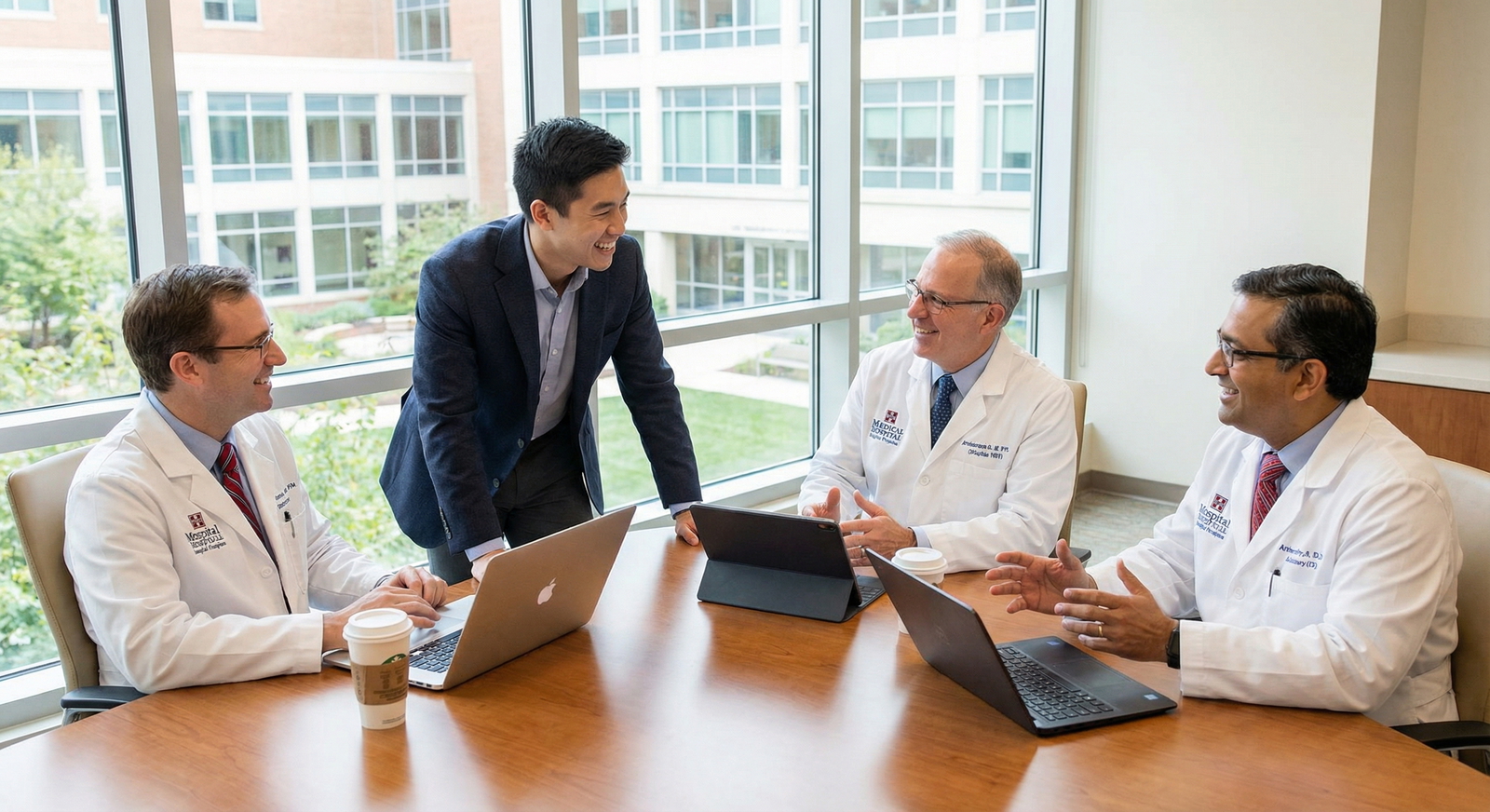
Why Your Questions Matter as a US Citizen IMG in Cardiothoracic Surgery
As a US citizen IMG or American studying abroad, the way you ask questions during cardiothoracic surgery residency interviews is almost as important as how you answer them. Programs already know your scores, letters, and CV; what they don’t know is how you think, how you learn, and how you’ll fit into their cardiothoracic team.
Thoughtful, specific questions to ask residency programs do three things simultaneously:
- Signal genuine interest in cardiothoracic surgery (not just “any surgical spot”).
- Address unique IMG concerns (visa isn’t your issue, but integration and support are).
- Help you decide if the program’s culture, volume, and training will actually make you the heart surgeon you want to be.
This guide focuses on what to ask—especially what to ask program directors and interviewers—tailored to US citizen IMGs targeting cardiothoracic surgery residency or integrated CT pathways.
Core Strategy: How to Choose and Frame Your Questions
Before diving into specific questions, you need a strategy. Not every program, or interviewer, should get the same questions. Your “interview questions for them” should be:
- Personalized to your path as a US citizen IMG
- Specific to cardiothoracic surgery and heart surgery training
- Different for each interviewer role (PD, faculty, fellow, resident, coordinator)
Principles for Strong Questions
Use these principles as you evaluate what to ask program director and faculty:
Be specific, not generic
- Weak: “What are your strengths and weaknesses as a program?”
- Strong: “What aspects of your cardiothoracic surgery training do you feel are uniquely strong compared to other programs in this region or nationally?”
Show you did your homework
- Reference program details (integrated vs independent CT track, major cases, research focus) visible on their website or FREIDA.
- Your question should build on that information, not just repeat it.
Connect to your background as a US citizen IMG
- You can acknowledge being an American studying abroad and ask how they’ve supported others with similar non-traditional paths.
- Focus on training and professional development, not just “Do you take IMGs?”
Ask about behaviors, not opinions
- Instead of “Is your program supportive?” ask “Can you give an example of how the program supported a resident who was struggling with a clinical or personal challenge?”
Plan questions by interviewer type
- Program Director: high-level training structure, outcomes, fit for your trajectory.
- Faculty: operative experience, mentorship, subspecialty exposure.
- Residents/Fellows: daily life, culture, workload, how they are treated.
- Coordinator: logistics, schedule, communication, onboarding issues specific to IMGs.
Create a working list of 20–25 questions; expect to use ~8–12 total per interview day depending on time.

Essential Questions to Ask the Program Director (Tailored for US Citizen IMGs)
When thinking about what to ask program director vs others, remember: the PD is the person most responsible for your global training experience and future career trajectory. These questions show maturity and a clear understanding of what heart surgery training requires.
1. Training Structure, Case Volume, and Autonomy
You need to understand exactly how you’ll learn to operate and at what pace you’ll be trusted in the OR.
Key questions:
“How is operative autonomy in cardiothoracic cases graduated over the course of training?”
Follow-up: “By the end of training, what cases do your graduates typically perform as primary surgeon with minimal attending assistance?”“Can you describe the typical cardiothoracic case mix here—cardiac vs thoracic vs congenital, and how that’s evolved over the past few years?”
This helps you spot if their “cardiothoracic” program is in practice heavily weighted to one side.“For residents specifically interested in adult cardiac versus thoracic oncology versus transplant, how do you tailor their operative experience?”
Shows you’re already thinking about sub-focus within heart surgery training.“Have there been any recent changes in hospital acquisitions, service lines, or referral patterns that significantly affected CT case volume?”
You’re checking for future stability of your operative exposure.
Why it matters for a US citizen IMG:
You may have had less early exposure to US-style OR systems. Knowing how autonomy is structured helps you evaluate whether you’ll be able to “catch up” and then excel compared to US MD peers.
2. Outcomes: Boards, Fellowships, and Jobs
You’re not training for training’s sake—you’re aiming for board certification and a sustainable career in cardiothoracic surgery.
Key questions:
“Over the past 5–10 years, what have your ABTS board pass rates been, and what support do you provide to residents preparing for boards?”
“Where have your recent graduates gone—academic, private, advanced fellowships—and what patterns do you see in placement?”
Follow-up: “Are there specific institutions or practice types where your graduates are consistently successful?”“For residents who decide to change directions—for example, from CT to general surgery or critical care—how does the program support that transition?”
Demonstrates maturity and awareness that paths can evolve.
Why it matters for a US citizen IMG:
As an American studying abroad, you may feel you need to “prove” your training pedigree to secure competitive jobs or advanced fellowships. A program with strong placement outcomes is especially important.
3. Support and Integration for US Citizen IMGs and Non-Traditional Applicants
Even as a US citizen, you’re still an IMG, and that brings real but addressable challenges: credentialing, cultural differences in training, and network gaps.
Key questions:
“As a US citizen IMG, I may need some initial support adapting to documentation and workflow differences between my medical school system and the US. How have you supported other residents from non-US schools during that transition?”
“Have you trained US citizen IMGs or American graduates from non-US schools before in cardiothoracic or related surgical specialties? What characteristics made them successful here?”
This is a tactful way to understand their experience with your background.“What formal or informal mentorship structures exist, especially for residents from non-traditional paths?”
Follow-up: “Is there a system for pairing interns with near-peer and senior mentors early on?”
What you’re looking for:
- Concrete examples (“We paired them with a senior resident, did EMR bootcamps, OR shadowing before starting on-call”).
- Comfort and familiarity, not hesitation, when they discuss IMGs.
4. Resident Wellness, Culture, and Professionalism in a High-Stress Specialty
Cardiothoracic surgery residency is demanding by definition. You need honest insight into how the program balances intensity with sustainability.
Key questions:
“How do you monitor workload and burnout specifically in high-intensity rotations like CT ICU and transplant?”
“Can you share an example of a time when a resident was struggling—clinically or personally—and what the program did to support them?”
This asks for actions, not vague reassurances.“How does the program handle conflicts or professionalism concerns between residents and attending surgeons?”
Shows you understand the hierarchical and high-stakes nature of heart surgery training.
5. Program Direction and Your Fit
Finally, you want to know if your interests actually align with where the program is going.
Key questions:
“How do you see this cardiothoracic surgery program evolving over the next 5 years—clinically, academically, and technologically (e.g., ECMO, structural heart, robotics)?”
“Given my background as a US citizen IMG and my interests in [e.g., adult cardiac, outcomes research, global surgery], where do you see the best fit within your program?”
This invites the PD to “place” you in their mental map of the residency.

Targeted Questions for Faculty, Fellows, and Residents
You’ll often have multiple interviewers per day. Customize your interview questions for them depending on their role.
Questions for Cardiothoracic Faculty and Attendings
Faculty can reveal what day-to-day training and mentorship really look like.
Operative teaching and expectations
“What does effective intraoperative teaching look like to you when working with a senior CT resident?”
“How are decisions made about which cases are appropriate for residents to perform as primary surgeon versus first assist?”
“Do you routinely review cases with residents post-op—either informally or in structured M&M or case conferences?”
Research and academic development
“What ongoing research projects in cardiothoracic surgery are available for residents to join, and how early can they get involved?”
“How do you support residents who want to present at national meetings (STS, AATS, etc.)—funding, protected time, mentorship in abstract and manuscript writing?”
US citizen IMG–specific angle
- “Have you mentored trainees who trained outside the US? Were there any particular strategies that helped them adapt to US-based cardiothoracic practice and research expectations?”
Questions for Fellows (if present) in Integrated or Independent CT Tracks
If the program has integrated 6–8 year I-6 pathways or an independent cardiothoracic surgery residency following general surgery, fellows are a critical window into program culture.
“How would you describe the balance of operative exposure between fellows and earlier-year residents in high-yield CT cases?”
“Do you feel the program prepares you to be independently safe and confident in the full spectrum of cases you expect to practice after graduation?”
“Have you noticed any differences in how the program supports residents who were US grads versus IMGs, if any?”
You’re not fishing for drama—just checking for equity and awareness.
Questions for Current Residents: The Real-Life Experience
Residents are the most honest barometer of a program. Use your time with them wisely.
Daily life, workload, and culture
“Walk me through a typical week for you on the cardiothoracic service, including call schedule and ICU responsibilities.”
“In practice, how closely does your actual workweek align with the 80-hour rule, and how does the program respond if that is exceeded?”
“How approachable are the CT attendings for real-time teaching versus just pushing the list?”
“Is feedback mostly informal, or do you have structured summative feedback that actually influences your growth?”
Welcoming IMGs and diverse backgrounds
“Have there been US citizen IMGs or other IMGs in your program? How was their transition into intern year and beyond?”
“Socially and culturally, how inclusive is the resident group for people from different backgrounds and training paths?”
Career development
“How early in training do people start shaping their career paths (academic vs private, subspecialty interests), and who helps guide those decisions?”
“If you had to decide again, would you rank this program #1? Why or why not?”
The last question often yields the most candid, practical information.
Questions About Logistics, Structure, and Day-to-Day Training
Beyond “big picture” topics, you need a clear sense of how your training will actually run—especially as someone transitioning from a different medical school environment.
Curriculum, Rotations, and Evaluations
“How are rotations divided between CT OR, CT ICU, step-down/floor, and outside rotations (e.g., vascular, cardiology, anesthesia)?”
“Are there dedicated simulation or skills labs for CT procedures (e.g., cannulation, valve repair techniques, minimally invasive setups)? How often are these used?”
“How frequently are residents formally evaluated, and what are the consequences if a resident is not meeting milestones?”
Shows you care about standards and accountability.“Can residents influence rotation schedules to pursue specific interests—for example, more time in structural heart, heart failure, or thoracic oncology?”
Education: Conferences, Didactics, and Independent Study
“What does your formal educational curriculum look like for cardiothoracic surgery—weekly didactics, journal clubs, anatomy sessions, board review?”
“Is protected time for education truly honored, or does clinical work often override it?”
“Are there structured resources for ABTS or ABSITE-style exam prep, and how have residents performed historically?”
As a US citizen IMG, your test-taking skills are often strong, but the specific US board-style approach and CT content emphasis can differ from your medical school environment. Programs that invest in structured teaching reduce your adaptation time.
Institutional Resources and Infrastructure
“What is the scope of the CT program’s resources—number of ORs, dedicated CT ICU beds, ECMO program, hybrid OR, structural heart program?”
“Do you have an in-house TAVR, LVAD, or transplant program, and how actively are residents involved in those cases?”
“How is multidisciplinary collaboration handled—tumor boards for thoracic oncology, heart team meetings for complex coronary or structural cases?”
Practical Tips: How to Use These Questions Effectively
Knowing good questions to ask residency programs is only half the battle; you must also deploy them strategically.
1. Prioritize and Personalize
- Before each interview, review the program’s website, case logs (if available), and major CT highlights.
- Choose 6–8 high-yield questions that:
- Address gaps in the publicly available information.
- Match your own goals (operative autonomy, research, transplant, thoracic oncology, etc.).
- Signal you are a serious, informed applicant.
2. Match Questions to Interviewers
- Program Director: program direction, outcomes, culture, how they support US citizen IMGs.
- Faculty: teaching style, research opportunities, subspecialty exposure.
- Residents/Fellows: honest reality about hours, culture, and career prep.
- Coordinator: schedule structure, onboarding logistics, credentialing.
3. Avoid Redundant or Easily Googleable Questions
If something is clearly on the website (“Do you do TAVRs?”), deepen the angle:
- Instead of: “Do you have a TAVR program?”
- Ask: “I saw your active TAVR program on the website—how involved are residents intraoperatively and perioperatively, and at what stage of training?”
4. Frame from a Position of Professionalism, Not Insecurity
As a US citizen IMG, do not lead with defensive questions like “Do you consider IMGs equal to US grads?” Instead, assume professionalism and inquire about support and expectations:
- “What characteristics have made prior international graduates particularly successful in this program?”
5. Take Notes and Reflect
Immediately after the interview day:
- Write down specific answers to your key questions while they’re fresh.
- Rate:
- Operative autonomy
- Culture and support
- Fellowship/job outcomes
- IMG integration/mentorship
- Use these notes when creating your rank list; your memory will blur programs together by March.
Frequently Asked Questions (FAQ)
1. As a US citizen IMG, should I directly ask if they have taken IMGs before?
Yes, but phrase it constructively and in a way that focuses on success patterns:
- “Have you previously trained US citizen IMGs or American students who went abroad? What factors helped them thrive in your program?”
This avoids sounding defensive while still giving you insight into their IMG experience and support structures.
2. Is it appropriate to ask about visa issues if I’m a US citizen IMG?
For you, visas are not an issue, but programs sometimes conflate “IMG” with “visa needs.” You can clarify early in your application or casually during interviews:
- “Just to clarify, I’m a US citizen who studied abroad, so I don’t require visa sponsorship.”
You don’t need to devote a precious interview question to this unless they appear confused.
3. How many questions should I ask each interviewer?
Aim for 2–4 well-targeted questions per interviewer, depending on how conversational the meeting is and how much time remains. It is better to ask a few thoughtful, deep questions than to speed through a long checklist.
4. Are there any questions I should avoid completely?
Avoid:
- Questions that sound like you’re negotiating (salary, moonlighting) on interview day unless the program brings it up.
- Anything that sounds like you’re questioning their integrity (“Are your published case logs accurate?”).
- Questions that could be perceived as disparaging other programs (“Why are you better than [competitor]?”).
Instead, focus on understanding their reality, how they train heart surgeons, and how they will support you as a US citizen IMG seeking rigorous, comprehensive cardiothoracic surgery residency training.
Used well, these questions to ask residency programs will not only impress interviewers but also help you identify where you will thrive as a future cardiothoracic surgeon. Your goal is not to survive training—it is to emerge as a competent, confident heart and thoracic surgeon with a strong professional identity. The right questions now are a crucial step toward that future.