Why Your Questions Matter in Diagnostic Radiology Interviews
As a diagnostic radiology applicant, you’re not just trying to impress programs—you’re also interviewing them. The questions you ask programs will shape your rank list, help you avoid poor-fit environments, and reveal nuances you’ll never see on a website or in a brochure.
Radiology is uniquely dependent on culture, technology, and teaching structure. It’s easy to be distracted by “shiny” facilities and miss deeper issues like weak teaching, limited case mix, or poor fellowship/job placement. Having a clear set of focused, strategic questions to ask residency programs—tailored specifically to diagnostic radiology—can make a major difference in your diagnostic radiology match outcome.
This guide breaks down what to ask, whom to ask, and how to interpret what you hear—so you can go into every interview with confidence and a plan.
Principles for Asking Smart Questions on Interview Day
Before diving into specific questions, it helps to understand the strategy behind them.
1. Ask Different People Different Questions
You’ll usually meet:
- Program Director (PD)
- Associate/Assistant Program Directors (APDs)
- Faculty interviewers
- Chief residents
- Junior and senior residents
- Possibly the Department Chair or Vice Chair
- Program coordinator and administrative staff
Use each person’s role to your advantage:
- Program Director – big-picture vision, curriculum, program philosophy, support and wellness, performance expectations.
- Faculty – clinical teaching, case volume, subspecialty strength, research, mentorship.
- Residents – day-to-day reality, culture, workload, call, moonlighting, how the program treats them when things are hard.
- Coordinator/Staff – logistics, organizational culture, responsiveness, how the program “runs.”
Knowing what to ask the program director versus a resident is one of the most important parts of preparing your interview questions for them.
2. Prioritize Depth Instead of Volume
You don’t need 40 questions to ask residency programs. You need about 10–15 well-targeted ones you’re ready to adapt based on how the conversation goes. It’s more powerful to go deeper on a topic that matters to you—like case volume or fellowship placement—than to skim over ten topics superficially.
3. Use Open-Ended, Neutral Phrasing
Avoid sounding like you’re cross-examining the program. Frame questions to invite honest, nuanced answers:
- Instead of: “Do residents work too hard here?”
- Try: “How would you describe the typical workload for residents at different stages of training?”
Your tone should convey genuine curiosity, not skepticism.
4. Align Your Questions With Your Priorities
Clarify your top 3–5 priorities before interview season. For example:
- Strong MSK and neuro with good fellowship placement
- Supportive culture and good faculty teaching
- Balanced call and work-life fit
- Geographic location or family needs
Then make sure you have at least 1–2 targeted questions in each of those categories for every interview.

Key Questions for the Program Director and Leadership
When you’re thinking about what to ask a program director in diagnostic radiology, focus on program philosophy, structure, and long-term outcomes. These are areas where leadership has the clearest insight.
1. Program Culture, Philosophy, and Stability
Questions:
- “How would you describe the culture of this radiology residency? What do you think makes it distinct from other programs?”
- “What are you most proud of about this program? What’s one area you’re actively working to improve?”
- “Have there been any major changes to the program in the last 3–5 years, and what prompted those changes?”
- “How stable is the leadership? How long have you been PD, and how long have the APDs and chief residents typically served in their roles?”
What you’re listening for:
- A clear, specific description of culture—mentorship, collegiality, autonomy—rather than generic “we’re like a family.”
- Evidence of self-reflection and concrete improvement efforts.
- Stability in leadership combined with openness to feedback.
2. Curriculum, Case Mix, and Subspecialty Exposure
Diagnostic radiology training can vary widely in case volume and subspecialty strengths. This is a core domain for interview questions for them.
Questions:
- “What does the typical progression of autonomy look like from R1 to R4 in your program?”
- “How is time divided among subspecialties—particularly neuro, MSK, body, chest, IR, and pediatrics? Are there opportunities to tailor rotations based on interests in the later years?”
- “How do residents get exposure to advanced or niche areas (e.g., cardiac imaging, PET/MR, functional neuroimaging) if they’re interested?”
- “How do you ensure residents meet or exceed ACGME case minimums across modalities and subspecialties?”
What you’re listening for:
- Structured, thoughtful curriculum rather than ad hoc assignments.
- Clear attention to case volume and variety, especially in bread-and-butter imaging.
- Flexibility for senior residents to shape their training around career goals.
3. Call Structure, Night Float, and Workload
Call is often where the true culture of a program is revealed.
Questions:
- “How is call structured here—home call vs in-house, night float vs traditional call? At what level do residents start taking independent call?”
- “How do you monitor and balance resident workload on busy rotations and call shifts?”
- “What systems are in place for backup or support when call volumes are unusually high?”
What you’re listening for:
- Transparent description of call and backup systems.
- Reasonable expectations given the institution’s size and volume.
- Awareness of resident fatigue and measures to mitigate burnout.
4. Teaching, Feedback, and Evaluation
This is where you can probe how they think about you as a learner, not just a service provider.
Questions:
- “How do you support residents who may be struggling clinically, academically, or with board prep?”
- “What does feedback look like—both day-to-day and formally? How often do residents receive explicit feedback on their performance?”
- “How do you help residents develop the non-interpretive skills important in radiology—communication, consulting with clinicians, quality and safety, and leadership?”
What you’re listening for:
- Regular, structured feedback mechanisms (e.g., semiannual meetings, milestone assessments).
- Individualized support rather than “we just tell them to read more.”
- Awareness of radiology’s evolving role as consultants and team members.
5. Outcomes: Boards, Fellowships, and Jobs
When considering questions to ask residency programs, long-term outcomes should be high on your list.
Questions:
- “How have your residents performed on the ABR Core and Certifying exams in recent years?”
- “Can you share examples of the types of fellowships graduates have matched into over the last few classes?”
- “What proportion of graduates go directly into practice versus fellowship, and how does the program support both pathways?”
- “How do you help residents interested in academic radiology versus private practice?”
What you’re listening for:
- Concrete data: board pass rates, fellowship match examples, job placement trends.
- Evidence that the program supports a range of career goals.
- Openness and transparency—evasive answers here are a red flag.
Essential Questions for Residents: The Real Story
Residents are your best window into the true day-to-day experience. Save some of your most candid questions for them—especially in resident-only sessions.
1. Daily Workflow, Supervision, and Autonomy
Questions:
- “Can you walk me through a typical day for a first-year, second-year, and senior resident here?”
- “How does readout work with attendings? Do you sit side-by-side, or is it more remote/indirect? Does that change over training?”
- “Do you feel you get enough reps on bread-and-butter cases? Are there any rotations where you consistently feel over- or underwhelmed with volume?”
What you’re listening for:
- A balance of supervision and autonomy appropriate to training level.
- Enough volume to build pattern recognition without being unsafe.
- Engagement of faculty in teaching during readout.
2. Culture, Wellness, and How Residents Are Treated
These are some of the most important questions to ask during residency interviews, because website culture blurbs rarely match reality.
Questions:
- “How would you describe the culture among residents? Among residents and attendings?”
- “When someone has a personal crisis, illness, or family emergency, how does the department respond in practice?”
- “Do you feel comfortable asking for help on call or when you’re overwhelmed?”
- “What’s one thing you wish you could change about the program, and what’s one thing you hope never changes?”
What you’re listening for:
- Specific examples of support (or lack thereof).
- Whether residents feel safe admitting uncertainty.
- Consistency across different residents’ responses.
3. Call, Nights, and Work-Life Balance
Fellow applicants often focus their diagnostic radiology match strategy on prestige or geography and underweight the importance of sustainable call.
Questions:
- “How busy are night floats or call shifts in reality? Are you ever staying late after signout regularly?”
- “Do you typically get your post-call day fully protected, or do you end up staying for conferences/other duties?”
- “How manageable is balancing rotations, call, and life outside the hospital?”
What you’re listening for:
- Honest appraisal of volume without sugarcoating.
- Respect for protected time and post-call recovery.
- Varied opinions that still point in the same general direction.
4. Teaching and Learning Environment
Questions:
- “Which attendings are particularly strong teachers, and what do they do that helps you learn?”
- “Do you feel comfortable asking questions during readout, or are there attendings where you have to pretend you know more than you do?”
- “How much protected didactic time do you get? Is conference time truly respected, or are you frequently pulled out for service needs?”
What you’re listening for:
- Strong didactics (e.g., daily noon conference plus subspecialty lectures).
- Protected time that is genuinely honored, not just on paper.
- Examples of both excellent and weak teaching that feel honest.
5. Career Mentorship and Networking
Questions:
- “How early did you start getting mentorship for fellowship or job planning? Did you feel supported?”
- “Do faculty actively help with letters, networking, and connecting you to opportunities in academics or private practice?”
- “How did recent graduates find their first jobs, and did the program play an active role?”
What you’re listening for:
- Active, not passive, mentorship.
- Faculty who advocate for residents and connect them to their networks.
- Success stories that align with your own goals.
Topic-Based Question Sets: Tailoring to Your Priorities
Below are focused sets of questions to ask residency programs in diagnostic radiology, organized by priority area. Use these as a menu and choose those that best match your goals.
A. Technology, PACS, and Workflow Systems
Radiology is technology-driven. Outdated systems can negatively affect your learning and sanity.
Targeted questions:
- “What PACS and EMR systems do you use, and how reliable are they? Any frequent downtime issues?”
- “Do residents have voice recognition, and how accurate/usual is it here?”
- “Are residents involved in discussions around workflow changes or technology upgrades?”
Why it matters:
- Efficient systems free you to focus on learning, not fighting with software.
- Resident input on workflow often correlates with a culture that values their perspective.
B. Research and Academic Opportunities
If academic radiology or subspecialty fellowship is on your radar, you’ll want clarity here.
Targeted questions:
- “For residents interested in research, how easy is it to get involved in projects?”
- “Are there protected research blocks or elective time that can be dedicated to scholarly activity?”
- “What support is available for presenting at national meetings (e.g., RSNA, ARRS, subspecialty societies)?”
Follow-up with residents:
- “How many residents in your class are actively involved in research?”
- “Is it feasible to do research while keeping up with clinical duties?”
C. Diversity, Inclusion, and Professionalism
Your four years in radiology residency will shape your professional identity; you want a place that aligns with your values.
Targeted questions:
- “How does the program approach diversity and inclusion among residents and faculty?”
- “Has the program had to address any professionalism or harassment issues, and how were they handled (at a high level)?”
- “Are there formal mentorship structures for women in radiology, underrepresented minorities, or other groups?”
What you’re listening for:
- Concrete initiatives (committees, mentorship programs, resident organizations).
- Evidence that issues are addressed transparently and thoughtfully.
D. Transition to Independent Practice and Fellowship
The end of residency is as important as the beginning.
Targeted questions:
- “How do you prepare residents for the transition to fellowship or first job—especially in terms of managing lists independently, interacting with clinicians, and handling discrepancies?”
- “Do senior residents have opportunities to function in a more attending-like role with oversight (e.g., mini-fellowship experiences, senior call models)?”
What you’re listening for:
- Structured senior-level experiences that build confidence.
- Reinforcement of communication and consultation skills, not just image interpretation.
Practical Tips: How to Use Your Questions Strategically
1. Create a Master List, Then Customize Per Program
Before interview season:
- Draft a master list of potential questions across all domains (curriculum, culture, outcomes, etc.).
- For each program, pick 5–7 must-ask questions aligned with:
- What’s unclear from their website
- What’s particularly important to you (e.g., peds volume, IR exposure)
- Any red flags or gaps you’ve heard about from peers
Having a focused list prevents you from running out of time or repeating generic questions.
2. Avoid Questions Answered Clearly on the Website
If you can find it easily online (number of residents per class, rotation length, basic call structure), don’t use precious interview time on it unless you’re seeking clarification or deeper nuance.
Instead, try:
- “I saw on the website that you use a night float system starting in the second year. In practice, how has that affected learning, wellness, and continuity with daytime attendings?”
This shows you’ve done your homework and are looking for depth.
3. Write Down Answers Immediately After Each Interview
Once the day is over, details blur quickly across programs. After each interview:
- Jot down key impressions about:
- Culture (supportive vs competitive)
- Volume (too light, too heavy, or balanced)
- Faculty enthusiasm for teaching
- Resident satisfaction and stress level
- Note memorable quotes or stories from residents and faculty that capture the program’s character.
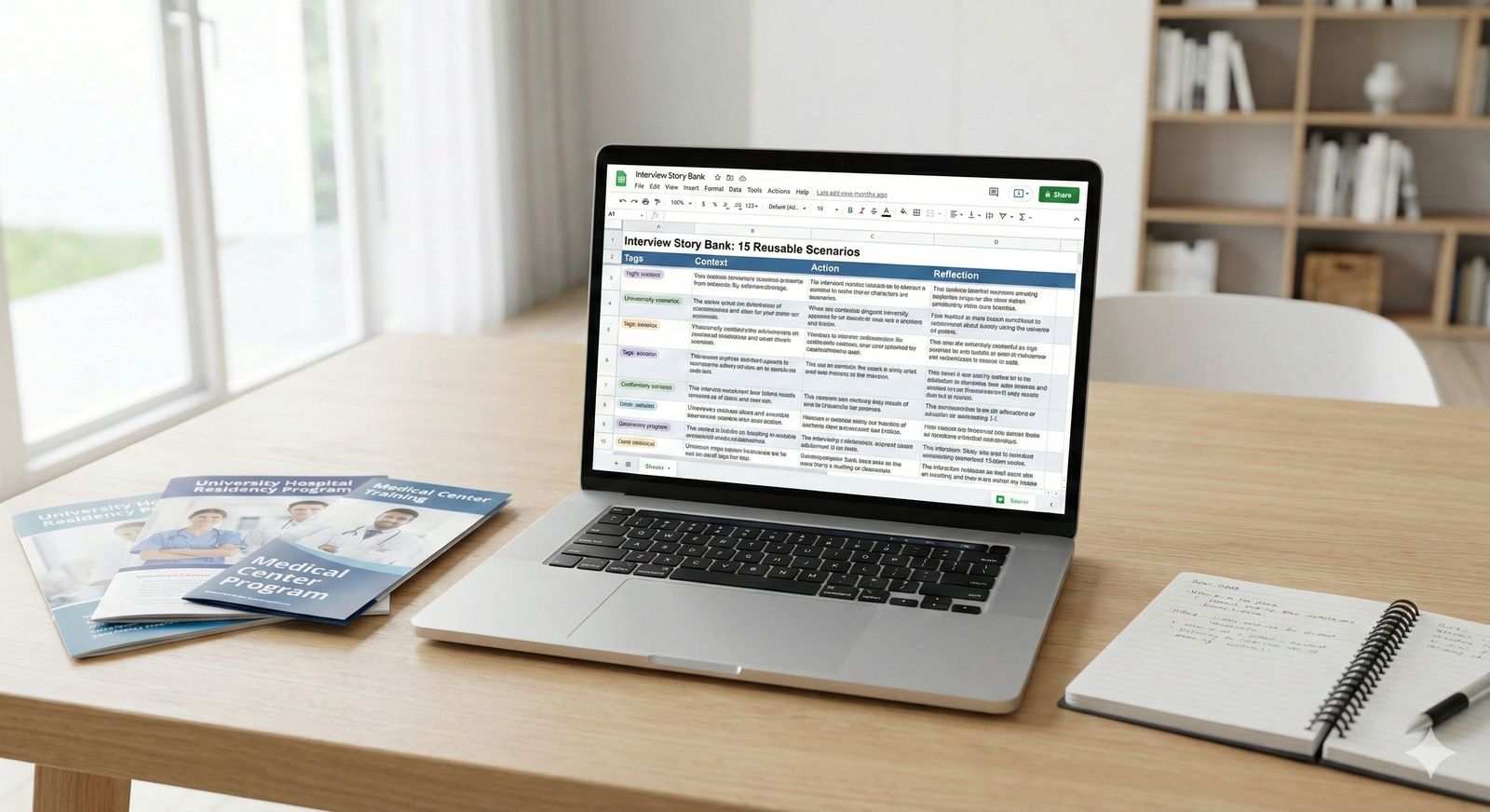
- If you’re in the diagnostic radiology match, consider keeping a simple spreadsheet scoring programs on your top 4–5 criteria based on answers you heard.
These notes will be invaluable when building your rank list months later.
4. Pay Attention to Nonverbal and Indirect Cues
Sometimes what’s not said is as important as what is:
- Long pauses, evasive answers, or frequent deflection are subtle red flags.
- Residents who hesitate when you ask “Would you choose this program again?” are giving you crucial data.
- Overly defensive responses when you ask about workload, burnout, or recent program changes may suggest deeper issues.
Conversely, consistency in answers across different people and enthusiasm when talking about graduates or departmental changes are positive signs.
FAQs: Questions About Asking Questions
1. Is it okay to ask about moonlighting and salary?
Yes—these are legitimate components of your training and life. Better ways to ask:
- “Do residents have opportunities for internal or external moonlighting? At what PGY level does that usually start?”
- “How does the program approach balancing moonlighting with wellness and educational priorities?”
Avoid sounding like money is your only priority; frame it within the bigger picture of training and life balance.
2. What are some red-flag answers from programs?
Potential red flags include:
- Vague or evasive responses to questions about board pass rates, fellowships, or resident attrition.
- Residents universally describing themselves as “tired” or “burned out” with little evidence of efforts to improve.
- Programs dismissing wellness or diversity questions as unimportant or “buzzwords.”
- Leadership who seem disengaged from day-to-day resident experiences.
One off answer isn’t everything, but patterns matter.
3. How many questions should I ask in each interview?
Aim for:
- Faculty/PD interviews: 2–3 well-thought-out questions per encounter.
- Resident-only sessions: 4–6 questions spread across several residents, with the flexibility to go deeper on key topics.
If time is limited, prioritize your top two: one about training/education and one about culture/wellness.
4. Can asking “tough” questions hurt my chances?
If you ask respectfully and with genuine curiosity, thoughtful programs will respect you more, not less. The key is tone and phrasing:
- Good: “How has the program responded to resident feedback about call burden in recent years?”
- Risky: “I’ve heard your call is terrible—why is it so bad?”
You are choosing a professional home for four years. Serious, mature questions signal that you are equally serious about your training.
Using intentional, well-crafted questions to ask programs in diagnostic radiology will help you see beyond glossy marketing and uncover what truly matters: how you will grow, be supported, and become the radiologist you aim to be. Treat every interview as a two-way conversation, and let your questions guide you toward the programs where you’ll thrive.