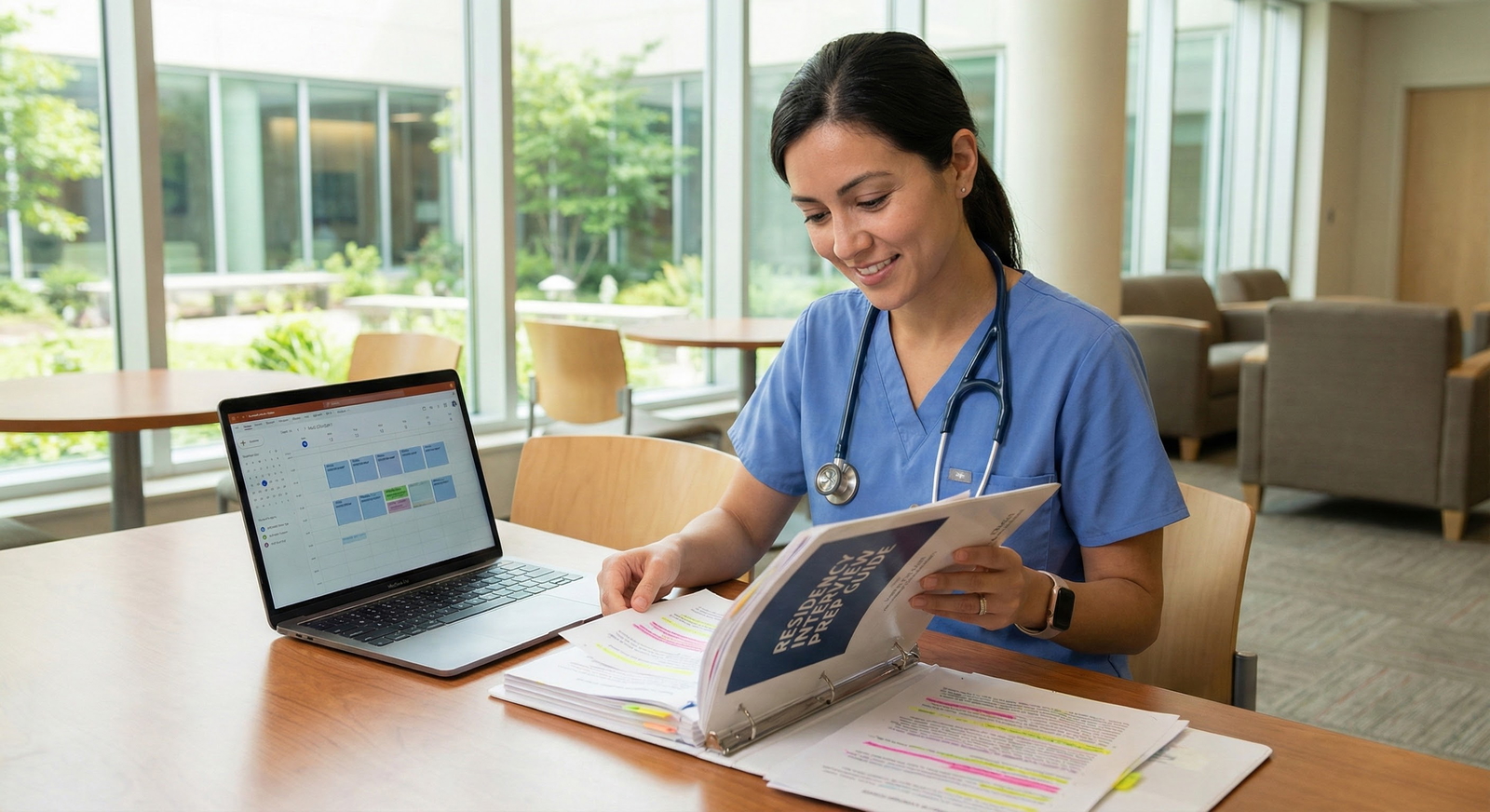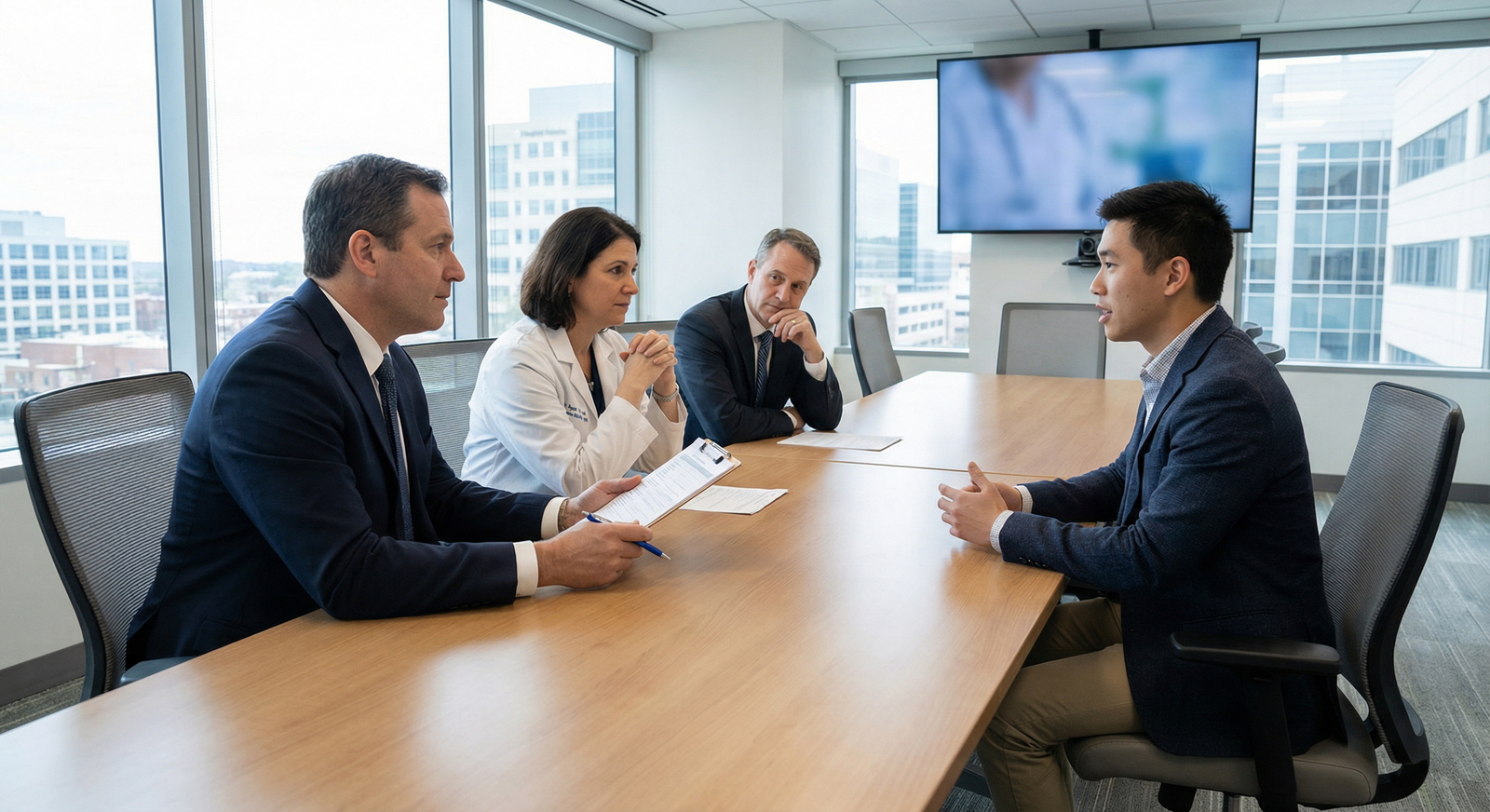
Why Your Questions Matter More Than You Think
As an MD graduate entering neurology, your questions during residency interviews and open houses are one of the strongest ways to evaluate fit—and to stand out as a thoughtful candidate.
Programs are not just assessing whether you can do the work; they’re evaluating whether you understand what neurology residency really entails and whether you’re asking the right things. For you, this is about much more than “sounding smart.” The questions you ask residency programs will:
- Reveal the true culture behind the sales pitch
- Clarify how well they will support your growth as a neurologist
- Help you compare programs when several neurology residency offers feel similar
- Signal to programs that you’re engaged, mature, and serious about the specialty
This guide focuses specifically on questions to ask neurology residency programs as an MD graduate from an allopathic medical school. You’ll find:
- The most important domains to ask about
- Example word-for-word questions you can adapt
- What the answers might reveal
- Separate sections for questions to ask program directors, residents, and at second looks
Throughout, you’ll see the core neurology-specific priorities: exposure to neurocritical care, EEG/EMG, stroke, outpatient neurology, and preparation for a competitive neuro match (fellowships like epilepsy, stroke, neurophys, movement disorders, etc.).
1. Strategy First: How to Approach Questions During Neurology Interviews
Before we dive into lists, it helps to have a strategy. Interview days are busy, and you won’t be able to ask everything.
Anchor Your Questions Around Your Priorities
As an MD graduate, you likely already know some of what matters to you. Common priority areas include:
- Strong inpatient neurology (stroke, neuro ICU, consults)
- Outpatient clinic experience and continuity
- EEG/EMG exposure and neurophysiology
- Research and academic neurology paths
- Lifestyle, call schedule, resident well-being
- Fellowship preparation and match outcomes
Spend 10–15 minutes before each interview listing 3–4 top priorities. Then customize your questions to those topics.
Avoid “Website Questions”
If it’s clearly listed on the website or in their FREIDA profile, don’t waste valuable time asking it directly. Instead:
- Don’t ask: “How many residents do you take each year?”
- Better: “I saw that you take 6 residents per year. With that size class, how do you structure mentorship and resident support?”
This shows you’ve done your homework and are asking for insight, not basic information.
Balance Depth with Positivity
You should absolutely ask about challenges—but phrase questions constructively. For example:
- “What are some areas the program is currently working to improve, and how are residents involved in that process?”
This reads as mature and solutions-oriented rather than negative.
2. Core Questions to Ask the Program Director (PD) and Leadership
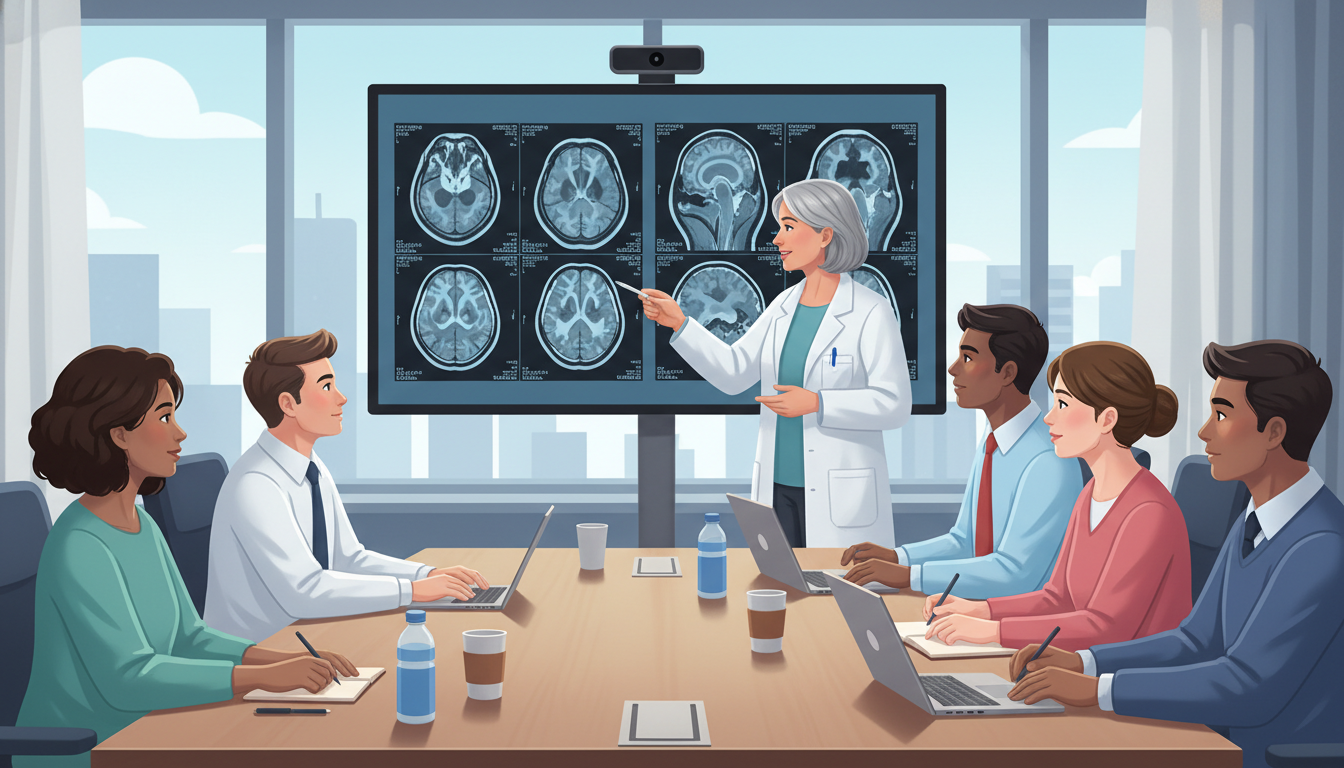
When you think about what to ask program director during a neurology interview, focus on the big-picture themes: training philosophy, resident support, academic development, and the direction of the program.
A. Program Philosophy and Culture
1. “How would you describe the ideal resident who thrives in this neurology residency?”
What it reveals: Who succeeds here—academic vs. community-minded, independent vs. heavily supervised, research-focused vs. clinically focused.
2. “What are you most proud of about this neurology residency, and what are you currently working to improve?”
What it reveals: Program transparency, areas of growth (e.g., outpatient volume, neuro ICU presence, subspecialty exposure), leadership honesty.
3. “How would you describe the culture among residents and between residents and faculty?”
Follow-up:
- “Can you share an example of how faculty supported a resident going through a challenging time?”
Look for: Specific examples rather than vague “we’re like a family” statements.
B. Clinical Training and Autonomy
As an MD graduate from an allopathic medical school, you’ll often be compared to DO or IMG applicants. Strong questions show you’re focused on training quality.
4. “How is progressive autonomy built into the program from PGY-1 through PGY-4?”
Follow-up:
- “By the time residents graduate, what types of cases and decisions are they managing independently?”
5. “How is the balance between inpatient neurology (stroke, consults, neuro ICU) and outpatient neurology structured across the years?”
What to listen for:
- Clear exposure to stroke and neurocritical care
- Adequate outpatient continuity and subspecialty clinics
- Avoiding an overwhelmingly inpatient-heavy experience that limits clinic skills
6. “How much exposure do residents get to EEG, EMG, and neurophysiology overall?”
For a future neuro match (epilepsy, neurophys, sleep), this is key.
Follow-up:
- “Are residents able to independently read basic EEGs or EMGs by graduation?”
- “How early can we start getting involved in neurophysiology if we’re interested?”
C. Academics, Research, and Fellowship Preparation
7. “What structures are in place to support residents pursuing research—especially in stroke, epilepsy, movement disorders, or neuroimmunology?”
Possible follow-ups:
- “Is there protected research time?”
- “How are residents paired with research mentors?”
- “Could you share examples of recent resident projects or publications?”
8. “How do you help residents prepare for a competitive neuro match and fellowships?”
Look for:
- Formal advising
- CV-review sessions
- Mock interviews
- Data on match into subspecialties like vascular neurology, epilepsy, movement, neuromuscular, etc.
9. “What have your neurology residency graduates done after training over the past 5 years—fellowships, academic positions, community practice?”
You’re looking for: a clear sense of outcomes. This is one of the most powerful interview questions for them when you want program-specific evidence of success.
D. Program Changes and Stability
10. “Have there been any major changes in the program over the last few years, and do you anticipate any significant changes in the near future?”
Examples: New hospital expansions, change in chair, switching primary training site, adding or losing neuro ICU, etc.
11. “How has the program responded to resident feedback in the past?”
Ask for specifics:
- “Can you share an example of feedback residents gave and what changed as a result?”
A PD who can point to clear changes based on feedback suggests a responsive, evolving program.
3. High-Yield Questions for Current Neurology Residents
Residents will give you the most honest, practical information about what life in the program is truly like. This is where many of your highest-yield questions to ask residency programs belong.
A. Daily Life and Workload
1. “Walk me through a typical day for a PGY-2 on the inpatient neurology service here.”
Listen for:
- Start and end times
- Census size
- How many new consults per day
- How manageable the workload feels
2. “On your busiest rotations, how sustainable does the schedule feel? Are you still able to sleep, eat, and function like a human?”
This often produces candid responses. Notice whether they hesitate or laugh nervously.
3. “What does call look like at each level of training?”
Follow-up specifics:
- “Is it in-house or home call?”
- “What’s the average number of pages/admissions overnight?”
- “How many nights in a row?”
For an MD graduate, it’s especially important to know how much responsibility you’ll handle early and whether support is robust.
B. Education and Teaching Quality
4. “How consistently do scheduled didactics and noon conferences actually happen?”
You want to know whether clinical duties routinely swallow education time.
5. “Are attendings good about teaching on busy inpatient services, or does education mostly happen in conference rooms?”
You’ll get a sense of how strong on-the-fly teaching is versus formal didactics.
6. “How supportive are attendings when you say, ‘I don’t know’ or need help?”
Red flags: Residents who seem afraid to ask for help or describe being shamed.
C. Resident Culture and Well-Being
7. “How would you describe the relationships among the residents? Is the environment more collaborative or competitive?”
8. “When someone is struggling—clinically, personally, or emotionally—what actually happens here? How does the program show up for that resident?”
9. “Have you ever considered leaving the program, and if so, what made you stay?”
This is a bold question but often yields very honest answers. Use your judgment and rapport to decide when it’s appropriate.
D. Logistical and Lifestyle Realities
10. “Where do most residents live, and what is your commute like?”
11. “What’s the reality of vacation—do you actually get to take all your days off without guilt or coverage drama?”
12. “Do residents feel safe in and around the hospital, especially during night shifts?”
E. Neurology-Specific Experience
13. “Do you feel confident managing common neurological emergencies (status epilepticus, acute ischemic stroke, spinal cord compression) independently by your senior year?”
14. “How’s the exposure to subspecialties like movement disorders, neuromuscular, headache, epilepsy, and neuroimmunology?”
Follow-up:
- “Are there any areas you wish you had more exposure to?”
15. “How early do residents start thinking about neuro match and fellowships, and how does the program support you during that process?”
This gets at both mentorship and timing—critical for a strong neurology residency outcome.

4. Questions to Ask About Curriculum, Rotations, and Fellowships
Beyond culture, you’re choosing a training environment that will shape your skills for decades. Use pointed questions to understand the structure and outcomes of the neurology curriculum.
A. PGY-1 and Early Neurology Exposure
For many MD graduates, the PGY-1 year makes or breaks their early impression of the program.
1. “What does the PGY-1 year look like for neurology residents in terms of medicine vs. neurology time?”
Follow-up:
- “Is there any early neurology exposure during the intern year?”
- “Do interns feel like part of the neurology department from day one?”
2. “How well does your PGY-1 year prepare you for PGY-2 neurology responsibilities?”
Ask this to residents to get real answers.
B. Inpatient vs. Outpatient Balance
3. “How is the mix of inpatient stroke, general neurology, neuro ICU, and consult services designed over the four years?”
4. “How much continuity clinic do residents have, and do you feel it’s enough to build outpatient neurology skills and follow patients over time?”
C. Subspecialty and Elective Time
5. “How much elective time is available, and how flexible is it?”
Follow-up:
- “Can residents do away rotations or external electives?”
- “Are there limitations for visa or funding reasons?” (If relevant to you or your peers.)
6. “Is there enough flexibility to tailor the experience if you’re interested in a particular path—like vascular neurology, neurocritical care, epilepsy, or neuromuscular?”
D. Procedure and Technical Skill Exposure
For neurology, this includes lumbar punctures, Botox injections, EMG performance, EEG interpretation, and sometimes intra-arterial procedures (if stroke-heavy).
7. “How many lumbar punctures, EMGs, and EEG readings do residents typically perform or interpret by the end of training?”
8. “Are residents able to become credentialed or demonstrate competency in specific procedures by graduation?”
This is vital if you see yourself in a community practice where you’ll be the primary neurologist doing basic procedures.
E. Fellowship and Career Outcomes
9. “Can you share a recent breakdown of where your last 3–5 graduating classes matched for fellowships or went into practice?”
Ask for:
- Subspecialties
- Institutions
- Proportion going into academics vs community
10. “For residents interested in academic careers, what concrete opportunities exist—such as teaching medical students, leading QI projects, or obtaining education-focused mentorship?”
These questions help you assess whether the program aligns with your vision beyond residency.
5. Questions to Ask at Second Looks and Late in Interview Season
As you approach rank list decisions, your questions should help you differentiate among programs that initially felt similar.
A. Comparative and Clarifying Questions
1. “If you had to name one or two aspects that most clearly distinguish this neurology residency from others you’re familiar with, what would they be?”
Ask this of PDs, APDs, and residents—you’ll get surprisingly different answers.
2. “If you were choosing your neurology residency again today, would you choose this program, knowing everything you know now—and why or why not?”
Ask this only when there’s enough rapport to invite honesty.
B. Long-Term Fit and Support
3. “How does the program support residents who change their career goals—for example, someone who starts thinking they’re community-bound but later becomes interested in a research-heavy neuro match?”
4. “What formal and informal mentorship structures exist—assigned faculty mentors, peer mentors, research mentors?”
Follow-up:
- “How easy is it to switch mentors if your interests change?”
C. Program Leadership and Direction
5. “What is your long-term vision for this neurology residency over the next 5–10 years?”
This is a powerful what to ask program director question late in the season. It shows you’re thinking long-term—and it reveals whether the program is stable, growing, or in flux.
6. “How has the department navigated recent challenges in healthcare—such as staffing shortages, increasing volume, and burnout?”
You’re listening for systems-level thinking and institutional support, not just “we work harder.”
D. Specific Clarifications for MD Graduates
As an MD graduate from an allopathic medical school, you may be especially interested in:
7. “How are MD graduate residency applicants typically integrated into the most competitive rotations or research projects—are there any structural advantages or expectations?”
8. “Are there unique opportunities here because of the allopathic medical school affiliation—such as access to PhD collaborators, basic neuroscience labs, or large clinical trial networks?”
These questions help highlight what you, as an MD-trained applicant, can uniquely leverage.
6. How to Use Answers to Shape Your Rank List
Gathering information is only half the job. You also need a structured way to synthesize what you learn from all these questions to ask residency programs.
Build a Simple Comparison Framework
For each program, rate 4–6 domains from 1–5 after interview day:
- Clinical training strength (stroke, neuro ICU, consults, outpatient)
- Subspecialty and fellowship preparation
- Resident culture and well-being
- Teaching quality and academic environment
- Location and lifestyle
- Program leadership and stability
Beside each category, jot down a few key points that came directly from your interview questions for them—such as:
- “Residents say call is busy but ‘very doable’ and they feel well-supported.”
- “PD clearly articulated vision and showed specific examples of ongoing improvements.”
- “Limited exposure to movement disorder; residents recommend self-directed learning if interested.”
Watch for Consistency
Compare what the PD says with what residents say:
- If leadership describes a “collaborative, balanced environment,” but residents repeatedly mention burnout or lack of support, that inconsistency is a red flag.
- If multiple people independently highlight the same strengths (e.g., “our stroke program is phenomenal,” “we match very well into vascular neurology”), that’s likely a core area of true excellence.
Reflect on How You Felt
Beyond data, notice:
- Did you feel comfortable asking questions?
- Did residents seem like people you’d want to work alongside at 3 a.m.?
- Did you feel seen and respected as an MD graduate ready for rigorous neurology training?
Your emotional impressions, combined with structured data from your questions, will help you create a rank list you can feel confident about.
FAQs: Questions to Ask Neurology Residency Programs
1. How many questions should I ask during a neurology residency interview?
Aim for quality over quantity. In each PD or faculty interview, 2–4 thoughtful questions are usually ideal. With residents (during socials or Q&A sessions), you can ask more—often 5–10 across the whole day. The goal is to have a core list of must-ask questions plus a few optional ones if time allows.
2. What if my mind goes blank when they ask, “Do you have any questions for us?”
Prepare a short written list in advance and keep it in front of you (or on your screen for virtual interviews). You can say, “Yes, I jotted down a few questions as I was learning about your program,” and refer to that list. Having 6–8 strong questions prepared ensures you always have something meaningful to ask.
3. Are there any questions I should avoid asking?
Try to avoid:
- Questions clearly answered on the website (“How many electives do we get?”)
- Overly negative or confrontational questions (“I heard your program is malignant—why?”)
- Questions about salary or vacation early in the conversation (these are fine later or with residents, but shouldn’t be your first priorities)
Instead, frame concerns constructively, such as:
- “How does the program support resident wellness, especially on your busiest services?”
4. How can I tailor my questions if I’m especially interested in a specific neuro match fellowship, like epilepsy or stroke?
Make your interests clear and targeted:
- “I’m very interested in pursuing an epilepsy fellowship. How early can residents get involved with EEG reading or epilepsy research here?”
- “What has been the match success of residents into [vascular neurology/epilepsy/movement disorders] over the last few years, and what helped them be successful?”
This shows focus and maturity, and helps you judge whether the program is a strong launching pad for your specific neurology career goals.
By approaching each interview day with a clear strategy and a refined set of questions to ask programs, you’ll gain much deeper insight into each neurology residency than you could from websites or brochures alone. As an MD graduate, your ability to ask nuanced, neurology-specific questions is one of your strongest tools—use it to build the career, and the training environment, that truly fits you.