
Why Your Questions Matter in the Otolaryngology Match
In otolaryngology, strong board scores and research get you the interview—but the otolaryngology match is often decided in the margins: your fit, curiosity, professionalism, and how well you understand what you want from an ENT residency. One of the most powerful tools you have is the quality of the questions you ask programs.
Thoughtful, specific questions to ask residency programs:
- Help you compare very different ENT residency experiences
- Signal to faculty that you understand the field and are ready for its demands
- Reveal culture, workload, teaching quality, and red flags that won’t be obvious on the website
- Give you concrete data to use when you build your rank list
This guide breaks down high‑yield, specialty‑specific questions to ask programs in otolaryngology (ENT)—organized by who you’re talking to and what you’re trying to learn. It also includes sample phrasing so you can turn “good ideas” into actual interview questions for them, and helps you decide what to ask program directors versus residents and other faculty.
Strategy First: How to Approach Questions in ENT Residency Interviews
Before diving into lists, you need a strategy. Asking smart questions is not just about having a long list—it’s about:
- Choosing the right person for each question
- Showing you’ve done your homework
- Adapting to what you hear in real time
- Using your questions to test your own priorities
Step 1: Clarify Your Own Priorities
Different otolaryngology applicants want different things. Before the interview day, list your top 5–7 priorities. For example:
- Breadth and depth of surgical experience (especially in PGY‑2–3)
- Balance of general ENT vs subspecialty exposure
- Fellowship placement and mentorship in a specific niche (e.g., otology, peds ENT, H&N, facial plastics, laryngology, rhinology)
- Program culture and resident well-being
- Operative autonomy vs “fellow‑heavy” environment
- Call burden and backup systems
- Research infrastructure (basic science vs outcomes vs QI vs industry collaboration)
- Location, cost of living, and support for partners or families
Then build your question list around those, so every question serves a purpose.
Step 2: Match the Question to the Person
Not all questions belong with the program director (PD). Rough guideline:
- Program Director / Assistant PD: Curriculum, vision, changes in the program, outcomes, big‑picture philosophy, formal policies.
- Residents (especially junior vs senior): Day‑to‑day realities, culture, call, operative autonomy, how things actually work vs how they’re advertised.
- Subspecialty Faculty: Depth of subspecialty exposure, fellowships, mentorship, research opportunities, surgical complexity.
- Program Coordinator / Staff: Logistics, scheduling, administrative support.
A common mistake in ENT residency interviews is asking residents only generic questions (“Are people nice?”) and missing the chance to probe real differences (call structure, operative exposure, how they handle difficult attendings).
Step 3: Don’t Ask What You Should Already Know
Reading the website, program brochure, and FREIDA is mandatory. Avoid questions easily answered by:
- A simple Google search
- The first page of the program’s website
- The interview invitation email
Instead, build on what you’ve learned:
“I saw on your website that you recently added robotic cases to your head and neck practice. How has that changed resident involvement in those cases?”
This makes you look prepared and engaged.

High-Value Questions to Ask Program Directors in ENT
When you’re thinking about what to ask the program director, focus on strategy, structure, and outcomes—things only leadership can fully answer. Here are targeted questions you can adapt.
1. Program Philosophy and Vision
You want to know: What kind of otolaryngologist does this program aim to produce? Where is it headed?
Questions to ask residency leadership:
- “How would you describe the type of otolaryngology graduate your program is designed to produce—more fellowship‑bound academic surgeons, community generalists, or a mix?”
- “What do you see as this program’s greatest strengths compared to other ENT residency programs?”
- “What are 2–3 concrete changes you’ve made in the last few years based on resident feedback, and how did you implement them?”
- “Where do you see the program in 5–10 years in terms of case volume, subspecialty coverage, and research?”
What you’re listening for:
- Clear, consistent identity (e.g., strong community experience vs heavy academic, tertiary referral focus)
- Evidence they listen to residents and actually change things
- A realistic but ambitious vision (not vague or defensive answers)
2. Curriculum and Operative Experience
Otolaryngology is procedurally intense, and programs vary dramatically in how quickly you get into the OR and how hands‑on you are.
Targeted questions:
- “How is surgical autonomy structured across PGY‑2 to PGY‑5? When do residents typically start acting as primary surgeon on common procedures like tonsils, septoplasties, tubes, and tracheostomies?”
- “Can you walk me through the typical operative experience of a PGY‑2 and PGY‑3 here? What are they primarily responsible for?”
- “Are there any key index cases or subspecialty volumes you’ve had to actively protect for residents, especially where fellows are present?”
- “How do you track resident case numbers in core areas like head and neck oncologic resections, otologic cases, and endoscopic sinus surgery? What happens if someone is trending low?”
Red flag clues:
- Vague or non‑specific answers about autonomy
- Overemphasis on “observe first, then slowly assist” with little detail about when residents actually lead
- Heavy fellowship presence with no clear mechanism to protect resident cases
3. Subspecialty Exposure and Rotation Structure
ENT is broad. You need enough exposure to decide on a fellowship and be a safe generalist.
Questions:
- “How is exposure to the major subspecialties—otology, rhinology, head and neck, facial plastics, laryngology, and peds ENT—structured across the five years?”
- “Are there any subspecialty areas where you’ve intentionally expanded or are working to strengthen exposure?”
- “Do residents rotate at community or VA hospitals, and how does the operative experience differ from the main academic site?”
- “Are there opportunities for visiting electives or external rotations in areas where local volume may be limited, such as advanced otology or complex airway?”
4. Fellowship Matching and Career Outcomes
ENT is fellowship‑heavy, but a good program should also prepare excellent generalists.
Key questions:
- “Over the last 5 years, what proportion of graduates pursued fellowship training, and in which subspecialties?”
- “How does the program support residents who want to enter directly into comprehensive or community otolaryngology?”
- “Can you give examples of recent career paths of graduates—both academic and community?”
- “For residents targeting competitive fellowships (e.g., otology, facial plastics), what specific resources or mentorship do you provide?”
What to notice:
- Do they know their own match and job placement data well?
- Do they sound equally proud of surgeons going into community practice, or do they only highlight academics?
5. Research Expectations and Support
Most otolaryngology programs expect some scholarly activity; some have a heavy research culture or dedicated research time.
Questions:
- “What are the expectations around research for residents here? Is there protected research time built into the schedule?”
- “Can you describe the range of research being done—basic science, translational, clinical outcomes, QI—and how residents typically get involved?”
- “If a resident has a strong research interest or existing projects from medical school, how do you help them integrate that into their time here?”
- “How are residents supported to present at national meetings like COSM, AAO-HNS, or subspecialty societies—both with time and funding?”
6. Culture, Well-Being, and Difficult Situations
You won’t ask, “Is this a malignant program?” directly—but you can ask questions that reveal how the program handles strain, conflict, and change.
Subtle but powerful questions:
- “What qualities do you see in residents who really thrive here?”
- “Can you describe a time when the program faced a major challenge—such as a service expansion, accreditation issue, or staffing shortage—and how residents were involved in addressing it?”
- “How do you handle situations when a resident is struggling—be it with clinical performance, wellness, or personal issues?”
- “How does the program gather and act on resident feedback about workload, call, or specific rotations?”
You’re looking for:
- Concrete processes, not platitudes
- Evidence of psychological safety and honest feedback channels
- A track record of responding to resident concerns
High-Yield Questions to Ask Residents (and How to Read Between the Lines)
Residents are your best source of unfiltered information about what the program is actually like. These are some of the most impactful questions to ask residency residents in otolaryngology.
1. Day-to-Day Life, Workload, and Call
These questions go beyond “How busy are you?” and instead get at balance, support, and sustainability.
Examples:
- “Can you walk me through a typical weekday for a PGY‑2 on the main otology or peds service here—from pre‑rounds to sign‑out?”
- “How is home call vs in‑house call structured, and how often are you actually called in overnight?”
- “When you’re on call, do you generally feel backed up by senior residents and attendings? Are there certain services or nights that are particularly challenging?”
- “What does a typical weekend on call look like here—consult volume, OR cases, and post‑call recovery?”
What to listen for:
- Whether “we’re busy” sounds energized or resentful
- If they volunteer that attendings are approachable at night
- How often post‑call days are actually honored
2. Operative Autonomy and “Real” Surgical Training
Current residents know where they truly get to operate versus retract or observe.
Questions:
- “On your last few OR days, what kinds of cases did you do, and what portion of the case did you perform yourself?”
- “At what point in training did you start feeling like the primary surgeon on bread‑and‑butter cases like tonsils, septoplasties, FESS, or thyroids?”
- “In rooms where there are fellows, how is resident vs fellow role determined? Are there services where residents feel they consistently get great autonomy?”
- “Do you ever worry about meeting case requirements in any particular area? If so, how does the program respond?”
Red flags:
- Lots of talk about “great exposure” but vague descriptions of actual hands-on operating
- Repeated mention of “lots of observers” or “double‑scrubbing with fellows” without resident leadership
3. Culture: How People Treat Each Other
Culture is harder to quantify but critically important. Good questions uncover respect, safety, and camaraderie.
Questions:
- “How would you describe the relationship between residents and faculty here—both in the OR and outside of it?”
- “Have you ever seen a resident raise a concern about workload, mistreatment, or patient safety? How was it handled?”
- “If you could change one thing about the culture here, what would it be?”
- “What do residents typically do together outside the hospital? Are there genuine friendships across classes?”
Watch for:
- Consistency across different residents’ answers
- Whether they can name real examples, not just say “We’re like a family”
- If anyone hesitates or looks to others before answering honestly
4. Education, Feedback, and Exam Prep
Otolaryngology has a steep learning curve; you want a place that teaches well, not just throws you in.
Questions:
- “How are didactics structured—Core Curriculum, temporal bone lab, simulation, tumor board, M&M? Which sessions do you find most valuable?”
- “Do you feel there is protected time for teaching, or are you often pulled away for clinical duties?”
- “How do attendings typically give you feedback—formally at the end of rotations or informally in the OR and clinic?”
- “How did the program help you prepare for the ENT in‑service exam, and has there been any change based on past results?”
5. Support Outside the OR: Life, Family, and “Being Human”
You’ll be an ENT resident, but also a person.
Questions:
- “How do people here handle major life events—kids, illness in the family, personal crises? Have you seen the program be flexible?”
- “Do residents generally feel comfortable taking vacation when they need it, or is there guilt or difficulty around scheduling?”
- “How affordable is it to live here on a resident salary? Where do most residents live, and what’s the commute like?”
- “For partners or spouses, especially if they’re also in medicine or training, how supportive has the program been with scheduling or location needs?”
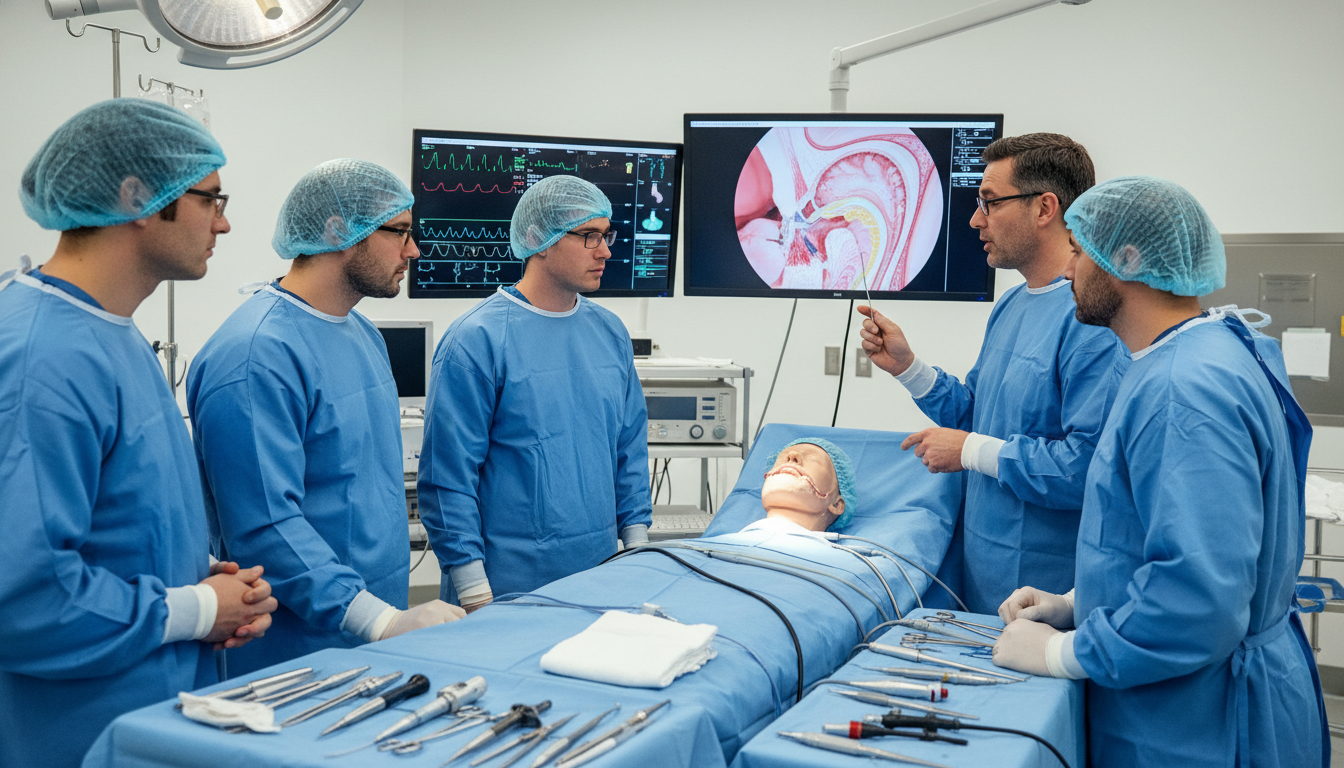
Subspecialty- and ENT-Specific Questions You Shouldn’t Forget
Because ENT is so diverse, asking subspecialty‑focused questions helps distinguish one program from another beyond generic interview questions for them.
Otology and Neurotology
- “What is the typical resident experience with tympanoplasty, mastoidectomy, and stapedectomy? Who usually does what portions of the case?”
- “How often do residents participate in cochlear implant cases, and what is your role in the OR and postoperative management?”
- “Is there exposure to lateral skull base surgery? If so, what is the resident’s involvement relative to fellows or neurosurgery?”
Rhinology and Skull Base
- “How early and how often do residents get hands‑on experience with FESS, septoplasty, and nasal valve surgery?”
- “Do residents participate in endoscopic skull base cases, and what parts of those cases are they typically involved in?”
- “Is there access to cadaver labs or simulation specifically for sinus and skull base approaches?”
Head and Neck / Oncologic Surgery
- “What is resident involvement in major head and neck resections and free flap reconstructions?”
- “For PGY‑4 and PGY‑5 residents, how independently do they manage postoperative flap monitoring and decision‑making?”
- “How active is your multidisciplinary tumor board, and what is the resident role?”
Pediatric Otolaryngology
- “Where do the pediatric ENT cases take place, and how is time divided between the children’s hospital and adult sites?”
- “Who typically performs pediatric airway procedures—like bronchoscopies and laryngotracheal reconstructions—and what is resident involvement?”
- “Do residents gain experience managing complex pediatric airway and sleep surgery patients longitudinally?”
Facial Plastics and Reconstruction
- “What is the breadth of facial plastics exposure—cosmetic cases, MOHS reconstruction, trauma, congenital deformities?”
- “In facial trauma call, are ENT residents the primary responders, or is it shared with other services like plastics or OMFS?”
- “How do residents who are interested in facial plastics build a competitive fellowship portfolio here?”
Virtual vs In-Person: Adapting Your Questions
Whether your ENT residency interviews are virtual or in‑person, the core content of what to ask is similar—but the way you gather information changes.
In-Person Interviews
You can read body language and hallway interactions. Use downtime to ask:
- “What have you noticed about attendings’ interactions with residents during rounds this morning?”
- “I saw the call rooms briefly—do you usually use these when on call, or is most call from home?”
You can also directly compare facilities, simulation labs, and the feel of the hospital.
Virtual Interviews
You lose the informal cues, so your questions must be even more precise.
- Ask residents explicitly: “What’s one thing about this program that doesn’t come across well on Zoom but is a big part of daily life?”
- “How has the program maintained a sense of community among residents, especially during times of remote learning or increased virtual care?”
If you’re invited to virtual socials, prepare a different set of questions from the formal interview day—more candid, culture-oriented, and lifestyle-focused.
Putting It All Together: Building Your Personal Question List
To make these questions usable during a busy ENT interview season, turn them into a one-page, prioritized list.
Step 1: Create Three Buckets
- Must-Ask PD Questions (3–5 per program)
- Must-Ask Resident Questions (5–7 per program)
- Flexible / “If Time Allows” Questions (extras)
Step 2: Tailor by Program
Before each interview:
- Review the website, case logs (if available), and any program‑specific handouts.
- Adjust at least 2–3 questions to connect to something unique about that program (a new hospital, a particular research lab, a famous subspecialty division).
Example adaptation:
Standard question: “How do residents interested in otology build a competitive fellowship application here?”
Tailored: “Since your program has a strong relationship with neurotology and skull base surgery, how do residents plug into those cases and research early on if they’re aiming for otology fellowship?”
Step 3: Track Answers for Your Rank List
After each interview day, jot down:
- Strengths: 3–5 bullet points
- Concerns / Red Flags: 2–3 bullet points
- Answers to your top priority questions (call, autonomy, fellowship match, culture, etc.)
Having structured notes based on consistent questions will make your final rank list much more grounded and less emotional.
FAQs: Questions to Ask Programs in Otolaryngology (ENT)
1. How many questions should I ask during an ENT residency interview?
Aim for 2–4 meaningful questions per interview segment (e.g., with PD, residents, faculty). Quality matters more than quantity. If your questions are informed and specific, 2–3 well‑chosen ones can demonstrate far more insight than a rapid-fire list.
2. What are bad questions to ask residency programs in ENT?
Avoid questions that are:
- Easily answered on the website or in the interview invitation (e.g., “How long is your residency?”)
- Overly personal or confrontational (e.g., “Are there any malignant attendings I should avoid?”)
- Focused exclusively on lifestyle without showing interest in training (“How early do you usually get out every day?” as your first and only question)
Instead, ask neutral but probing questions like, “Can you describe the most challenging rotations in terms of workload, and how residents are supported through them?”
3. Should I ask the same questions at every otolaryngology program?
Have a core set of questions to ask every program—especially around operative autonomy, call, and culture—so you can compare. But always tailor a few questions to that program’s unique features (e.g., strong peds ENT, huge VA, heavy research).
4. Is it okay to ask directly about fellowship match and board pass rates?
Yes. In the context of the otolaryngology match, it’s entirely appropriate to ask:
- “What have board pass rates been like for your residents over the last several years?”
- “Could you share recent fellowship match trends and how the program supports residents in that process?”
Thoughtful, outcome‑focused questions to ask residency leadership signal that you’re serious about your training and long‑term growth.
By preparing intentional, specialty‑focused questions in advance—and directing them to the right people—you’ll gain a much clearer picture of where you’ll thrive as an otolaryngologist, and you’ll present yourself as a mature, engaged future colleague in a highly competitive field.