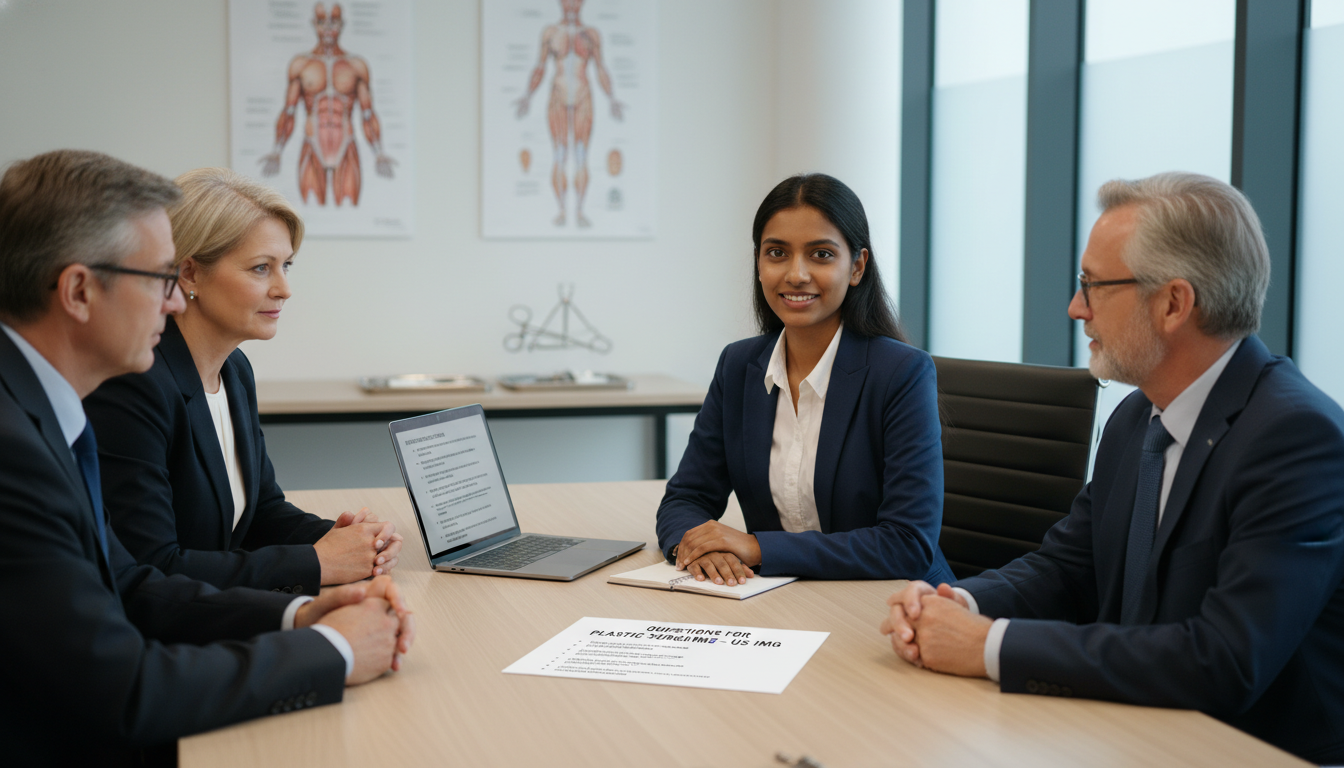
If you are a US citizen IMG (American studying abroad) aiming for plastic surgery, you already know you’re targeting one of the most competitive specialties and one of the most competitive paths: the integrated plastics match. Your interview days and pre-/post-interview communications are not just about programs evaluating you—they are also your opportunity to evaluate whether each residency is truly the right fit for your goals, training style, and life circumstances.
This article will walk you through smart, high-yield questions to ask programs—tailored specifically for US citizen IMGs in plastic surgery. We’ll cover what to ask program directors, residents, coordinators, and how to adapt your questions whether you’re interviewing in person or virtually.
Why Your Questions Matter Even More as a US Citizen IMG in Plastic Surgery
As a US citizen IMG or American studying abroad, you may face additional layers of scrutiny in the plastic surgery residency selection process:
- Programs may want reassurance about your clinical readiness coming from a non-US system.
- They may have limited experience with IMGs and therefore unclear expectations.
- You may need extra clarity on visa issues (if applicable, e.g., dual citizenship), licensing, and requirements for clinical experience.
- You’re competing for spots in a small, highly selective specialty where subtle differences between programs matter a lot.
Because of this, your interview questions for them are more than just “polite conversation.” Carefully chosen questions:
- Signal that you understand the plastic surgery training landscape.
- Demonstrate that you’re thinking like a future colleague, not just an applicant.
- Help you determine if the program truly supports and understands US citizen IMGs.
- Provide concrete information you can use when building your rank list.
A useful framework for crafting questions:
- Clarify Fit – “Is this environment where I will thrive?”
- Clarify Support – “How will this program invest in me as a trainee and future plastic surgeon?”
- Clarify Outcomes – “Where do graduates go, and will this help me reach my goals?”
- Clarify IMG-Readiness – “Does this program understand and support the specific needs of US citizen IMGs?”
Strategic Questions to Ask the Program Director and Core Faculty
The program director (PD) and core faculty are where you should focus your big-picture, strategic questions. This is also the best setting for questions that show maturity, insight, and an understanding of integrated plastics training.
1. Questions That Show You Understand Plastic Surgery Training
These questions communicate that you grasp the demands of an integrated plastic surgery residency and are thinking about long-term growth:
“How would you describe the overall philosophy of plastic surgery training at your program?”
- Follow-up: “How has that philosophy changed over the last 5–10 years?”
This helps you understand if the program is more academically oriented, aesthetics-heavy, reconstruction-focused, or balanced.
- Follow-up: “How has that philosophy changed over the last 5–10 years?”
“What distinguishes your plastic surgery residency from other integrated plastics programs?”
Look for concrete answers: case volume, longitudinal continuity clinics, early operative autonomy, strong microsurgery, or aesthetics exposure.“How do you balance operative independence with appropriate supervision across the six years?”
This gives insight into culture: are they protective and hands-on, or more autonomy driven?
2. Questions About Resident Outcomes and the Integrated Plastics Match
You want to know exactly how graduates do—and also show that you’re thinking ahead:
“What have your graduates done after residency over the last 5–10 years—fellowships, practice types, academic vs private?”
- Follow-up: “How does the program support residents who want competitive fellowships, such as microsurgery or craniofacial?”
“For applicants who matched here from non-US schools, how have their careers progressed compared to US MD grads?”
This subtly checks how IMGs have been supported and how they’ve performed.“How does the program support residents who are interested in an academic career versus those aiming for private practice?”
Listen for things like protected research time, mentorship, networking, and grad outcomes.
3. Questions to Ask About Training Environment and Culture
For such a long and intense residency, culture is everything:
“How would you describe the culture of your program—both in the OR and outside of it?”
- Follow-up: “What are you most proud of about this culture, and what are you currently working to improve?”
“How do you address and prevent burnout among residents, especially given the intensity of plastic surgery training?”
Look for real initiatives: wellness days, supportive leadership, backup systems when life happens, mental health resources.“Can you describe your expectations for intern year and how those expectations evolve by PGY-3 and PGY-6?”
You want to hear a clear developmental trajectory, not vague “We expect you to work hard.”
4. Questions About Support for US Citizen IMGs and Non-Traditional Paths
As a US citizen IMG or American studying abroad, it’s smart to ask direct but professional questions about IMG support:
“Have you trained US citizen IMGs or other IMGs in recent years? How has that experience been from the program’s perspective?”
Pay attention to their tone—are they enthusiastic, neutral, or defensive?“Are there any institutional or program-specific considerations that IMGs should be aware of—for example, licensing timelines, onboarding, or orientation differences?”
This shows responsibility and preparation on your part.If relevant to you: “As a US citizen who trained abroad, are there any additional steps you’d want me to prioritize before starting residency to ensure a smooth transition?”
This invites advice and lets them see you as coachable and proactive.
5. Questions to Ask Program Director About Faculty Mentorship and Feedback
You’ll want to gauge how invested the faculty is in your development:
“How is mentorship structured here? Are residents formally paired with faculty mentors, or is it more organic?”
“How do you handle residents who are struggling—whether clinically, academically, or personally?”
This reveals whether the program is supportive, punitive, or hands-off.“How often do residents receive formal feedback, and how is that feedback used to guide their progress?”
Look for structured evaluations, semiannual reviews, and honest bidirectional feedback.

Questions to Ask Residents: The Real Story Behind the Brochure
Residents will often give you the most honest and practical perspective. This is where your questions to ask residency should get into daily life, call realities, and how the program actually functions.
1. Questions About Daily Life and Workload
These questions help you understand what your life will really look like:
“Can you walk me through a typical day as a PGY-1? A PGY-3? A chief?”
You’re listening for: start/end times, OR time vs floor work, call structure.“How manageable is the workload realistically? When do things feel the most intense?”
“How is call structured between junior and senior residents? How often are you really working late?”
Ask for specifics: “q3,” “home call vs in-house,” etc.
2. Questions About OR Experience and Case Volume
Plastic surgery is a procedural specialty; hands-on experience matters:
“How early do residents start operating meaningfully, not just retracting?”
“Do you feel you get enough exposure to the full breadth of plastics—reconstructive, hand, microsurgery, craniofacial, and aesthetics?”
- Follow-up: “Are there any areas where you feel you have to actively seek out more cases?”
“How do attendings handle autonomy in the OR? Do they let you struggle a bit, or are they very hands-on?”
“For graduating chiefs, do you feel comfortable performing common reconstructive and aesthetic procedures independently?”
3. Questions About Program Culture, Inclusion, and IMG Experience
This is particularly important as a US citizen IMG:
“How supportive are the faculty and senior residents when someone is struggling or behind on the learning curve?”
“Have there been US citizen IMGs or other IMGs in the program? How integrated and supported did they feel?”
“Do you feel the environment is generally collaborative or competitive among residents?”
“How approachable are the attendings on a day-to-day basis?”
Trust your instincts here. If residents hesitate, exchange glances, or give vague answers, there might be underlying issues.
4. Questions About Research, Fellowship, and Career Support
Plastic surgery is research-heavy, and many graduates pursue fellowship:
“How easy is it to get involved in research as a junior resident? Are projects readily available?”
“Is there protected research time, and do residents actually get to use it?”
“Of the last several graduating classes, how many did fellowships, and in what subspecialties?”
“How involved is the program in helping residents secure fellowships or positions after residency?”
5. Questions About Life Outside the Hospital
Training is long; location and lifestyle matter:
“What is it like living in this city as a resident—cost of living, commute times, safety?”
“Do residents actually have time for family, relationships, hobbies, or side interests?”
“If you had to choose again, would you still pick this program, and why or why not?”
This often yields the most honest and helpful answers.
What to Ask Program Coordinators and Administrative Staff
Program coordinators are powerful sources of truth about logistics, support systems, and institutional attitudes toward IMGs. They also tend to remember which applicants were respectful and organized.
1. Questions About Onboarding, Licensing, and IMG Logistics
As a US citizen IMG, you may face additional steps with state licensing or credentialing:
“For residents who completed medical school outside the US, what extra steps or timelines should I be aware of for onboarding or licensing?”
“Does your institution have experience navigating ECFMG documentation and US-based requirements for IMGs?”
“Are there any recent changes in state or institutional policies that affect IMGs or internationally trained graduates?”
Even though you’re a US citizen, your medical education abroad still places you in the IMG category, and logistics can be different.
2. Questions About Schedules, Administrative Support, and Evaluations
“How are rotations and schedules assigned—does the program try to accommodate major life events when possible?”
“What systems are in place to support residents missing time due to illness, parental leave, or emergencies?”
“How are evaluations organized and communicated to residents throughout the year?”
3. Questions About Housing, Benefits, and Practical Living Questions
These aren’t “trivial” questions—they directly affect your stress and well-being:
“Does the hospital provide any housing resources or discounts for residents?”
“What benefits are available—health insurance, parental leave, wellness resources, or mental health support?”
“Are there reliable transportation options if living further from the hospital?”
Coordinators can often give practical, specific answers that residents and faculty might not know.

How to Customize Your Questions as a US Citizen IMG (American Studying Abroad)
It’s not enough to memorize a list of interview questions for them; you should tailor your questions to your unique situation as a US citizen IMG applying to plastic surgery.
1. Use Your Background to Ask Insightful, Not Defensive, Questions
Instead of sounding apologetic about being an IMG, leverage it:
“Coming from an international school has given me exposure to different healthcare systems. Where do you see that being an asset within this program?”
“For residents who trained outside the US, what aspects of US-based clinical practice have typically required the most adjustment, and how does the program help with that transition?”
This frames your background as strength and shows self-awareness.
2. Clarify Expectations for Clinical Readiness
Some programs worry about IMGs’ familiarity with US clinical workflows:
“Are there particular skills or knowledge areas you expect new interns to be especially solid on, given the nature of plastic surgery and this institution?”
“Is there any pre-residency reading, boot camp, or orientation you recommend for IMGs to hit the ground running?”
Use this information to prepare during the months between Match and July 1.
3. Ask About Past Experiences with US Citizen IMGs
Without making it uncomfortable, you can ask:
- “What qualities have you seen in successful residents who came from international schools, and what challenges have they faced?”
The answer will tell you two things:
- Whether the program has a pattern of working successfully with IMGs.
- What you might need to proactively address in yourself.
Practical Tips for Using These Questions Effectively
1. Plan 10–15 Strong Core Questions
Don’t bring a massive list and mechanically read through it. Instead:
- Prepare 10–15 core questions that you really care about.
- Mark 3–5 as “must ask at every program” (e.g., culture, operative autonomy, resident outcomes).
- Have extras to pull from depending on which interviewer you get (PD vs resident vs faculty).
2. Customize by Program
Before each interview:
- Review the program’s website, case logs, faculty interests, and research profile.
- Eliminate questions answered clearly online (it looks unprepared if you ask those).
- Refine questions to reference specific program features:
- “I saw your program has a strong microsurgery service with high free-flap volume. How does early exposure to that shape residents’ development over the six years?”
3. Use Questions to Show You’re Listening
Base follow-up questions on what your interviewer says. For example:
Faculty: “Our residents are very involved in research, especially in outcomes and quality-of-life studies.”
You: “That’s great to hear. For a resident interested in outcomes research, how is mentorship typically arranged, and how early can they get started?”
This turns a passive conversation into an engaging, collegial one.
4. Avoid Red-Flag Questions or Poor Timing
Avoid:
- Questions about salary or vacation as your first question.
- Aggressive questions like “Why are your case logs lower than [another program]?”
- Oversharing about visa anxiety if it doesn’t apply to you (you’re a US citizen IMG; you still face IMG challenges but not visa-related ones unless you have additional status issues).
Instead, frame concerns professionally:
- “How does your program ensure residents meet or exceed minimum ACGME case requirements across subspecialties?”
5. Keep a Post-Interview Notes System
After each interview day, write down:
- Who you spoke with and what stood out.
- Key answers to your questions (culture, autonomy, research support, IMG experience).
- Your overall gut feeling.
This will be invaluable when ranking programs and writing thank-you emails that reference specifics.
Frequently Asked Questions (FAQ)
1. As a US citizen IMG, should I directly ask if a program has concerns about IMGs?
You can, but it’s better to ask it in a constructive way. For example:
- “Have you had experience training residents from international schools, and what has made them successful here?”
If a program truly has a strong blanket bias against IMGs, that’s probably not where you want to train. Better to detect that through their tone and experience rather than putting them on the defensive.
2. How many questions should I ask during each interview session?
Aim for 2–4 thoughtful questions per interviewer, depending on time. It’s okay if you don’t get through your entire list. Quality is more important than quantity. Prioritize questions about training quality, culture, and support for your specific goals (e.g., fellowship, academic career) and background as an American studying abroad.
3. Is it okay to reuse the same questions at different programs?
Yes—and you should. Some core questions (culture, autonomy, graduate outcomes, support for IMGs) are important everywhere. However, slightly customize the wording to reflect each program’s strengths or unique structure so it doesn’t sound generic.
4. Can I ask about my competitiveness or chances of matching at that program?
Avoid directly asking about your chances; it puts interviewers in an awkward position and rarely yields useful answers. Instead, you can ask:
- “What qualities do you look for in residents who are most successful in this program?”
- “Based on your experience, what do you think helps applicants stand out positively here?”
Then use that information to shape your behavior and follow-up communications rather than fishing for reassurance.
By planning thoughtful, targeted questions to ask programs, you present yourself not just as a candidate trying to survive the integrated plastics match, but as a future colleague who understands training, values mentorship, and is actively seeking the right environment to grow. As a US citizen IMG in plastic surgery, your questions can both differentiate you and ensure that the program you ultimately join is one where you will truly thrive.