
Residency interviews are not just about how well you answer questions—they’re equally about the questions you ask. For a US citizen IMG or an American studying abroad, the questions you choose can highlight your insight, professionalism, and readiness for training in the US system.
This guide will walk you through what to ask, why it matters, and how to tailor your questions as a US citizen IMG so you leave every interview having gathered real information—and having made a strong impression.
Why Your Questions Matter Even More as a US Citizen IMG
Programs evaluate you on three broad things during interviews:
- Your fit with the culture
- Your understanding of residency realities
- Your initiative and communication skills
The questions you ask programs touch all three.
For a US citizen IMG / American studying abroad, programs may already know you’ve taken an unconventional route. Your questions are a powerful way to:
- Show maturity and insight into how residency works in the US
- Demonstrate that you’ve researched their specific program
- Clarify how the program supports IMGs and prepares graduates for boards and fellowships
- Signal that you’re thinking long-term about fit, wellness, and training quality
You are also interviewing them. Thoughtful questions help you decide:
- Is this a place where US citizen IMGs succeed?
- Will this program help me reach my career goals in the US?
- Are there red flags in culture, workload, or support?
Think of interview questions as both a strategic tool and a safety check.
Core Strategy: How to Build Your Personal Question List
Before getting into specific wording, use this framework:
1. Start with Your Priorities
As a US citizen IMG, some common priorities include:
- Visa needs (usually less of an issue for you, but still relevant if you plan to work with IMG colleagues)
- Geographic preferences (family in the US, return to a certain region)
- Fellowship or career goals
- Competitiveness for boards and subspecialty training
- Supportive environment for transitions (e.g., from different healthcare systems)
- Culture around wellness and mistreatment
List your top 5 non‑negotiables (e.g., “strong mentorship,” “IMG‑friendly,” “hands‑on training,” “safe neighborhood,” “solid board pass rates”).
Then craft questions that directly test those priorities.
2. Ask Different People Different Things
You will meet:
- Program Director / Associate PD
- Faculty interviewers
- Chief residents
- Current residents (often in a resident‑only session)
- Program Coordinator
You don’t need to ask everyone the same questions. Instead, use each person’s role:
- Program director: Big‑picture strategy, outcomes, curriculum, evaluation, IMG experience.
- Faculty: Teaching culture, clinical supervision, resident autonomy.
- Residents: Day‑to‑day life, call schedule, culture, wellness, real workload.
- Coordinator: Logistics, scheduling, support, policies.
3. Avoid Asking What’s on the Website
You can still clarify details, but don’t waste limited time asking about things clearly listed online (e.g., number of residents, list of rotations). Instead, build on that information:
- “I noticed on your website that you rotate at three hospital sites. Can you tell me how residents typically split their time and what you see as the unique strengths of each site?”
This shows you did your homework and are seeking deeper understanding.
4. Have a Tiered Question Bank
Prepare 3–4 “must‑ask” questions for each type of interviewer, and another 6–8 “backup” questions you can use depending on how much time you get.
And always have 1–2 strong closing questions to leave a final positive impression.

Smart Questions to Ask Program Directors and Faculty
These are the people who make decisions about which residents to rank and how the program evolves. Your goal: show you think like a future colleague, not just an applicant.
A. Questions About Program Philosophy and Training
These help you understand how the program trains residents and what they value.
Examples:
“How would you describe the type of resident who thrives in this program?”
- Why it works: Shows you care about fit and introspection. Also gives clues about expectations and culture.
“How has the program changed in the last 3–5 years, and what changes do you anticipate in the next few years?”
- Why it works: Signals long‑term thinking and interest in stability/progress.
“What aspects of the program are you most proud of, and what are you currently working to improve?”
- Why it works: Gives balanced insight into strengths and weaknesses without sounding negative.
“How do you balance service needs with education, especially on busy rotations?”
- Why it works: Shows you understand the tension between workload and learning.
B. Questions About Evaluation, Feedback, and Support
US citizen IMGs often want clear structure when adjusting to the US system.
Examples:
“How are residents evaluated, and how often do they receive formal feedback?”
- Follow‑up: “What kind of support is available if a resident is struggling academically or clinically?”
“How do you identify and support residents who may need extra help in adapting to the healthcare system or documentation expectations?”
- Strategically highlights IMG needs without labeling yourself as “at risk.”
“What resources are available to help residents prepare for board exams?”
- Especially important if you’re in a specialty with high‑stakes boards; watch for structure versus vague answers.
C. Questions Focused on US Citizen IMG Experience
You want to know if the program truly understands and supports IMGs, including Americans studying abroad.
Examples (adapt as needed):
“I’m a US citizen IMG, and I’m curious how IMGs typically integrate into your program. What kinds of support or orientation do you provide to help them transition successfully?”
“Could you share how US citizen IMGs or other IMGs have done in terms of board pass rates, fellowships, or job placement after graduating from your program?”
“What do you see as strengths that IMGs bring to your program, and how do you leverage those strengths?”
- This reframes IMG status as an asset, not a liability.
D. Questions About Career Outcomes and Fellowship
If you know your career direction, be explicit. If you’re unsure, ask about breadth of opportunities.
Examples:
“Where have your recent graduates gone after residency—both in terms of fellowship placements and practice positions?”
“For residents interested in [your field or subspecialty], what mentorship and research opportunities typically exist?”
“How early do residents get involved in scholarly activities, and how are they supported in presenting at conferences or publishing?”
E. Tactical Question for Ranking Decisions
If the conversation is going well, one of the most powerful questions to ask a program director (near the end of the interview) is:
- “Based on our conversation today, do you have any concerns about my application or my fit with your program that I could address now?”
This takes courage, but it:
- Shows maturity and openness to feedback
- Gives you a chance to clarify misunderstandings
- Leaves a strong impression as a reflective, coachable applicant
High-Value Questions to Ask Residents (Your Most Honest Source)
Residents will give you the clearest picture of real life at the program. Most of your questions to them should focus on experience, culture, and daily reality.
A. Questions About Daily Life and Workload
Examples:
“Can you walk me through a typical day on a busy inpatient rotation versus a lighter one?”
- Listen for: start/finish times, sign‑out, time for teaching, notes, scut.
“What does call look like here—for both intern and senior years?”
- Ask about nights, weekends, ICU, night float systems.
“On average, how many hours per week do you work, and does that feel sustainable?”
- Be cautious: tone matters. Ask calmly and professionally.
“Do you feel the duty hours are respected, and what happens when the service is extremely busy?”
B. Questions About Culture and Support
This is where fit is won or lost.
Examples:
“How would you describe the culture among residents—collaborative, competitive, close‑knit?”
“How approachable are the attendings and program leadership? Do you feel comfortable bringing up concerns?”
“Have you ever seen a resident struggle here, and how was that handled?”
- Gives real insight into how humane the program is.
“Do residents here feel they can ask for help without being judged?”
C. Questions Specific to US Citizen IMG Experience
Fellow IMGs (and even US grads) can tell you what it’s like to be an IMG at that institution.
Examples:
“How well do IMGs integrate into the resident group here? Do they tend to feel fully included?”
“Do you know of US citizen IMGs in the program? What has their experience been like overall?”
“Have you noticed any differences in expectations or supervision for IMGs versus US grads?”
- You’re listening for fairness and respect.
D. Questions About Learning and Autonomy
You want a place where you learn and grow, not just survive.
Examples:
“Do you feel you get enough autonomy to grow, with appropriate backup when needed?”
“How often do you have structured teaching on busy days versus quiet days?”
“Do you feel the program prepares you well for boards and independent practice?”
E. Questions About Life Outside the Hospital
Residency is a multi‑year commitment; your life outside work matters.
Examples:
“Do residents have time for life outside of residency—family, hobbies, fitness?”
“How affordable is it to live in this area on a resident salary?”
“What do you wish you had known about living in this city before you matched here?”
Strategy Tip: Compare Answers
Listen for consistency:
- Are residents’ answers aligned with what leadership says?
- Do IMGs give the same story as US grads?
- Are there hints of burnout, resentment, or fear?
If residents constantly say things like “It’s busy, but we’re learning a ton and we feel supported,” that’s very different from “We survive…but it’s rough.”
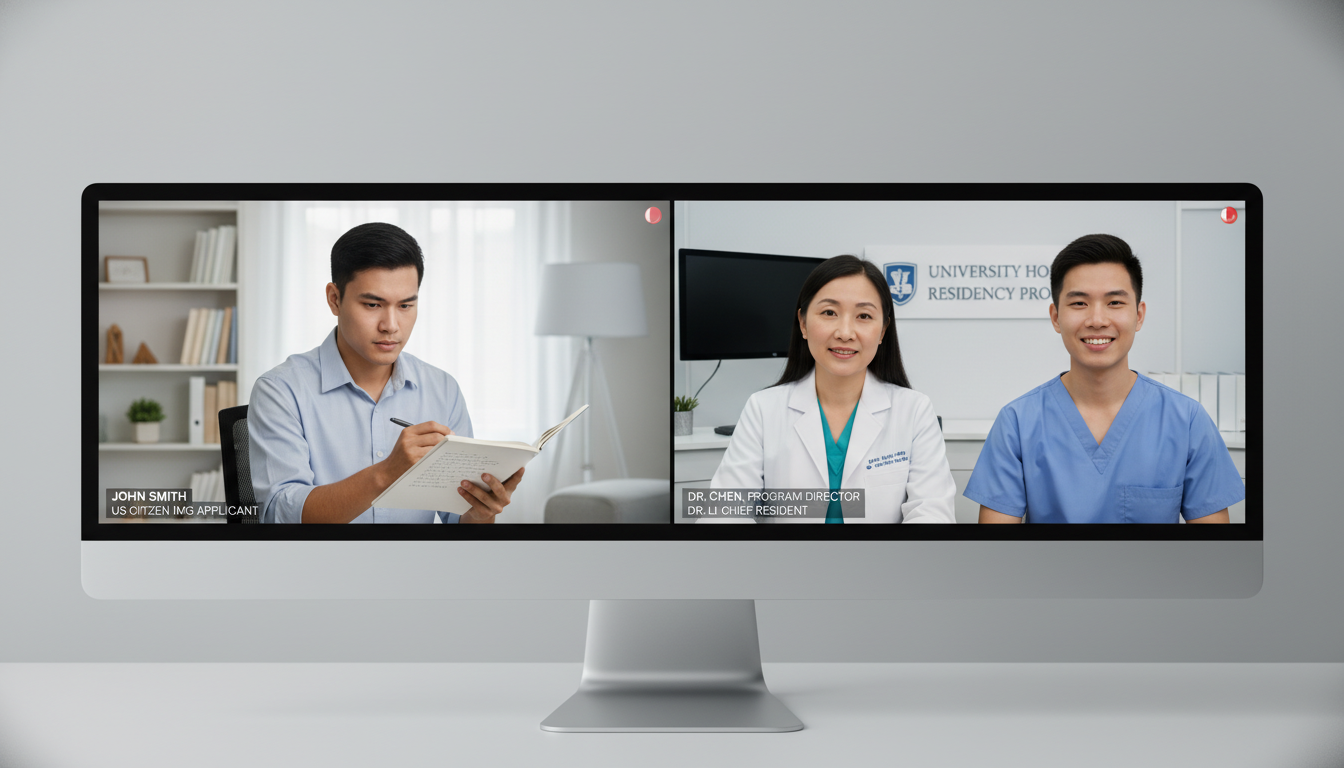
Specific Questions Tailored to US Citizen IMGs and Americans Studying Abroad
Being a US citizen IMG or an American studying abroad gives you a unique perspective. You understand both US life and another health system. You can use that identity to frame thoughtful, insightful interview questions for them.
A. Addressing the Transition to the US Clinical Environment
Examples:
“Coming from a different health system, I’m very focused on making a smooth transition to US practice. How does your program help new interns adjust to your EMR, documentation, and hospital workflows?”
“Is there any preparatory orientation, boot camp, or simulation experience during the first few weeks to help interns, especially IMGs, get comfortable?”
“For US citizen IMGs who have been away from the US for several years, how do you help them re-adjust both clinically and culturally?”
These questions show insight into your own needs and preparedness.
B. Highlighting Your Strengths as an IMG
Don’t only ask what they can do for you; also convey that you bring value.
You might preface a question with something like:
“As an American studying abroad, I’ve had to adapt to a new country, language, and system. I feel that’s strengthened my resilience and communication skills.”
Then ask:
- “In what ways do you see residents’ diverse backgrounds contributing to the program’s strengths?”
Or:
- “How does the program leverage the cultural and educational diversity that IMGs bring to the team?”
And you can incorporate this mindset into interview questions for them that show you think about team dynamics and inclusivity.
C. Deciding if a Program Is Truly IMG-Friendly
You won’t often hear, “We struggle with IMGs.” Instead, look for specific evidence:
Ask:
“What proportion of your residents are IMGs or US citizen IMGs, and how long have you been taking IMGs?”
“Could you share some examples of IMGs who have held leadership roles here, such as chief resident or major committee roles?”
“What structures are in place if a resident’s prior training or documentation style differs from US expectations?”
Programs that are truly IMG‑friendly will answer clearly and proudly; vague or defensive responses can be a red flag.
How to Ask Questions Tactically During the Interview Day
Knowing what to ask is only half the battle. How and when you ask matters.
1. Prioritize, Don’t Rapid-Fire
You may have 15–20 minutes per interviewer. Aim for:
- 1–2 questions about them/their perspective (personalize)
- 2–3 questions about the program (content, culture)
- 1 closing question
Leave time for natural conversation. If they’ve just answered something you planned to ask, adapt.
2. Use the “Build and Bridge” Technique
Make your questions more impactful by connecting them to something you’ve heard or researched:
- “From your website, I saw you have significant community hospital exposure. I’m very interested in learning broad, real‑world medicine. Could you tell me more about how that setting shapes residents’ training?”
This turns generic interview questions for them into tailored, memorable conversations.
3. Be Respectful of Sensitive Topics
You need to know about board pass rates, attrition, and support—but ask professionally:
Instead of:
- “Have you ever had residents fail boards or leave the program?”
Try:
- “How do you support residents in board preparation, and how have your graduates performed over time?”
- If appropriate: “If a resident struggles with exams or performance, what kind of remediation or support structures are available?”
You’ll often get the information you need without making interviewers defensive.
4. End Strong: Closing Questions That Leave an Impression
Consider ending with one of these:
- “What do you enjoy most about working with residents in this program?”
- “Is there anything you wish more applicants understood about your program before ranking?”
- “From your perspective, what distinguishes this program from others in the region?”
Then briefly summarize your interest:
“Thank you—that’s really helpful. Based on everything I’ve heard today, I can see myself fitting well here, especially because of [specific feature].”
This reinforces your genuine interest without violating NRMP communication rules.
Common Pitfalls to Avoid When Asking Residency Questions
Even solid candidates can send the wrong signal with poorly chosen questions. Avoid these traps:
1. Overemphasis on Time Off and Vacation
You should ask about wellness and schedules—but balance it.
Don’t lead with:
- “How many vacation days do we get?”
- “How often do we get out early?”
Instead, ask more holistic questions:
- “How does the program promote resident wellness and prevent burnout?”
- “How manageable do you find the schedule over the course of the year?”
2. Asking About Salary Too Early or Too Directly
Stipends are important, but typically standardized and easily searchable.
If cost of living concerns you, focus on:
- “How affordable is it to live in this area on the resident salary, and do most residents live nearby?”
3. Sounding Entitled or Transactional
Avoid questions that sound like you’re only interested in what you can get, rather than what you can contribute.
Instead of:
- “How soon can I do research so I can get a competitive fellowship?”
Try:
- “I’m very interested in contributing to the academic mission of the program. How do residents typically get involved in ongoing research or QI projects?”
4. Asking “Yes/No” Questions
Open‑ended questions yield more insight.
Instead of:
- “Do you support IMGs?”
Ask:
- “How do you support IMGs as they transition into your program, and what has been your experience working with them?”
Open‑ended structure invites detailed, honest responses.
Putting It All Together: Sample Question Sets by Interviewer Type
To make this concrete, here’s a sample set you might bring into an interview day as a US citizen IMG.
For Program Directors / Associate PDs
- “How would you describe the kind of resident who thrives in this program?”
- “Where have your recent graduates gone after residency, and how do you support residents aiming for fellowship versus primary care practice?”
- “As a US citizen IMG, I’m especially interested in how IMGs integrate into the program. What structures are in place to help them transition effectively?”
- “How do you balance clinical service demands with resident education on the busiest rotations?”
- “Based on our conversation today, is there anything about my background or fit that you’d like me to clarify?”
For Faculty Interviewers
- “What keeps you committed to teaching in this program, and how do you like to work with residents on the wards/clinics?”
- “How do you approach giving residents feedback, especially when they’re early in training or adapting from different educational systems?”
- “How much autonomy do senior residents typically have in patient care decisions?”
- “For residents interested in [subspecialty/research area], what opportunities exist here?”
For Current Residents
- “Can you describe a typical day on your busiest rotation?”
- “How supportive are attendings and senior residents when you’re overwhelmed or unsure?”
- “How would you describe the culture among residents? Do people genuinely get along and support each other?”
- “How have IMGs, including any US citizen IMGs, integrated socially and professionally into the residency?”
- “What are the biggest strengths of this program, and what do you think needs improvement?”
For Program Coordinators
- “What qualities do you see in residents who are especially successful and happy here?”
- “How does the program handle scheduling flexibility—for example, unexpected life events or illnesses?”
- “Are there resources for new residents who may be relocating from abroad or from distant states?”
Use these as templates, not scripts. Adjust them to your specialty and personal priorities.
FAQs: Questions to Ask Programs as a US Citizen IMG
1. How many questions should I ask in each interview?
Aim for 2–4 well‑chosen questions per interviewer, depending on how talkative they are and how much time you have. It’s better to ask fewer, thoughtful questions than many rushed ones. Prioritize questions you can’t answer from the website or public data.
2. Is it okay to directly mention that I’m a US citizen IMG or American studying abroad?
Yes—and it can be strategically helpful. Briefly acknowledging that you’re an American studying abroad or a US citizen IMG allows you to ask targeted, relevant questions about support, transition, and IMG integration. Just keep the tone confident and positive, focusing on your strengths and preparedness.
3. Can I ask about how IMGs perform in the program without sounding insecure?
You can, if you frame it professionally. For example:
- “I’m interested in programs where IMGs are well supported and successful. Could you share how IMGs, including US citizen IMGs, have done here in terms of board performance and post‑residency placement?”
This shows you’re proactive about fit, not anxious about your status.
4. What are red flags in how programs respond to my questions?
Be cautious if you notice:
- Vague or evasive answers about board pass rates, resident attrition, or support for struggling residents
- Dismissive or minimizing responses to questions about wellness, workload, or mistreatment
- Inconsistencies between what leadership and residents say
- A pattern of “we’re very busy, but we manage” without mention of support, teaching, or teamwork
Your questions are one of your best tools for detecting these issues early.
Thoughtful, strategic questions signal that you’re not just trying to match anywhere—you’re trying to match somewhere you can thrive. As a US citizen IMG, use your unique perspective to ask deeper questions, evaluate IMG support honestly, and present yourself as a resilient, insightful future colleague.