Understanding the Radiation Oncology Residency Landscape
Radiation oncology is a small, highly specialized field with a competitive—and recently volatile—match environment. Effective pre-interview preparation is not just about rehearsing answers; it’s about understanding the specialty, the current rad onc match climate, and what programs are truly looking for.
The current rad onc match context
Radiation oncology residency has experienced fluctuations in applicant numbers and fill rates over the past decade. Key implications for you:
Smaller specialty, closer community
- Faculty and program directors often know each other; word-of-mouth matters.
- Your reputation from away rotations, research collaborations, and networking can meaningfully influence interview impressions.
More holistic review
- Programs increasingly value professionalism, communication, and alignment with the specialty, not just Step scores and publications.
- Pre-interview preparation is your chance to show maturity, insight, and genuine interest in oncology.
Fit and commitment to the field
- Programs are wary of applicants who appear to be “back-up” candidates or uncertain about rad onc.
- You must be able to articulate why radiation oncology, why now, and why this program with clarity and authenticity.
Your goal in pre-interview preparation:
To present yourself as a thoughtful, well-informed future colleague who understands radiation oncology as a career and has a realistic sense of what training and practice will entail.
Building a Strong Foundation Before Interview Invitations
Effective residency interview preparation in radiation oncology begins long before you receive your first invitation. Think of this as the “pre-season training” phase.
1. Clarify your radiation oncology story
You will be asked some version of “Tell me about yourself” and “Why radiation oncology?” in almost every interview. Begin by crafting the core narrative now.
Ask yourself:
- When did you first become seriously interested in oncology or cancer care?
- What experiences (clinical, research, or personal) made you consider radiation oncology specifically rather than medical or surgical oncology?
- What aspects of rad onc practice appeal to you most (e.g., technology, longitudinal relationships, multidisciplinary care, radiobiology, procedures)?
- How have you explored the field—electives, shadowing, tumor boards, research, mentorship?
Create a 1–2 minute narrative that:
- Has a clear starting point (a meaningful experience, patient encounter, or prior interest).
- Demonstrates progressive exploration and commitment (rotations, research, mentorship).
- Ends with a confident statement of why you see yourself in radiation oncology long term.
Example structure:
- Origin – “During my internal medicine rotation, I was struck by…”
- Exploration – “This led me to seek out a rad onc elective where I…”
- Confirmation – “Through these experiences, I realized that what I value most is…”
- Future – “I see my career evolving as a radiation oncologist who…”
2. Audit your application through a PD’s eyes
Before interviews, review your ERAS application and personal statement the way a program director would:
- Identify your 3–5 most defining experiences:
- Radiation oncology research project(s)
- Oncology-related volunteer work
- Leadership roles
- Longitudinal clinical experiences
- Significant life experiences (e.g., caregiver roles, personal cancer connection)
For each, be ready to explain:
- What you did (your specific role)
- What you learned
- How it shaped your interest in rad onc or your approach to medicine
Create a short bullet list or one-liner for each experience. These will become anchors you can draw upon during interview questions.
3. Strengthen your basic knowledge of radiation oncology
You are not expected to think like an attending, but you are expected to understand the basics:
- Key disease sites frequently discussed:
- Breast, prostate, head and neck, lung, CNS, GI, and hematologic malignancies
- Basic radiotherapy concepts:
- External beam vs brachytherapy
- Fractionation (conventional, hypofractionation, SBRT/SRS)
- General workflow: consult → simulation → planning → QA → treatment → follow-up
- Team structure:
- Roles of radiation oncologists, physicists, dosimetrists, radiation therapists, nurses, and allied staff
How to prepare quickly:
- Review a short introductory rad onc text or online resource.
- Skim one or two NCCN guidelines for common cancers (e.g., breast, prostate) to understand how radiation fits into multimodality care.
- Attend tumor boards if you’re still rotating; observe how radiation oncologists contribute to discussions.
This content knowledge helps you:
- Ask intelligent questions in interviews.
- Converse meaningfully about your clinical and research experiences.
- Demonstrate a realistic understanding of the specialty.

Strategic Program Research: Preparing for Tailored Conversations
One of the most important aspects of pre-interview preparation is targeted program research. Personalized, well-informed conversations can clearly distinguish you from other applicants.
1. Build a program dossier
For each program you might interview at, compile a one-page “dossier” with:
Program basics:
- Location and associated health system
- Number of residents per year and total complement
- Major affiliated hospitals (VA, NCI-designated cancer center, community sites)
Program strengths:
- Disease-site specialization and high-volume services
- Notable technology (e.g., proton therapy, MR-Linac, brachytherapy expertise, SRS/SBRT programs)
- Recognized research or clinical trial strengths
Key faculty:
- Chair and program director
- Site-specific leads that align with your interests (e.g., CNS, pediatric, GU)
- Any faculty you have met before or have academic overlap with
Training structure:
- PGY-2–PGY-5 rotation schedule (especially disease-site rotations)
- Didactic curriculum (physics, radiobiology, journal club, oral boards prep)
- Resident case volume and graduated independence
- Opportunities in brachytherapy, pediatric rad onc, palliative care
Research environment:
- Availability of protected research time
- Basic science, translational, and clinical research options
- Access to mentorship, research tracks, MPH/PhD opportunities
Culture and “fit” indicators:
- Resident well-being initiatives
- Program responses to prior match cycles or workforce discussions
- Diversity initiatives and support systems
Keep these organized in a folder or note-taking app you can quickly reference before each interview day.
2. Use your research to generate meaningful questions
Residency interview preparation is not just about answering questions; what you ask says a lot about your maturity and understanding of the field. Avoid generic questions that you could answer by reading the website.
Examples of thoughtful questions:
Training and curriculum
- “How do you ensure residents gain sufficient experience in brachytherapy, especially for gynecologic and prostate cases?”
- “Could you describe how senior residents transition to graduated autonomy in treatment planning and on-treatment decision-making?”
Research and mentorship
- “I’m interested in clinical outcomes research in CNS tumors. Which faculty are most active in this area and how do residents typically get involved?”
- “How is protected research time structured, and how flexible is it for residents who secure external funding or major projects?”
Culture and resident support
- “Can you share an example of how the program has supported a resident facing a personal or professional challenge in the last few years?”
- “How does the program incorporate resident feedback into curriculum or workflow changes?”
Future and workforce
- “How does your program counsel residents about the current radiation oncology job market, and what kind of positions have your graduates taken recently?”
Prepare 5–8 questions per program, knowing you may only ask a subset depending on time and who you meet.
3. Map your interests to the program’s strengths
Programs want residents whose goals they can realistically support. Before each interview, clearly identify:
- 2–3 specific interests (e.g., “outcomes research in head and neck cancer,” “education and resident teaching,” “global oncology,” “stereotactic body radiation therapy”).
- How that program’s resources, faculty, or patient population align with your goals.
Then practice explicit statements such as:
- “Your strong CNS program and access to proton therapy make this an ideal place for me to build expertise in…”
- “The structured research time in PGY-4 and the mentorship from Dr. X align very well with my interest in…”
This demonstrates that you’ve done your homework and can visualize yourself contributing to—and benefiting from—the program.
Mastering Core Residency Interview Preparation Skills
This is the heart of how to prepare for interviews: anticipating common themes, practicing your responses, and developing a flexible communication style.
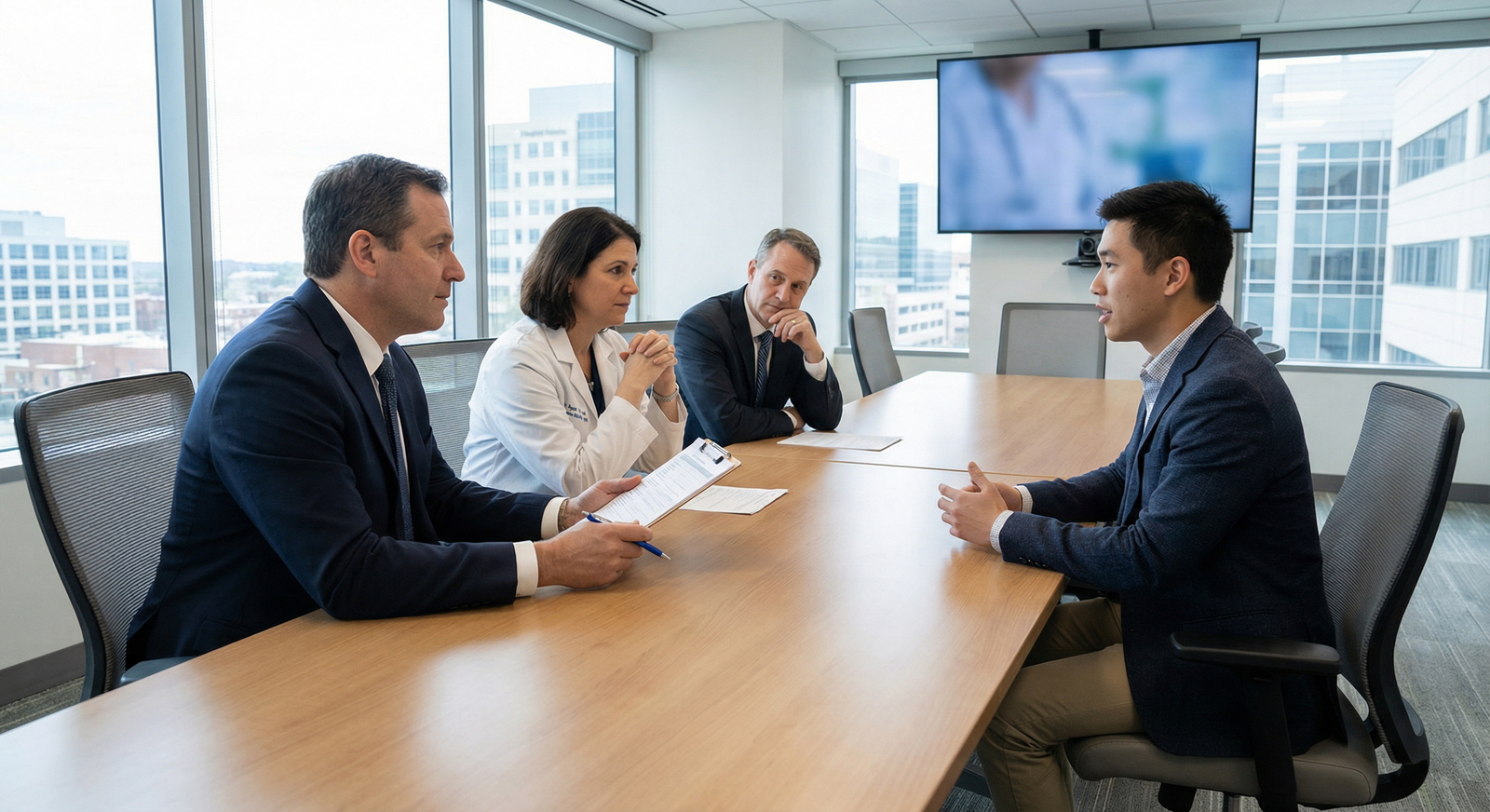
1. Prepare for common interview questions (with a rad onc lens)
You will see variations of these core interview questions residency programs commonly ask. Prepare concise, reflective answers with radiation oncology–specific framing.
Tell me about yourself.
- 60–90 seconds.
- Professional arc: background → key experiences → why you’re here.
- Include 1–2 specific rad onc touchpoints (rotation, research, mentorship).
Why radiation oncology?
- Link your interest to:
- Cancer care and patient relationships.
- Integration of technology and precision.
- Multidisciplinary collaboration.
- Longitudinal care, survivorship, and palliative aspects.
- Avoid generic “I like physics and tech” without deeper insight.
Why our program?
- Pull directly from your program dossier.
- Mention 2–3 concrete features + how they match your goals.
- Show that you understand the program’s identity (e.g., strong community outreach, heavy brachy focus, research powerhouse).
Tell me about a challenging situation.
- Use a STAR framework (Situation, Task, Action, Result).
- Choose cases that demonstrate:
- Professionalism and communication under stress.
- Empathy and ethical decision-making.
- Insight into oncology-specific issues (breaking bad news, goals-of-care conversations, coordination across specialties).
Tell me about a time you made a mistake.
- Pick something real but not catastrophic.
- Emphasize:
- Accountability
- Reflection and feedback
- Concrete changes you made afterward
What are your strengths and weaknesses?
- Strengths: tie them to rad onc (e.g., attention to detail in treatment planning, comfort with technology, strong interdisciplinary communication).
- Weaknesses: discuss in terms of growth areas with real strategies you’re using to improve.
Where do you see yourself in 10 years?
- Some combination of:
- Academic vs community practice (you can be uncertain but thoughtful).
- Disease-site or clinical focus.
- Research, education, or leadership interests.
- Show that you understand the breadth of rad onc practice and are realistic about training and early career steps.
2. Prepare to discuss your research in depth
Radiation oncology is research-heavy; almost every interviewer will probe your scholarly work.
For each project on your CV:
- Be ready to explain:
- The research question
- Your specific role
- Key methods, results, and implications
- Any challenges or unexpected findings
- Anticipate simple clarifying questions:
- “How did you choose that endpoint?”
- “What did you control for in your analysis?”
- “How might this change clinical practice or future research?”
If you have basic science or physics-oriented work:
- Prepare a “layperson’s explanation” suitable for a non-specialist:
- 2–3 sentences that summarize the rationale and significance.
- Be honest about the limits of your expertise; don’t overstate your role.
3. Practice behavioral and ethical questions in an oncology context
Oncology-specific scenarios can come up, such as:
- Managing patient expectations about cure vs palliation.
- Handling a conflict with a team member about goals of care.
- Advocating for a vulnerable patient with limited resources.
When answering:
- Highlight core values: compassion, respect for patient autonomy, non-maleficence, and teamwork.
- Show that you recognize the emotional weight and complexity of cancer care.
- Emphasize communication and shared decision-making.

Logistics, Presentation, and Mindset: The Often-Overlooked Essentials
Even the strongest content preparation can be undermined by poor logistics, unprofessional presentation, or unmanaged anxiety. Pre-interview preparation must include these practical elements.
1. Mastering virtual interview logistics
Many programs now use virtual interviews—sometimes exclusively. Treat the virtual format with the same seriousness as in-person.
Technical setup:
- Reliable laptop/desktop with a stable internet connection.
- Test your microphone and camera; use wired headphones if possible.
- Position the camera at eye level; frame your head and shoulders.
- Conduct test calls with friends or your institution’s career office.
Environment:
- Quiet, private space; coordinate with roommates or family.
- Neutral, uncluttered background (or a simple professional virtual background if necessary).
- Good front-facing lighting; avoid sitting with a window directly behind you.
Backup plans:
- Have the Zoom/Teams/Webex links and program contacts easily accessible.
- Keep your phone fully charged as a backup hotspot.
- Know how to quickly log in from a second device if your primary fails.
2. Professional appearance and non-verbal communication
Radiation oncology is generally formal to moderately formal. Err on the side of professionalism.
Attire:
- Suit jacket and dress shirt/blouse; tie is optional but often recommended for men/masculine attire.
- Solid or simple patterns; avoid distracting prints.
- Neutral colors often photograph better on video.
Body language:
- Sit upright but not rigid.
- Look at the camera when speaking to simulate eye contact.
- Nod and respond with facial expressions to signal engagement.
- Avoid fidgeting with pens, hair, or jewelry.
Record and review a mock interview to identify any distracting habits.
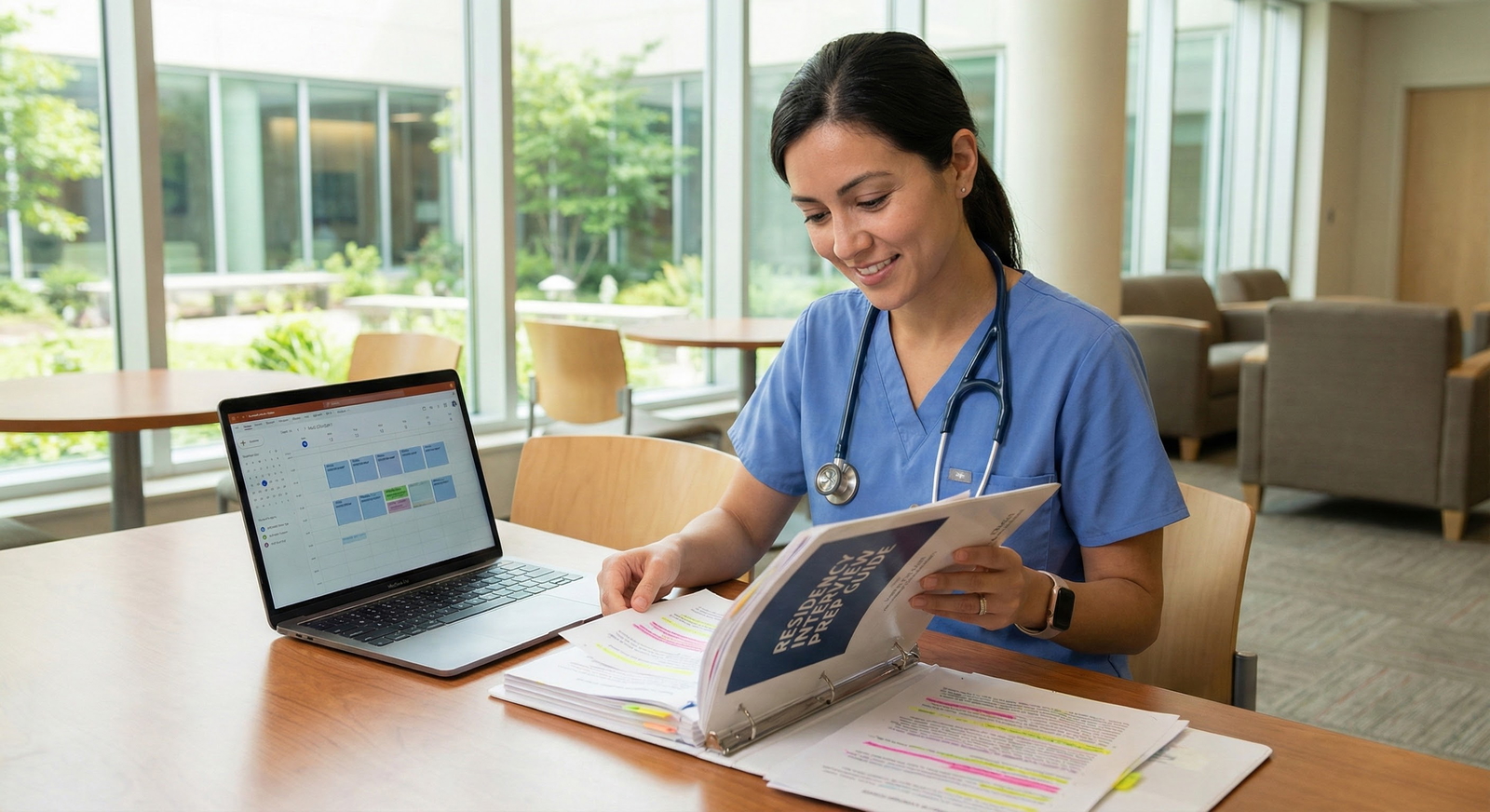
3. Organization of your interview calendar
When the rad onc match interview invitations begin to arrive, timing and organization matter.
Maintain a central calendar for:
- Interview dates and times (time zones!)
- Pre-interview socials
- Deadlines for confirming or declining
Track:
- Who you interviewed with at each program.
- Key impressions.
- Pros/cons for later rank list formulation.
Respond to invitations promptly and professionally. If you need to cancel, give as much notice as possible; your reputation can follow you in this small specialty.
4. Managing stress and optimizing performance
Residency interview preparation is both cognitive and emotional. To perform well:
Before interview season:
- Establish sleep routines you can maintain.
- Practice brief mindfulness or breathing exercises.
- Identify 1–2 people you can debrief with (friends, mentors, co-applicants).
Night before interviews:
- Light review of your program dossier and questions.
- Lay out clothing, test technology, and confirm links.
- Set multiple alarms if interviewing early.
Day-of strategies:
- Eat something light but substantial before starting.
- Have water nearby; avoid excessive caffeine that could worsen anxiety.
- Between interviews, take short breaks—look away from the screen, stretch, reset.
Adopting the mindset of a future colleague rather than a supplicant can reduce anxiety: you are also evaluating the program for fit.
Putting It All Together: A 2–3 Week Pre-Interview Preparation Plan
To make this actionable, here is a sample structured plan for how to prepare for interviews in radiation oncology over 2–3 weeks before your first interview:
Week 1: Foundation and narrative
- Refine your “tell me about yourself” and “why radiation oncology” answers.
- Identify 3–5 core experiences from your application and write brief talking points.
- Create research summaries for each project on your CV.
- Review basic radiation oncology concepts and disease-site overviews.
Week 2: Program research and mock interviews
- Build 1-page dossiers for your highest-priority programs.
- Draft 5–8 personalized questions for each program.
- Schedule at least two mock interviews:
- One with a mentor or faculty member.
- One with a peer or career office adviser.
- Record a session, then review your non-verbal communication and response structure.
Week 3: Logistics and fine-tuning
- Finalize your interview space; test all equipment.
- Prepare a simple “cheat sheet”:
- Your key stories and strengths.
- Unique points about each program.
- Do short, focused practice:
- 10–15 minutes per day of question drills.
- Brief visualization or mindfulness exercises.
By the time your first radiation oncology residency interview begins, you’ll have:
- A consistent, authentic narrative.
- Clear understanding of your experiences and goals.
- Knowledge of the programs and meaningful questions.
- A reliable, professional virtual setup and plan for managing stress.
Frequently Asked Questions (FAQ)
1. How early should I start residency interview preparation for radiation oncology?
Begin light preparation 4–6 weeks before you expect interview invitations, especially refining your narrative and reviewing your research. Intensive practice—mock interviews, program-specific research, logistics—should start 2–3 weeks before your first scheduled interview. Because radiation oncology is small and research-focused, earlier attention to your scholarly work and “why rad onc” story is particularly important.
2. What types of interview questions residency programs in radiation oncology emphasize?
Most programs use a mix of:
- Traditional questions: “Tell me about yourself,” “Why radiation oncology?”, “Why this program?”
- Behavioral questions: Challenges, conflicts, mistakes, leadership experiences.
- Research-focused questions: Details of your projects, your role, and implications.
- Oncology-specific questions: Reflections on end-of-life care, multidisciplinary collaboration, or communication with patients about prognosis.
Clinical knowledge questions are usually basic or conceptual; the focus is more on your judgment, communication, and maturity.
3. How can I show genuine interest in a program without overdoing it?
Use specificity and substance rather than flattery. Demonstrate that you:
- Understand the program’s case mix, research strengths, or educational structure.
- Have concrete interests that align with named faculty or resources.
- Ask thoughtful, individualized questions that go beyond the website.
Avoid exaggerated superlatives (“This is my absolute top program” during interviews) or insincere claims. Authentic enthusiasm grounded in real facts is more persuasive than trying to signal preference prematurely.
4. Do I need advanced physics or radiobiology knowledge before interviews?
No. Programs do not expect you to function at a resident level in physics or radiobiology during the interview season. However, having basic literacy is helpful:
- Understanding external beam vs brachytherapy.
- Recognizing common modalities (IMRT, SBRT, SRS).
- Appreciating how fractionation and normal-tissue constraints matter.
Focus on being conversant, not expert. Demonstrating curiosity and readiness to learn is more important than reciting technical details.
Thorough, structured pre-interview preparation in radiation oncology will help you present as a mature, informed future colleague. By combining a clear narrative, targeted program research, strong communication skills, and practical logistical planning, you will be well-positioned to navigate the rad onc match interview season with confidence and clarity.