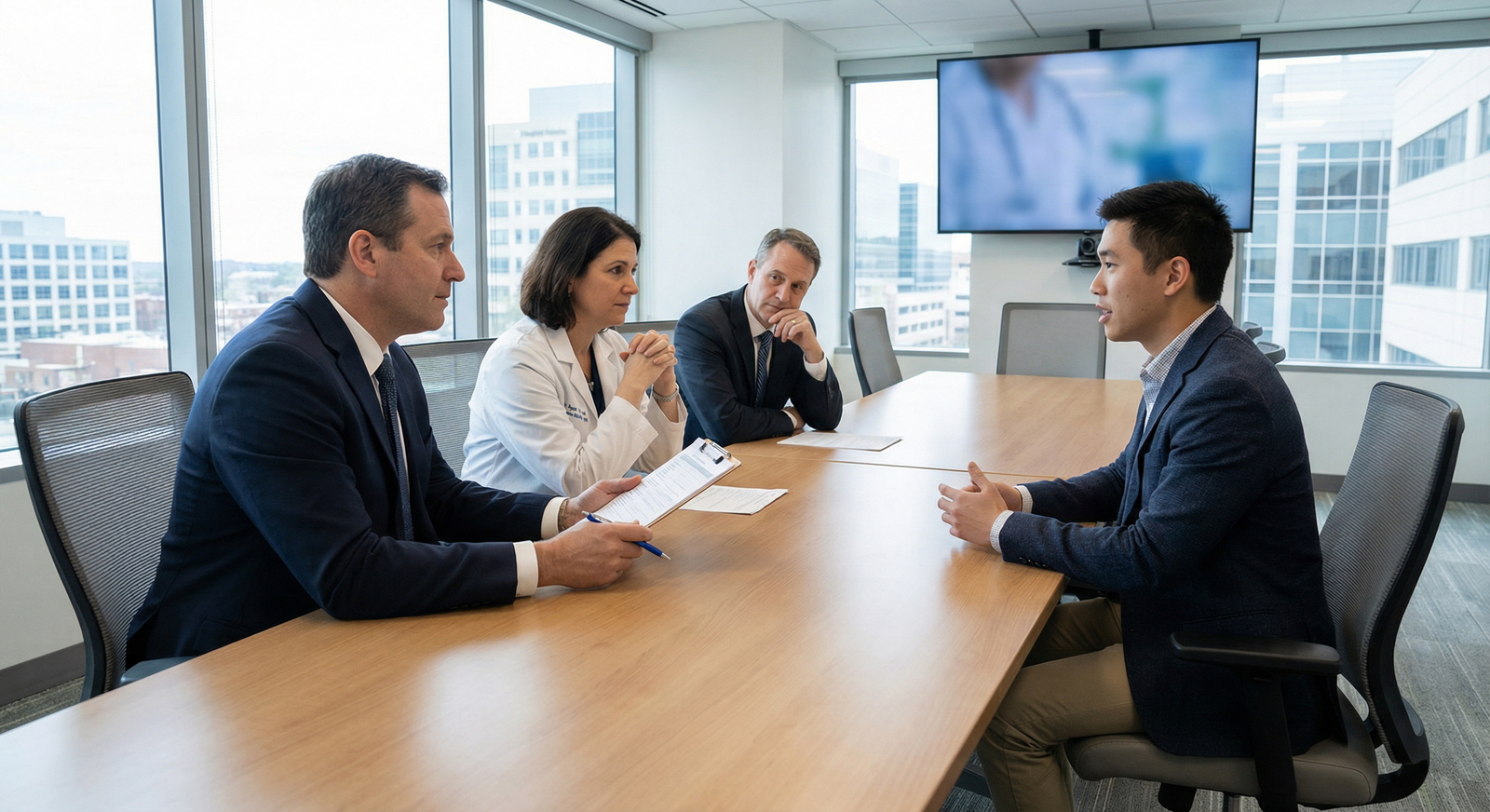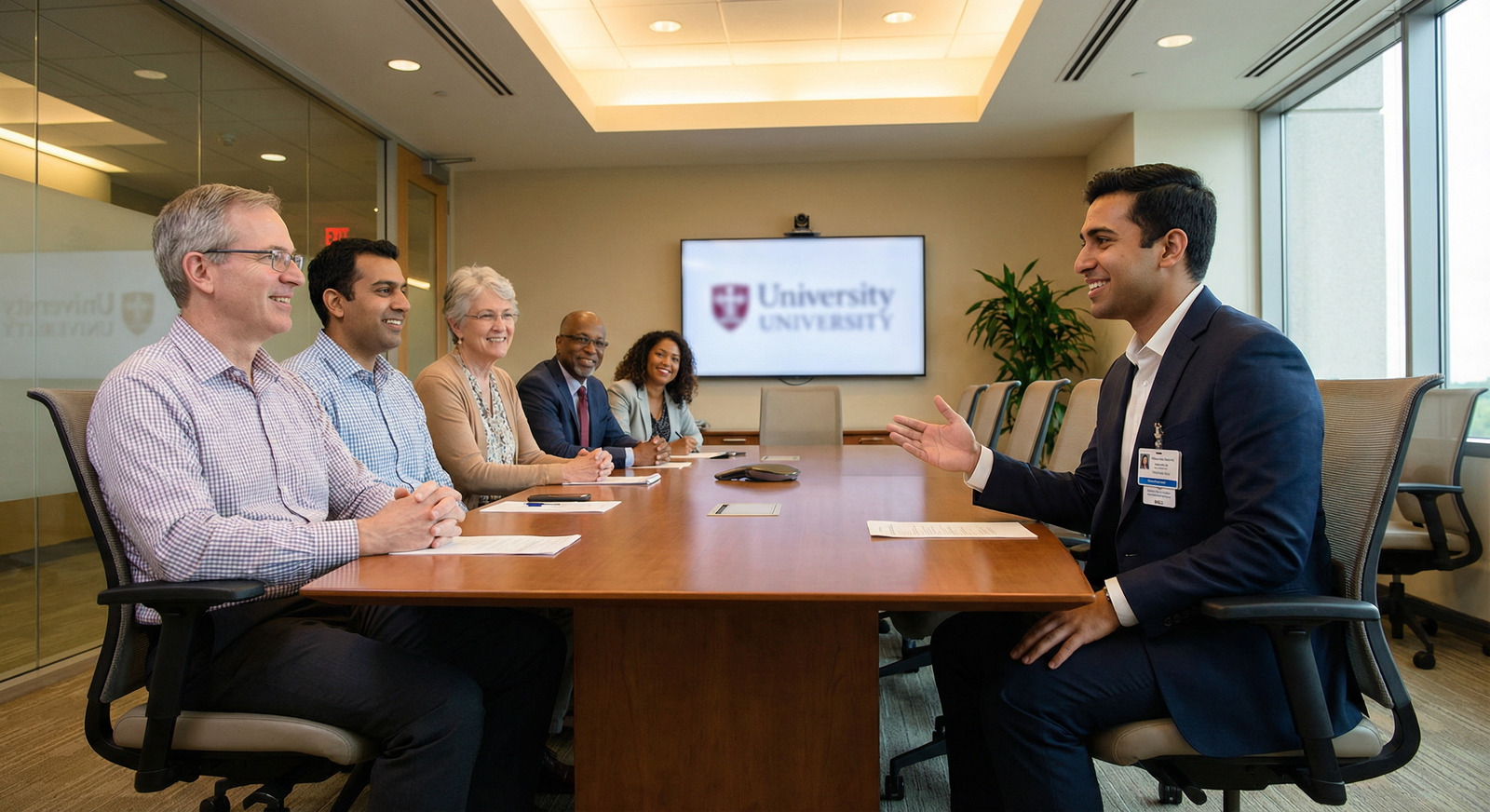
Understanding the Radiology Residency Interview Landscape
Diagnostic radiology is one of the most competitive and rapidly evolving specialties. Pre-interview preparation is therefore not a luxury—it is a core part of your radiology residency strategy. Strong letters, board scores, and research may earn you an interview, but your performance on interview day often determines your place in the diagnostic radiology match.
Before you dive into practicing interview questions, step back and understand what programs are actually assessing:
- Clinical and cognitive ability
- Communication skills and team fit
- Maturity, professionalism, and reliability
- Genuine interest in radiology as a career
- Alignment with the program’s mission and culture
Pre-interview preparation for radiology residency should be deliberate and structured. It spans four main domains:
- Content preparation – what you say (your story, experiences, radiology motivations)
- Program preparation – what you know (about each program and why it fits you)
- Process preparation – how you say it (communication, body language, timing)
- Logistics preparation – where and when (technology, schedule, environment)
This guide walks through each domain in detail, tailored specifically to diagnostic radiology applicants.
Step 1: Clarify Your Radiology Story and Career Goals
Before you start rehearsing generic interview questions for residency, you need a clear, compelling narrative about why diagnostic radiology and why you.
Define Your “Radiology Why”
Programs want to know that you understand what radiologists actually do—beyond “I like anatomy and images.” Spend time refining your answer to “Why radiology?” with concrete experiences.
Reflect on:
First exposure to radiology
- A particular patient case that changed management because of imaging
- A memorable day in the reading room
- A mentor who influenced your understanding of the field
Core aspects that attract you
- Problem-solving and pattern recognition
- Breadth of pathology and systems knowledge
- Central role in multidisciplinary care (tumor boards, ED triage, etc.)
- Technology, AI, and image-guided procedures (for programs with IR emphasis)
What you understand about the realities
- High volume and time pressure
- Need for continuous learning across modalities
- Practice variation (academic vs private, teleradiology, subspecialization)
Actionable exercise:
Write a 200–250 word short essay answering:
“Why diagnostic radiology, and how have your experiences prepared you for this field?”
You won’t recite this verbatim, but it becomes the backbone of your interview responses.
Identify Your Core Themes
Look through your CV, personal statement, and ERAS application. Highlight:
- 3–5 clinical experiences you’re proud of
- 2–3 research or scholarly projects, ideally imaging-related
- 2–3 leadership or teaching roles
- 1–2 examples that show resilience or growth after challenges
Convert each into a short story using the STAR format (Situation, Task, Action, Result):
Example (Radiology-focused):
- Situation: During my third-year surgery rotation, I followed a patient with nonspecific abdominal pain.
- Task: The team was uncertain about the diagnosis, and I was encouraged to follow the workup closely.
- Action: I requested to observe in radiology when the CT scan was performed. The radiologist walked me through the images, showing findings consistent with appendicitis and a subtle abscess.
- Result: Seeing how rapidly imaging clarified the diagnosis and changed management solidified my interest in radiology and led me to pursue a dedicated radiology elective and research in acute care imaging.
You can flex these stories for multiple common interview questions residency programs ask, including:
- “Tell me about yourself.”
- “Why radiology?”
- “What’s a clinical experience that impacted you?”
- “Describe a time you made a mistake or faced a challenge.”
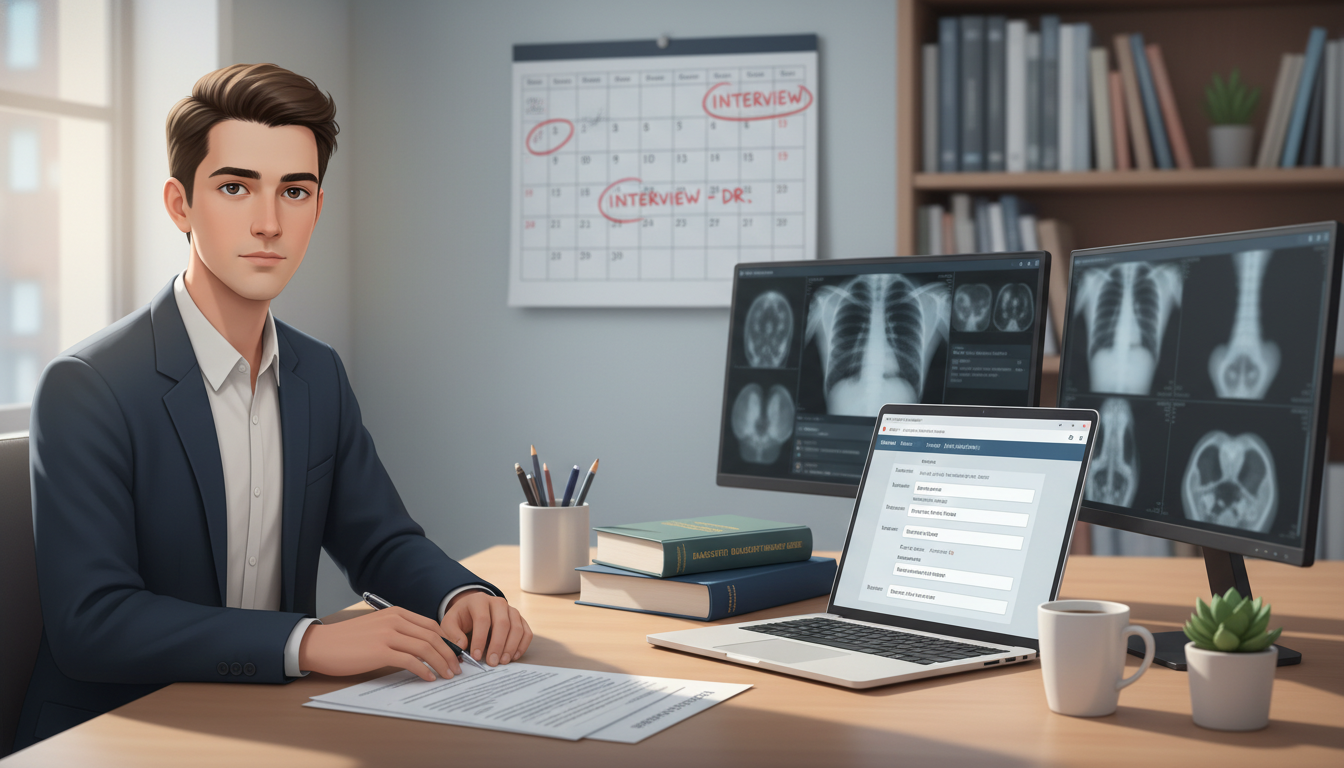
Step 2: Master the Radiology-Specific Interview Content
Beyond generic residency interview preparation, radiology has some distinct themes. Anticipating and practicing around these will make you significantly more confident.
Common Radiology Residency Interview Questions (and How to Prepare)
Below are some high-yield interview questions residency faculty frequently ask radiology applicants, with guidance on how to prepare:
“Why diagnostic radiology rather than another specialty?”
- Contrast radiology with your other serious career considerations (e.g., internal medicine, surgery).
- Emphasize not just what you like about radiology, but what you might miss elsewhere (imaging-driven diagnosis, multi-specialty collaboration, visual pattern recognition).
“What do you think a typical day is like for a radiology resident?”
Demonstrate realistic understanding:- Mix of reading studies, dictating reports, reviewing with attendings
- Protocoling studies, consulting with clinicians
- Rotations: ED, body, neuroradiology, chest, MSK, possibly night float
- Conferences and teaching responsibilities Your goal is to show you’ve shadowed, asked questions, and researched the workflow.
“How do you feel about spending much of your day at a workstation?”
- Be honest, but emphasize:
- You enjoy focused, cognitively demanding work
- You value clinical interaction through consultations and multidisciplinary meetings
- You balance screen time with wellness and self-care
- Be honest, but emphasize:
“What are your career goals in radiology?”
Have a plausible short- and long-term plan:- Early goals: build strong general diagnostic skills, explore subspecialties
- Later goals: academic vs private practice, leadership, teaching, QI, informatics, or subspecialty training (e.g., neuro, MSK, IR)
It’s fine if you’re undecided, but anchor it:
- “I’m currently most drawn to neuroradiology and MSK, but I want a broad-based training environment that will let me explore different paths.”
“Tell me about a time you made a diagnostic error or missed something.”
For radiology, this is especially important. If you don’t have imaging-specific examples, pick any clinical or academic context:- Show humility and ownership
- Emphasize how you changed your process
- Highlight your comfort with feedback and quality improvement
“How do you manage high workload and stress?”
Radiology volume can be intense. Provide specific strategies:- Prioritization, checklist use, double-checking high-risk findings
- Communication with team when overwhelmed
- Personal coping strategies and wellness habits
“What interests you about our specific radiology residency program?”
This is where targeted program research becomes crucial (see next section). You should be able to name:- 2–3 concrete program features
- A clear connection between those features and your goals or learning style
Prepare a Concise, Authentic “Tell Me About Yourself”
This question almost always appears in some form and sets the tone. Craft a 60–90 second answer with three parts:
- Background: Where you’re from and a key identity or experience (e.g., engineering, global health, imaging research).
- Medical school trajectory: How your clinical and academic path led you toward radiology.
- Current and future focus: What you’re interested in exploring within radiology and what you’re looking for in a program.
Example outline:
“I grew up in [city], and before medical school I studied biomedical engineering, where I first became interested in imaging technology. In medical school at [institution], I initially considered internal medicine, but repeated experiences where imaging changed management, particularly during my ED and surgery rotations, pulled me toward radiology. I pursued a dedicated radiology elective and joined a CT protocol optimization project, which strengthened my interest in both diagnostic reasoning and systems-level improvement. Now I’m looking for a radiology residency with strong general training, early exposure to subspecialties, and opportunities to be involved in quality improvement and teaching.”
Anticipate Behavior and Teamwork Questions
Radiology is very team-driven—residents interact with technologists, nurses, clinicians, and other residents. Prepare examples that show:
- Effective communication with non-physician team members
- Navigating disagreement with colleagues
- Teaching or explaining complex concepts clearly
- Helping a struggling teammate without condescension
Use the STAR method for each and practice out loud until they are fluent but not memorized.
Step 3: Research Programs Strategically (and Deeply)
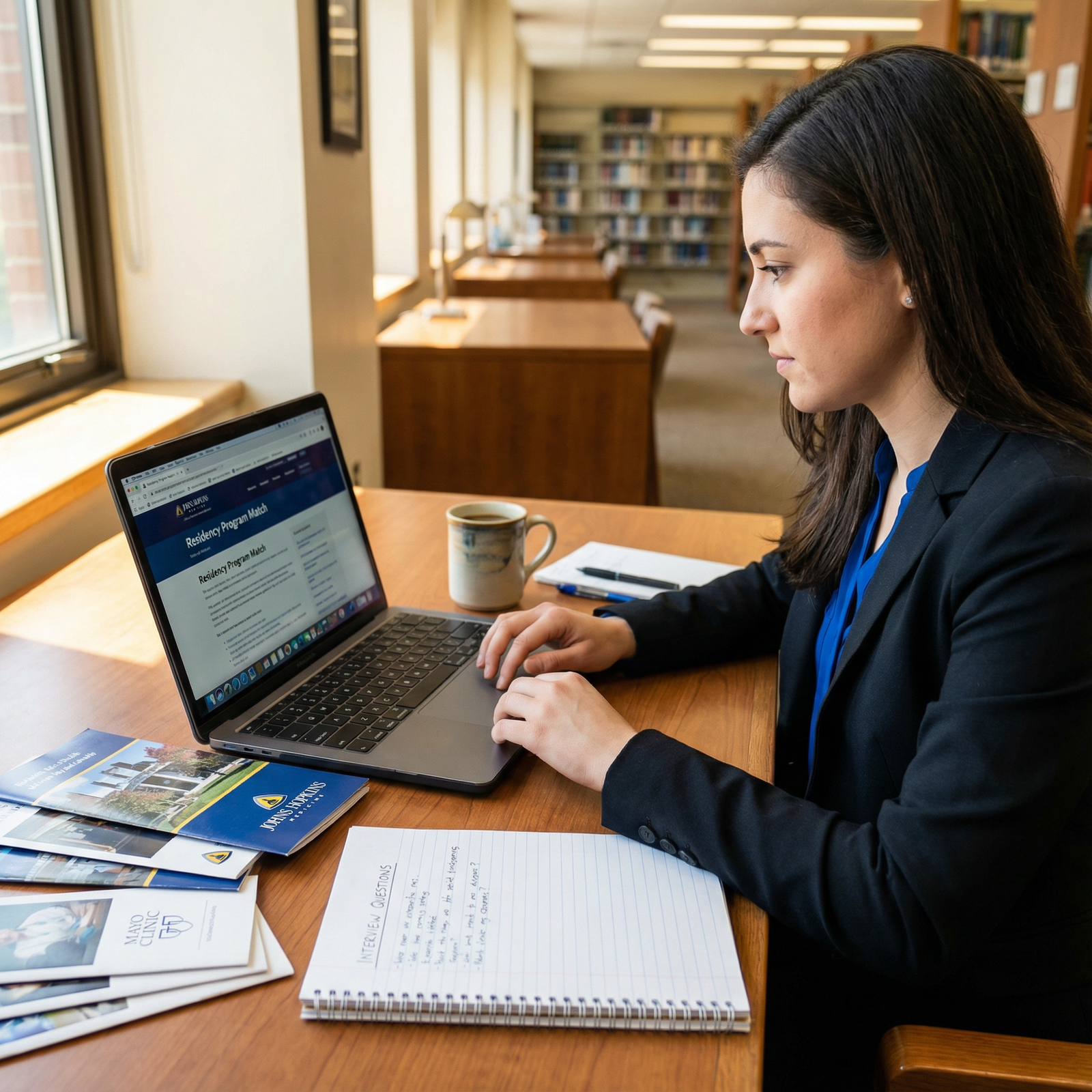
Program-specific preparation is where many applicants underperform. For each radiology residency program, you should be able to answer, without notes:
- “What attracts you to our radiology residency specifically?”
- “How do you see yourself fitting into this program and community?”
- “What aspects of our training or department align with your goals?”
Build a Systematic Program Research Workflow
For each program on your interview list:
Start with the program website
- Curriculum structure (e.g., ESIR options, independent IR, DR/IR, night float structure)
- Subspecialty strengths (neuro, MSK, body, pediatric, breast, cardiothoracic)
- Call schedule and early exposure to different modalities
- Unique tracks (research track, global health, informatics, QI)
- Resident-led conferences, case conferences, tumor boards
Review faculty and resident interests
- Look for faculty whose clinical or research interests match yours
- Note resident-led initiatives (wellness, DEI, teaching curriculum, podcasts, etc.)
Check recent publications and departmental news
- Scan PubMed for the department name and diagnostic radiology topics you’re interested in
- Look for headlines on AI, imaging protocols, or new modalities
Leverage social media (if available)
- Many radiology residencies have active Twitter/X, Instagram, or LinkedIn profiles
- Look at conference participation (RSNA, ARRS, AUR, subspecialty societies)
Create a One-Page “Program Snapshot” for Each Interview
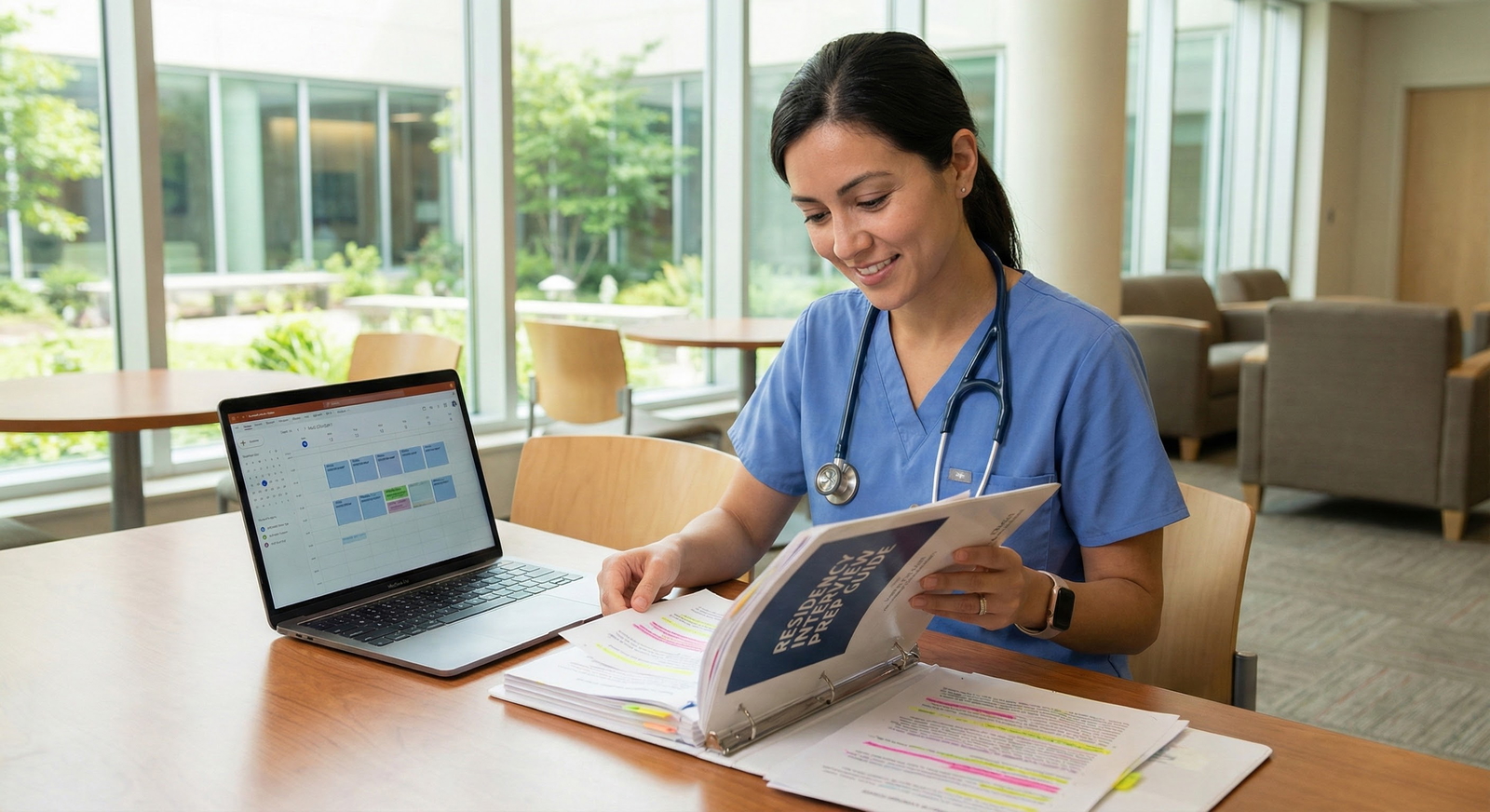
To organize your radiology residency interview preparation, create a simple one-page summary (digital or printed) for each program:
Include:
Program basics
- Location, size, academic vs community
- Number of residents per year
- Diagnostic vs integrated IR options
3–5 key strengths (from your perspective)
- “Strong neuroradiology division with high-volume stroke center”
- “Robust teaching file and case-based conference structure”
- “Emphasis on resident autonomy in senior years”
- “Dedicated informatics track using AI tools in workflow”
Your personal connections
- Faculty or residents you’ve met before
- Shared alma mater or geographic ties
- Research interests that align with their projects
Questions you want to ask
- One about education/teaching
- One about culture/wellness
- One about career development/fellowships
- One about imaging technology/resources (PACS, AI, 3D lab, etc.)
Having this snapshot ready prevents you from sounding generic and helps you appear authentically invested in that specific diagnostic radiology residency.
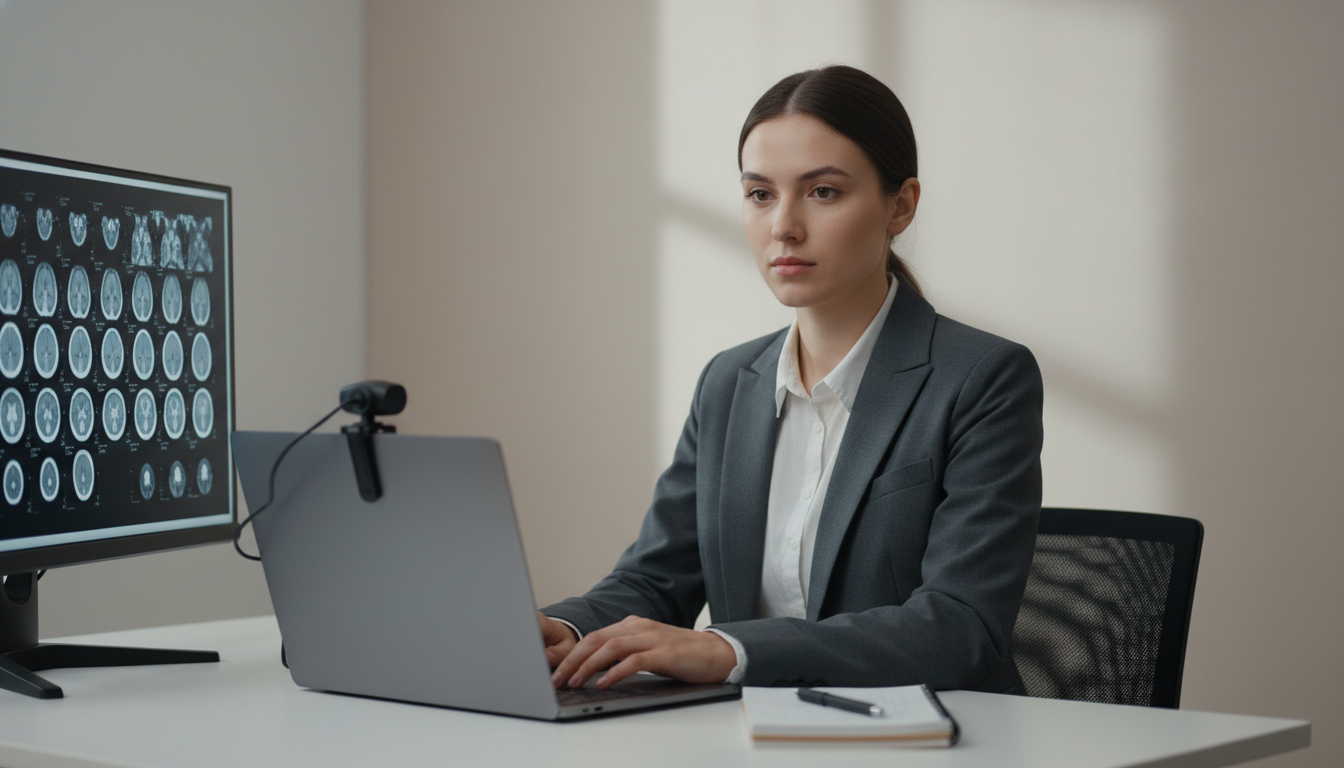
Step 4: Optimize Logistics, Technology, and Professional Presentation
Even strong candidates can undermine their performance with preventable logistical or presentation errors. This is especially important with virtual interviews, now common in radiology residency programs.
Create a Professional Interview Environment
Whether your interviews are virtual, in-person, or hybrid, attend to:
- Background: Neutral, uncluttered, quiet. Avoid distracting posters or busy artwork.
- Lighting: Front-facing, soft, and even (avoid strong backlighting from a window).
- Camera: Eye level or slightly above; you should be centered with head and upper torso visible.
- Sound: Use a reliable microphone or headset; test for echoes and background noise.
Do a trial run with a friend or mentor and ask:
- “Is anything in the frame distracting?”
- “Is my eye contact with the camera natural?”
- “Is my voice clear and at an appropriate volume?”
Technology Check for Virtual Radiology Interviews
Radiology is a technology-driven field, and fair or not, programs may infer something about your reliability and attention to detail from your virtual setup.
At least a week before your first interview:
- Install and test all platforms (Zoom, Teams, Webex, Thalamus, or program-specific platforms).
- Ensure your internet connection is stable; if possible, use wired Ethernet.
- Check that your display name appears professional and correct.
- Disable distracting notifications (desktop alerts, phone, email dings).
On the day of the interview:
- Restart your computer in the morning.
- Close non-essential applications, especially those using camera or bandwidth.
- Log in 10–15 minutes early to address any last-minute issues.
Prepare a backup plan:
- Second device (laptop/tablet) with apps installed
- Phone numbers or email addresses for the program coordinator
Professional Dress and Nonverbal Communication
Even in virtual interviews, dress as you would for an in-person academic interview:
- Attire: Professional suit (jacket and shirt/blouse); neutral colors work best.
- Grooming: Conservative and neat; minimize overly flashy accessories.
Nonverbal cues matter:
- Sit upright but relaxed; avoid swaying or spinning in your chair.
- Keep hands in a natural, visible position; occasional gestures are fine.
- Look at the camera when speaking, and at the screen when listening.
- Nod and show attentiveness while faculty and residents speak.
Practice 1–2 mock interviews on video and watch yourself critically. Focus on:
- Filler words (“um,” “like,” “you know”)
- Speaking pace (aim for measured and clear, not rushed)
- Eye contact with the camera rather than constant self-view checking
Step 5: Build a Targeted Practice Plan (Mock Interviews and Feedback)
Interview skill is trainable. Consistent, deliberate residency interview preparation dramatically improves your performance.
Structure Your Practice
Solo practice (first pass)
- Answer common questions out loud in a quiet room.
- Record 1–2 sessions on your phone or computer.
- Listen back for clarity, organization, and overlong or rambling answers.
Peer or mentor practice
- Ask a classmate, upper-year resident, or mentor to conduct a 30–45 minute mock interview.
- Provide a list of radiology-specific and behavioral questions.
- Request honest, specific feedback, not just reassurance.
Formal mock interviews (if available)
- Many medical schools, radiology interest groups, or national organizations offer structured mock interviews.
- If possible, seek out someone with radiology experience; they can better gauge the depth of your specialty understanding.
What to Practice Specifically for Radiology
Focus on:
Explaining why radiology in a way that’s:
- Mature and reality-based
- Reflective of the specialty’s day-to-day practice
- Distinct from generic “I like images and technology”
Talking about:
- Any radiology electives, shadowing, or subinternships you’ve done
- Imaging-related research or QI projects, including your role, methods, and outcomes
- How you’ve handled complex or uncertain diagnoses as a student
Articulating:
- Your comfort with independent reading and self-directed learning
- How you respond when someone questions your interpretation or opinion
- How you would approach learning a new modality or rotation (e.g., MRI, ultrasound)
Develop Strong Questions for Interviewers
Well-crafted questions show engagement and help you assess fit. Avoid easily Google-able questions and focus on the lived experience of residents and faculty.
Examples tailored to diagnostic radiology:
For program leadership:
- “How does the program support residents who are interested in subspecialty fellowships, particularly in [your area of interest]?”
- “What changes or improvements are you planning for the residency over the next 3–5 years?”
For faculty:
- “How do residents get involved in your research or quality improvement projects?”
- “How do you balance resident autonomy with supervision, especially on call?”
For residents:
- “What does a typical day on [e.g., night float, neuroradiology, ED radiology] look like here?”
- “What aspects of this program do you think best prepared recent graduates for their fellowships or first jobs?”
- “How supportive is the environment when residents are struggling—academically, personally, or with wellness?”
Have 5–7 questions pre-written per program, and choose the most appropriate based on who you’re speaking with and what has already been covered.
Step 6: Organize Follow-Up, Reflection, and Ranking Data
Pre-interview preparation doesn’t end when the Zoom window closes. How you capture information and follow up after interviews affects both your final rank list and your professional impression.
Take Structured Notes After Each Interview
Within 30 minutes of finishing, write down:
- Your overall impression (gut feeling)
- Specific positives:
- Culture (supportive, collegial, competitive?)
- Educational structure
- Subspecialty strengths relevant to your goals
- Specific concerns:
- Call burden or schedule
- Location/family considerations
- Any red flags from conversations
- People you met:
- Names, roles, and anything memorable from your discussion
Use a consistent template so you can compare programs when building your final diagnostic radiology match list.
Thoughtful Post-Interview Communication
Most programs do not require or expect extensive post-interview communication, and NRMP rules limit what can be promised. Still, concise, professional communication can be appropriate:
- Thank-you emails (if you choose to send them):
- 3–5 sentences, specific, and genuine
- Reference a part of your conversation or something you learned about the program
- Avoid discussing ranking intentions
Example:
Dear Dr. [Name],
Thank you for taking the time to speak with me during my interview at [Program]. I enjoyed learning about the resident-driven teaching curriculum and your work in [e.g., emergency radiology protocols]. Our discussion about how residents gradually gain autonomy on overnight call reinforced my interest in your program’s approach to training. I appreciate the opportunity to interview and learn more about [Institution].
Sincerely,
[Your Name]
Do not overdo follow-up communication; avoid repeated emails or attempts to “game” the diagnostic radiology match process through pressure or implied commitments.
Frequently Asked Questions (FAQ)
1. How early should I start residency interview preparation for diagnostic radiology?
Begin structured preparation at least 4–6 weeks before your first interview. Earlier is better for competitive specialties like radiology, especially if you want time for:
- Mock interviews with mentors or radiology residents
- Reviewing your CV, personal statement, and research in depth
- Systematic program research and creating your “program snapshots”
Light reflection and narrative-building (your “why radiology” story, key experiences) can begin even earlier in the application cycle.
2. Are radiology residency interviews more technical or more behavioral?
Most diagnostic radiology residency interviews are primarily behavioral and conversational, not oral board-style technical exams. However, you should be prepared to:
- Discuss your imaging-related experiences and what you learned
- Demonstrate a realistic understanding of radiology practice and training
- Talk intelligently about any radiology research or QI you’ve done
You are generally not expected to read cases or answer detailed radiology knowledge questions during interviews, but you should show intellectual curiosity and engagement with the field.
3. What are some red flags during radiology residency interviews that I should watch for?
Potential red flags (which warrant careful reflection, not automatic disqualification) include:
- Residents appearing consistently burned out or discouraged
- Faculty or residents minimizing wellness or disregarding work-hour limits
- Lack of transparency about call schedules, workload, or fellowship placement
- Culture of disrespect toward technologists, nurses, or other teams
- Inconsistent or evasive answers when you ask about recent graduates’ outcomes
Use your note-taking system after each interview to capture these impressions while they’re fresh.
4. How much does interview performance really matter in the diagnostic radiology match?
Your interview performance is critical once you’ve reached the interview stage. For most programs:
- Interview impressions significantly shape your position on the rank list
- Program directors weigh professionalism, communication skills, and fit very heavily
- Poor interview performance can move a strong-on-paper candidate down the list, while an excellent interview can elevate a borderline candidate
Thoughtful pre-interview preparation—especially around your narrative, program research, and communication skills—can therefore meaningfully impact your success in the diagnostic radiology match.
Effective pre-interview preparation in diagnostic radiology is about more than memorizing answers. It’s about understanding the specialty, reflecting on your own path and goals, and learning to communicate those clearly and professionally. By investing time in the steps above—clarifying your story, mastering radiology-specific content, researching programs deeply, optimizing your logistics, and practicing deliberately—you put yourself in the strongest possible position to stand out in radiology residency interviews and ultimately in the diagnostic radiology match.