
Understanding the Radiology Residency Interview Landscape
Diagnostic radiology is one of the most competitive and rapidly evolving specialties. As an MD graduate aiming for a radiology residency, your pre-interview preparation can decisively influence your place in the allopathic medical school match. Long before you log into Zoom or walk into a hospital conference room, programs have already formed a partial impression from your ERAS application, boards, and letters. The interview is your opportunity to turn a “maybe” into a “yes.”
Pre-interview preparation for an MD graduate residency applicant in radiology has three core goals:
- Demonstrate genuine, well-informed interest in diagnostic radiology and that specific program.
- Show that you understand the work, workflow, and lifestyle of radiologists.
- Communicate clearly, professionally, and collegially—as someone others want to work with at 3 a.m. during call.
This guide focuses on what to do in the weeks leading up to interview day: how to prepare for interviews strategically, what to review clinically, how to practice interview questions residency programs frequently ask, and how to organize your materials and mindset.
Step 1: Clarify Your Radiology Story and Career Goals
Before researching programs or rehearsing answers, you need a clear, coherent narrative about why you, as an MD graduate, are pursuing diagnostic radiology and what you hope to do within it.
A. Define Your “Why Radiology?” in Detail
Almost every radiology residency interview will include some form of:
- “Why diagnostic radiology?”
- “When did you realize radiology was the right fit?”
- “Why radiology instead of another specialty?”
Your answer should be personal, specific, and anchored in your experiences—not a generic statement about liking “technology” and “problem-solving.”
Reflect on:
Clinical rotations:
- A case where radiology changed management.
- A time you followed a patient from ED to imaging to intervention.
- How radiology influenced your differential diagnosis skills.
Radiology electives or shadowing:
- What you enjoyed: pattern recognition, integrating clinical data, teaching from the workstation.
- What surprised you: pace, interaction with clinicians, emergency work, on-call dynamics.
Your strengths and personality:
- Attention to detail, visual-spatial reasoning, comfort with uncertainty, ability to communicate clearly in writing and verbally.
- Preference for cognitive work vs. procedural work (and interest in IR, if relevant).
Actionable exercise:
Write a 3–5 sentence answer to “Why diagnostic radiology?” Then expand to a 2–3 minute spoken story including a specific patient or rotation experience. Practice out loud until it feels natural, not memorized.
B. Identify Your Medium- and Long-Term Goals
Most interviewers don’t expect you to have your entire career mapped out, but they want to see thoughtful direction. Be prepared to answer:
- “Where do you see yourself in 5–10 years?”
- “What are your career goals within radiology?”
Consider:
- Academic vs. community practice
- Subspecialty interests: neuroradiology, MSK, body imaging, chest, pediatrics, breast, IR, nuclear medicine
- Interest in research, education, leadership, or health policy
- Geographic or patient population preferences
You can be honest about uncertainty—just anchor it:
“I’m open to several subspecialties right now, particularly neuroradiology and MSK, because I enjoyed those rotations. I know residency will shape this further, but I’m certain I want to practice in an academic center with a strong teaching mission.”
Step 2: Build a Targeted Program Research Strategy
Thorough, structured program research separates strong MD graduate residency applicants from the rest. It also directly improves your performance in the allopathic medical school match by helping you choose programs that truly fit your goals.
A. Create a Program Research Template
For each radiology residency on your interview list, build a one-page document with:
Program basics
- Location, size of program (number of residents per year)
- Affiliated medical school and hospital types (academic, VA, community)
- Call structure and night float system
- Fellowship opportunities and where graduates match
Curriculum and training
- Rotation structure (how early specialty rotations start)
- Call expectations for PGY-2 vs PGY-4
- Exposure to all modalities (CT, MRI, US, fluoroscopy, mammography, nuclear medicine, IR)
Program culture and strengths
- Reading room environment (resident responsibility vs. autonomy)
- Case volume and complexity
- Reputation in specific subspecialties
- Research infrastructure and expectations
Unique program features and talking points
- AI or advanced imaging initiatives
- Global health opportunities
- Dual certification pathways (e.g., diagnostic radiology + nuclear medicine)
This document is both a study guide before the interview and a reference for writing post-interview impressions.
B. Use Multiple Information Sources
Program website:
- Look for curriculum maps, call schedules, resident handbook, faculty interests.
- Note any highlighted research labs, AI projects, or quality improvement initiatives.
FREIDA and official databases:
- Confirm program size, test pass rates, and required rotations.
Resident and alumni perspectives:
- Social media accounts, resident-led blogs, or podcast interviews.
- Ask upper-level residents or recent graduates from your school who matched there.
Publications and academic presence:
- Check if faculty members in your areas of interest publish regularly.
- Look at subspecialties where the program is particularly strong.
Actionable checklist before each interview:
- Identify 3 specific reasons you’re interested in that particular program.
- Prepare 2–3 personalized questions to ask faculty and residents.
- Know the name of the program director, associate PDs, and chief residents.

Step 3: Review Your Application and Radiology-Relevant Knowledge
Interviewers often use your ERAS application and personal statement as their roadmap. For effective residency interview preparation, you must know your own file better than anyone else.
A. Re-Read and Annotate Your Application
Carefully review:
- Personal statement
- Work, research, and volunteer experiences
- Publications and presentations
- MSPE and transcript (to the extent you have access)
For each major experience, be prepared to discuss:
- What you did—your specific role, not just the project description.
- What you learned—skills, insights, challenges.
- Impact—on patient care, workflow, or your career direction.
If you have radiology-related experiences (research projects, QI initiatives, shadowing), expect deeper questions:
- “What was the clinical question?”
- “How did imaging change management?”
- “What did you conclude from your study?”
B. Refresh Foundational Radiology and Clinical Concepts
Diagnostic radiology interviews are usually not heavily technical, but some radiology residency programs may test broad understanding to gauge your interest and baseline knowledge.
Focus on:
Core imaging principles (conceptual level):
- When to use CT vs. MRI vs. ultrasound vs. X-ray.
- Basic risks and benefits of radiation exposure.
- Contrast use: indications, contraindications (e.g., contrast-induced nephropathy, gadolinium safety).
Common clinical scenarios:
- Acute abdomen: CT indications, ultrasound first in specific populations.
- Trauma: standard imaging protocols (FAST exam, CT pan-scan).
- Stroke: role of non-contrast CT, CT angiography, perfusion imaging.
- Cancer staging: importance of imaging in diagnosis and follow-up.
Radiology’s role in multidisciplinary care:
- How imaging findings are presented in tumor boards.
- Communication of critical findings to clinical teams.
You do not need to memorize extensive radiology textbooks to succeed in the diagnostic radiology match. The goal is to show you’ve thought about how imaging fits into clinical care and that you’ve made an informed specialty choice.
Step 4: Master Common Residency Interview Questions (Especially for Radiology)
Practicing common interview questions residency programs ask is central to residency interview preparation. For an MD graduate targeting radiology, some questions are especially frequent.
A. Core Behavioral and Motivation Questions
Practice structured, specific answers to:
- “Why diagnostic radiology?”
- “Why our program?”
- “Tell me about yourself.”
- “What are your strengths and weaknesses?”
- “Describe a challenge or failure in medical school and how you handled it.”
- “Tell me about a difficult patient or team interaction.”
Use a simple structure such as STAR (Situation, Task, Action, Result) to keep answers focused and outcome-oriented.
Example – Challenge/Failure Answer (Condensed):
- Situation: “During my third-year internal medicine rotation, I struggled to balance note-writing with seeing patients early in the clerkship and fell behind.”
- Task: “I needed to improve efficiency while maintaining quality care and documentation.”
- Action: “I sought feedback from my senior resident, adopted templates, and prioritized tasks by urgency. I also blocked time after rounds specifically for documentation.”
- Result: “By mid-rotation, I was consistently completing notes on time and received positive feedback for both organization and thoroughness. I now apply similar strategies to manage multiple tasks efficiently.”
B. Radiology-Specific Questions You Should Expect
- “What experiences confirmed your interest in radiology?”
- “What do you think are the biggest challenges facing diagnostic radiology today?”
- “How do you envision the impact of AI on radiology?”
- “Do you see yourself pursuing a fellowship? Which areas interest you?”
- “How do you feel about the relative amount of patient interaction in radiology?”
Prepare one or two thoughtful talking points for each:
AI in Radiology – Sample Talking Points:
- AI as a tool to augment, not replace, radiologists—triaging studies, highlighting critical findings, reducing fatigue.
- Importance of radiologists understanding algorithm limitations and biases.
- Role of AI in workflow optimization and quality assurance.
Patient Interaction in Radiology – Sample Approach:
“I value patient interaction and realized during rotations that radiologists do interact with patients—through procedures, consultations, and communicating with the care team. I like that radiologists impact many patients each day through high-level decision-making. I also see opportunities to increase direct patient communication, like explaining imaging findings to patients when appropriate.”
C. Questions About Your Background and Competitiveness
You might encounter:
- “I see you took a research year—tell me about that.”
- “Can you explain this grade/USMLE score?”
- “Why do you think you’re a good fit for a radiology residency?”
For any potential “red flags”:
- Acknowledge briefly.
- Take responsibility if appropriate.
- Explain what you learned and how you improved.
- Emphasize current readiness and strengths.
Step 5: Prepare Insightful Questions to Ask Interviewers
Your questions often shape how interviewers remember you. Strong MD graduate residency candidates in the diagnostic radiology match use questions to demonstrate insight, maturity, and genuine interest.
A. Questions for Program Leadership (PD/APD)
- “How would you describe the culture of your radiology residency?”
- “What qualities do you value most in your residents?”
- “How has the program adapted to recent changes in diagnostic radiology—such as AI, remote reading, and evolving certification requirements?”
- “What changes or improvements do you foresee in the next 3–5 years?”
B. Questions for Faculty (By Subspecialty Interest)
- “What types of cases define your service here compared to other institutions?”
- “How do residents typically get involved in research or QI projects in your section?”
- “Can you describe how residents are supervised and given autonomy as they progress?”
C. Questions for Residents
Often the most important:
- “What made you choose this program over others where you interviewed?”
- “How is the call schedule, and how supported do you feel on call?”
- “How easy is it to get a fellowship of your choice after training here?”
- “What is something you would change about the program if you could?”
- “How is the relationship between residents and faculty in the reading rooms?”
Avoid questions clearly answered on the website or in the initial overview presentation. Show that you’ve done your homework.
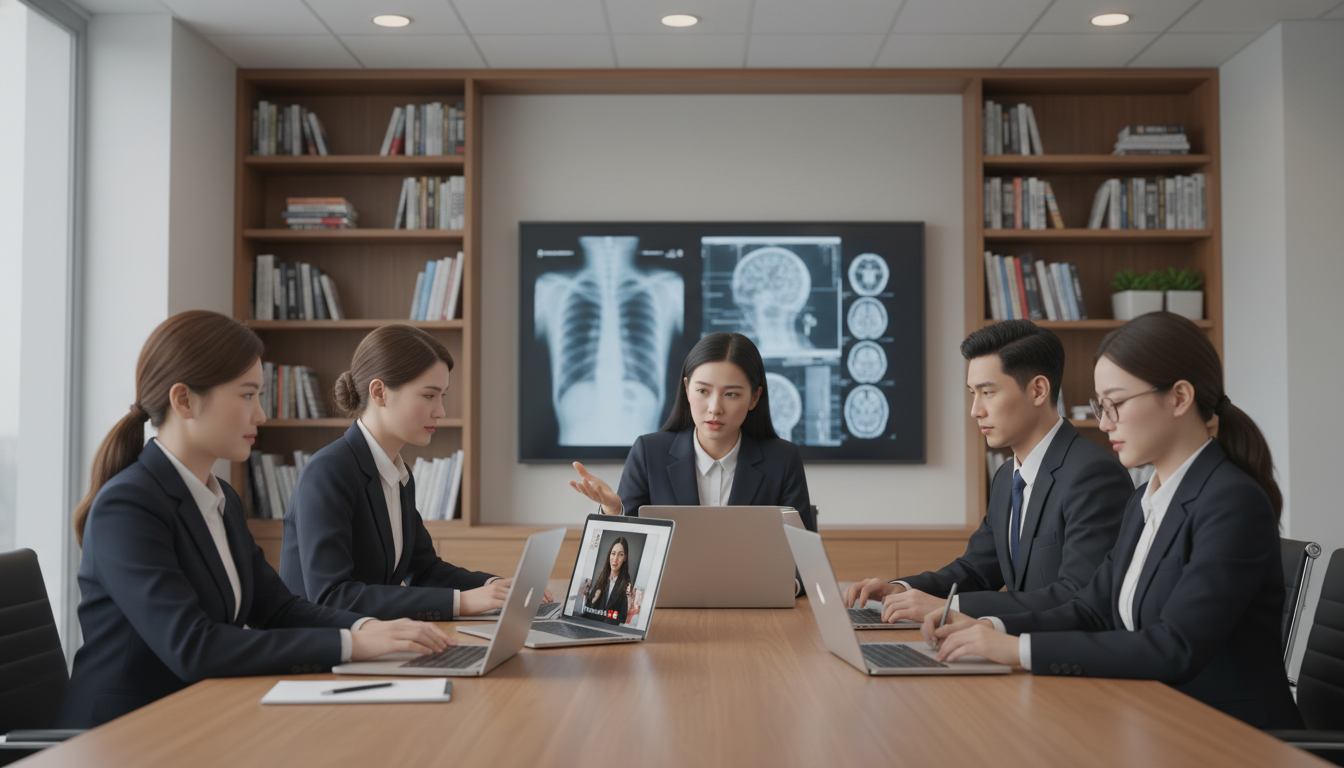
Step 6: Practice Delivery: Mock Interviews, Virtual Setup, and Professional Presence
Even with excellent content, your delivery can make or break your impression. This is where practical residency interview preparation becomes critical—especially with the continued prominence of virtual interviews in the allopathic medical school match.
A. Do Multiple Mock Interviews
Aim for at least 2–3 full mock interviews, including:
- One with a faculty advisor (ideally in radiology or a related specialty).
- One with your medical school’s career office.
- One peer mock focused on specific “problem” questions.
Record at least one session (with permission) and watch for:
- Eye contact and camera alignment (for virtual).
- Filler words (“um,” “like”).
- Overly long or disorganized answers.
- Body language (nervous habits, posture).
B. Optimize Your Virtual Interview Setup
For virtual diagnostic radiology match interviews, test everything at least several days in advance:
Technology:
- Stable internet connection and backup plan (hotspot, secondary device).
- Updated video platform (Zoom, Teams, etc.).
- Quality webcam and microphone (test both audio and video with a friend).
Environment:
- Quiet room free from interruptions.
- Neutral, uncluttered background (bookshelf, plain wall, or professional decor).
- Good lighting from the front or side, not from behind.
Positioning:
- Camera at eye level—use books or a stand if needed.
- Sit centered in the frame, upper torso visible.
- Maintain appropriate distance from the camera.
C. Professional Dress and Nonverbal Communication
Attire:
- Business formal (suit jacket, dress shirt/blouse, tie optional but common).
- Avoid loud patterns or distracting accessories.
- Ensure clothing is comfortable and allows free movement.
Nonverbal cues:
- Sit up straight, relaxed shoulders.
- Nod occasionally to show engagement.
- Look into the camera when speaking (for virtual interviews) to simulate eye contact.
Practice introducing yourself concisely:
“Hi, I’m Dr. [Name], an MD graduate from [School], interested in diagnostic radiology with particular interest in [optional subspecialty]. Thank you for the opportunity to interview today.”
Step 7: Organize Logistics, Notes, and Post-Interview Workflow
Pre-interview preparation isn’t only about what you say; it’s also about managing information and stress across multiple interviews.
A. Create a Master Interview Spreadsheet
Include columns for:
- Program name and location
- Interview date and format (virtual/on-site)
- Interviewer names and roles (after you receive them)
- Key program features and pros/cons
- Personal fit notes (gut impression, culture, geography)
- Follow-up actions (thank-you notes sent, additional questions)
This helps you stay organized and later build a thoughtful rank list for the diagnostic radiology match.
B. Prepare a “Day-Of” Checklist
The night before each interview:
- Confirm interview date, time, and time zone.
- Print or open (in a separate window) your 1-page program research summary.
- Have a pen and notepad ready for quick notes.
- Prepare water and light snacks (for long virtual interview days).
- Lay out your interview attire.
- Set multiple alarms if the interview is early.
Morning-of:
- Log in 15–20 minutes early to test audio/video.
- Close unrelated browser tabs and silence notifications.
- Turn off phone or put it on “Do Not Disturb.”
C. Plan Your Post-Interview Reflection
Immediately after each interview day, while details are fresh:
- Write down:
- What you liked most and least about the program.
- Memorable interactions with residents or faculty.
- How you’d feel training and living there for 4+ years.
- Any follow-up questions.
This reflection is invaluable when creating your rank list and comparing similar radiology residency programs later.
Step 8: Manage Stress, Mindset, and Professionalism
The diagnostic radiology match can be particularly anxiety-provoking given its competitiveness. Strong pre-interview preparation includes taking care of your mental and emotional state.
A. Normalize Anxiety and Impostor Feelings
Many MD graduate residency applicants—especially in competitive fields like radiology—experience impostor syndrome. Before interviews:
- Remind yourself: you received this interview invitation because your application was competitive.
- Reframe interviews as conversations about mutual fit, not interrogations.
- Practice supportive self-talk: “I’ve prepared well. I will do my best in each conversation.”
B. Develop a Pre-Interview Routine
Create a simple, repeatable routine that helps you center yourself:
- Short walk or light exercise
- 5 minutes of deep breathing or mindfulness
- Brief review of your “Why radiology?” and top three program-specific points
- A final technical check (camera, mic, background)
C. Maintain Professionalism Throughout the Process
Every interaction counts:
- Be kind and courteous to coordinators and administrative staff.
- Respond to emails promptly and professionally.
- Be on time or early for all interviews and social events.
- Avoid negative comments about other programs or applicants.
Professionalism and collegiality are heavily weighted when programs choose among similarly qualified candidates.
Putting It All Together: A Sample Two-Week Pre-Interview Plan
If you have about two weeks before your first diagnostic radiology residency interview, you might structure your preparation like this:
Days 1–2: Foundation
- Clarify your “Why radiology?” story and long-term goals.
- Re-read your ERAS application and highlight discussable experiences.
- Identify potential red-flag areas and craft honest, constructive narratives.
Days 3–5: Program & Content Preparation
- Build your program research template and fill it out for the first 3–4 programs.
- Refresh basic imaging principles and radiology’s role in common clinical scenarios.
- Draft personalized questions to ask interviewers.
Days 6–8: Mock Interviews and Delivery
- Schedule 2–3 mock interviews (faculty, career office, peer).
- Record and review at least one, focusing on structure and nonverbal cues.
- Refine answers to common behavioral and radiology-specific questions.
Days 9–10: Technical and Logistical Setup
- Optimize your virtual interview environment and technology.
- Create your master spreadsheet and day-of checklist.
- Finalize your interview wardrobe and test how it appears on camera.
Days 11–14: Light Review and Mental Preparation
- Daily brief review of your “core stories” and program notes.
- Maintain sleep, nutrition, and exercise routines.
- Practice your pre-interview calming routine.
By the time you enter the first radiology residency interview, you’ll have a well-rehearsed narrative, strong program knowledge, polished communication skills, and a system to carry you through the rest of the interview season.
FAQs: Pre-Interview Preparation for MD Graduates in Diagnostic Radiology
1. How much radiology knowledge do I need before interviews?
Programs do not expect you to read like a radiology resident on day one. For the allopathic medical school match, what matters most is that you:
- Understand when and why major imaging modalities are used.
- Appreciate radiology’s role in clinical decision-making.
- Have thought about trends like AI, remote reading, and evolving practice patterns.
Depth of subspecialty knowledge is not required; a clear and informed commitment to the field is.
2. What are common red flags in a radiology residency interview, and how should I address them?
Common concerns include:
- Lower USMLE/COMLEX scores or a failed attempt.
- A leave of absence or extended training time.
- Limited radiology exposure or a late switch from another specialty.
Address them by:
- Briefly stating the issue without defensiveness.
- Explaining contributing factors honestly (health, family, adjustment, etc.).
- Emphasizing what you learned and how you’ve improved.
- Demonstrating current performance and readiness for radiology training.
3. How important is research for a diagnostic radiology match, and should I focus on it in interviews?
Research helps, especially at academic-heavy programs, but it is not mandatory for every MD graduate residency applicant. In interviews:
- Focus on what you actually did and learned from your projects.
- Highlight any imaging-related or data-heavy work.
- If you lack radiology research, emphasize clinical, leadership, or QI experiences instead.
Programs value curiosity, follow-through, and the ability to work in teams as much as publication count.
4. How many mock interviews should I do to feel prepared?
Most applicants benefit from 2–3 structured mock interviews:
- One early, to identify major issues in delivery or structure.
- One closer to interview season, focusing on radiology-specific questions.
- Additional brief sessions for targeted practice if you receive tough feedback.
Quality matters more than quantity: choose interviewers who will give you candid, specific feedback.
Thorough, strategic pre-interview preparation helps you present your strongest, most authentic self as an MD graduate applying to diagnostic radiology. By integrating clear personal narratives, thoughtful program research, polished communication skills, and careful logistical planning, you maximize your chances of a successful diagnostic radiology match and set the stage for a rewarding residency experience.