
Understanding the Unique Position of the US Citizen IMG in Neurosurgery
Applying for neurosurgery residency is demanding for any applicant—but as a US citizen IMG (American studying abroad), your preparation needs to be even more intentional. You carry the advantages of US citizenship (no visa concerns, easier onboarding) but must still overcome program concerns about training quality, clinical exposure, and readiness compared with US MD/DO graduates.
This means your pre-interview preparation is not just about practicing answers; it’s about:
- Anticipating and confidently addressing IMG-related questions
- Demonstrating you understand the rigor and lifestyle of brain surgery residency
- Showing that you are safe, reliable, and teachable in the high-stakes world of neurosurgery
Before the first “Tell me about yourself,” you should already have a clear strategy for:
- How you present your story as an American studying abroad
- How you highlight neurosurgery-specific experiences
- How you handle classic residency interview questions and neurosurgery “fit” questions
- How you research each program and build a connection with their faculty and culture
The sections below walk you step-by-step through how to prepare for interviews as a US citizen IMG targeting neurosurgery.
Step 1: Clarify Your Neurosurgery Story and Personal Brand
Neurosurgery programs will see many applicants with strong test scores and solid research. What distinguishes you is your story—especially important as a US citizen IMG.
Define Your Core Narrative
Before you start residency interview preparation, write out concise answers to these questions:
- Why neurosurgery?
- What specific experiences drove you to brain and spine surgery?
- Which patient, surgery, or mentor crystallized your decision?
- Why you, as an IMG, and why now?
- Why did you pursue medical school abroad?
- How did that experience strengthen you rather than hold you back?
- Why neurosurgery in the United States?
- Why US training specifically?
- How does your long-term vision (academic neurosurgeon, subspecialist, etc.) align with US training?
Aim for a 2–3 sentence core message that ties these together. For example:
“I’m a US citizen who chose to study medicine in Ireland because of its strong neuroanatomy and clinical training, and I used that platform to build extensive exposure to neurosurgery through electives and research. Over time, working with brain tumor and trauma patients showed me that I’m drawn to complex decision-making, long-term continuity, and the technical challenge of neurosurgery. I’m now seeking US neurosurgery residency training because I want to practice in an academic environment where I can combine surgery, teaching, and clinical research.”
This “core narrative” will anchor your responses throughout the interview.
Preempt Common IMG-Related Concerns
Program directors will wonder:
- “Will this IMG transition smoothly into our system?”
- “Can they handle the workload and communication expectations?”
- “Are their clinical skills and knowledge on par with US grads?”
During pre-interview preparation, list specific evidence that counters these concerns:
- US clinical electives or visiting student rotations in neurosurgery or related fields
- Strong letters from US neurosurgeons or US-trained attendings
- Performance on USMLE/COMLEX, especially if strong scores or step improvements
- Research productivity in neurosurgery or neuroscience
- Examples of teamwork, professionalism, and reliability across systems
You don’t need to say “As an IMG, I know you may be concerned…” in the interview; you just need to show that you’re already “US-ready”.
Step 2: Deep Dive into Neurosurgery Programs and the Specialty
Neurosurgery programs expect applicants to be informed, focused, and long-term oriented. Pre-interview preparation must include serious program research and specialty awareness.
Research Each Program Strategically
For every interview invite, build a one-page program sheet (digital or on paper). Include:
- Program basics
- Location, hospital system, level of trauma center
- Size of residency (number of residents per year)
- Length of program (typically 7 years; note research or enfolded fellowships)
- Clinical structure
- Major clinical sites and subspecialty exposure (vascular, tumor, spine, functional, pediatrics)
- Call structure and case volume—especially trauma and emergency cranial cases
- Research profile
- Major research themes: neuro-oncology, functional neurosurgery, spine biomechanics, neurotrauma, etc.
- Active labs, NIH funding, and any high-profile PI you might connect with
- Culture and strengths
- Any emphasis on mentorship, wellness, global neurosurgery, education, or innovation
- Recent program news, expansion, or big changes (mergers, new chair, new program director)
Use:
- Program website and faculty bios
- Recent publications / PubMed searches for key faculty
- Institution’s neurosurgery department pages (often separate from GME site)
- Doximity residency navigator, alumni lists, and conference abstracts
This level of knowledge lets you ask specific, mature questions and show you’re thinking like a future neurosurgical colleague, not just an applicant.
Understand Neurosurgery’s Expectations and Realities
Program directors will test whether you truly understand what you are signing up for. In your prep, be ready to speak to:
- Lifestyle and workload
- Long hours, ICU care, overnight calls, emergent surgeries
- Balancing OR time, clinics, consults, and documentation
- Emotional demands
- High mortality and morbidity, difficult family conversations
- Coping with complications and permanent neurologic deficits
- Long-term career trajectory
- Fellowship vs. general neurosurgery
- Academic vs. private or hybrid practice
- Research, teaching, and leadership roles over time
Have concrete experiences from your rotations to demonstrate you’ve seen the intensity up close and still want it—thoughtfully.
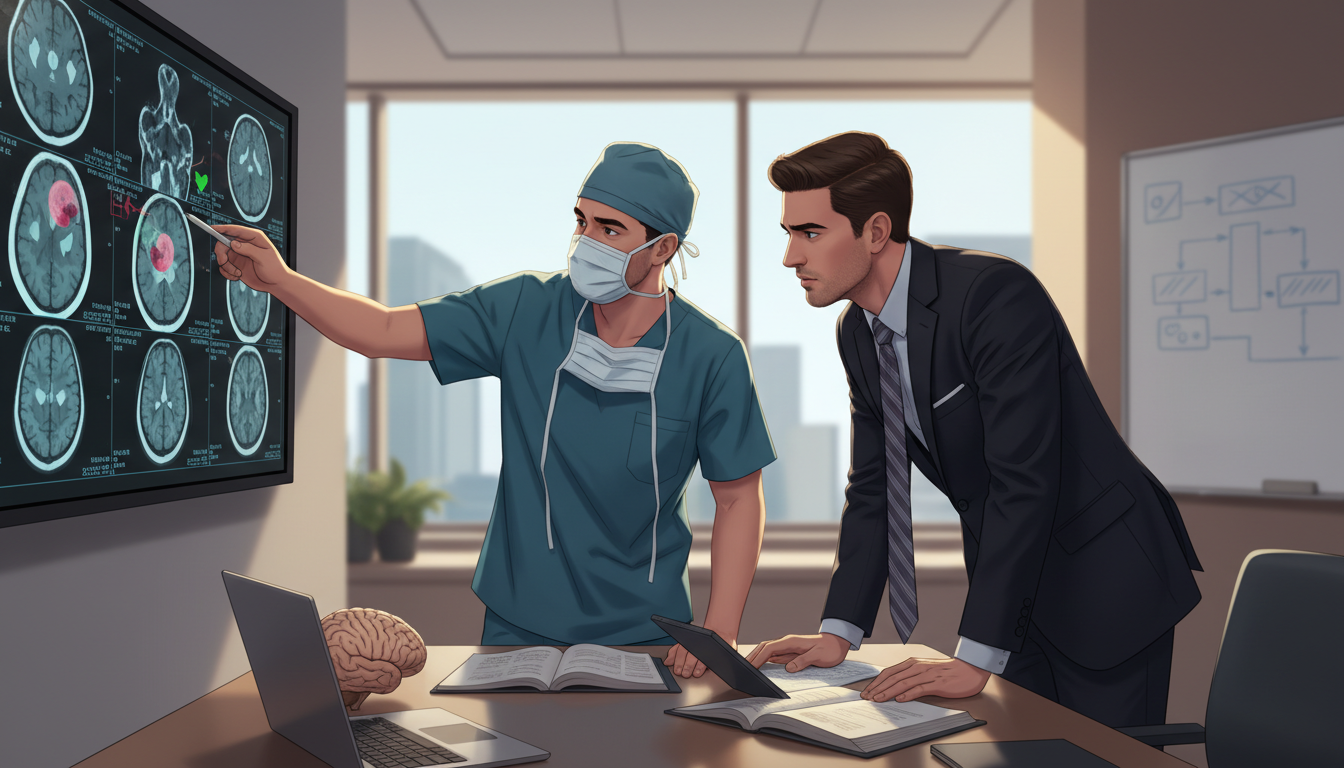
Step 3: Master Core Residency Interview Questions (with a Neurosurgery Lens)
A huge part of how to prepare for interviews is practicing high-yield interview questions residency programs will ask, then tailoring your answers for neurosurgery and your IMG status.
Foundational “Classic” Questions to Prepare
Practice answers (out loud) for at least the following:
Tell me about yourself.
- Structure: present → past → future
- Briefly state your stage (US citizen IMG in X year), main interest (neurosurgery), and key themes (research, perseverance, teamwork).
- Transition into how that led you to neurosurgery and to this interview.
Why neurosurgery? Why brain surgery residency instead of another surgical field?
- Include a specific patient or operative experience.
- Connect intellectual attraction (neuroanatomy, decision-making) with patient-centered motivation (long-term impact, meaningful recoveries).
- Show you understand the demands and are committed for the long haul.
Why did you attend medical school abroad?
As a US citizen IMG, this question is almost guaranteed. Your answer should be:- Honest, but framed positively (global perspective, unique training opportunities, personal/family reasons, or educational reasons).
- Focused on what you gained—resilience, adaptability, exposure to diverse healthcare systems.
- Followed by how you bridged back to the US (electives, US exams, research).
Why our program?
- Use content from your program research sheet.
- Mention 2–3 specific features: trauma exposure, research alignment, faculty mentors, unique rotation sites.
- Show you’ve thought about living in that city/region and can picture your life there over 7 years.
What are your strengths and weaknesses?
- Strengths: Prioritize those that align with neurosurgery: work ethic, composure under pressure, technical curiosity, communication with teams.
- Weaknesses: Choose a real but non-fatal issue (e.g., difficulty delegating, overcommitting, perfectionism) and show concrete steps you’ve taken to improve.
Tell me about a time you made a mistake.
- Use a clinical or team-related example in which:
- You clearly own the mistake.
- You show insight into what went wrong.
- You demonstrate that you changed your behavior as a result.
- Use a clinical or team-related example in which:
Where do you see yourself in 10–15 years?
- Align with neurosurgery pathways: academic surgeon, subspecialty (e.g., skull base, vascular, pediatrics, spine, functional), research interests.
- Emphasize flexibility but show you’ve thought about your future.
Neurosurgery-Specific Questions to Expect
As part of your residency interview preparation, rehearse answers to questions like:
- “What do you think will be the hardest part of neurosurgery residency for you?”
- “Tell me about a particularly challenging neurosurgical or neuro ICU patient.”
- “How do you handle fatigue, long call nights, and high-stress situations?”
- “What role do you see research playing in your career?”
- “What do you understand about the complications unique to neurosurgery?”
When answering, always:
- Refer to specific rotations or cases
- Demonstrate reflection, not just enthusiasm
- Tie back to skills that neurosurgery residency requires (stamina, humility, communication, professionalism, curiosity)
Addressing Being a US Citizen IMG Without Apology
You may also encounter more subtle or direct questions about your IMG background:
- “How has your international training prepared you for US practice?”
- “What challenges do you anticipate transitioning into the US system?”
- “How did you manage to get neurosurgery exposure as an American studying abroad?”
For each, you want an answer that:
- Normalizes your pathway
- “I’m grateful for the path I took; it’s given me X, Y, and Z strengths.”
- Proves readiness
- “Through my US electives at [Hospital], working with [Neurosurgeon], I’ve already functioned in the US clinical environment and received strong feedback.”
- Connects to neurosurgery
- “Managing resource limitations abroad helped me think critically and independently, which serves me well in neurosurgical decision-making.”
Step 4: Build a High-Yield Practice Plan (Mock Interviews, STAR Stories, and Feedback)
The difference between a good and great interview is almost always rehearsal.
Create a Bank of STAR Stories
Behavioral questions (“Tell me about a time when…”) require concrete examples. Prepare 10–15 brief stories using the STAR method:
- Situation: Set the context concisely
- Task: What were you responsible for?
- Action: What did you do?
- Result/Reflection: What happened, and what did you learn?
Focus on:
- High-pressure clinical situations
- Complex or emotionally challenging patient encounters
- Team conflicts or miscommunications
- Times you showed leadership or initiative
- Situations that highlighted your adaptability as a US citizen IMG moving between countries/systems
With 10–15 stories, you can flexibly adapt them to answer multiple interview questions residency programs ask, like:
- “Tell me about a time you had a conflict with a team member.”
- “Give an example of when you went above and beyond for a patient.”
- “Describe a stressful situation and how you managed it.”
Schedule Formal Mock Interviews
For neurosurgery, aim for at least:
- 2–3 general mock interviews (school career office, mentors, or residents)
- 1–2 neurosurgery-specific mock interviews (if possible with neurosurgery faculty or senior residents)
Ask them to focus on:
- Clarity and structure of your answers
- Professionalism and composure under tougher questions
- Whether your neurosurgery motivation feels genuine and grounded
- Whether and how your IMG status comes across (too defensive? underexplained? overemphasized?)
Record video if allowed. Watch for:
- Eye contact and body language
- Filler words (“um,” “like,” “you know”)
- Long, unfocused answers vs. concise stories
Revise your answers based on feedback.
Balance Authenticity and Polish
Your goal isn’t to sound scripted; it’s to sound prepared and thoughtful. If you can answer core questions in multiple different but coherent ways, you’ll feel more comfortable adapting to the tone and style of each interviewer.
Step 5: Pre-Interview Logistics, Materials, and Professional Presentation
Once the more conceptual residency interview preparation is underway, focus on the practical aspects that can quietly make—or break—a neurosurgery interview.
Organize Your Application Materials
Before the first interview:
- Re-read your ERAS application, personal statement, and CV.
- Highlight:
- Every neurosurgery-related experience
- Every research project (know your exact role and key findings)
- Any gaps or red flags (repeat exams, leaves of absence); have concise, honest explanations ready.
Interviewers often quote directly from these documents. You need to be ready to talk in depth about:
- Any paper, abstract, or poster listed
- Any leadership or volunteer experience
- Any neurosurgery shadowing or electives abroad and in the US
For research, be able to explain each project at both:
- A broad, layperson level
- A technical level if speaking with a subspecialist
Create a Program Folder and Tracking System
Use a simple spreadsheet or note document to track:
- Interview dates and times (account for time zones!)
- Interview format (virtual vs. in-person, platform used)
- Names and roles of faculty and residents you’ll meet
- Specific points you want to remember (e.g., “ask Dr. X about brain tumor clinical trial,” “mention interest in spine deformity research”)
This keeps your questions targeted and helps with later ranking decisions.
Professional Attire and Technical Setup
For a virtual neurosurgery residency interview:
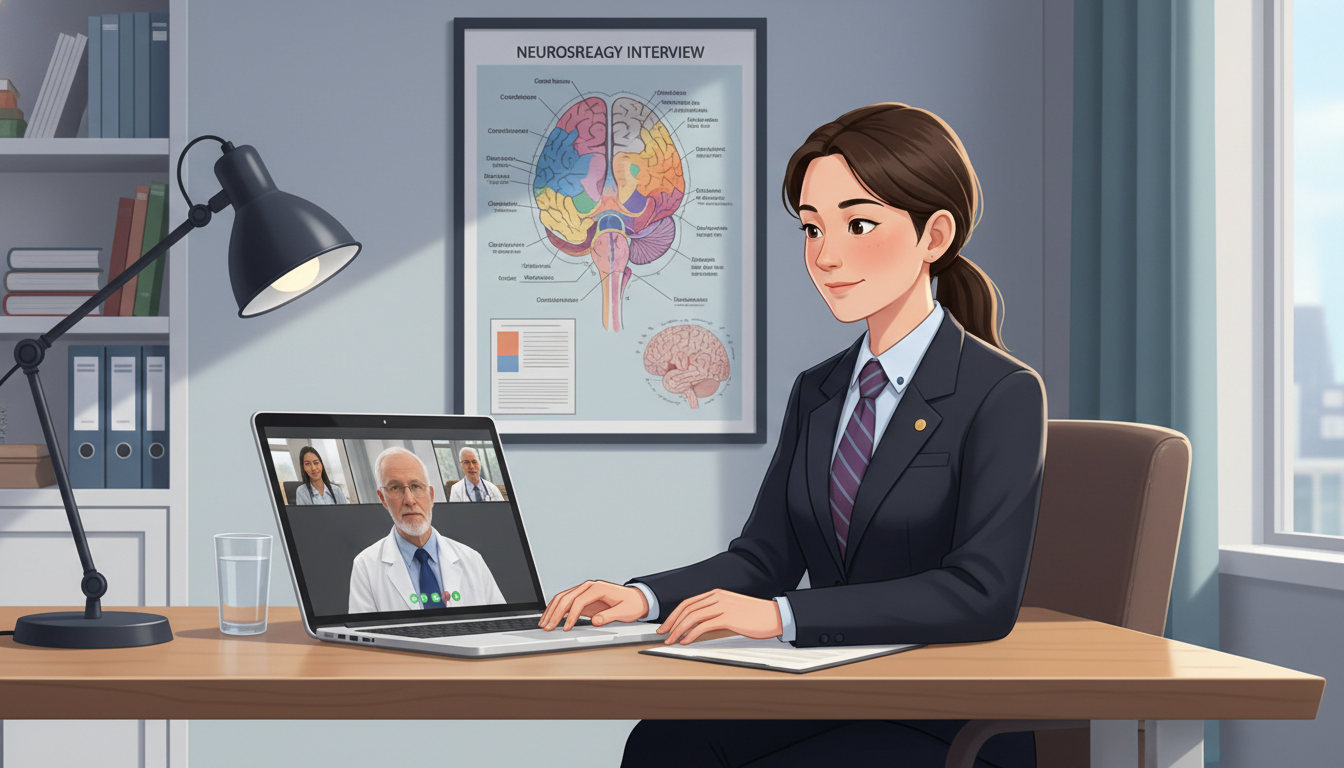
- Attire: Conservative business formal (dark suit, solid or subtle-patterned shirt/blouse, minimal jewelry)
- Background: Neutral, uncluttered, well-lit; avoid distracting posters or personal items in view
- Technology check:
- Test your camera, microphone, and internet connection
- Have a backup device or hotspot plan
- Practice logging into the platform used (Zoom, Thalamus, Teams, etc.)
For in-person interviews:
- Bring:
- Printed CV and abstract list (optional but can help you feel prepared)
- Small notepad and pen
- Comfortable professional shoes (you may walk a lot on hospital tours)
In neurosurgery, attention to detail is valued. Being technically and professionally prepared supports the image of someone who will be reliable in the OR and ICU.
Step 6: Pre-Interview Questions You Should Ask (and How to Use Them Strategically)
Your questions tell the program what you value and how you think. Coming in with thoughtful, neurosurgery-specific questions is a critical part of pre-interview preparation.
High-Value Questions for Faculty
Prepare a list, then adapt based on your interviewer’s role:
To the Program Director/Chair
- “How do you see this neurosurgery program evolving over the next five to ten years?”
- “What qualities do your most successful residents tend to share?”
- “How does your program support residents who are interested in academic or research-focused careers?”
To Research-Oriented Faculty
- “What opportunities exist for residents to become involved in ongoing research in [subspecialty]?”
- “How have recent residents balanced research productivity with their clinical responsibilities?”
- “Do residents typically present at national neurosurgery meetings, and how is that supported?”
To Clinical Faculty
- “How is autonomy and operative responsibility graduated across the PGY years?”
- “How does the program ensure residents are well-prepared for independent practice at graduation?”
- “What are some challenges residents commonly face here, and how does the program help them navigate those?”
High-Value Questions for Residents
Residents usually give the most candid view of the training environment:
- “What qualities do you think help someone thrive specifically in this neurosurgery program?”
- “How would you describe the culture between residents and faculty?”
- “How has the program responded when residents struggle—either personally or academically?”
- “What does a typical call night look like at your level?”
- “If you had to choose this program again, would you? Why or why not?”
Avoid questions you can easily answer from the website (e.g., “How long is your program?”), especially in a competitive field like neurosurgery.
Final Pre-Interview Checklist for the US Citizen IMG in Neurosurgery
In the last week before interviews begin, run through this checklist:
- Narrative & Identity
- Clear, concise answers to:
- “Tell me about yourself”
- “Why neurosurgery?”
- “Why did you study medicine abroad?”
- “Why our program?”
- Clear, concise answers to:
- IMG Considerations
- Confident, positive explanations of:
- Your decision to be an American studying abroad
- How you bridged into US clinical and research settings
- Any gaps, exam retakes, or non-traditional steps
- Confident, positive explanations of:
- Neurosurgery Readiness
- Comfortable discussing:
- Demands of neurosurgery residency
- Specific neurosurgery cases or rotations that impacted you
- Long-term career goals in neurosurgery
- Comfortable discussing:
- Practice & Feedback
- At least 2–3 mock interviews completed
- 10–15 STAR stories rehearsed
- Recorded session reviewed for body language and clarity
- Program Research
- One-page summary for each program
- Tailored questions ready for faculty and residents
- Logistics & Setup
- Professional attire prepared
- Technology tested (for virtual interviews)
- Schedule, time zones, and contact info confirmed
Approaching your neurosurgery residency interviews with this level of structure will let you move beyond anxiety and focus on the real goal: connecting as a future colleague and showing programs why you belong in their operating rooms, call rooms, and research meetings for the next seven years.
FAQ: Pre-Interview Preparation for US Citizen IMG in Neurosurgery
1. As a US citizen IMG, should I bring up my IMG status proactively in neurosurgery interviews?
You don’t need to lead with it, but you should be prepared to address it clearly when it comes up. When asked (“Why did you go abroad?” or “How has your training prepared you for US practice?”), answer:
- Briefly and honestly
- Framed around what you gained (adaptability, diverse clinical exposure)
- Highlighting the steps you’ve taken to integrate into the US system (US electives, neurosurgery research, US letters of recommendation)
Avoid apologizing for your path; instead, show insight and maturity.
2. What types of neurosurgery experiences matter most before interviews?
Programs look for evidence of genuine commitment to neurosurgery, such as:
- Clinical rotations/electives in neurosurgery or neuro ICU (especially in the US)
- Shadowing or longitudinal mentorship with neurosurgeons
- Research in neurosurgery, neurology, neuroscience, or related fields
- Conference presentations, posters, or involvement in neurosurgery interest groups
During interviews, be ready to discuss specific patients or cases that influenced your decision and what you learned from them.
3. How technical should I be when answering interview questions in neurosurgery?
Match the level of your interviewer:
- With PDs or general faculty: focus on clinical judgment, professionalism, and big-picture understanding more than granular technical details.
- With subspecialty neurosurgeons: be ready for deeper discussions about specific cases or research, but do not pretend expertise you don’t have.
You should always be able to explain your research or clinical experiences clearly at both a high level and a moderately detailed level, but you are not expected to be a neurosurgical expert before residency.
4. How can I stand out positively during neurosurgery residency interviews as an American studying abroad?
You stand out by combining:
- Preparedness: polished answers, clear narrative, strong knowledge of each program
- Insight: realistic understanding of neurosurgery’s demands and your own strengths/limitations
- Ownership of your path: confident, non-defensive explanation of your IMG route
- Professionalism and presence: being on time, technically prepared, respectful, and engaged
Many programs appreciate the resilience and adaptability of a US citizen IMG who can clearly show that they are ready for the rigor of brain surgery residency and have already proven themselves in US clinical and research settings.