Understanding the EM Residency Landscape as a Caribbean IMG
Emergency Medicine (EM) is a highly competitive specialty, and as a Caribbean IMG, you face unique challenges—but also unique strengths. Before diving into detailed residency interview preparation, you need a clear picture of the terrain you’re entering.
How Program Directors View Caribbean Medical Graduates
Programs know that Caribbean medical school residency applicants can be very strong, but they also know that training environments and grading standards vary. This leads to:
- Closer scrutiny of objective metrics: USMLE scores, clinical evaluations, and standardized letters (SLOEs) carry even more weight.
- Heavier emphasis on clinical performance in the U.S.: EM rotations at U.S. hospitals (especially ACGME–affiliated) are critical to demonstrate that you can function effectively in the U.S. system.
- Attention to communication and professionalism: Programs want to be sure you’ll integrate smoothly into fast‑paced ED teams.
For Caribbean applicants from schools like SGU, Ross, AUC, etc., a strong SGU residency match or similar institutional track record can help, but each applicant stands on their own performance.
Why Interviews Matter Even More for Caribbean IMGs
Once you’re invited, your interview often matters more than your test scores:
- It’s your chance to demonstrate you’re more than a Step score.
- It lets you counter any implicit bias about Caribbean training by showing maturity, insight, and clinical awareness.
- EM places huge value on teamwork, communication, stress tolerance, and likeability—all best assessed in person (or over video).
Your goal in pre‑interview preparation is to be so well‑rehearsed, self‑aware, and knowledgeable that any concern about being a Caribbean IMG is overshadowed by your clear potential as a strong emergency physician.
Building Your Pre-Interview Foundation
Strong pre‑interview preparation starts weeks (ideally months) before your first residency interview invitation arrives.
1. Understand What EM Programs Are Really Looking For
Across the board, EM programs tend to prioritize:
- Clinical competence: Can you take a good history and exam, form differentials, interpret basic labs and imaging, and recognize sick vs stable?
- Teamwork and communication: How you interact with nurses, techs, consultants, co-residents, and patients.
- Work ethic and reliability: Do you show up prepared, follow through, and own your responsibilities?
- Resilience and stress tolerance: The ED is high pressure. Programs look for calm, grounded applicants.
- Teachability and humility: Will you learn from feedback and own your mistakes?
- Fit with the program culture: Personality, interests, interpersonal style.
Use these domains as a checklist. Every answer you prepare—and every story you select—should demonstrate at least one of these qualities.
2. Self-Assessment: Your Personal EM Story
Before diving into “how to prepare for interviews,” you need a clear narrative:
Why Emergency Medicine?
- Identify 2–3 core reasons (e.g., love of acute care, variety, procedures, team-based environment, impact on vulnerable populations).
- Tie each reason to a specific experience: an EM shift, a preclinical EM interest group, EMS ride-along, or a critical case you assisted with on rotation.
Why you, specifically, fit EM:
- Skills: rapid decision-making, staying calm under pressure, ability to multitask.
- Personal traits: adaptability, curiosity, empathy, efficiency.
- Experiences: ED rotations, trauma exposure, global health, student leadership.
Why you trained in the Caribbean:
- Be prepared to explain this honestly and confidently:
- Late decision to pursue medicine
- Limited seats in home-country schools
- Desire for a U.S.-style curriculum
- Show growth: what you gained from your Caribbean medical school experience (cultural competence, resilience, resourcefulness).
- Be prepared to explain this honestly and confidently:
Write these out in bullet points, then refine them into concise, confident talking points.
3. Strength–Weakness Inventory
Create a simple 2-column list:
- Strengths: e.g., bilingual, EMS experience, strong Step 2 score, leadership in EM interest group, outstanding SLOEs.
- Potential Red Flags / Weaknesses:
- USMLE failures or low score
- Gaps in training
- Late EM decision
- Limited U.S. clinical experience
- No home EM program at your Caribbean school
For each weakness, draft a brief, positive-framed explanation that:
- Owns the issue without blame.
- Demonstrates insight.
- Shows what you did to improve or compensate.
- Ends on a strengths-based note.

Mastering Core Residency Interview Content for EM
Once your foundation is set, the next phase of residency interview preparation is content: what you’re going to say and how you’ll say it.
1. High-Yield EM Interview Questions for Caribbean IMGs
You’ll see many generic “interview questions residency” lists, but as a Caribbean IMG in EM, prioritize:
Classic Motivational & Fit Questions
- “Tell me about yourself.”
- “Why Emergency Medicine?”
- “Why our program?”
- “What is most important to you in a residency program?”
- “Where do you see yourself in 5–10 years?”
Performance & Behavior Questions
- “Tell me about a time you made a mistake in patient care.”
- “Describe a difficult interaction with a nurse or colleague.”
- “Tell me about a time you received critical feedback.”
- “Describe a stressful situation in the ED and how you handled it.”
Caribbean IMG-Specific or Contextual Questions
- “Why did you choose a Caribbean medical school?”
- “What challenges did you face as a Caribbean graduate, and how did you handle them?”
- “Can you talk about your transition from Caribbean clinical sites to U.S. rotations?”
- “What did you learn from practicing in a resource-limited environment?”
EM-Specific Clinical and Situational Questions
- “Walk me through your approach to a patient with chest pain in the ED.”
- “How would you prioritize multiple patients when the ED is full?”
- “Tell me about a sick patient you managed in the ED. What did you do?”
These questions combine the EM match focus on clinical reasoning and systems thinking with the Caribbean IMG lens on adaptability and transition to U.S. care.
2. Structuring Strong Answers: The S.T.A.R. Method
Use S.T.A.R. (Situation, Task, Action, Result) for behavioral questions:
- Situation: Briefly set the scene.
- Task: What was required of you.
- Action: What you did (focus here).
- Result: Outcome, plus reflection/lesson.
Example (Difficult Feedback):
- Situation: “On my EM rotation at a busy community hospital, I was told I seemed hesitant during initial patient presentations.”
- Task: “I needed to improve my confidence and clarity in presenting to attendings.”
- Action: “I started prepping a quick problem list and prioritized key data before calling the attending. I asked a senior resident to observe my presentations and give targeted feedback. I also rehearsed a structured format (OPQRST, vital signs, red flags).”
- Result: “By the end of the rotation, my evaluations specifically noted clear and concise presentations, and I was encouraged to trust my clinical judgment. It taught me to actively seek feedback and implement it quickly—something I expect to continue doing in residency.”
3. Crafting a Compelling “Tell Me About Yourself” (TMAY)
As a Caribbean IMG, your TMAY is critical in setting a confident, positive tone.
Aim for 60–90 seconds, roughly structured as:
- Opening identity line: “I’m a fourth-year student from [Caribbean School], originally from [Country/City], and I’m passionate about Emergency Medicine because…”
- Background & path to medicine: A concise summary of your journey (include any unique elements: EMS, prior career, athletics, research).
- Key EM experiences: Highlight 1–2 formative EM rotations or events that confirmed your choice.
- What you bring: 2–3 strengths or themes: teamwork, language skills, resilience, patient-centered care.
- Future orientation: One sentence about what you’re looking for in a residency program.
Write this out, refine it, and then practice until it sounds natural, not memorized.
4. Explaining “Why EM?” and “Why Our Program?”
Why EM?
Combine:
- A meaningful clinical story
- Concrete aspects of EM that match your personality
- Long-term vision
Example elements:
- “I love making rapid, impactful decisions for undifferentiated patients.”
- “I’m energized by team-based care and the pace of the ED.”
- “I value shift work and the flexibility it offers for future interests like global health or administration.”
Why Our Program?
Do program-specific homework:
- Review their website: clinical sites, trauma levels, patient population.
- Note special features: ultrasound curriculum, EMS involvement, global health, simulation, social EM programs.
- Talk to residents when possible; note what they emphasize (culture, teaching style, autonomy).
Then, in your answer:
- Mention 3–4 specific program features.
- Link each feature to your goals or experiences.
- Show that you understand their context (e.g., community vs academic, urban vs rural, trauma vs medical heavy).
Communication, Delivery, and Professional Presence
Content alone isn’t enough. Programs judge you on how you communicate—critically important in emergency medicine.
1. Practicing Clear and Confident Communication
As a Caribbean IMG, you may have trained in diverse clinical environments with varying communication norms. For EM, you want to project:
- Clarity: Organized thoughts, logical sequencing, avoiding rambling.
- Brevity: Efficient explanations—just like ED presentations.
- Confidence without arrogance: Direct eye contact, steady voice, comfortable body language.
- Professional warmth: Approachable, team-friendly demeanor.
Practical steps:
- Record yourself answering common questions; watch for filler words, rushed speech, or monotone delivery.
- Practice with:
- A mentor or advisor
- Fellow applicants (especially other Caribbean IMGs)
- Simulation sessions at your school
Focus especially on your first 3–5 minutes (TMAY, Why EM?)—they set the tone.
2. Handling Difficult or Stressful Questions
Interviewers in EM may intentionally push you a bit to see how you respond under pressure.
Examples:
- “You failed Step 1. Tell me what happened.”
- “You applied broadly. If you don’t match into EM, what will you do?”
- “How would your worst critic describe you?”
Your approach:
- Stay calm and pause briefly if needed.
- Acknowledge the difficulty honestly.
- Avoid defensiveness or blame.
- Pivot to insight and improvement.
For a failed exam:
- Briefly state what happened (no long excuses).
- Clarify what you changed (study plan, habits, mental health support).
- Point to improved subsequent performance (e.g., Step 2, clinical grades).
- Emphasize resilience and growth.
3. Zoom/Virtual Interview Etiquette for EM Applicants
Even as in-person interviews return, many programs still use virtual formats. For Caribbean IMG applicants—especially those still offshore—virtual performance is crucial.
Technical Preparation:
- Stable internet; test on multiple platforms (Zoom, Teams, WebEx).
- Neutral, clean background; avoid visual distractions.
- Good lighting (face front-lit, not back-lit).
- Use a headset or good mic to reduce noise.
Professional Appearance:
- Business formal: suit jacket, dress shirt/blouse; avoid loud patterns.
- Neat grooming; minimal jewelry.
- Maintain good posture and camera eye-level.
Virtual Communication Tips:
- Look at the camera when speaking; glance at the screen when listening.
- Slightly overemphasize nods and facial reactions to show engagement.
- Keep answers crisp; virtual delay can amplify rambling.

Program Research, Logistics, and Strategy for the EM Match
Pre‑interview preparation isn’t only about what you say. It’s also about where you interview, how you prioritize programs, and how you manage logistics.
1. Researching EM Programs as a Caribbean IMG
For Caribbean medical school residency applicants in EM, it’s important to distinguish between:
IMG-friendly programs: Historically interview and rank IMGs; check:
- FREIDA
- Program websites
- NRMP Charting Outcomes
- Word-of-mouth from upperclassmen and alumni (especially from your own Caribbean school)
Less friendly programs: Some highly competitive academic centers rarely rank IMGs.
Focus your energy on:
- Programs with a track record of matching Caribbean graduates.
- Places where you had rotations, SLOEs, or faculty connections.
- Locations where you genuinely could see yourself living.
Keep an organized spreadsheet with:
- Program name, location, trauma level
- IMG friendliness
- Interview date and time
- Key features & notes for “Why this program?” answers
2. Understanding the Role of SLOEs and Rotations
In EM, Standardized Letters of Evaluation (SLOEs) are gold:
- Be ready to discuss each rotation and SLOE in detail:
- Setting (community vs academic)
- Patient population
- What you did well
- What you improved over the month
- If you did an EM rotation at a U.S. site affiliated with a residency program, know basic details about that program; interviewers may ask.
If your Caribbean school didn’t offer many EM rotations, be prepared to:
- Highlight related experiences: ICU, trauma surgery, internal medicine nights.
- Emphasize transferrable skills: triage, acute stabilization, multidisciplinary teamwork.
3. Pre-Interview Logistics and Professionalism
Scheduling:
- Respond to interview offers quickly—EM invites can fill fast.
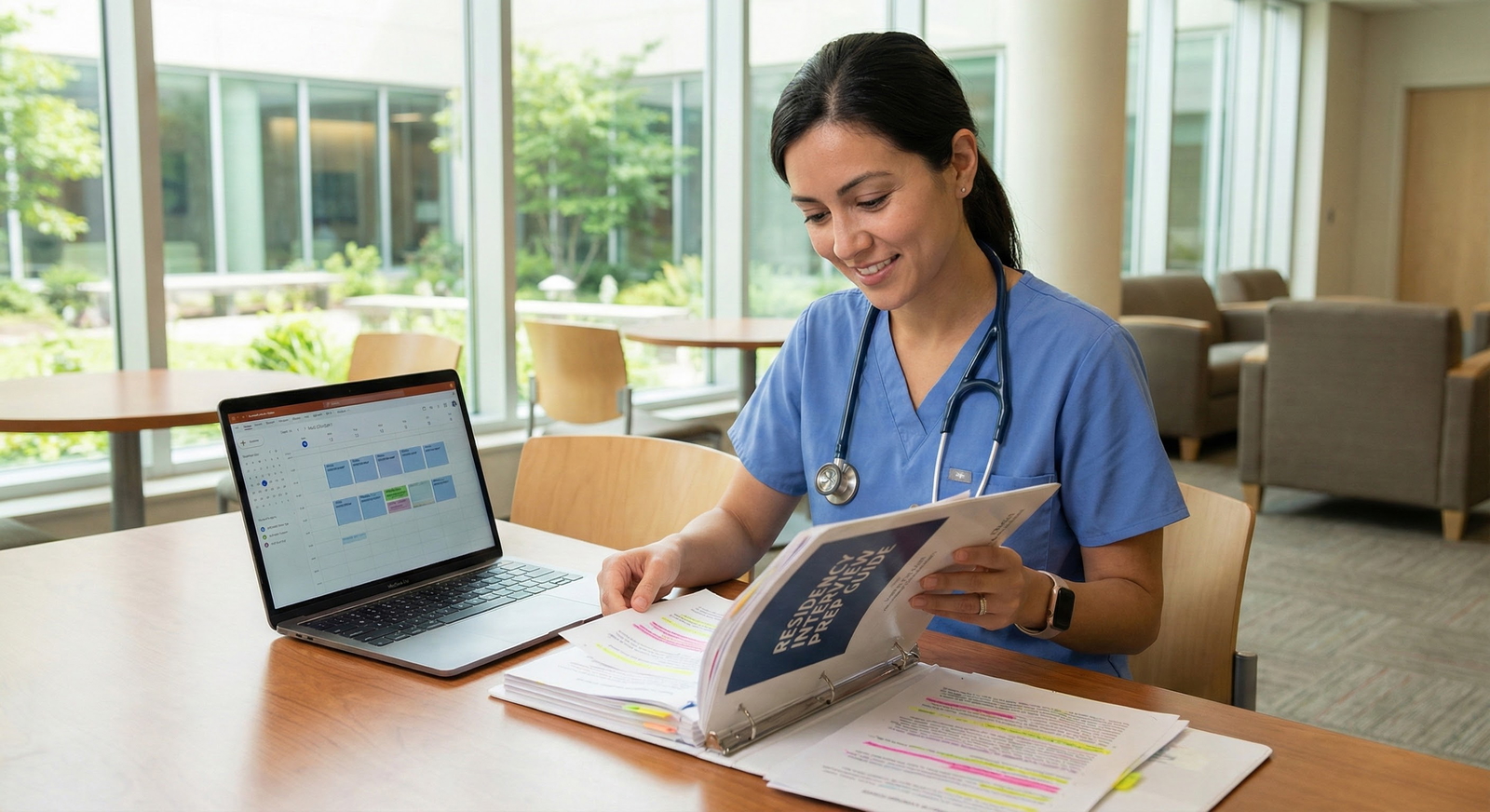
- Use a calendar system (Google Calendar, iCal) with reminders.
- Avoid overloading yourself: 1 virtual interview/day; for in-person, factor travel time.
Time Zones:
- As a Caribbean IMG, time zone differences can be tricky.
- Confirm every time: program’s local time vs your location.
- Add events to your calendar with the correct time zone.
Documents & Notes:
- Keep a digital/printed folder per program:
- Program overview
- Faculty names
- Unique strengths
- Patient populations
- Your tailored “Why this program?” bullets
- Questions you want to ask them
Arriving (virtually or in-person) clearly prepared signals professionalism and genuine interest.
Practicing and Refining: Turning Preparation into Confidence
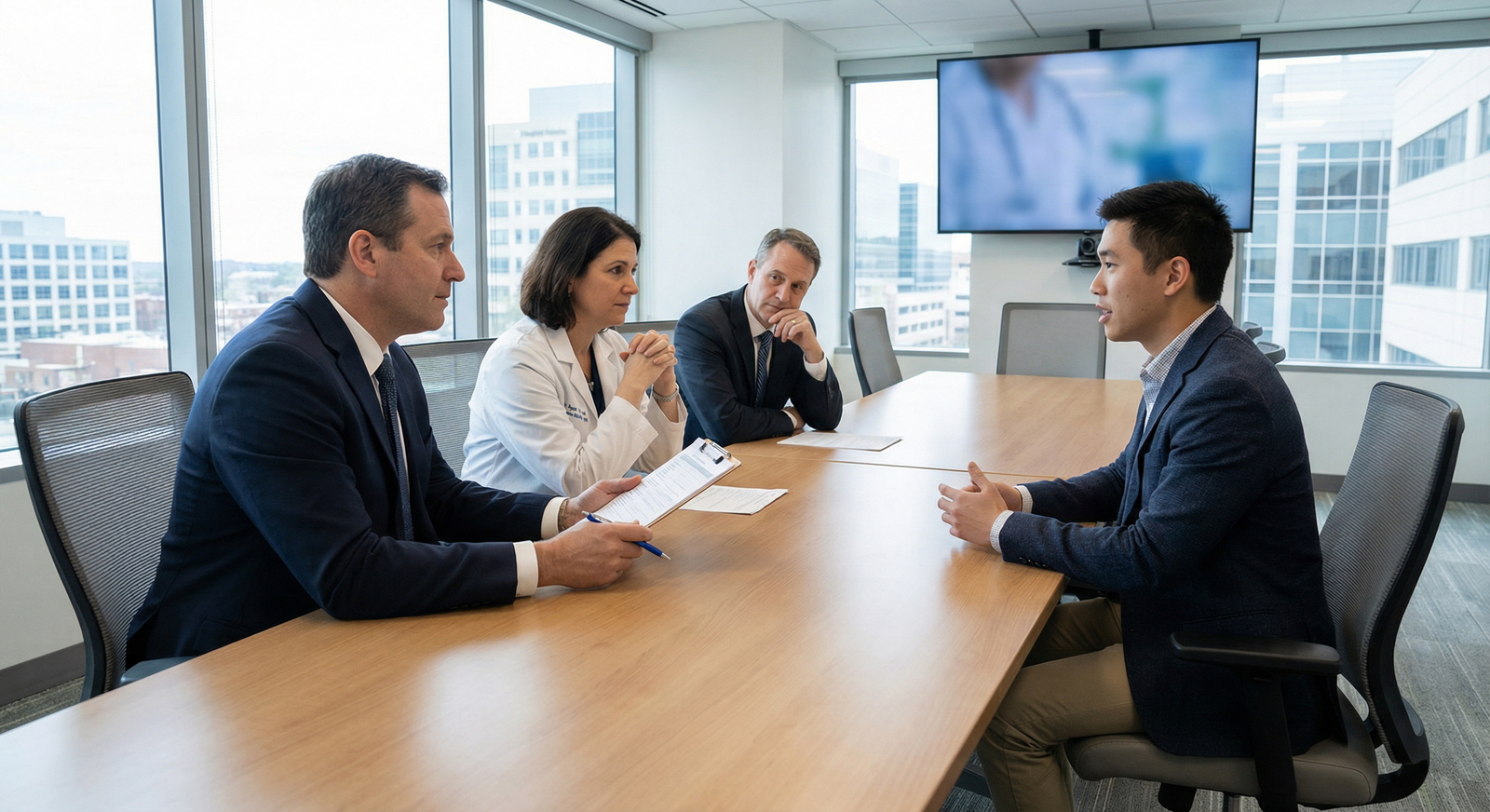
1. Mock Interviews Tailored for EM
Generic mock interviews help, but EM‑focused sessions are better:
- Request EM-specific mocks from:
- EM faculty at your rotation sites
- EM interest group advisors
- Alumni currently in EM residency (including Caribbean grads)
- Ask them to:
- Challenge your clinical reasoning.
- Probe your teamwork and conflict-management stories.
- Push on red flags (scores, delays, gaps).
After each mock:
- Write down 3 things you did well and 3 things to improve.
- Repeat weekly leading up to your interviews.
2. Story Bank: Your Personal Experience Library
Create a quick-access “story bank” document with 8–12 key experiences:
Organize by themes:
- Leadership
- Teamwork
- Conflict resolution
- Dealing with a mistake
- Handling stress
- Cross-cultural patient care
- Advocacy or going “above and beyond”
- Learning from feedback
For each story, jot:
- S: 1–2 lines
- T: 1 line
- A: 3–4 bullets (what you did)
- R: 1–2 lines + what you learned
This lets you adapt stories to many questions without sounding rehearsed.
3. Mental Preparation and Mindset
The EM match—and especially interviews—can be mentally draining, more so when you’re navigating it as a Caribbean IMG.
Pre‑interview, focus on:
Reframing the narrative: You aren’t “less than” because of your Caribbean school. You are:
- Resourceful: thrived in diverse, sometimes resource-limited settings.
- Adaptable: transitioned between countries and systems.
- Resilient: handled distance from home and high demands.
Sleep and routine:
- Don’t destroy your sleep cycle with late-night cramming.
- The week before each stretch of interviews: normalize your schedule to match likely interview times.
Brief daily review:
- 10–15 minutes reviewing your story bank and key program notes.
- 5 minutes of breathing or mindfulness to steady nerves.
This preparation helps you walk into each room (or virtual room) grounded and present.
Frequently Asked Questions (FAQ)
1. As a Caribbean IMG, how many EM interviews do I need to feel reasonably safe for the EM match?
Numbers vary by year, but historically, Caribbean IMGs aiming for an EM match tend to be more secure with 10–12+ interviews. Some match with fewer; others need more, especially with red flags. Focus on doing well at each interview you do receive—quality of performance and fit matters as much as the raw count.
2. How should I address concerns about being a Caribbean graduate during residency interviews?
You usually don’t need to bring it up directly unless asked. When it does come up:
- Answer honestly why you chose a Caribbean school.
- Emphasize what you gained: adaptability, cultural competence, resilience.
- Highlight objective strengths: strong Step 2, strong SLOEs, robust clinical evaluations, solid SGU residency match patterns (or equivalent from your institution, if applicable).
- Always pivot to why you’re well-prepared for U.S. EM training now.
3. What are the most important “first steps” in residency interview preparation for EM?
For a Caribbean IMG targeting Emergency Medicine, the first steps are:
- Clarify your EM story: Why EM, why you, and what you bring.
- Review your application thoroughly: personal statement, ERAS experiences, SLOEs—know them inside out.
- Build a story bank of clinical and personal experiences using the S.T.A.R. method.
- Start EM-specific mock interviews early, ideally with EM faculty or residents.
Once these are in place, refine answers, research programs, and optimize your communication skills.
4. How clinically detailed do I need to be in EM interview answers?
Most residency interview questions for EM are behavioral and motivational, but some will ask about clinical reasoning. You don’t need Step 3-level depth, but you should:
- Show a structured approach (e.g., ABCs, red flag identification, initial stabilization).
- Demonstrate comfort with common ED presentations (chest pain, shortness of breath, abdominal pain, trauma).
- Admit limits: if pushed beyond your level, say what you’d do as a learner (look up guidelines, ask senior help, engage your team).
You’re not expected to be an attending; you are expected to think like a responsible, teachable intern-in-training.
Effective pre‑interview preparation as a Caribbean IMG in Emergency Medicine is less about memorizing perfect answers and more about knowing yourself, knowing EM, and communicating both clearly and confidently. With deliberate preparation, strategic practice, and a grounded mindset, you can walk into every interview ready to show programs exactly why you’ll be an asset to their ED team.