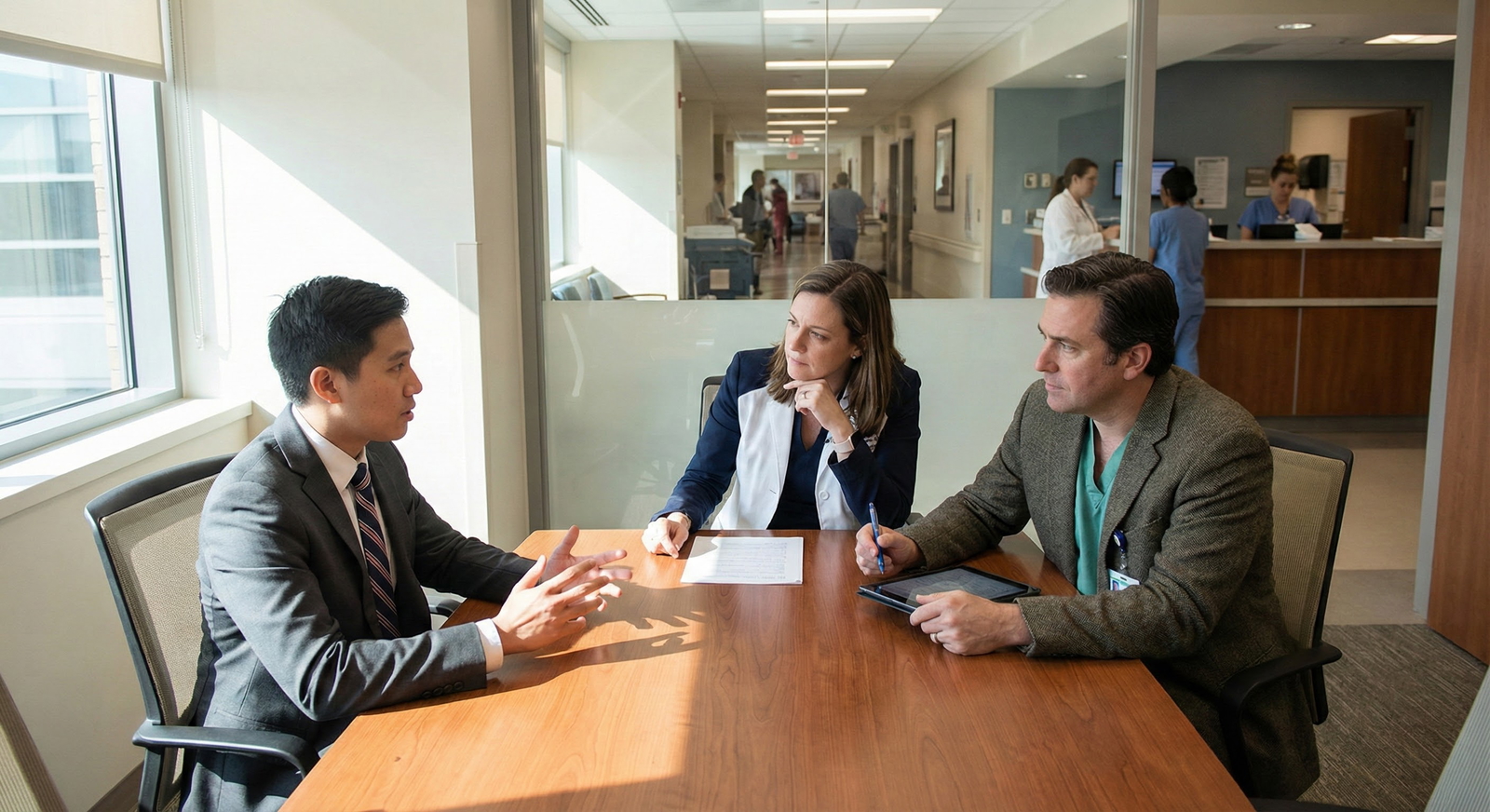
Understanding the Landscape: What Makes Diagnostic Radiology Unique for Caribbean IMGs
Diagnostic Radiology is a competitive and rapidly evolving specialty. For a Caribbean IMG—whether from SGU, AUC, Ross, Saba, or another Caribbean medical school—standing out in the residency interview cycle requires deliberate, early, and highly strategic preparation.
Before getting into the “how to prepare for interviews” step-by-step, it’s essential to understand:
- Why diagnostic radiology is competitive
- How Caribbean medical school residency applicants are perceived
- What interviewers actually look for in an IMG candidate
Why Diagnostic Radiology Is Highly Competitive
Radiology attracts applicants who are:
- Strong in the basic sciences and technology
- Comfortable with visual–spatial reasoning
- Data-driven and analytical
- Interested in a lifestyle that can be more predictable compared to many other specialties
On top of that:
- Fewer positions compared to Internal Medicine or Family Medicine
- Many U.S. MD and DO applicants with high scores
- Increasing interest in subspecialty fellowships (e.g., neuroradiology, IR, MSK)
This translates into higher expectations for exam scores, clinical performance, and interview performance—especially during the diagnostic radiology match process.
The Caribbean IMG Dimension
Caribbean graduates do match into radiology every year—including into excellent programs—but:
- Programs may be more selective about IMGs
- PDs often scrutinize exam scores, clinical grades, and letters more closely
- Interview performance can make or break your application
For anyone from a Caribbean medical school, residency interview performance must be a major strategic priority, not an afterthought.
If you’re coming from a place like SGU, your SGU residency match success in radiology will depend heavily on how well you present your story, your training, and your readiness for U.S. radiology training.
Step 1: Build a Radiology-Centered Narrative Before Interview Season
Your “narrative” is the thread that ties together your:
- Background
- Choice of radiology
- Experiences
- Strengths and weaknesses
- Career goals
Programs are not just evaluating whether you are smart—they’re asking:
“Will this person thrive in our diagnostic radiology residency, be teachable, and be someone we want to work with at 2 a.m.?”
Clarify Your Radiology Identity
Before your first interview invitation, you should have clear answers to:
Why Diagnostic Radiology?
Go beyond “I like imaging” and “I like problem-solving.” Aim for a 2–3 minute story built from:- Concrete clinical encounters where imaging changed management
- Experiences in radiology electives or sub-internships
- How your personality and learning style fit radiology (analytical, detail-oriented, calm under uncertainty)
Example (concise but specific):
“During my third-year internal medicine rotation, I followed a patient with vague abdominal pain and weight loss. The CT findings completely shifted the working diagnosis from IBS to pancreatic cancer. I spent time with the radiologist who walked me through the subtle findings—how small details changed staging and management. That experience, along with a subsequent four-week radiology elective, made me realize I’m most engaged when integrating imaging with clinical questions and collaborating across services.”Why Radiology as a Caribbean IMG?
Anticipate concerns. You might say:- You sought rigorous training and high patient volumes in the Caribbean
- You proactively obtained U.S. clinical experience and radiology exposure
- You’ve consistently sought feedback and improvement
What Kind of Radiologist You Hope to Become
Be honest but grounded:- Interested in academic vs. community practice
- Tentative interest in subspecialties (e.g., neuroradiology, MSK, body imaging, IR)
- Commitment to teaching, research, or quality improvement
Align Your Experiences With Radiology
Review your CV and highlight experiences that demonstrate radiology-relevant skills:
Research: Even if not imaging-specific, discuss:
- Data analysis, statistics, critical appraisal
- Systems-based projects (e.g., reducing CT utilization, ED throughput)
Clinical rotations: Emphasize:
- Times you engaged proactively with radiology reports
- Cases that changed through imaging findings
Electives and observerships in radiology:
Discuss what you learned about:- Workflow, call structure, case conferences
- Communication with referring physicians
- Professionalism in high-stakes interpretations
Write down 5–7 key experiences that might anchor your answers to common interview questions residency programs will ask.
Step 2: Master the Core Interview Questions (With Radiology-Focused Angles)
Strong residency interview preparation begins with knowing the most likely questions—and tailoring your answers for radiology as a Caribbean IMG.
Below are common categories and how to approach them.
1. “Tell Me About Yourself”
This opener sets the tone. Aim for:
- 60–90 seconds
- Chronological but purposeful
- Ending with why you’re interviewing for diagnostic radiology now
Structure:
- Origin and background (brief; 1–2 sentences)
- Medical school journey (Caribbean context, strengths)
- Pivotal experiences that led to radiology
- One line about your goals and what you’re looking for in a program
Example:
“I grew up in [country], where access to advanced imaging was limited, so clinical diagnosis often relied heavily on physical exam and basic tests. I completed my medical training at [Caribbean school], where the high patient volume and pathology diversity challenged me to be efficient and resourceful. During my U.S. clinical rotations, I found myself repeatedly drawn to imaging—especially when CT and MRI completely redirected patient management. My four-week elective in diagnostic radiology at [U.S. hospital] confirmed that I thrive when I’m integrating complex imaging with clinical information and collaborating with multiple teams. Now I’m looking for a program that emphasizes strong mentorship, subspecialty exposure, and a solid foundation in general diagnostic radiology to prepare me for an academic career.”
2. “Why Radiology?” (Diagnostic Radiology–Specific)
Avoid vague clichés like “I like looking at images.” Programs want evidence that you understand what radiologists actually do.
Include:
- Clinical examples
- Personality fit (detail-oriented, comfortable with uncertainty, enjoys pattern recognition)
- Experience with call, workflow, or image-guided procedures (if any)
Pitfalls to avoid:
- Making it sound like you’re escaping patient contact
- Focusing only on lifestyle
- Overemphasizing technology without mentioning patient impact
3. “Why Our Program?”
For Caribbean medical school residency applicants, this question is crucial. Programs want to know you didn’t just blanket-apply.
Research in advance:
- Program structure (mini-fellowships, ESIR, night float, early subspecialization)
- Case mix (trauma center, cancer center, pediatric volume)
- Educational culture (noon conferences, resident teaching)
- Their track record with IMGs or SGU residency match successes if publicly mentioned
Example structure:
- One sentence about the program’s strengths
- One sentence about fit with your goals
- One specific reference: conference structure, rotation design, research resources, or faculty interests
4. “Tell Me About a Challenge/Failure”
As a Caribbean IMG, you may be asked about:
- Transitioning to a different educational system
- Adapting to high-volume clinical settings
- Any academic or USMLE setbacks
Own the challenge, frame it in terms of what you did to address it, and end with measurable improvement.
Example (adaptable):
“In my first semester of basic sciences, I struggled with time management and underperformed on one block exam. I met with faculty, adjusted my study schedule to include spaced repetition and weekly self-assessment quizzes, and formed a small peer study group. Over the next semesters, my scores improved steadily, and I scored [X] on Step 1. That experience taught me to seek feedback early and adjust proactively—skills I’ve carried into clinical rotations and my radiology electives.”
5. Behavioral and Teamwork Questions
Radiologists constantly collaborate—with ED, surgery, oncology, and others. Expect:
- “Tell me about a time you had a conflict on a team.”
- “Describe a time you had to deliver difficult information.”
- “Describe a time you had to work under intense time pressure.”
Use the STAR method (Situation, Task, Action, Result), and highlight communication, calm problem-solving, and professionalism.
6. Radiology-Specific Knowledge and Insight
Most programs won’t quiz you on detailed imaging criteria, but they may ask:
- “What do you think are the major challenges facing radiology?”
- “How do you see AI affecting radiology?”
- “What aspects of radiology do you think will be hardest for you?”
Prepare 2–3 talking points on:
- The balance between overutilization vs. underutilization of imaging
- AI as a tool for triage, detection, and workflow, not a replacement
- Burnout, teleradiology, and maintaining quality
- Radiation safety, appropriate imaging, communication of urgent findings
Step 3: Program-Specific Research and Customization
One of the most common weaknesses in Caribbean IMG interviews is sounding generic. Your diagnostic radiology match odds rise dramatically when you sound program-specific.
How to Research Programs Efficiently
For each interview:
Read the program website carefully:
- Rotation schedule and structure
- Subspecialty breakdown
- ESIR options
- Call system
- Resident class size
Check resident and faculty profiles:
- Backgrounds of current residents (DOs, IMGs, Caribbean graduates)
- Any shared Caribbean medical school connections
- Faculty with interests aligned with yours (e.g., QI, AI, chest imaging)
Look up recent publications or news:
- Departmental achievements (new MRI, AI projects, expansion of IR suite)
- Any research you might realistically join as a resident
Leverage alumni networks:
- Contact alumni from your Caribbean school in radiology
- Ask about culture, expectations, and how IMGs are integrated
Create a Program Snapshot Sheet
For each program, create a 1-page “snapshot” you can review before your interview:
- Program name & location
- Unique strengths (3 bullets)
- Potential concerns (case volume, commuting, call intensity)
- 3 reasons it fits your goals
- 5 tailored questions to ask faculty and residents
This not only helps you sound prepared, but also helps you construct your rank list thoughtfully after interviews.

Step 4: Practical Logistics and Presentation (In-Person and Virtual)
Caribbean IMGs must overcome any subtle bias quickly by projecting professionalism, confidence, and clarity. Logistics matter more than many applicants realize.
Professional Appearance
- Attire:
- Traditional suit (dark blue, gray, or black)
- Minimal accessories
- Closed-toe, professional shoes
- Grooming:
- Neat hair; conservative style
- Minimal fragrance
- Professional makeup (if any), neutral tones
Whether it’s in-person or virtual, the goal is: “polished, calm, focused.”
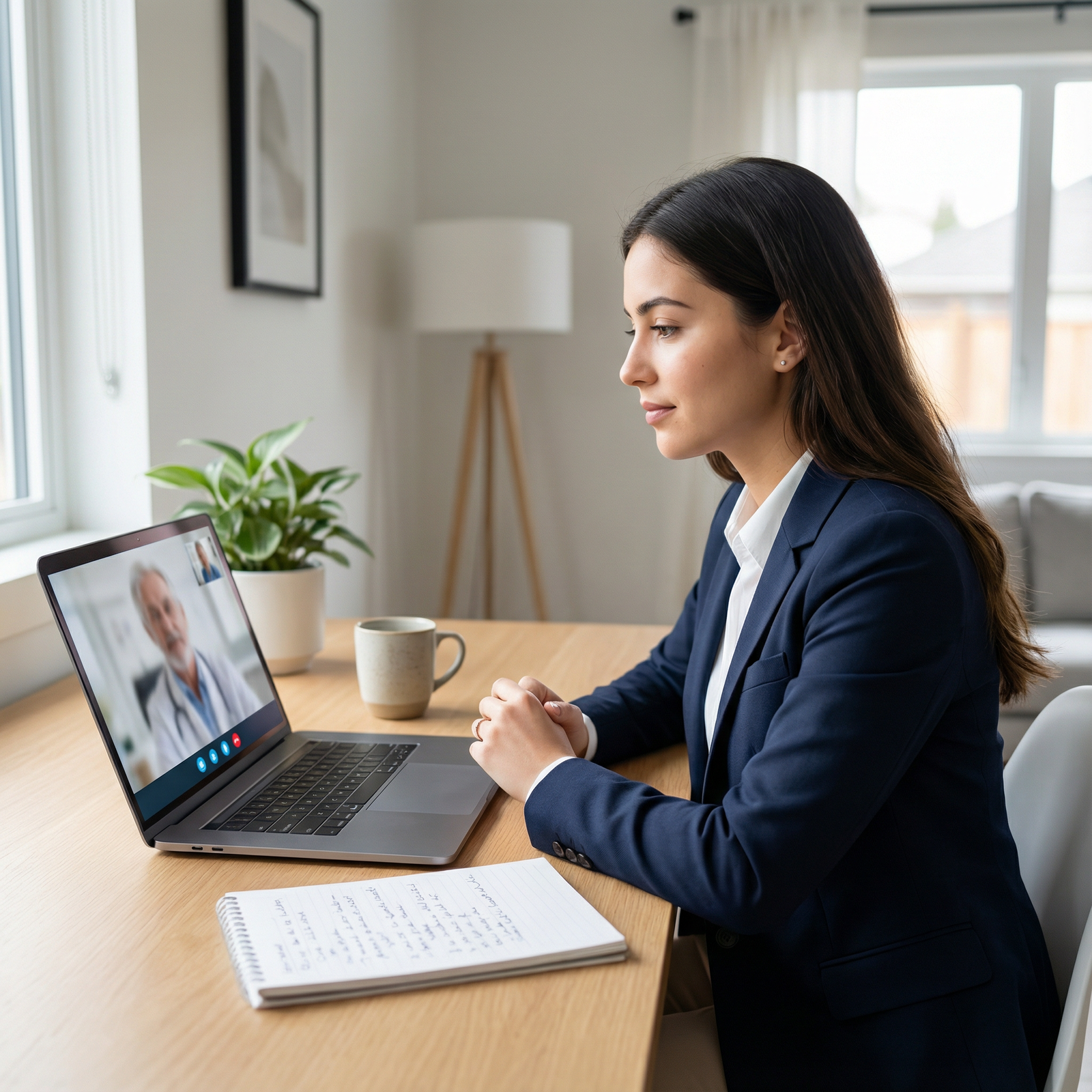
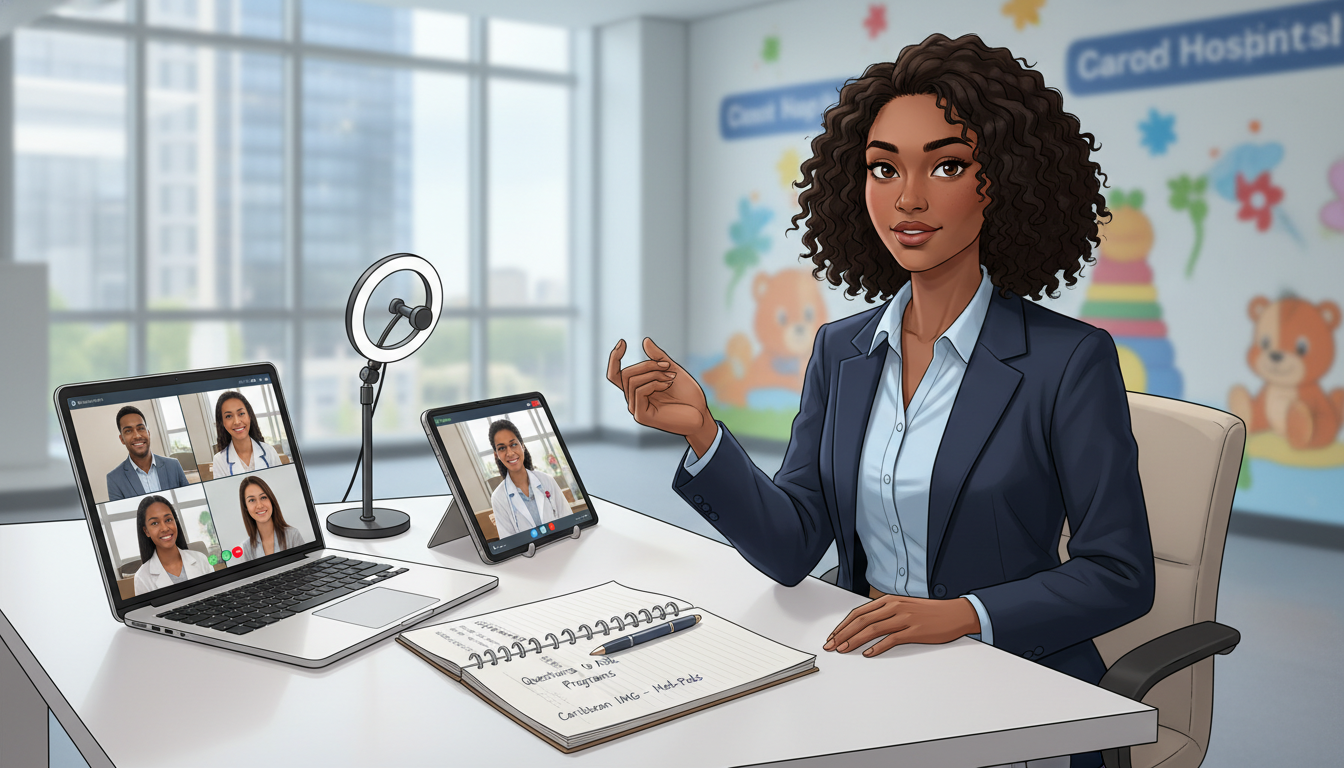
Virtual Interview Setup
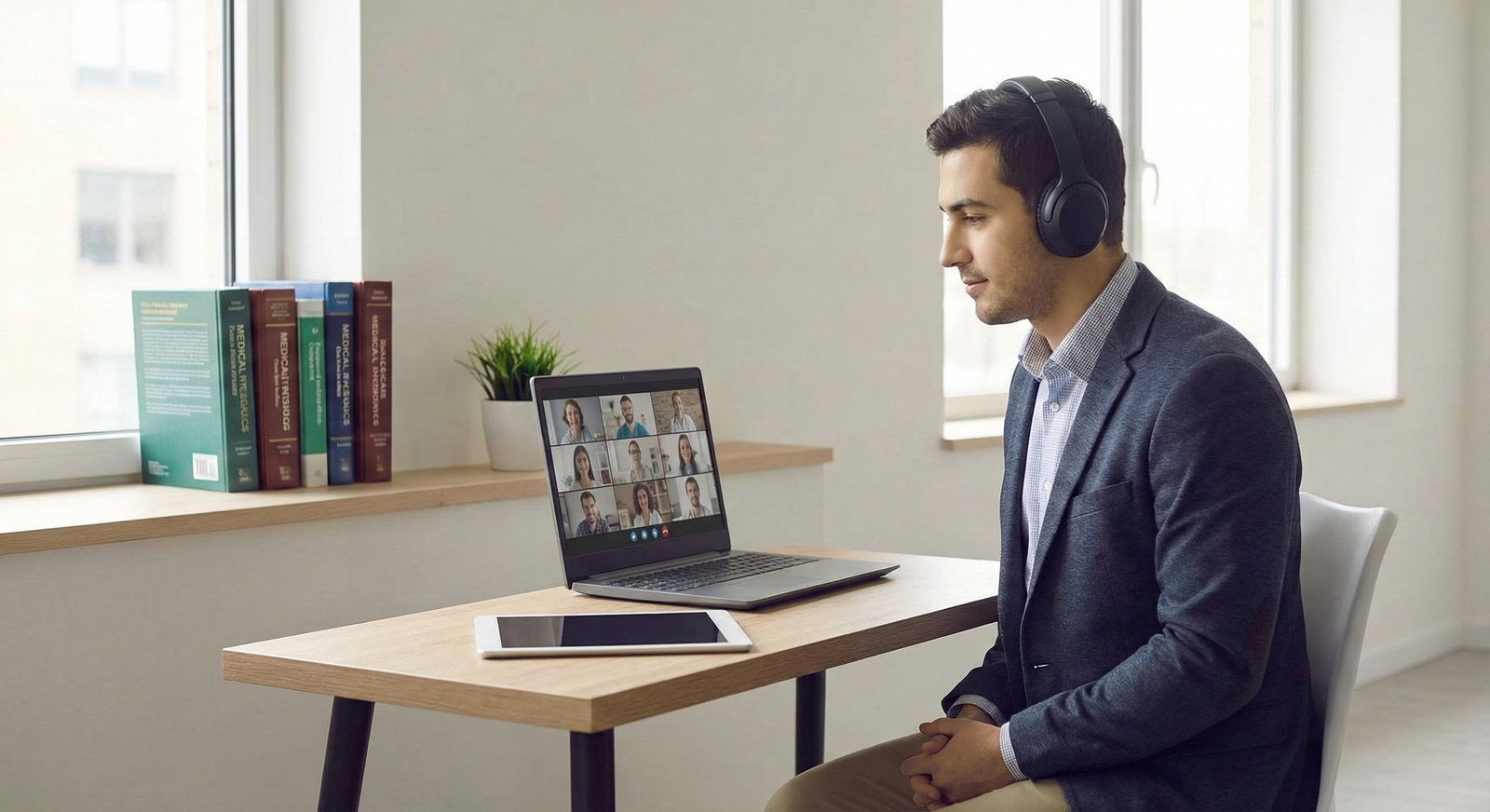
If your interviews are virtual (which remains common):
Background:
- Neutral, uncluttered wall
- Avoid virtual backgrounds if possible unless they’re clean and stable
Lighting:
- Natural light from in front of you, not behind
- Test at the same time of day as your scheduled interviews
Camera & audio:
- Eye-level camera (raise your laptop if needed)
- Wired or high-quality wireless headphones
- Test internet speed and have a backup (hotspot if possible)
Body language:
- Look at the camera when speaking, not the video box
- Stay engaged, nod, smile naturally
- Avoid fidgeting, looking away, or typing during interviews
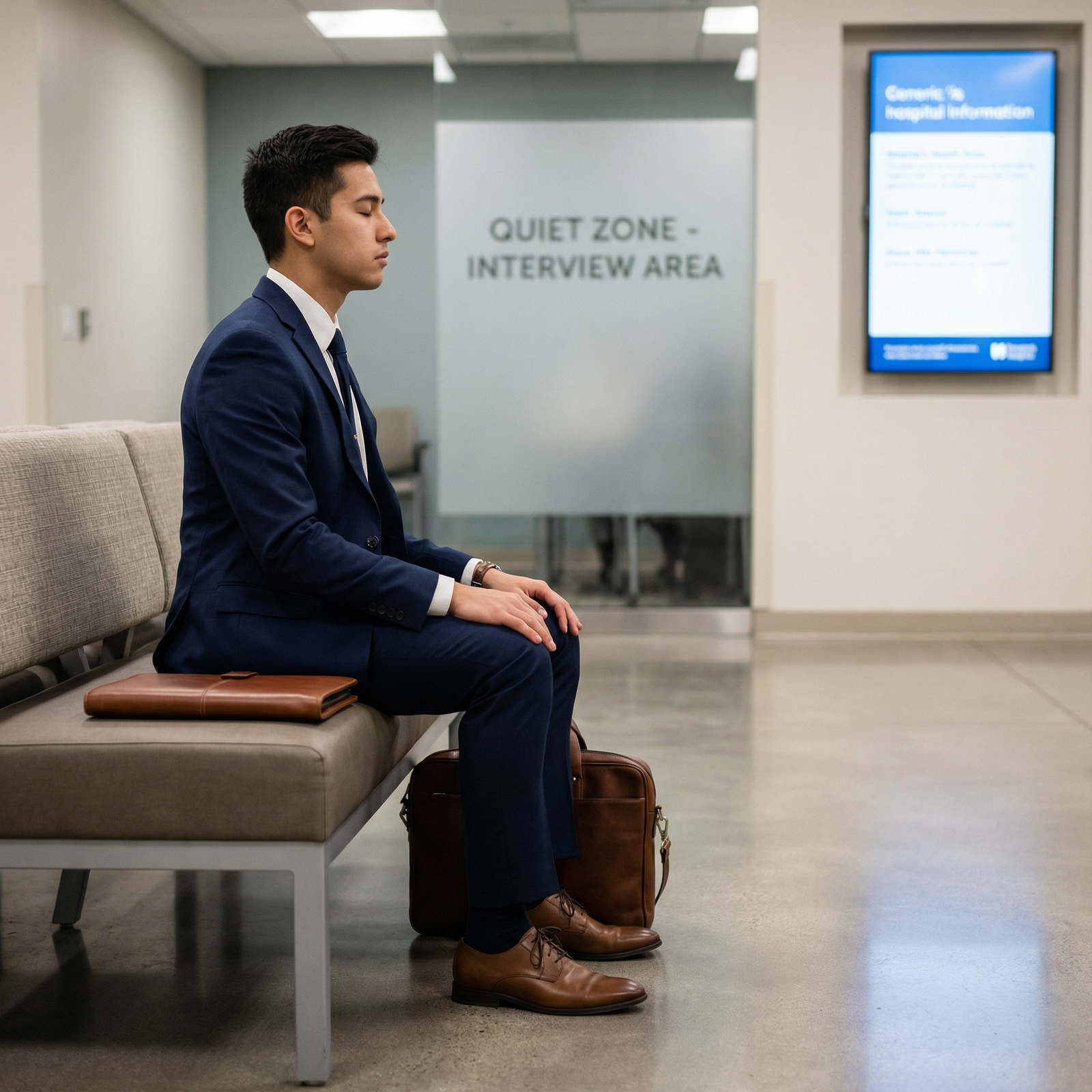
In-Person Interview Logistics
- Confirm location, parking, public transit, and arrival times
- Plan to arrive 30–45 minutes early
- Bring:
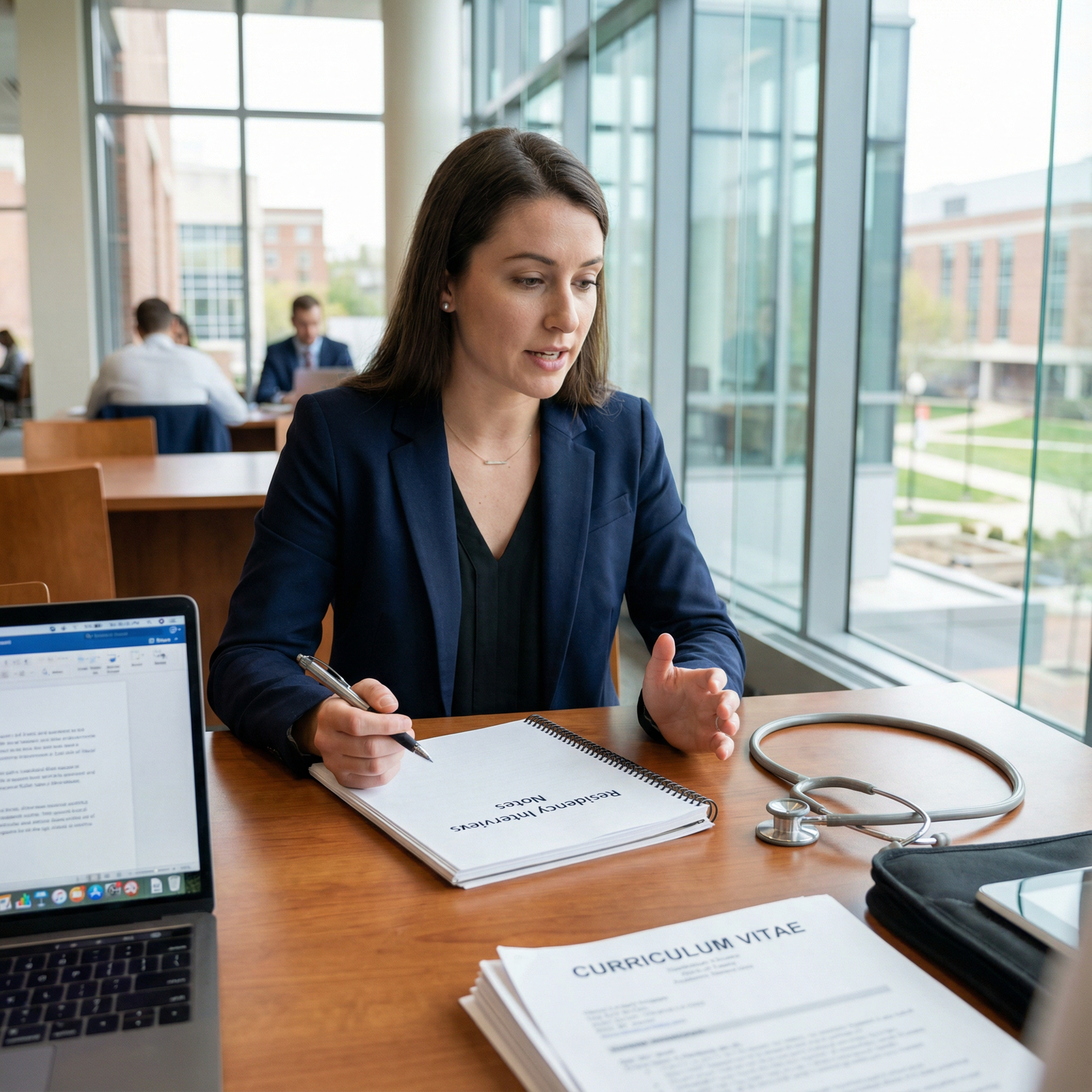
- Printed copies of your CV
- A small notebook with your questions
- A bottle of water and a snack in your bag
Remember: hallway conversations, pre-interview dinners, and resident tours all count as part of the evaluation—even if unofficially.
Step 5: Intensive Practice: Mock Interviews and Feedback
Knowing how to prepare for interviews is not enough. You need repetition and feedback.
Structure Your Practice
Solo practice (first):
- Record yourself answering:
- Tell me about yourself
- Why radiology?
- Why this program? (generic template)
- Tell me about a challenge/failure
- Keep answers focused: 60–120 seconds each
- Watch the recordings for:
- Filler words (“um,” “like,” “you know”)
- Eye contact
- Nervous habits
- Rambling or tangents
- Record yourself answering:
Peer and mentor mock interviews:
- Ask:
- Faculty radiologists you’ve worked with
- Residents (especially IMGs or former Caribbean graduates)
- Your school’s career services/SGU or similar alumni network
- Provide them with:
- Your CV and personal statement
- List of target programs
- Ask for specific feedback on:
- Clarity and confidence
- Depth of radiology understanding
- How you come across as a colleague
- Any concerns they might have if they were the PD
- Ask:
Targeted remediation:
- If you get repeated feedback like “too long-winded,” practice more concise answers.
- If you seem overly rehearsed, practice variations and allow some spontaneity.
- If you’re too quiet, work on projecting your voice and showing enthusiasm.
Use Common “Interview Questions Residency” Lists Strategically
Online lists are helpful, but don’t memorize robotic answers. Instead:
- Group questions into themes (motivation, teamwork, conflict, ethics, radiology knowledge, future plans)
- Prepare bullet-point ideas, not scripts
- Be ready to adapt stories across different questions
Step 6: Addressing IMG-Specific Concerns Confidently
Certain topics come up more often with Caribbean IMGs. Anticipate and prepare.
“Why Did You Choose a Caribbean Medical School?”
Avoid defensiveness. Answer with:
- Honest reasons (timing, opportunities, career pivot)
- The strengths you gained (resilience, high clinical volume, diverse pathology, adaptability)
- Concrete outcomes (strong letters, Step scores, research, U.S. rotations)
Visa and Sponsorship Questions
Know your situation clearly:
- Visa type needed (J-1 vs H-1B, if applicable)
- Any prior visa status in the U.S.
- If programs ask, be honest but concise:
- “I will require J-1 sponsorship through ECFMG; I’ve already reviewed the process and timeline.”
Explaining Gaps, Exam Attempts, or Red Flags
If you have:
- A repeated exam
- A leave of absence
- A failed course/rotation
Use the same principles:
- Own it (no excuses)
- Show insight into what went wrong
- Emphasize concrete steps taken and sustained improvement
- Highlight recent successes that demonstrate readiness
Programs are more comfortable with IMGs who show maturity and accountability, not perfection.
Step 7: Strategic Use of Radiology Electives, Research, and Networking
Effective pre-interview preparation starts months before interview season.
U.S. Radiology Electives and Observerships
If you are still early in your journey:
- Aim for at least one U.S.-based diagnostic radiology elective
- Engage actively:
- Ask to review cases before readouts
- Volunteer for case presentations at noon conference
- Request feedback from attendings
Strong performance can yield:
- Radiology-specific letters of recommendation
- Mentors who can advise you on the diagnostic radiology match
- Insider knowledge of how radiology programs evaluate IMGs
Research and Scholarly Work
Not mandatory for all programs, but helpful, especially in a competitive field:
- Case reports or case series with imaging figures
- Retrospective imaging studies (e.g., CT utilization trends, MRI protocol optimization)
- Quality improvement projects (structured reporting, communication of critical results)
Be prepared to discuss:
- Your exact role
- Study design (basic idea)
- What you learned about radiology and patient care
Networking With Residents and Faculty
- Attend virtual open houses and information sessions
- Ask thoughtful, specific questions about:
- Daily workflow
- Teaching style
- How IMGs have integrated into the program
- Keep brief, professional email correspondence with mentors or contacts you meet
Step 8: Pre-Interview Day: Final Checklist and Mental Preparation
In the 48–72 hours before each interview:
Content Review
- Re-read:
- Your personal statement
- Your ERAS application and CV
- The program’s website and your snapshot sheet
- Refresh 2–3 recent radiology cases or interesting clinical stories to mention
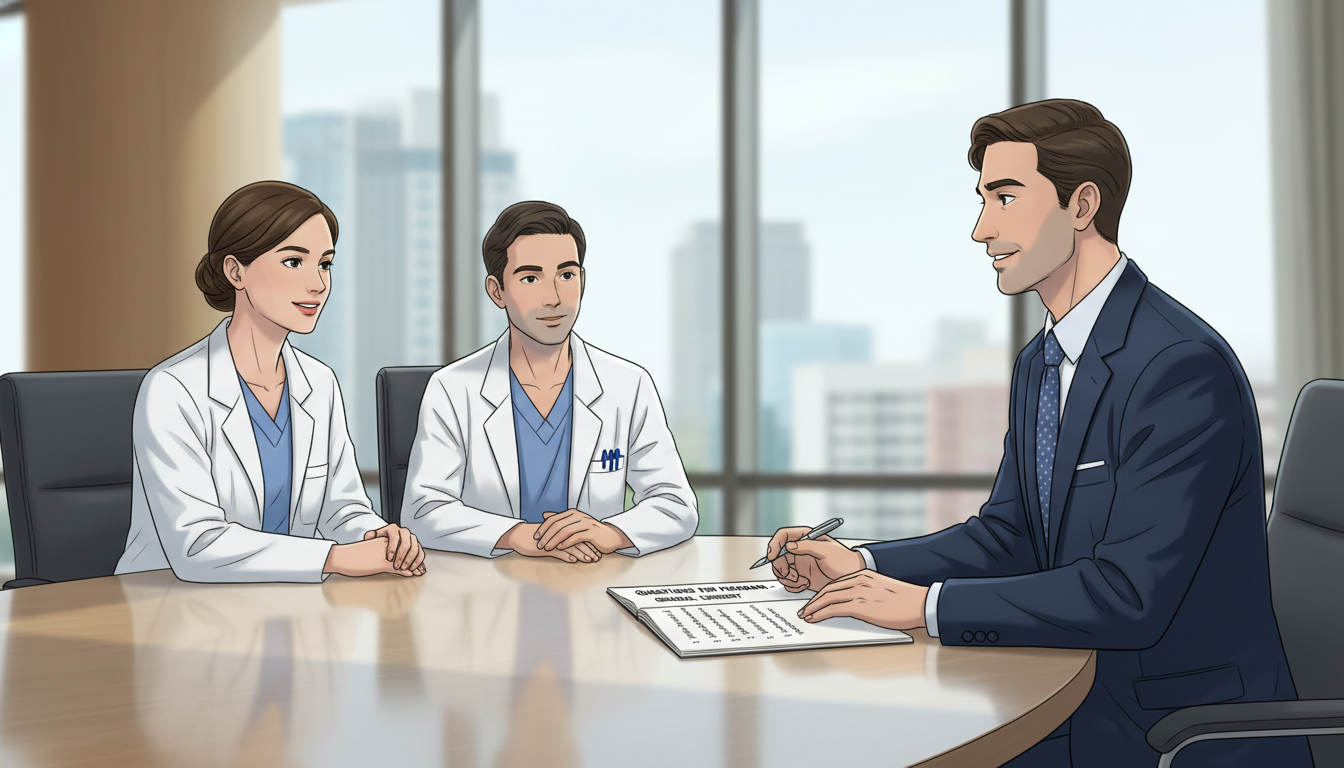
Questions to Ask Interviewers
Prepare questions tailored to:
Faculty:
- “How does your program help residents develop independence on call?”
- “How are residents involved in teaching medical students or junior residents?”
Residents:
- “What surprised you most about the program after you started?”
- “How does the program support residents preparing for the CORE exam?”
- “How integrated are IMGs or Caribbean graduates in your resident cohort?”
Avoid questions easily answered by a quick website review.
Mental and Physical Readiness
- Sleep: Prioritize 7–8 hours the night before
- Nutrition: Light, balanced meals; avoid heavy or greasy food right before
- Mindset:
- Brief mindfulness or breathing exercises
- Focus on fit rather than perfection—this is a two-way evaluation
Remind yourself: you’ve made it to interviews because your file is strong enough. Now your task is to show them who you are as a future radiology colleague.
FAQs: Pre-Interview Preparation for Caribbean IMGs in Diagnostic Radiology
1. As a Caribbean IMG, what is the single most important thing I can do to improve my diagnostic radiology match chances before interviews?
The most impactful step is to develop and practice a clear, cohesive narrative that ties together your choice of radiology, your Caribbean training, your clinical and academic strengths, and your future goals. Combine this with mock interviews and feedback from radiology faculty or residents. A strong story—delivered confidently—often distinguishes successful Caribbean applicants from those with similar scores but weaker interviews.
2. How different are radiology residency interviews from other specialties?
Many general questions overlap (tell me about yourself, why this program, strengths/weaknesses), but radiology interviews emphasize:
- Your understanding of the radiologist’s role in patient care
- Your comfort with independent work and high cognitive load
- Your fit with a collaborative, consultative specialty
You’re less likely to be grilled on physical exam skills and more likely to be asked about problem-solving, communication, and your view of radiology’s future (AI, tele-radiology, appropriate utilization).
3. Do I need radiology research to match as a Caribbean IMG?
Radiology research is helpful but not strictly mandatory for every program. Many successful Caribbean IMGs match into diagnostic radiology with strong clinical performance, exam scores, and convincing radiology exposure without extensive research. However, having even modest scholarly work (case reports, QI projects, or imaging-focused studies) shows initiative and interest, and can strengthen your application—especially at more academic programs.
4. How should I handle questions about my Caribbean medical school during interviews?
Be factual, positive, and confident. Avoid sounding apologetic. A helpful framework:
- Why you chose it: Timing, opportunity, determination to pursue medicine
- What you gained: High clinical volume, exposure to diverse pathology, resilience, adaptability
- Proof of readiness: USMLE scores, strong letters from U.S. clinicians or radiologists, successful U.S. clinical rotations
Emphasize that your Caribbean medical school residency pathway has required grit and self-direction—traits that are valuable in a demanding field like diagnostic radiology.
With deliberate, early, and focused pre-interview preparation, Caribbean IMGs can present themselves as highly competitive, well-informed, and resilient candidates for diagnostic radiology residency. Start building your narrative, practicing your answers, and connecting your Caribbean training to your future role as a U.S. radiologist—long before your first interview invite arrives.