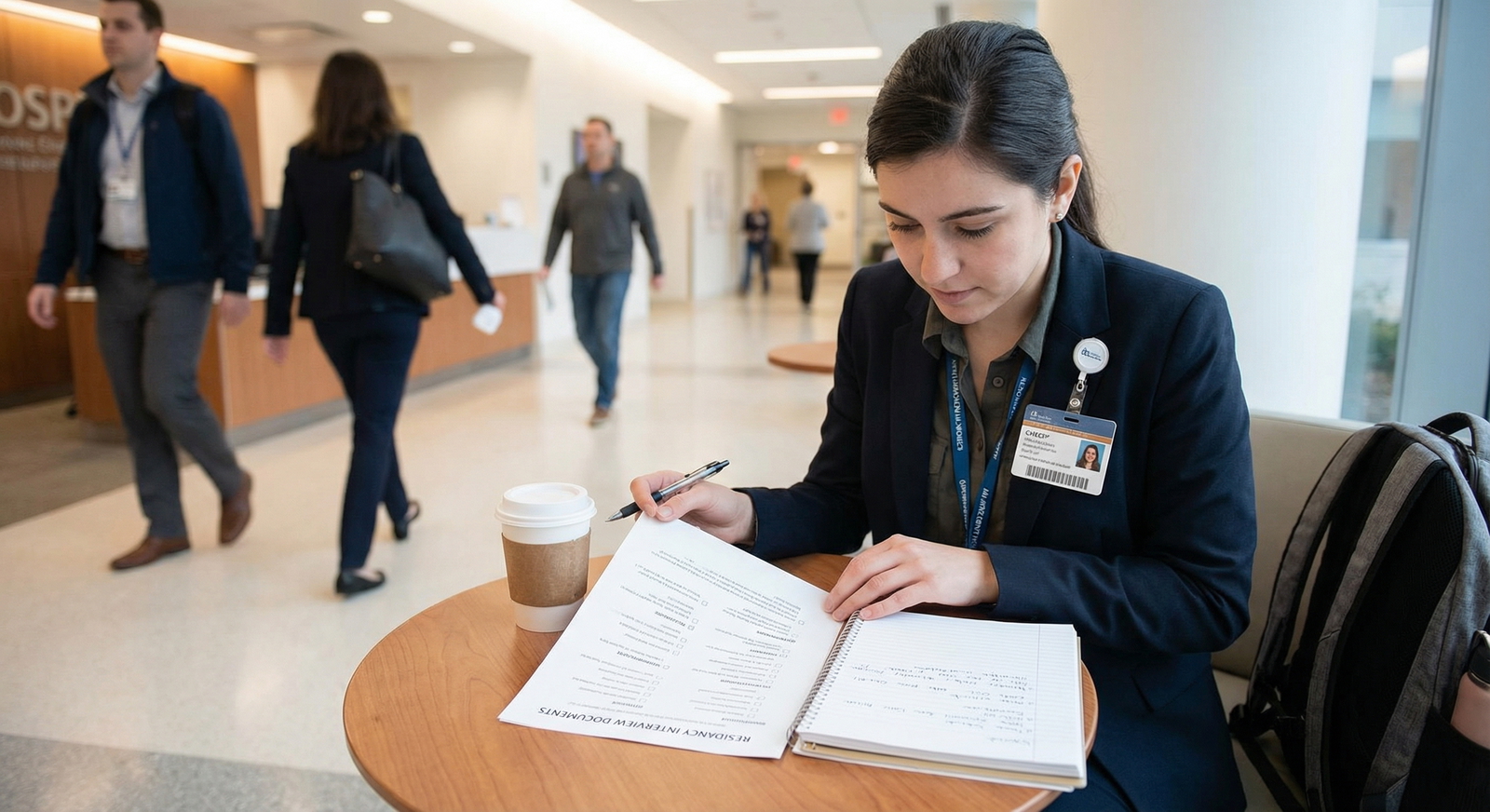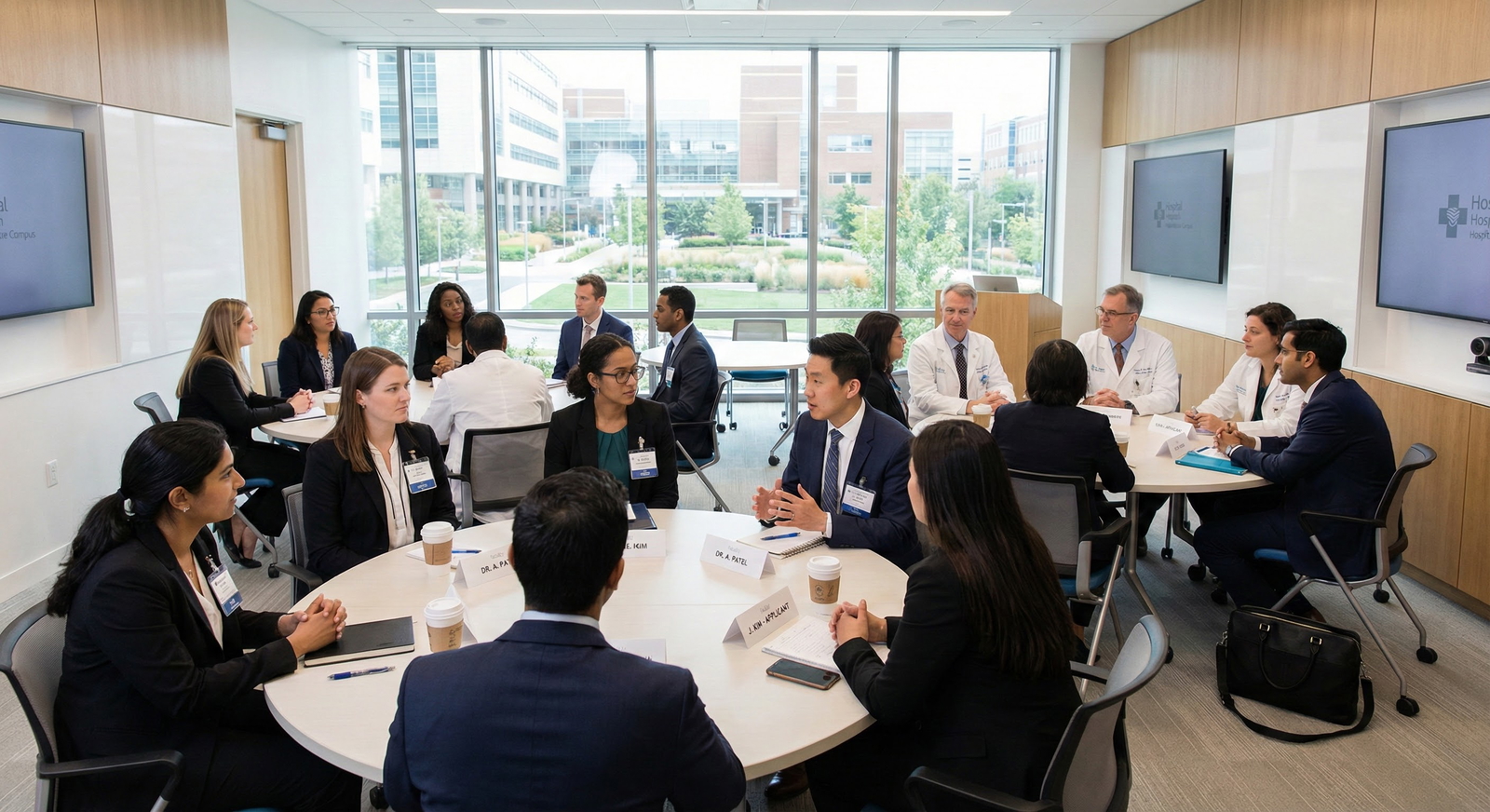
Understanding the Clinical Informatics Landscape Before Your Interview
For an MD graduate residency candidate in Clinical Informatics, pre‑interview preparation is more than memorizing standard answers. Clinical informatics sits at the intersection of patient care, data science, and health IT training. Programs want to see that you understand this ecosystem and your place in it.
What Clinical Informatics Programs Are Really Looking For
Before you plan how to prepare for interviews, internalize what typical programs seek:
Clinical grounding
- Solid understanding of workflows in inpatient, outpatient, and transitions of care.
- Ability to discuss real patient care scenarios and how information flow helped or hindered care.
Systems thinking
- You see the hospital not as isolated departments but as an integrated system of people, processes, data, and technology.
- You can talk about how a change in the EHR affects nurses, physicians, coders, billing, quality metrics, and patients.
Technical curiosity (not necessarily formal coding skills)
- Interest in how EHRs, decision support, interfaces, and data pipelines work.
- Comfort with learning new tools and collaborating with IT and data teams.
Change management and communication
- Experience with leading or participating in QI projects, pilots, or rollouts.
- Ability to explain complex concepts to non‑technical clinicians and to translate clinical needs to technical staff.
Professionalism and resilience
- Maturity in handling ambiguous projects, conflicting stakeholder priorities, and change resistance.
- Insight into your own learning style and leadership style.
As an MD graduate, you already have the clinical foundation; your pre‑interview work should focus on demonstrating how that foundation translates into informatics potential.
Clarify Your Own Career Narrative
Programs will ask some version of: “Why clinical informatics?” and “Where do you see yourself in 5–10 years?” You’ll need a coherent, believable narrative that connects:
- Your clinical experiences – specific problems you saw (e.g., medication errors, poor care coordination, clunky documentation).
- Your exposure to informatics or health IT – projects, committees, QI initiatives, or self‑initiated work.
- Your future goals – e.g., becoming a CMIO, data‑driven quality leader, or physician informatician bridging IT and clinical care.
Draft a 3–4 sentence “story spine”:
“I trained in [clinical field/context], where I repeatedly saw [specific pain points or failures] that seemed rooted in how we collect and use information. During [project/rotation/role], I worked on [specific informatics-related initiative], which showed me how thoughtfully designed systems can improve safety and efficiency. Over time, I realized I was most engaged when working at this systems level, partnering with clinicians and IT. I’m pursuing a clinical informatics fellowship to deepen my skills in [data, decision support, implementation science, etc.] so I can [specific career aim].”
This narrative should then color how you answer many of the interview questions for residency or fellowship‑level training.
Researching Programs and Tailoring Your Preparation
One of the most overlooked parts of residency interview preparation—especially for MD graduates from allopathic medical school match pathways—is targeted research. In clinical informatics, this is even more critical because programs vary widely in technical focus, clinical exposure, and institutional culture.
Build a Structured Program Research Framework
Create a spreadsheet or document with one page per program. Before each interview, fill in:
1. Program focus and identity
- Is the program:
- EHR‑implementation heavy?
- Data analytics / population health‑oriented?
- Research‑intensive (publications, grants)?
- Industry/health IT partnership‑oriented?
2. Clinical environment
- Academic medical center vs. community system vs. integrated health network.
- Primary EHR vendor(s) (Epic, Cerner/Oracle, Meditech, etc.).
- Size and complexity of the system (number of hospitals, outpatient sites, etc.).
- Special clinical programs (cancer center, telehealth, population health initiatives).
3. Faculty and leadership
- Fellowship program director: clinical background, main informatics interests, recent projects.
- Key faculty: CMIO, CNIO, data science leads, quality improvement leaders.
- Any faculty whose work overlaps with your interests (e.g., CDS, interoperability, AI, user experience).
4. Educational structure and health IT training
- Formal curriculum: coursework, master’s degree options, certificate programs.
- Rotations: time in IT operations, analytics, EHR build, quality improvement, clinical duties.
- Opportunities in:
- Clinical decision support
- Clinical data warehouse / data science
- Telemedicine / digital health
- Population health / value‑based care
- Human factors and usability
5. Projects and outputs
- Fellows’ recent quality improvement or informatics projects.
- Poster presentations or publications by the program.
- Partnerships with:
- Public health agencies
- Payers
- Industry (EHR vendors, startups)
6. Culture and expectations
- Call schedule and clinical workload for MD graduates.
- Expectations around research, publications, or conference presentations.
- How fellows are integrated into institutional governance (committees, steering groups).
This systematic research gives you:
- Specific talking points to reference during the interview.
- Insight into whether the program matches your career goals in clinical informatics.
- A foundation for asking strong, targeted questions.
Use Your Network (Even if It Feels Small)
Even for an MD graduate without a big informatics network, you can often find connections:
- Medical school faculty: Ask if any faculty have worked with the program or know the CMIO/associate CMIO.
- Residents and fellows: If you’re coming from a residency, ask your chiefs, QI officers, or IT liaisons who they know at target institutions.
- Professional communities:
- AMIA (American Medical Informatics Association) groups and listservs.
- Local or regional informatics societies.
- LinkedIn alumni from your medical school or residency who are in informatics roles.
Prepare 2–3 concise questions when you reach out (e.g., “What do fellows there typically work on?” “How supportive is IT of informatics projects?”). Treat this as pre‑interview reconnaissance that can refine how you present yourself.
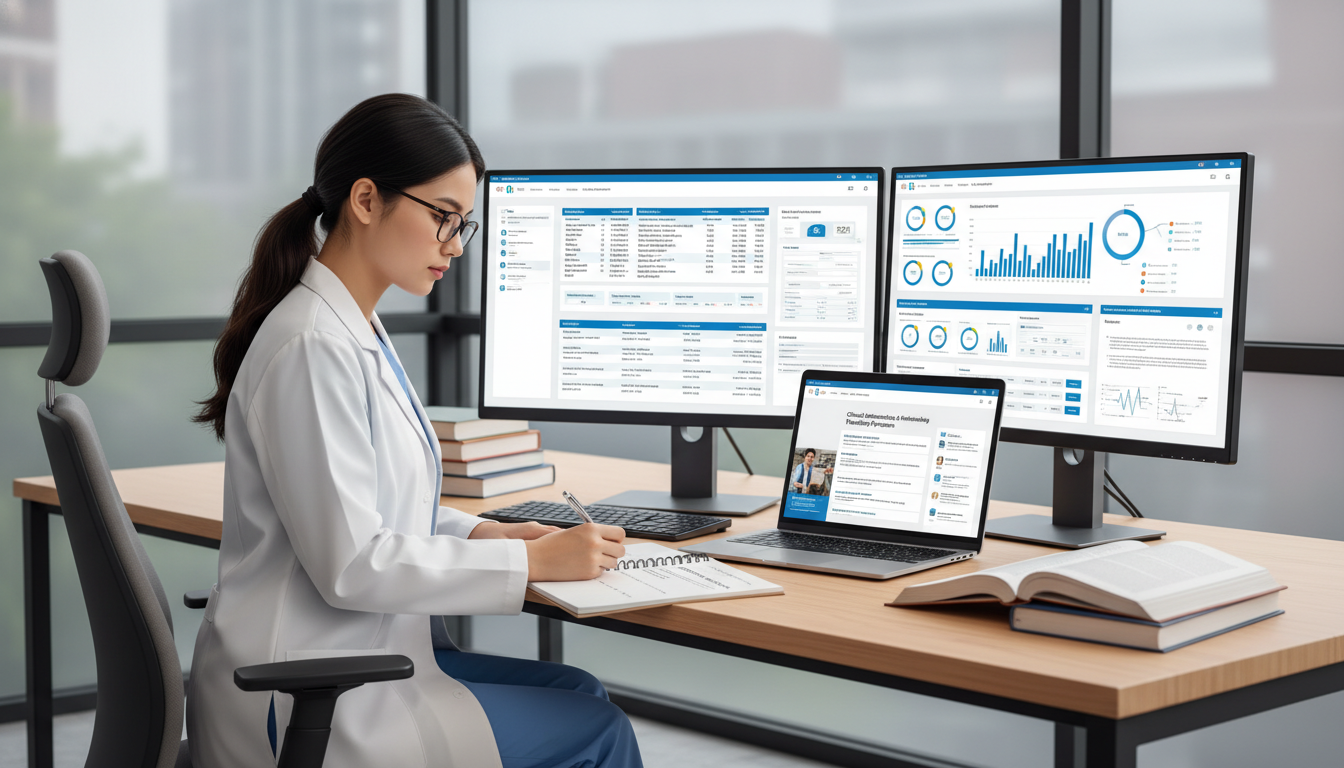
Mastering Core Residency Interview Themes in Clinical Informatics
Most interviewers will use standard interview questions residency candidates know, but they’ll pivot to informatics‑specific angles. Structured preparation here makes you sound thoughtful rather than rehearsed.
Theme 1: Motivation and Fit for Clinical Informatics
Expect questions like:
- “Why clinical informatics instead of a traditional clinical path?”
- “What led you from being an MD graduate to pursuing this fellowship?”
- “Describe the moment you realized you were drawn to health IT.”
Prepare:
- A 60–90 second “why informatics” answer (grounded in your story spine).
- One or two pivotal experiences:
- A near‑miss or adverse event tied to information failure.
- A QI or EHR optimization project you led or joined.
- A rotation where you collaborated with IT or informatics teams.
Emphasize:
- Your desire to improve care at scale (beyond one‑on‑one encounters).
- Interest in measuring impact (data‑driven improvement).
- Motivation to be a bridge between clinicians, IT, and administration.
Theme 2: Project and Systems Experience
Interviewers will want evidence that you can successfully operate in complex systems.
Likely questions:
- “Tell me about an informatics or QI project you worked on.”
- “Describe a time you had to work with multiple stakeholders.”
- “How do you handle resistance to change?”
Use a structured framework like STAR (Situation-Task-Action-Result):
Example (EHR Documentation Template Improvement)
- Situation: “On my internal medicine rotation, we noticed high variability and errors in discharge summaries.”
- Task: “I joined a QI team to redesign the discharge summary template in our EHR.”
- Action: “I gathered input from residents, attendings, and case managers; mapped the current workflow; worked with our analyst to prototype new fields; and led a pilot on one ward.”
- Result: “Within three months, documentation completeness improved by 25%, and we reduced duplicate documentation events by 30%. Residents reported spending less time on redundant fields.”
Prepare at least three STAR stories:
- A project that improved care or workflow.
- A situation where you dealt with change resistance or conflict.
- A time you led or coordinated across professions (clinicians, IT, admin).
Theme 3: Understanding of Informatics Concepts (at a Clinician Level)
You’re not expected to be a software engineer, but you should show basic fluency.
Be ready to discuss:
- Clinical decision support (CDS):
- Example: alert fatigue, poorly targeted alerts, best‑practice advisories.
- How you’d approach improving a CDS tool (criteria refinement, workflow integration, user feedback).
- Data and metrics:
- How you’ve used clinical data to measure quality or outcomes.
- Understanding of process vs. outcome measures.
- EHR usability and workflow:
- Concrete examples of poor usability you’ve experienced.
- Ideas for improving documentation, order entry, or care coordination in the EHR.
You can practice describing 1–2 simple informatics concepts aloud as if you’re explaining them to a clinically savvy but non‑technical colleague. Clarity matters more than jargon.
Theme 4: Leadership, Teaching, and Communication
Clinical informatics physicians are de facto leaders and educators.
Prepare stories showing:
- You’ve helped teach or train others (EHR tips, new workflow, protocols).
- You’ve mediated between groups (e.g., residents vs. IT) and helped find a compromise.
- You’ve presented data or project results to committees, leadership, or peers.
Think of one teaching example and one conflict‑management example you can lay out in STAR format.
Theme 5: Ethics, Safety, and Patient‑Centeredness
Expect questions touching on:
- Algorithmic bias or fairness.
- Data privacy and security.
- Balancing efficiency vs. quality time with patients.
You should articulate:
- That technology is a tool, not the goal; patient care and safety remain central.
- Awareness that data‑driven tools can unintentionally worsen disparities if not carefully designed and tested.
- Comfort questioning a system design or metric that appears misaligned with patient interest.
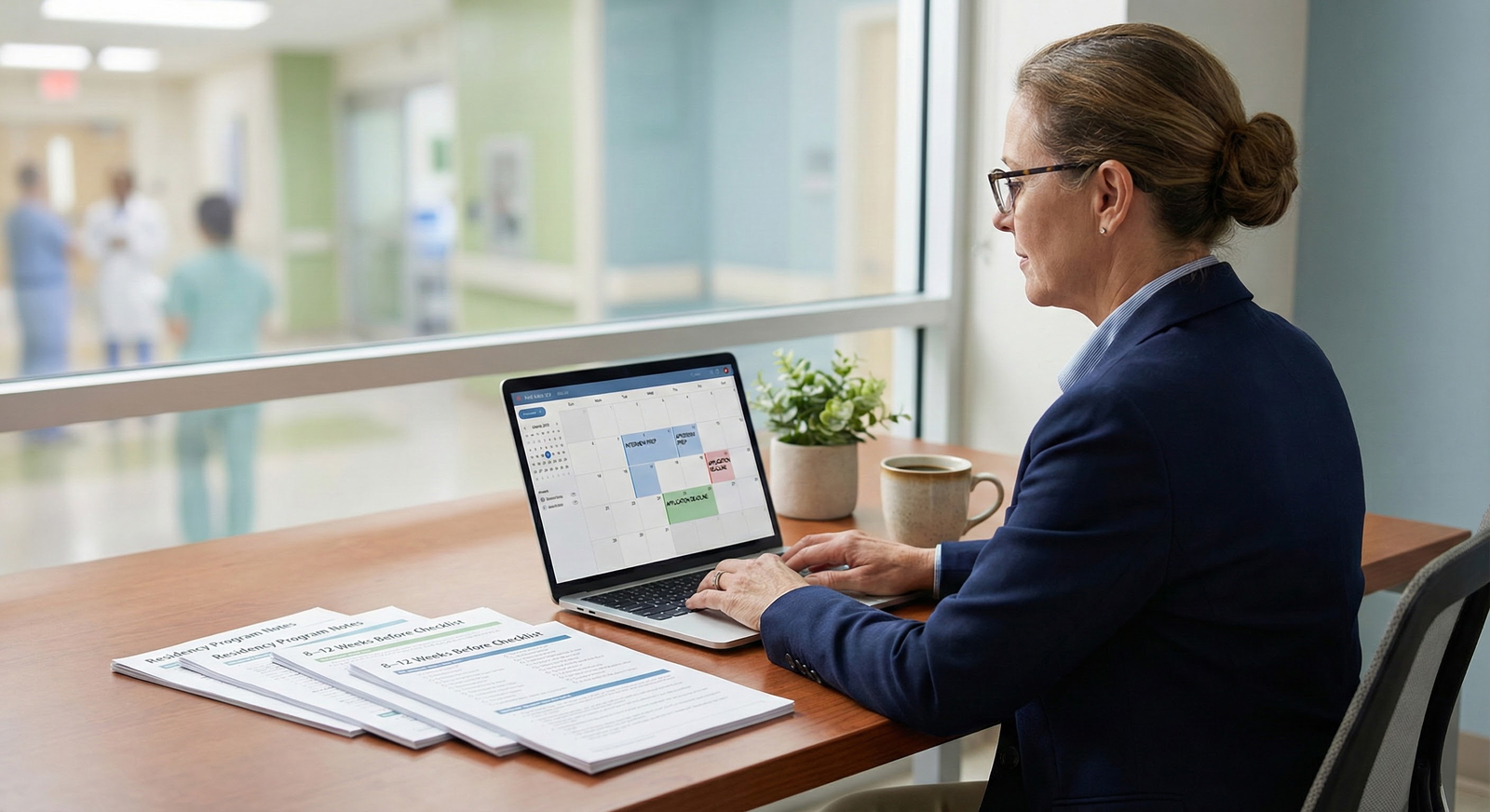
Practical Steps: How to Prepare for Interviews Day‑by‑Day
Transform the themes above into a concrete pre‑interview plan for any MD graduate residency or fellowship in clinical informatics.
2–3 Weeks Before Interviews
Refine Your Core Story
- Finalize your 60–90 second “why clinical informatics” pitch.
- Identify 3–5 key experiences:
- Informatics or QI project.
- Leadership/teaching example.
- Ethics/safety dilemma.
- Example of resilience (e.g., failed project or setback).
Review Your Application and CV in Detail
- Highlight every project that’s even remotely related to informatics, QI, data, or systems.
- Make sure you can:
- Explain your role clearly.
- Discuss methods and metrics simply.
- Reflect honestly on what you’d do differently now.
Revisit Foundational Knowledge
- Refresh:
- Basic QI methodologies (PDSA cycles, run charts, root cause analysis).
- Health IT vocabulary: CDS, FHIR, HL7, interoperability, data warehouse, user‑centered design.
- Any clinical informatics fellowship‑relevant coursework or certifications you’ve done (e.g., AMIA courses).
- Refresh:
Research Each Program
- Populate your program research framework (described earlier).
- Draft 3–5 program‑specific questions (more on this later).
1 Week Before Interviews
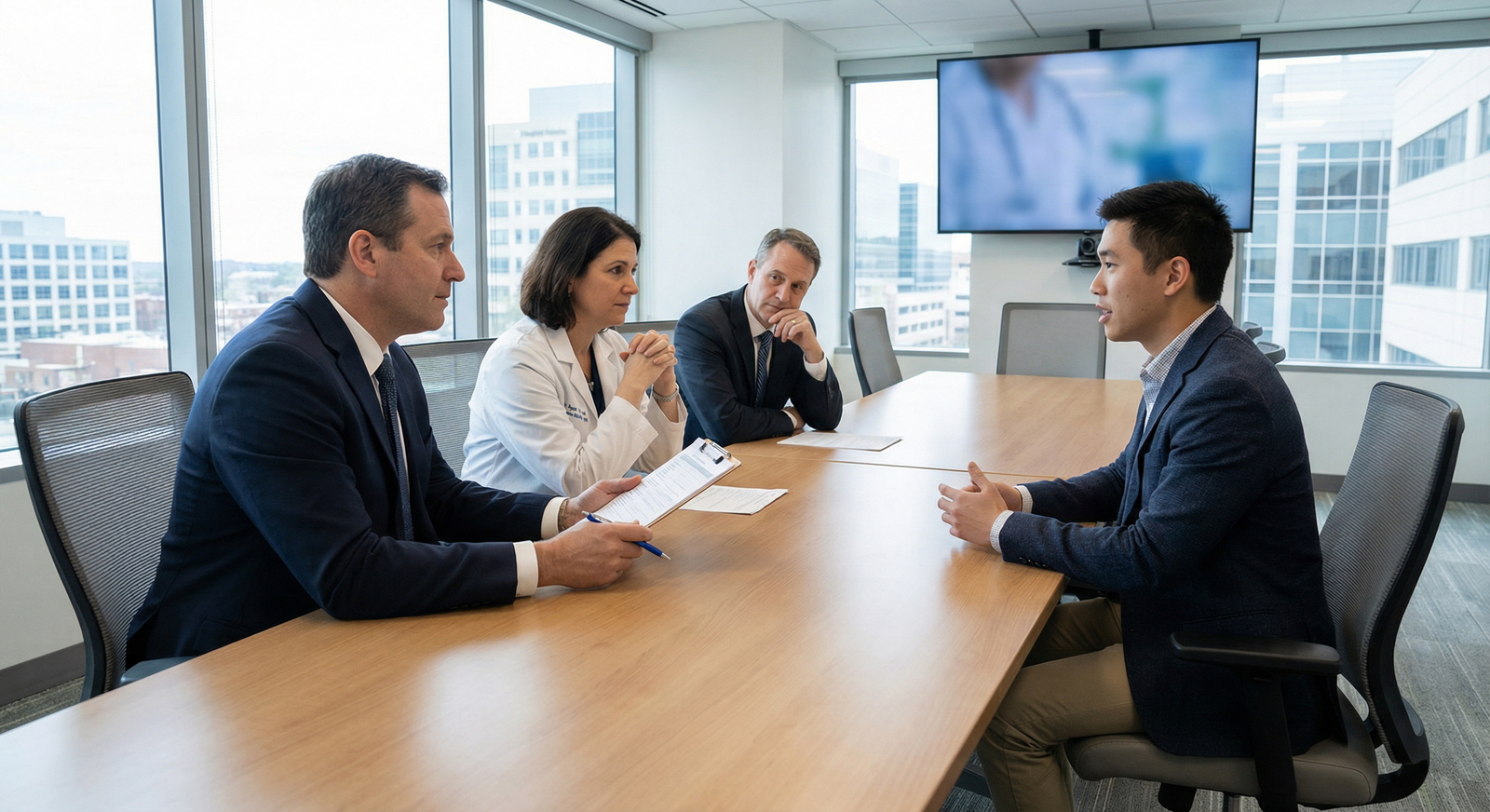
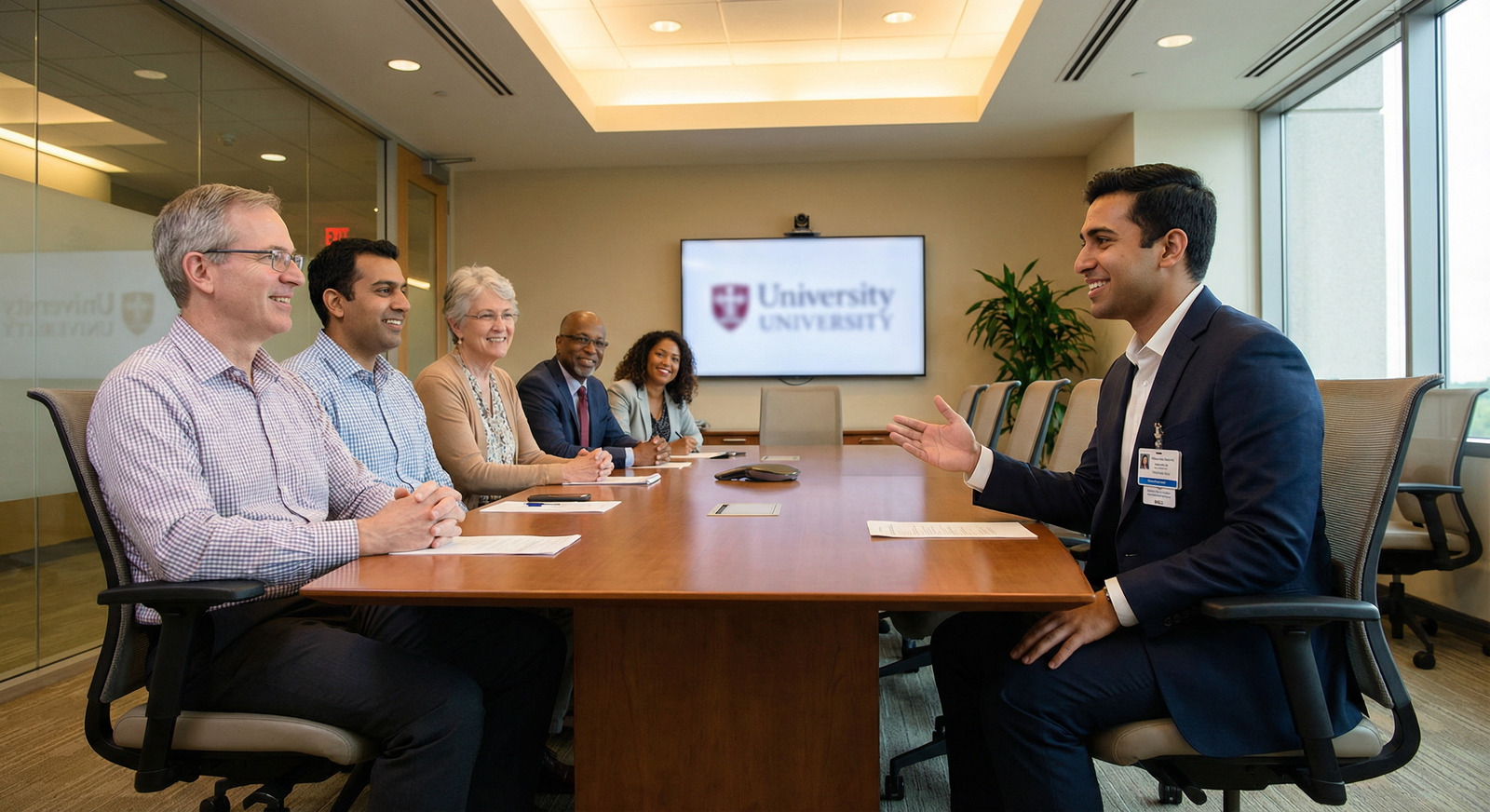
Conduct Mock Interviews
- Ask a mentor, colleague, or friend to run a 30–45 minute mock interview.
- Include:
- “Tell me about yourself.”
- “Why clinical informatics?”
- “Describe an informatics or QI project.”
- “Tell me about a time something didn’t go as planned.”
- Record at least one session (audio or video) and critique:
- Speaking speed.
- Filler words.
- Rambling vs. structure.
- Clarity when explaining technical or data‑related content.
Craft and Practice Your Closing
- Many interviewers end with: “Is there anything else you’d like us to know?”
- Prepare a 20–30 second closing:
- Re‑emphasize your main strengths.
- Reiterate your enthusiasm for contributing to that program’s specific priorities.
Plan Logistics
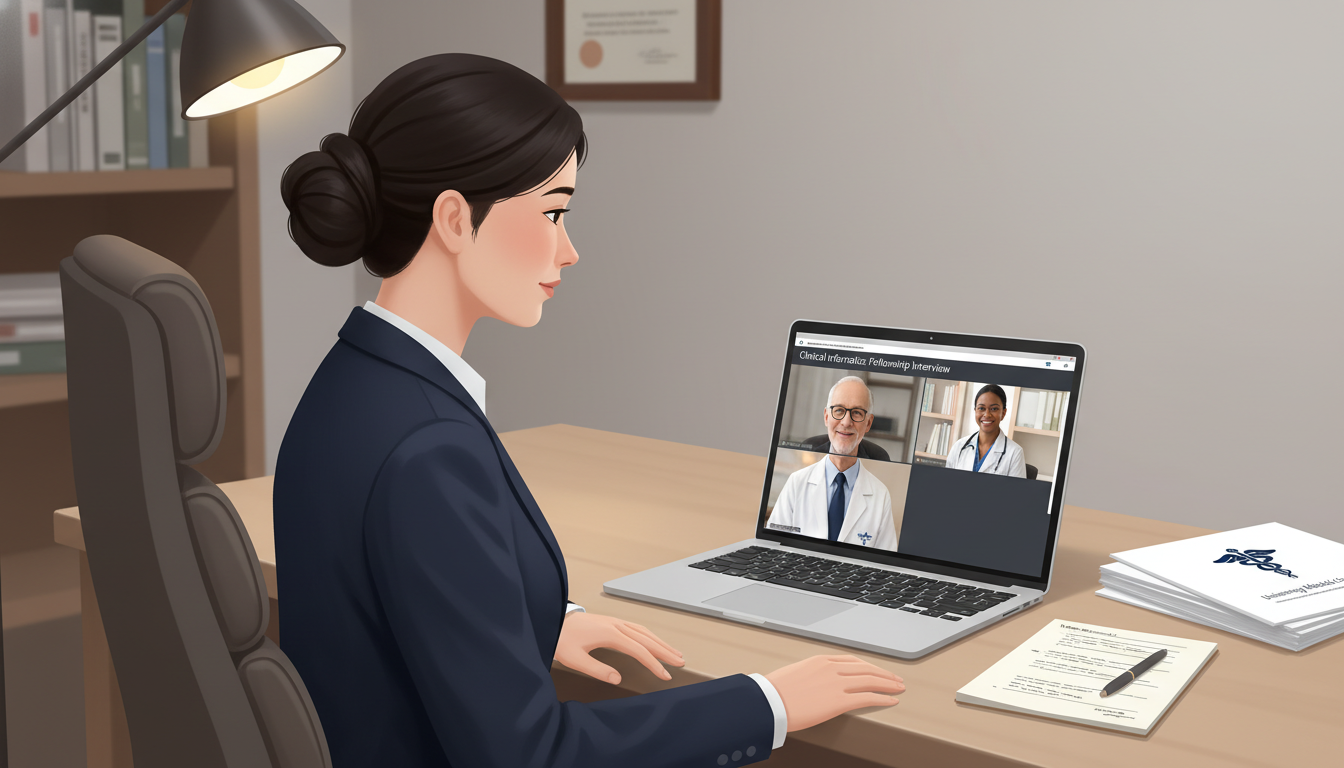
- For virtual interviews:
- Test internet, camera, microphone, and platform (Zoom, Teams, etc.).
- Choose a quiet, well‑lit, neutral background.
- Arrange your notes (see “Cheat Sheets” below).
- For in‑person interviews:
- Confirm travel, lodging, and transit.
- Double‑check dress code and parking instructions.
- For virtual interviews:
2–3 Days Before Each Interview
Finalize Program‑Specific Preparation
- Re‑read your notes on:
- The program’s EHR and major initiatives.
- Faculty you’re likely to meet.
- Recent projects or publications you wish to reference.
- Select 1–2 experiences in your background that best match this program’s flavor (e.g., more analytics vs. more implementation).
- Re‑read your notes on:
Prepare a One‑Page “Cheat Sheet”
- Bullet points only, to keep on your desk (for virtual) or review before entering (for in‑person):
- 3 key experiences you want to highlight.
- 3 program‑specific facts.
- 3 program‑specific questions you’ll ask.
- A few reminder phrases (“mention discharge summary project,” “discuss telehealth workflow pilot”).
- Bullet points only, to keep on your desk (for virtual) or review before entering (for in‑person):
Review Common Interview Questions Residency and Fellowship Candidates See
- Quickly rehearse concise answers to:
- “Strengths and weaknesses.”
- “Biggest failure or challenge.”
- “A time you received critical feedback.”
- “Your approach to learning new skills (e.g., analytics, SQL, scripting).”
- Quickly rehearse concise answers to:
Day of the Interview
Before:
- Review your cheat sheet.
- Do a brief 2–3 minute vocal warm‑up (speaking clearly on a few sample questions).
- Take 3–4 slow breaths to center yourself.
During:
- Listen carefully; answer what’s asked before expanding.
- Use STAR for behavioral questions.
- Show curiosity: connect your interests with their projects.
- Ask your prepared questions but remain adaptable.
After:
- Jot quick notes on each conversation:
- Who you met.
- Projects or themes that excited you.
- Any concerns or red flags.
- Within 24–48 hours, send tailored thank‑you notes referencing specific discussion points.
- Jot quick notes on each conversation:
Asking Insightful Questions and Avoiding Common Pitfalls
Your questions signal your maturity and whether you understand what life in a clinical informatics fellowship really entails.
Strong Questions to Ask (Tailor as Needed)
About curriculum and training:
- “How is time typically divided between clinical responsibilities, informatics projects, and formal coursework?”
- “What kinds of longitudinal projects do fellows usually complete, and how are they chosen?”
- “How do you support fellows who want to gain deeper skills in data analysis or programming?”
About operational exposure:
- “How are fellows integrated into EHR governance and decision‑making structures?”
- “Can you describe a recent major EHR change or initiative, and how fellows were involved?”
About mentorship and outcomes:
- “How is mentorship structured—do fellows have primary and secondary mentors?”
- “Where have recent graduates gone after completing this program (roles, organizations)?”
About culture and support:
- “How does the program support fellows when a project encounters resistance or stalls?”
- “What characteristics have you seen in your most successful fellows?”
Choose 2–3 per interviewer depending on their role (program director vs. IT leader vs. fellow).
Common Pitfalls to Avoid
Over‑selling technical skills you don’t have
- It’s fine to be a beginner in programming or analytics.
- Instead of exaggerating, say:
- “I’m comfortable with clinical workflows and metrics; I’ve started learning [tool/language] and I’m eager for structured training.”
Being too vague about your clinical identity
- Even though it’s an informatics trajectory, your clinical background remains crucial.
- Be clear about:
- Your primary specialty or intended clinical practice.
- How much time you see yourself spending clinically vs. in informatics long‑term.
Neglecting the “people side” of informatics
- Don’t focus only on technology; emphasize:
- Change management.
- Communication with frontline clinicians.
- User experience and feedback loops.
- Don’t focus only on technology; emphasize:
Speaking negatively about your current institution or EHR
- Instead of venting, frame criticism as:
- “I saw opportunities for improvement in…”
- “We faced challenges with… which led me to become interested in how to design better systems.”
- Instead of venting, frame criticism as:
Failing to articulate what you want from the program
- Programs want to know what success would look like for you.
- Have a clear, concise statement:
- “By the end of fellowship, I hope to have led at least one large‑scale EHR optimization project from design to post‑implementation evaluation, deepened my skills in [e.g., CDS design / data analysis], and built a foundation for a role as [e.g., associate CMIO, informatics faculty, health system informatician].”
Aligning Pre‑Interview Preparation With Long‑Term Goals
Most clinical informatics paths don’t end with the residency or fellowship. Your preparation should subtly demonstrate that you’re thinking long‑term.
Connect Fellowship to Your 5–10 Year Vision
When asked about future goals, connect:
- Short‑term (during training):
- Gain structured health IT training across EHR governance, CDS, analytics, and implementation.
- Lead one or more projects with measurable clinical or operational impact.
- Medium‑term (post‑fellowship):
- Serve as a physician informatician with partial clinical and partial informatics responsibilities.
- Lead EHR optimization or specialty‑specific projects.
- Long‑term:
- Potential roles: CMIO, VP of Clinical Informatics, clinical data science leader, digital health innovation lead.
- Areas of sustained interest: patient safety, population health, AI and machine learning, telehealth, documentation burden reduction, interoperability.
Programs will pay attention to whether your goals align with what they can realistically offer. Be ambitious but grounded.
Use Interviews to Evaluate Programs, Not Just Impress Them
As an MD graduate residency applicant in this niche field, you’re also selecting an institutional partner for your career. During interviews, quietly assess:
- Do their projects and priorities resonate with your interests?
- Are fellows and faculty genuinely engaged or stretched too thin?
- How do they talk about failures and challenges? (Healthy programs are honest about limitations.)
- Is there room for your growth trajectory (e.g., leadership development, teaching opportunities, advanced degrees)?
Your pre‑interview preparation gives you the confidence to both present well and critically evaluate fit—which is exactly what programs expect from a thoughtful future clinical informatician.
Frequently Asked Questions (FAQ)
1. As an MD graduate with limited formal informatics experience, can I still be a competitive applicant?
Yes. Many successful clinical informatics fellowship and residency‑level applicants come from traditional clinical backgrounds with limited formal informatics training. What matters is that you can show:
- Clear motivation for clinical informatics rooted in real patient care experiences.
- Engagement in systems‑oriented activities (QI, workflow redesign, committee work, EHR optimization).
- Curiosity and self‑directed learning, such as attending AMIA meetings, taking basic data courses, or shadowing IT teams.
Use your pre‑interview preparation to connect your clinical narrative to informatics themes and articulate what you’ve already done to explore the field.
2. How technical do I need to be for clinical informatics interviews?
Programs do not expect most MD graduate residency applicants to be advanced programmers. You should, however:
- Demonstrate comfort working with data and metrics.
- Show that you understand high‑level concepts (CDS, interoperability, usability, data quality).
- Be ready to learn tools like SQL, basic scripting, or analytics platforms during training.
If you’ve done any self‑study or small projects in this area, mention them—but don’t exaggerate. Emphasize your ability to learn and collaborate with technical teams.
3. What are some informatics‑specific interview questions residency or fellowship applicants often encounter?
Common clinical informatics‑focused questions include:
- “Describe an instance where technology improved or harmed patient care in your experience.”
- “If you could redesign one part of your current EHR, what would it be and why?”
- “Tell me about a time you used data to change clinical practice or improve a process.”
- “How would you approach implementing a new clinical decision support tool for sepsis alerts?”
Prepare structured answers with concrete examples, highlighting your systems thinking, communication skills, and patient‑centered perspective.
4. How can I stand out among other applicants with stronger informatics backgrounds?
You can differentiate yourself by:
- Depth of clinical insight – understanding real‑world workflows and pain points.
- Strong communication and leadership stories – showing you can lead change, not just design it.
- Thoughtful, program‑specific questions – demonstrating you did your homework and understand their environment.
- Clarity of long‑term vision – articulating how the clinical informatics fellowship aligns with a broader career path.
Your pre‑interview preparation—especially around narrative, STAR stories, and program research—can easily make you memorable, even when others have more technical experience.