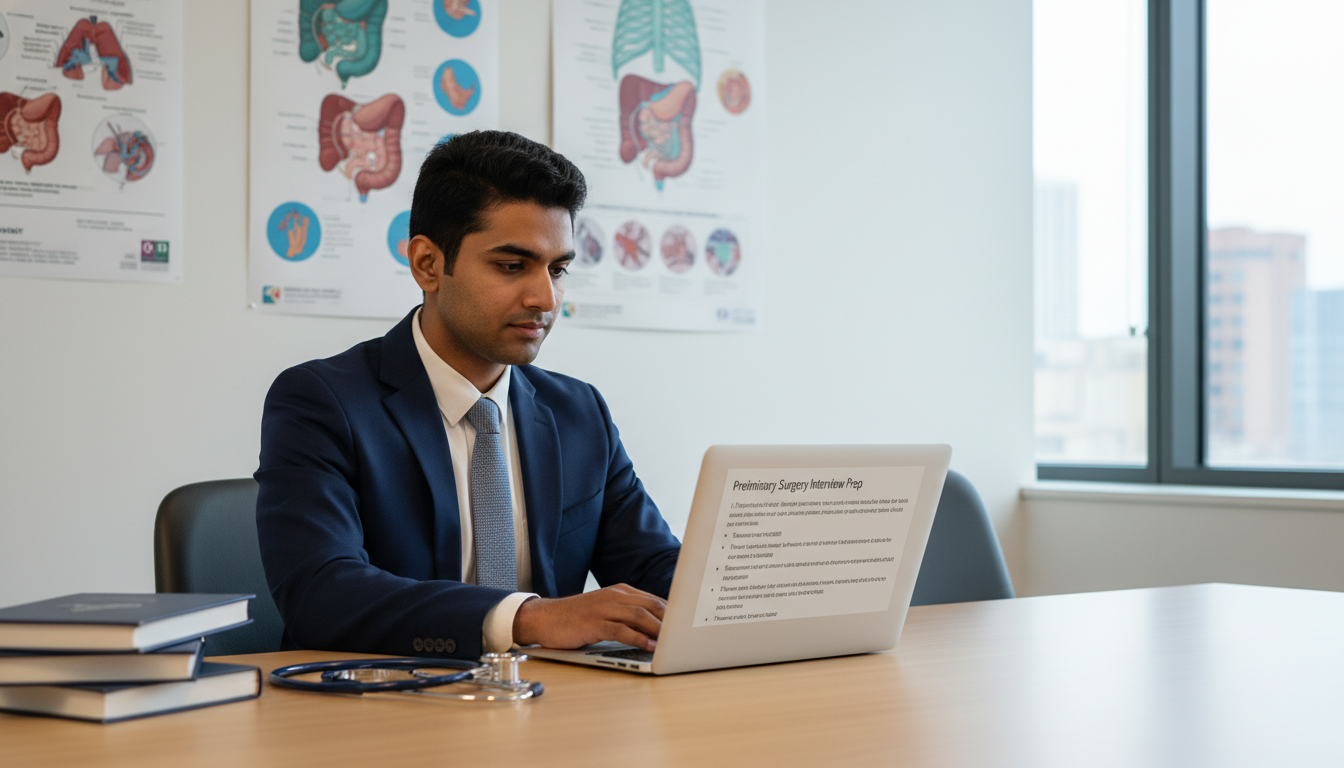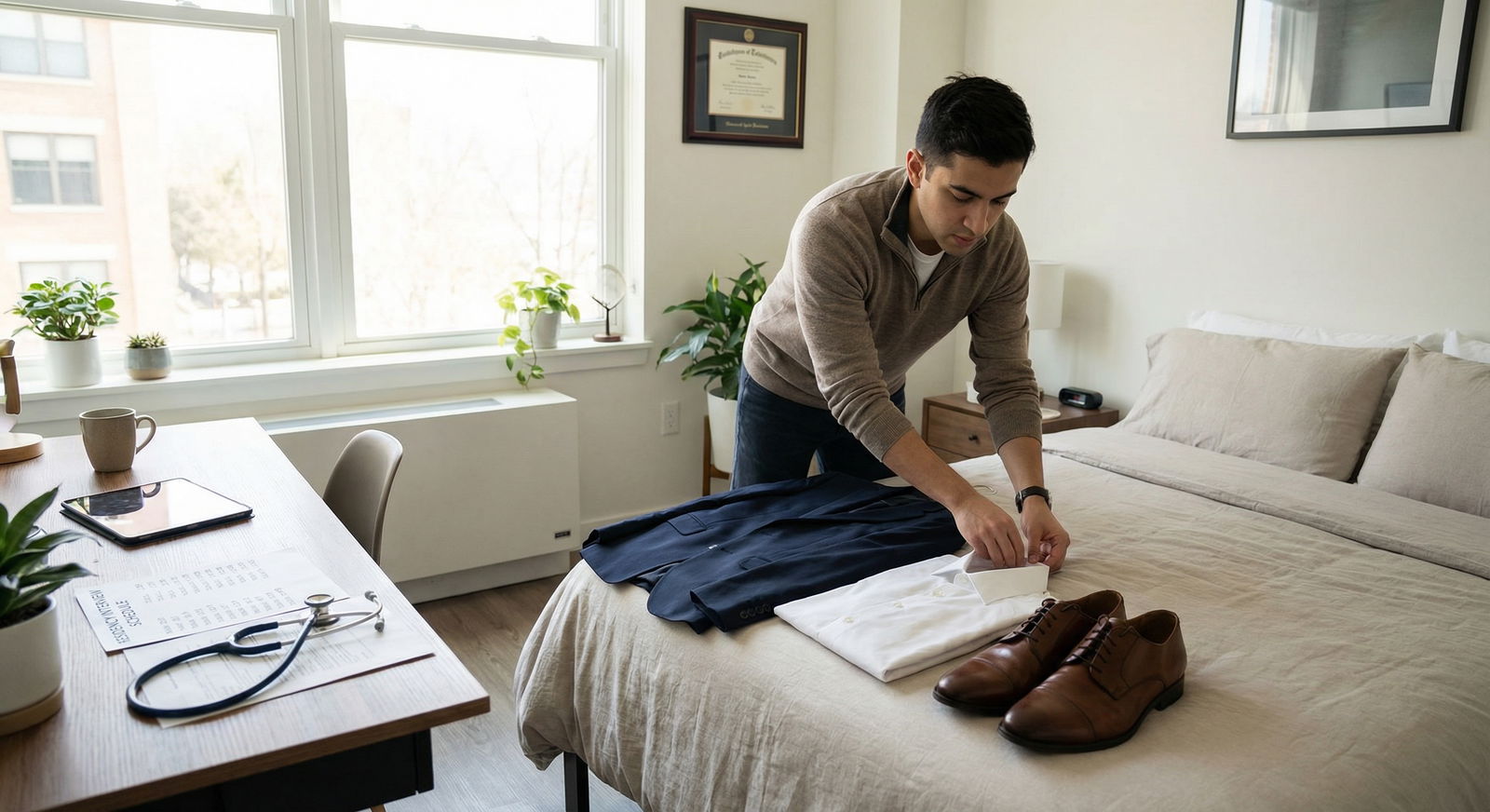
The Role of Dress Code in Residency Interviews: Why First Impressions Matter
When you walk into a residency interview—whether in person or on camera—your appearance speaks before you do. In a high-stakes process where many applicants have similar test scores and clinical experiences, the way you present yourself can subtly influence how your professionalism and readiness for medical practice are perceived.
This isn’t about fashion for its own sake. It’s about signaling to residency programs that you understand the expectations of medical careers, respect the process, and are prepared to represent their institution in front of patients, families, and colleagues. This guide explains why dress code matters in Residency Interviews, what Professional Attire looks like in this context, and how to avoid common mistakes while staying comfortable and confident.
Why Dress Code Matters in Residency Interviews
First Impressions in a Competitive Selection Process
Interviewers form impressions rapidly—often within seconds—based on nonverbal cues such as posture, facial expressions, and attire. In residency interviews, your appearance becomes part of the data that programs unconsciously use to answer questions like:
- Can I see this person talking to my patients tomorrow?
- Would I be comfortable having this applicant represent our program?
- Do they understand professional norms in healthcare environments?
You will not match—or fail to match—because of your suit alone. But attire can create an initial positive or negative frame that colors how the rest of your interview is perceived. A polished, appropriate outfit:
- Signals organization and preparation
- Reduces distracting thoughts about your appearance
- Allows your qualifications and personality to be the main focus
- Reinforces the image of a future colleague rather than a student still “trying to figure it out”
In a close decision between comparable candidates, that cohesive professional impression can matter.
Professionalism: Looking Like a Future Physician
Residency is your transition from supervised learner to independently practicing physician. Programs are looking for residents who can step into clinical environments and immediately interact with:
- Patients and families across diverse backgrounds
- Nurses and allied health professionals
- Consultants and attending physicians
- Community members, administrators, and other stakeholders
Professional Attire during interviews tells programs you recognize this responsibility. It demonstrates that you:
- Understand typical expectations for physician dress
- Appreciate the seriousness of the role you are seeking
- Have the judgment to choose appropriate clothing for formal clinical and academic settings
Even in programs where “business casual” is common on ordinary clinic days, Residency Interviews are almost always treated as formal professional events.
Aligning With Program Culture and Expectations
Different residency programs have different cultures:
- Some academic centers may lean toward traditional business formal
- Community programs might seem more relaxed, but still expect polished professionalism
- Certain specialties (e.g., surgery, radiology) may have more conservative norms than others (e.g., psychiatry, pediatrics)
Your goal is not to “stand out” with bold fashion but to align with the professional norms of your target programs. Thoughtful attire shows:
- Cultural awareness
- Adaptability
- Respect for institutional expectations
If you appear significantly more casual than current residents or faculty, interviewers may question your judgment or readiness. When in doubt, it is safer to be slightly more formal than the minimum standard.
Core Principles of Professional Attire for Residency Interviews

Business Professional vs. Business Casual
For residency interviews, the default expectation is business professional, not business casual. This generally means:
- A coordinated suit (jacket and matching pants or skirt, or a professional dress with blazer)
- Neutral or subdued colors (navy, charcoal gray, black, or dark brown)
- Closed-toe dress shoes
- Minimal and simple accessories
- Neat grooming and a clean, pressed overall look
Business casual (separates, chinos, no blazer, casual shoes) is usually too informal unless a program explicitly states otherwise—for example, for informal dinners or social events.
Comfort and Functionality Are Non-Negotiable
A common mistake is prioritizing appearance over comfort. Remember that Residency Interviews often involve:
- Long days with multiple interviews
- Tours of clinics/hospitals (when in-person)
- Periods of sitting, standing, and walking
- Weather variations and travel stress
Uncomfortable clothing or shoes can distract you, affect your confidence, and subtly show in your body language. To balance professionalism and comfort:
- Choose fabrics that breathe and allow movement
- Ensure jackets and shirts fit comfortably across the shoulders
- Test sitting, standing, and walking in your outfit beforehand
- Break in new shoes before interview day
Comfortable, well-fitting clothes support confident, relaxed engagement with interviewers.
Virtual Residency Interviews: On-Camera First Impressions
Even with virtual formats, the basic standard is the same: dress as if you are going to the program in person. For video interviews:
- Wear full professional attire (top and bottom)—you may stand up unexpectedly
- Avoid busy patterns that strobe or distort on camera
- Favor solid or subtle patterns in mid-tone colors
- Check how your outfit looks on camera in your actual lighting
- Make sure your background is uncluttered and non-distracting
Professional Attire in a virtual setting signals the same things: respect for the process, readiness for medical careers, and an understanding that First Impressions still matter, even through a screen.
Detailed Dress Code Guidelines for Residency Interviews
Professional Attire Guidelines: Suits, Shirts, and Jackets
Whether you typically shop in “men’s” or “women’s” sections, the principles are similar.
Suits and Jackets
- Color: Navy, charcoal gray, black, or dark brown are ideal. A subtle pinstripe is acceptable but not necessary.
- Fit: Shoulder seams should align with your shoulders; the jacket should button comfortably without pulling.
- Style: Single-breasted, two-button or three-button jackets are standard. Avoid very trendy cuts or extreme slim fits.
- Length: For jackets, ensure you can comfortably reach forward or raise your arms without straining the fabric.
If a full suit is not accessible, a coordinated blazer with well-matched dress pants or a professional skirt can be acceptable, but a true suit is the most straightforward choice.
Shirts and Tops
- Shirts/Blouses: Choose collared shirts or modest blouses made of quality fabrics that are not sheer.
- Colors: White, light blue, pale gray, or other soft neutrals work well; subtle patterns (e.g., thin stripes) are okay.
- Neckline: Keep necklines conservative. If you’re worried about gaping buttons or exposure when leaning forward, adjust the fit or layer with a camisole.
- Wrinkles: Press or steam your top; wrinkles can give an impression of disorganization.
Consider moisture-wicking undershirts if you tend to perspire under stress—they can make a big difference during long interview days.
Footwear and Hosiery
Shoes
- Style: Closed-toe, low to moderate heel or flat dress shoes.
- Color: Black, brown, navy, or other dark neutrals that match your belt (if visible).
- Condition: Shoes should be clean and polished; avoid visible scuffs or worn heels.
- Comfort: Break them in before the interview. Wear them around your home, to clinic, or to a less critical event first.
Extremely high heels, platforms, sneakers, sandals, flip-flops, or obviously athletic shoes are not appropriate for Residency Interviews.
Socks and Hosiery
- Socks: Dark-colored, mid-calf or higher; no visible skin when sitting. Avoid flashy patterns.
- Hosiery: If you choose to wear tights or stockings, opt for neutral, opaque, or lightly sheer. Some choose not to wear hosiery; this is generally acceptable if your overall look is polished and appropriate for the local climate and culture.
Grooming, Hair, and Makeup
Your goal is to look neat, clean, and professional in a way that feels authentic to you.
Hair
- Style: Controlled and away from your face; you shouldn’t be constantly pushing hair back.
- Length: Long hair can be worn down if well-groomed; many applicants prefer a low ponytail, bun, or half-up style for practicality.
- Facial Hair: Beards and mustaches are acceptable if they are neatly trimmed and well-maintained.
Choose a style you are accustomed to; interview day is not the ideal time to test a completely new haircut if it may leave you feeling self-conscious.
Makeup and Nails
- Makeup: If you wear makeup, aim for a natural, “you but rested” look. Avoid overly dramatic eyeliner, heavy contouring, or bold lip colors that might distract.
- Nails: Keep nails clean and at a reasonable length. Neutral or subtle nail colors are safest; chipped polish should be removed.
You do not need to wear makeup or nail polish at all. Professionalism is about cleanliness and grooming, not adherence to any specific cosmetic standard.
Accessories, Jewelry, and Bags
- Jewelry: Simple and minimal—stud earrings, a small necklace, a watch, a simple ring or two. Avoid large dangling earrings, stacks of bracelets, or anything that makes noise when you move.
- Watch: A classic, understated watch can subtly convey time-consciousness and professionalism.
- Bags/Portfolios: Carry a professional-looking bag, briefcase, or portfolio. Backpacks can be acceptable if clean, simple, and not overly casual, but a structured bag tends to look more polished.
- Religious and Cultural Dress: Hijabs, turbans, yarmulkes, and other religious attire are fully appropriate. Choose versions that are neat and coordinate with your professional clothing.
Avoid obvious brand logos, flashy designer patterns, or accessories that could draw more attention than your words.
Practical Interview Dressing Strategies and Common Pitfalls
Do Your Research on Program Culture
Before finalizing your outfit:
- Review the program’s website and social media to see how residents and faculty appear in professional photos.
- Look at group photos on the residency web pages—note how formal or casual people tend to dress.
- If you know current residents, politely ask: “For interview day, is traditional business professional attire the norm?”
Even with this information, you should not dress less formally than business professional, but it can help you calibrate details.
Dress One Level More Formal Than the Setting
A useful rule:
- If the culture seems very formal → standard business professional is correct.
- If the culture seems business casual → still choose business professional for interviews.
- If told “casual” for a pre-interview social → choose business casual, not jeans and T-shirts.
Being slightly overdressed for a social event is far less problematic than appearing underdressed for a formal interaction.
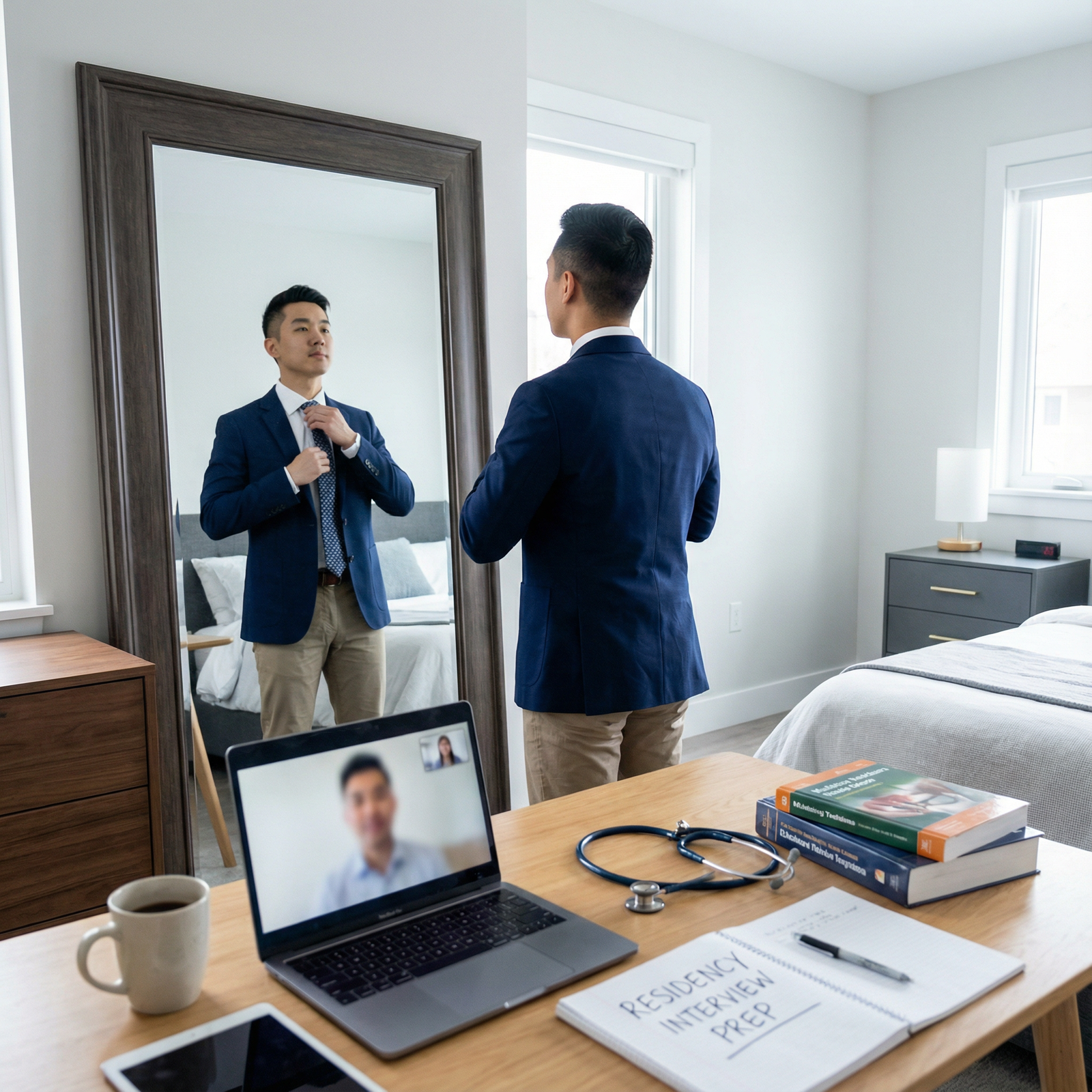
Try on Your Full Outfit in Advance
At least one week before your first interview:
- Try on the full outfit, including shoes and accessories.
- Sit, stand, walk, and reach for objects.
- Practice answering interview questions in front of a mirror or camera.
- Check for:
- Gaping buttons or pulling fabric
- Visible undergarment lines or colors
- Hemlines that ride up too high when sitting
- Shoes that pinch, slide, or feel unstable
This dress rehearsal lets you identify issues when you still have time to adjust, tailor, or swap items.
Pack and Prepare for Travel (In-Person Interviews)
If you are traveling:
- Pack your suit in a garment bag if possible.
- Use hotel or hospital ironing boards, or bring a travel steamer to refresh clothes.
- Carry one backup shirt/blouse in case of spills.
- Keep a small kit: lint roller, stain remover pen, safety pins, and a sewing kit.
For back-to-back interviews on the road, rotating two shirts and one or two suits is usually sufficient.
Avoid Common Attire Mistakes
Some choices reliably detract from an otherwise strong impression:
- Overly casual: Jeans, T-shirts, hoodies, leggings as pants, sneakers (outside of a clear medical necessity)
- Overly flashy: Loud prints, neon colors, glitter, oversized jewelry, or trendy fashion statements
- Poor fit: Baggy or overly tight clothing, dragging hems, or visibly strained seams
- Distracting elements: Strong fragrances (which can bother others), noisy accessories, or slogan-branded items
Your goal: when you leave the room, interviewers remember your insights and personality, not your outfit.
Conclusion: Dress as the Colleague You Are Becoming
Your residency interview outfit will not compensate for unprepared answers or a weak application. However, it can be a powerful tool for:
- Reinforcing your image as a future physician
- Demonstrating respect for the process and the people involved
- Creating a professional, confident first impression that lets your qualifications shine
Think of Professional Attire as part of your broader interview strategy—alongside your personal statement, letters, and clinical evaluations. All of these pieces together communicate who you are as a future resident.
By planning ahead, choosing appropriate clothing, and aligning with the professional norms of medical careers, you reduce unnecessary stress and present your best self. You have worked for years to reach this moment; let your appearance support, not undermine, your hard-earned readiness.
Frequently Asked Questions About Dress Code for Residency Interviews
1. What should I wear to a residency interview if I usually dress very casually?
Aim for business professional, even if this is far from your usual style. A simple navy or charcoal suit, a neutral shirt or blouse, and clean, closed-toe dress shoes are enough. If you’re unfamiliar with dress clothes, visit a department store or suit shop and ask for help choosing an interview-appropriate outfit. Comfort improves significantly when clothing is properly fitted.
2. Are there differences in attire expectations between specialties (e.g., surgery vs. psychiatry)?
Subtle cultural differences exist, but business professional is appropriate for all specialties:
- Surgery, radiology, anesthesiology, and some internal medicine programs may lean toward more conservative, traditional looks.
- Pediatrics, family medicine, and psychiatry may be slightly more flexible in style but still expect polished professionalism.
Because programs within any specialty can vary, it’s safer to meet a consistent high standard rather than trying to tailor your outfit by specialty.
3. How should I handle professional attire for virtual residency interviews?
For virtual Residency Interviews:
- Dress in full business professional attire, not just from the waist up.
- Check your look on camera—avoid bright white shirts that blow out under lighting, or very dark outfits that blend into your background.
- Ensure your hair and grooming are neat and that you’re not fidgeting with jewelry or accessories during the call.
- Sit at a distance from the camera that shows your upper body and part of your suit jacket, reinforcing a professional image.
The virtual format changes the medium, not the expectations.
4. Is it acceptable to wear cultural or religious attire (e.g., hijab, turban) with my interview outfit?
Yes. Religious and cultural attire is absolutely appropriate and protected. Choose versions that:
- Are clean, well-fitted, and in good condition
- Coordinate with your suit or professional clothing
- Do not impede your ability to maintain eye contact or clear communication
Programs are evaluating your readiness for residency, not your conformity to a single cultural standard of appearance.
5. How many different outfits do I need for multiple interviews?
You do not need a different suit for every interview. Most applicants successfully rotate:
- 1–2 suits in neutral colors
- 2–4 shirts or blouses
- 1–2 pairs of dress shoes
You can vary ties, scarves, or subtle accessories if desired, but it’s perfectly acceptable to appear in photos or events in the same suit on different days. Fit, cleanliness, and neatness matter far more than variety.
By approaching dress code thoughtfully and strategically, you align your outward appearance with the professionalism and dedication you have already demonstrated in your medical training. That alignment supports stronger First Impressions and helps residency programs see you clearly as the resident—and colleague—you are prepared to become.