The Ultimate Guide to Residency Interview Prep: Stand Out from the Crowd
Preparing for residency interviews is one of the most pivotal stages of your medical career. After years of coursework, clinical rotations, and exams, this is your chance to show programs who you are beyond your CV and scores. With increasing competition and limited positions, strategic interview preparation is essential if you want to stand out and secure your ideal program.
This comprehensive guide walks you step-by-step through residency interview preparation—from understanding the process and refining your application, to practicing high-yield questions, optimizing virtual performance, and mastering post-interview professionalism. Use this as a practical roadmap to approach interview season with clarity, confidence, and purpose.
Understanding the Residency Interview Process and What Programs Really Assess
Residency interviews are more than just a conversation; they are structured evaluations designed to assess your readiness for the next phase of your medical career.
What to Expect in Residency Interviews
Programs use the interview to evaluate qualities that are difficult to quantify on paper:
- Interpersonal skills and communication
- Professionalism and maturity
- Teamwork and “fit” with the program culture
- Alignment with the program’s mission and patient population
- Potential for growth in the specialty and beyond residency
You may encounter different interview structures:
Traditional One-on-One Interviews
A faculty member, program director, or senior resident speaks with you individually for 20–40 minutes. These are conversational but purposeful, often mixing behavioral, personal, and specialty-specific questions.Panel Interviews
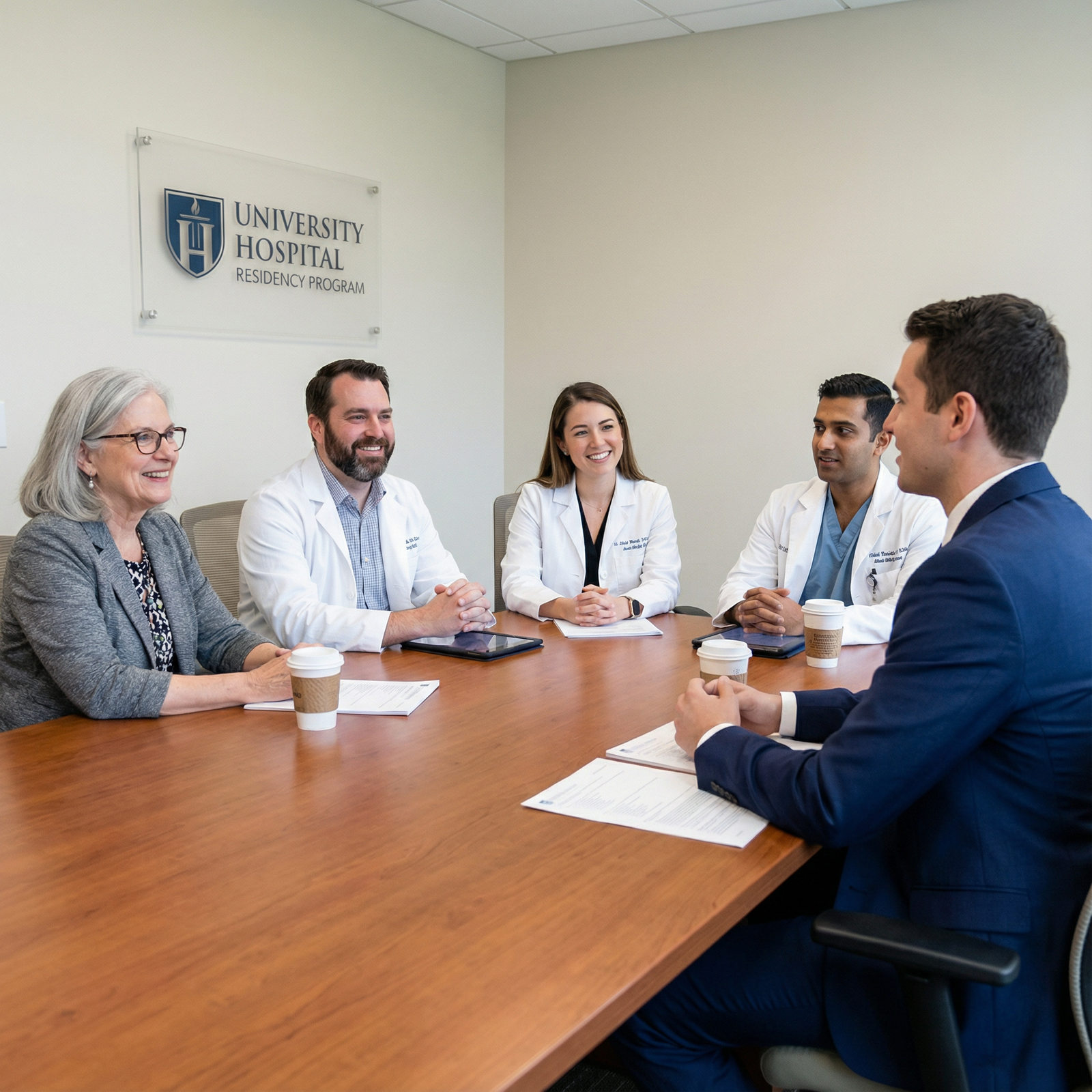
Multiple interviewers (faculty, chief residents, sometimes program leadership) interview you together. This setting can feel more intense; you’ll need to maintain eye contact, engage everyone on the panel, and manage your time thoughtfully when responding.Multiple Mini-Interviews (MMIs)
You rotate through several short stations (often 5–10 minutes each), each with a specific scenario or ethical dilemma. These test your reasoning, communication, empathy, and professionalism under time pressure.Virtual Interviews
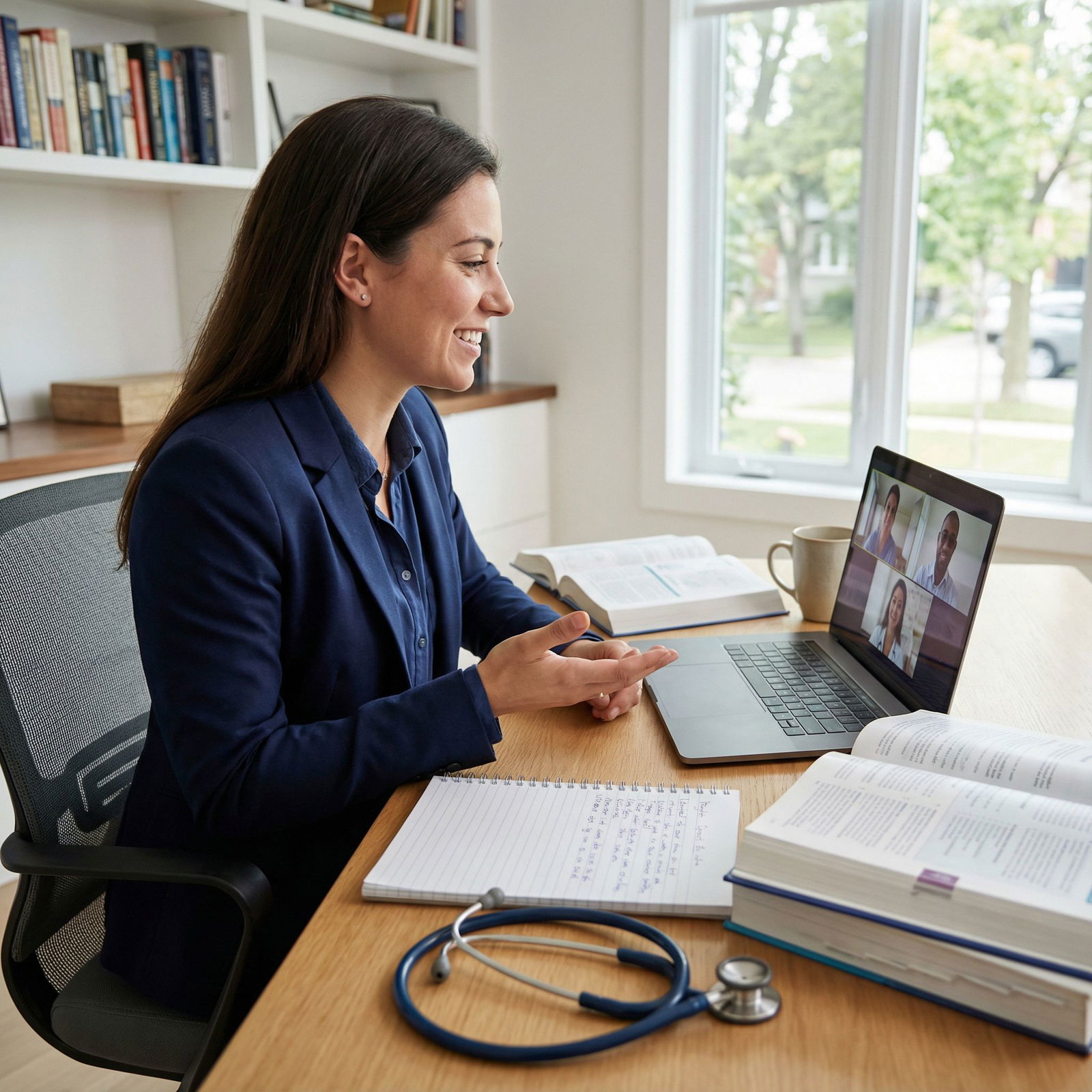
Now standard across many specialties, virtual Residency Interviews add an extra layer: technology and environment. Programs still evaluate the same qualities, but they’re also observing how well you adapt to this format, maintain eye contact via camera, and communicate clearly online.
Understanding which formats your programs use allows you to tailor your Interview Preparation accordingly.
Core Qualities Programs Look For
Regardless of format or specialty, most programs are looking for the same key attributes:
Professionalism
- Punctuality (logging in early, arriving on time)
- Respectful, courteous communication
- Appropriate dress and background (for virtual settings)
- Integrity when discussing your experiences and challenges
Demonstrated Interest in the Program and Specialty
- Knowledge of the program’s structure, strengths, and mission
- Clear reasons for pursuing the specialty
- Evidence that you’ve thought about how you would thrive there
Cultural and Team Fit
- Ability to collaborate and communicate with diverse team members
- Attitude toward colleagues, staff, and patients
- Compatibility with the program’s educational philosophy and work style
Clinical and Professional Competence
- Ability to reflect on clinical experiences critically
- Awareness of your strengths and growth areas
- Emotional intelligence and self-awareness
The more clearly you understand these expectations, the more intentionally you can shape your answers, examples, and overall presence.
Strengthening Your Application Foundation: Personal Statement and ERAS Review
Your application is the context for your interview. Most questions you’ll be asked will spring from what you wrote. A strong, well-aligned application makes it easier for you to shine.
Refining Your Personal Statement for Interview Season
By interview time, your Personal Statement is already submitted—but it’s still central to your prep. Interviewers often have it open while speaking with you and will refer to your key themes and stories.
Use your Personal Statement to:
Anchor Your Narrative
Identify the 2–3 core themes you want programs to remember about you (e.g., commitment to underserved care, passion for teaching, interest in research, leadership). Make sure your interview responses reinforce these themes.Highlight Motivations and Values
Be ready to expand on:- Why you chose this specialty
- Pivotal experiences that shaped your career goals
- What you value in a training environment (mentorship, diversity, patient population, research, etc.)
Connect Past, Present, and Future
Outline how your path so far prepared you for residency and how this specialty and specific program align with your long-term Medical Career goals.
Actionable tip:
Print or save your Personal Statement, annotate it, and mark any story, phrase, or value that could become a discussion point. Prepare to elaborate with more detail, including what you learned from each experience.
Reviewing Your ERAS Application and CV Like an Interviewer
Expect that anything written in your application is fair game for a question.
Systematically review:
Experiences Section
- Be prepared to discuss your top 3–5 most meaningful experiences in depth.
- For each, know your specific role, impact, and what you learned.
- Be ready to answer: “If I spoke to your supervisor, how would they describe you?”
Research and Scholarly Work
- Understand your project’s aims, methodology, your role, and key findings.
- Be honest about your level of involvement; do not exaggerate.
- Have 1–2 talking points about how research shaped your thinking.
Clinical Rotations and Evaluations
- Anticipate questions about sub-internships, away rotations, or any unique settings.
- If there are weaker grades or red flags, prepare a brief, honest, and accountable explanation, along with what changed afterward.
Gaps or Non-Linear Paths
- Be ready to proactively and succinctly address time off, career transitions, or non-traditional routes, focusing on growth, resilience, and what you gained.
This thorough review prevents you from being caught off-guard and helps you project confidence and integrity.
Building a High-Yield Residency Interview Preparation Strategy
Effective Interview Preparation is not about memorizing scripts. It’s about building a flexible, authentic framework so you can adapt to any question while staying true to your story.
Researching Programs Strategically
Strong knowledge of each program allows you to tailor your responses and questions, demonstrating genuine interest and professionalism.
Focus your research on:
Program Structure and Curriculum
- Call schedules, rotations, clinic structure, elective opportunities
- Unique tracks (global health, medical education, research, advocacy)
Patient Population and Clinical Environment
- Types of patients seen (urban, rural, underserved, academic, community)
- Subspecialty exposure and procedural opportunities
Program Culture and Wellness
- Resident cohesion, mentorship structure
- How they support wellness, mental health, and work-life balance
Faculty and Leadership
- Program director’s background and interests
- Key faculty whose work aligns with your own interests
Where to find this information:
- Program websites and social media
- FREIDA and specialty society resources
- Program-sponsored virtual open houses or Q&A sessions
- Conversations with current or recent residents (via alumni, mentors, or LinkedIn)
Use your research to tailor responses like:
- “Why this program?”
- “What are you looking for in a residency program?”
- “Where do you see yourself in five to ten years?”
Anticipating and Practicing Common Residency Interview Questions
You cannot predict every question, but you can prepare for categories of questions.
High-yield categories:
Motivation and Fit
- “Why did you choose this specialty?”
- “What interests you about our specific program?”
- “How do you see yourself contributing to our program?”
Clinical Experiences and Challenges
- “Tell me about a difficult patient encounter.”
- “Describe a time you made a mistake and how you handled it.”
- “Tell me about a time you went above and beyond for a patient.”
Teamwork and Conflict
- “Describe a conflict with a colleague or team member.”
- “How do you handle disagreements with your attending or senior?”
- “When have you had to give or receive difficult feedback?”
Strengths, Weaknesses, and Growth
- “What are your greatest strengths as a future resident?”
- “What is a weakness you’re working on?”
- “What do you see as your biggest challenge in residency?”
Ethics, Professionalism, and Systems Issues
- “Tell me about a time you witnessed unprofessional behavior.”
- “How do you approach questions about resource limitations or ethical dilemmas?”
- “How would you handle a situation where you’re concerned about patient safety?”
Future Plans and Career Goals
- “Where do you see yourself in 5–10 years?”
- “Are you interested in fellowship?”
- “What role do you see yourself playing in medical education, research, or leadership?”
Approach:
Write bullet points (not scripts) for each category. Aim to have 2–3 stories that can be adapted to different questions (e.g., one story about a challenging patient that also demonstrates teamwork and communication).
Mastering Behavioral and Situational Questions with the STAR Method
Behavioral questions ask, “Tell me about a time when…” These are crucial for demonstrating professionalism, resilience, and insight.
Use the STAR Method:
- Situation – Briefly set the scene.
- Task – What was your responsibility or role?
- Action – What did you do? (Focus on your specific contributions.)
- Result – What happened? What did you learn or change afterward?
Example (Conflict with a team member):
- Situation: “During my internal medicine clerkship…”
- Task: “I needed to coordinate discharge planning with a senior resident who had a different approach.”
- Action: “I clarified our shared goals, listened to their concerns, proposed a compromise, and sought attending input when needed.”
- Result: “We improved communication, the patient’s discharge went smoothly, and I learned to address disagreements early and respectfully.”
Practice condensing your STAR responses into 60–90 seconds. This shows clarity, organization, and respect for time.
Preparing Thoughtful Questions to Ask Interviewers
Your questions are not a formality—they are a powerful signal of your interest, professionalism, and priorities.
Avoid questions easily answered on the website (e.g., “How many residents are in your program?”). Instead, ask:
About Training and Education
- “How does the program support residents who are interested in [research/teaching/quality improvement/global health]?”
- “Can you describe how feedback is given and how residents are supported if they’re struggling?”
About Culture and Support
- “What qualities do successful residents in this program tend to share?”
- “How does the program foster wellness and prevent burnout?”
About Growth and Leadership
- “What opportunities exist for residents to take on leadership roles?”
- “How do alumni from this program typically fare in terms of fellowship or job placement?”
Tailor at least 3–5 questions per program and adjust them depending on whether you’re speaking with faculty, residents, or leadership.
Mock Interviews, Delivery Skills, and Managing Stress
Solid content alone is not enough; your delivery, presence, and composure are just as important.
Using Mock Interviews Effectively
Treat mock interviews as seriously as the real ones.
Options for mock interviews:
- Faculty advisors or deans at your medical school
- Residents or fellows in your desired specialty
- Peers in your class (especially those with strong communication skills)
- Professional residency Interview Preparation services, if accessible
How to make mocks high yield:
- Simulate actual conditions (wear professional attire, use the same device and platform, sit at a desk).
- Record yourself (video and audio) and watch it critically.
- Ask your interviewer to focus on:
- Clarity and organization of your answers
- Nonverbal communication (eye contact, posture, hand gestures)
- Overuse of filler words (“um,” “like,” “you know”)
- Any habits that may distract (looking away, fidgeting)
After each mock session, write down 2–3 concrete improvements to implement next time.
Perfecting Nonverbal Communication and Professional Presence
Professionalism is conveyed through how you show up, not just what you say.
Key elements:
- Posture: Sit upright, slightly leaning forward—engaged but relaxed.
- Eye Contact: Look into the camera for virtual interviews; in-person, maintain comfortable eye contact without staring.
- Facial Expression: Aim for attentive, friendly, and calm; a slight smile can help you appear approachable.
- Pacing: Speak clearly, at a moderate pace. Pausing briefly before answering is a sign of thoughtfulness, not weakness.
Managing Anxiety and Stress Before and During Interviews
Residency Interviews are inherently stressful. Managing that stress is part of your professionalism.
Practical strategies:
- Structured Preparation: Anxiety often decreases as your preparation increases. Have a clear plan and timeline.
- Rehearsed Openers: Have confident answers ready for “Tell me about yourself” and “Why this specialty?” to start strong.
- Grounding Techniques: Use deep breathing, short walks, stretching, or brief mindfulness exercises before logging in or entering the room.
- Sleep and Self-Care: Prioritize sleep, nutrition, and brief physical activity—especially the week of multiple interviews.
If you’re dealing with significant anxiety, consider speaking with a mentor, counseling services, or a physician; proactive support is a sign of insight, not weakness.
Practical Logistics and Professionalism: In-Person and Virtual
Your logistical planning and attention to detail directly reflect your professionalism.
Professional Attire and Appearance
Choose an outfit that is conservative, comfortable, and allows you to focus on the conversation.
- General guidelines:
- Dark or neutral colors (navy, black, gray, charcoal)
- Blazer or suit jacket with dress shirt or blouse
- Skirt or pants that fit well and are not restrictive
- Closed-toe, clean, comfortable shoes
- Minimal accessories and fragrances
- Neat grooming (hair, nails, facial hair)
Try your outfit in advance—sit, stand, and move around in it to ensure comfort.
Logistics for In-Person Interviews
- Confirm exact locations, parking, and check-in details.
- Plan to arrive 15–20 minutes early.
- Keep a folder with:
- Extra copies of your CV
- A small notepad and pen
- Any documents you were asked to bring
- Keep your phone on silent and out of sight during all professional interactions.
Optimizing Your Virtual Interview Setup
For virtual Residency Interviews, your “interview room” is part of your professional image.
Checklist:
Environment:
- Quiet, private space
- Neutral or professional background (plain wall, bookshelf, or clean office)
- Good lighting (natural light or a lamp in front of you, not behind)
Technology:
- Stable internet connection (use wired if possible)
- Test your webcam and microphone ahead of time
- Close unnecessary programs that may cause lag or notifications
- Have backup options ready (phone hotspot, alternative device)
Positioning:
- Camera at eye level
- Frame from mid-chest up
- Avoid typing or loud clicking during the interview
Log in 10–15 minutes early to troubleshoot any issues and reduce last-minute stress.
Final Steps: The Day Before, The Day Of, and Post-Interview Etiquette
The Day Before Your Residency Interview
Use the day before for focused, light-touch preparation:
Review your:
- Program-specific notes
- Key stories and experiences
- List of questions for interviewers
Prepare:
- Interview outfit laid out and ready
- Technology tested and backup options considered
- Directions/Zoom links easily accessible
Protect your rest:
- Avoid cramming; it often increases anxiety
- Aim for a consistent bedtime and a good night’s sleep
- Use gentle relaxation strategies if you’re feeling keyed up
The Day of the Interview: Execution and Professionalism
Before the interview:
- Eat a light meal to maintain energy
- Use deep breathing or brief movement to reduce tension
- Do a quick tech and audio check for virtual interviews
During the interview:
- Greet each interviewer warmly and by name when possible
- Listen actively; don’t rush to answer without understanding the question
- If you need a moment to think, say, “That’s a great question—let me think for a moment.”
- Be honest; it’s okay to say, “I’m not sure, but here’s how I’d approach finding the answer.”
End of the interview:
- When asked if you have questions, use your prepared, program-specific questions
- Close with a brief, sincere expression of appreciation and interest
Post-Interview Etiquette: Thank You Notes and Reflection
Your behavior after the interview still reflects your professionalism.
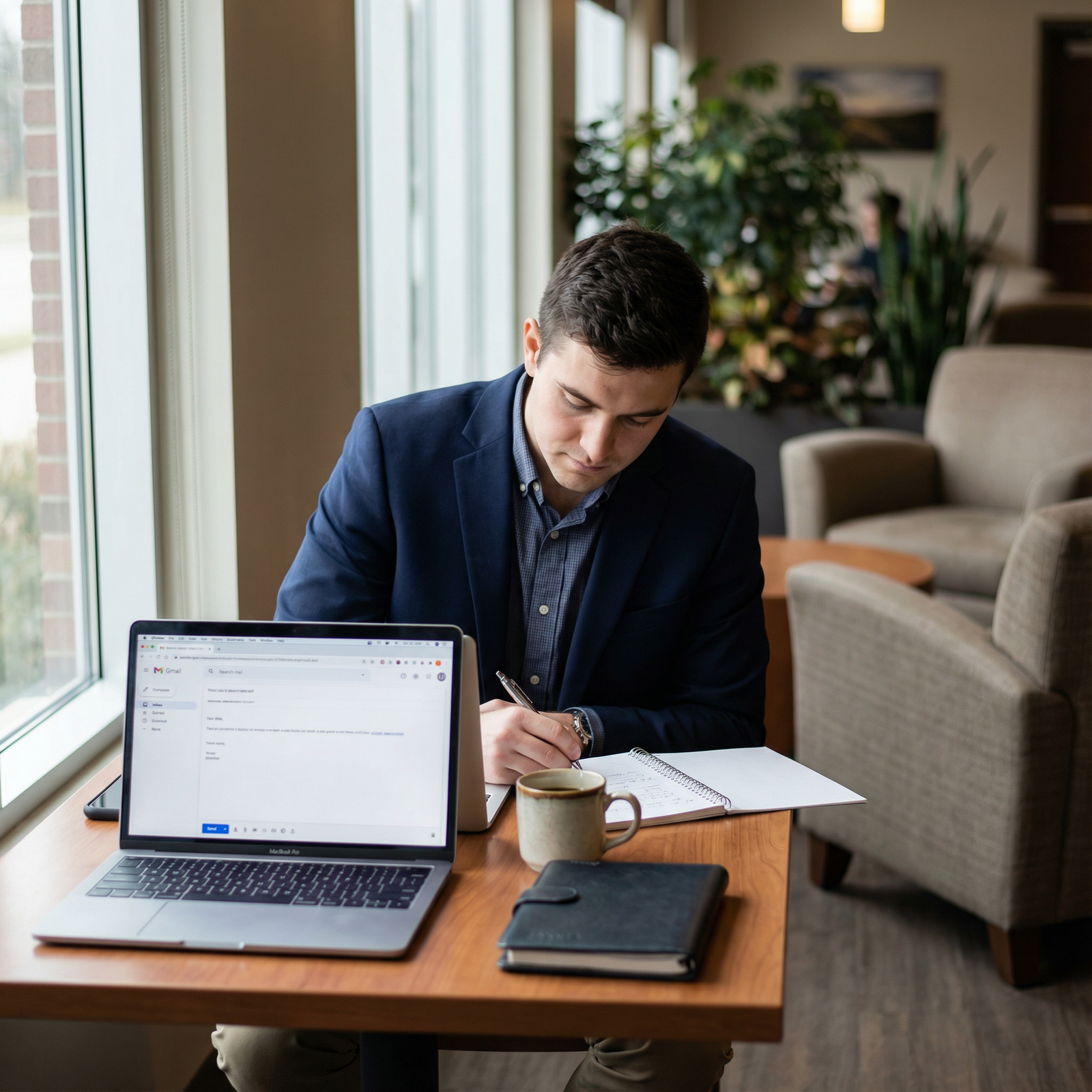
Thank-you emails:
- Send within 24–48 hours.
- Keep them concise but specific:
- Thank the interviewer by name.
- Reference 1–2 specific things you discussed.
- Reiterate your interest in and fit with the program.
- Proofread carefully; errors here can undo a strong impression.
Reflection for future improvement: Immediately after each interview, jot down:
- Who you met (names, roles)
- Key points about the program (strengths, concerns, “vibe”)
- Questions you wished you had asked
- How you felt about your performance and what you’d adjust next time
These notes will be invaluable later when you create your rank list and if you need to send any follow-up communications.
Residency Interview FAQ: Common Questions from Applicants
1. How early should I start preparing for residency interviews?
Begin light Interview Preparation as soon as you submit your ERAS application. By the time interview invitations arrive, you should have:
- Reviewed your Personal Statement and application in depth
- Identified key stories for common question categories
- Started researching programs and tracking details in a spreadsheet
About 2–4 weeks before your first interview, schedule mock interviews and refine your answers and delivery.
2. What if I don’t know the answer to a medical or ethical question?
It’s acceptable—and often preferable—to acknowledge uncertainty rather than guess confidently but incorrectly. For clinical or ethical questions:
- Clarify the scenario if needed
- Think out loud logically, explaining your reasoning
- Emphasize patient safety, ethical principles, and seeking supervision when appropriate
- End with how you would consult guidelines, senior colleagues, or institutional policies
Humility combined with sound reasoning and a patient-centered approach reflects professionalism.
3. How important are virtual backgrounds, lighting, and technical details?
They matter more than many applicants realize. While they won’t get you ranked #1, poor audio, dark lighting, or distractions can significantly detract from your performance. A clear, well-lit, and distraction-free environment signals respect for the process and helps interviewers focus on your content rather than your surroundings.
4. Is it okay to bring up red flags (like a failed exam or gap year) if they don’t ask?
If you have a significant red flag and it is central to your application, it’s wise to have a concise, accountable narrative ready. If they don’t bring it up, you don’t need to force it into unrelated questions. However, if there is a natural opportunity (e.g., “Tell me about a challenge you’ve overcome”), you can address it directly:
- Own what happened without making excuses
- Explain what you learned and what changed
- Highlight subsequent evidence of improvement or success
5. Should I tell a program it’s my top choice during or after the interview?
Only tell a program it’s your genuine top choice—and only if you are certain. If you choose to communicate this:
- Do so later in the season via a clear, honest email to the program director
- Avoid making the same promise to multiple programs
- Remember that the NRMP Match rules discourage soliciting or requiring such statements, and no program can ask you to disclose rank intentions
Thoughtful, structured Interview Preparation can dramatically improve your confidence and performance. By understanding what programs value, refining your narrative, practicing strategically, and demonstrating professionalism at every step, you position yourself to stand out and move closer to the residency and Medical Career you envision.