Understanding the Urology Residency Landscape as a DO Graduate
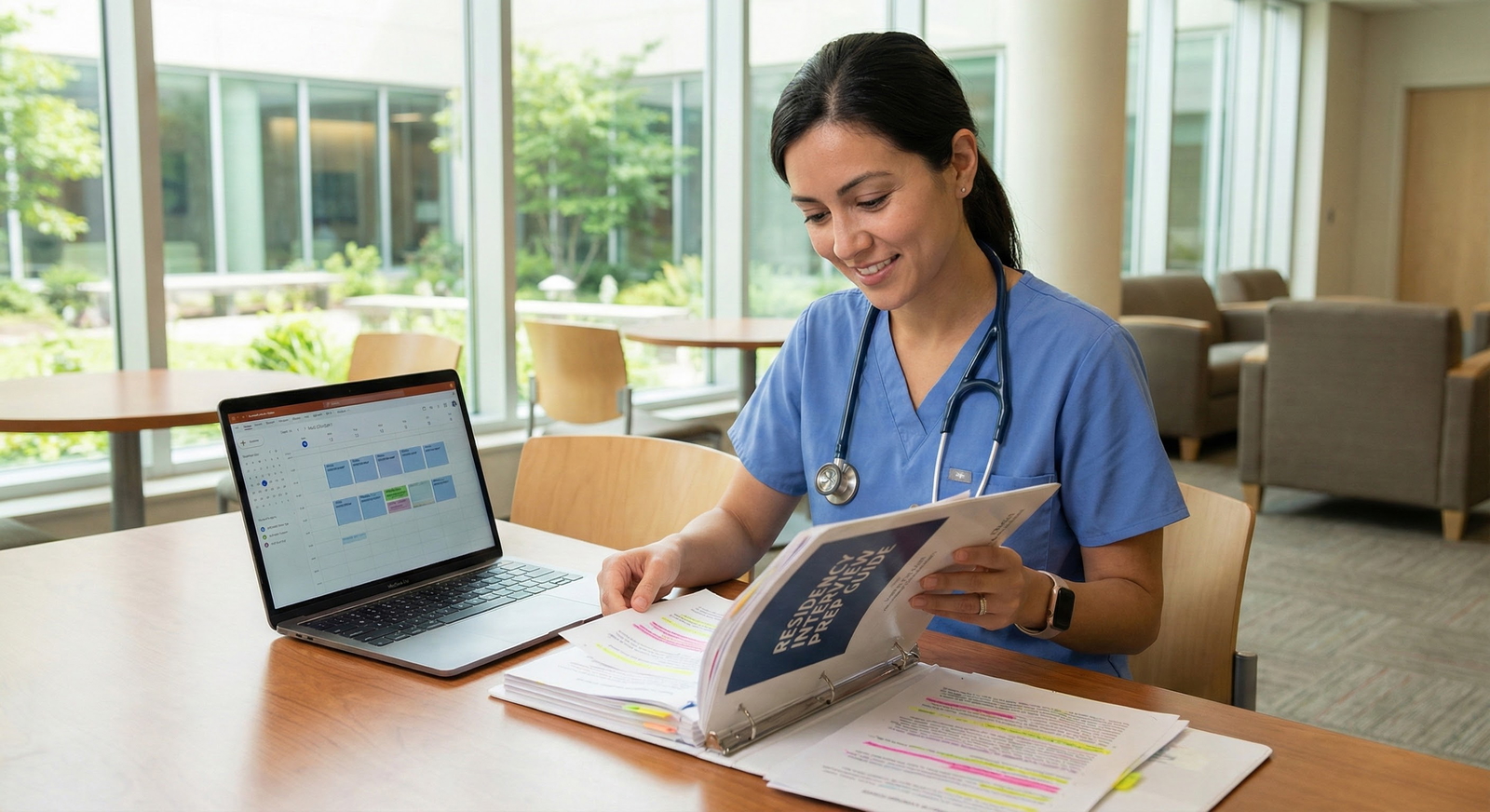
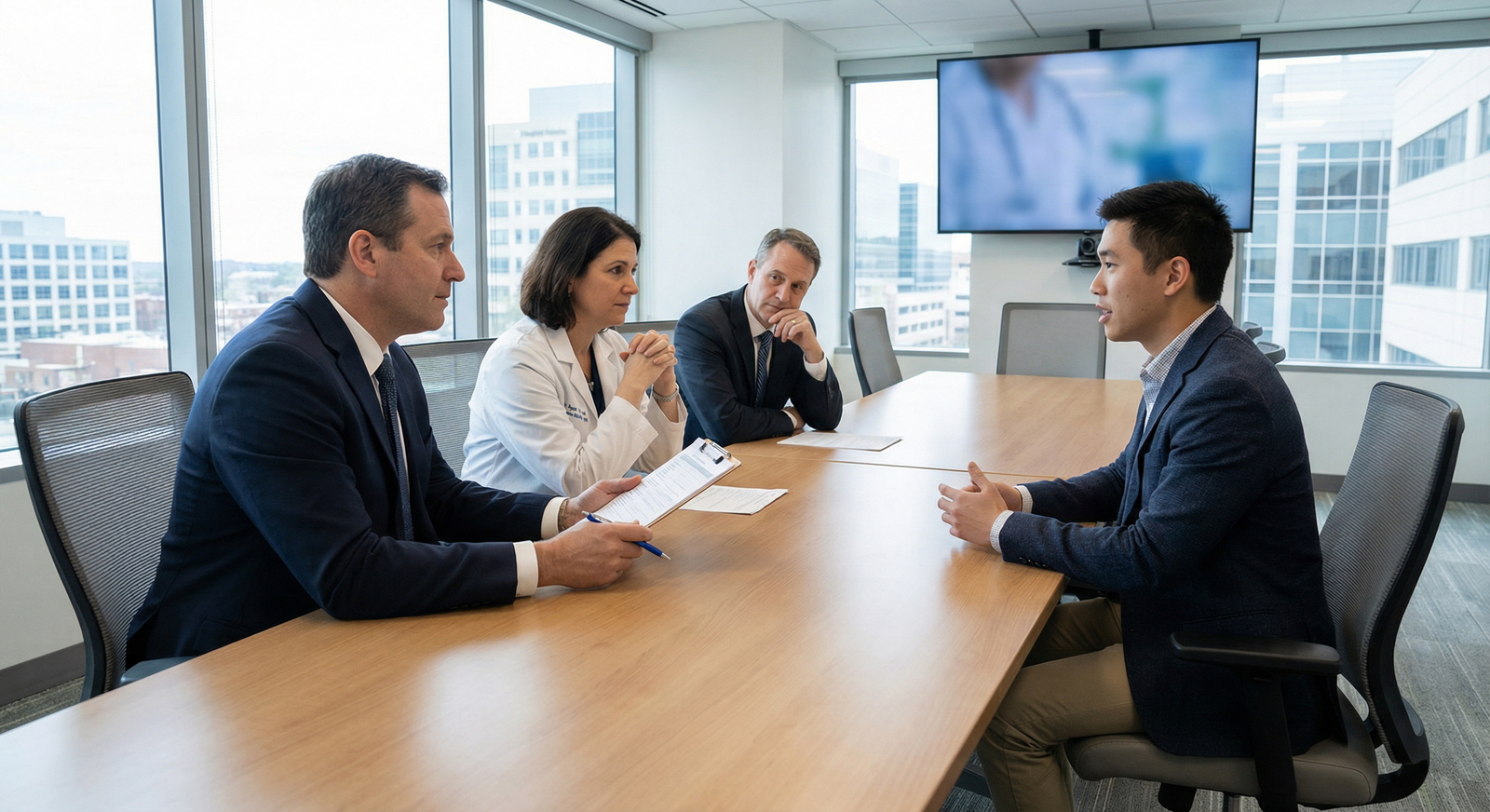
Pre-interview preparation for a DO graduate in urology requires more than generic residency interview advice. Urology is a small, competitive field with an early match, and osteopathic applicants historically face extra scrutiny. That doesn’t mean you can’t match—it means your preparation must be strategic, deliberate, and specialty-specific.
Why Urology Is Unique
Key features of the urology match landscape you should keep in mind:
Early match timeline
- Urology traditionally participates in an early match (separate from the main NRMP timeline), with earlier application, interview, and ranking deadlines.
- This compresses your preparation window; you must be interview-ready sooner than many of your classmates.
Small specialty, tight community
- Urology is relatively small, and faculty often know each other.
- Your reputation, professionalism, and how you perform on interview day are quickly shared, both positively and negatively.
Research and “fit” matter
- Even programs that are DO-friendly will expect evidence that you understand urology, its lifestyle, and its demands.
- Prior exposure (sub-internships, shadowing, research) helps confirm your commitment.
DO-Specific Considerations
As a DO graduate, you need to be ready to address:
Why a DO pathway?
Many interviewers will be genuinely curious about why you chose osteopathic medicine. This is not inherently negative—but you should have a confident, concise explanation.USMLE/COMLEX performance
- Some programs are familiar with COMLEX; others rely heavily on USMLE.
- If you have both, be ready to explain your performance trends; if only COMLEX, understand how to translate your strengths.
Bias and misconceptions
- Some programs may (consciously or unconsciously) have reservations about DO applicants in a competitive field like urology.
- Your goal is to demonstrate that you are clinically strong, academically capable, and an excellent team member—someone indistinguishable from (or stronger than) any MD applicant.
Your pre-interview preparation should be built around three pillars: content preparation, presentation preparation, and program-specific strategy.
Mastering the Content: What You Need to Communicate Clearly
Content preparation is about what you’ll say: your story, motivations, goals, and understanding of urology. This is the foundation for effective residency interview preparation.
1. Clarify Your Personal Narrative as a DO Going into Urology
Before facing any interview questions residency programs may ask, you need a coherent narrative that connects:
- Why medicine?
- Why DO?
- Why urology?
- Why now, in this specific stage of training?
Write out bullet points for each:
Why medicine?
- Avoid clichés (“I want to help people”) without specifics.
- Anchor your response in a concrete experience (family illness, clinical exposure, long-standing interest in biology and problem-solving, etc.).
Why DO? (for a DO graduate residency applicant)
- Highlight aspects of osteopathic training that align with urology:
- Whole-patient perspective (cancer survivorship, sexual function, quality of life).
- Musculoskeletal anatomy knowledge and hands-on physical exam skills.
- Emphasis on communication and patient-centered care.
- Highlight aspects of osteopathic training that align with urology:
Why urology?
Programs want to see more than “I liked the rotation.” Include:- Specific patient stories from your urology rotations or sub-Is.
- What you enjoy about the field:
- Surgical precision, variety of open/endo/robotic procedures.
- Longitudinal relationships (stones, BPH, cancer survivorship).
- Balance of clinic and OR.
- Evidence you understand the lifestyle: call demands, emergencies, elective vs urgent cases.
Why now? (timing and readiness)
- Reflect on how your clinical experiences and research have prepared you to enter residency.
- Emphasize growth: what you struggled with initially and how you improved (e.g., OR etiquette, complex anatomy).
Action step:
Draft a one-paragraph answer to each prompt above, then distill each into 3–4 key bullet points. Use the bullets in mock interviews and adapt your wording to sound natural.
2. Prepare for High-Yield Urology Interview Questions
While every program is different, urology match interviews reliably cover several core domains. Prepare targeted answers to these common interview questions residency programs ask urology applicants:
“Tell me about yourself.”
- 60–90 seconds, professional but personable.
- Start with where you’re from / your background, briefly mention your DO training, then segue into interest in urology.
- End with a transition that invites discussion (e.g., “…and those experiences led me to seek a program that values strong surgical training and mentorship, like yours.”).
“Why urology?”
- Use your prewritten narrative.
- Include 1–2 brief clinical anecdotes.
- Highlight aspects of urology unique from other surgical subspecialties.
“Why did you choose a DO program?” / “What does osteopathic training mean to you?”
- Emphasize positive reasons, not backups.
- Example points:
- Attraction to whole-person care and functional outcomes.
- Interest in musculoskeletal medicine and anatomy.
- Exposure to community-based training environments.
“Tell me about a challenging clinical situation and how you handled it.”
- Use the STAR framework: Situation, Task, Action, Result.
- Choose a story from surgery/urology if possible, or another rotation that showcases composure under pressure and teamwork.
“Tell me about a time you made a mistake.”
- Avoid catastrophic examples, but don’t dodge responsibility.
- Focus on insight and concrete changes you made afterward (checklists, communication habits, etc.).
“What are you most proud of?”
- Could be research, a patient interaction, or a leadership role.
- Tie it back to traits valuable in a resident: resilience, initiative, empathy, or systems thinking.
“Where do you see yourself in 10 years?”
- Acknowledge uncertainty but show direction.
- Examples: academic urology, community practice, subspecialty interest (endourology, oncology, female pelvic medicine), or rural access to urologic care.
- For DO graduates, you can mention interest in urologic care in underserved settings, aligning with the DO mission.
Behavioral and team-based questions
- “Describe a conflict with a colleague and how you resolved it.”
- “How do you handle feedback?”
- “What would your co-residents say is your greatest strength and area for improvement?”
Action step:
Create a bank of 15–20 bullet-pointed answers to these questions. Don’t script them word-for-word; instead, have 2–3 key ideas and one example story per question.

Showcasing Your Record: Research, Rotations, and Letters
DO graduate residency applicants in a competitive field like urology must be especially intentional about how they present their application components during interviews.
1. Prepare to Discuss Your Research
The urology match places strong value on urologic research but will also consider related work (oncology, surgery, quality improvement, outcomes).
For each research project, prepare a 30–45 second summary including:
- The broad question or problem
- Your specific role (design, data collection, analysis, writing)
- Key findings or current status (submitted, accepted, in prep)
- What you learned that’s relevant to urology or residency
Be prepared for:
- “Tell me about your research”
- “What was the most challenging part of your research project?”
- “If I read your paper, what’s the one takeaway you’d want me to remember?”
If your research is not directly in urology:
- Draw explicit connections: methodology, statistics, surgical outcomes, patient-centered outcomes, or decision-making under uncertainty.
2. Highlight Your Urology Exposure and Sub-Internships
Programs want proof that you know what urology life is like—not just on paper.
Be ready to summarize:
Your urology rotations and sub-Is
- Where you rotated and for how long
- Types of cases you saw (endourology, robotics, oncology, peds, etc.)
- Your level of responsibility: pre-rounding, note writing, presenting, assisting in the OR
Specific learning moments
- A memorable patient that solidified your interest.
- A day in the OR when you realized you enjoyed the procedural flow.
- Times when a resident or attending gave you meaningful feedback.
How each rotation changed your expectations
- Show that you’ve reflected on both the joys and the challenges of the field.
If you rotated at a program where you’re now interviewing, recall:
- The names of faculty and residents you worked with.
- Specific aspects of the program you appreciated (teaching style, case mix, culture).
3. Know Your Application Inside Out
Residency interview preparation requires that nothing on your ERAS application surprises you when asked.
Review carefully:
Your personal statement
- Be prepared to expand on every anecdote and theme.
- If your statement emphasizes altruism, curiosity, or resilience, your stories in the interview should match.
All experiences and activities
- For each position (leadership, volunteering, employment), know your start/end dates, typical responsibilities, and what you learned.
Potential “red flags”
Be proactive in formulating a calm, honest explanation for:- Failed/low board scores
- LOA (leave of absence)
- Course remediation
- Significant gaps in your timeline
Use a concise structure: what happened, what you learned, and how you improved. Avoid defensiveness.
Strategic Program Research: Tailoring Your Approach
Generic answers won’t impress urology programs. You need targeted, thoughtful reasons for each program on your interview schedule.
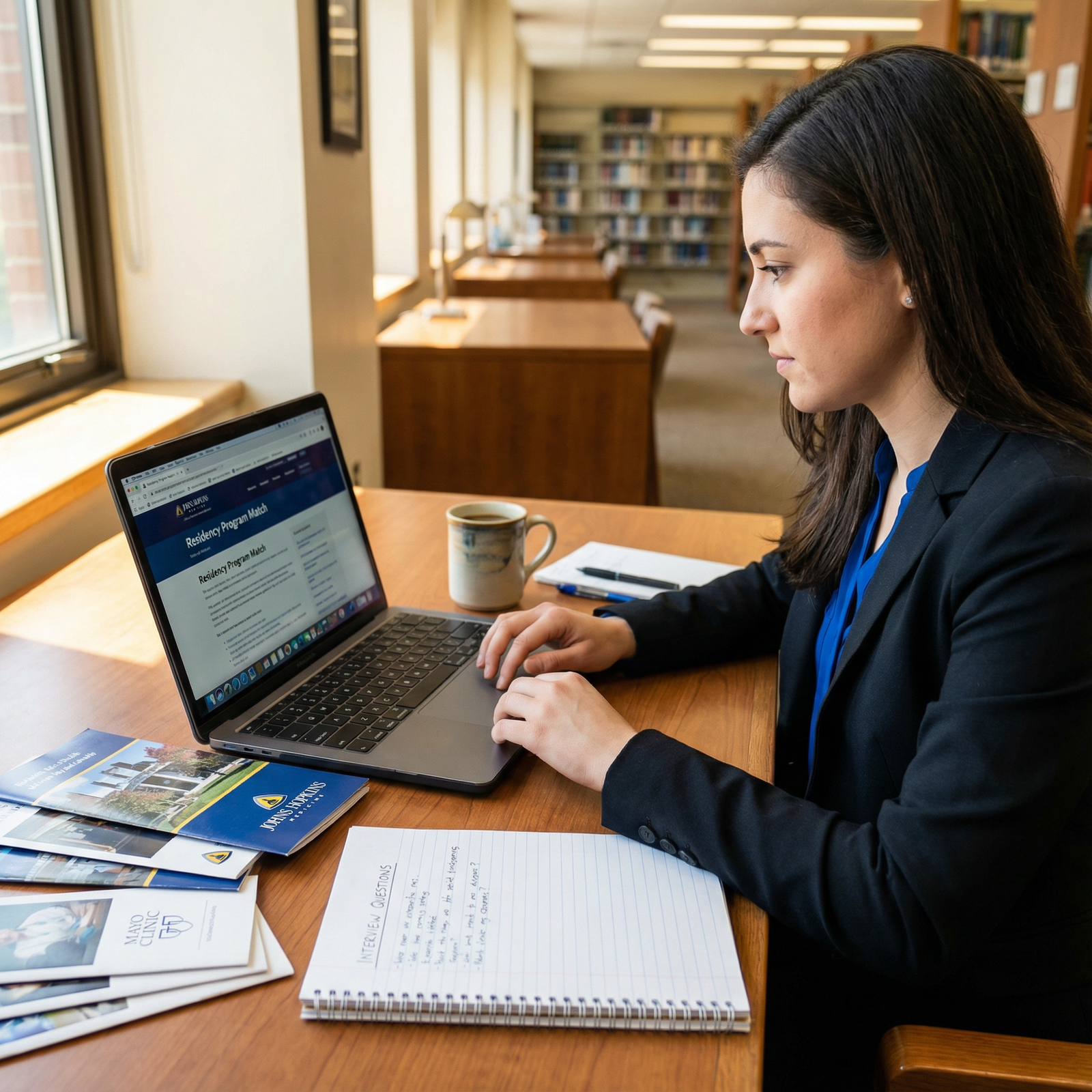
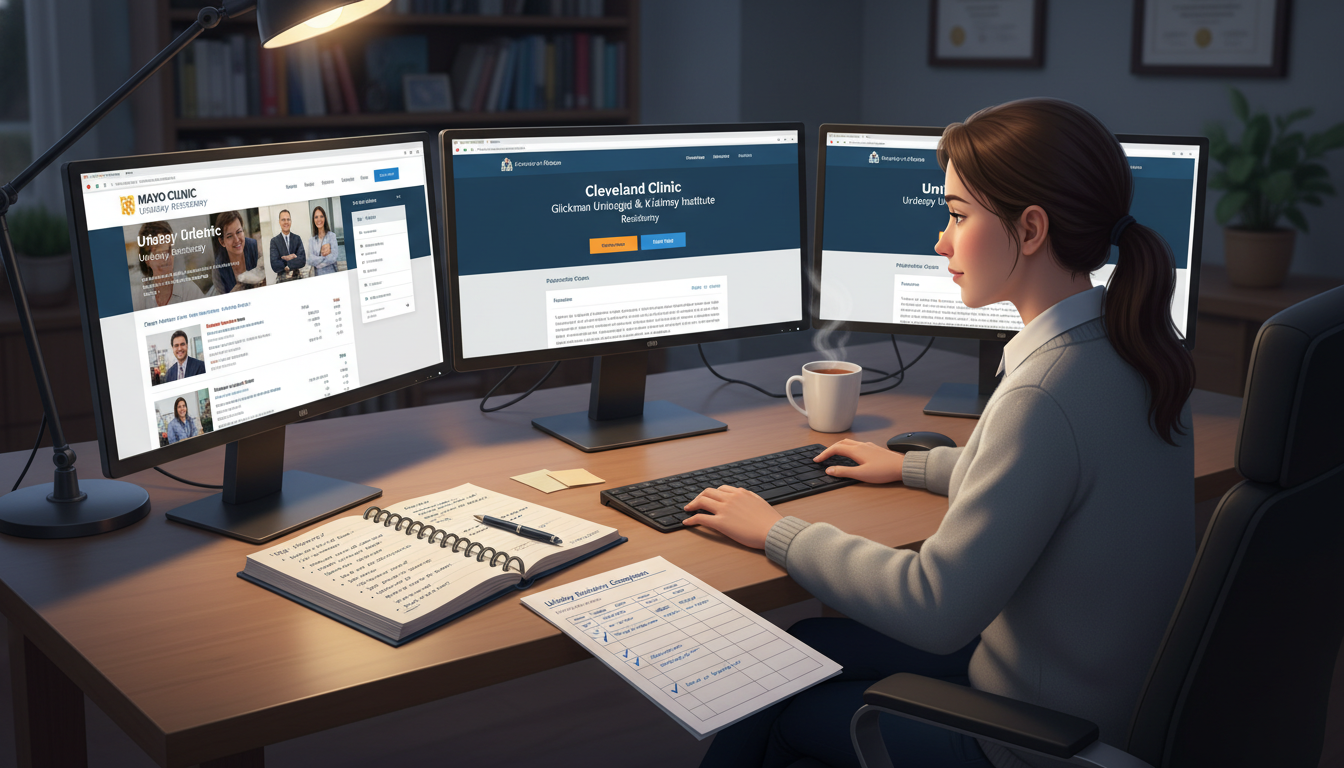
1. Build a Systematic Program Research Template
For each program, create a one-page summary (digital or printed) with:
Program basics
- Location, hospital system, affiliated med school.
- Number of residents per year.
- Call structure and typical rotation schedule (if available).
Clinical strengths
- Known for robotics? Endourology? Reconstruction? Oncology? Peds?
- Large tertiary center vs community-based training.
Academic features
- Research focus areas; access to labs, outcomes research, or public health.
- Recent notable publications from the department.
- Resident presentations at national meetings (AUA, SUO, etc.).
Culture and values
- Mission statement or “about us” section.
- Any specific emphasis on diversity, wellness, community care, or DO inclusion.
Alumni outcomes
- Recent fellowships and where graduates practice (academic vs community).
Program’s history with DOs
- Have they matched DO applicants previously?
- Are any current residents or faculty DOs? This can be a major asset—mention it if relevant.
2. Prepare Program-Specific Answers and Questions
For each interview, be ready to answer:
- “Why this program?”
- Mention 2–3 specific aspects: case volume, operative autonomy, a certain faculty member’s research, resident culture, or geographic ties.
- Tie these to your career goals.
Prepare 3–5 thoughtful questions you can ask each interviewer, such as:
- “How would you describe the operative autonomy of senior residents, particularly on complex oncology or reconstructive cases?”
- “What distinguishes residents who thrive in this program?”
- “How are DO residents integrated into the academic culture here, and have there been any DO graduates going into fellowships?”
- “What recent changes has the program made in response to resident feedback?”
Avoid questions easily answered on the website (rotation list, basic schedule) unless you’re asking for nuance or updates.
Polishing Your Presentation: Communication, Professionalism, and Logistics
What you say matters, but how you say it often determines how interviewers perceive your readiness for residency.
1. Communication Skills and Nonverbal Behavior
Practice these elements deliberately:
Eye contact (or equivalent on video):
- In-person: maintain steady but not intense eye contact.
- Virtual: look into the camera periodically, not just at your own image.
Body language
- Sit upright, shoulders relaxed.
- Nod occasionally to show engagement.
- Avoid fidgeting with pens, jewelry, or your ID badge.
Speech
- Aim for clear, moderate-paced responses.
- Use pauses instead of filler words (“um, like”).
- If English is not your first language, practice complex answers aloud to build fluency and confidence.
Action step:
Record yourself answering 5–6 common questions and watch the playback. Note distracting habits and adjust.
2. Dress and Professional Image
For both in-person and virtual interviews:
- Attire
- Dark suit (navy, charcoal, or black) with conservative shirt or blouse.
- Simple tie or minimal jewelry if worn.
- Clean, well-fitted, and pressed clothing.
- Grooming
- Professional hairstyle, facial hair neatly trimmed if present.
- Minimal or natural-looking makeup if used.
- Accessories
- Avoid flashy jewelry, strong fragrances, or noisy accessories.
As a DO graduate, you may feel pressure to “over-prove” yourself; your goal is to present as calm, confident, and prepared—not overly anxious or formal.
3. Logistics for In-Person and Virtual Interviews
In-person:
- Confirm travel and lodging early, especially for urology interview peaks.
- Plan to arrive the day before, if at all possible.
- Pack:
- Suit, backup shirt/blouse, comfortable but polished shoes.
- Printed copy of your CV and program notes (optional but useful).
- Snacks and water if the day is long.
Virtual:
- Choose a quiet, well-lit space with a neutral background.
- Test your internet connection and platform (Zoom/Webex/etc.)
- Use a laptop or desktop, not a phone.
- Elevate your camera to eye level.
- Log on 10–15 minutes early.
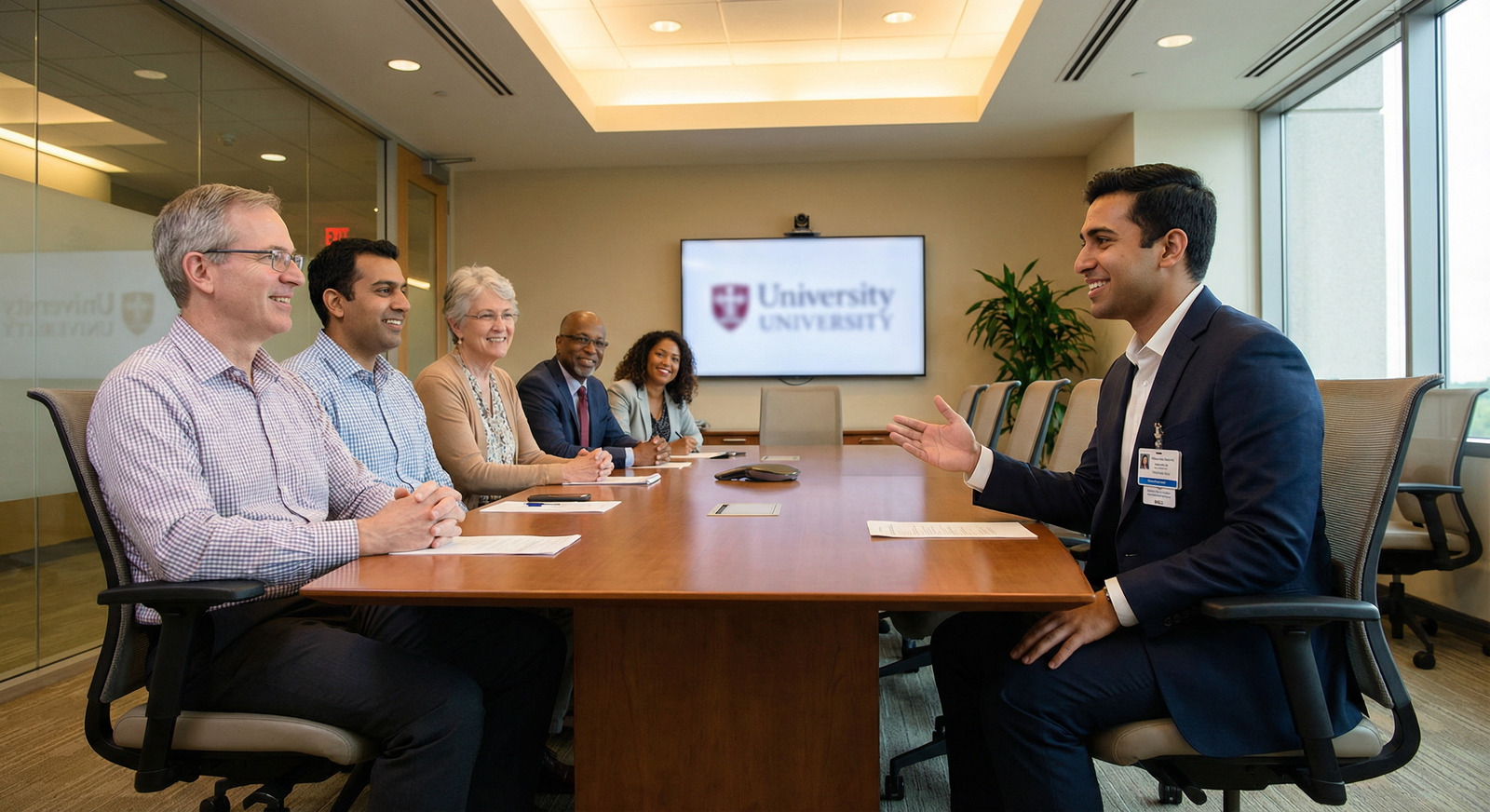
4. Mock Interviews and Feedback
Purposeful residency interview preparation includes live practice:
- Ask a mentor, urology faculty member, chief resident, or your school’s career office to conduct 1–2 mock interviews.
- Specifically request feedback on:
- Clarity of your “Why DO?” and “Why urology?” responses
- Professionalism and confidence
- How well you handle difficult or unexpected questions
If you lack local urology mentors, consider:
- DO-friendly national organizations, alumni networks, or online residency advising groups.
- Pairing with a co-applicant for mock interviews (record via Zoom and critique each other).
Mental Preparation, Mindset, and Post-Interview Strategy
Finally, strong pre-interview preparation includes protecting your mental bandwidth and having a plan for what happens after each interview.
1. Adopting the Right Mindset
Remember:
You are interviewing them as well.
You should be evaluating:- How residents interact with each other.
- Whether faculty show genuine interest in teaching.
- How DO-friendly or inclusive the environment feels.
Confidence without arrogance.
You’ve completed a rigorous DO curriculum and pursued a demanding specialty; own that.
But also show humility and willingness to learn.You don’t have to be perfect.
Interviewers expect some nerves. They care more about authenticity, professional behavior, and your capacity for growth.
2. Handling Difficult or Unexpected Questions
Occasionally, you may face:
- Vague questions (“Tell me something not in your application”).
- Ethical dilemmas.
- Challenging questions about board scores, academic record, or gaps.
Strategies:
- Take a brief pause. It’s fine to say, “That’s a great question; let me think for a moment.”
- Organize your answer into 2–3 clear points.
- Avoid oversharing personal details that feel uncomfortable; stay professional and composed.
3. Post-Interview Debriefing and Notes
Immediately after each interview day:
Write down:
- Your overall impression of the program’s culture.
- Specific positives and concerns.
- Names of key faculty and residents you spoke with.
- Unique features or comments that stood out.
Rate:
- “Would I be happy here?” (1–10)
- “Training quality / case volume perception” (1–10)
- “Fit with my goals as a DO graduate” (1–10)
These notes will be crucial when you create your rank list for the urology match.
4. Thank-You Notes and Follow-Up
Expectations vary by program:
- Some programs explicitly discourage thank-you emails; respect their instructions.
- If not prohibited, brief and professional thank-you notes can reinforce your interest.
Structure:
- Subject line: “Thank you – [Your Name], Urology Interview [Date]”
- 3–5 sentences:
- Express appreciation.
- Mention one specific conversation point.
- Reiterate genuine interest (if true).
Avoid sending “love letters” or statements implying ranking order unless you’re certain of the program’s policy and your own intentions.
Frequently Asked Questions (FAQ)
1. As a DO graduate, do I need USMLE scores for the urology match?
Not all urology programs require USMLE, but many are more comfortable comparing applicants via USMLE. If you have strong USMLE scores, they can significantly help you in such a competitive field. If you only have COMLEX, be prepared to:
- Know your percentile equivalents.
- Emphasize your strengths in other areas (sub-Is, research, letters).
- Highlight programs historically open to DO applicants.
Always follow each program’s stated exam requirements.
2. How can I show I’m serious about urology if my school has limited exposure?
Focus on what you can control:
- Secure at least one away rotation/sub-internship in urology if possible.
- Engage in urology-related research, even if remotely.
- Attend urology grand rounds or conferences (in person or virtual).
- Seek DO urologists or alumni for mentorship, shadowing, and letter support.
In interviews, clearly describe these efforts to demonstrate initiative and genuine interest.
3. What are some red flags in urology residency interviews, and how can I avoid them?
Common red flags include:
- Inconsistent stories about why you chose DO or urology.
- Appearing uninterested in the program (no program-specific questions, generic answers).
- Disparaging comments about other specialties, programs, or colleagues.
- Lack of insight into your weaknesses or mistakes.
Avoid them by:
- Preparing a coherent narrative beforehand.
- Doing thorough program research.
- Practicing professional, respectful language.
- Demonstrating self-awareness and growth.
4. How early should I start residency interview preparation for the urology match?
Because the urology match is early, you should:
- Begin structured residency interview preparation by late summer or early fall of your application year.
- Draft and refine your narratives (“Why DO?”, “Why urology?”, “Why this program?”) before interview invitations arrive.
- Start mock interviews at least 2–4 weeks before your first scheduled interview, then adjust based on feedback.
Starting early lowers stress and improves your ability to adapt to different interview styles.
Preparing for urology residency interviews as a DO graduate is demanding but entirely achievable with deliberate, structured planning. By mastering your narrative, understanding the specialty, tailoring your approach to each program, and presenting yourself with confidence and professionalism, you position yourself as a compelling candidate in the urology match—and as a future colleague that faculty and residents will be excited to train.