
Why Your Questions Matter in the Urology Match
Urology is a small, competitive field where everyone tends to know everyone. How you conduct yourself during interviews—including the questions you ask—can strongly influence how programs remember you and how well you assess your fit.
Thoughtful, specific questions serve three purposes:
- They show maturity and insight. You’re not just trying to match; you’re trying to find a place where you’ll thrive.
- They help you compare programs meaningfully. On paper, many urology residency programs look similar. Your questions reveal the real differences.
- They clarify expectations. Understanding call structure, operative autonomy, and fellowship opportunities helps you make informed rank list decisions.
This guide focuses on what to ask urology residency programs—from program directors and faculty to residents and support staff—so you walk into interviews prepared with smart, targeted questions.
Core Principles for Asking Good Questions
Before diving into specific lists, it’s helpful to understand what makes for effective questions to ask during urology residency interviews.
1. Make Your Questions Specific, Not Generic
Programs get tired of hearing the same vague questions (“What are your strengths?”). Instead:
- Use details from their website, resident bios, or case logs.
- Link questions to your interests (endourology, oncology, reconstructive, etc.).
- Show that you’ve already done basic homework.
Example:
- Weak: “What are the strengths of your urology residency program?”
- Strong: “Your case logs show high volumes in endourology and reconstructive cases. How does resident operative autonomy differ between these two areas as you progress from PGY‑2 to chief year?”
2. Ask Questions You Can’t Answer With a Quick Google Search
Save interview time for deeper questions. If the answer is easily found on their website or in FREIDA, don’t waste the opportunity.
Instead of: “Do your residents rotate at multiple hospitals?”
Try: “How do the different hospital sites differ in surgical volume and resident responsibility, and how is education coordinated across them?”
3. Tailor Questions to the Person You’re Speaking With
Think about what to ask program directors versus what to ask residents or faculty:
- Program Director (PD): Vision, culture, evaluation, resources, future changes.
- Faculty: Training philosophy, operative autonomy, mentorship, subspecialty opportunities.
- Residents: Day‑to‑day life, call burden, team dynamics, wellness, actual vs. advertised experience.
- Coordinator/Staff: Logistics, housing, orientation, scheduling details.
4. Respect the Rules
There are NRMP and AUA rules about questions that might feel coercive or probing for ranking information. Avoid:
- Asking how they’ll rank you.
- Pressuring them to indicate your standing.
- Questions about other candidates.
Keep your questions focused on fit, training quality, and program structure, not on match strategy.

High-Yield Questions to Ask the Program Director
When you meet the PD, your questions should convey that you’re thinking seriously about your training and long‑term trajectory. These are some of the most impactful interview questions for them at the leadership level.
1. Questions About Program Structure and Philosophy
“How would you describe the training philosophy of this urology residency?”
Listen for whether they emphasize autonomy, early OR exposure, graduated responsibility, or research.“What changes have you made in the past 3–5 years based on resident feedback?”
This reveals responsiveness to residents and willingness to evolve.“What upcoming changes do you anticipate in the program (expanding residents, new faculty, new sites, call restructuring)?”
Helps you understand what the program might look like when you’re a chief, not just as an intern.
2. Questions About Operative Experience and Autonomy
For urology, surgical volume and independence are central:
“How do you ensure progressive operative autonomy from junior to chief years?”
Ask for specific examples: “Can you share what a typical chief‑level case day looks like?”“Are there specific rotations or sites where chief residents function nearly at the level of junior attendings?”
You’re probing for real preparation for independent practice.“If a resident is particularly interested in a certain subspecialty (e.g., endourology, urologic oncology, FPMRS, pediatrics), how flexible is the program in tailoring elective time or case exposure?”
3. Questions About Evaluation, Feedback, and Support
“How are residents evaluated, and how often do they receive formal feedback?”
Ask whether feedback is mainly summative (end of rotation) or also formative (ongoing case‑based).“What support systems are in place for residents who may struggle—academically, clinically, or personally?”
Professionalism and patient safety matter; you want a program that supports remediation constructively.“How do you monitor for resident fatigue and burnout, and what changes have you made to address it?”
This shows you care about sustainability and wellness.
4. Questions About Career Outcomes and Networking
“What have your graduates done in the last 5–10 years in terms of fellowships and practice types?”
Ask them to break down academic vs. private practice vs. hybrid; fellowship vs. direct practice.“How does the program help residents network within the urology community, especially for those seeking competitive fellowships?”
Look for mention of AUA participation, national conference support, introductions to leaders in the field.“For residents who are unsure early on, how do you help them explore different career paths within urology?”
5. Questions About Fit and Culture
“What kind of resident tends to thrive here? What qualities are you looking for beyond board scores and grades?”
Helpful to assess whether your style matches their expectations.“If there’s one thing you hope residents say about this program after finishing, what would that be?”
You’ll learn what they truly value.
Smart, Honest Questions to Ask Residents
Residents are your most reliable source of information about what life is really like in a urology residency. Plan these questions to ask residency house staff thoughtfully.
1. Questions About Day‑to‑Day Life and Workload
“Can you walk me through a typical day for a PGY‑2 and for a chief resident in this program?”
Ask specifically about:- Pre‑rounding expectations
- Timing of rounds
- OR vs. clinic balance
- Note writing and admin burden
“How does call work here—for junior and senior residents?”
Clarify:- In‑house vs. home call
- Frequency of weekend call
- Backup systems and cross‑coverage
“On average, how many hours per week do you work? Does that fluctuate significantly by rotation?”
Compare across programs using your own notes later.
2. Questions About Operative Exposure and Autonomy (Resident Perspective)
“When did you first feel you were truly ‘operating’ rather than just retracting or closing?”
Look for honest stories, not just “we get early autonomy.”“Are there any areas of urology where you feel over‑ or under‑exposed in terms of case volume?”
This can highlight gaps: e.g., robotics, peds, reconstruction, FPMRS.“How do attendings generally approach teaching in the OR? Do they let you struggle a bit or tend to take over?”
Programs vary dramatically in style, and this may be more important than raw case numbers.
3. Questions About Culture, Morale, and Support
“What are the strongest aspects of this program from a resident’s perspective? What would you change if you could?”
The “change” part often reveals more than the “strengths.”“How would you describe the relationship between residents and faculty? Between juniors and seniors?”
Look for descriptions of trust, mentorship, and psychological safety.“Have there been any residents who left the program or switched specialties? What were the circumstances?”
Programs with a good culture can still have attrition, but how it’s handled tells you a lot.“Do residents socialize outside of work? How integrated are residents’ partners/families in the community?”
Helpful if you’re moving to a new city or have a family.
4. Questions About Education and Research
“How well protected are your didactic and simulation sessions? Do you actually get to attend regularly?”
Ask if it’s common to be pulled away for floor work or cases.“What is the expectation for research productivity here, and how supported do you feel—statistical support, mentorship, time?”
Especially important if you’re considering academics or a competitive fellowship.“Do residents have dedicated research time? If so, how is it used in practice?”
“Dedicated” time that gets filled with service work is a red flag.
5. Questions About Life Outside the Hospital
- “How livable is your salary in this city, especially in terms of housing?”
- “What do you and your co‑residents do for fun when you’re not working?”
- “If you had to choose again, would you pick this urology residency program?”
The hesitation or enthusiasm in their answer is very telling.
Targeted Questions for Faculty and Subspecialists
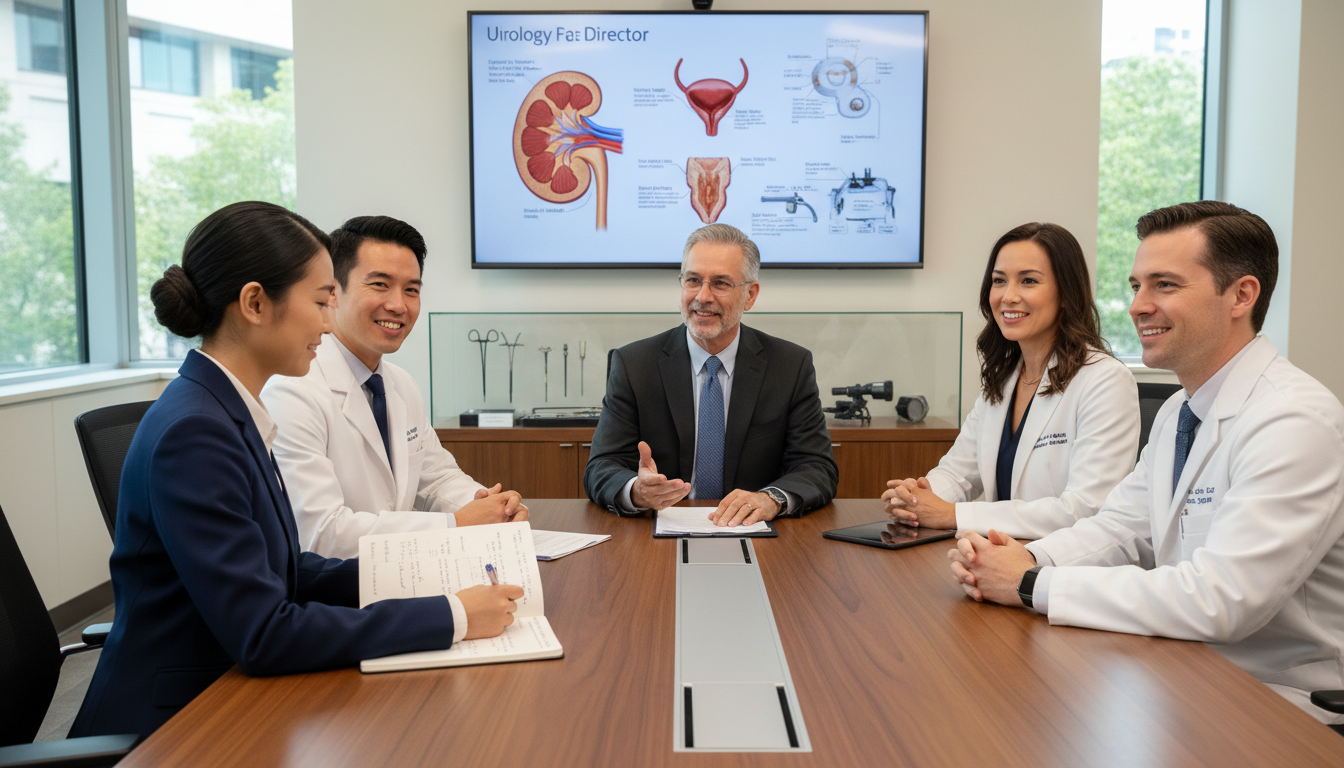
In urology, subspecialty training and mentorship are critical. When you meet individual faculty or small panels, your interview questions for them can be more tailored.
1. Questions About Subspecialty Training
Match your questions to the faculty member’s focus (e.g., oncology, endourology, reconstruction, FPMRS, pediatrics):
- “How are residents integrated into your subspecialty cases, especially complex ones?”
- “For residents strongly interested in your subspecialty, what opportunities exist for additional exposure or continuity (longitudinal clinics, research projects, elective time)?”
- “Where have residents gone for fellowship training in your area over the past few years?”
Strong subspecialty programs are usually proud of their fellowship match lists.
2. Questions About Mentorship and Professional Development
- “How do mentorship relationships typically form here? Is there a formal system in addition to informal pairing?”
- “How do you help residents build a professional identity—including teaching, research, and leadership—beyond just surgical skills?”
- “What opportunities exist for residents to take on teaching roles with medical students and junior residents?”
3. Questions About Program Direction and Innovation
“Where do you see the field of urology going in the next decade, and how is this program adapting to that?”
“Are there any unique technologies or techniques (robotics platforms, lasers, imaging) that residents get particularly strong exposure to here?”
Ask specifics: dual consoles? novel endoscopic equipment? advanced laparoscopy?“How do you incorporate quality improvement and outcomes data into resident education?”
Look for evidence‑based practice and data literacy.
Strategic, Honest Questions to Guide Your Rank List
Beyond individual conversations, think of your questions as tools to evaluate fit across your entire interview season. Here’s how to be intentional.
1. Clarify What Matters Most to You
Before interviews start, list your top 5–7 priorities in a urology residency:
- Surgical volume and autonomy
- Fellowship opportunities vs. readiness for general practice
- Geographic location, proximity to support system
- Program culture and resident happiness
- Research expectations and resources
- Call burden and work‑life balance
- Diversity and inclusiveness
Then build your question list to probe these areas at every program.
Example priorities and matching questions:
Priority: Operative autonomy
- “Can you describe a recent case where a senior resident functioned with near‑independent autonomy?”
Priority: Fellowship match
- “How involved are faculty in advocating for residents during the fellowship application process?”
Priority: Wellness and sustainability
- “When residents are struggling or overwhelmed, what actually happens? Can you share an example (de‑identified) of how that was handled?”
2. Use the Same Core Questions Across Programs
To compare programs, ask a consistent set of baseline questions at each site, in addition to program‑specific ones. For example, you might standardize:
- “What aspect of this program are you most proud of?”
- “If there’s one thing you would change, what would it be?”
- “How do residents’ responsibilities evolve from PGY‑2 to chief year?”
- “How would you describe the culture here in 3 words?”
Document answers right after each interview day while your impressions are fresh.
3. Avoid Pitfalls in Your Questions
Some common mistakes in the urology match:
Sounding entitled or transactional.
Avoid questions that imply “what can you do for me?” without showing what you bring to the table.Focusing excessively on vacation, moonlighting, or time off.
These are important, but if that’s all you ask about, it can send the wrong message. Fold them into broader questions about wellness.Asking questions clearly answered in the brochure or website.
Skim all provided materials before the interview day.Over‑sharing personal ranking strategy.
You don’t need to (and shouldn’t) promise to rank a program #1 or ask how they will rank you.
Practical Tips: Building and Using Your Question List
1. Create a “Question Bank” Before Interview Season
Maintain a document with sections:
- For PDs
- For residents
- For faculty/subspecialists
- Program‑specific notes and questions
Color‑code or star your must‑ask questions vs. optional ones, since time is often limited.
2. Adapt in Real Time
If a question has already been answered in a group session or earlier conversation, skip it. It’s fine to say:
- “You mentioned earlier that call is home call for seniors. Could I ask a little more about how often you’re actually called in and how that impacts your next day’s schedule?”
This shows you’re listening carefully, not just reading a script.
3. Balance Depth and Brevity
Keep questions focused and open‑ended, but not so broad that they invite 15‑minute monologues. If someone gives a long answer and time is tight, it’s okay to say:
- “That’s very helpful, thank you. In the interest of time, I’ll ask just one more quick question…”
4. Write Down Impressions Immediately After
After each interview day, jot down:
- Key pros and cons
- Representative quotes from residents or the PD
- Your “gut feeling” in a few sentences
- Any red flags raised by their answers (e.g., chronic understaffing, frequent resident departures, lack of transparency)
These notes will be invaluable when building your rank list weeks later.
FAQs: Questions to Ask Programs in Urology
1. How many questions should I ask in a typical urology residency interview?
Plan to ask 2–4 focused questions in each individual interview, depending on length. In a 20–30 minute session with the program director, 3–5 well‑chosen questions are reasonable. You’ll also have chances in resident panels, faculty interviews, and informal sessions. Quality matters more than quantity.
2. Is it okay to ask about fellowship match rates and board pass rates?
Yes—these are appropriate and important questions. You might phrase them as:
- “How have your graduates done on the ABU written and oral boards in recent years?”
- “Could you share examples of recent fellowship matches from this program?”
You’re not asking for confidential data, just patterns and outcomes. Programs that are proud of their track record usually share this openly.
3. Can I ask about moonlighting, salary, and benefits without looking bad?
You can, but frame these questions within the context of wellness and sustainability:
- “How does the program approach wellness and financial realities for residents, including salary, benefits, and any moonlighting opportunities?”
Save purely logistical questions for the coordinator or for follow‑up emails if possible, and avoid making these your first or only questions.
4. What if I feel like all my questions have already been answered during the day?
It happens, especially at well‑organized interview days. In that case, you can:
Ask for clarification or deeper detail on something mentioned earlier:
- “You mentioned that residents have early exposure to robotics. Could you walk me through how that looks for a PGY‑2 vs. PGY‑4?”
Ask a reflective or opinion‑based question:
- “From your perspective as PD/faculty/resident, what do you think applicants often misunderstand about this program?”
It’s perfectly acceptable to say, “You’ve done a great job covering most of my prepared questions; I’d love to hear your thoughts on X…”
Thoughtful, well‑researched questions are one of the most powerful tools you have during the urology match. They help you learn what you need to know about each urology residency, demonstrate genuine interest, and ultimately build a rank list that aligns with your goals, values, and future career in this unique and rewarding specialty.