Understanding the Dermatology Residency Landscape as a US Citizen IMG
Dermatology is among the most competitive specialties in the United States, and being a US citizen IMG (American studying abroad) adds unique challenges and opportunities. Before you even think about what to say on interview day, it helps to understand the environment you’re stepping into.
Why dermatology is so competitive:
- Limited number of residency positions nationwide
- Very strong applicant pool (high Step scores, AOA, extensive research)
- High lifestyle satisfaction and strong earning potential
- Increasing emphasis on research productivity and letters from well-known dermatologists
As a US citizen IMG, you are evaluated differently than non‑US IMGs, but you still face some of the same hurdles:
- Program directors may be less familiar with your international school’s grading and clinical standards.
- Some dermatology programs do not routinely interview IMGs at all.
- Your application must demonstrate not just that you meet the bar, but that you clearly exceed it in key areas (academic metrics, research, clinical exposure in the U.S., and professionalism).
The key message: Your pre-interview preparation must compensate for any perceived disadvantages and highlight your unique strengths. The more intentional you are before interview season, the more likely you’ll be to secure and convert interviews into a derm match.
Step 1: Strategic Preparation Before Interview Invitations Arrive
You should start preparing for dermatology residency interviews months before the first invite hits your inbox. Pre‑interview preparation is not only about practicing answers; it’s about building a strong, confident narrative of who you are as an American studying abroad.
Clarify Your Personal and Professional Narrative
Before you can answer “Tell me about yourself,” you must know your story:
Your identity as a US citizen IMG
- Why did you choose to attend medical school abroad?
- What did you gain from this experience (resilience, adaptability, cultural competence, independence)?
- How did you maintain connection to US healthcare (electives, observerships, research, mentors)?
Your motivation for dermatology
Programs want to see more than “I like skin and procedures.” Reflect on:- Specific clinical encounters that sparked your interest in dermatology
- Experiences with chronic skin disease, complex medical dermatology, or underserved populations
- The balance of medicine, surgery, continuity of care, pathology, and aesthetics that appeals to you
- How your background as an IMG enriches your perspective on skin disease (e.g., global dermatology, diverse skin types, limited-resource settings)
Long-term goals
- Academic vs. private practice vs. hybrid
- Interest in subspecialties: pediatric derm, dermatopathology, procedural/cosmetic, complex medical derm
- Plans for research, leadership, health equity, or global dermatology
Write out a one-page “personal narrative brief” summarizing these themes. This will serve as the foundation for nearly every interview answer.
Review Your Application Like a Program Director
Print a copy of your ERAS application, CV, and personal statement and read them as if you are the interviewer.
Highlight:
- Research experiences (especially dermatology-focused)
- US clinical experiences, away rotations, and sub-internships
- Leadership and teaching roles
- Service to communities and patient advocacy
- Any gaps, red flags, or unusual transitions (leave of absence, Step failures, transfer between schools)
For each item, be ready to explain:
- What you did
- What you learned
- How it shaped your path to dermatology
If there are potential red flags (e.g., a low Step score, a repeat year, visa or licensing delays abroad), prepare a brief, honest, non-defensive explanation, followed immediately by what you learned and how you improved.
Build a Derm-Specific Knowledge Base
Pre-interview preparation for dermatology should include clinical and specialty familiarity, not just generic professionalism.
You should be comfortable discussing:
- Common derm conditions: acne, psoriasis, atopic dermatitis, rosacea, skin cancers
- Global dermatology and skin of color (an area where US citizen IMGs can often shine)
- Dermatologic anatomy and basics of dermpath (very high-level)
- Principles of skin biopsies, cryotherapy, basic procedures
- Chronic disease management and patient counseling
You do not need board-level detail, but you should sound like someone who has genuinely spent time in dermatology clinics, read about the field, and thought critically about patient care.
Resources to review:
- A concise dermatology handbook (e.g., Bolognia’s “Dermatology Essentials” or similar)
- A few high-yield review articles from journals like JAMA Dermatology or JAAD
- Notes from your derm electives, away rotations, or observerships

Step 2: Mastering Residency Interview Preparation Fundamentals
Many applicants underestimate how structured and deliberate residency interview preparation must be, especially in a competitive field like dermatology. As a US citizen IMG, you want to leave no doubt about your professionalism, communication skills, and readiness.
Build a Bank of Core Interview Questions (and Evidence-Based Answers)
You will repeatedly encounter certain interview questions residency programs almost always ask. Create a document and script out bullet-point answers for:
Personal and background questions
- “Tell me about yourself.”
- “Walk me through your journey from college to medical school abroad to applying in dermatology.”
- “Why did you choose to attend medical school outside the US?”
- “What has been the greatest challenge of being an American studying abroad, and what did you learn from it?”
Dermatology-specific questions
- “Why dermatology?”
- “What aspects of dermatology are you most interested in?”
- “Tell me about a meaningful dermatology patient encounter.”
- “How do you see the field of dermatology changing over the next 10 years?”
Behavioral and situational questions
- “Tell me about a time you had a conflict with a team member. How did you handle it?”
- “Describe a time you made a mistake in clinical care and what you did next.”
- “Give an example of how you handled a difficult or non-adherent patient.”
Academic and professionalism questions
- “Explain this gap or lower grade/board score in your application.”
- “What would your attendings say are your greatest strengths? Weaknesses?”
- “How do you handle stress and prevent burnout?”
Fit and career goals
- “Why this program specifically?”
- “What are you looking for in a dermatology residency?”
- “Where do you see yourself in 5–10 years?”
For each, build answers with the STAR method (Situation, Task, Action, Result), and tie them back to:
- Your growth as a clinician
- Your resilience as a US citizen IMG
- Your commitment to dermatology and patient care
- Your readiness to contribute to that specific program
Practice Aloud, Not Just in Your Head
Residency interview preparation must include spoken practice:
Record yourself answering 5–6 common questions.
- Watch the recordings to assess pace, clarity, filler words, and body language.
- Note if you sound memorized or natural. Aim for structured but conversational.
Mock interviews with dermatology or IM mentors
- If you did US rotations, ask attendings or residents to run a 30-minute mock session.
- Specifically request feedback on: clarity, confidence, professionalism, and any IMG-related biases they might perceive.
Peer practice with other applicants
- Even if they’re not derm applicants, practicing with others helps reduce anxiety.
- Swap roles of interviewer and interviewee and use a list of derm-focused questions.
Actionable tip: Create a 15–20 question interview bank, and ensure you’ve practiced each one out loud at least 3–4 times before interview season.
Prepare to Address the US Citizen IMG Question Directly
Programs may be curious about why an American studied abroad. Decide ahead of time how you’ll address this without sounding defensive.
A strong framework:
- Brief reason: “I chose to attend medical school in [Country] because…” (e.g., unique opportunities, personal/family reasons, earlier acceptance vs. re-applying, exposure to global health).
- Value gained: “This experience allowed me to develop…” (adaptability, cultural humility, broad clinical exposure, experience with skin of color, resource-limited environments).
- Connection to US training: “I maintained my connection to US medicine by…” (US rotations, research, conferences, mentorship, Step scores, USMLE performance).
- Forward focus: “Now I feel strongly positioned to bring this global perspective back to a US dermatology program where I can…”
Your goal is to turn a potential concern into a distinct advantage.
Step 3: Program Research and Tailored Preparation
One of the most overlooked aspects of how to prepare for interviews is specific program research. For a derm match, generic answers are not enough; programs can tell who has done their homework.
Create a Program Research Spreadsheet
For each program where you have applied (and especially for each one that invites you), track:
- Program name and location
- Size of program and number of residents per year
- Notable faculty interests (e.g., psoriasis, skin cancer, pediatric derm, global health, health equity, dermpath)
- Strengths: research, procedural volume, complex medical derm, multidisciplinary clinics
- Any residents or faculty you’ve met at conferences or on rotations
- Unique features: free clinics, community outreach, skin of color clinics, global dermatology electives
Use sources such as:
- Program websites
- Recent publications from program faculty (PubMed, Google Scholar)
- Social media accounts (many derm departments are active on Twitter/X, Instagram)
- Virtual open houses, webinars, or info sessions
Prepare Tailored “Why This Program?” Answers
For every program you are likely to interview at, you should be able to answer:
- Why do you want to train here, specifically?
- How do your interests align with this program’s strengths?
- What could you contribute to the program?
Build 3–4 bullet points per program, such as:
- “I’m drawn to your strong focus on complex medical dermatology and multidisciplinary clinics, especially your collaboration with rheumatology.”
- “Your resident-run free clinic aligns with my experience working in under-resourced settings abroad and my interest in health equity.”
- “Dr. X’s work in psoriasis and biologics overlaps with my research on systemic therapy outcomes during my elective at [US institution].”
When you answer “Why this program?”, weave in your identity as a US citizen IMG only if it naturally fits (e.g., global perspective, language skills, experience with diverse skin types).
Develop Thoughtful Questions to Ask Programs
Interviewers consistently mention that questions at the end of an interview separate well-prepared candidates from minimally prepared ones.
Avoid superficial questions easily answered by the website. Instead, ask targeted, derm-specific questions such as:
- “How does your program expose residents to skin of color and diverse patient populations?”
- “What opportunities exist for residents to become involved in community outreach or global dermatology?”
- “How is resident mentorship structured, particularly for those interested in academic careers or subspecialty fellowships?”
- “How have residents historically balanced research with their clinical responsibilities?”
As a US citizen IMG, you might also (tactfully) inquire about:
- “How does the program support residents transitioning from international medical schools, if any have trained here?”
- “What systems are in place to help incoming residents adapt to the EMR and hospital systems?”

Step 4: Logistics, Professionalism, and Virtual/On-Site Readiness
In a competitive field like dermatology, small professionalism details can influence perceptions. Thoughtful pre-interview preparation means being flawless on logistics.
Organize Your Interview Season
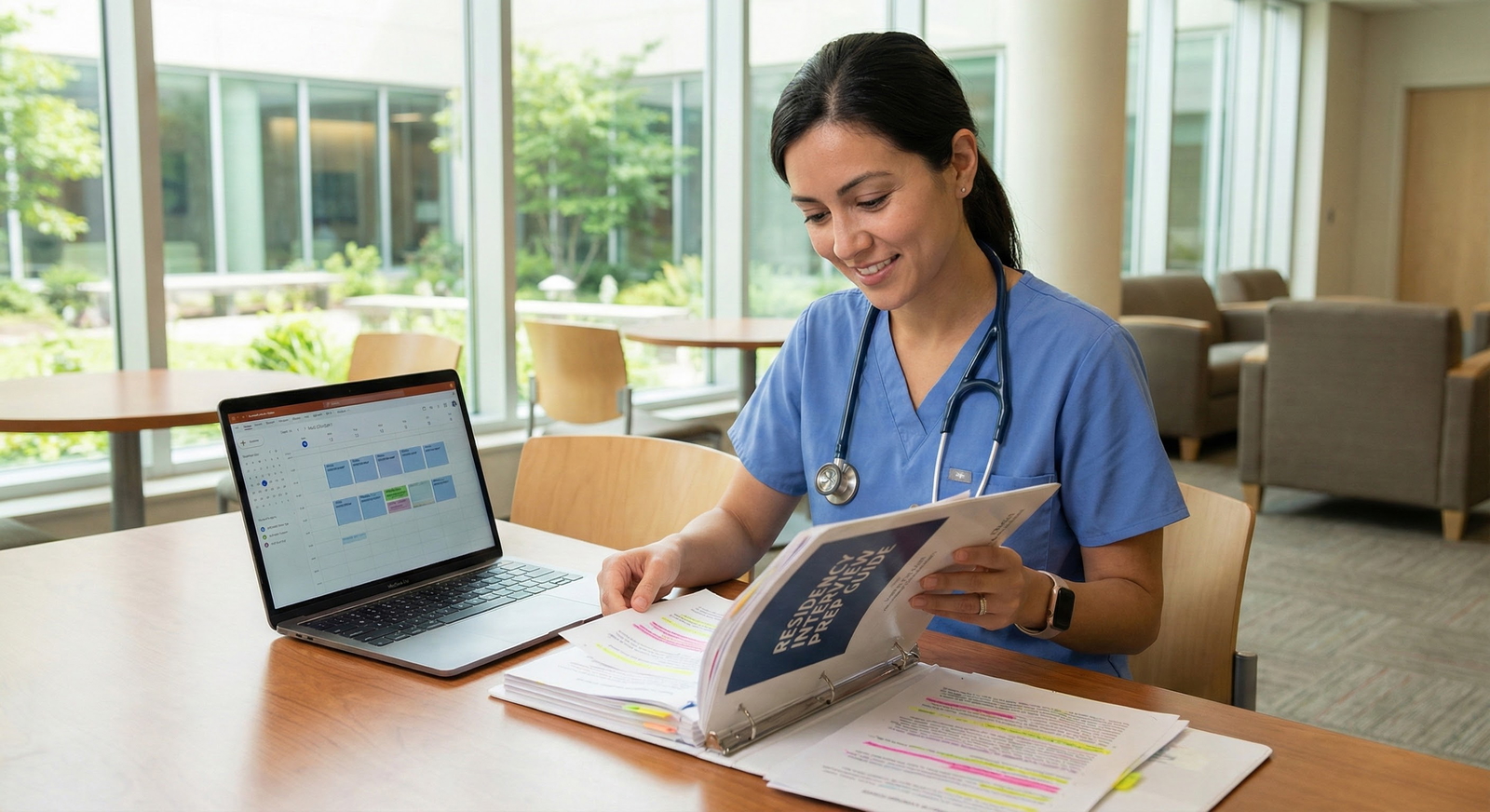
- Create a master calendar of all interview dates, time zones, and formats (virtual vs. in-person).
- Double-check time zones, especially if you are still abroad or traveling.
- Set reminders 24 hours and 1 hour before each interview.
- Keep a separate folder (digital or physical) for each program with:
- Program research
- Names and titles of interviewers (if provided)
- Questions you plan to ask
- Important program-specific notes
Prepare Professionally for Virtual Interviews
Many dermatology programs still use virtual formats for at least part of the process.
Checklist:
- Equipment: Test your camera, microphone, and internet connection 1–2 days before. Have a backup device if possible.
- Environment: Quiet, neutral background, good lighting (face illuminated, no backlighting).
- Dress: Professional business attire—same standard as in-person.
- Body language: Sit upright, look into the camera, nod naturally, avoid fidgeting.
Actionable tip: Join the virtual platform 15–20 minutes early to troubleshoot any issues and reduce anxiety.
Prepare for In-Person Interviews (if offered)
If in-person interviews are an option:
- Confirm travel arrangements early (flights, hotel, local transportation).
- Plan to arrive the day before to avoid delays or fatigue.
- Bring:
- Printed copies of your CV and ERAS application
- A small notebook and pen
- A professional folder or padfolio
- Wear comfortable but professional shoes—interview days can involve walking tours.
Regardless of format, your goal is to project maturity, reliability, and respect for the process—qualities particularly important for applicants facing stereotypes about international training.
Step 5: Psychological Preparation, Confidence, and Post-Interview Strategy
Pre-interview preparation is not only about content and logistics; it’s also about your mindset.
Build Confidence as a US Citizen IMG
Imposter syndrome is extremely common among Americans studying abroad, especially in hyper-competitive fields like dermatology. To manage this:
Write down 3–5 concrete strengths you bring:
- Strong USMLE performance or improvements over time
- Documented research, publications, or presentations in derm
- Experiences with diverse skin types and global health
- Fluency in another language or cultural competencies
- Resilience demonstrated by adapting to a foreign medical system
Rehearse positive self-statements before interviews:
- “I have worked hard to be here, and I belong in these spaces.”
- “My unique path adds value, not just risk.”
- “I am here to learn whether this program is a good fit for me as much as they are evaluating me.”
Your goal is not arrogance, but grounded confidence based on preparation and self-awareness.
Plan for the End of Each Interview
Before interviews begin, decide:
How you will thank interviewers:
- A brief, individualized email within 24–48 hours is typically sufficient.
- Reference something specific from your conversation to make it genuine.
How you will document impressions:
- After each interview, write notes on:
- Program culture
- Faculty and resident interactions
- Clinical exposure and research alignment
- How well you felt you “fit”
- These notes will be invaluable for your rank list and to avoid blending programs together.
- After each interview, write notes on:
Aligning Pre-Interview Preparation with Your Derm Match Strategy
Finally, your pre-interview workflow should connect to your overall derm match plan:
- Aim to demonstrate consistency: the same focused, thoughtful, derm-specific passion in your application, your interactions, and your interviews.
- Use pre-interview time to:
- Strengthen ongoing derm research projects
- Maintain relationships with US-based mentors (they may advocate for you)
- Attend derm conferences (even virtual) where programs or faculty you’ll interview with are present
The more you show up as a mature, prepared, and engaged future dermatologist, the more likely you’ll stand out in a crowded field.
FAQs: Pre-Interview Preparation for US Citizen IMGs in Dermatology
1. As a US citizen IMG, how early should I start residency interview preparation for dermatology?
Ideally, you should begin structured preparation 3–6 months before interviews. That means clarifying your narrative, reviewing your ERAS application, creating a core question bank, and starting mock interviews in late summer or early fall. Because dermatology is so competitive, you want to walk into your first interview already polished—not using early interviews as “practice.”
2. How can I address concerns about being an American studying abroad during interviews?
Be proactive but concise. Explain briefly why you chose to study abroad, emphasize the strengths you gained (resilience, adaptability, global perspective, experience with diverse skin types), and highlight how you remained connected to US medicine (US rotations, research, mentorship). Always pivot toward what you bring to a US dermatology residency now, rather than dwelling on perceived deficits.
3. What are some dermatology-specific topics I should review before interviews?
You should be comfortable discussing:
- Common conditions (acne, psoriasis, atopic dermatitis, skin cancers, infections)
- Chronic disease management and patient education
- Skin of color and global dermatology considerations
- Your own dermatology rotations, cases, and research
You don’t need to sound like a board-certified dermatologist, but you should clearly appear to have significant, genuine exposure to the specialty.
4. How many mock interviews should I do to feel prepared?
Aim for at least 3–5 formal mock interviews:
- 1–2 with mentors or attendings (ideally including someone in dermatology or another competitive specialty)
- 2–3 with peers or residents
- Additional self-recorded sessions answering common questions
The goal is to reduce anxiety, refine your responses, and ensure your story as a US citizen IMG pursuing dermatology comes across confidently and consistently across all interviews.
By approaching pre-interview preparation strategically—combining self-reflection, derm-specific knowledge, structured practice, and professional logistics—you can significantly increase your chances of a successful dermatology residency match as a US citizen IMG.