
Why Your Questions Matter as a US Citizen IMG in Interventional Radiology
As a US citizen IMG (American studying abroad), the questions you ask during interventional radiology (IR) residency interviews can significantly influence how programs see you—and how you evaluate them. In a competitive field like IR, especially for an American studying abroad, you are being evaluated not only on your CV, but on your insight into the specialty and your understanding of what makes a strong training environment.
Thoughtful, specific questions to ask residency programs accomplish several goals:
- Show genuine interest in interventional radiology residency, not just “any” position
- Demonstrate that you’ve done your homework on the IR match, including the integrated and independent pathways
- Allow you to assess how well the program supports US citizen IMG trainees
- Help you compare programs when making your rank list
- Give you a sense of culture, expectations, and support systems
This guide breaks down high-yield interview questions for them—program directors, faculty, and residents—tailored specifically to US citizen IMGs aiming for IR. You don’t need to ask all of these; instead, use them as a menu to build your own targeted list.
Core Strategy: How to Use Questions Effectively
Before we dive into topic-specific lists, it’s important to understand the strategy behind what to ask.
Principles for High-Impact Questions
Be specific, not generic
“What is your program like?” is far less effective than:- “How do you balance autonomy and supervision for IR residents during complex endovascular cases?”
Show that you’ve done your research
Reference what you saw on their website, in their case logs, or in the interview day presentation:- “I noticed your program emphasizes PAD and oncology interventions. How much exposure would a trainee have to neurointerventional or trauma work?”
Align questions with your profile as a US citizen IMG
Without apologizing for being an IMG, show awareness of potential concerns and ask how they support trainees from diverse medical school backgrounds:- “What support do you offer residents who are navigating differences between their prior training environment abroad and the US system?”
Match the question to the right person
- Program Director (PD): curriculum, philosophy, selection criteria, long-term outcomes
- IR Faculty: case mix, teaching style, research, advanced procedures
- Residents/Fellows: culture, workload, how policies feel in real life
Limit questions per interviewer Aim for 2–4 strong questions during each interview slot. Have a longer list prepared, but prioritize based on what hasn’t been covered yet.
Avoid questions with answers easily found online If it’s clearly on their website (e.g., number of positions), don’t ask it unless you’re probing deeper.

Questions for Program Directors: Curriculum, Philosophy, and the IR Pathway
As a US citizen IMG, you want to understand not just what the program does, but how it thinks. These are questions to ask the program director that reveal their philosophy, expectations, and support for someone with your background.
A. Understanding the IR Training Path and Structure
1. Training Pathway and Integration with DR
- “Can you walk me through how the integrated interventional radiology residency is structured here from PGY‑2 through PGY‑6, particularly how the DR and IR components are blended?”
- “How do you decide which rotations are essential for building a strong clinical foundation in IR (e.g., ICU, vascular surgery, hepatology, oncology)?”
- “How much elective time is available, and are there opportunities to tailor that time toward my specific IR interests—such as IO, PAD, or venous interventions?”
Why this matters for US citizen IMGs:
Shows that you understand modern IR as a clinical specialty, not just procedures, and that you are thinking longitudinally about your training.
B. Autonomy, Supervision, and Case Complexity
2. Balancing Teaching and Independence
- “How do you structure progression of autonomy in IR cases—from observing to performing complex procedures as primary operator?”
- “By the time residents graduate, what types of procedures are they routinely comfortable performing independently?”
- “Are there particular high-complexity cases (TIPS, Y-90, EVAR, advanced venous recanalizations) that you prioritize for senior residents?”
3. Case Volume and Diversity
- “What does a typical week of cases look like for an IR resident at different levels of training?”
- “Are there any major gaps in case mix (e.g., limited neuro IR or pediatric IR), and how do you compensate for those in training?”
- “How do you ensure that residents meet or exceed ACGME IR case requirements?”
C. Support for US Citizen IMGs and Nontraditional Backgrounds
4. IMG-Specific Support and Integration
As a US citizen IMG, you want to ask directly—but professionally—about how they approach applicants like you.
- “Have you trained US citizen IMG residents in your program, particularly in IR? If so, what qualities helped them succeed here?”
- “What support systems are in place for residents who may have completed medical school abroad and are adapting to the US clinical environment?”
- “Are there any additional resources or mentorship available for IMGs who may initially feel less familiar with US-based EMR systems, documentation standards, or clinical workflows?”
5. Selection Philosophy for IR Applicants
- “When you think about successful graduates from your program, what characteristics or experiences did they have when they started—beyond scores and publications?”
- “For someone who is an American studying abroad, what aspects of my application or background would you consider most important in assessing my fit here?”
- “Are there any specific gaps you commonly see in IMG training that you actively help residents address early in residency?”
These questions show self-awareness and invite the PD to openly address how their program supports residents with international training experiences.
D. Outcomes, Jobs, and Fellowships
6. Fellowship and Job Placement
Even though IR residency is terminal training, graduates often pursue niche fellowships or specific practice types.
- “Where have your IR graduates gone in recent years—both geographically and in terms of practice type (academic vs. private practice vs. hybrid)?”
- “If a resident is interested in highly specialized training (e.g., neurointerventional, advanced venous, complex aortic work), how do you support them in obtaining those fellowships?”
- “Do most graduates work in positions that align with what they envisioned when they started here?”
7. Preparation for the Boards
- “How does your program help residents prepare for the IR/DR boards and the oral examination?”
- “Are there dedicated board review sessions or protected didactic time? How successful have your graduates been on their first attempt?”
These outcome-centered questions signal that you are thinking far beyond the match.
Questions for IR Faculty: Case Mix, Teaching, and Research
Faculty interviews are a prime opportunity to ask interview questions for them that reveal how they train IR residents on the ground.
A. Day-to-Day Training and Teaching Style
8. Teaching in the Angio Suite
- “During a typical case, how do you like to involve residents—do you prefer them to take the first attempt at access, or do you focus more initially on imaging interpretation and planning?”
- “How do you adjust your teaching style for junior vs. senior IR residents?”
- “What do your best trainees do in the IR suite that sets them apart?”
9. Feedback and Evaluation
- “How often do residents receive formal feedback on procedural performance and clinical decision making?”
- “Is feedback usually given in real time in the suite, or in scheduled sessions?”
- “If a resident is struggling with a technical skill or clinical concept, how do you remediate that?”
B. Case Mix and Subspecialty Exposure
10. Understanding the Breadth of IR at This Institution
- “Which areas of IR are particularly strong here—oncology, PAD, venous disease, women’s health, trauma, dialysis access, pulmonary embolism management?”
- “Is there a niche area of IR that your group is especially known for?”
- “How early are IR residents exposed to complex decision-making for oncologic or vascular patients—not just the procedure itself?”
11. On-Call Experience
- “What does IR call look like for residents in terms of case types and volume? What are the most common overnight emergencies?”
- “How is supervision structured on call—do residents ever take home call independently, or is there always an attending or fellow in-house or available?”
- “How do you balance call responsibilities with wellness and learning?”
These questions help you understand what your real life in IR training would look like.
C. Research, Innovation, and Academic Growth
12. Research Expectations and Opportunities
- “What kind of IR research is being done here—clinical projects, outcomes research, device trials, or translational work?”
- “Are IR residents expected or encouraged to lead projects, present at SIR, or publish?”
- “How do you help residents who may have limited prior research experience, especially for those from non-US schools, to get involved and succeed academically?”
13. Mentorship and Longitudinal Guidance
- “Do residents have a formal research or career mentor in IR assigned early in training?”
- “How have you personally mentored residents who were US citizen IMG trainees or from nontraditional backgrounds?”
- “Can you share an example of a resident who came in with modest academic experience and developed a strong IR academic profile by graduation?”
These questions show you’re thinking proactively about growth over time, not just surviving residency.
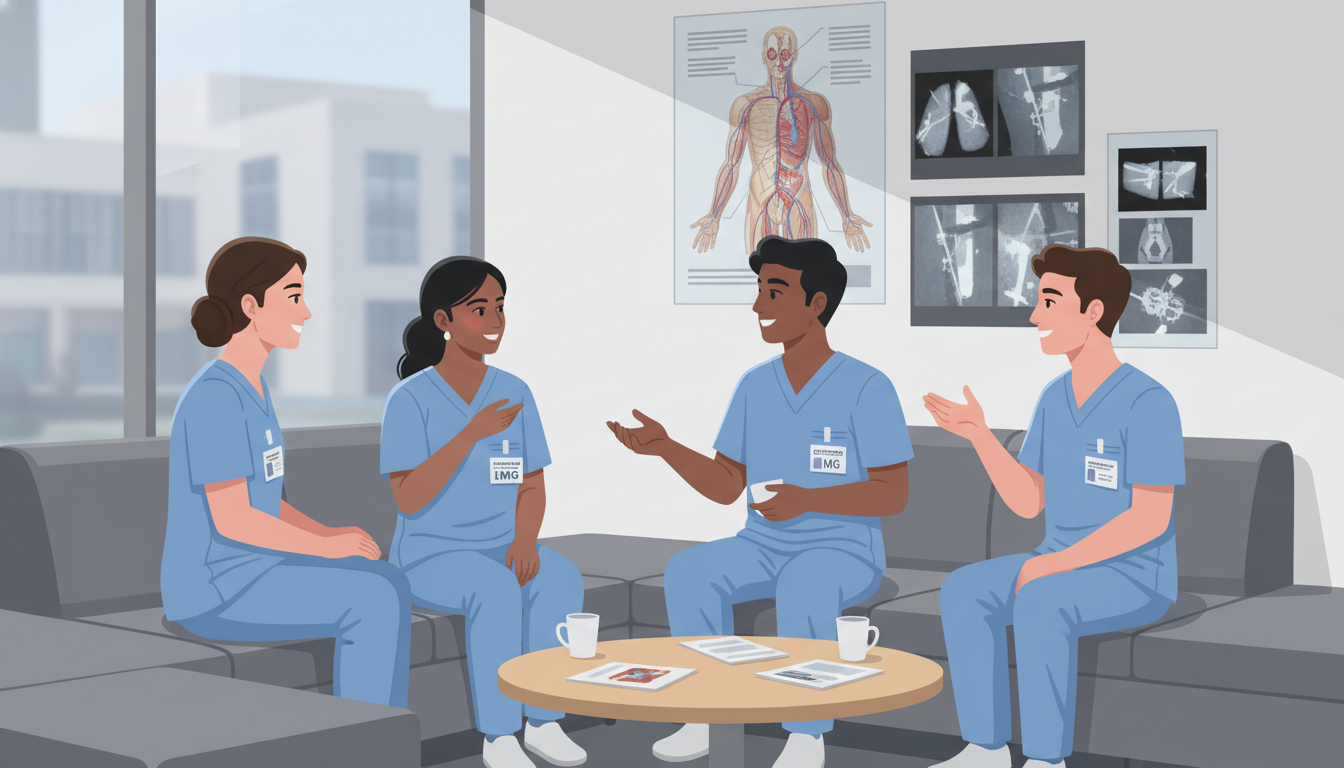
Questions for Current Residents: Culture, Workload, and Real-Life Experience
Current residents give you the clearest insight into what it feels like to train there. This is where you can ask more candid questions to ask residency trainees, especially about how supportive the environment is for someone coming from an IMG background.
A. Culture, Camaraderie, and Support
14. Day-to-Day Atmosphere
- “How would you describe the culture in this program—collaborative, competitive, relaxed, intense?”
- “Do residents socialize outside of work, or is the culture more that people go home to their families and lives?”
- “How approachable are attendings and IR faculty if you need help or feel overwhelmed?”
15. Support for IMGs and Diverse Backgrounds
- “Have there been residents here who were US citizen IMG trainees or international graduates? How have they done?”
- “Do you feel that residents from non-US schools are treated any differently—positively or negatively—by faculty or other departments?”
- “Are there any unspoken expectations or norms that an American studying abroad should know about before starting here?”
These questions are particularly relevant to your specific situation and will help you see if the program is genuinely inclusive.
B. Workload, Call, and Wellness
16. Managing Workload and Burnout
- “On a typical IR-heavy day, how many hours are you usually in the hospital?”
- “How manageable is the call schedule, and how do people feel after a week of call?”
- “Do you feel like you have time to study, do research, and live your life outside of work?”
17. Learning vs. Service
- “Do you feel that the work you do is mostly educational, or is there a lot of repetitive ‘service’ work that doesn’t add much to your training?”
- “Are there particular rotations that feel more burdensome than beneficial, and has the program been responsive when residents raise those concerns?”
- “What would you change about the program if you could?”
These questions give you a realistic picture of life in that IR program, beyond the polished presentation.
C. Resident Autonomy and Confidence
18. Preparedness and Graduates’ Confidence
- “Do you feel like the program is preparing you to be a confident, independent IR attending by the time you graduate?”
- “When you talk to recent graduates, what do they say about how well this program prepared them for their jobs?”
- “Do you ever feel like you are competing with fellows or advanced APPs for cases, or do residents get priority for hands-on experience?”
Questions to Evaluate Fit as a US Citizen IMG in IR
Finally, you’ll want to ask targeted questions that help you decide whether this is the right match for you—not only as an aspiring IR, but as an American studying abroad returning to the US system.
A. Integration with DR Residents and Other Services
19. Relationship with DR and Other Departments
- “How integrated are IR and DR residents socially and educationally?”
- “Is there any tension between DR and IR tracks, or do residents generally work well together?”
- “How is the relationship between IR and referring services like surgery, oncology, vascular, and hepatology? Do they see IR as a true clinical partner?”
These questions help you understand if IR is respected and valued at the institution, which affects your future practice.
B. Onboarding and Transition Support for IMGs
20. Early-Year Support Systems
- “What does the orientation period look like for new residents—especially those who might not have done all of their clinical rotations in the US?”
- “Are there any formal resources or workshops on documentation, billing, US medico-legal issues, and EMR navigation?”
- “How much guidance do interns and PGY‑2s receive in managing their time and responsibilities early on?”
This is crucial if you’re coming from a school with fewer US-style clerkships.
C. Life Outside the Hospital
21. Location, Housing, and Community
- “How do residents typically live—near the hospital, with roommates, with partners or families?”
- “Is the city affordable on a resident salary? Any areas you’d recommend or avoid?”
- “For those who moved here from abroad or from very different environments, how easy was it to build a community?”
Your own happiness and support system outside work will affect how you perform in training.
Putting It Together: How to Build Your Personal Question List
To make this practical for your IR match season, here’s how to structure your own set of questions to ask programs:
Step 1: Start with Your Priorities
For a US citizen IMG, common priorities include:
- Getting strong clinical and procedural IR training
- Being supported in the transition from an international school to US residency
- Having access to mentorship, research, and career guidance
- Training in a respectful, inclusive environment
- Ending up competitive for jobs or subspecialty fellowships
Write your top 3–5 priorities and select questions that map directly to each.
Step 2: Create Short, Medium, and Long Lists
- Short list (must-ask): 1–2 questions for PD, 1–2 for IR faculty, 1–2 for residents
- Medium list (nice-to-ask): Additional 4–8 questions if time allows
- Long list (backup): Deeper questions if conversation opens up or if earlier topics are already covered
Step 3: Tailor Questions to Each Program
Before the interview day:
- Visit the program’s website
- Look at faculty interests, case mix, and research
- Adapt phrasing:
- Instead of “What is your case mix like?”
- Say “I saw that your program has strong PAD and oncology volumes. What is exposure like to trauma embolization and advanced venous work?”
Step 4: Practice Delivery
- Practice asking your interview questions for them out loud; they should sound conversational, not rehearsed.
- Avoid reading from a script. Instead, keep a brief note of keywords you can glance at between interviews.
Step 5: Take Notes After Each Interview
Immediately after your interview day, jot down:
- How each program answered your key questions
- How you felt talking to PD, faculty, and residents
- Any red flags (e.g., evasive answers, dismissive of IMGs, excessive service demands)
These notes will be critical later when building your rank list.
FAQ: Questions to Ask Programs for US Citizen IMG in Interventional Radiology
1. As a US citizen IMG, should I directly mention that I’m an “American studying abroad” when asking about support for IMGs?
Yes, and you can do it confidently. You might say: “As a US citizen who completed medical school abroad, I’m curious how your program supports residents who may be transitioning from an international training environment to the US system.” This frames your background as a fact, not a liability, and opens the door for them to describe specific support.
2. Are there any questions I should avoid asking during an IR interview?
Avoid:
- Questions easily answered on the website (e.g., number of positions, salary)
- Overly personal questions to faculty or PDs
- Questions that imply you didn’t prepare (“So, what do you do here?”)
Also avoid leading with lifestyle-only questions (“How little call can I get?”) before demonstrating your commitment to IR training.
3. How many questions should I ask each interviewer?
Aim for 2–4 well-chosen questions per interviewer. Time is limited, and you want to leave space for organic conversation. It’s better to ask a few thoughtful, in-depth questions than to rush through many superficial ones.
4. Can good questions really impact my chances in the IR match?
They can. Strong, program-specific questions signal maturity, insight into interventional radiology, and seriousness about training. While they won’t compensate for a very weak application, they can distinguish you among similar applicants and help faculty remember you as engaged and thoughtful—especially important for a US citizen IMG where programs may be looking for evidence you’ll transition smoothly and thrive in their environment.
Using the right questions to ask residency programs, program directors, faculty, and residents will not only help you stand out, but also ensure you choose an interventional radiology residency that truly fits your goals and background.