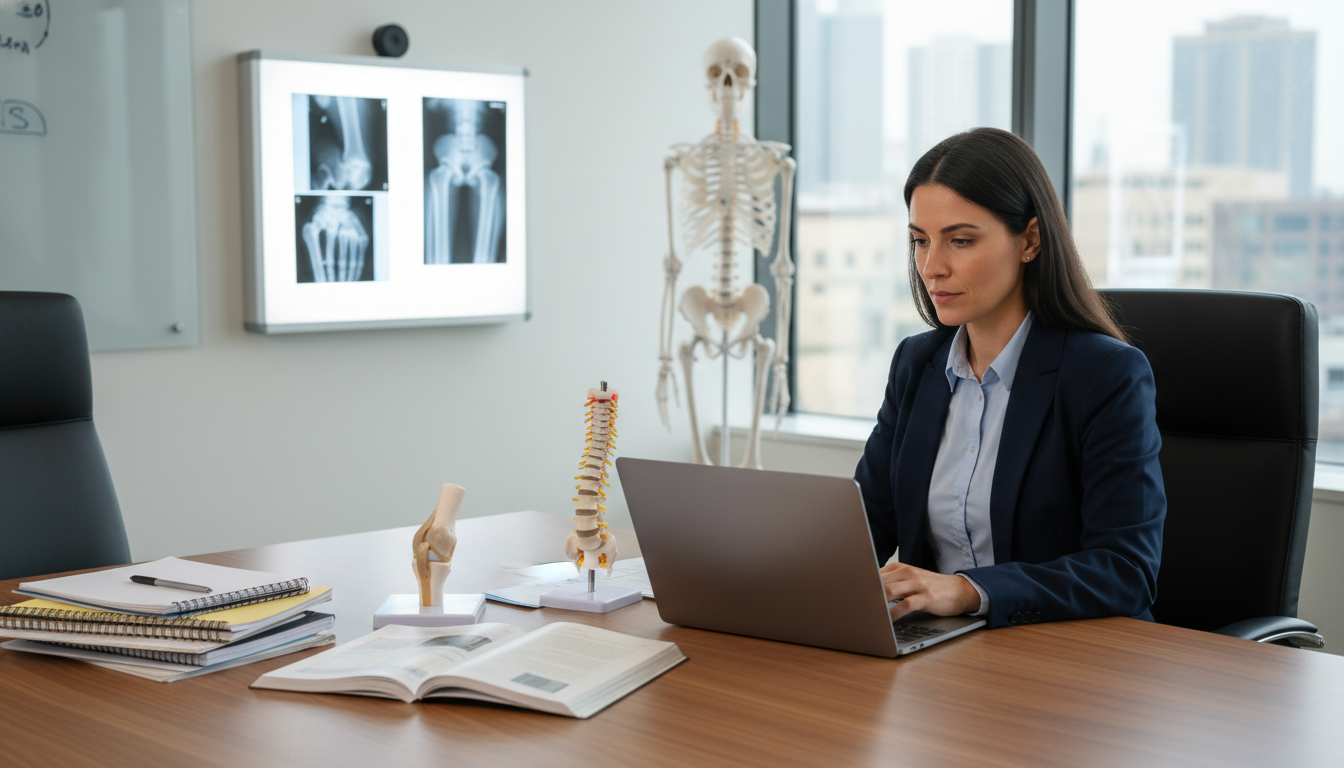
Understanding Your Unique Position as a US Citizen IMG in Orthopedic Surgery
As a US citizen IMG (American studying abroad), you occupy a very specific—and increasingly common—space in the orthopedic surgery residency landscape. You have many advantages: US citizenship (no visa issues), fluency in US culture, and usually strong motivation to return home. But you also carry the label “IMG” in one of the most competitive specialties.
Before you focus on residency interview preparation, you need to understand what program directors may be thinking when they see your application:
Positives they see:
- No need for visa sponsorship or immigration paperwork
- Cultural familiarity with US healthcare and patient expectations
- Often strong English communication skills
- Clear motivation and persistence (you chose a nontraditional path)
Concerns they may have:
- Variable clinical training quality depending on your international school
- Limited exposure to US clinical systems and documentation
- Fewer home-program advocates and fewer built-in ortho opportunities
- Question marks about why you went abroad instead of attending a US med school
Your goal in pre-interview preparation is to anticipate these perceptions and prepare to systematically address them during the ortho match interview process. That means:
- Showing you understand US orthopedic practice and residency demands
- Demonstrating that your training and experiences are equivalent in rigor
- Presenting clear, compelling reasons for your path as a US citizen IMG
- Making it easy for programs to see you as a future colleague, not a risk
Everything you do before interview day—from research to rehearsal—should be designed to help programs confidently answer one question: “Can I see this person thriving on our orthopedic service?”
Step 1: Strategic Background Work Before Interview Season
Clarify Your Narrative as an American Studying Abroad
Program directors will almost certainly wonder: “Why did this US citizen go to school abroad?” If you don’t proactively address this, they will form their own assumptions.
Before interview season:
Write out your story in 3–4 clear points:
- Why you chose to attend medical school abroad
- What you gained from that experience
- How you compensated for any limitations (e.g., lack of home ortho program, fewer research labs)
- Why you are now strongly committed to practicing orthopedic surgery in the US
Aim for a positive, forward-looking framing:
- Instead of: “I didn’t get into US schools.”
- Use: “I chose an international route that allowed me to start medical training right away. I quickly recognized the gaps between my environment and US training standards, and I intentionally sought US-based rotations, research, and mentorship to align with ACGME expectations.”
This narrative will feed into your answers about “Tell me about yourself,” “Why did you study abroad?” and “Why ortho?”
Deeply Understand Orthopedic Surgery as a Specialty
Program directors expect orthopedic surgery applicants to have a mature, informed understanding of the field. As a US citizen IMG, your insight into US ortho practice may be questioned unless you demonstrate the depth of your exposure.
Pre-interview, you should:
- Review core ortho topics to speak intelligently about:
- Common fractures (hip, ankle, wrist, proximal humerus)
- Fundamentals of trauma management
- Basics of arthroplasty, sports, spine, pediatrics, and hand
- Perioperative care, DVT prophylaxis, pain control, rehab
- Follow major organizations and guidelines:
- AAOS (American Academy of Orthopaedic Surgeons)
- Orthopaedic Trauma Association (OTA)
- JBJS and JAAOS for key clinical review articles
- Stay current on major trends/issues, such as:
- Outpatient joint replacement
- Opioid stewardship
- Value-based care and cost-conscious treatment
- Diversity, equity, and inclusion in orthopedics
You don’t need to be a subspecialist, but you must sound like someone who understands the culture, pace, and expectations of US orthopedic training.
Build and Organize Your “Residency Portfolio”
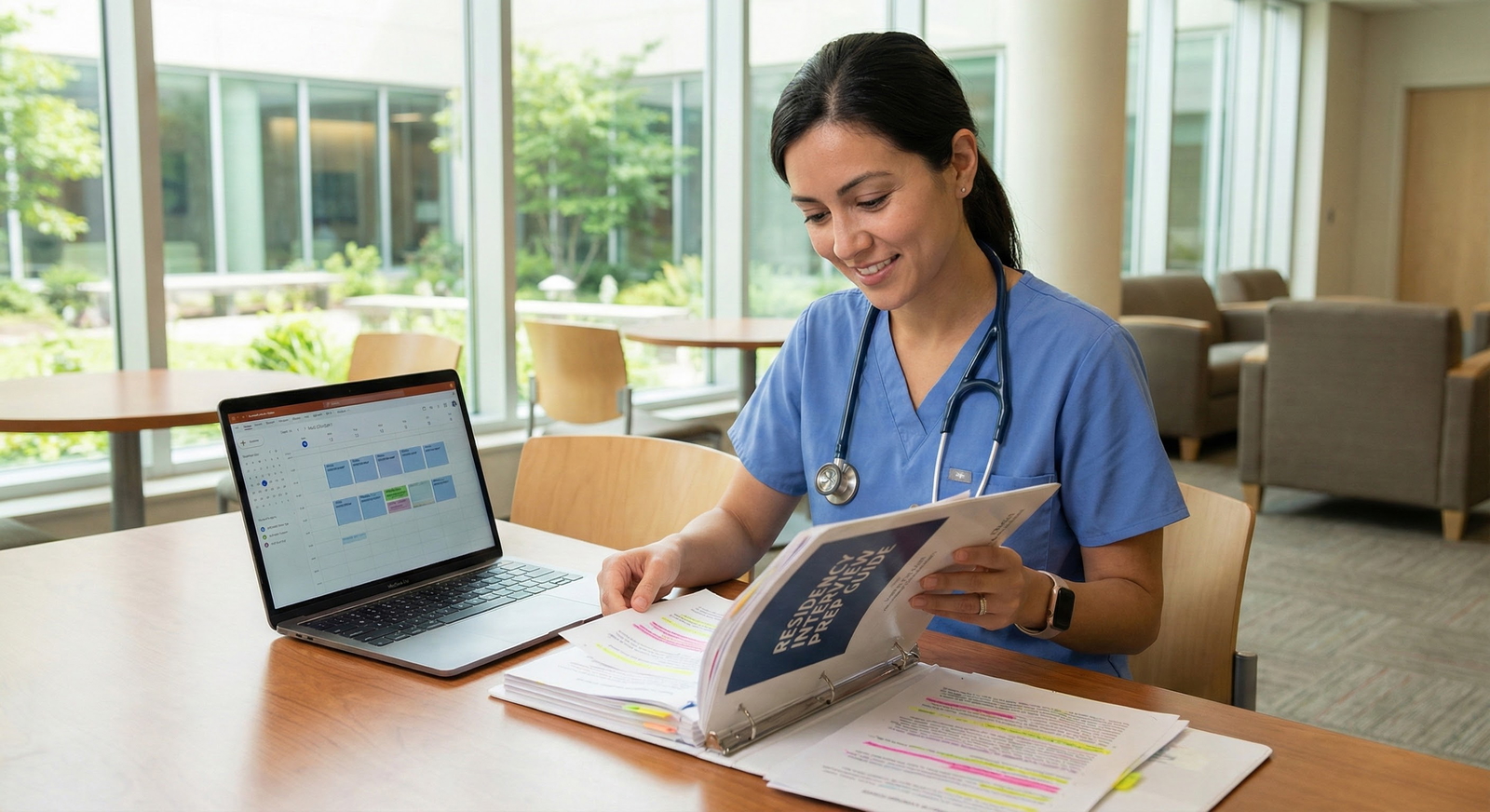
A strong residency interview preparation strategy includes organizing your entire application material so you can speak fluidly and consistently about your experiences.
Create a digital or physical portfolio including:
- CV + ERAS application (printed and/or annotated)
- Personal statement with your reasoning for ortho and US training
- List of all research projects:
- Status (published, submitted, in preparation)
- Your exact role
- One or two key findings you can explain in lay terms
- Clinical rotations list:
- US-based clinical experiences (especially ortho and surgery)
- International rotations with interesting pathology or systems differences
- Key cases from ortho rotations:
- At least 4–5 cases you can describe in detail (presentation, your role, what you learned)
- Service and leadership experiences relevant to team-based, physically demanding work
Think of this portfolio as your interview playbook. Every question links back to something in your experiences, and having this structured in advance will make your answers smoother and more credible.

Step 2: Mastering Core Residency Interview Questions (With an Ortho Focus)
Common “Tell Me About Yourself” and Narrative-Based Questions
Almost every orthopedic surgery residency interview will include some version of:
- “Tell me about yourself.”
- “Walk me through your path to orthopedic surgery.”
- “Why did you decide to study medicine abroad?”
For a US citizen IMG, your answer needs to be:
- Chronological but efficient (2–3 minutes max)
- Focused on motivation, growth, and insight
- Explicit about how your path prepared you for ortho
Example framework (adapted for US citizen IMG):
- Origin + early interests:
- Where you grew up, early exposure to sports, injuries, or mechanical thinking
- Decision to study abroad:
- Honest, non-defensive, and forward-looking explanation
- Key medical school experiences:
- Ortho exposure, role models, US rotations, research involvement
- Why orthopedics:
- Emphasize alignment with your strengths: problem-solving, teamwork, physicality, longitudinal patient impact
- Why US residency:
- Commitment to US healthcare environment and training standards
Write your answer out, refine it, then practice it verbally until it feels natural, not scripted.
“Why Orthopedic Surgery?” – Answering for a Highly Competitive Specialty
Program directors in ortho are sensitive to applicants who seem drawn by prestige, salary, or general “surgical” appeal rather than a deep understanding of the field.
Prepare a 3-part answer:
- Personal connection
- A specific experience or moment that oriented you toward ortho:
- A fracture care in clinic
- An OR case where function was restored
- Your own or a family member’s musculoskeletal injury
- A specific experience or moment that oriented you toward ortho:
- Intellectual fit
- Problem-solving with anatomy and biomechanics
- Satisfaction from seeing structural problems fixed with tangible results
- Understanding of imaging, physical exam, and procedural planning
- Lifestyle and team fit
- Comfort with high-intensity, early mornings, long OR days
- Enjoyment of team sports and collaborative environments
- Willingness to take ownership in emergencies and trauma calls
For an American studying abroad, emphasize your deliberate pursuit of ortho despite limited in-country resources:
“Because my medical school doesn’t have a large orthopedic department, I intentionally sought US clinical rotations and research projects in ortho to confirm this was the right fit for me, and those experiences only reinforced my interest.”
“Why Our Program?” – Doing Deep Program-Specific Research
Nothing hurts an ortho match interview more than a generic “I want good operative exposure and strong research.” Every program offers that. Your answer needs to prove you did your homework.
Before each interview:
- Review:
- Program website, rotation structure, call schedules
- Faculty interests and subspecialty strengths
- Hospital type (county, academic, community, Level I trauma)
- Note:
- Any ties: region, mentors, prior rotation, research collaborator
- Unique features: early OR autonomy, strong sports program, high trauma volume, dedicated research year
Prepare a 2-minute, program-specific “Why us?” answer:
- Start with mission & training environment:
- “I like that your program serves a high-volume trauma center with a diverse patient population…”
- Add curricular elements:
- “Your early PGY-2 involvement in complex fracture management is unique and aligns with my interest in trauma.”
- Close with your contribution:
- “With my US and international clinical experiences and a strong interest in trauma research, I see myself fitting well with your emphasis on resident-led scholarly work.”
As a US citizen IMG, this shows you’re not applying blindly—you’ve clearly thought about where you’re most likely to thrive.
Behavior-Based and “Fit” Questions for Ortho Residents
Orthopedic programs rely heavily on team dynamics. Expect behavior-focused interview questions such as:
- “Tell me about a time you had a conflict on a team.”
- “Describe a situation where you received critical feedback.”
- “Tell me about a time you had to work with limited resources.”
Prepare 4–5 strong STAR stories (Situation, Task, Action, Result) from:
- Clinical rotations (especially US-based)
- Research collaborations
- Athletic or team-based experiences (sports, military, group projects)
- International settings where resource constraints were real
For each story, highlight:
- How you communicated
- How you supported the team
- How you handled stress or failure
- What you learned and changed afterward
Program directors are asking themselves: “Can I trust this person on my call team at 2 a.m.?” Your stories should consistently say “yes.”
Step 3: Orthopedic-Specific Content and Clinical Readiness
Prepare for Clinical and Technical-Oriented Interview Questions
While many programs have become more conversational, orthopedic surgery interviews may still probe your clinical reasoning and basic technical understanding, especially if you have extensive ortho experiences on your CV.
Questions might include:
- “Walk me through your assessment of a patient with an ankle fracture.”
- “How do you approach the initial management of an open fracture?”
- “What did you learn from assisting with [specific surgery]?”
Pre-interview, review:
- ATLS principles and trauma flow
- Basic ortho emergencies:
- Open fractures
- Compartment syndrome
- Septic joints
- Postoperative care basics:
- DVT prophylaxis
- Pain control
- Weight-bearing restrictions
- Wound care
As a US citizen IMG, this clinical readiness reassures programs that your international education has not left major gaps in US-relevant orthopedic knowledge.
Translate Your International Experiences into US-Relevant Strengths
Your status as American studying abroad can actually become a differentiator—if you know how to present it.
Before interviews, identify 3–4 “conversion points”:
- Resource-limited settings
- What did you learn about clinical decision-making without immediate imaging?
- How did you communicate with patients when resources were constrained?
- Diverse patient populations
- What musculoskeletal pathologies did you see that are less common in the US?
- How did this sharpen your physical exam and diagnostic skills?
- Systems comparisons
- What aspects of international systems made you appreciate elements of US care (e.g., trauma networks, rehab infrastructure)?
- Adaptability and resilience
- Moving countries, adapting to new systems, and still excelling academically and clinically
Use these reflections to answer questions like:
- “How has your international training prepared you for US residency?”
- “What unique perspective do you bring to our program?”
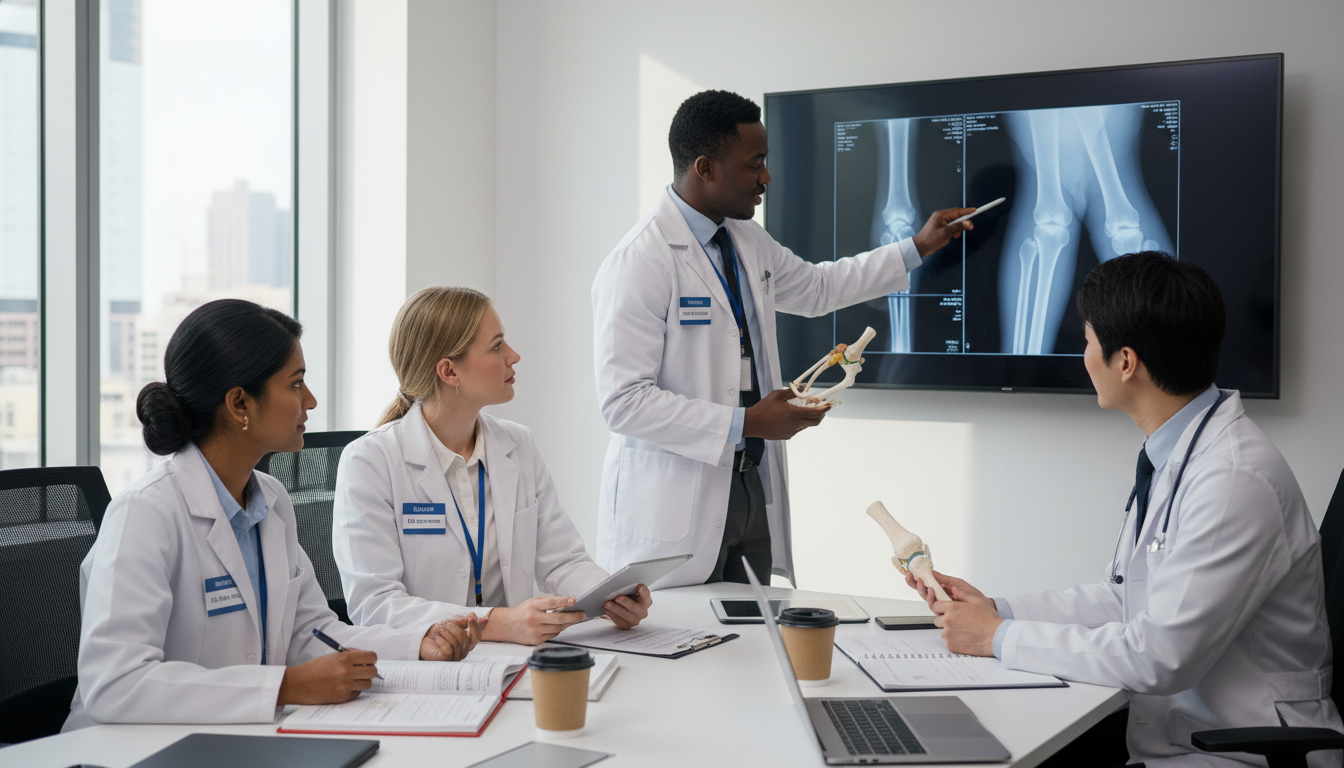
Step 4: Practical Interview Day Preparation – From Logistics to Performance
Logistics: Time Zones, Technology, and Travel
As a US citizen IMG, you may be traveling internationally or working across different time zones during virtual interview season. Pre-interview preparation should include:
- Confirming time zones carefully
- Convert all interview times to your local time and the program’s time zone
- Use calendar reminders with explicit labels: “8:00 AM EST / 2:00 PM CET”
- Technology checks for virtual interviews:
- Stable internet connection (hard-wired if possible)
- Test your camera, microphone, and lighting
- Neutral, professional background (avoid distractions or noisy environments)
- Travel planning for in-person interviews:
- Batch interviews regionally when possible
- Have buffer time for flight delays
- Bring printed copies of your CV, abstracts, and a small notebook
Programs notice applicants who appear flustered, late, or technically unprepared. Eliminating logistics stress allows you to focus on content and connection.
Professional Presentation: Dress, Body Language, and Speech
Orthopedic surgery is a team sport with a strong culture of professionalism. Your appearance and behavior should convey that you’ll fit into that environment.
- Attire:
- Conservative suit (dark blue, grey, or black)
- Simple, clean lines; avoid flashy accessories
- For in-person: comfortable yet formal shoes suitable for walking
- Body language:
- Sit upright, slight forward lean
- Maintain eye contact (look at the camera during virtual interviews)
- Use calm, deliberate hand gestures; avoid fidgeting
- Speech:
- Moderate pace, clear articulation
- Avoid slang or overly casual language
- Practice reducing filler words (“um,” “like,” “you know”)
If English is your first language—as it is for many US citizen IMGs—leverage that advantage by being especially polished and clear in your communication.
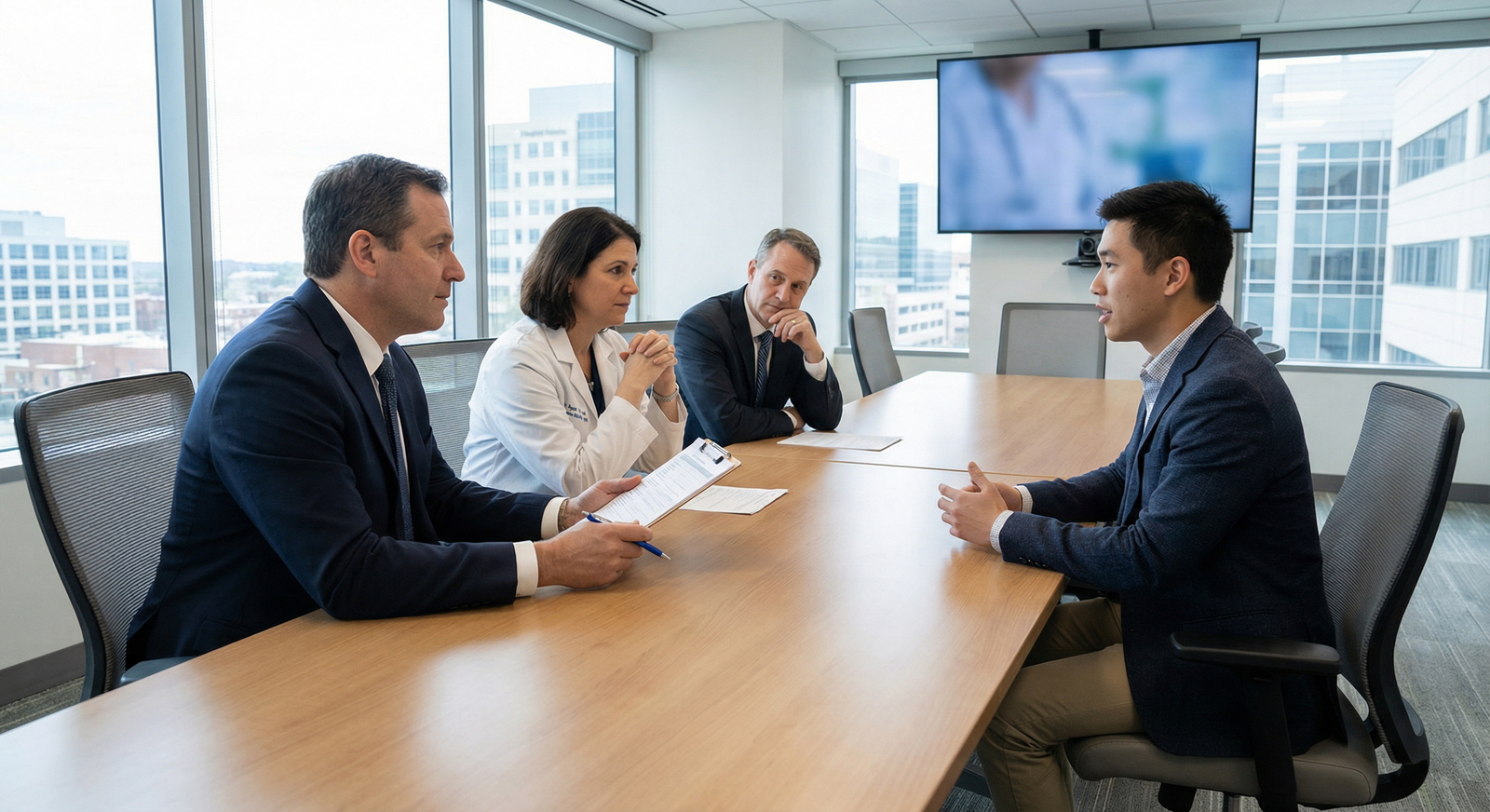
Practice: Mock Interviews and Focused Feedback
The most powerful form of residency interview preparation is rehearsed conversation:
- Arrange mock interviews with:
- US-trained mentors or attendings (especially in surgery or ortho)
- Current residents (ideally ortho residents)
- Career services or advising offices at your medical school
- Ask for feedback on:
- Clarity and structure of your answers
- Professional demeanor
- How convincingly you explain your US citizen IMG path
- Whether you’re underselling or overselling anything
Record yourself on video during practice. Watch for:
- Distracting mannerisms
- Flat or monotone delivery
- Lack of enthusiasm when discussing ortho
- Overly lengthy, unfocused answers
Your goal: confident, concise, and conversational responses that showcase your strengths without sounding memorized.
Step 5: Optimizing Interaction with Programs Before and After Interviews
Pre-Interview Communication: How Much Is Too Much?
Before the interview, you might be tempted to send many emails to programs to “stand out.” Be careful—over-communication can backfire.
Appropriate pre-interview communication:
- Confirming logistics if something is unclear
- Sending updated CV or publications if there are significant changes
- Briefly thanking a program for an invitation (optional and should be concise)
Avoid:
- Repeatedly asking for an interview if you’ve been silent or waitlisted
- Overly personal or emotional appeals
- Mass emails that clearly lack program-specific content
Being professional, respectful, and efficient in your communication helps build your reputation as a future colleague.
Asking Smart Questions During the Interview
Programs evaluate you as much by your questions as by your answers. Orthopedic surgery residents are expected to be curious, thorough learners.
Prepare a bank of 10–15 well-researched questions that you adapt depending on who you’re speaking with:
- For program directors:
- “How do you see the case volume and complexity evolving over the next 3–5 years?”
- “What traits distinguish your most successful residents?”
- For faculty:
- “How do you involve residents in research and quality improvement projects?”
- “How do you tailor operative autonomy based on PGY level?”
- For residents:
- “What does a tough day on trauma call look like here?”
- “How supported do you feel when you’re struggling, clinically or personally?”
Avoid questions you could easily answer by reading the website. Show that you did your homework and are thinking like someone about to commit five years of your life to this program.
Post-Interview Follow-Up and Signaling Interest
After interviews:
- Send brief, specific thank-you emails:
- Within 24–72 hours
- 3–6 sentences maximum
- Refer to a specific topic you discussed
- Reaffirm your enthusiasm (without overpromising or ranking statements unless this is genuine and allowed)
- Keep a tracking spreadsheet:
- Date of interview, impressions, program pros/cons
- Strengths/weaknesses you noticed in your interview performance
- People you spoke with and any specific follow-up you promised
For a US citizen IMG, being organized and intentional in this stage can counter any assumption that you’re applying widely without a clear plan.
FAQs: Pre-Interview Preparation for US Citizen IMG in Orthopedic Surgery
1. As a US citizen IMG, will programs ask me directly why I went abroad for medical school?
Yes, many will—explicitly or indirectly. Be prepared with a clear, honest, and non-defensive response. Focus on:
- Why starting medical education abroad made sense for you at the time
- How you ensured your training met US standards (US rotations, Step scores, research)
- How your international experience has made you a stronger, more adaptable future orthopedic surgeon
Avoid blaming or sounding resentful toward the US system. Keep it professional and growth-oriented.
2. Do I need orthopedic research to be competitive, and how should I discuss it in interviews?
For orthopedic surgery, research—especially in ortho—is highly valuable and often expected. If you have it:
- Be ready to explain each project in simple terms: why it mattered, what your role was, and the key takeaway
- Emphasize skills gained (data analysis, critical thinking, collaboration)
- Connect your research interests to what the program offers
If your research isn’t orthopedic-specific, highlight transferable skills and demonstrate that you’ve still pursued clinical ortho exposure (electives, observerships, shadowing).
3. How should I handle difficult questions about gaps, failures, or lower grades?
First, anticipate these during your residency interview preparation. If you have:
- A failed exam
- A gap in training
- Lower grades in surgery or early coursework
Prepare a straightforward, non-defensive explanation using this structure:
- Context – Briefly describe what happened
- Accountability – Acknowledge your role without blaming others
- Response – Explain concrete steps you took to improve (study changes, mentorship, time management)
- Outcome – Show eventual success (improved scores, strong USMLE performance, better clinical evaluations)
Programs value resilience and insight—key traits in orthopedic surgery.
4. What is the best way to prepare for residency interview questions specific to orthopedics?
Combine three strategies:
- Content review – Refresh ATLS principles, core fracture management, and postoperative care
- Case reflection – Prepare 4–5 ortho cases you can discuss in detail, emphasizing your role and what you learned
- Mentor discussion – Talk with an orthopedic surgeon or resident about:
- The daily realities of ortho practice
- Common misconceptions
- Skills that set apart successful residents
This combination ensures you sound both medically prepared and specialty-aware, which is crucial for a successful ortho match as a US citizen IMG.
By approaching pre-interview preparation systematically—clarifying your narrative, mastering core questions, reinforcing orthopedic knowledge, polishing your professional presence, and interacting thoughtfully with programs—you can transform the “IMG” label from a potential liability into a distinctive strength in your orthopedic surgery residency journey.