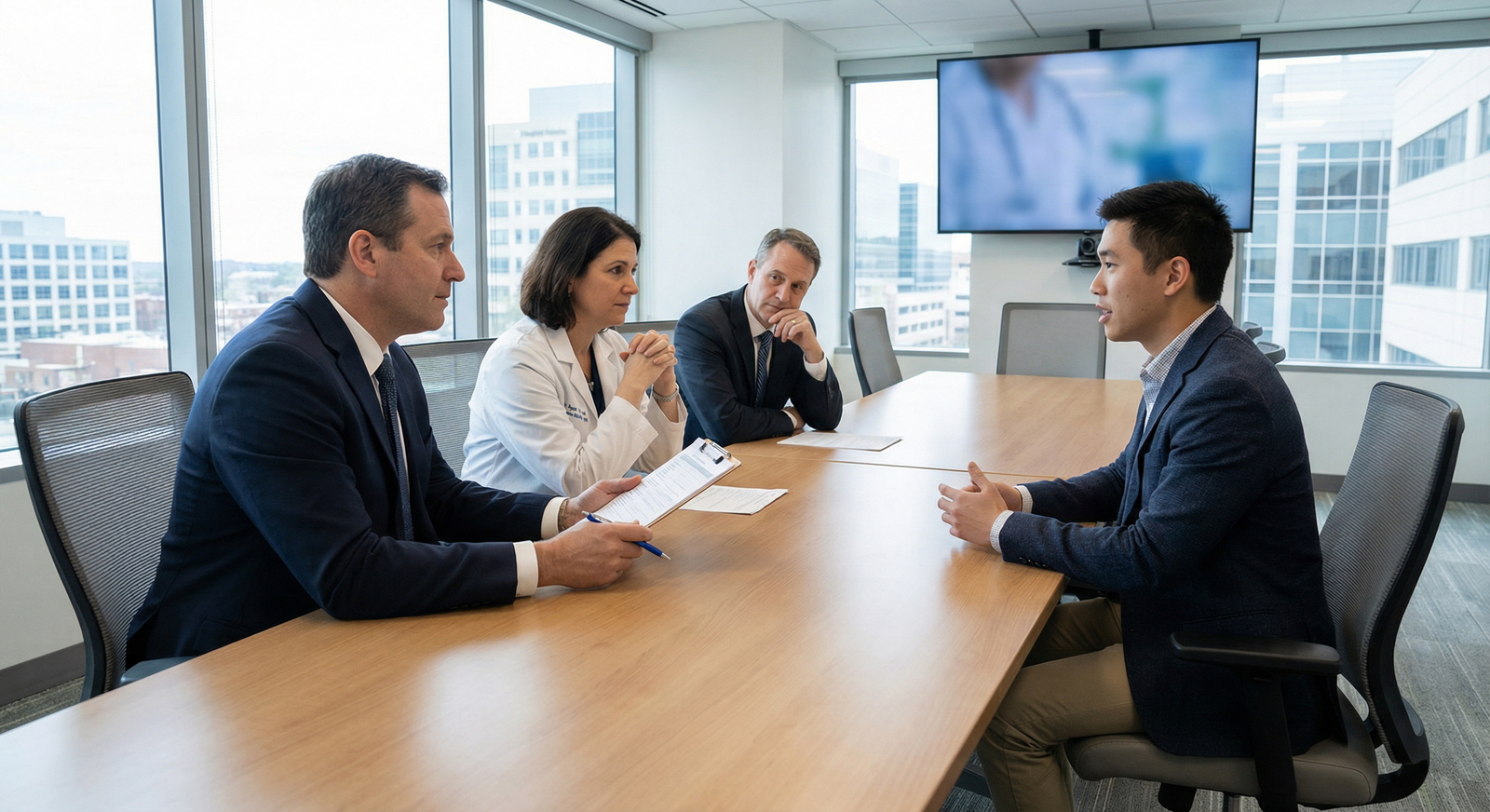
Understanding the Unique Position of the US Citizen IMG in Preliminary Medicine
As a US citizen IMG (American studying abroad), you occupy a very specific space in the residency landscape—especially when applying to a preliminary medicine year (prelim IM). Program directors often recognize that you understand US culture and healthcare expectations, but may still have concerns about:
- Variability in your international medical school’s reputation and curriculum
- Limited or fragmented US clinical experience
- How well you’ll transition to US hospital systems and team dynamics
- Your long-term plan after a single-year preliminary medicine position
Effective residency interview preparation starts with understanding how others may perceive you and proactively addressing those concerns.
Why Pre-Interview Preparation Matters More for US Citizen IMGs
Compared to US MD/DO seniors, you may have:
- Less face-to-face exposure to US faculty who can advocate for you
- A greater need to explain your choice to study abroad
- Gaps or non-traditional paths on your CV (extra degrees, time off for exams, etc.)
The interview is often the first time a program gets a full sense of who you are beyond your scores and application. Thoughtful, rigorous pre-interview preparation can:
- Turn potential “red flags” into coherent, strengths-focused narratives
- Show that you are well-informed, reliable, and coachable
- Demonstrate that you understand the realities of a preliminary medicine year, not just categorical IM or your advanced specialty
Your goal is to leave each interviewer thinking:
“This candidate knows exactly what a prelim IM year entails, will be a low-drama, high-reliability intern, and will make our team better.”
Step 1: Clarify Your Story and Strategy as a US Citizen IMG
Before digging into how to prepare for interviews, you need to clearly understand your own story and how it fits with preliminary medicine.
Define Your Overall Training Path
Most applicants to prelim IM are using it as a one-year gateway to another field. Common paths:
- Prelim IM → Neurology
- Prelim IM → Anesthesiology
- Prelim IM → Radiology or IR
- Prelim IM → Dermatology or Radiation Oncology
- Prelim IM → Ophthalmology or PM&R
As a US citizen IMG, programs will want to see that:
- You fully understand that a preliminary medicine year is clinically intense, with heavy inpatient responsibilities.
- You are genuinely interested in internal medicine fundamentals, not just “checking a box.”
- You understand how the prelim year prepares you for your advanced specialty.
Prepare a 2–3 sentence explanation of your overall path. For example:
“I’m applying to a preliminary medicine year with the intention of starting a neurology residency afterward. Internal medicine training is crucial for me because many of the neurologic conditions I’ll manage—like stroke, encephalopathy, and neurologic complications of systemic disease—require a strong foundation in inpatient medicine, hemodynamics, and chronic disease management.”
Address the “American Studying Abroad” Question
Programs commonly wonder:
- Why did you, as an American, choose to do medical school abroad?
- What challenges did you face and overcome in that environment?
- How did that experience prepare you for US training?
Create a concise, honest, non-defensive narrative. Avoid blaming or appearing resentful. Example:
“I chose to attend medical school in Ireland after not gaining admission to a US school on my first cycle. It allowed me to pursue medicine without delay while training in a rigorous, clinically focused system. Living and studying abroad pushed me to become highly adaptable—navigating a new healthcare system, different cultural norms, and independent learning. Those experiences sharpened my resilience and communication skills, which I believe will serve me well in a busy preliminary medicine year.”
Anticipate IMG-Specific Concerns
List your potential vulnerabilities and prepare constructive responses:
- Lower or average Step scores
- Attempts on USMLE exams
- Limited US clinical experience
- Gaps between graduation and application
- Visa history (even if you’re a US citizen, some may still ask about international transitions)
For each, craft a short explanation + what you learned + how you improved.
Example (gap year):
“I had a 10-month gap after graduation while waiting for a US clinical rotation opportunity and preparing for Step 3. During that time, I completed an online research project in cardiology and volunteered at a free clinic. It was a period that reinforced my self-discipline and kept me clinically engaged while I prepared for the next steps.”

Step 2: Build Strong Content for Common Residency Interview Questions
You will almost certainly be asked variants of the classic interview questions residency programs rely on. As a US citizen IMG in preliminary medicine, tailor your content to show reliability, maturity, and clarity about your one-year role.
Below are key questions and how to build high-impact answers.
1. “Tell Me About Yourself”
Objective: Set the tone, summarize your journey, and highlight 2–3 themes.
Structure:
- Where you are now (US citizen IMG, school, current stage)
- Brief origin story (why medicine, why abroad)
- Key strengths or themes (relevant to prelim IM)
- Current goal (why prelim medicine, in 1 line)
Example:
“I’m a US citizen who completed medical school in Poland, currently in my final year while finishing US clinical electives. I grew up in New York in a family of nurses, which exposed me early to the importance of meticulous inpatient care. When I didn’t gain admission to a US school initially, I chose to train abroad, which taught me adaptability, cross-cultural communication, and independence. Clinically, I’m most drawn to acute care settings where I can think through complex medical problems as part of a team. Right now, I’m applying for a preliminary medicine year as the foundation for my career in anesthesiology, because I value the strong medical base and teamwork that internal medicine provides.”
2. “Why Preliminary Medicine?” (Not Just “Why Internal Medicine?”)
Programs want to know that you understand what a prelim IM year actually involves.
Key points to hit:
- You understand it’s a full intern year, with real responsibility.
- You see direct, concrete connections to your advanced specialty.
- You’re not just using them as a placeholder.
Example:
“I’m applying specifically for a preliminary medicine year because I want a strong, hands-on intern experience with diverse medical pathology. In my advanced field, radiology, I’ll constantly rely on my understanding of systemic disease to interpret studies and communicate with referring teams. A prelim year in medicine—particularly one with strong inpatient exposure—will sharpen my clinical reasoning, comfort with acutely ill patients, and my ability to function as a reliable team member. I’m not looking for a light year; I want a challenging, supportive environment that truly prepares me for the rest of my training.”
3. “Why Did You Study Abroad as an American?”
You must answer this clearly, confidently, and in under 1–2 minutes. Avoid long justifications.
Suggested framework:
- Honest, brief reason (did not match, family reasons, cost, etc.)
- What you gained from international training
- How you bridged to US medicine (USMLEs, US rotations)
Example:
“I went abroad after not being accepted to a US school on my first application. I didn’t want to delay my medical training, and my school in the Caribbean offered a US-focused curriculum and opportunities for clinical rotations in the States. Training internationally forced me to be resourceful and proactive—navigating new systems, advocacy for my own learning, and adapting to diverse patient populations. I’ve complemented that with US clinical rotations where I learned the workflows and expectations of American hospitals, which I see as the environment I want to build my career in.”
4. “What Are Your Strengths and Weaknesses?”
For preliminary medicine, align your strengths with what makes a good intern:
- Reliability and work ethic
- Team communication
- Efficiency and organization
- Willingness to ask for help appropriately
Example strength:
“One of my strengths is thorough follow-through. During my US inpatient rotation, I made it a habit to check on pending studies before sign-out and update my notes, which my senior residents appreciated because it reduced loose ends for the night team.”
Example weakness (paired with growth):
“I used to struggle with delegating tasks because I felt personally responsible for every detail. On busy ward rotations, I realized that this could slow the team down. Over time, I’ve worked on communicating clearly, handing off appropriate tasks, and trusting my colleagues—all while maintaining accountability. Now, I consciously identify which tasks I must do myself and which I can delegate to nurses or medical students with clear instructions.”
5. “Tell Me About a Difficult Situation / Failure”
Use a structured approach: Situation – Action – Result – Reflection (what you learned).
Prelim IM programs especially value:
- Examples involving team conflict, mistakes, or communication challenges
- Evidence that you seek feedback and adapt quickly
- Ownership, not blame
Step 3: Research Programs and Prepare Targeted Questions
Strong residency interview preparation includes more than rehearsed answers—you need intelligent questions that show you’ve studied the program.
How to Research Effectively
For each program, review:
- Program website: curriculum, rotation schedule, call system, preliminary vs categorical differences
- Resident roster: any IMG presence, diversity, retention
- Institution’s affiliated advanced specialties (if relevant to your pathway)
- Hospital type: community vs academic, patient population, teaching intensity
Create a one-page “program snapshot” for each interview that includes:
- 2–3 unique features of the program
- 1–2 specific reasons you are genuinely interested
- 2–3 tailored questions
Example Questions for Preliminary Medicine Interviews
Focus on questions that demonstrate maturity and understanding of a prelim year:
- “How integrated are preliminary medicine residents with categorical residents on inpatient teams?”
- “What are the typical career paths of your recent preliminary medicine graduates, and how does the program support them?”
- “How does the program manage workload and wellness for interns during your heaviest rotations?”
- “For prelim residents pursuing specialties like neurology or radiology, how flexible is the schedule if they need to attend off-site orientation or boot camps?”
Avoid questions that suggest you didn’t read the website or only care about hours, e.g., “How many days off do we get?” as your first question.

Step 4: Practical Logistics and Rehearsal for Residency Interview Preparation
Now to the “how to prepare for interviews” step-by-step: logistics, practice, and environment.
Organize Your Interview Season
Track everything in a spreadsheet or app:
- Program name, date, and format (Zoom/in-person)
- Pre-interview social details
- Interviewers (names, roles)
- Impressions, pros/cons, post-interview notes
Time zones: As an American studying abroad, confirm times in your local time zone if you’re still overseas.
Backup plan:
- Have an alternate internet connection (hotspot, phone tether).
- Test your audio, camera, and Zoom/Teams platform.
Prepare Your Physical and Technical Setup
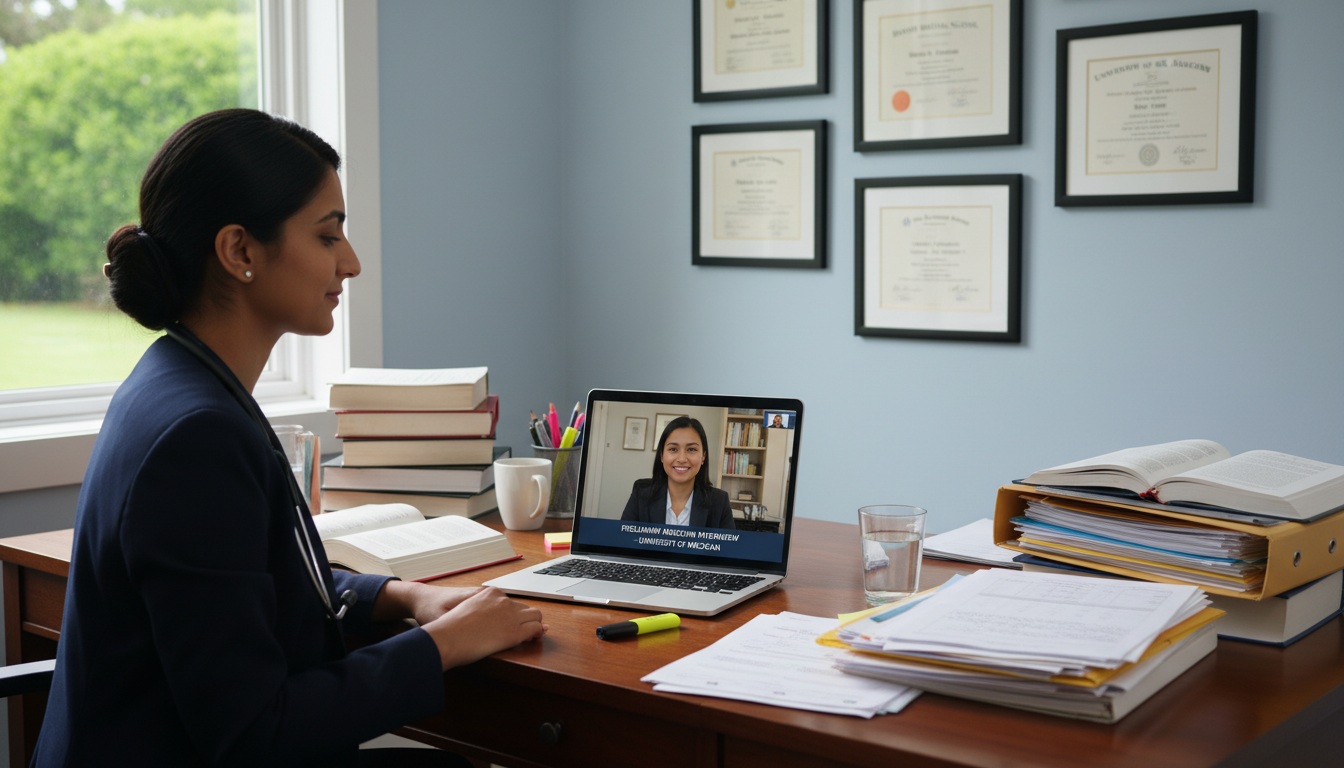
For virtual interviews:
- Neutral, uncluttered background (or subtle professional background)
- Good lighting from the front (window or lamp behind camera)
- Stable camera at eye level
- Wired headphones or reliable wireless audio
Dress in conservative professional attire—suit or blazer; avoid loud patterns. Even if only your upper body is visible, dress fully in case you need to stand.
Rehearse Intelligently (Not Robotically)
Create bullet points, not scripts
- Outline 3–4 talking points per major question
- Practice saying them in different words to stay natural
Mock interviews
- Use your school’s career office, mentors, or friends
- Ask for feedback specifically on:
- Clarity of your story as a US citizen IMG
- How convincingly you explain your interest in prelim medicine
- Any filler words, rambling, or lack of structure
Record yourself
- Review 1–2 practice sessions on video
- Pay attention to eye contact, posture, pace, and body language
Plan your “elevator pitch” for each of the following (30–60 seconds each):
- Who you are and your path (American studying abroad → prelim IM → advanced specialty)
- Why this program interests you
- How your IMG background is a strength, not a liability
Step 5: Day-Before and Day-Of Interview Strategy
The Day Before
- Confirm the schedule and platform for the interview.
- Re-read your ERAS application and personal statement—remember what you wrote.
- Review your one-page snapshot for the program.
- Choose 3–4 main points you want the program to remember about you.
- Set out your clothes and test your camera/lighting one last time.
Get at least 7–8 hours of sleep; your cognitive performance and emotional regulation matter.
The Morning Of
- Eat a light, non-experimental meal.
- Do a brief warm-up:
- 2–3 practice answers out loud
- Deep breathing or short walk to reduce anxiety
Have nearby:
- A printed copy or second screen with your CV and personal statement
- Your program snapshot and your questions for them
- Water and tissues
During the Interview
- Open with energy: smile, clear greeting, make eye contact.
- Listen fully to questions—don’t rush to respond.
- Structure your answers clearly (e.g., “There are two main reasons…”).
- Be honest if you don’t know something: “I haven’t encountered that situation yet, but here is how I would approach it…”
- Avoid complaining about previous institutions, programs, or people.
As a US citizen IMG, be prepared for at least one interviewer to:
- Ask “Why abroad?”
- Ask about your transition to US healthcare
- Clarify whether you intend to practice in the US long-term (answer clearly: “Yes.” if that’s the case)
After the Interview
Write down your impressions the same day:
- Culture, resident interactions, faculty style
- How transparently they described workload and expectations
- Fit with your goals and personality
Send brief, personalized thank-you emails within 24–48 hours. Include:
- A specific detail from your conversation
- A reaffirmation of your interest
Example:
“Thank you for speaking with me yesterday about the preliminary medicine program at [Hospital]. I especially appreciated hearing about how prelim residents are integrated into the MICU team and the autonomy they gain by the second half of the year. Our discussion reinforced my impression that your program would provide the rigorous foundation I’m seeking before entering neurology training. Thank you again for your time and consideration.”
Frequently Asked Questions (FAQ)
1. As a US citizen IMG, should I address my Step score directly if it’s average or below average?
Yes, if your score is likely to be seen as a concern, be prepared with a concise, non-defensive explanation. Focus on:
- Any contextual factors (briefly)
- What you changed in your study approach afterward
- Evidence of improvement (e.g., higher Step 2, strong clinical evaluations)
Do not over-apologize. Frame it as one part of your journey, not your entire identity as an applicant.
2. How can I show genuine interest in a preliminary medicine program if my long-term goal is another specialty?
You can be transparent about your advanced specialty goals while emphasizing that:
- You value the internal medicine skill set.
- You want a challenging, high-yield year, not an “easy” one.
- You are committed to being fully engaged and reliable, even if you leave after one year.
Link specific parts of their prelim IM curriculum to skills you need in your future specialty.
3. Do programs see US citizen IMGs differently than non-US IMGs?
Often, yes. As an American studying abroad, you may be perceived as:
- More likely to stay in the US long-term
- More familiar with US culture and communication norms
However, concerns about school quality, clinical training environment, and US healthcare familiarity can still apply. Your preparation should directly demonstrate that you are ready for US residency expectations, regardless of where you trained.
4. What are some red flags for prelim IM programs during interviews?
Common red flags include:
- Inability to clearly explain why you studied abroad
- Appearing uninterested in internal medicine or the workload of an intern year
- Focusing excessively on lifestyle, scheduling, or moonlighting, especially as a one-year resident
- Speaking negatively about previous schools, programs, or colleagues
- Not understanding the difference between prelim and categorical positions
Thorough residency interview preparation, honest self-reflection, and well-structured answers can help you avoid these pitfalls.
Thoughtful, deliberate pre-interview preparation allows you, as a US citizen IMG pursuing a preliminary medicine year, to present yourself as a mature, reliable, and well-informed intern ready to contribute from day one. By clarifying your story, anticipating key questions, researching programs deeply, and rehearsing effectively, you dramatically increase the chance that programs will see past the label of “IMG” and recognize your true potential as a colleague and future specialist.