

What if every other applicant leaves a program raving about it, and you walk out thinking, “Did we even see the same place… or is there something wrong with me?”
Welcome to the part of residency applications nobody really talks about: when you don’t click with a supposedly amazing program, and then spend weeks wondering if that means you’re broken, ungrateful, or missing something obvious.
When You’re the Only One Who Didn’t “Love” It
You know the script.
Group chat blows up after interview day:
“Omg, that program was AMAZING.”
“Top 3 for sure.”
“Residents looked so happy!!”
“PD was incredible, such great vibes.”
And you’re just sitting there thinking:
“I felt… nothing. Or worse, I felt uncomfortable. Did I miss something?”
That disconnect is jarring. It makes you immediately suspect yourself instead of the program.
Let me say this bluntly: not loving a popular program is not a red flag on you. At all. Programs are not universally “good” in some objective way. They are environments. Ecosystems. Cultures. And cultures fit some people and not others.
I’ve watched this play out over and over:
- Applicant A: “Best interview day I’ve had. They’re my #1.”
- Applicant B: “Honestly? Weird vibes. It’s off my list.”
- Same program. Same day. Totally different reactions.
The scary part is the mental spiral that follows: If everyone else loved it and I didn’t, am I just picky? Ungrateful? Delusional about my own competitiveness?
No. You’re just a human with your own wiring, priorities, and tolerances.
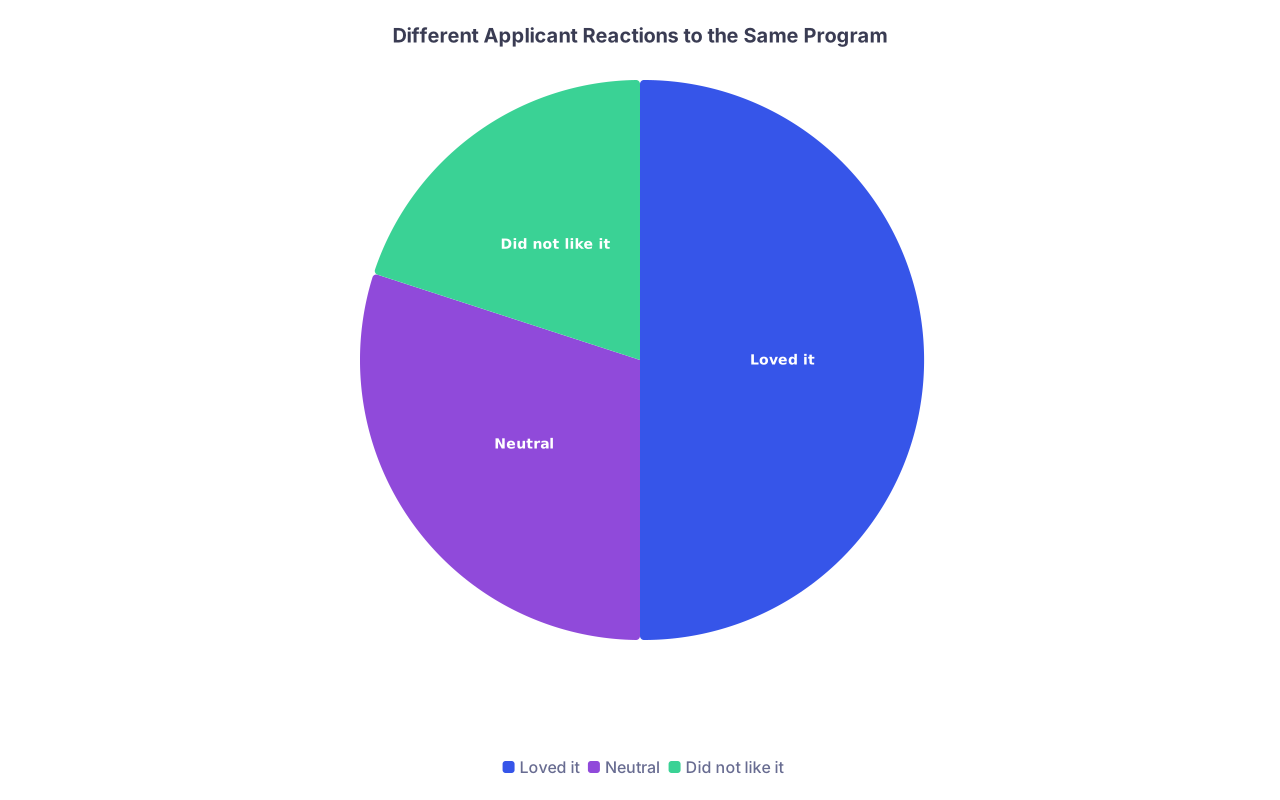
| Category | Value |
|---|---|
| Loved it | 50 |
| Neutral | 30 |
| Did not like it | 20 |
Look at that breakdown. Even at so‑called “top” places, there are always people who walk away feeling “meh” or actively turned off. You’re not some statistical anomaly.
Why Your Reaction Might Be Out of Sync With Everyone Else’s
Let’s dissect this, because your brain is probably making it about your worth as an applicant. It’s not.
1. You noticed things others didn’t (or chose not to care about)
Maybe you caught small moments that stuck in your gut:
- An attending snapped at a nurse, and everyone else brushed past it.
- The chief quietly joked, “You basically live here PGY2,” and people laughed… but you noticed the eye bags.
- Residents said, “We’re like family,” but you couldn’t ignore how they dodged questions about wellness or backup when someone’s sick.
Other people might have been seduced by the big shiny stuff: reputation, fellowship matches, city, research. Your brain went, “Yeah, but what about this?” That doesn’t make you wrong. It means your filters are different.
2. Your priorities are just not the group’s priorities
Some people legitimately do better in:
- High-volume, high-intensity environments
- Very academic, research-heavy programs
- Ultra-competitive cultures where everyone’s gunning for top fellowships
If your internal priorities are more like:
- I want to not despise my life outside the hospital
- I care about how people treat nurses, techs, patients
- I need supervision that doesn’t feel like I’m being thrown to the wolves
Then of course you’re going to look at the same program and come out with a different conclusion. It’s not that they’re wrong and you’re right, or vice versa. It’s just mismatch.

3. Groupthink is loud, your intuition is quiet
A lot of “everyone loved it” is just groupthink in action. People don’t want to be the downer in the chat. Or they’re chasing prestige. Or they convince themselves they loved it because they feel like they should.
You: quietly uncomfortable but second-guessing yourself.
Them: loudly enthusiastic, maybe partially performing.
Just because something’s loud doesn’t mean it’s true.
Also: people lie. Not maliciously, but they curate. They’ll say “Top 3!” and privately rank it 7th. You don’t actually know how “everyone else” is ranking anything.
4. You’re burnt out and your “read” on places is distorted
Here’s the annoying possibility: sometimes you’re just so cooked by the whole process that everything feels slightly off, including programs that might be perfectly fine for you.
Sleep-deprived. Travel-exhausted. Zoom-fatigued. On your 9th interview in 14 days. You walk into a place that might’ve suited you in October, but in January you’re just numb and cynical.
This doesn’t mean your reaction is invalid. It means it might be more about you right now than them as a program. That’s still useful to know, but you shouldn’t build an entire self-judgment empire on top of that one data point.
Does Not Liking a “Good” Program Mean You’re the Problem?
Short answer: No. Longer answer: It might mean you’re paying attention.
Let me be harsher than people usually are: forcing yourself to love a place just because others do is how you end up miserable for 3+ years. That’s the actual red flag. Not the fact that your gut said no.
I’ve seen this play out:
- MS4 ranks Program X high purely because of its prestige and everyone hyping it
- Intern year: “Yeah… I knew I didn’t vibe with it on interview day, but I thought I was the problem.”
- Now they’re trapped in a culture they knew in their bones wasn’t right for them
Your instinct might not be flawless, but it’s data. Ignoring it because you’re scared of being “too picky” is risky.
If anything, being able to say, “That’s a great program for some people, but I didn’t feel at home there,” is actually a sign of emotional maturity. You’re not just chasing brand names; you’re trying to build a life that’s sustainable.
How to Tell If It’s a “You Problem” or a Valid Mismatch
Your brain is probably hammering you with:
“What if I’m the red flag? What if my standards are unrealistic? What if no program will ever feel right?”
Let’s separate your anxiety from reality.
Ask yourself a few blunt questions
Was there something specific that bothered me?
If you can name concrete things—call schedules, resident demeanor, how faculty talked about patients—that’s not just anxiety. That’s observation.Would I be okay living this program’s daily life, not just its brochure version?
Picture yourself at 2 a.m. on a random Tuesday in February, not match day high. Are you okay being there? If the answer is a hard “no,” pay attention.Do I dislike this program, or am I just tired of the entire process?
If everywhere feels “blah,” that’s more about burnout. If this place felt uniquely off, that’s about them.If nobody else had said a word about it, how would I rank it?
Remove the noise. Imagine no one else interviewed there. Does your rank list change? If yes, you’re probably more influenced by the crowd than you think.
Look at patterns, not a single outlier
If you hate every well-regarded program, okay, maybe there’s something to unpack about your expectations.
But if you clicked with some big-name places, were neutral about others, and really disliked one or two that people loved—that’s just normal variation.
| Program | Your Reaction | Group Chat Vibe |
|---|---|---|
| A | Loved | Loved |
| B | Neutral | Loved |
| C | Disliked | Loved |
| D | Liked | Mixed |
| E | Disliked | Mixed |
Look at a pattern like that. You disagree with the crowd on a couple of places. That doesn’t scream “you’re unreasonable.” It screams “you’re a person, not a clone.”
How This Affects Your Rank List (and Future You)
Here’s where anxiety really ramps up: “If I rank this ‘beloved’ program lower, am I sabotaging my career? Am I being stupid?”
Let me be honest: prestige and connections can matter. But so does not hating your life.
A few realities people gloss over
- There are residents right now at “top tier” programs quietly regretting their rank lists.
- There are residents at “mid-tier” programs thriving, building killer CVs, getting fellowships they want, because they’re supported and not destroyed.
- PDs don’t see your rank list. They’re not going to “know” you didn’t love them. They will not blacklist you in the future because you ranked them 7th instead of 2nd. That’s not a thing.
What does matter is whether you land somewhere you can grow, function, and not burn out by PGY2.
If your gut said no, and you can articulate even a little why, it’s completely reasonable to move that program down. Or off. Even if everyone else is fan-girling it.

| Step | Description |
|---|---|
| Step 1 | Interview Day |
| Step 2 | Keep High on List |
| Step 3 | Reassess With Notes |
| Step 4 | Consider Move Down |
| Step 5 | Rank Lower or Drop |
| Step 6 | Gut Reaction |
| Step 7 | Specific Concerns? |
The real risk isn’t: “What if I don’t rank this famous program high?”
The real risk is: “What if I ignore my discomfort and then have to live there for 3–7 years?”
What If I’m Just Too Sensitive / Needy / Picky?
Let’s take your worst fear seriously for a second.
What if you are more sensitive than the average applicant? Need more support? Less chaos? A kinder culture?
Then you especially cannot ignore when a place doesn’t feel right.
Residency is already brutal. Even at “supportive” programs, you will be exhausted, questioned, pushed, and occasionally humiliated. If your baseline is more sensitive, or you know you struggle with anxiety or depression, you should be even more aggressive about screening out environments that feel off.
That’s not being weak. That’s being self-aware.
I’d rather you pick a program where you’re “slightly under-challenged but stable” than “constantly overwhelmed and on the edge of breaking” at some hardcore name-brand place.
You do not get bonus points in life for suffering at a prestigious hospital that ignores you as a human.
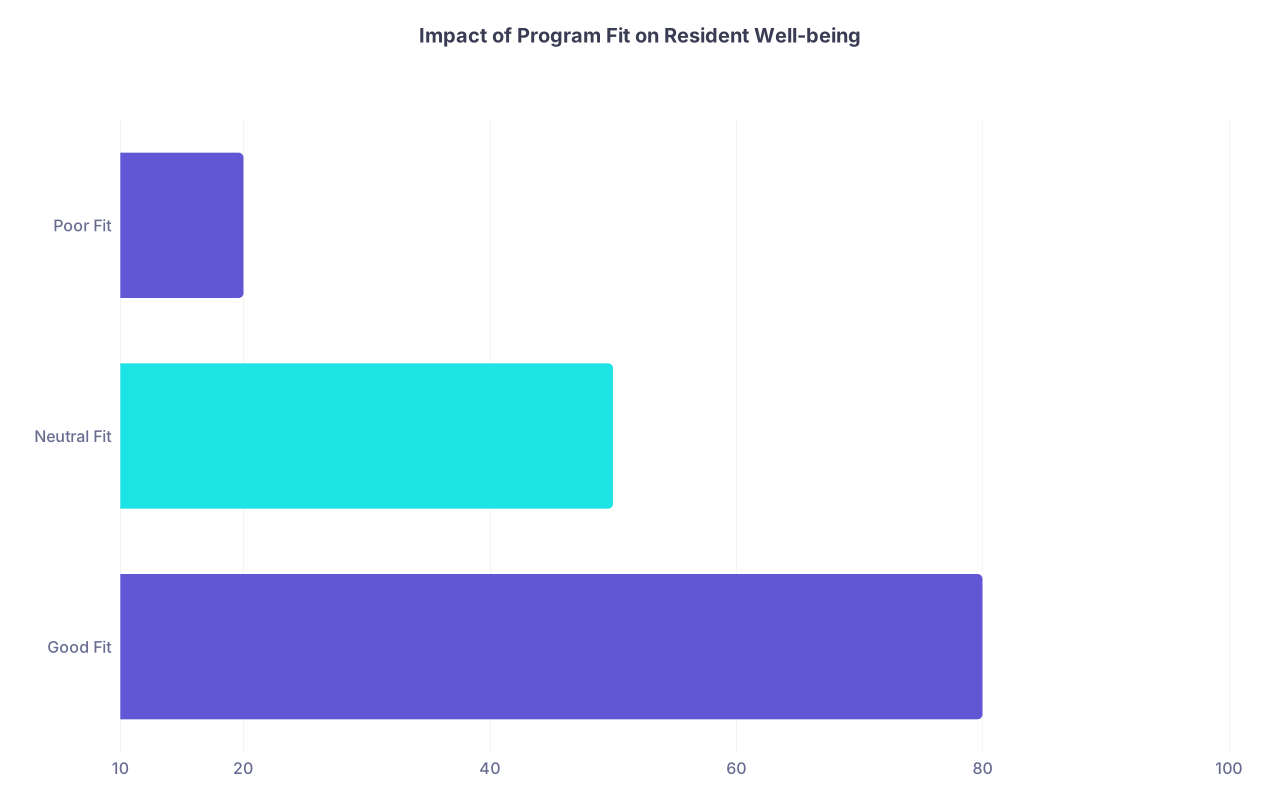
| Category | Value |
|---|---|
| Good Fit | 80 |
| Neutral Fit | 50 |
| Poor Fit | 20 |
People in good-fitting programs are simply more likely to be okay. That’s what you’re trying to optimize, whether you realize it or not.
Action Steps So You Don’t Spiral Forever About This One Program
You’re anxious, so you need something concrete to do, not just vague reassurance.
Try this:
Write a brutally honest debrief of that interview day.
No filters. What you liked, what felt off, exact quotes, body language, moments you keep replaying. Don’t edit it to sound rational. Just get it out.Wait 48 hours. Read it again.
See what still feels true when the emotion softens. If your reaction still makes sense, trust it more. If it feels exaggerated, adjust—but don’t erase it.Compare it to your notes from programs you loved.
What’s missing? What’s reversed? That contrast will clarify what you actually value instead of what you think you’re supposed to value.Talk to one person who knows you well and doesn’t care about prestige.
Not the “rank everything by Doximity” classmate. Someone who sees you as a human. Explain your hesitation. If their immediate response is, “Honestly, I’m not surprised you didn’t vibe with that,” you have your answer.Then rank based on your data, not the group chat.
And once your list is certified, stop re-litigating it. That way lies madness.


