
The fantasy that “once you match, everything’s fine” is a lie.
You can absolutely match, show up on July 1, and only then realize: oh no. This place has real red flags. And you’re trapped… for years. Or at least that’s what it feels like at 2 a.m. when you’re on hour 26, attending is yelling, and your co-intern is crying in the supply closet.
Let’s talk about that scenario. The one nobody likes to admit they think about:
What if I only realize the red flags after I’ve already matched?
First: You’re Not Stupid for Missing the Red Flags
This is the part that eats people alive. Not just “This program sucks,” but “I should’ve known better. I ignored signs. I made a horrible decision.”
I’ve watched people spiral on exactly that loop.
Here’s the ugly truth: the whole residency application system is basically designed to hide a lot of the reality you only see once you’re living it. You get:
- Polished interview days
- Carefully selected “happy” residents
- A 6–8 hour snapshot of the program on their absolute best behavior
Meanwhile, they see:
- Your entire ERAS
- Your letters, scores, dean’s letter
- How desperate you are not to go unmatched
Pretty asymmetrical.
You’re not dumb if you didn’t pick up on:
- Residents saying “We’re like family!” but not making eye contact
- Faculty glossing over duty hour stuff with “We work hard, but we learn a lot”
- Vague answers about fellowship placement or attrition rates
You’re just… normal. Optimistic. You wanted to believe them. Also, you don’t know what you don’t know. Until you’re the one cross-covering 60+ patients with zero backup at 3 a.m., it’s hard to understand what “we push autonomy” really means.
So no, you weren’t negligent. You didn’t fail some hidden test of judgment. Most people only discover the real culture from the inside.
What “Red Flags After Matching” Actually Look Like
Let’s get concrete. Because when you’re panicking, everything feels like a red flag.
There’s a difference between:
- “This is hard and I’m adjusting”
vs. - “This place is legitimately unsafe or toxic.”
Some patterns I’ve seen that usually mean it’s more than just first-month shock:

1. Consistent duty hour violations with pressure to lie
Not just a bad week. I mean: every rotation. Every service. Mentors saying things like, “We all just log 80 even if we work more, that’s how it’s done.” That’s a red flag. Programs lose accreditation over this.
2. No supervision when you clearly need it
You’re being asked to do stuff clearly above your level with no backup. You call, and the senior shrugs, or the attending says, “Figure it out.” Patients are at risk. You’re one bad code away from disaster.
3. Blatant culture of bullying or humiliation
Attending pimping hard is one thing. But people regularly getting screamed at in front of patients, being called stupid or incompetent, PDs using threats. That’s not “old school.” That’s abuse.
4. Zero interest in education
Sign-outs instead of teaching. Conferences canceled constantly for “service needs.” Being told, “We’re too busy to teach here, you’ll learn on your own.” You can grind through that for a while, but it’s not what you signed up for.
5. High attrition with weird explanations
You start hearing, “Oh yeah, three people left last year, they just… weren’t a good fit.” But when you talk to upper levels privately, you get stories about burnout, mental health crises, switching specialties, or people transferring out because they were desperate.
6. Systemic dishonesty
Leadership saying one thing publicly (“We’re very committed to wellness”) while punishing residents who use sick days, maternity leave, or mental health resources. Or telling ACGME one version of reality and you living another.
Not all of those mean “Run now,” but a cluster of them is not normal “residency is hard” stuff. It’s “this program has structural, culture-level issues.”
Are You Really Trapped? What Your Actual Options Are
This is the big terrifying thought: “I matched here. I’m stuck here. Period.”
That’s not 100% true. The catch is: none of the options are easy or clean. But you’re not as powerless as it feels.
Option 1: Stay, but change how you survive it
This is what most people do, honestly. Because transferring is rare and complicated.
Staying doesn’t mean “shut up and take it.” It means: I’m going to treat this like a job I don’t love but have to finish, and I’m going to actively limit how much it destroys me.
Things I’ve seen residents do that actually helped:
- Find your micro-community: 1–3 co-residents you trust. Vent with them. Watch each other for signs you’re unraveling.
- Draw hard lines where you can: Maybe you can’t fix the call schedule, but you can refuse to come in on your one post-call day off “to help out.”
- Use institutional resources strategically: GME office, ombuds, counseling. Not as magic fixes, but as documentation and backup.
- Protect your long game: Study for boards even if the program doesn’t prioritize it. Get involved in research or QI that makes you marketable for jobs/fellowships so you have an exit ramp.
Staying doesn’t mean you approve. It just means you’re choosing the least-destructive path in a system that doesn’t give you perfect choices.
Option 2: Try to transfer programs
Hard. Not impossible.
Let me be blunt:
Transfers are messy. Programs don’t advertise spots, PDs have to talk to each other, and there’s a stigma (even though they often created the problem).
But transfers do happen. I’ve watched residents move:
- From malignant IM to a saner IM program
- From small community program to bigger university center
- From one region to another for family/health reasons
Where it tends to work better:
- You’re early (PGY-1 or early PGY-2)
- You’re in a larger specialty (IM, FM, peds, psych) with more programs
- Your performance is solid despite the environment
What you’d likely need:
- A PD who will either support the transfer or at least not sabotage it
- Another program with a funding slot open (this is the annoying part—Medicare caps funded positions)
- A clear, non-dramatic explanation: “I’m looking for a program with stronger teaching / more support / closer to family for X situation.”
This is where it helps to quietly reach out to mentors from med school, prior rotations, or anyone who knows PDs elsewhere. Back-channel conversations are how a lot of these moves start.
Is it risky? Yes. You risk your current PD getting weird if they find out too early. That’s why you move slowly, document everything, and get real advice from someone who knows your specific specialty politics.
Option 3: Change specialties or re-enter the Match
Nuclear option. But not off the table.
This is more like: “I realized not only is this program bad, I also hate this field and would rather do something else than be here for 3–7 years.”
You’re thinking:
- Leave this residency, regroup, reapply to a different specialty
- Or do a preliminary year (if that’s what you matched into) and then shoot for something else
Reality check:
- You might need to explain why you left.
- You might have a gap year.
- You might end up in something less competitive than you originally wanted.
But for people who are truly miserable and in the wrong field, it can still be better than grinding through years of the wrong life.
How to Tell If It’s “Residency Is Hard” vs “This Place Is Bad”
This is the part that gets tangled because residency, even at a good place, feels awful sometimes.
You’re sleep-deprived, constantly behind, never caught up on notes, and everyone around you is also overwhelmed. Your baseline becomes “miserable but functional.”
So how do you know if it’s them or just the stage of life?
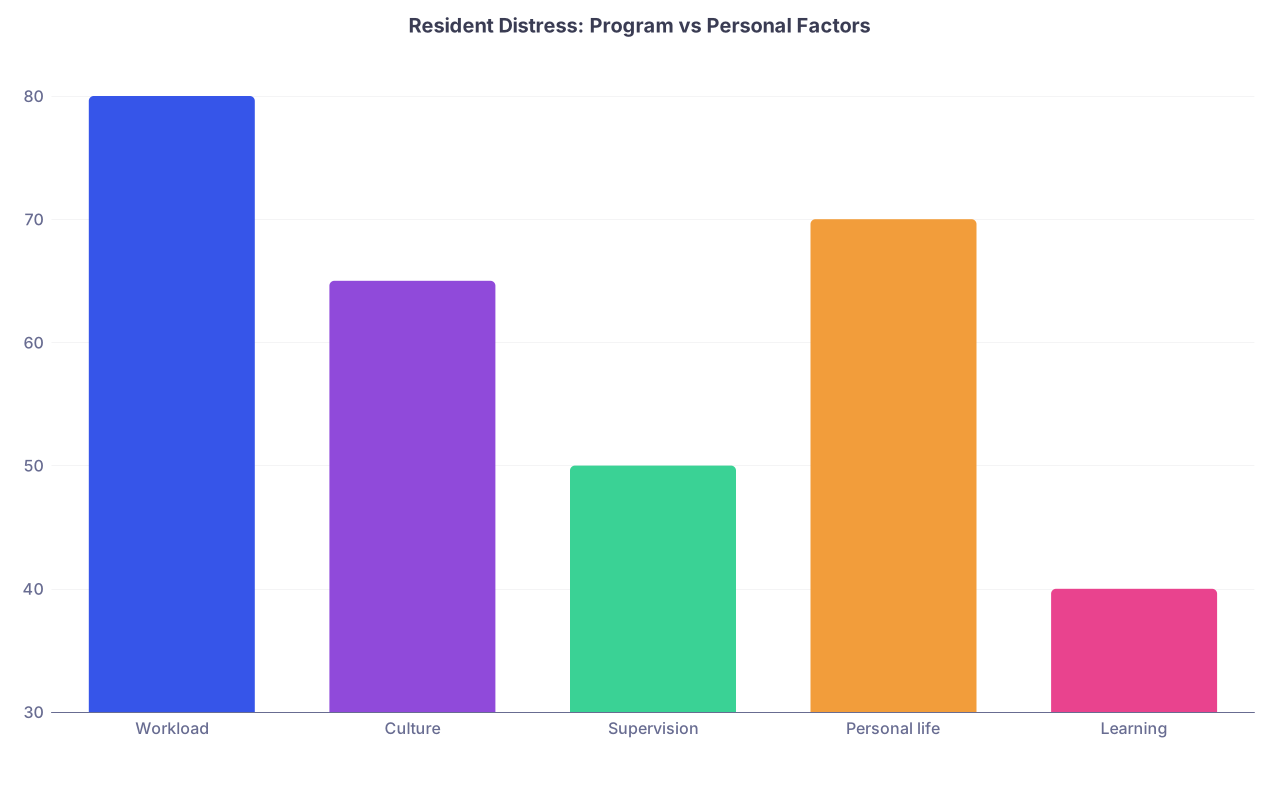
| Category | Value |
|---|---|
| Workload | 80 |
| Culture | 65 |
| Supervision | 50 |
| Personal life | 70 |
| Learning | 40 |
Here’s one way I mentally separate it:
- If you rotated somewhere else as a student and it was also hard, but you didn’t constantly feel disrespected, unsafe, or lied to? That’s a clue your current program may be the outlier.
- Talk to your co-interns privately. If everyone’s saying versions of “I thought residency would be hard, but I didn’t expect this,” that’s a pattern.
- Look at your body’s response. Are you only tired or are you dreading every single shift with chest-tightening anxiety? Crying in the parking lot before you walk in? That’s not just “busy.”
Also: ask older residents how they feel. If PGY-3s sound dead inside, bitter, and all they say is “Just survive and get out,” that’s different from tired but proud and reasonably satisfied.
How Much Can You Actually Push Back Without Getting Crushed?
Another awful fear: “If I speak up, I’ll be labeled problematic. If I stay quiet, I’ll be complicit and miserable.”
There’s a real power imbalance. Let’s not pretend there isn’t.
But there are levers:

| Step | Description |
|---|---|
| Step 1 | Notice red flags |
| Step 2 | Seek immediate help |
| Step 3 | Document issues |
| Step 4 | Group approach to leadership |
| Step 5 | Individual meeting with mentor |
| Step 6 | GME or Ombuds if needed |
| Step 7 | Personal safety at risk |
| Step 8 | Others affected |
- Document things. Dates, times, emails, duty hours, specific phrases. Documentation is power in a system that pretends problems are “isolated misunderstandings.”
- Start small. Instead of nuking the PD in an email, talk quietly to a chief you trust or a senior who’s survived. Sometimes they’ll say, “Yeah, that attending is known to be awful, here’s how we handle them.” Sometimes they’ll say, “You’re not the first; maybe we should bring this to GME.”
- Use group voice when you can. A single “complaining intern” can be dismissed. Three or four residents saying, “We’re concerned about repeated duty hour violations or unsafe cross-cover” is different.
Is there retaliation risk? Yes. Especially in truly malignant programs. That’s why you move carefully, document everything, and sometimes decide the goal is “protect myself and my patients” rather than “fix this dumpster fire completely.”
What If You’re Already in Deep: PGY-2 or PGY-3 and Regretting Everything
This is its own special dread. You’ve invested a year or more. You’re attached to your co-residents. You’re close to finishing, but the thought of another year (or three) there feels unbearable.
You start doing this math in your head:
- “If I leave now, I’ve wasted all this time.”
- “If I stay, I’m wasting my mental health.”
- “If I transfer, I might have to repeat a year.”
There’s no perfect answer, but here’s how I’ve seen people think through it:
| Path | Main Upside | Main Downside |
|---|---|---|
| Stay | Finish on time, stable path | Ongoing stress, limited change |
| Transfer | Better environment, same field | Uncertain spot, may repeat a year |
| Leave | Exit toxic system entirely | Career reset, reapplication needed |
Some questions to ask yourself (and maybe a therapist, honestly):
- If this exact program didn’t improve at all, can I survive here the remaining time without completely breaking?
- Is my issue the field (I hate this specialty) or the program (I might like this elsewhere)?
- Would I rather redo a year in a better environment than drag myself through fewer years in this one?
You’re allowed to decide, “This sucks, but I can white-knuckle it with support,” or “I’d rather delay my timeline than stay here.” Neither choice makes you weak or dramatic.
What If You’re Still a Student Reading This and Freaking Out
You might be reading all of this thinking, “Okay, cool, so I’m doomed. I’ll just inevitably miss red flags and then be stuck.”
Deep breath.
There’s some good news buried in this:
- Most programs are not secretly malignant. Flawed? Sure. Overworked? Absolutely. But truly dangerous or abusive? That’s a minority.
- You’re already ahead because you’re thinking about this early. You’ll listen more closely on interview day, you’ll ask different questions, you’ll stalk resident Reddit threads more critically.
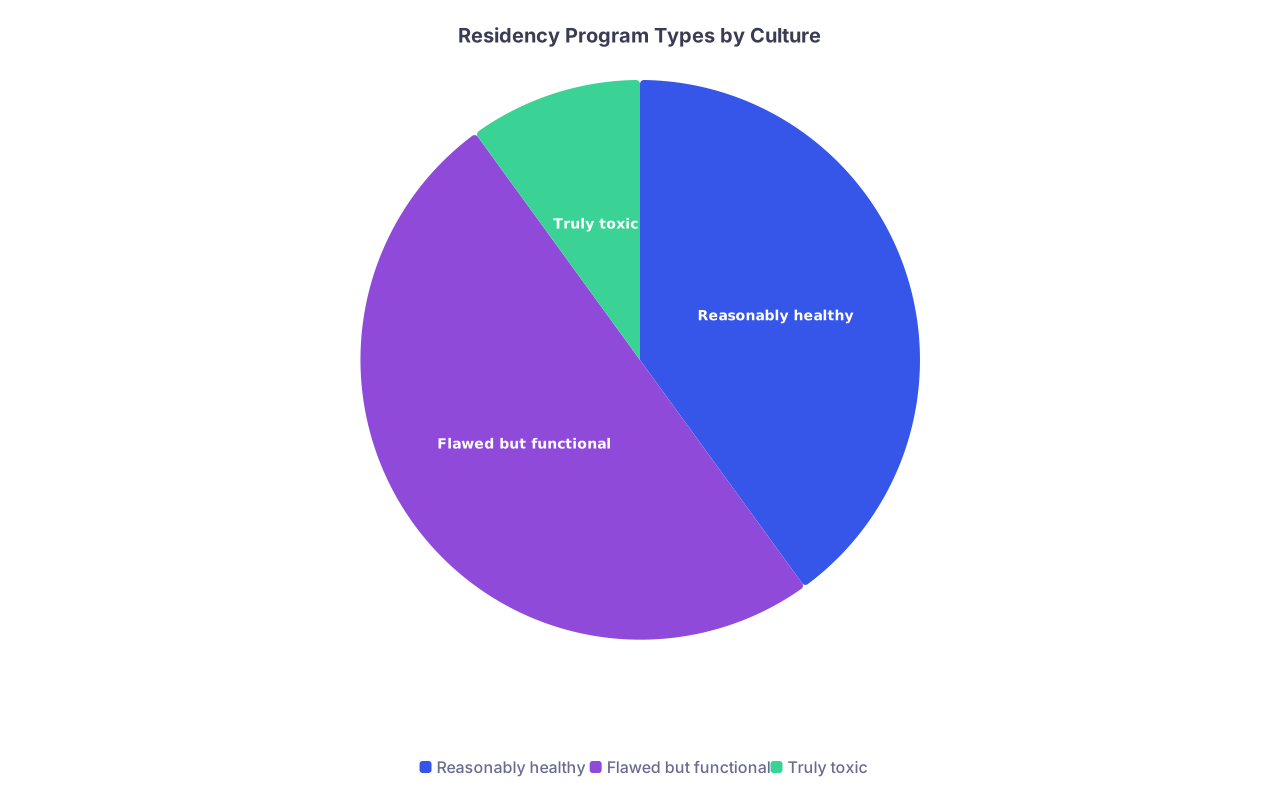
| Category | Value |
|---|---|
| Reasonably healthy | 40 |
| Flawed but functional | 50 |
| Truly toxic | 10 |
Do some programs lie or sugarcoat? Yes. But a lot of real red flags leak out through:
- How residents talk when the PD isn’t nearby
- How transparent they are about attrition, fellowships, board pass rates
- Whether they get weird defensive energy when you ask, “How does the program respond when residents struggle?”
You still won’t catch everything. Nobody does. But you’re not walking in blind.
The Quiet Truth Nobody Tells You
The system is not set up to protect you. You kind of already know that.
The ACGME, GME office, ombuds, wellness programs—those are all tools, not guarantees. Some are excellent. Some are toothless. Some only get activated when multiple residents bleed enough for long enough that it becomes a liability issue.
That sounds bleak, but there’s a flipside:
You’re not the only one who sees what’s wrong. Residents talk. Fellows talk. Nurses talk. Stories spread.
I’ve seen:
- PDs removed after enough documented complaints
- Programs put on probation for duty hour and supervision issues
- Residents successfully transferred to better environments
- Toxic attendings finally sidelined after residents collectively said “Enough”
You might not get justice during your years there. That’s the worst part. But you can still protect yourself, preserve enough of your sanity to build the life after residency that you actually want, and quietly make it harder for that program to pretend everything is fine.
A Tiny, Uncomfortable Reassurance
If you’re already in that “oh no, I chose wrong” headspace, here’s the part that sounds like a cliché but is actually true:
Residency is not the rest of your life.
Even if your program is awful. Even if you never transfer. Even if you spend three or five or seven years in a place you wouldn’t recommend to your worst enemy.
You still come out the other side board-eligible. You still get to pick jobs with better cultures, better leadership, more control. I’ve seen some of the most burned-out residents become fiercely protective, humane attendings precisely because they know what bad looks like.
You’re allowed to hate where you are and still fight for the version of yourself who gets out.
If You Remember Nothing Else
- Missing red flags before the Match doesn’t mean you failed; the system is built to hide a lot until you’re inside.
- You are not 100% trapped: staying, transferring, or even changing fields are all painful but real options.
- Your job isn’t to single-handedly fix a broken program; your job is to protect yourself, your patients, and your future long enough to make it out.