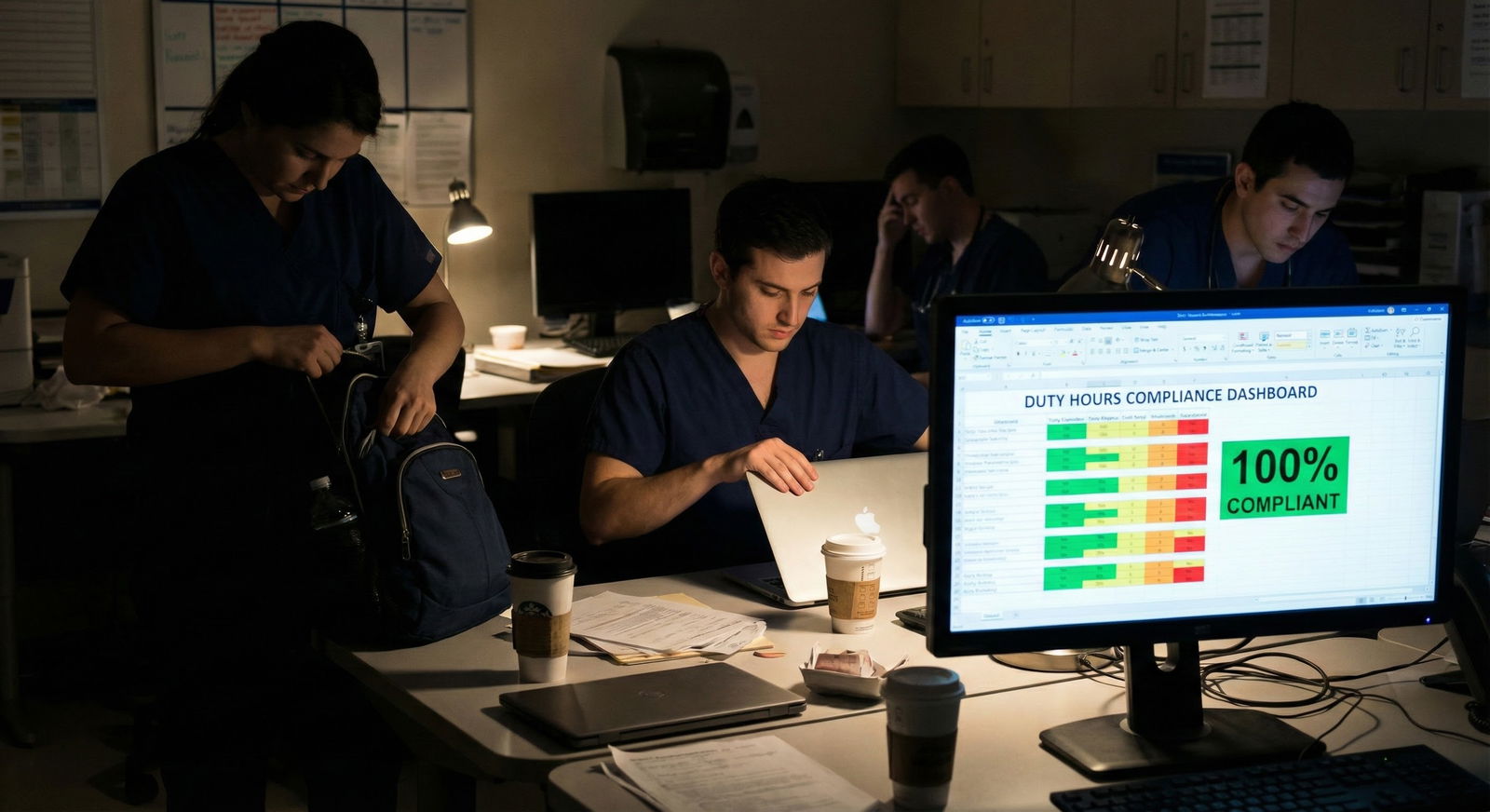
The way residents treat staff tells you more about a program than any glossy brochure ever will.
You saw residents snapping at nurses, curt with techs, maybe rolling their eyes at a clerk or sighing loudly at a pharmacist on the phone. And now you’re spiraling:
Was that just a bad day?
Or did I just walk into a malignant culture and not realize it until now?
Let’s pull this apart like someone who can’t stop replaying an interaction in their head at 2 a.m. Because that’s basically what we’re doing.
What You Probably Saw (And Why It’s Messing With Your Head)
Let me guess the scene.
You’re on a tour or a shadow day. Everyone’s doing that fake-polite thing. The PD is charming, the chief is smooth, the slide deck is “we’re a family.” And then, in a totally unscripted moment, you see:
- A senior resident snap at a nurse: “I already ordered that. Can you just check?”
- A resident talk over a social worker in rounds.
- Or worse, a resident dress down a med student in front of the team.
And your brain does that horrible thing: if they’re willing to act like this in front of a visitor… what’s it like when no one is watching?
You’re right to pay attention. That wasn’t nothing.
But you’re also right to be unsure. Because medicine is weirdly high-stress and terrible at emotional regulation. Good people can act badly. Malignant people just stay that way.
Stress vs Malignancy: What’s The Actual Difference?
Here’s the uncomfortable truth: every residency has stress. There will be days where someone is short, sighs, or says something they shouldn’t have. If you’re looking for a program where no one ever snaps… it doesn’t exist.
But there’s a massive difference between:
- An overstretched resident having one bad interaction
vs - A culture where disrespect is standard operating procedure
Think of it as three levels.
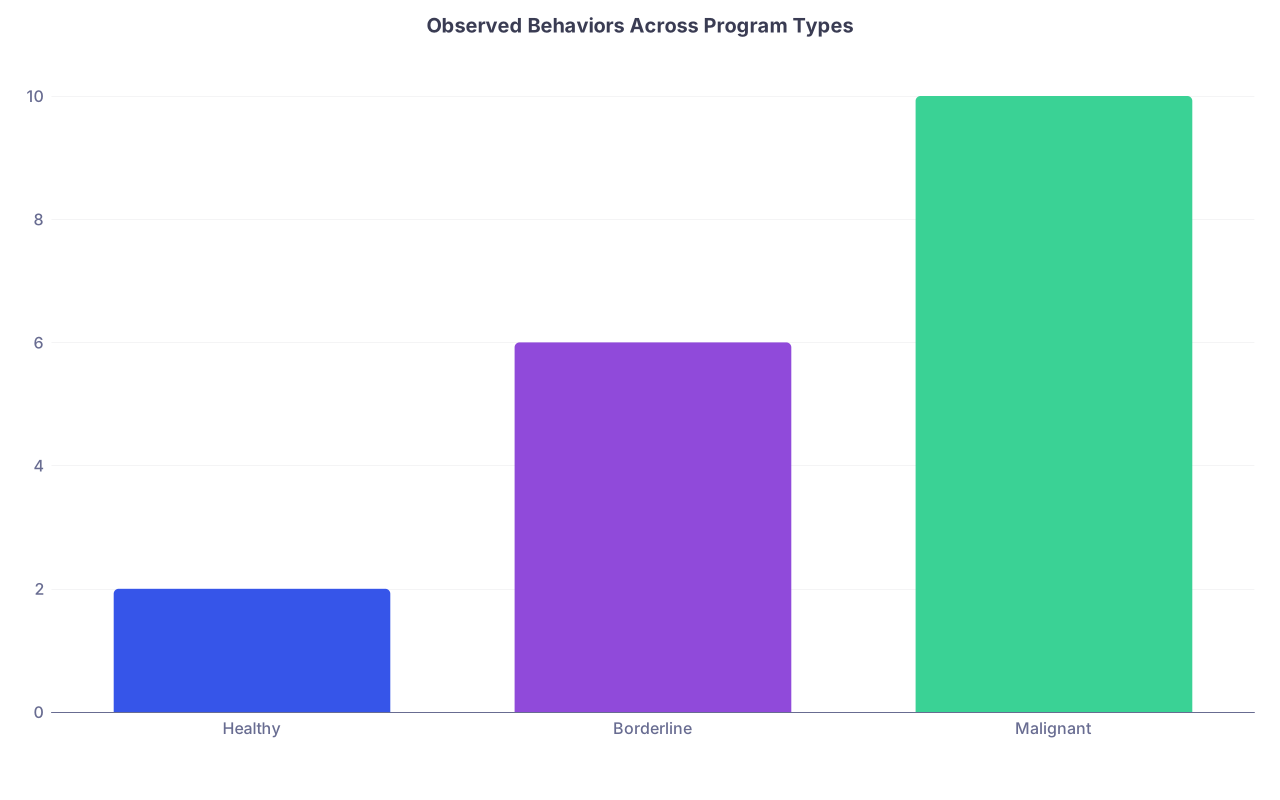
| Category | Value |
|---|---|
| Healthy | 2 |
| Borderline | 6 |
| Malignant | 10 |
This isn’t scientific data. It’s how often I’ve seen these patterns.
Level 1: Normal (but Uncomfortable) Stress
Signs it might just be acute stress, not a toxic culture:
- The resident immediately looks guilty or tries to fix it: “Sorry, I’m just running behind, that came out wrong.”
- The staff doesn’t flinch. They look mildly annoyed, not afraid.
- You see other interactions that feel warm, collaborative, joking.
- The same resident is kind to students and staff in other moments.
In a healthy program, you’ll see tension. But you’ll also see repair.
Level 2: Borderline Culture
This is the gray zone that drives applicants insane because you’re not sure what you saw.
People aren’t raging monsters, but:
- Sarcasm is the default tone.
- People make “jokes” that are clearly barbs.
- Nurses roll their eyes behind residents’ backs.
- You feel like everyone’s slightly on edge all the time.
Here, the culture might not be fully malignant, but it’s not exactly safe either. You’d survive. You might not thrive.
Level 3: Malignant Culture
This is where snapping at staff is just one symptom of something much worse.
Red flags I’ve seen in truly malignant programs:
- Residents mock staff after they walk away.
- People talk about nurses and techs like they’re obstacles, not teammates.
- Public shaming: “Why would you do that? That’s basic.” in front of everyone.
- Blame culture: everyone’s terrified of admitting mistakes.
- PDs hand-wave this with “We work hard here” or “It builds resilience.”
When you see residents consistently punch down, that’s not “stress.” That’s who they’ve been trained to be.
Watch The Reactions, Not Just The Outburst
The isolated snapping you saw? Honestly, it might be a blip.
What matters more is: what happened in the 30 seconds after?

| Step | Description |
|---|---|
| Step 1 | Resident snaps at staff |
| Step 2 | Likely stress moment |
| Step 3 | Borderline culture |
| Step 4 | Possible malignant culture |
| Step 5 | Look for overall warmth |
| Step 6 | Add to serious red flag list |
| Step 7 | What is the reaction |
Some patterns to pay attention to:
- Did anyone intervene? Sometimes an attending steps in: “Let’s take a breath, we’re all on the same side.” That’s gold. That means the hierarchy can actually police itself.
- Did the nurse look surprised or just resigned? Shocked = unusual. Resigned = this is daily life.
- Did the resident soften later? Some will circle back with, “Sorry about earlier.” You may not hear it, but if the dynamic seems repaired, that’s data.
If you see zero attempts at repair, and it happens multiple times in different settings, that’s when I’d start getting genuinely worried.
How To Read A Program’s Culture Without Feeling Like You’re Overreacting
You’re not crazy for over-analyzing this. Culture is hard to see in one day, so you’re clinging to any clues you can get.
Here’s how I’d structure it, if I were in your exact anxious-brain mode.
| What You See | What It Likely Signals |
|---|---|
| One resident snapping once, then apologizing | High stress day, emotionally imperfect human, not necessarily toxic culture |
| Multiple residents short with staff all day | Normalized impatience, possible red flag |
| Staff avoiding certain residents/attendings | Power imbalance, fear, potential toxicity |
| Staff joking comfortably with residents | Baseline trust and psychological safety |
| Residents joking harshly about nurses or consults | Disrespect baked into culture |
If you only remember one thing: staff are your window into the truth. They don’t owe the program loyalty the way residents do.
If the nurses and techs seem:
- Relatively relaxed
- Willing to joke with residents
- Comfortable asking questions
That’s a good sign, even if you saw one bad moment.
If they:
- Avoid eye contact
- Seem tense when a particular attending or senior walks in
- Whisper complaints in the corner
That’s not nothing. That’s your canary in the coal mine.
Questions You Can Actually Ask (Without Sounding Like A Snitch)
Your other fear: “If I bring this up, I’ll look dramatic or difficult.”
You don’t have to say, “So why was your R3 screaming at that nurse?” There are subtler, safer ways to get clarity.
Try things like:
To a resident, one-on-one:
“How’s the relationship with nursing here? Do you feel like the teams work well together?”To a nurse (if you get a chance and it feels safe):
“How do you like working with the residents here?”To a chief or PD in a more general way:
“How do you handle conflict or tension between residents and staff?”
Listen less to the words and more to the energy:
If residents immediately get defensive: “Well, we work really hard here, so…”
That’s a little concerning.If they openly admit: “Honestly, nights in winter can get tense. People snap. But we call each other on it.”
That’s much healthier. No program is perfect. The honest ones are safer.
When Your Brain Starts Saying “Maybe I’m Just Too Sensitive”
This is the part where you gaslight yourself.
You start thinking:
- “Everyone says residency is hard, maybe I need to toughen up.”
- “Maybe this is just how real medicine works.”
- “Am I already the ‘problem’ applicant who can’t handle conflict?”
No. There’s a difference between stressful and soul-eroding.
Stressful is: long hours, high responsibility, sometimes people are rushed and clipped.
Soul-eroding is: routine humiliation, disrespect, and a hierarchy where cruelty is normal.
You are allowed to not want to spend 3–7 years in a place where:
- People routinely snap at staff.
- No one ever apologizes.
- Everyone just shrugs and calls it “work ethic.”
You’re not weak or “soft” for wanting to be trained by people who haven’t forgotten how to be human.
Putting This Incident in Context With Other Red Flags
That snapping you saw should not be evaluated alone. Think pattern, not single data point.
Ask yourself:
Did I also notice…
- Residents looking exhausted and flat, not just tired but empty?
- People bragging about how “we don’t complain here” or “we’re too busy to go home on time”?
- A PD or chief minimizing wellness or joking about burnout?
- No mention of support: counseling, check-ins, debriefs after codes or deaths?
If the answer is yes, then the snapping is exactly what it looked like: a symptom of something bigger and uglier.
But if, aside from that one moment, you saw:
- Residents laughing together
- Nurses chatting easily with interns
- Attendings teaching without humiliating anyone
- People honestly acknowledging how hard training is while still caring
Then that incident might have been what you fear it never is: a bad 30 seconds in an otherwise functional place.
What I’d Actually Do If I Were You
If I were lying awake replaying this, here’s exactly how I’d handle it:
Write it down
Literally describe what you saw, who was there, what was said, how people reacted. Your memory will get fuzzier with time and anxiety.Score the program on culture only
Ignore name, prestige, fellowship match, whatever. Purely on human behavior: would I want to be a nurse or intern here? Yes/no/unsure.Look for corroboration
Talk to current residents at a pre-interview dinner, virtual meet, or even cold-email a recent grad. Ask about staff relationships and conflict.Compare against other programs
Don’t evaluate this in a vacuum. If every other place you visit feels warmer, that’s telling. If lots of places seem similar, it might really just be stress.Be willing to bump it down your rank list
You don’t have to blacklist the program over a single moment. But if it sticks with you, listen to that. Move it down. There’s a reason your gut won’t let it go.
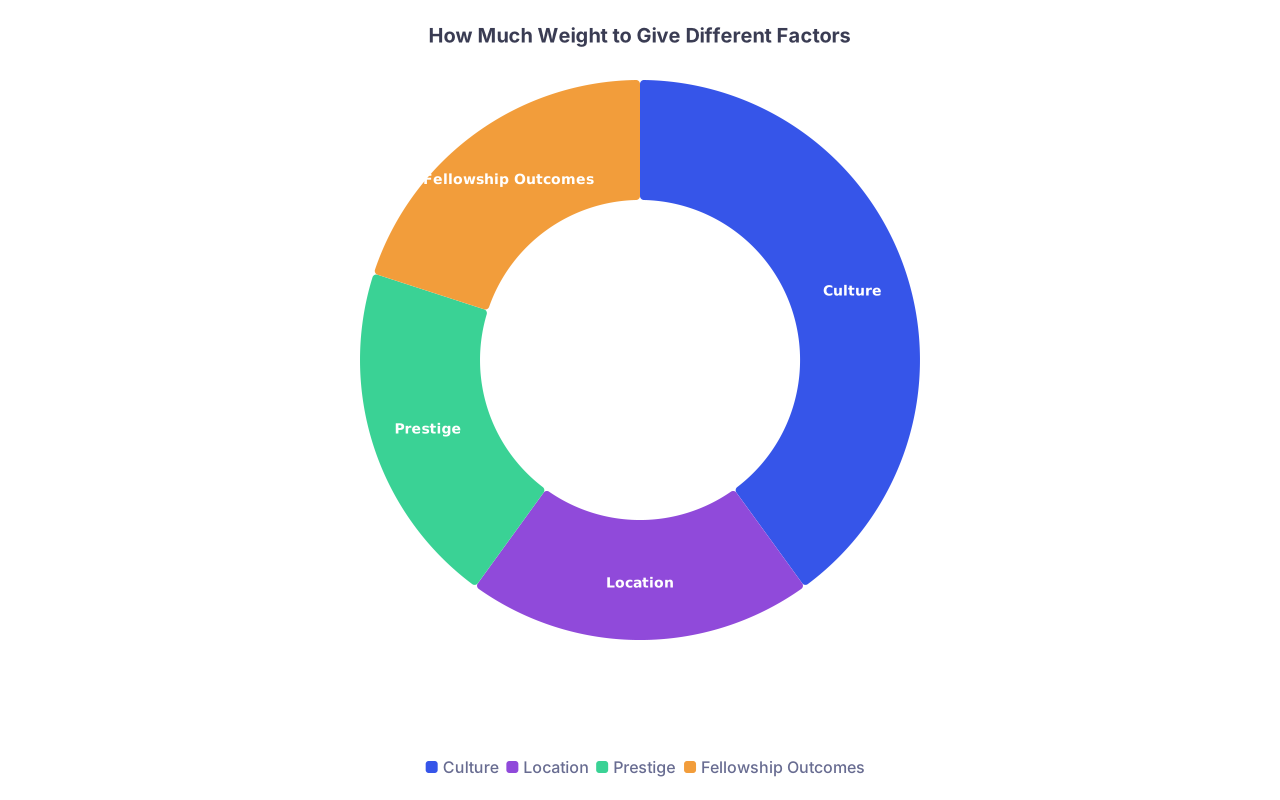
| Category | Value |
|---|---|
| Culture | 40 |
| Location | 20 |
| Prestige | 20 |
| Fellowship Outcomes | 20 |
If you force me to pick numbers, I’d say: culture is at least 40% of the decision. Because when it’s bad, it bleeds into everything.
The Hard Part: Residency Will Change You. Culture Decides How.
You’re not just picking a workplace. You’re picking the environment that’s going to shape how you handle stress, how you talk to nurses, how you treat med students when you’re the senior.
Programs where residents casually snap and no one cares? They don’t just train you to manage DKA and sepsis. They train you to normalize disrespect.
Programs where people occasionally lose it, then own it and repair? Those are the ones where you can become both competent and still vaguely human.
You asked: “Normal stress or malignant culture?”
The true answer is: look beyond the single snap. Watch the repair, the patterns, and the way people talk about each other when they think you’re not listening.
Years from now, you won’t remember the specific words that resident said to that nurse. You’ll remember whether you spent your training becoming proud of the doctor you turned into—or quietly ashamed.