Most applicants handle program probation news either by panicking or pretending it does not matter. Both approaches are wrong.
If you want a strong training experience and future career, you must learn how to probe ACGME and probation issues without sounding accusatory, naïve, or desperate. There is a way to do this that gets you real information, protects your reputation, and sometimes even impresses programs.
Let me walk you through it.
1. Get Oriented: What “Probation” And ACGME Concerns Actually Mean
Before you ask a single question, you need to understand the terrain. Otherwise you will sound uninformed and programs will shut down.
ACGME statuses in plain language
Here is the stripped‑down version of what ACGME can do to a program:
| Status | What It Usually Means |
|---|---|
| Continued Accreditation | Routine, no major active concerns |
| Continued With Warning | Significant issues, must be fixed soon |
| Probationary Accreditation | Serious non-compliance, at risk |
| Withdrawal of Accreditation | Program is closing |
| Initial Accreditation | New program under close review |
The exact labels can shift over time, but practically:
- “With warning” = Yellow light.
- “Probation” = Flashing red.
Neither automatically means “run away,” but both require real due diligence.
Where probation concerns usually come from
Patterns I have seen over and over:
- Chronic duty hour violations swept under the rug
- Toxic program culture – retaliation for reporting, bullying
- Inadequate supervision – seniors/attendings not present when they should be
- Weak educational content – clinics cancelled for service, bad board pass rates
- Missing documentation – CCC not functioning, Milestones not recorded properly
- Resident complaints that uncover systemic problems
Your job is not just to know that there is an issue, but what kind and whether it is actually improving.
2. Do Your Homework Before You Say A Word
If you walk into an interview and ask, “So I heard you’re on probation?” you already lost.
You need a fact base first.
Step 1: Check official sources
- ACGME Accreditation Data System (ADS) public info
- Some specialties / regions share more than others.
- You may see language like “continued accreditation with warning” or “probationary accreditation.”
- Program website / GME office
- Look for: “Our program recently underwent ACGME review and we are implementing improvements in X, Y, Z.”
If there is nothing obvious, but rumors are intense, assume at least some smoke.
Step 2: Pay attention to smoke signals
Residents leak the truth unintentionally. Look for:
- Multiple recent program director changes in a short span
- Sudden class size reduction
- Multiple residents leaving or being “transferred”
- Interns doing attending‑level work at night
- Residents saying phrases like:
- “It is better than a few years ago.”
- “We are working with ACGME on some things.”
- “We cannot talk about certain details but there were issues.”
These are not automatic deal-breakers. But you should shift into investigative mode.
Step 3: Write down your specific concerns
Do not go in with “I heard you had problems” energy. Instead, prepare 3–5 specific issues you want clarity on.
Example list:
- Duty hours and schedule fairness
- Resident input and safety reporting
- Board pass rates and academic support
- Faculty supervision at night / on ICU
- Program stability – leadership turnover, class size
This keeps you from sounding like a gossip and centers you on resident education and safety.
3. The Core Principle: Ask About Improvement, Not Accusation
The way you frame questions determines whether you get real answers or canned PR.
Your north star:
You are not a prosecutor; you are a thoughtful applicant evaluating fit and trajectory.
You want to sound like someone who:
- Understands that all programs have problems
- Cares about education, safety, and culture
- Is mature enough to talk about difficult topics professionally
That is exactly the kind of resident PDs want.
4. Scripts: How To Ask About Probation Without Burning Bridges
Let’s get concrete. Here is how to phrase things to different audiences.
A. With the Program Director (PD)
PDs are usually the ones who interface with ACGME. They know the details. They also worry about reputation. You must be precise and respectful.
1. If the probation / warning is public knowledge
Use this structure:
- Acknowledge reality
- Emphasize your interest
- Ask focused, improvement‑oriented questions
Example:
“I know the program has gone through some ACGME review challenges recently. I am very interested in training here and want to understand the trajectory.
Could you share:
- What the main concerns were from ACGME, in general terms?
- What specific changes you have implemented in response?
- How residents are involved in that improvement process?”
You are not asking for confidential documents. You are asking for themes and actions. That is fair.
2. If it is not clearly public but you suspect issues
Do not say, “I heard rumors.” Instead, tie your question to observed facts and broader process.
Example:
“I have seen that across many programs nationally, ACGME has increased scrutiny around duty hours, supervision, and resident wellness.
From your perspective, what have been the biggest growth areas for your program in the last few years, and what changes have you made to address ACGME feedback or resident concerns?”
If there was probation, they can answer in that frame: “We did have formal feedback in X area, and here is what we changed.”
If they dodge completely or give vague answers, that itself is data.
3. PD follow‑up questions that do not burn bridges
You can safely ask:
- “How do you measure whether the changes are actually working?”
- “Have there been any recent ACGME or internal reviews that confirmed improvement?”
- “What do you see as the remaining challenges over the next 1–2 years?”
This makes you look like a serious learner, not a rumor‑chaser.
B. With Chief Residents
Chiefs are your best reality filter. They see the implementation, not just the plan.
Here you can be slightly more direct, but still professional.
Example:
“I have heard that the program has been working hard on improving areas like duty hours and supervision. From your perspective as chief, what were the main issues, and what has actually changed on the ground for residents?”
Another:
“If I matched here as an intern next July, what would I notice that is different compared to residents who started 2–3 years ago?”
Then shut up and listen. Chiefs often tell the truth between the lines:
- “We are still working on night float coverage” = this is still a live problem.
- “The big things ACGME flagged have been addressed, but culture change is slower” = better, but still evolving.
If you sense openness, you can add:
“Were there any ACGME concerns related specifically to resident safety, supervision, or retaliation for reporting issues?”
If they flinch or tense up, notice it. Do not push harder in the same moment. Move to a different topic, then circle back later with someone else.
C. With Current Residents (away from PDs)
This is where you will get the most honest data, both verbal and nonverbal.
Your goal: make it easy to be honest without asking them to break confidentiality.
Approach it as:
- “What has it actually been like living through the changes?”
- “What do you wish applicants understood about the program’s past and trajectory?”
Examples:
“I know every program has some areas it is trying to fix. For yours, what have been the biggest pain points in recent years, and do you feel leadership is genuinely addressing them?”
“Sometimes ACGME concerns are mostly paperwork, other times they reflect real safety or culture problems. Without disclosing anything confidential, how would you characterize what your program has been working through?”
That last sentence is key. You are telling them: I know there are lines; I am not asking you to cross them.
5. What To Listen For: Green Flags vs. Red Flags
As you ask these questions, content matters, but tone and alignment matter more.
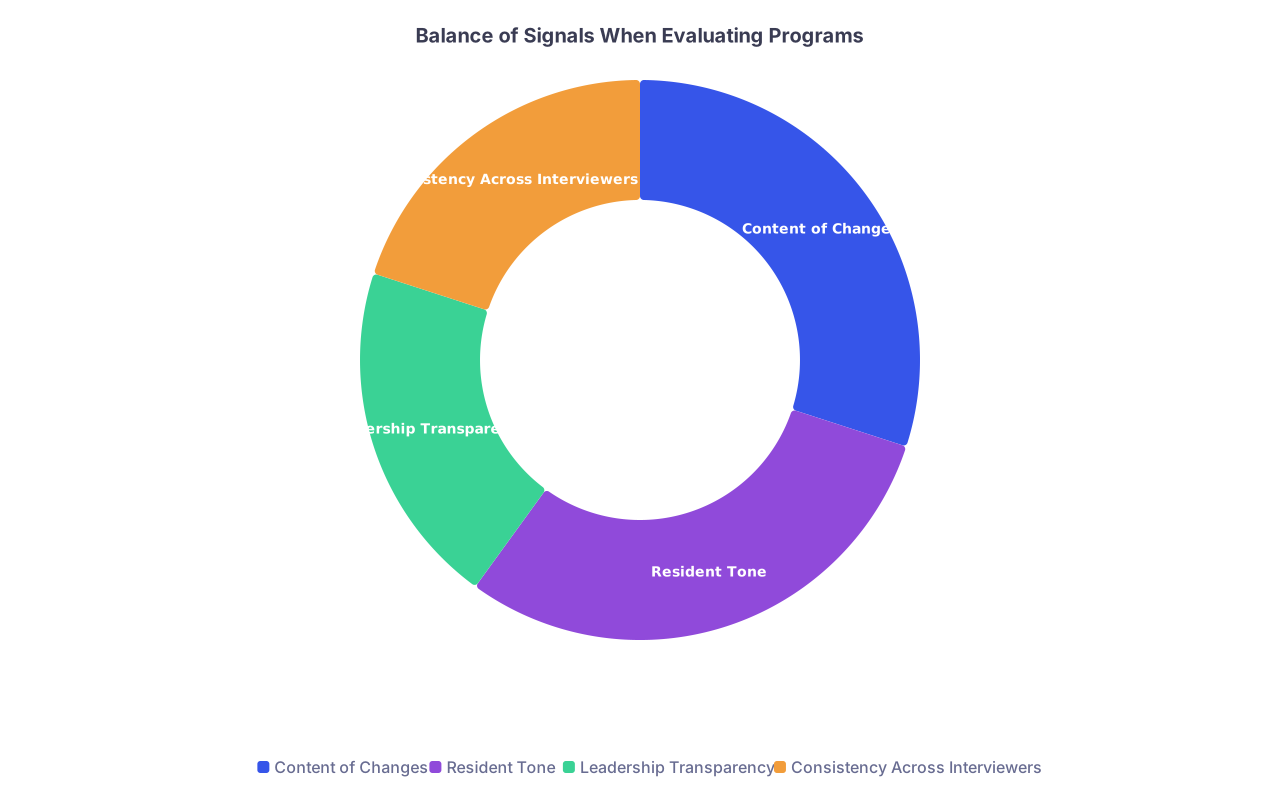
| Category | Value |
|---|---|
| Content of Changes | 30 |
| Resident Tone | 30 |
| Leadership Transparency | 20 |
| Consistency Across Interviewers | 20 |
Strong green flags
If you hear things like this, that is good:
From PD:
- “ACGME was concerned about X, Y, Z. We agreed about X, partly agreed about Y, and clarified Z. We did A, B, and C to fix it.”
- “We added a night attending, capped admissions, and expanded our wellness resources.”
- “We set up monthly check‑ins with residents specifically to review progress.”
From residents:
- “The last 2 years have been much better than before.”
- “Leadership actually listened when we said the ICU coverage plan was unsafe.”
- “When someone reports an issue, there is follow‑up and no retaliation that I have seen.”
From chiefs:
- “Some things are still painful, like clinic load, but we have data now and a concrete plan.”
This pattern means: problems existed, they were real, but there is growth and transparency.
Major red flags
These are the things that should make you seriously reconsider:
Vagueness from leadership
- “There were some misunderstandings with ACGME, but it is fine now.”
- “We had some paperwork issues, nothing serious,” especially when residents tell you otherwise.
Inconsistent stories
- PD says, “Hours are fully compliant, never an issue,” while residents laugh when asked about duty hours.
Fear in residents
- Long awkward pauses.
- “We are not allowed to talk about that.”
- Looking over their shoulders during the social before answering.
Blame shifting
- Leadership blaming “a couple of problematic residents.”
- Residents blaming “one crazy attending” when patterns sound systemic.
Minimizing real harm
- “Yeah, we had a few 28‑hour calls but everyone goes through that, it is just how it is here.”
If more than one of these shows up, treat that as a high‑risk program. You only get one residency.
6. Emailing About ACGME Concerns Without Looking Like a Liability
Sometimes you need to ask before or after interview day. Doing this badly can absolutely hurt you. Done well, it can help.
When it is reasonable to email
- You are choosing between 2–3 programs and probation status is the big differentiator.
- You heard conflicting information on interview day and want clarification.
- You are ranking a program highly but feel uneasy about safety / closure risk.
General email template
Keep it short, professional, and focused on fit.
Subject example:Question about program development and accreditation trajectory
Body example:
Dear Dr. [Last Name],
Thank you again for the opportunity to interview with the [Program Name] residency and for the time you and the team spent sharing your vision for the program.
As I finalize my rank list, I am very interested in understanding the trajectory of training at [Institution]. I am aware that the program has recently been working with ACGME on certain improvements, and I would appreciate any general context you are able to share about:
- The main areas of focus identified in recent reviews, and
- The key changes that have been implemented to strengthen resident education and safety.
I remain very interested in [Program Name] and want to ensure I have an accurate understanding of where the program is headed over the next few years.
Sincerely,
[Your Full Name, AAMC ID]
Notice:
- No word “probation.”
- No mention of “I heard from residents that…”
- No accusation.
- Clear professional interest.
If they respond thoughtfully, that is a plus. If they ignore you or answer with a non‑answer, factor that into your rank list.
7. Protecting Your Reputation While Asking Tough Questions
Your job is to gather information without getting labeled as “the problem applicant.”
Here is how you avoid that.
1. Do not lead with drama
On interview day:
- Spend 80–90% of your time on normal questions: curriculum, research, call schedule, mentorship, career outcomes.
- Reserve probation / ACGME questions for 1–2 conversations, not every single interaction.
If you ask every interviewer about problems, you will look obsessed with risk and negativity.
2. Never cite gossip as your source
Avoid phrases like:
- “I read on Reddit that…”
- “Some residents online said your program almost shut down.”
Instead, anchor questions to:
- “Recent ACGME focus on…”
- “National increased attention on resident safety and duty hours…”
- “Your own comments on the program website about improving X…”
You want to sound like an informed adult, not a comment‑section addict.
3. Watch your tone: curious, not confrontational
Bad version:
“Are you on probation with ACGME? Are you going to lose accreditation while I am here?”
Better version:
“How confident are you about the program’s stability and accreditation status over the next several years, and what contingencies exist to protect residents if any major changes happen?”
One sounds like a threat. The other sounds like a thoughtful career decision.
8. Ranking Strategy When ACGME Concerns Are Real
Here is the hard part: you have data now. The question becomes how to use it.

Step 1: Separate risk type
Not all ACGME issues are equal.
Administrative / documentation‑heavy issues
- CCC processes, Milestones documentation, some curriculum mapping.
- Risk to you: lower. Annoying, but usually fixable without hurting your training.
Patient safety / supervision issues
- Inadequate attending coverage, repeated near‑misses, unreported adverse events.
- Risk: high. Your license and sanity are on the line.
Culture / retaliation issues
- Residents punished for speaking up, fear to report errors, PD ignoring complaints.
- Risk: extremely high. These programs grind people down.
Be harsher on patient safety and culture problems than on paperwork or scheduling.
Step 2: Weigh trajectory over snapshot
Ask yourself:
- Is this a program on the way up from a rough period?
- Or a program on the way down where good people are trying to escape?
Signs of “on the way up”:
- New PD with a clear plan
- Visible changes already in place
- Residents who say, “I would choose this program again now, even though the last few years were rocky.”
Signs of “on the way down”:
- Multiple PDs leaving recently
- Residents quietly saying they would not choose it again
- Defensive leadership + fearful residents
Rank accordingly.
Step 3: Have a personal cut‑line
You need to decide:
“What is the lowest level of safety and honesty I am willing to accept for the next 3–7 years?”
My rule of thumb:
- If residents look broken and leadership is evasive, that program does not go on your rank list.
- If residents are honest about problems and leadership is specific and transparent about fixing them, the program can stay — just not at the very top unless you see strong evidence of real improvement.
9. Advanced: How Programs Actually Recover From Probation
You will sound much more like a peer and future leader if you understand what real recovery looks like.
Real recovery usually includes:
Formal action plan with timelines submitted to ACGME
Concrete structural changes:
- New PD or associate PD
- Additional faculty hires
- Rebalanced rotations (e.g., moving away from unsafe community sites)
Schedule redesign:
- Cap on admissions
- Protected didactics actually protected
- More night coverage or nocturnists
Governance changes:
- Functional Program Evaluation Committee (PEC)
- Regular anonymous surveys with visible response
If the program can describe these things in detail, odds are they are actually doing the work. If they wave their hands and talk about “renewed commitment” but cannot name specific changes, they probably are not.
10. A Simple Conversation Flow You Can Use
To make this concrete, here is a “script skeleton” you can plug into any interview day.

| Step | Description |
|---|---|
| Step 1 | Ask standard questions |
| Step 2 | Signal awareness of improvement efforts |
| Step 3 | Ask about main focus areas |
| Step 4 | Ask about specific changes |
| Step 5 | Confirm resident experience |
| Step 6 | Adjust rank list based on consistency |
Quick version in words:
- Start normal: curriculum, call, fellowship.
- Signal you understand programs evolve:
- “A lot of programs are working on X, Y, Z nationally.”
- Ask PD about focus areas and changes.
- Ask chiefs and residents what has actually changed on the ground.
- Compare stories. If they line up and sound honest, you are probably okay. If they clash badly, treat it as a major red flag.
11. Common Mistakes To Avoid
Let me save you from the patterns I keep seeing:
Mistake 1: Avoiding the topic entirely
- Out of fear of offending the program, you do not ask anything. Then you match and discover the rumors were true. Too late.
Mistake 2: Going in like an investigator
- “How many citations did you get? Can I see the letter?” This is not your role. You want themes and actions, not case files.
Mistake 3: Turning residents into whistleblowers
- Pressuring them to say something negative on the spot. They still have to work there tomorrow. Be respectful of that.
Mistake 4: Letting one horror story outweigh consistent positive data
- Every program has a bitter alum somewhere online. Compare that to what current residents and leadership say, and how they say it.
FAQ (exactly 2 questions)
Q1: Is it ever appropriate to directly use the word “probation” when talking to a program?
Yes, but only when it is clearly public and you do it carefully. For example:
“I understand from publicly available ACGME documents that the program was previously on probation. I am interested in how the program responded to that feedback and what changes are now in place.”
Do not ask, “Are you on probation right now?” as your first question. Focus on response and trajectory, not labels. If the PD wants to clarify current status, they will.
Q2: Could asking about ACGME concerns hurt my chances of matching at that program?
If you come across as hostile, rumor‑driven, or obsessed with drama, yes. If you ask once or twice in a professional, improvement‑focused way, it usually does not hurt you and sometimes helps; PDs often appreciate residents who care about safety and education. The key is balance: spend most of your time asking about normal aspects of training, then layer in a few thoughtful questions about how the program has responded to past challenges.
Open your interview question list right now and add two carefully worded prompts about program improvement and ACGME feedback. If you wait until you are sitting in front of the PD to improvise, you will either say too little or way too much.