The worst way to verify residency red flags is to blast random alumni on Instagram and hope for the best. You need a protocol, not vibes.
You are about to ask people to potentially burn bridges, contradict their program, or share uncomfortable truths. Done poorly, you look unprofessional and may scare them off. Done correctly, you get the real story without putting anyone—or yourself—at risk.
Here is exactly how to safely contact former residents to confirm program concerns.
Step 1: Get Very Clear On What You Actually Need To Know
Before you message anyone, you need to sharpen the question. “Is this a malignant program?” is lazy and unhelpful. You want specific, verifiable information.
Think in categories:
- Culture and psychological safety
- Workload and scheduling
- Education and supervision
- Career outcomes and fellowship support
- Ethics and retaliation risk
Write down your concerns as concrete questions, not vibes.
Examples of bad questions:
- “Is this program toxic?”
- “Should I rank them low?”
Better, specific questions:
- “How did the program respond when residents raised concerns about unsafe patient loads?”
- “Were you able to reliably leave by post-call time, or did you usually stay much later?”
- “Were you able to attend scheduled didactics, or did service demands routinely pull you out?”
- “Did anyone you know leave the program early? If so, were they supported or punished?”
This does two things:
- You avoid fishing expeditions that sound gossipy.
- You make it easier for ex-residents to give clear, useful answers in less time.
Quick exercise (do this before contacting anyone):
- List your top 3 concrete worries about the program.
- Turn each into 1–2 focused questions.
- Keep the total number of questions to 5–7 max.
Step 2: Choose the Right People To Contact (And Who To Avoid)
Not all former residents are equal sources. Some have axes to grind. Others are still financially or politically tied to the program.
Here is a simple targeting hierarchy.
| Priority Level | Who To Target |
|---|---|
| 1 (Best) | Graduated 1–5 years ago |
| 2 | Recently transferred out |
| 3 | Senior residents about to graduate |
| 4 (Use Caution) | Faculty who trained there |
| 5 (Avoid) | Anonymous Reddit-only sources |
Highest-yield targets
Recent graduates (1–5 years out)
- They remember the day-to-day reality.
- They are no longer dependent on the program for evaluations or promotion.
- They may still care about their program’s reputation enough to be honest but not reckless.
People who transferred out or left early
- They often hold the key to serious red flags.
- But you must approach with extra sensitivity; many left after real trauma.
- They are usually more candid about structural problems, bullying, or safety issues.
Senior residents currently in the program
- This is more risky for them, so you must be very careful and respectful.
- Go this route if you have a strong connection (same med school, mutual friend) and can protect their identity.
How to find them (without creeping)
Concrete methods:
- Program website alumni pages – many list recent grads and where they went for fellowship or practice.
- Fellowship program websites – search current fellows who trained at your target residency.
- LinkedIn – search “[Program Name] residency” and filter for people with MD/DO.
- Med school alumni network – email your school’s alumni office or advisors:
“Do you know any graduates who trained at X program in the last 5 years?” - Specialty societies – some list current fellows with residency background.
Avoid:
- Random cold DMs on personal Instagram/TikTok if you have zero professional context.
- Contacting current interns unless you know them—they are still too vulnerable to retaliation.
Step 3: Protect Them And Yourself From Blowback
You are asking for candid feedback that, if traced back, could damage a resident’s relationship with their program. That is not hypothetical; I have seen PDs call graduates to “ask who has been saying negative things.”
You minimize risk by controlling three things: medium, content, and traceability.
3.1. Choose safer communication channels
Good options:
- Email to a professional or alumni address
- LinkedIn messaging
- Direct phone call after initial consent
- Zoom/Teams audio with camera off if they prefer
Riskier options:
- Texting to personal numbers you obtained through back channels
- Messaging from anonymous burner accounts (looks shady)
- Commenting publicly on their social media asking them to DM you
Start with a low-pressure, professional channel (LinkedIn/email). Only move to phone/audio if they agree.
3.2. Do not document gossip
You must assume any email, text, or DM could be screenshotted or forwarded.
Safer practice:
- Use written messages only to request a conversation, not to dig into accusations.
- Keep detailed conversations to phone or audio, where nuance and anonymity are easier.
Basic rule:
Written = logistics + neutral questions.
Spoken = sensitive content, specific stories, names.
3.3. Never, ever name your sources to a program
If a PD or faculty member asks, “Who told you that?” the correct answer is:
- “Multiple graduates mentioned similar themes.”
- “I spoke with people who trained there in the last few years.”
You do not give initials, years, fellowships, or any identifying details. If you cannot protect people, you have no business asking them for honesty.
Step 4: Craft a First Message That Gets Replies (And Builds Trust)
Most med students blow this part. They send a wall of text, or they sound like they are asking for gossip.
Your goals:
- Signal that you are professional and serious.
- Make it very clear you respect their time.
- Show that you understand confidentiality and risk.
Here is a template that actually works.
Email / LinkedIn template you can adapt
Subject: Quick question about [Program Name] residency
Dear Dr. [Last Name],
My name is [Your Name], and I am a [MS4 / PGY-1 applying to transfer / etc.] applying to [Specialty]. I noticed you trained at [Program Name], and I am currently considering how to rank it.
I have heard some mixed feedback about the program and wanted to ask a few specific questions about your experience, especially regarding [workload / culture / support for residents]. I want to be respectful of your time and confidentiality and would not share anything identifiable with anyone at the program.
If you are open to it, would you be willing to chat for 10–15 minutes by phone sometime this week or next? I am happy to work around your schedule.
Thank you for considering this,
[Your Full Name]
[Med School or Current Program]
[Email] | [Optional: Cell]
Notice what this does:
- Mentions how you found them indirectly (their training).
- States you have heard mixed feedback, not “horror stories.”
- Offers a time-bound, short call.
- Explicitly mentions confidentiality.
Do not:
- Attach long rants about Reddit threads.
- List out 20 questions in the first email.
- Ask them to “spill the tea” or “be brutally honest” in writing.
Step 5: Structure the Conversation So You Get Real Answers
Once they say yes, you need a script. Not to read word-for-word, but to keep you from freezing or rambling.
5.1. Open the call correctly
You want them to relax and feel safe.
You can say something like:
“Thank you again for taking time for this. Just to be clear, I will keep your name and any identifiable details completely out of any conversations with the program. I am just trying to understand what training there is actually like so I can make an informed rank list.”
Then give a 15-second context:
- “I am deciding between X and Y programs.”
- “I have heard conflicting things about workload and culture.”
- “My main concerns are resident support and how the program handles feedback.”
Then ask an open, neutral starter:
- “How would you describe the overall culture when you were there?”
- “If you had to summarize your experience in a sentence or two, how would you put it?”
5.2. Ask targeted questions about red-flag domains
Do not dance around it. Hit the core areas.
Here is a practical checklist.
Work hours and workload
- “On a typical inpatient month, about how many hours a week were you working?”
- “Were duty hours actually followed, or was there pressure to under-report?”
- “How often did you stay 2+ hours after your scheduled end time?”
Supervision and safety
- “Did you feel comfortable calling attendings or seniors overnight?”
- “Were there situations where you felt patient safety was compromised because of staffing or workload?”
- “How did the program respond when residents raised safety concerns?”
Culture and retaliation
- “If residents complained about something reasonable—like unsafe census or bullying—how was that received?”
- “Did anyone ever get labeled as ‘not a team player’ for speaking up?”
- “Was there anyone you would not feel safe criticizing, even privately?”
Education
- “Did you get protected time for didactics, or were you constantly pulled to the floor?”
- “How strong was the teaching on busy services? Attending teaching vs scut work?”
Career outcomes
- “Did people get the fellowships or jobs they wanted?”
- “Did the program leadership actually advocate for residents, or did you feel on your own?”
Attrition and mental health
- “Did many people leave the program early?”
- “How did leadership respond to residents struggling with burnout, illness, or personal crises?”
You are not interrogating them. You are having a guided conversation. If they volunteer something big, follow that thread.
5.3. Ask follow‑up questions that reveal patterns, not just anecdotes
When they share a negative story, do not stop at “That sounds bad.”
You want pattern data:
- “Was this a one-time event, or did it feel like a recurring theme?”
- “How did your classmates feel about this? Were most people frustrated, or was it split?”
- “If you had to guess, what percent of your class were generally happy there?”
This is how you avoid overreacting to one dramatic story that is not representative.
Step 6: Read Between the Lines Like an Adult
You are not just collecting quotes. You are listening for how they talk about the program.
Red flags in tone:
- Long pauses before answering basic questions like, “Would you rank there again?”
- Laughing before answering serious questions about safety or culture.
- “It depends what you care about” used to dodge obviously bad things.
- Statements like, “If you keep your head down, you will be fine.”
Red flags in content (straight from things I have heard):
- “We were ‘encouraged’ not to log all our hours.”
- “You just do not go to GME; they will not protect you.”
- “People who pushed back stopped getting good rotations and letters.”
- “Everyone is counting the days until graduation.”
Green-ish signs:
- They can name real flaws, but also concrete improvements and leaders trying to fix things.
- They say, “It was hard, but I always felt supported.”
- They would send their own kid there for training.
- They know specific examples where residents raised an issue, and leadership actually did something meaningful.
Your job is not to label a program as “good” or “evil.” Your job is to decide:
Is this an acceptable risk for me, given my goals and tolerance?
Step 7: Protect Confidentiality When You Use This Information
What you learn will influence your rank list and how you interpret the program’s narrative. But you must not become the source of a witch-hunt.
Core rules:
- Do not quote them verbatim to anyone at the program.
- Do not say, “A 2022 graduate told me X.”
- If multiple sources say the same thing, summarize themes, not individuals.
If a PD or APD asks, “What concerns have you heard?” you can answer like this:
- “I have heard from several recent graduates that service demands sometimes interfere with education, especially residents being pulled out of didactics. I am curious how you are addressing that now.”
- “I have heard there were concerns about duty hour compliance a few years ago. Can you tell me what has changed since then?”
You use the information to sharpen your questions, not to reveal your informants.
Step 8: Handle Conflicting Information Like a Rational Person
You will get contradictions. One grad will say, “Best decision of my life.” Another will say, “War zone.” That is normal.
Here is a simple method to process conflicting reports.
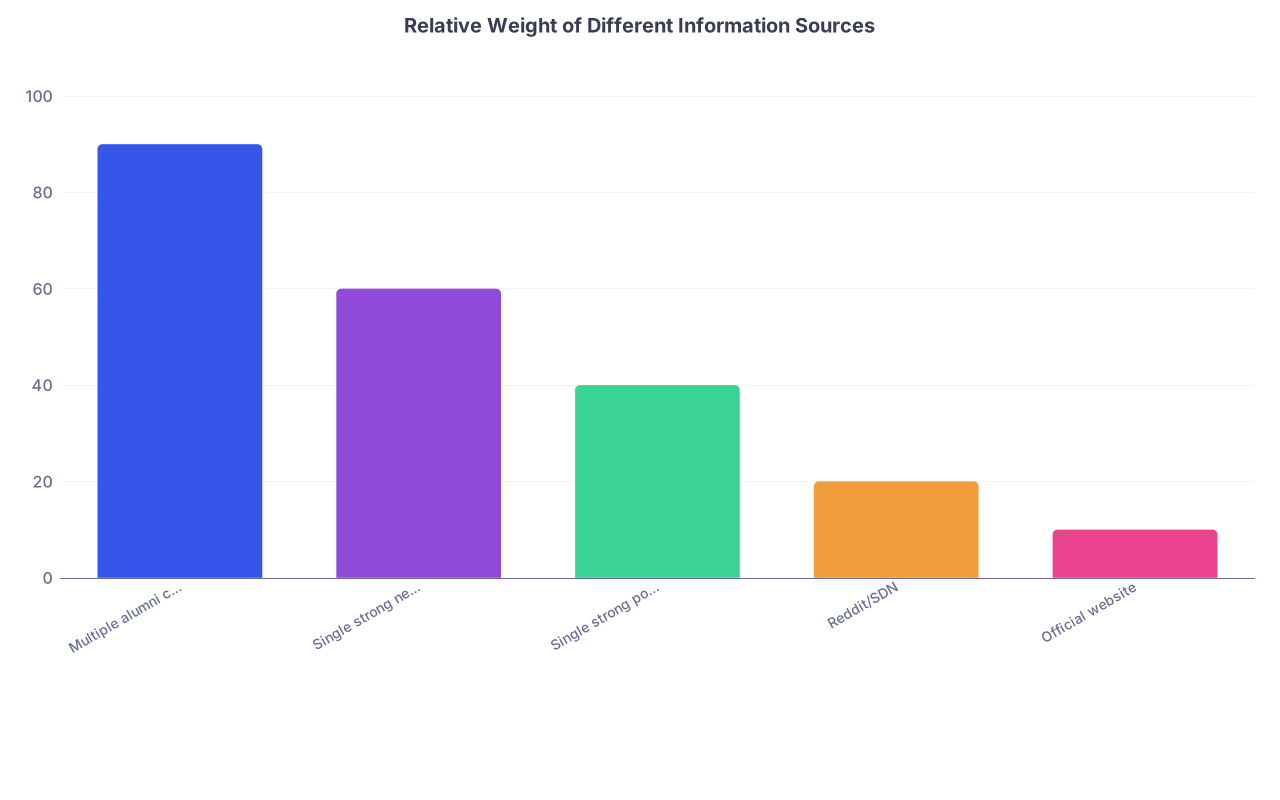
| Category | Value |
|---|---|
| Multiple alumni consistent | 90 |
| Single strong negative | 60 |
| Single strong positive | 40 |
| Reddit/SDN | 20 |
| Official website | 10 |
8.1. Count sources and consistency
- Two or more independent graduates describing the same pattern = heavy weight.
- One dramatic horror story, with nobody else echoing it = still concerning, but lower weight.
- All positives, zero negatives, when you know the program has red flags online = suspicious.
8.2. Adjust for time and leadership changes
Ask every person:
- “Who was the PD when you were there?”
- “Did leadership change while you were a resident?”
Programs can genuinely improve or worsen rapidly after leadership changes. A malignant PD leaving is a big deal. A new PD who has already driven away multiple seniors? Also a big deal.
8.3. Anchor to your own non-negotiables
Decide in advance what is non-negotiable for you:
- No tolerated bullying from faculty.
- No systemic duty hour fraud.
- No retaliation against residents who raise legitimate safety concerns.
If a program crosses your personal red lines in multiple independent accounts, you rank it accordingly. Even if the fellowship match list looks shiny.
Step 9: After The Call – What You Owe Them
You do not vanish. These people just stuck their neck out for you, at least a little.
Two simple actions:
Send a brief thank-you message
- “Thank you again for taking time to talk with me. I really appreciate your candor and will keep our conversation confidential. It was very helpful as I consider my options.”
That is it. No updates necessary unless they asked.
- “Thank you again for taking time to talk with me. I really appreciate your candor and will keep our conversation confidential. It was very helpful as I consider my options.”
Do not forward their stories as gossip
- If you share themes with trusted classmates, strip out all identifiers.
- No names. No years. No “this person is now at [X fellowship].”
- You are allowed to protect your peers from bad situations. You are not allowed to expose someone who tried to help you.
Step 10: Quick Protocol Summary (If You Are Short On Time)
Here is your bare-bones protocol.

| Step | Description |
|---|---|
| Step 1 | Define specific concerns |
| Step 2 | Identify 3-5 recent grads |
| Step 3 | Send brief professional message |
| Step 4 | Schedule 10-15 min call |
| Step 5 | Ask targeted questions |
| Step 6 | Look for patterns not stories |
| Step 7 | Protect identity and use info to refine rank list |
If you follow just this flow—without overcomplicating it—you will already be ahead of most applicants, who rely on anonymous threads and gut feelings.
Common Mistakes To Avoid
Three things I see over and over that you should not repeat:
Using screenshots from Reddit as your main “evidence”
- Anonymous posts can be real, exaggerated, or completely fabricated. They are a starting point to decide whom to call, not the final verdict.
Ambushing current residents on interview day with hostile questions
- Residents are not going to torch their own program in front of faculty. You put them in an impossible spot and you get canned, useless answers. Save the real questions for private alumni conversations.
Over-sharing what you heard with everyone
- “Oh yeah, someone told me that Dr. X is emotionally abusive” repeated enough times will get back to that program. That is how you burn alumni, even if your intentions were good.
One More Tool: A Simple Mental Scoring System
If you like structure, rate each program 1–5 in these categories after your calls:
| Category | 1 (Best) | 5 (Worst) |
|---|---|---|
| Safety & Hours | Honest hours, safe staffing | Chronic duty hour abuse, unsafe |
| Culture | Supportive, non-retaliatory | Fear, bullying, retaliation |
| Education | Strong teaching, protected time | Service-only, no real teaching |
| Outcomes | Good fellowships/jobs, advocacy | Poor outcomes, no faculty support |
| Transparency | Problems acknowledged, improving | Problems denied, gaslighting |
After speaking with alumni:
- Any program with mostly 4–5s and consistent bad stories from multiple grads should move down or off your list.
- Programs with some 2–3s and leadership that seems to be actively fixing issues may still be worth ranking, depending on your options.
Visual: How Many People To Contact Per Program
You do not need to talk to ten people per program. You do need more than one, if possible.
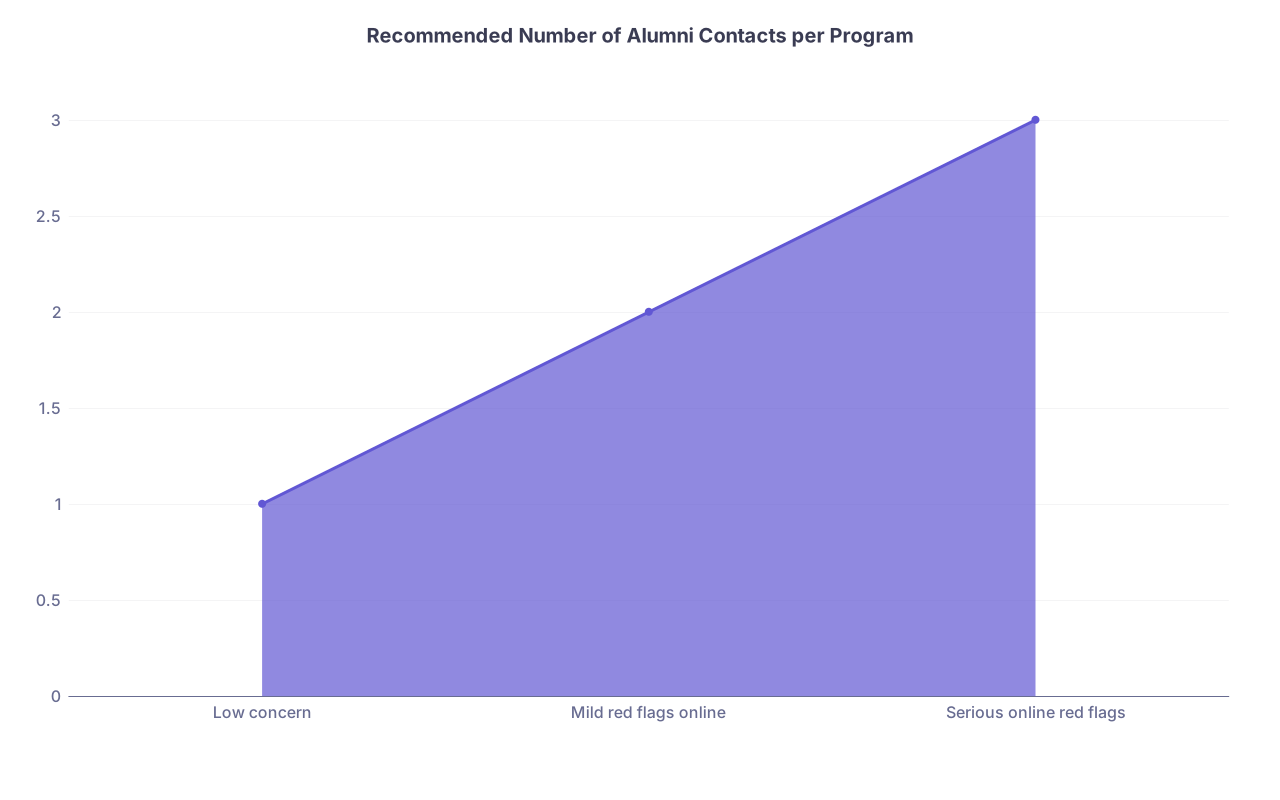
| Category | Value |
|---|---|
| Low concern | 1 |
| Mild red flags online | 2 |
| Serious online red flags | 3 |
Simple rule:
- No red flags online or from advisors → 1 alumni call is usually enough.
- Some concerning chatter online → aim for 2.
- Serious allegations or consistent horror stories → 3+ if you are still considering ranking it.