

It’s two weeks before your rank list is due. Your email is a graveyard of interview reminders, your Notes app is full of half-baked pros/cons, and you keep thinking: “That one program… something felt off. Am I overreacting?”
At this point you should stop arguing with yourself in your own head and start having one very specific, very intentional conversation: a structured red‑flag review with mentors who actually know what they’re talking about.
This is not “talk vaguely about vibes.”
This is a targeted, time‑bound, checklist‑driven meeting designed to catch things you’re normalizing—or rationalizing—because you’re tired, anxious, and sick of Zoom.
We’ll go step‑by‑step from two weeks out → one week out → final 3 days → day of rank submission, and I’ll walk you through what to do, who to talk to, and how to structure the conversation so you do not ignore real problems or overreact to trivial nonsense.
Two Weeks Out: Set Up the Red‑Flag Infrastructure
At this point you should stop scrolling Reddit about “toxic programs” and start lining up real humans.
Step 1 (Today or Tomorrow): Pick Your Mentor Team
You want 3–4 people max. More voices than that and you’ll drown.
Aim for a mix:
- One person in your specialty (ideally faculty who interviews or sits on the rank committee)
- One generalist mentor who knows you well (advising dean, longitudinal preceptor, sub‑I attending)
- Optional: a recent grad who just matched in your specialty
- Optional: a non‑physician you trust for life-alignment questions (partner, family, therapist) — not for program gossip, but for sanity checks on lifestyle and location
Who to avoid:
- The bitter PGY‑3 who hates every program
- The “everything is amazing” faculty who never says anything bad
- Anyone who makes everything about their own training from 1998
Your email should be short and surgical:
“My rank list is due on [date]. I’d like a 30‑minute meeting this week or early next to go through potential red flags at the programs I’m considering. I’ll send you a structured 1‑page summary ahead of time so we can be efficient.”
You’re signaling this is focused, not a vague therapy session.
Step 2 (Next 24–48 hours): Build Your Red‑Flag Matrix
You need a single, brutal spreadsheet. One tab. Every program. No storytelling, just cold data and specific anecdotes.
Core columns should include:
| Column | What Goes Here |
|---|---|
| Program name | Exact program and institution |
| Tier | Your rough tier: top / middle / safety |
| Gut vibe | 1–5 rating, quick phrase |
| Major red flags | Short bullet phrases only |
| Minor concerns | Inconveniences, weak spots |
| Safety factors | Location, support, visa, etc. |
Then add a Red‑Flag Types section for each program:
- Workload culture (abuse, chronic violations, “we don’t go home until the work is done” said proudly)
- Compliance (ACGME duty hours, moonlighting rules, leave policies)
- Education vs. service ratio (are you cheap labor or being trained?)
- Resident support (wellness, maternity/paternity leave actually used, sick coverage)
- Leadership stability (recent PD or chair turnover, multiple resignations)
- Reputation among residents at your home institution
Rate each on a 0–2 scale:
- 0 = No concern
- 1 = Mild concern / monitor
- 2 = Red flag / dig deeper
You’re not ranking yet. You’re labeling risk.
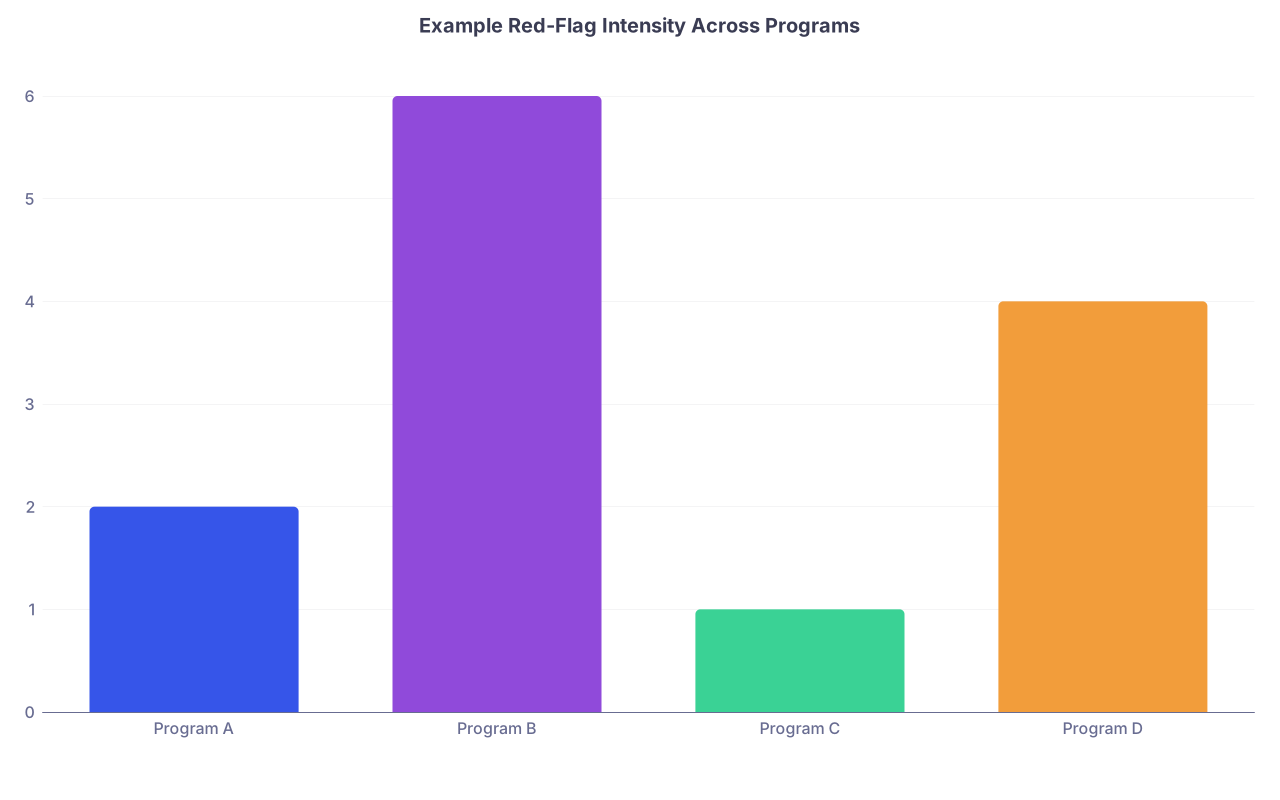
| Category | Value |
|---|---|
| Program A | 2 |
| Program B | 6 |
| Program C | 1 |
| Program D | 4 |
(Here: higher number = more total “2” scores across categories.)
Step 3 (End of Week – ~Day −10 to −12): Draft Your Question Set
You want the conversations with mentors to feel reproducible, not random.
For each program you’re seriously considering (top 5–10), write answers to:
“What bothered me?”
- Concrete behaviors, quotes, situations.
- Example: “Chief openly joked about ‘doing 6 days a week, 14 hours, nobody complains’ and everyone laughed awkwardly.”
“What reassured me?”
- Examples of residents being supported, clear processes, someone defending education.
“What do I not know and need outside intel on?”
- Hidden reputation issues, board pass rates, recent ACGME citations, financial instability, known malignant attendings.
This becomes your script with mentors. Not “So, uh, what do you think?” You’re bringing cases to them like a mini morbidity & mortality for your rank list.
7–10 Days Out: Have the Hard Conversations
At this point you should start actually meeting people, not just polishing your spreadsheet.
Step 4: Schedule and Stack Your Mentor Meetings
Ideal setup:
- 2 meetings this week
- 1–2 meetings early next week
- Nothing scheduled for the final 48 hours before submission (that’s for synthesis, not new input)
If you can, front-load meetings with people who:
- Know your field and can interpret red flags correctly
- Have current information on specific programs (recent alumni, current residents elsewhere)
Step 5: Structure Each Mentor Meeting (30–45 minutes)
Here’s a simple structure that actually works:
5 minutes – Context & your goals
- Your board scores, competitiveness band.
- Your non‑negotiables: geography, partner’s job, visa, family, fellowship goals.
15–25 minutes – Program‑by‑program red‑flag review
- Walk through only the programs in your top 8–10.
- For each:
- 1 sentence: “Here’s how I’d rank it if I ignore red flags.”
- 2–3 bullets: Major concerns.
- Ask: “Do you see these as yellow or red? Anything I’m missing?”
5–10 minutes – Pattern check
- “Where do you see me overreacting?”
- “Where do you think I’m under‑reacting?”
Push them: “If I were your kid, would you let me rank this #1?”
You’ll be shocked how different faculty talk when you ask that question directly.
What Actually Counts as a Red Flag (Versus Normal Imperfection)
At this point you should separate annoyances from structural danger. Lots of students get this backwards.
Category 1: True Red Flags (These Can Move a Program Down Several Spots)
These are the ones that should trigger alarms in your mentor conversations.
Consistent reports of duty‑hour violations that are normalized
- Not “we stay late occasionally.”
- “Nobody logs honestly. If you do, the PD calls you in.”
Residents afraid to speak in front of leadership
- Silent residents on Zoom when PD is present.
- Private messages later: “Please don’t mention I said this.”
- That is not shyness; that is fear.
Multiple stories of retaliatory behavior
- Residents punished for going on leave.
- People blackballed from fellowships after complaints.
Unstable leadership
- New PD every 2–3 years.
- Chair ousted, PD “stepping down” suddenly, or “interim” leadership everywhere.
- Ask your mentors explicitly if they’ve heard of turmoil.
ACGME or board pass issues
- Recent probation or warning letter.
- Repeated poor board pass rates with no clear remediation plan.
Systemic disrespect or harassment patterns
- Sexist/racist jokes brushed off as “old school.”
- Multiple residents telling you, “Watch out for Dr. X, everyone knows but nothing changes.”
Category 2: Yellow Flags (Need Context, Not Panic)
These should trigger clarifying questions, not instant demotion:
- Heavy service but clearly acknowledged and structured
- Weak research infrastructure but strong clinical training (depends on your goals)
- Older EMR, clunky workflows, but stable staff
- Location issues (safety, commute) that are manageable with support
Your mentors help translate these into: “Annoying but survivable” vs “This will grind you down.”
Category 3: Noise (Don’t Let This Run Your Rank List)
You’ll see a lot of this on SDN and Reddit:
- “Food was bad on interview day”
- “One resident seemed tired and quiet”
- “They didn’t reply to my thank‑you email”
- “Not enough free swag”
If your spreadsheet is full of these, you’re missing the point.
Using External Data Without Losing Your Mind
At this point you might be doom‑scrolling reviews and spreadsheets. Some of that is useful. Most is garbage.
Step 6: Targeted External Checks (Next 5–7 Days)
Here’s where external sources do help, if you use them with discipline:
Current residents you know (or alumni from your school)
- Ask 3 explicit questions:
- “If you had to do it again, would you rank your program #1?”
- “Who thrives there, and who struggles?”
- “What’s the one thing you wish you’d taken more seriously before ranking?”
- Ask 3 explicit questions:
Your home institution’s advising office
- They often keep quiet lists of programs to be cautious about.
- Ask: “Any programs on my list you’d strongly discourage or want me to look at more closely?”
Board pass rates, fellowship match lists
- Not everything, but if a program consistently fails its boards or no one matches into your desired subspecialty—that matters.

If something you find conflicts sharply with your impressions, flag it to discuss with mentors. Don’t immediately blow up your list at 1 a.m. based on one anonymous comment.
One Week Out: Convert Red‑Flag Data Into a Draft Rank List
Now you’ve had at least 1–2 mentor conversations and some external intel. Time to actually shift programs on your list.
Step 7: Build Your “Assuming No Red Flags” Rank Order
First pass: rank purely on fit and desire:
- Where would you be most excited to train?
- Where did you feel most like yourself on interview day?
- Where do your career goals line up cleanly with program strengths?
Ignore the red‑flag data for this pass. You need a baseline.
Step 8: Apply a Structured Red‑Flag Adjustment
Then do a second pass where you correct for risk:
For each program:
- Look at your red‑flag score (count of 2’s in your matrix).
- Re‑read your mentor notes: did they say “run” or “you’ll be fine”?
- Decide if the program:
- Stays near where it is.
- Moves down a few spots (yellow → orange).
- Drops near the bottom or off the list (true red).
Here’s the key: be explicit.
Write it out:
- “Program X: Would have been #2 based on ‘fit’. Moving to #6 due to credible reports of malignant culture from 3 independent sources + PD instability.”
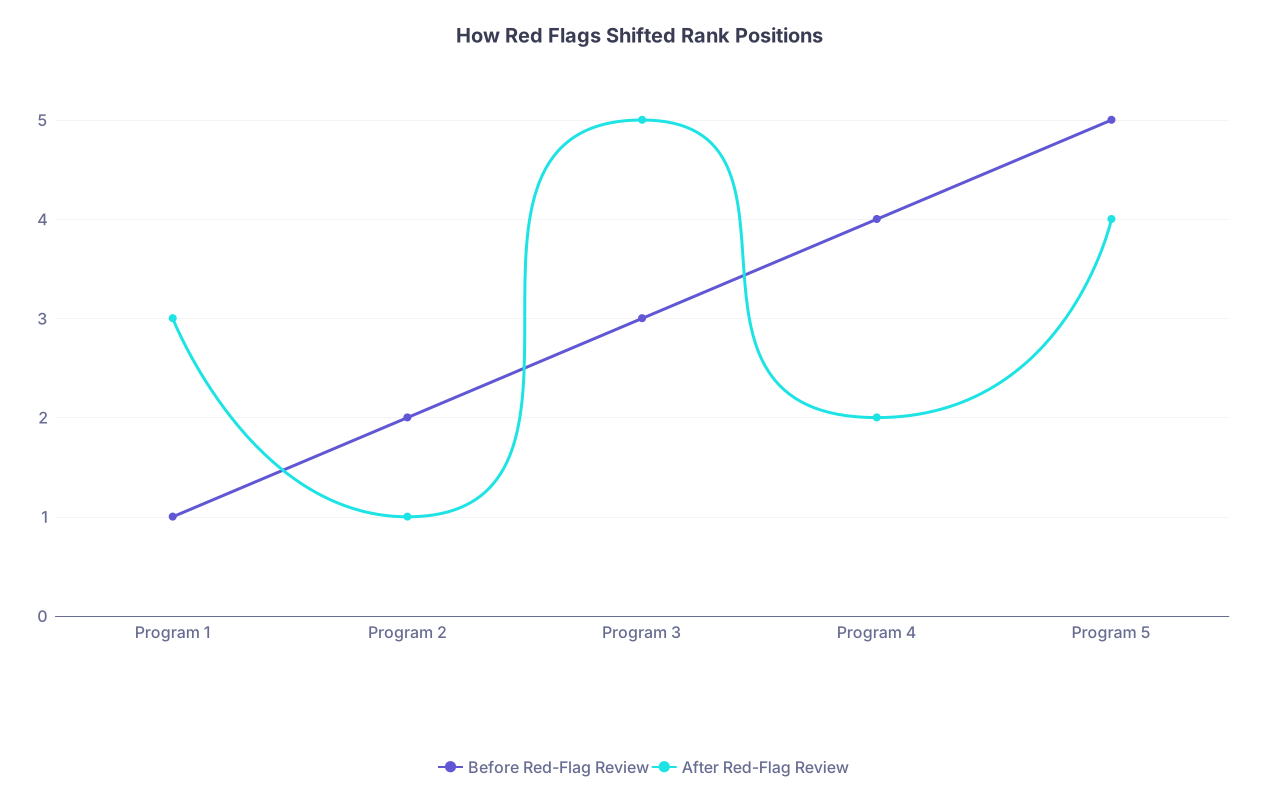
| Category | Before Red-Flag Review | After Red-Flag Review |
|---|---|---|
| Program 1 | 1 | 3 |
| Program 2 | 2 | 1 |
| Program 3 | 3 | 5 |
| Program 4 | 4 | 2 |
| Program 5 | 5 | 4 |
Seeing the “before vs after” appeals to your rational brain when your emotional brain later panics.
Step 9: Run the “Would I Be Okay Matching Here?” Test
For each program in your top 8–10, ask yourself:
- “If I open an email on Match Day and see this program, will I be relieved, neutral, or devastated?”
Relief/neutral = acceptable.
Dread = that’s a problem.
Bring that back to mentors if there’s a disconnect:
- “You rank Program Y highly, but when I imagine matching there, I feel sick. Am I missing something, or is that my brain telling me something real?”
Final 3 Days: Last‑Pass Mentor Check and Lock‑In
At this point you should stop gathering new data and focus on consistency checks.
Step 10: One Short Follow‑Up With Your Primary Mentor (3–2 Days Out)
Send them:
- Your current rank list
- A 1‑paragraph summary of your logic, including:
- Program(s) you moved down due to red flags.
- Any program still high on your list despite concerns.
Ask three specific questions:
- “Do any of my top 5 look misaligned with what you know about me?”
- “Is there any program here that you think I’m still underestimating risk for?”
- “If I match at my #5, will you be comfortable with that for me?”
You’re not asking them to rebuild your list. You’re using them as a sanity check against catastrophic blind spots.

Step 11: Personal Alignment Check (2–1 Days Out)
This part is not fluffy. I’ve seen it matter.
Ask yourself, ideally out loud, maybe with your partner or a trusted non‑physician:
- “Does my #1 logically support the life I say I want in 5–10 years?”
- “Am I sacrificing basic safety or sanity for prestige?”
- “If nothing changes at this program for the next 4 years, am I okay with that?”
Red flags are not just about abuse and duty hours. They’re also about quiet misalignment that becomes misery.
Day of Submission: Final Review and Commit
At this point you should stop editing and start verifying.
Step 12: Last‑Minute Checklist (Same Day, Before You Click Submit)
Run through this—literally, line by line:
- Every program in your top 5 has no unaddressed major red flags that mentors flagged as “run.”
- Any program you’re truly scared of has been moved down or removed.
- You’ve had at least one real mentor review your list logic.
- Your top choice is the place you would genuinely most want to go, not the place you feel you’re supposed to want.
- You are not ranking any program you would refuse to attend under any circumstance.
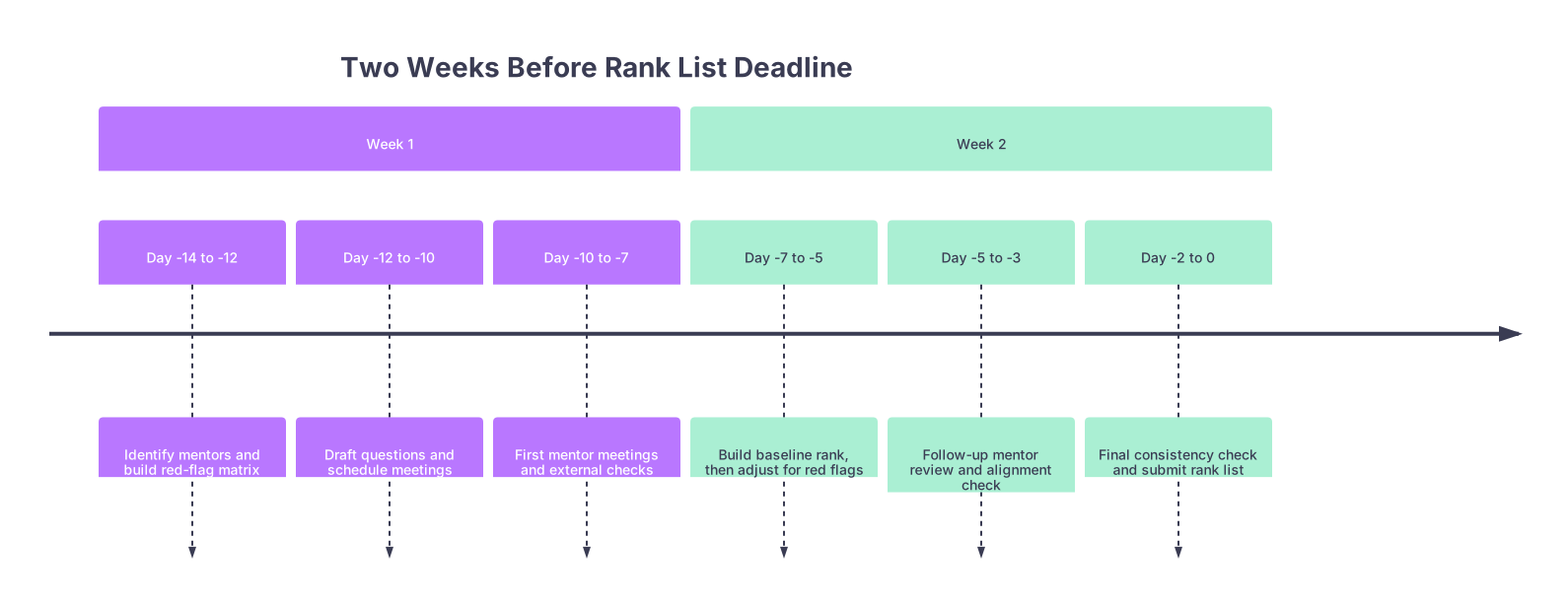
| Period | Event |
|---|---|
| Week 1 - Day -14 to -12 | Identify mentors and build red-flag matrix |
| Week 1 - Day -12 to -10 | Draft questions and schedule meetings |
| Week 1 - Day -10 to -7 | First mentor meetings and external checks |
| Week 2 - Day -7 to -5 | Build baseline rank, then adjust for red flags |
| Week 2 - Day -5 to -3 | Follow-up mentor review and alignment check |
| Week 2 - Day -2 to 0 | Final consistency check and submit rank list |
Once this checklist is clean, submit. Do not go back and rearrange three programs at 11:58 p.m. because of a random memory that popped into your head in the shower.
You did the work. Trust the process you built.
FAQ (Exactly 2 Questions)
1. What if my favorite program has clear red flags but also the best prestige/opportunities?
Then you have an honest trade‑off, not a puzzle. Talk with mentors one more time specifically about that program and ask them to quantify risk: “On a 0–10 scale, how likely is it that I’d be miserable here?” If mentors who know you well put that risk at 7–10, I’d move it down—prestige does not fix burnout, harassment, or unsafe systems. If they put it at 3–4 and can name residents like you who are thriving there, you might keep it high, but document your reasoning so future‑you remembers this was a conscious choice, not denial.
2. How many red flags are “too many” for a program to stay high on my list?
If you’ve got more than two categories (culture, compliance, leadership, education, etc.) scored as a 2 in your matrix, and those are backed by at least one credible mentor or current resident, that program should not be in your top 3 unless you have very unusual constraints (visa, single geographic region, etc.). A single serious concern can sometimes be buffered by strong mentorship and support. A pattern is different. Once it looks like a pattern, drop it down.
Action step for today:
Open a blank spreadsheet and list every program you interviewed at. Add three columns: “Major red flags,” “Minor concerns,” “Mentor to ask.” Fill those in for just your top 5 programs. That’s your starting point—then email one mentor and book a 30‑minute slot this week to go through it.


