
The blanket fear of “new programs” is lazy thinking. A new residency is not automatically a red flag; sometimes it is the best-kept secret on the rank list.
Let me be very clear: “Established for 30 years” is not a quality metric. It is a timestamp. That’s it.
Yes, there are real red flags in residency. But lumping every new program into the danger bucket is one of the most persistent, unexamined myths I see applicants repeat to each other on Reddit, SDN, and during interview days. It leads people to over-rank bloated, coasting legacy programs and miss out on well-resourced, high-opportunity new ones.
Let’s dismantle this properly.
The Origin Story of the “New Program = Red Flag” Myth
The fear isn’t totally irrational. It just gets applied with zero nuance.
Here’s where it comes from:
- People remember the spectacular failures: the small community programs that lost accreditation, imploded, or never got fully staffed. These stories travel fast.
- Applicants lean on heuristics. You don’t have time to deeply research 80 programs, so “new = risky” becomes a mental shortcut.
- Older attendings and residents sometimes project their era’s realities onto yours. Their training world, pre-Safe Rides, pre-duty hour enforcement, pre-NextGen MCAT, is not yours.
And yet, what does the actual accreditation system look like today?
ACGME doesn’t just casually hand out new residency approvals like candy. A “new” program in 2026 has gone through:
- Institutional vetting (GMEC approval, sponsoring institution capacity)
- A detailed application and review
- Ongoing site visits and continuous data monitoring once it starts
Is it foolproof? No. But it’s not the Wild West.
What’s happened is this: a valid caution (“new programs need scrutiny”) mutated into a lazy rule (“new = bad”). That’s the myth.
What the Data and Trends Actually Show
We don’t have a national RCT of “old vs new programs,” but we do have patterns, workforce data, and match outcomes that tell a pretty consistent story.
Look at what’s driving the boom in “new programs”:
- Geographic maldistribution of physicians – especially in the South, Mountain West, and certain rural regions
- Hospital systems converting long-standing fellowships or hospitalist pipelines into formal residencies
- State and federal incentives to create GME slots in underserved areas
These aren’t all small, desperate hospitals throwing together a program overnight. A large portion are major health systems expanding capacity because they already function as de facto training environments.
And if you actually talk to residents in some of these new programs (I have, repeatedly), certain themes repeat:
- They’re often over-resourced at the beginning: more faculty per resident, more attention from the PD, less “resident as workhorse” mentality.
- They bend over backwards to make graduates match well into fellowships, because the first few classes set the reputation.
- They introduce modern curricula from day one—point-of-care ultrasound, wellness structures that aren’t just lip service, early subspecialty exposure—because they’re not dragging decades of legacy structure behind them.
Meanwhile, many “name brand” legacy programs:
- Live off their old reputation while quietly cutting educational time.
- Expect residents to do the work of an EMR + three scribes + social work.
- Have never updated their didactics beyond a noon conference schedule from 1998.
Longevity is not a guarantee of quality. It is a guarantee of inertia.
Real Risks of New Programs (And Which Ones Actually Matter)
Now, let’s not swing to the other extreme. There are actual risks with new programs. But they’re specific and checkable; they aren’t magical unknowns.
Here’s what actually matters.

1. Accreditation and Stability
Difference between:
- ACGME Initial Accreditation with a solid sponsoring institution you recognize
vs. - A small standalone hospital with no prior GME experience, hastily building infrastructure
Ask:
- Is this attached to an institution that already sponsors other residencies or fellowships?
- Have any of their other programs had recent citations or probation?
- Do they have ACGME “initial” vs “continued” accreditation yet? (Early programs usually start with initial—this alone is not a red flag.)
2. Clinical Volume and Case Mix
A flashy brochure means nothing if residents are fighting over cases.
You want to know:
- Annual ED visits
- Number of inpatient admissions
- Presence of key services: ICU, cardiology, neurology, GI, OB (for IM/FM, you still need good consult exposure), trauma level, etc.
If a “new” program is at a busy safety net hospital or regional referral center, volume is usually not the issue. Ironically, newer programs at these sites can give residents better hands-on experience because they’re not competing with four other residencies and six fellowships.
3. Faculty Depth and Turnover
Here is where some new programs really do stumble.
Red flags:
- Four core faculty, all hired in the last six months, all part-time
- PD is brand new to GME leadership and still doing 0.8–1.0 FTE clinical without protected time
- No clear APD or program coordinator structure
Compare that to:
- PD with prior experience as APD or core faculty at a known program
- Multiple core faculty with academic or teaching track records
- Clear mentorship structure for residents
New or old, this is where you should be paying attention.
The Upside of Being Early: Why New Can Be a Strategic Advantage
This is the part people don’t appreciate. There are real, concrete advantages to training in a well-constructed new program—especially if you’re one of the first few cohorts.
1. Faculty Attention Per Resident
In a mature, large program with 30 residents per class, you can disappear. Easily.
In a new program with 6–10 residents per class, the PD knows:
- Your USMLE/COMLEX scores
- Your career goals
- Your fellowship targets
- The exact rotations where you thrived or struggled
That matters when it’s time for letters, advocacy, and fellowship calls.
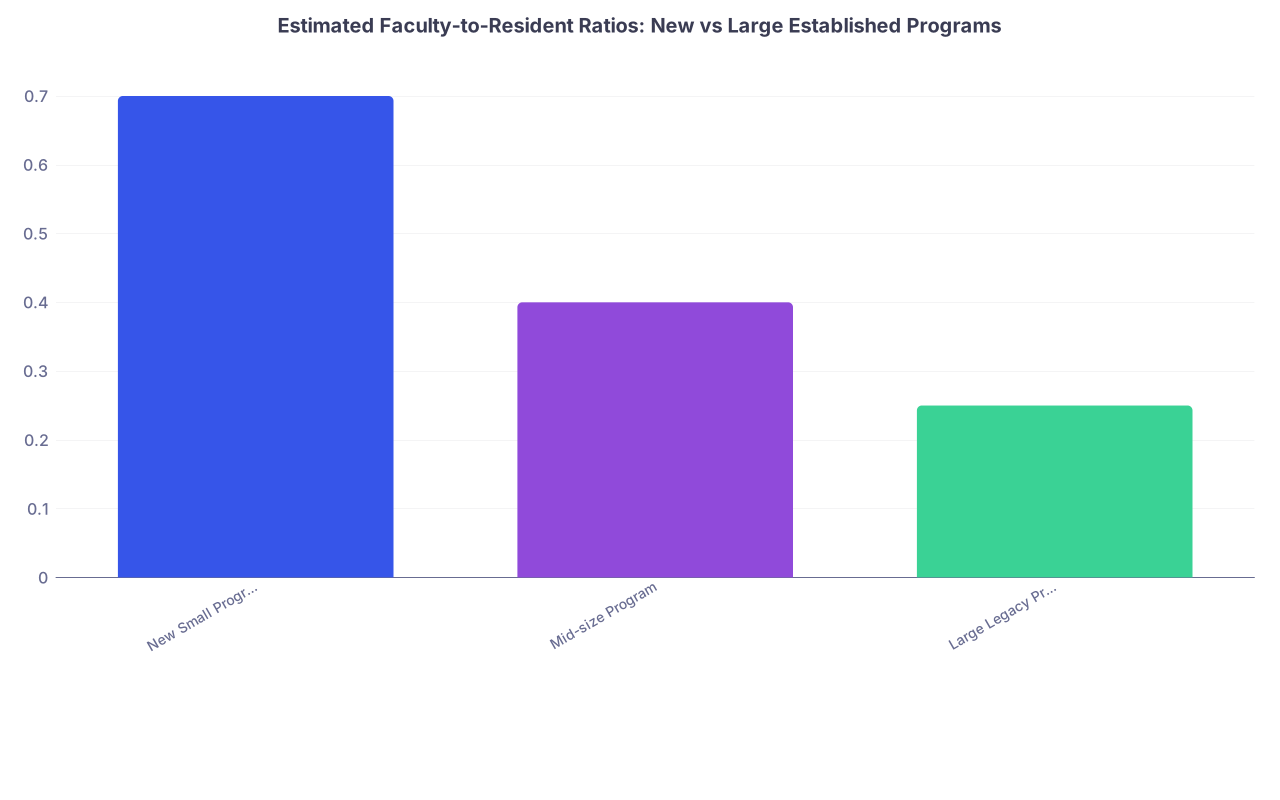
| Category | Value |
|---|---|
| New Small Program | 0.7 |
| Mid-size Program | 0.4 |
| Large Legacy Program | 0.25 |
No, these numbers aren’t from a single national dataset; they’re indicative of what you see repeatedly: new, small programs often start with more faculty bandwidth per resident.
2. Leadership and Systems Experience
At old programs, leadership roles are a queue you wait in for years.
At new programs, there’s often:
- Immediate opportunities to build QI projects that actually get implemented (order sets, triage protocols, new rotations)
- Real resident input into call schedules, didactics, and evaluation systems
- Early chief roles, committee membership, and institutional visibility
Residency is three to five years of your life. You can either be a cog in a long-standing machine or one of the people shaping how the machine is built.
3. Fellowship and Career Outcomes – Not the Black Box You Think
Applicants constantly assume: “Fellowships won’t take grads from new programs.” That’s not how this works.
Fellowship directors care about:
- Your individual performance
- Strength and content of your letters
- Your research or scholarly output
- How well they know and trust the faculty writing your letters
If your PD is a former faculty from a big-name place (which is often how new programs staff up leadership), their phone call is worth just as much as when they were at the old institution.
A strong resident at a new program with a plugged-in PD and driven faculty will match better than a middling resident at a famous program with generic letters. I have watched that happen in cardiology, GI, EM fellowships, you name it.
How to Distinguish a High-Potential New Program from a Dumpster Fire
Instead of the brain-dead “new = bad” rule, use an actual framework. Yes, it takes more effort. That’s the point.
| Factor | Green Flag Example | Red Flag Example |
|---|---|---|
| Sponsoring Institution | Large academic or regional referral center | Tiny standalone hospital with no GME history |
| Leadership | PD/APD with prior teaching or GME leadership | Brand new PD with no education track record |
| Other GME Programs | Existing residencies/fellowships in other fields | None at all, no institutional GME presence |
| Clinical Volume | High-volume ED/wards, broad pathology | Low census, limited subspecialty services |
| Resident Input | Residents involved in shaping curriculum | “We don’t have residents yet” + no clear plan |
Now add a few pointed questions on interview day and in follow-up emails.
Ask:
- Who designed your curriculum, and what did you model it after?
- What is your plan for fellows vs residents when it comes to procedures and autonomy?
- How many core faculty are 100% committed to this institution long-term?
- What systems are already in place: simulation, ultrasound, QI infrastructure, research support?
Then pay attention to how they answer, not just the content. Do they seem like they’ve thought deeply about training, or are they selling you a brochure?
The Hidden Red Flags at “Old, Safe” Programs
Here’s the twist everyone ignores: some of the worst training environments hide under the halo of “long-established.”
Things you should be more worried about than a program’s age:
- Residents consistently staying 2–3 hours past sign-out
- Chronic under-staffing and “just suck it up, that’s residency” culture
- No meaningful mentorship on research or career planning
- “Our graduates do fine” with zero specific match or job data
- Strong emphasis on service over education (“you’ll see a lot of volume” used as a cover for excessive scut)
A 40-year-old program can be coasting on reputation while exploiting residents. A 3-year-old program can be aggressively optimizing your experience because every graduate is part of their public track record.
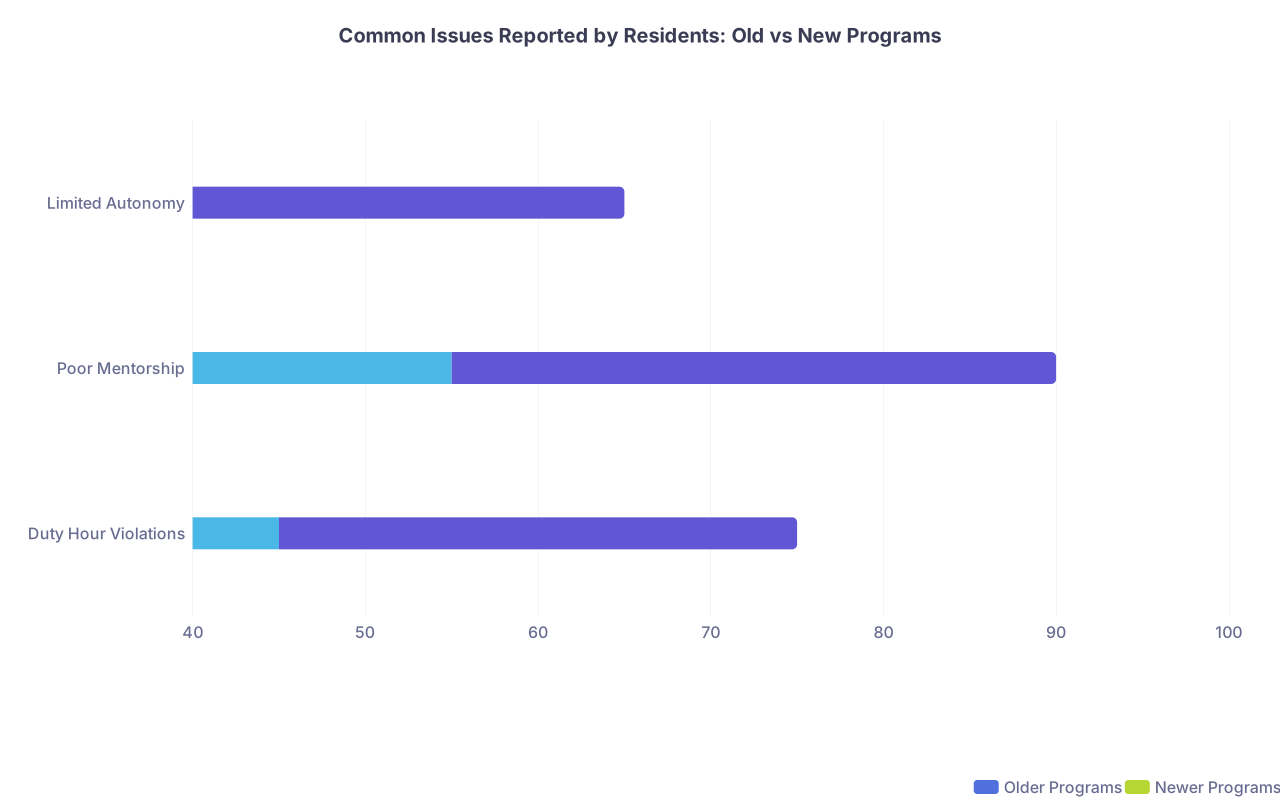
| Category | Older Programs | Newer Programs |
|---|---|---|
| Duty Hour Violations | 45 | 30 |
| Poor Mentorship | 55 | 35 |
| Limited Autonomy | 40 | 25 |
Are these exact percentages universal? No. But pattern-wise, you see different problems: new programs struggle with logistics and growing pains; older ones more often with culture and burnout.
How to Actually Weigh “Newness” in Your Rank List
Let’s be practical.
You should not:
- Blindly rank every brand-new program above established ones “for opportunity”
- Automatically dump new programs to the bottom because someone on Reddit said “never be the first class”
You should:
- Treat “new vs old” as one axis among many: location, fit, volume, faculty, culture.
- Discount the fear-mongering unless there’s specific evidence: shaky institution, unconvincing leadership, no clear plan.
- Ask current residents (if any) very bluntly: What has not gone well in the start-up phase?
Use a mental model like this:

| Step | Description |
|---|---|
| Step 1 | Look at Program Age |
| Step 2 | Check Institution, Leadership, Volume |
| Step 3 | Check Culture, Burnout, Education |
| Step 4 | Lower on Rank List |
| Step 5 | Evaluate Fit With Personal Priorities |
| Step 6 | New or Established |
| Step 7 | Serious Concerns? |
If a new program passes the institution/leadership/volume test and aligns with your goals, you should absolutely feel comfortable ranking it aggressively. You’re not a beta tester. You’re an early adopter with leverage.
The Bottom Line: Stop Using Age as a Proxy for Quality
Strip away the folklore and here’s what actually holds up:
“New” is a risk modifier, not an automatic red flag. The real questions are about accreditation stability, clinical volume, and leadership depth—not the start date on the ACGME website.
High-quality new programs can offer outsized benefits: more faculty attention, earlier leadership roles, and a strong institutional push to make early graduates succeed. Those are real advantages, not marketing fluff.
Some of the most serious problems in residency—burnout culture, exploitation, educational neglect—are more correlated with complacent, long-established programs than with thoughtfully built new ones.
So the next time someone says, “Never go to a new program,” recognize it for what it is: a tired, unexamined rule that saves them from thinking—and could cost you real opportunity.