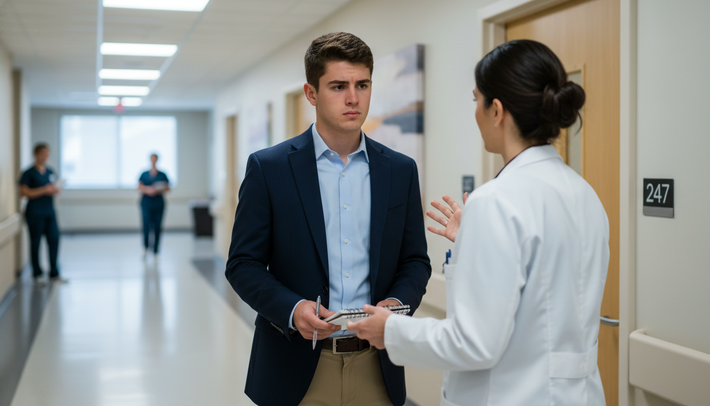
The fastest way to ruin a promising shadowing experience is to show up looking careless, unprepared, or unhygienic.
Faculty may not say anything to your face. Admissions committees will never tell you this cost you an interview. But unprofessional dress and hygiene quietly damage your reputation more than you realize.
This is not about fashion. It is about signal. You are signaling whether you understand what it means to be in a clinical environment, around patients, staff, and vulnerable people who must trust you immediately.
If you are preparing for medical shadowing, you cannot afford to make these mistakes.
1. The Core Misunderstanding: You Think “Shadowing” Means “Low Stakes”
Shadowing is not a casual observation day. It is a professional audition in disguise.
The most dangerous assumption students make:
“I am not actually working, I am just there to watch. So the dress code is probably flexible.”
That thinking is exactly what gets students silently blacklisted.
What physicians and staff infer from your appearance
They are not just noticing whether you look “nice.” They are reading your:
- Judgment
- Respect for patients
- Understanding of infection control
- Awareness of professional norms
- Reliability
If you walk in with:
- Strong perfume
- Open-toed shoes
- Wrinkled pants
- Visible stains
- Heavy makeup or messy hair
they do not think, “This person is just a student, it’s fine.”
They think:
- “If they cannot get this basic part right, can they handle sensitive information?”
- “Will I have to manage them all day?”
- “Would I ever want to write a strong letter for this person?”
You will rarely hear those thoughts out loud. The consequence is much quieter:
No invitation back. No future research or clinical opportunities. A generic or absent letter of recommendation.
Do not confuse silence with approval.
2. Clothing Mistakes That Immediately Undermine You
You do not need expensive clothes. You do need to avoid the traps that scream “I do not understand clinical professionalism.”
Mistake #1: Treating shadowing like business casual at a tech office
What works in your campus job can look sloppy or unsafe in a hospital.
Common offenders:
- Stretchy leggings worn as pants, especially with short tops
- Tight skinny jeans
- Untucked casual shirts
- Athletic joggers or track pants
- Low-cut tops or visible chest hair
- Sneakers with bright colors or huge logos
These say, “I dressed for comfort, not for a clinical environment.”
Safer default for most outpatient or hospital shadowing (unless told otherwise):
- Solid or subtle-pattern blouse/button-down or simple knit top
- Slacks or chinos (not skin-tight, no rips, no fraying)
- Closed-toe, closed-heel shoes (more on this later)
- Optional: Neat, short white coat if the site permits and physician approves
If the site or preceptor suggests scrubs, follow their guidance, but do not assume “scrubs = pajamas.” They must still be:
- Clean
- Appropriately fitted
- Intact (no fading, holes, or stretched-out waistbands)
Mistake #2: Ignoring the “no denim” and “no leggings” reality
Many clinics and hospitals have an unwritten (or written) rule:
- No denim
- No leggings as outerwear
Students think, “But my black jeans look like pants,” or “These leggings are high-quality.”
The problem is perception, not fabric:
- Leggings/skinny jeans outline every contour of your legs and hips
- Staff must bend, turn, and move around patients; the standard is modesty and professionalism
- Once you cross the line into “too casual” or “too tight,” staff stop seeing you as future colleague and see you as a visitor who did not read the room
When in doubt:
- Replace jeans with simple black or navy slacks
- Replace leggings with thicker ankle-length pants or straight-leg trousers
Mistake #3: Clothes that are wrinkled, stained, or ill-fitting
No one cares if your shirt is from Target or a luxury brand. They do care if it looks like it came directly from the bottom of your laundry basket.
Problems that silently hurt you:
- Wrinkled shirts and pants
- Deodorant stains
- Faded black pants that now look grey and patchy
- Pants dragging on the floor, fraying at the hem
- Shirts gaping at the chest or pulling across the back
- Jackets that look like they belong to someone two sizes bigger
These do not read as “busy college student.”
They read as “this person does not respect the environment they are entering.”
At minimum:
- Iron or steam your clothes the night before
- Check under strong light for stains and deodorant marks
- Make sure you can raise your arms and bend without major gaping or exposure
Mistake #4: Over-accessorizing and drawing attention away from patients
You are not there to be the most noticeable person in the room.
Avoid:
- Big dangling earrings that could catch on equipment or hair
- Stacks of bracelets that jingle constantly
- Large, flashy necklaces
- Oversized belts with giant buckles
- Loud or reflective clothing elements
The physician and the patient should be able to forget what you are wearing ten minutes after the encounter. That is success.
3. Footwear and Safety Errors Students Keep Repeating
If you get only one thing right, get the shoes right. Footwear is both a safety and hygiene issue.
Mistake #5: Open-toe or open-heel shoes
You might think, “I am not touching patients, so safety risk is low.”
Reality:
- Needle sticks happen in rooms you are standing in
- Bodily fluids splash
- Heavy equipment gets moved and can roll over feet
- Hospitals and some clinics have explicit policies against any open-toe or open-heel shoes
Avoid completely:
- Sandals (all kinds)
- Mules
- Crocs with open heels or vents on top (unless your site specifically allows and you use the closed-heel version with socks)
- Slingbacks
Choose:
- Closed-toe, closed-heel shoes
- Flat or low heel (you will walk more than you expect)
- Easily cleanable material
Mistake #6: Fashion sneakers that scream “gym” or “streetwear”
Bright neon running shoes or chunky high-fashion sneakers send the wrong message.
They may be technically closed-toe, but visually they clash with the clinical environment.
Better:
- Neutral-colored sneakers (black, white, navy, grey) with minimal logos
- Simple loafers, clogs designed for healthcare, or oxfords
- Shoes that can be wiped down if something spills
If you must wear sneakers, keep them:
- Clean (no caked dirt or frayed laces)
- Low-profile
- Logically compatible with your clothes (no fluorescent orange with a conservative outfit)
4. Hygiene Errors That Make People Avoid You (But Never Tell You Why)
Dress code issues are frustrating. Hygiene problems are fatal.
This is where otherwise excellent students lose everything.
Mistake #7: Strong fragrance — perfume, cologne, scented lotion
You may think smelling “good” helps. In medicine, strong scent is one of the most common unspoken complaints about students.
Here is what you are forgetting:
- Patients with asthma, COPD, migraines, or chemotherapy sensitivity can get sick from strong scents
- Pregnant staff may be nauseated by perfumes
- Clinical environments often have no-fragrance policies, even if not explicitly told to you
Never wear:
- Strong perfume or cologne
- Heavily scented lotions or body sprays
- Scented hair products that leave a noticeable trail
Aim for “neutral clean,” not “noticeable pleasant.”
Mistake #8: Poor breath and oral hygiene
This one is brutally simple. You will be standing close to people.
If your breath is bad, someone will notice. They will not tell you.
Common causes:
- Coffee breath with no brushing or gum afterward
- Not flossing (odor from between teeth is real)
- High-protein diets without adequate water and oral care
- Smoking or vaping residue
Preventive steps:
- Brush and floss before leaving, not just when you wake up
- Use alcohol-free mouthwash
- Bring sugar-free mints (not gum if your setting discourages chewing)
- Avoid garlic-heavy or onion-heavy food within 12–18 hours of shadowing
Mistake #9: Body odor and sweat mismanagement
Long days, anxious anticipations, and hospital heat make sweating very common. Pretending it won’t happen to you is a mistake.
Problems that stand out:
- No deodorant or weak deodorant
- Re-wearing shirts that already absorbed sweat
- Heavy synthetic fabrics that trap odor
- Forgetting that anxiety sweat can smell stronger
Protect yourself:
- Use a reliable antiperspirant the night before and the morning of
- Do not re-wear tops — fresh shirt each day, especially under a white coat
- Choose breathable fabrics (cotton blends, moisture-wicking layers)
- Keep a backup undershirt in your bag if you are prone to sweating
Mistake #10: Hair, nails, and visible grooming neglect
You do not need a professional blowout or manicure. You do need to avoid looking careless.
Watch for:
- Long hair hanging forward into patient space or exam fields
- Hair constantly flipped, adjusted, or touching your face
- Very long or untrimmed nails
- Chipped, bright nail polish
- Dirty or darkened nail beds
- Messy facial hair lines (for those with beards/mustaches)
Safer habits:
- Tie back hair securely (ponytail, bun, or clip that you do not have to keep adjusting)
- Keep nails short to moderate length, with neutral or no polish
- Keep facial hair trimmed and defined
- Check eyebrows/face for flaky skin if you have dermatitis and manage it as best you can
Remember: you may be asked to stand near sterile fields, newborns, or immunocompromised patients. Sloppy grooming can become a real clinical concern, not just an aesthetic one.
5. Cultural and Identity Expression: Where Students Sometimes Miscalculate
Your identity matters. So does patient safety and institutional policy. The mistake is assuming they are always in conflict, or ignoring the professional context completely.
Mistake #11: Over-prioritizing self-expression in a clinical first impression
You have every right to your:
- Cultural attire
- Religious garments
- Natural hair and protective styles
- Modest dress choices
Those can coexist with clinical norms.
Most trouble comes from:
- Very intense hair colors (bright blue, neon pink) that draw attention in conservative hospitals
- Highly political or graphic T-shirts under white coats
- Slogans or images that staff may perceive as unprofessional or inflammatory
If you are shadowing at:
- A major academic center — more flexibility, but still be cautious on a first day
- A small community hospital or private practice — usually more conservative norms
General rule:
- Let your professionalism speak first.
- Once people know your work ethic and maturity, small expressions of style are less likely to overshadow you.
Mistake #12: Not clarifying policies about religious or cultural dress
Do not guess. Ask early.
For example:
- Hijab: Most institutions fully support this; just ensure it is secure, does not drape into sterile areas, and is made of breathable, easy-to-launder fabric.
- Turbans or religious head coverings: Often acceptable; again, keep them neat and secure.
- Cultural garments: Long, flowing clothes may pose tripping or contamination risks near equipment; ask if there are modifications or specific expectations for certain settings like the OR.
The error is not wearing these items. The error is waiting until there is a conflict in a patient’s room or OR doorway to figure out what is allowed.
A polite, early email like:
“I wear a hijab/turban/other religious garment daily. Are there any specific guidelines or safety considerations for shadowing days, especially if we may observe in procedural areas?”
shows maturity and planning — not burden.
6. Overlooking the Written (and Unwritten) Rules
Many students harm their reputation before they even arrive by not clarifying the basics.
Mistake #13: Failing to ask about the site-specific dress code
Hospitals, free clinics, private practices, and OR settings often have different expectations.
Common variations:
- Some outpatient clinics allow scrubs. Others expect business casual plus white coat.
- Some psychiatry practices prefer softer, non-intimidating dress colors.
- Pediatrics settings might discourage white coats completely.
- OR or procedure days may require scrubs supplied on-site and specific shoe covers.
If you assume, you risk:
- Showing up in scrubs to a clinic that expects formal attire
- Wearing all black in a pediatric clinic where the vibe is intentionally warmer
- Wearing your own scrubs in an OR that requires hospital-laundered scrubs
One email can prevent this:
“I am looking forward to shadowing on [date]. Could you please let me know the preferred dress code for your clinic/hospital (shoes, scrubs vs business casual, white coat, etc.) so I can comply with your standards?”
Mistake #14: Ignoring the local climate and building reality
Shivering all day or sweating through your clothes is more than uncomfortable. It can look like you are distracted, unprepared, or faint.
Plan for:
- Cold ORs and ICU settings — bring a thin, professional layer you can wear under a white coat if permitted
- Hot, old buildings with poor AC — wear breathable fabrics and consider a light undershirt to protect your outer layer from sweat
Never rely on being able to adjust your outfit once you are already on the floor. You will not have time.
7. A Pre-Shadowing Checklist to Avoid Embarrassing Mistakes
Use this the night before. Do not trust your half-asleep morning brain.
Clothing
- Top is clean, ironed/steamed, not tight or revealing, no large logos
- Pants are non-denim, non-leggings, clean, no rips or fraying, fit comfortably
- Layers (if any) are professional and neutral
Shoes
- Closed-toe, closed-heel
- Clean, no holes or worn-down soles
- Neutral color and appropriate for walking/standing several hours
Hygiene
- Showered within last 24 hours
- Deodorant/antiperspirant applied
- Teeth brushed and flossed
- Nails trimmed and clean; no chipped, bright polish
- Hair secured away from face
- No perfume, cologne, or strongly scented products
Accessories
- Minimal jewelry, nothing dangling or noisy
- No political or controversial symbols on visible clothing
- Watch or simple badge holder if needed
Logistics
- Confirmed dress code via email or instructions
- Backup undershirt and small pack of mints in bag
- Printed or digital copy of any requirements (ID, vaccination proof, etc.)
You cannot control every variable. But you can eliminate the predictable, preventable errors that quietly push you to the bottom of a mental list.
FAQ (Exactly 4 Questions)
1. Can I wear scrubs to every shadowing experience to be “safe”?
No. Scrubs are not universally appropriate. Some clinics expect business casual with or without a white coat, and wearing scrubs there can make you look out of place or presumptuous, as if you are trying too hard to look like clinical staff. Only wear scrubs if the site or preceptor has specifically said they are acceptable or preferred. If uncertain, ask directly rather than assume.
2. Are tattoos and piercings a problem during shadowing?
It depends on the setting. Many academic centers are increasingly accepting of small, non-distracting tattoos and simple piercings. However, large, highly visible tattoos or multiple facial piercings can be frowned upon in conservative hospitals or private practices. The safer move is: remove non-essential facial piercings for shadowing and cover large tattoos if you can do so comfortably. Once you understand that specific institution’s culture, you can adjust.
3. How “nice” do my clothes need to be? I am on a budget.
You do not need expensive clothes, but you must look clean, intentional, and professional. A $20 pair of simple dark slacks, a plain blouse or button-down, and neutral closed-toe shoes are enough. Thrift stores, discount retailers, and clearance racks can supply perfectly acceptable outfits. What gets students in trouble is not low cost; it is visible neglect — wrinkles, stains, rips, overly casual pieces, or poor hygiene.
4. What if I made a dress or hygiene mistake on the first day — am I doomed?
Not necessarily, as long as you correct it quickly and completely. If you realize you violated a norm (wore strong perfume, open-toed shoes, or very casual clothes), fix it before your next shadowing day. If someone hints at a policy you missed, thank them briefly and adjust without defensiveness. Repeated or escalating issues destroy trust. A single, clearly corrected mistake can be forgiven and even interpreted as evidence that you can learn.
Open your calendar for your next shadowing day right now and write a 10-minute “appearance check” the night before — then build and test the exact outfit you will wear, head to toe, so you never discover a preventable problem in the clinic hallway.