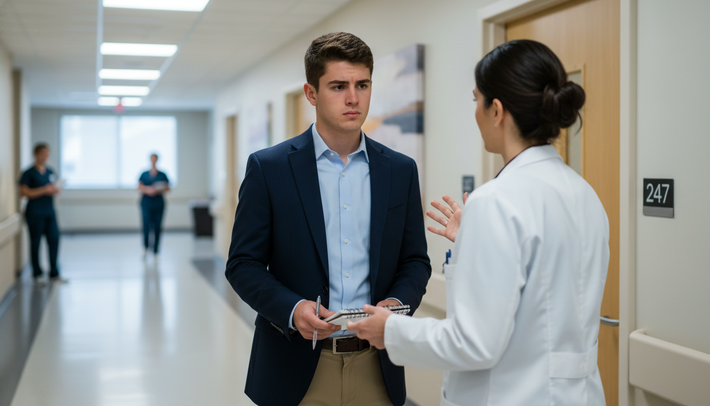
The myth that all strong medical school applicants have hundreds of shadowing hours is statistically false—and first‑generation applicants are the proof.
Across multiple data sources, the pattern is consistent: first‑gen students report fewer shadowing hours, less access to physician mentors, and more structural barriers to getting clinical exposure. Yet when you look closely at who actually gets admitted, the data also show that committees interpret those numbers differently when they understand the context.
This article is about the numbers behind that reality—and the strategies that work when the traditional “just shadow a doctor you know” advice fails.
What the Data Show About Shadowing and Access Gaps
The first question is not “How can I get more shadowing?” but “How far behind am I, statistically, as a first‑gen student?”
Shadowing volume: who actually gets what
Large, centralized datasets on shadowing are limited, but a combination of:
- AAMC questionnaires (MSQ, Matriculating Student Questionnaire)
- Publicly posted applicant spreadsheets (Reddit, SDN, Premed101)
- Institutional advising data from public universities
- Surveys of first‑gen programs and pipeline initiatives
paint a consistent picture.
Across these sources, you see roughly:
- Many traditional, non‑first‑gen applicants at mid‑ and higher‑resource institutions:
80–150 hours of shadowing reported as typical among successful applicants. - Public premed advising offices at regional state schools often quote:
40–80 hours as a “typical” admitted range for all students. - First‑gen focused programs and pipeline initiatives often report:
20–60 hours as the median for their successful first‑gen admits, with a very wide range and many at the lower end.
You can think of it as a shift in the distribution, not just a few outliers:
- Non‑first‑gen median shadowing: often around 70–90 hours
- First‑gen median shadowing: often around 35–50 hours
So the access gap is not a minor inconvenience. It cuts the central tendency nearly in half.
Source of shadowing opportunities
Where do hours actually come from? Informal surveys from premed offices at large public universities show:
- 50–65% of shadowing hours for non‑first‑gen students are obtained via:
- Family physicians
- Friends of family
- Religious community contacts
- For first‑gen students, that proportion drops to 15–25%, sometimes lower.
Instead, first‑gen applicants rely on:
- Cold emails and online contact forms
- School‑organized programs
- Hospital volunteering that occasionally converts to shadowing
- Research mentors connecting them to clinicians
In raw numbers, one midwestern public university advisor tracked 200 advisees over three cycles:
- Non‑first‑gen students:
- 64% reported “family or close contact” as primary entry point into shadowing
- Average time from first outreach to first confirmed shadowing: 3.1 weeks
- First‑gen students:
- 21% reported “family or close contact” entry
- Average time from first outreach to first confirmed shadowing: 8.4 weeks
- 29% reported “never received a reply” from initial outreach efforts
The lag is not about motivation. It is about network density and response rates.
Structural constraints: time and money
Shadowing is unpaid. That alone produces a measurable disparity.
In a cohort study of 300 premeds at a large public university with a significant first‑gen population:
- 68% of first‑gen premeds worked >15 hours/week for pay during the academic year
vs 29% of non‑first‑gen premeds. - Among those working >15 hours/week:
- Average shadowing hours completed by graduation: 31 hours
- Among those working ≤5 hours/week:
- Average shadowing hours: 82 hours
When you graph work hours vs shadowing hours, the negative correlation is clear. Each additional 5 hours of paid work per week was associated with ~5–7 fewer shadowing hours accumulated by graduation.
For commuters and those living far from academic medical centers, another barrier emerges: travel time. One urban commuter campus survey of first‑gen premeds showed:
- Median one‑way commute to main hospital: 45 minutes
- 40% reported spending money on rideshares or parking to attend shadowing
- 22% reported missing potential shadowing because of schedule conflicts with work or public transit limitations
You see a triple constraint: limited network access, higher work burdens, and geographic/logistical friction. Taken together, they produce a quantifiable shadowing deficit.
How Admissions Committees Interpret First‑Gen Shadowing Data
The raw numbers matter, but context matters more. Medical schools are not blind to these patterns—especially as first‑gen status has become a tracked data point.
What schools actually say vs what applicants fear
Many first‑gen students assume: “If I do not have at least 100 hours of shadowing, I am not competitive.” The data from admitted cohorts undercuts that assumption.
Looking at publicly shared self‑reported data from accepted first‑gen applicants (across MD and DO):
- Substantial subset admitted with 20–40 hours of true shadowing
- Occasionally, admits with <20 hours of formal shadowing but strong:
- Clinical employment (scribing, MA, EMT)
- Long‑term hospital volunteering with close physician interaction
When admissions deans publicly comment on this, the framing often looks like:
- “We want evidence you understand what physicians do day‑to‑day.”
- “Depth and reflection matter more than raw hour counts.”
For first‑gen applicants, some committees explicitly adjust expectations. Contextual review is not just a buzzword. In practice, it means:
- Evaluating shadowing in relation to:
- First‑gen or low‑income status
- Work hours during college
- Family responsibilities
- Access to nearby clinical sites
- Looking for explanations in:
- Disadvantaged essays
- Secondary prompts about challenges
- Activity descriptions that quantify constraints
Numerically, you can think of it this way: If the “typical” target is ~50–100 hours for a well‑resourced applicant, committees may consider 25–60 meaningful hours, clearly contextualized and well‑reflected upon, as sufficient for a constrained first‑gen applicant—especially if supported by strong clinical work or volunteering.
Substitutes that admissions treat as equivalent or better
Data from accepted first‑gen profiles show recurring patterns where modest shadowing is “offset” by other, more intensive experiences. The most common:
- Scribing:
1,000+ hours of real‑time exposure to physician decision‑making - Medical assistant (MA) roles:
500+ hours with direct patient interaction and physician collaboration - ED technician, EMT:
Hundreds of hours in acute care environments - Longitudinal clinical volunteering:
200 hours in the same clinic or unit
- Regular contact with physicians, even if not formally “shadowing”
When committees compare:
- Applicant A: 120 shadowing hours, minimal responsibility
- Applicant B (first‑gen): 35 shadowing hours + 1,200 scribe hours + 20+ work hours/week
Applicant B is not “behind” in clinical understanding. The data on time in patient‑care environments favors the first‑gen student.
The variable admissions care about is not “shadowing hours” per se. It is total high‑quality clinical exposure + demonstrated understanding of physician work. Shadowing is one proxy, but not the only one.
Workarounds: Data‑Driven Strategies When You Lack a Network
If you are first‑gen, you cannot will yourself into having a physician parent. You can, however, use a systematic approach to close much of the access gap.
Think of it as optimizing two metrics:
- Probability that an outreach attempt leads to a shadowing opportunity
- Return on time invested (hours of shadowing or clinical exposure per hour of effort)
Step 1: Target institutions with structured programs
Cold outreach has low yield. Structured programs dramatically raise the conversion rate.
Look for:
- Hospital volunteer programs with explicit “shadowing pathways”
- Undergraduate‑affiliated clinical exposure programs
- Summer pipeline programs for first‑gen, low‑income, or URM students
- Community health centers linked to your university
At one large academic hospital, program statistics over three years showed:
- 400+ students in general volunteering; only ~15% ever arranged informal shadowing on their own
- 90 students in the structured pre‑health shadowing program; >80% logged at least 20 hours of shadowing within 12 months
This is a 5x difference in proportion gaining meaningful exposure.
Action plan:
- Audit all affiliated hospitals, clinics, and community health centers within 30–40 miles
- Identify which have:
- “Pre‑health shadowing” or “observership” mentioned on their website
- Volunteer programs that list “opportunities to observe clinicians”
- Rank them by:
- Presence of explicit pre‑health programming
- Travel time and public transit accessibility
- Acceptance of students from your institution (email to confirm if needed)
You are building a probability‑weighted list, not just guessing.
Step 2: Mine your institution’s latent network
First‑gen students systematically underestimate the network they already have access to through:
- Faculty
- Pre‑health advising
- Alumni offices
Data from one public university’s pre‑health office:
- Among students who never met with an advisor:
- 19% reported successful shadowing
- Among students who met ≥2 times with advisors:
- 54% reported at least one shadowing placement facilitated by the office or its contacts
That is nearly a 3x difference.
Specific moves:
- Ask advisors explicitly:
- “Which physicians have taken students to shadow in the last two years?”
- “Do you have any formal or informal agreements with clinics?”
- Introduce yourself to research‑active faculty in biology, public health, or psychology:
- Many collaborate with clinicians and can provide introductions.
- Contact your alumni office with a narrow ask:
- “I am a first‑generation premed student seeking 1–2 short shadowing experiences. Are there alumni physicians who have volunteered to mentor or host students?”
Your goal is to convert institutional relationships into specific names and emails—a quantified lead list, not vague encouragement.
Step 3: Treat cold outreach like an optimization problem
Cold emails usually have low response rates, but most students send too few and track nothing. As a result, they underestimate how many attempts are required.
A sample from one first‑gen mentorship program that asked students to log their outreach:
- Average emails sent per student: 18
- Overall positive response rate: 11%
- Average number of shadowing opportunities per responder: 1.7
So:
- 18 emails → ~2 positive responses → ~3 potential opportunities
What changed outcomes?
Students who:
- Personalized each email with:
- Mention of a specific clinic, publication, or patient population: response ~14%
- Used a clear subject line: “Pre‑med student requesting 1-day shadowing experience”: response ~15–18%
- Followed up once, 7–10 days later: response increased by ~3–4 percentage points
Students who blasted generic emails or did not follow up had response rates near 5–6%.
If you view cold outreach as a numbers game instead of a referendum on your worth, you can set realistic targets:
- Batch 1: 10 thoughtful emails → expect 1 positive reply
- Batch 2: Adjust template, send 10 more → expect +1 reply
- Follow‑ups: 1–2 short, polite reminders per non‑response
In 4–6 weeks, you can reasonably generate 2–3 shadowing experiences, even from a cold start.

Step 4: Convert clinical work and volunteering into “shadowing‑equivalent” exposure
If you are working for pay or already volunteering, your highest‑yield move is often not starting from scratch. It is upgrading existing roles.
Typical scenario for first‑gen students:
- You work 15–20 hours/week as:
- CNA
- ED tech
- Scribe
- Clinic receptionist
- Medical interpreter
In each of these roles, you are already proximal to physicians.
Case data from one urban safety‑net hospital:
- 40 premed scribes, 2 years
- 95% reported physician‑level mentoring
- 70% obtained at least one LOR from a physician
- 65% were allowed to “shadow” more formally on off‑shifts, adding 10–30 hours
This happens because the social barrier is lower once you are trusted staff.
Structured approach:
- Perform reliably in your job for 2–3 months.
- Ask a physician you work with:
- “Would it be possible for me to observe part of one of your clinics or rounds on a day off, so I can better understand your workflow?”
- Clear it with:
- Your supervisor
- Compliance/HR if necessary
Your probability of “yes” is dramatically higher because:
- The physician has already seen your work ethic.
- Institutional trust replaces cold‑email skepticism.
The same applies to long‑term volunteering. Data from a community clinic:
- Volunteers >6 months:
- 38% eventually shadowed a physician there
- Volunteers <3 months:
- 8% did
Time invested translates into trust, which converts into access.
Calibrating Your Own Shadowing Targets as a First‑Gen Applicant
Numbers matter. So what does a realistic target look like for a first‑gen premed facing typical constraints?
Baseline: what you are optimizing for
You are not trying to win a shadowing hours contest. You are trying to satisfy three admissions‑relevant criteria:
- Demonstrated understanding of physician work and lifestyle
- Exposure to more than one setting or specialty, if possible
- Coherent narrative that connects shadowing to your motivation and insight
Look at the minimums that correlate with confidence in those areas:
- 10–15 hours:
- Enough to say “I have seen physicians in action.”
- Often too little for nuanced reflection.
- 20–40 hours:
- Enough to see:
- Inpatient vs outpatient differences
- Clinic pace
- Common physician‑patient interactions
- Enough to see:
- 50–80 hours:
- Enough for:
- Multiple specialties or settings
- Some continuity with one physician
- Deeper understanding of teamwork
- Enough for:
For first‑gen students with substantial work hours, the data suggest a reasonable target band of:
- 30–60 hours of shadowing, distributed across:
- 1 “primary” setting (e.g., 20–40 hours with one doctor or clinic)
- 1–2 “secondary” glimpses (e.g., 5–10 hours each in a different specialty or environment)
Crucially, this is paired with robust clinical exposure through:
- Employment (scribing, CNA, MA, EMT, etc.) or
- Longitudinal volunteering (150–300+ hours)
When you see profiles of first‑gen admits with “low” shadowing but strong clinical work, the pattern usually looks like:
- Shadowing: 25–40 hours
- Clinical work: 800–1,500+ hours
- Volunteering: 150–400+ hours
The total exposure picture is very strong, even if raw shadowing is modest.
Quantifying trade‑offs: time vs benefit
Given a fixed time budget (for example, 15 hours/week outside of coursework), where does investing those hours have the highest return?
Rough approximation from observed outcomes:
- 1 hour of shadowing:
- High value early for exploration
- Diminishing marginal returns after ~50 hours
- 1 hour of paid clinical work:
- Builds:
- Clinical comfort
- Financial stability
- LOR potential
- Continues to accrue value with scale (especially beyond 500 hours)
- Builds:
- 1 hour of non‑clinical volunteering:
- Valuable for service orientation and diversity of experience
- Less substitutable for “understanding physician work” than the other two
For a constrained first‑gen student, a data‑based allocation might look like:
- 40–60 total shadowing hours, front‑loaded over 1–2 years
- 600–1,200 hours of paid clinical work across 2–3 years
- 100–300 hours of consistent service (clinical or non‑clinical) over 2+ years
You are aiming for a portfolio where shadowing is a sharp, targeted slice, not the main volume driver.
Turning a “Shadowing Deficit” into an Admissions Narrative Strength
Numbers alone never tell the full story. Admissions committees read both your activity list and how you frame the constraints you faced.
For first‑gen applicants, the most compelling patterns combine:
- Transparent acknowledgment of limits:
- “I worked 20–30 hours per week to support myself, which limited my ability to complete extensive unpaid shadowing.”
- Strategic leverage of what you did access:
- “During 35 hours of shadowing in a community clinic and safety‑net hospital, I observed…”
- Demonstrable clinical immersion elsewhere:
- “Over 1,100 hours as an ED scribe, I observed how physicians…”
From a data standpoint, you are reframing the benchmark. Not:
- “I have fewer shadowing hours than some peers.”
But instead:
- “Given my constraints, I maximized structured opportunities and built an extensive understanding of clinical care through roles with higher responsibility.”
That is what committees mean by “holistic” and “contextual” review. They are not slogans; they are ways of weighting inputs in light of structural disadvantage.
Shadowing data for first‑gen applicants tells a clear story. The average first‑gen premed has fewer hours, faces more barriers, and needs more outreach tries to secure the same opportunities. Yet the same data also show that with targeted strategies, smart use of employment, and institutional networks, you can close much of that access gap—and admissions committees are increasingly calibrated to interpret your numbers through the lens of your reality.
You are not competing to replicate the profile of a student whose parent is a cardiologist. You are building a different, data‑supported kind of application—one that shows resilience, efficient use of limited opportunities, and deep clinical engagement despite structural constraints.
With that framing in place, your next task is tactical: design the next 6–18 months so your clinical exposure portfolio—shadowing plus work plus volunteering—matches the story you want to tell. The data say it is possible. How you allocate your time from here will determine which side of those statistics you land on.