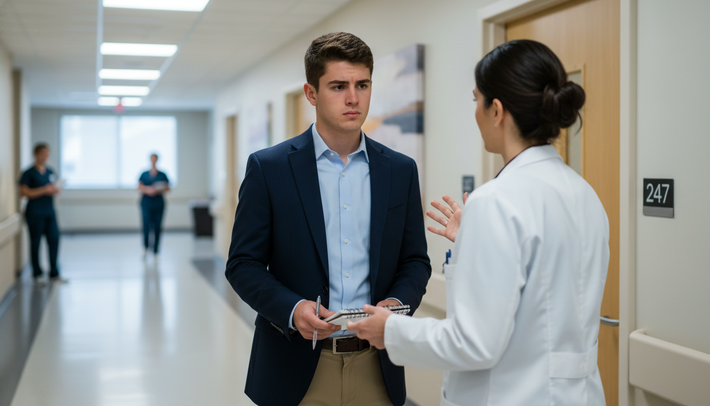
The brutal truth is this: attendings decide whether to invite you back within the first 1–2 hours of shadowing, then they spend the rest of the day subconsciously confirming that decision.
You think it hinges on how “smart” you sound or whether you ask enough questions. It doesn’t. The decision is made on things you’re barely paying attention to—timing, micro‑behavior, social awareness, and how easy (or not) you are to have around in a high‑pressure clinical environment.
I’ve listened to attendings debrief students after they left clinic. I’ve sat in program director offices while they pulled up emails from students asking to return. I’ve watched who quietly gets offered more time and who “never hears back.”
Let me walk you through how this really works.
What Attendings Actually Want From a Shadow
Most students believe shadowing is about them: their curiosity, their learning, their “passion for medicine.” That is the first mistake.
For an attending, a shadowing day is a high‑risk add‑on to an already overloaded schedule. They’re trying to:
- Move clinic or OR cases safely and on time
- Avoid complaints from patients, nurses, or admin
- Keep learners (students, residents, fellows) moving smoothly
- Not violate HIPAA or hospital policy with an overeager stranger following them around
Within that reality, they want a shadow who is three things:
- Low friction – You don’t slow them down, you don’t cause problems, you don’t add cognitive load.
- Socially safe – You won’t say something off to a patient, nurse, or colleague that creates fallout.
- Worth the risk – You’re serious, reliable, and potentially someone they’d be fine having in their orbit again.
(See also: How Shadowing Actually Influences Committee Decisions on MD Admits for more details.)
Almost every “invite back” decision is a gut call on those three dimensions.
When they talk about you later, they don’t say, “She was very passionate about medicine.” They say things like:
- “He was easy to have around. Didn’t get in the way.”
- “She picked up on the pace pretty fast.”
- “He wasn’t weird with patients.”
- “She actually showed up 10 minutes early; that’s rare.”
That’s the currency you’re being judged on.
The First 15 Minutes: Where Most Students Blow It
Attendings decide if they might invite you back before you enter the first patient room. Those first minutes in the hallway or workroom are deadly important.
Here’s what they’re scanning for, even if they never tell you.
1. Timing and Appearance
You think “on time” means arriving at 7:00 for a 7:00 start. It doesn’t.
If you’re not physically present, ready, and not frantically finding the bathroom by 6:50, you’re late in their mind. They won’t say that, but it ticks you down a notch.
They’re noticing:
- Did you email the night before to confirm the time and location?
- Did you dress correctly for their setting? (Clinic vs OR vs ED are very different.)
- Are you carrying a giant backpack and water bottle circus, or just a small notebook and pen?
This sounds trivial, but I’ve watched attendings decide “no second invite” purely on first‑impression disorganization.
At one large academic hospital, a cardiologist I know routinely hosts premeds. He told me, “If they show up cutting it close, big backpack, Starbucks in hand, AirPods around the neck—I’m nice to them, but I’m never inviting them back. It tells me everything I need to know.”
They rarely give feedback on this. They just disappear from your inbox later.
2. How You Introduce Yourself
Most students mumble their name, year, and “super interested in [specialty]” and think they’ve done their part.
The attending is listening for something else:
- Can you speak like a normal adult, not a robot reciting a script?
- Are you concise, or do you launch into your life story?
- Do you seem anxious in a way that will make patients uncomfortable?
The sweet spot is a calm, clear, 10–15 second intro. Example of what plays well:
“Hi Dr. Patel, thanks so much for letting me shadow. I’m Maya, a junior at [University], planning on applying to med school next year. I’m really looking forward to seeing how clinic works from your perspective.”
Short, normal, confident without being performative. They don’t need you to pitch your entire CV. They’re just deciding: “Can I tolerate this person next to me for 6–8 hours?”

During Patient Encounters: Where You Become “Safe” or “Never Again”
The single biggest fear attendings have with shadows: you saying or doing something in front of a patient that makes the physician look unprofessional, careless, or insensitive.
If they sense even a hint of risk, there is zero chance you’re getting invited back.
1. How You Enter the Room
Students obsess over where to stand. Attendings care more about your overall vibe.
The ones who get invited back consistently do a few quiet things:
- They knock when the attending does, not before.
- They enter after the physician, stand slightly behind and to the side, not in front.
- They keep their hands visible, not stuffed in pockets, not fiddling with a phone.
And crucially: they read the room within 2 seconds. If the patient is crying, agitated, in pain, or arguing with a family member—and you walk in smiling broadly and making intense eye contact? You’ve just flagged yourself as socially off.
I watched a GI attending blacklist a student for this exact reason. Complex, emotionally charged family meeting; the student beams in like it’s career day. The attending was polite, but when the student emailed asking to come back: no reply. He told me later, “If you can’t read that room, I’m not teaching you how to be a human.”
2. When You Speak (and When You Don’t)
Here’s the unspoken rule: if the attending doesn’t explicitly invite you to talk in the room, you’re silent.
That doesn’t mean you stand like a statue, but you don’t:
- Introduce yourself to the patient unless the attending models it first.
- Jump in with follow‑up questions.
- Explain things to the patient, even if you think you know the answer.
You are there to observe and to not create legal or interpersonal risk.
The students who get invited back know how to show engagement without speaking:
- Subtle nodding while the patient talks
- Making eye contact with the attending when they explain a finding, then glancing at the relevant body part or screen
- Writing brief notes after the encounter, not during the emotional peak of a conversation
Attendings notice this. You feel invisible, but they’re tracking: “Does this person understand how to be present without taking over?”
3. Reactions to Sensitive Content
There are moments in clinic that are litmus tests:
- A patient discloses trauma.
- There’s frank discussion about sexual health.
- Bad news gets delivered.
- A patient makes an inappropriate joke or comment.
If you visibly flinch, look away dramatically, or smirk at the wrong moment, you mark yourself as not ready.
I sat with a breast surgeon once who had a premed shadow. A patient made a dark, self‑deprecating joke about losing her hair and “looking like a 12‑year‑old boy.” The student laughed, a bit too loudly.
The surgeon didn’t say anything in front of the patient. But as soon as the door closed, the tone shifted. She walked the student to the nurses’ station, thanked her for coming, and later told me, “No way she’s coming back. If your emotional instincts are that off in front of a newly diagnosed cancer patient, I’m not training you.”
That’s how fast it happens.
Between Patients: The Micro‑Interactions That Decide Your Fate
What you do in the hallway, at the computer, and during “downtime” is often more decisive than how you behave in rooms.
1. The Question Trap
You’ve been told to “ask lots of questions.” That’s incomplete. The truth: they want strategic questions that don’t slow down the flow.
Good questions are:
- Deferred: “If we have a minute later, I’d love to ask you about…”
- Focused: tied to what you just saw, not random board‑style trivia.
- Short: one sentence, not a monologue with your own theories.
What they hate:
- Re‑asking what they literally just explained to the patient.
- Asking, “What specialty should I go into?” or “How competitive is [specialty]?” on first contact.
- Turning every slow moment into a quiz show.
An attending once summarized it perfectly: “If I feel like I have to entertain you, you’re not coming back.”
The students who get quietly invited back often ask things like:
“Earlier you mentioned changing your plan based on her social situation. Is that something you think about often in your specialty?”
That’s a high‑yield question. It maps to thinking, not fact regurgitation.
2. How You Handle Boredom and Downtime
Every clinic has dead space: no‑shows, delays, charting time.
This is the part where attendings watch how you handle yourself when no one is performing for you.
The mistakes:
- Pulling out your phone the second there’s silence.
- Slumping in an empty chair and zoning out.
- Complaining (even jokingly) about being tired, hungry, or bored.
They may say, “Feel free to check your phone if you need to.” That’s not a test you want to take literally. Do it sparingly, and not out in the open.
Students who get invited back usually:
- Keep a small notebook and jot down short impressions or questions.
- Watch the EMR screen while the attending is charting, without reading PHI out loud.
- Ask one or two well‑timed questions during longer lulls.
You’re signaling: “I can exist in this environment without constant stimulation or hand‑holding.”

Reliability, Professionalism, and the “Future Colleague” Test
There’s a moment near the end of almost every shadowing day when the attending mentally asks: “Could I see this person as a future colleague?”
You don’t have to be brilliant. But you must clear a basic professional bar.
1. Respecting Everyone, Not Just the Attending
Watch this very closely: how you treat nurses, MAs, techs, and front‑desk staff is glowing neon in their mind.
If you are warm and respectful with them—not over the top, just consistently polite—attendings relax. Their brain says, “Safe.” Because those people talk.
At one midwestern academic hospital, an EM attending told me their cardinal rule: “If the charge nurse doesn’t like you, you’re done.” They apply that same lens to premeds and med students. If the nurse says, “That student was rude, or in the way,” there’s no follow‑up invitation.
On the flip side, if a nurse says, “She was so polite, asked where to stand, thanked us for letting her observe,” you rise instantly.
You’re rarely present when this feedback is given. But it happens. All the time.
2. Boundaries and Oversharing
Some students try to build rapport with attendings by oversharing personal struggles or family health issues. It usually backfires.
The attending is asking, silently:
- Are you emotionally contained enough to be around real patient suffering?
- Are you going to make this day about your story or theirs?
A brief, relevant disclosure is fine if it clearly helps you understand a patient’s perspective. A 10‑minute tangent about your anxiety, your MCAT stress, or your relationship drama? Death blow.
I watched an OB/GYN attending slowly disengage from a very bright premed because every slight opening turned into another chapter of her personal saga. When the student later emailed asking to shadow in the OR, she got a polite but generic response: “Unfortunately I’m not able to accommodate additional shadowing at this time.”
Translation: “Too much emotional work. Not worth it.”
3. How You Handle Being Corrected
Even during simple shadowing, you’ll be corrected:
- “Stand here instead, so you’re not in the way.”
- “You can’t look up patients’ labs, that’s a privacy issue.”
- “We don’t wear scrubs in this clinic; business casual is better next time.”
The content of the correction doesn’t matter nearly as much as your reaction.
The students who get invited back do a few things instinctively:
- They don’t explain or defend why they did it differently.
- They respond with a simple “Got it, thanks,” and adjust immediately.
- They don’t apologize 5 more times over the next hour.
You’re showing adaptability under pressure. That’s what they care about.
The End of the Day: This Is When They Decide
There’s a specific window—usually the last 10–15 minutes—where the future gets determined.
Many students think the decision depends on a dramatic conversation: “You did great, I’d love to have you back.” Sometimes that happens. Often it doesn’t.
More often, the attending signals subtly.
1. How You Close the Loop
Most students say a vague, “Thank you so much for having me,” and leave. Not terrible. But you can do better without sounding transactional.
The closer that lands well usually has three pieces:
- Genuine, specific thanks: “Thank you for letting me sit in on that family meeting; it was really eye‑opening to see how you handled their questions.”
- Brief reflection: one sentence about what you learned that day.
- Calm interest in future exposure, but not a demand: “If you ever have clinic or OR days where an extra observer is okay, I’d really appreciate the chance to come back.”
Then you stop talking. You don’t push. You let them respond.
2. What Their Response Really Means
Here’s the translation layer no one gives you:
“Definitely, send me an email and we’ll set something up.”
- This is a genuine yes. They’ve already decided you cleared the bar.
“Sure, feel free to reach out if you’re in the area again.”
- Soft maybe. They might say yes if you follow up well and the timing works.
“It was great having you. Best of luck with everything.”
- That’s a polite no. They’re closing the loop.
Don’t argue with that reality. If it’s a soft no, your follow‑up email isn’t going to magically transform it. You can send one thank‑you, but you don’t badger.

The Invisible File: How This Follows You Into Med School and Beyond
Here’s the part almost no one tells you: shadowing impressions don’t stay in the room. They echo.
Attendings talk to:
- Pre‑health advisors at your university
- Admissions committee members they know
- Other attendings in the same department
- Residents who may later see your name on an application
The conversation is rarely formal. It’s a passing comment in the resident room:
“Hey, you know [Student Name]? They shadowed me a few times. Solid kid. You’ll like them.”
Or the opposite:
“Yeah, they shadowed once. Seemed a bit… intense. Not sure they’re ready for this environment.”
This matters most when you’re applying in a small specialty or to a specific institution where you’ve shadowed.
At some hospitals, especially in surgical subspecialties, repeated shadowing becomes an informal “early audition.” An attending who’s comfortable with you might say to a program director, “She’s been with me in the OR a few times; completely safe, very respectful.” That one line can nudge your application out of the giant pile of anonymous PDFs.
And if you’re wondering: yes, attendings remember the extremes. The remarkably good and the memorably bad. The middle majority blur together. Your goal is to be clearly on the “I’d trust this person around my patients again” side of that line.
The Core Truth: You’re Being Evaluated as a Professional, Not a Tourist
Strip everything else away, and the decision about whether you get invited back after shadowing comes down to this:
- Are you easy to have in a high‑stakes environment?
- Do you show basic emotional intelligence and respect for patients and staff?
- Do you demonstrate that you’re serious about medicine without making it all about you?
You won’t get a rubric. You won’t get formal feedback. What you’ll get is silence—or another opportunity.
Remember these when you walk into any shadowing experience:
- Attendings are testing whether you’re socially and professionally “safe,” far more than whether you’re smart.
- Every micro‑interaction—with patients, nurses, and staff—is part of that test, even when it feels like nothing is happening.
- The invitation back is usually decided early, quietly, and permanently. Act from minute one like you’re already being considered for a return.