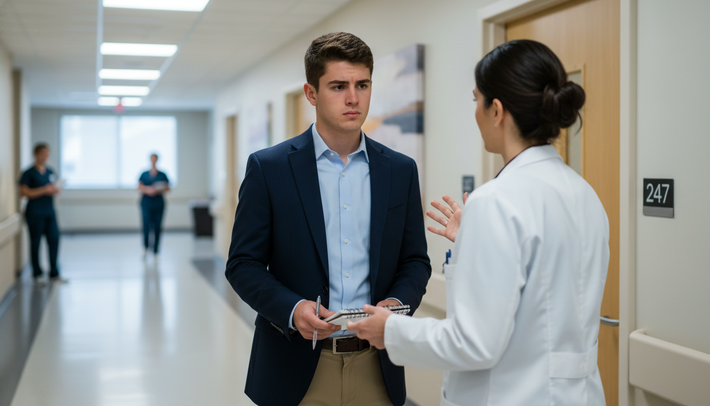
You are in a town with one stoplight, two family doctors, and the nearest academic medical center is 90 miles away.
Your premed advisor keeps telling you, “You need clinical exposure and shadowing hours.” But your “local healthcare system” is a solo family practice, a critical access hospital with six beds, and a mobile clinic that comes twice a month.
You have no physician relatives. Your college does not have formal shadowing pipelines. Every online forum seems written for people who can pick from ten hospitals within a 30‑minute radius.
You are stuck.
This is fixable. It just requires a different playbook than the typical urban premed.
(See also: Transforming Shadowing Notes into Strong Application Storytelling for tips on how to effectively document your experiences.)
Below is a concrete, step‑by‑step strategy for finding shadowing when you live in a rural area with very few doctors.
Step 1: Redefine What Counts as “Shadowing”
(Related: How to Politely Set Boundaries in Uncomfortable Shadowing Settings for guidance on navigating challenging situations.)
Before you start emailing anyone, reset your mental model. In large cities, “shadowing” often means:
- Walking behind a physician in a tertiary academic center
- Watching complex cases in the OR or cath lab
- Logging dozens of hours from a single department
In rural settings, your reality may look different, and that is acceptable to admissions committees if you can clearly explain what you did and what you learned.
Accept multiple formats as valid clinical exposure
You are trying to build:
- Sustained exposure to real patients and clinicians
- Insight into what daily medical practice is actually like
- Evidence that you can work in a healthcare environment
Valid ways to achieve that in a rural area include:
- Traditional one‑on‑one physician shadowing (even if limited hours)
- Shadowing physician assistants (PAs), nurse practitioners (NPs), or certified nurse midwives (CNMs)
- Working or volunteering in:
- Rural health clinics
- Critical access hospitals
- Tribal health centers
- Public health departments
- EMS / ambulance services
- Virtual or hybrid shadowing tied to real clinical encounters
Schools care more about the quality of your reflection and understanding than whether every hour was with an MD/DO in a big hospital. Several admissions deans have explicitly stated that rural context is taken into account.
Your constraint is real, but it is not disqualifying. You will build an unconventional portfolio instead of a single traditional shadowing pipeline.
Step 2: Map Every Possible Clinical Site Within Your Reach
Your next move is not “email doctors.”
Your next move is a systematic map of every clinical setting within your realistic radius (including those across state lines if appropriate).
Build your local clinical map
Create a spreadsheet with these columns:
- Facility / clinic name
- Type (clinic, hospital, EMS, public health, nursing home, etc.)
- Distance / drive time
- Website
- Main phone
- General email
- Specific providers (if listed)
- Notes (e.g., “no shadowing listed on website,” “has volunteers,” etc.)
Now fill it using:
Google Maps
- Search: “clinic near [your town]”, “hospital near [your town]”, “family medicine near [your town]”, “urgent care near [your town]”, “public health department [county name]”.
- Zoom out slowly up to 60–90 minutes driving distance.
State medical board directory
- Many states have searchable databases of licensed physicians with their practice address.
- Filter by your county and surrounding counties. Copy any physician with a clinic address into your spreadsheet.
Insurance provider directories
- Look at major insurers in your state (e.g., Blue Cross, Medicaid managed-care plans).
- Use their “Find a doctor” search by zip code. This often reveals small offices that do not show up prominently on Google.
Alternate clinical environments Add these categories to your search:
- Federally Qualified Health Centers (FQHCs)
- Indian Health Service or Tribal clinics
- Veterans Affairs community clinics (CBOCs)
- County mental health centers
- Dialysis centers
- Hospice organizations
- Home health agencies
- Nursing homes / skilled nursing facilities
- Free or mobile clinics
- Private EMS providers or volunteer fire/EMS departments
You should end up with a longer list than you expected, even if many facilities are 30–60 minutes away. That list is your battlefield.

Step 3: Use “Access Points” Instead of Cold‑Calling Random Doctors
Physicians in rural areas wear many hats. They may be hospitalists, clinic attendings, ER coverage, and nursing home providers all in one. They also may be more protective of patient privacy because everyone in town knows everyone.
You will have better success through structured access points than by emailing “Dear Doctor, may I shadow you?”
Access point #1: Hospital or clinic education / HR contacts
Rural hospitals and FQHCs often have one or two people managing all education or community relations. You want them on your side.
Actions:
Visit each hospital or FQHC website
- Look for “Education,” “Students,” “Volunteers,” “Community Outreach,” or “Human Resources.”
- If there is a “Volunteer Services” page, that is gold. Even if “shadowing” is not mentioned, volunteers are the first in line to convert into shadowing when policies allow.
Write a structured email (template)
Subject: Undergraduate premedical student seeking approved clinical observation
Body (adapt to your story):
Dear [Name or “Education Coordinator”],
My name is [Your Name]. I am an undergraduate student at [College] from [Town], pursuing medical school with a strong interest in rural health. I live in [County], and your facility is the primary hospital/clinic for my community.
I am seeking approved ways to gain clinical exposure and physician observation hours that comply with your policies and HIPAA. I understand many hospitals have restrictions on informal shadowing, particularly after COVID. I want to follow your established process, even if that involves first volunteering or completing specific trainings.
Could you please let me know:
- Whether your facility has any program or pathway for premedical students (volunteering, observing, or student programs)?
- If so, who I should contact to begin the process?
- If not, whether there are any alternative suggestions you have for gaining appropriate clinical experience in our area?
I would be happy to provide a resume, proof of vaccination, background check, or any other required documentation.
Thank you for your time and for serving our community.
Sincerely,
[Your Name]
[Phone]
[Email]
You are signaling you are serious, compliant, and respectful of policy. That matters.
- Follow up by phone after 5–7 business days if you do not hear back.
Prepare a short script:
- Who you are
- That you emailed already
- That you are looking for the proper pathway
Keep notes in your spreadsheet.
Access point #2: Volunteer roles as a path to shadowing
Many rural facilities will not let unknown undergraduates directly shadow. They will, however, let volunteers in with badges and HIPAA training.
Target volunteer roles that get you near clinical work:
- Hospital volunteer (transport, front desk, patient escort)
- Clinic greeter or patient flow assistant
- Nursing home activities volunteer
- EMS station volunteer / observer (if allowed)
- Public health event volunteer (vaccination clinics, health fairs)
Once you are inside and familiar, it becomes much easier to say to a staff member or the volunteer coordinator:
“I am planning to apply to medical school in [year] and hope to practice in rural communities like this one. Are there any physicians here who allow brief, structured observation for premed students who have already completed hospital training?”
It is much easier to advocate for you once you are a known, reliable person.
Step 4: Direct Outreach to Rural Physicians—But Do It Strategically
After you have tried structured paths, you will still likely need to contact physicians directly. Many rural physicians are deeply committed to mentoring the next generation, especially students from their region, but they receive vague or poorly written requests that make them hesitate.
You are going to be specific, low‑burden, and professional.
Prioritize the right physicians
In your spreadsheet, mark these as higher priority:
- Family medicine, internal medicine, pediatrics, OB‑GYN in small clinics
- DO physicians (often more common in rural primary care and sometimes more mentorship‑oriented)
- Alumni of your college or state schools (check LinkedIn, alumni directories)
- Physicians explicitly listed in “rural track” or “rural health” bios on practice websites
Build a concise email that lowers the ask
Subject: Local premed student from [Town] hoping to observe 1–2 half days
Body:
Dear Dr. [Last Name],
My name is [Your Name]. I grew up in [Town] and am currently a [year] at [College] planning to apply to medical school in [year], with the long‑term goal of returning to practice in a rural community.
I am reaching out because there are very few physicians in our area, and your clinic is one of the primary sites serving [region/communities]. I am seeking a limited, structured opportunity to observe clinical care to better understand day‑to‑day rural practice.
If your clinic policies allow, would you be open to allowing me to observe you for 1–2 half‑days initially? I would complete any required HIPAA or facility training, follow all instructions, and maintain complete confidentiality.
I know your time is extremely limited, so I want to emphasize that even a brief experience would be very valuable. If you are unable to host a student, I would be grateful for any guidance or suggestions you might have for gaining appropriate clinical exposure in our area.
Thank you for considering this request and for caring for our community.
Sincerely,
[Your Name]
[Phone]
[Email]
Key moves here:
- You identify as local and future rural physician material.
- You ask for small, specific time blocks, not “hundreds of hours.”
- You acknowledge policy and confidentiality up front.
- You give them an easy out with the option to advise instead.
Use every rural network you have
Do not rely only on cold email. In small towns, connections matter.
Potential connectors:
- Your own family’s primary care doctor or pediatrician
- School nurses at your high school or college
- Pharmacists at the local pharmacy
- Pastor/priest/faith leaders (rural doctors often attend local churches)
- Coaches or teachers who may know physicians socially
- County health department staff
- EMS chiefs or paramedic supervisors
When you ask them, do not say “Can you get me shadowing?” Say:
“Do you know any physicians or advanced practice providers in our area who might be open to talking with a premed student about rural medicine? I’m trying to understand the day‑to‑day work and, if their clinic allows, possibly observe briefly.”
Conversations often turn into “Let me introduce you to Dr. X.”
Step 5: Use Regional and State‑Level Rural Health Pipelines
Your town might not have a formal program. Your state might.
Many U.S. states have:
- Rural health associations
- Area Health Education Centers (AHECs)
- Rural physician pipeline or “grow your own” initiatives
These organizations often:
- Coordinate rural premed shadowing
- Offer summer clinical immersion programs
- Provide stipends for travel or housing in rural rotations
- Know which clinics are open to students
How to find and leverage them
Search for:
- “[Your state] AHEC premed”
- “[Your state] rural health association students”
- “[Your state] rural physician pipeline”
- “[Your state] rural medical education premed”
Once you find relevant programs, contact them directly:
“I am an undergraduate student from [rural county], very interested in rural primary care. I am seeking structured opportunities for clinical exposure or physician shadowing in rural settings. Are there any programs, contacts, or clinics you can recommend that work with pre‑medical students?”
- Ask specifically:
- Do they have a summer premed program?
- Do they fund short rural clinical immersion experiences?
- Do they have a list of rural physicians who take students?
If your state has a medical school with a rural track (e.g., WWAMI, KU Rural, UND, UAMS, etc.), check their website. Many list “rural pipeline” or undergraduate shadowing/immersion opportunities.
Step 6: Expand to Non‑Physician Clinical Shadowing (Then Connect to Physicians)
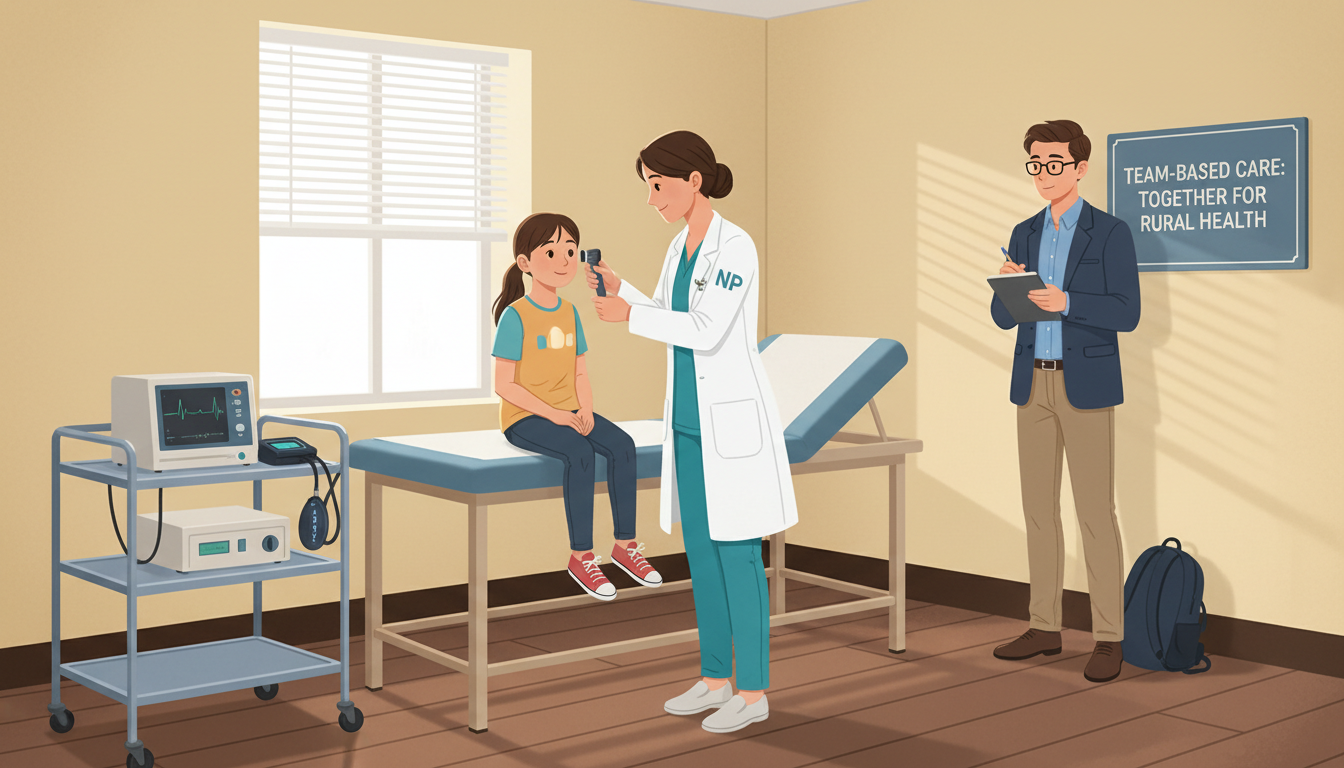
In understaffed rural systems, APPs and other clinicians often have more flexibility than physicians to host students.
Shadowing non‑physician providers is still valuable and respected by admissions committees, especially when framed correctly.
Target non‑physician clinicians strategically
Look for:
- Nurse practitioners (FNP, AGNP, PNP) in primary care clinics
- Physician assistants in family medicine, urgent care, or ER
- Certified registered nurse anesthetists (CRNAs) in small hospitals
- Certified nurse midwives (CNMs) doing prenatal care and deliveries
- Clinical pharmacists in rural hospitals or clinics
- Physical therapists, occupational therapists, respiratory therapists in local facilities
Use a similar outreach email, but tweak the framing:
“I understand that as a [PA/NP/CNM], you provide much of the front‑line care in our community. I am interested in medicine and rural primary care and would like to better understand how the healthcare team functions in settings like yours.”
Once you have rapport with a non‑physician clinician, you can ask:
“Are there any physicians you work with who enjoy teaching or might be open to a very limited observation experience for a local premed, if clinic policy allows?”
Often, they will hand‑deliver your request to the right doctor.
Step 7: Use Virtual and Hybrid Shadowing Intelligently
Virtual shadowing exploded during COVID and has not disappeared. Many rural students can use it to supplement limited local options.
The mistake some applicants make is relying only on virtual shadowing with no in‑person patient exposure. You will avoid that.
How to select high‑quality virtual shadowing
Look for programs that:
- Are sponsored by hospitals, medical schools, or recognized organizations
- Feature real physicians discussing actual cases (de‑identified)
- Include Q&A and interactive components
- Provide documentation of participation (certificates, attendance logs)
Examples of where to look (programs change often, so verify current status):
- Medical school pipeline programs (search “[school name] virtual premed shadowing”)
- Hospital community education pages
- National organizations (e.g., some specialty societies host series for premeds)
Use virtual hours to:
- Explore specialties you cannot see locally
- Understand general clinical reasoning
- Prepare better questions for any in‑person experiences you do get
In your applications, frame virtual shadowing as a complement, not the core.
Step 8: Turn Limited Hours into Strong Application Material
Rural students often worry: “I only got 30–40 hours of actual physician shadowing. Is that enough?”
For many schools, particularly state schools with rural missions, the answer is yes if:
- You pair that with stronger hands‑on clinical volunteering or work (CNA, MA, scribe, EMT, etc.)
- You show longitudinal commitment to healthcare environments
- Your reflections demonstrate maturity, insight, and understanding of rural medicine
Get some form of clinical employment if possible
Even in rural areas, options might include:
- Certified nursing assistant (CNA) in a nursing home or hospital
- Medical assistant (MA) in a clinic (some will train on the job)
- Phlebotomist (often requires a short course)
- ER tech (if you have EMT training)
- Home health aide
These jobs:
- Put you directly in contact with patients
- Show schools you can handle bodily fluids, stress, and shift work
- Compensate you (important if you cannot afford unpaid experiences)
Shadowing then becomes a layer on top of robust patient interaction, not your only clinical activity.
Document your experiences clearly
From the start, keep:
- A log of dates, hours, and settings
- Short notes on:
- One or two cases (de‑identified) that impacted you
- What you learned about the physician role
- What you saw that was unique to rural practice (resource constraints, continuity, social factors)
When it is time to fill out AMCAS/AACOMAS:
- Combine small shadowing stints into grouped entries (e.g., “Rural Physician Shadowing – Family Medicine and ER”)
- Explicitly label experiences as “Rural” in the description
- Highlight specific rural challenges:
- Limited specialists; long transfer distances
- Multi‑generational care
- Overlap between personal and professional roles
- Broader scope of practice for rural physicians
You are telling a clear story: “I am from here, I understand this environment, and I still want to do this work.”
Step 9: Address the Rural Constraint Directly in Your Narrative
You do not need to hide the fact that you had few doctors around. You need to present it as context, not excuse.
In personal statements and secondaries, you can:
- Briefly describe your community’s limited medical infrastructure
- Explain the steps you took to find any opportunities available
- Emphasize persistence and creativity:
- Volunteering before shadowing
- Working in direct patient care roles
- Using state or regional rural programs
- Engaging in virtual shadowing when in‑person was not possible
Example framing:
“Growing up in a county with no full‑time hospital and two primary care physicians, conventional premedical shadowing was not easily available. I began instead by volunteering at our critical access hospital, then completed CNA training to work in the adjacent nursing home. When the hospital’s education coordinator launched a small observer program, I was among the first selected, and I spent 24 hours shadowing the family medicine physician who covers clinic, ER, and inpatient care. These experiences, combined with virtual sessions hosted by [institution], showed me both the challenges and rewards of rural practice and reinforced my commitment to return to a community like my own.”
Adcoms read thousands of applications. When they see rural applicants who used every tool available, it stands out.

Step 10: Build a Long‑Term Relationship with at Least One Rural Mentor
If there is only one physician in a 40‑mile radius who is willing to let you shadow twice a year, that person can still become an anchor in your journey.
Your goal: turn a short shadowing experience into a multi‑year mentorship.
How to do it without being a burden
After your first shadowing session:
Send a detailed thank‑you email within 24 hours:
- Mention 1–2 specific things you observed and learned
- Reiterate your interest in rural medicine
Ask a modest follow‑up:
“Would you be comfortable if I checked in once or twice a year by email with an update on my progress and an occasional question about career decisions?”
Actually do this:
- Short updates once or twice a year
- Ask specific questions: “I’m considering EMT vs CNA training for more patient exposure. Which would you recommend given our local system?”
If things go well over 1–2 years:
- This physician may become a meaningful letter writer
- Even if you only logged 20–30 shadowing hours, a strong letter from a rural physician who truly knows you has weight
Your rural background plus a credible rural mentor is a combination many schools, especially public and mission‑driven ones, are actively looking for.
Common Pitfalls to Avoid in Rural Shadowing Searches
To keep yourself out of trouble:
- Do not show up at clinics unannounced asking to shadow. Always go through a contact, email, or phone first.
- Do not offer to “help with patients” during shadowing unless you are officially hired/credentialed and trained for a role. Observation is observation.
- Do not take photos, videos, or post patient details on social media. Ever.
- Do not pressure physicians. If they say “our policy does not allow shadowing,” thank them and ask if they know any facility that does.
- Do not assume that “no response” equals “they hate students.” Staff in rural settings are often overwhelmed; polite follow‑up is part of the process.
Putting It All Together: A Sample Rural Shadowing Plan
To make this concrete, here is what a 12‑month plan might look like for a rural sophomore or junior:
Month 1–2
- Build your clinical site spreadsheet for a 60‑mile radius
- Email hospital/FQHC education or HR contacts
- Apply for any volunteer roles that exist
Month 3–4
- Begin volunteering 3–4 hours/week if accepted
- Start clinical job training (CNA, MA, EMT) if feasible
- Send targeted emails to 4–6 rural physicians and 4–6 non‑physician clinicians
Month 5–6
- Begin limited shadowing where allowed (even 2–4 half days is progress)
- Ask clinicians you meet about additional contacts or programs
- Enroll in a reputable virtual shadowing series
Month 7–9
- Continue work/volunteering for sustained clinical exposure
- Secure at least one physician and one non‑physician mentor for periodic check‑ins
Month 10–12
- Log and reflect on all experiences
- Reach out to state AHEC or rural health association about upcoming summer or academic year opportunities
- Ask your primary mentor whether they would be open to writing a future letter of recommendation, if things continue to go well
This is not hypothetical. Many rural students have followed similar paths and built competitive applications with 30–60 hours of direct physician shadowing plus robust work and volunteering.
Right now, you are in a small town with very few doctors and no obvious pathways to shadowing.
Today, take one concrete step: open a blank spreadsheet and start mapping every clinical site within a 60‑mile radius of your home. List names, phone numbers, websites, and any education/volunteer contacts you can find. Once that map exists, your shadowing search is no longer vague frustration; it is a series of specific, solvable problems.