You've already spent months polishing your ERAS application. You've rehearsed answers until they feel automatic. Then interview day arrives and you treat the five minutes before the host joins like free time. That is the exact moment most candidates lose the rank-list bump they worked so hard for.
I have watched this play out on both sides of the Zoom window. Applicants scroll Instagram, adjust their hair in the camera preview, or stare blankly at the wall. The host is already there, sometimes muted, sometimes camera-off, taking notes on your composure. The "waiting room" is not a buffer. It is the first scored minute of the interview. Everything that follows is filtered through what happens in those five minutes.
Here is the timeline that actually decides outcomes, broken into the only sequence that matters.
The Night Before: The Environment Audit
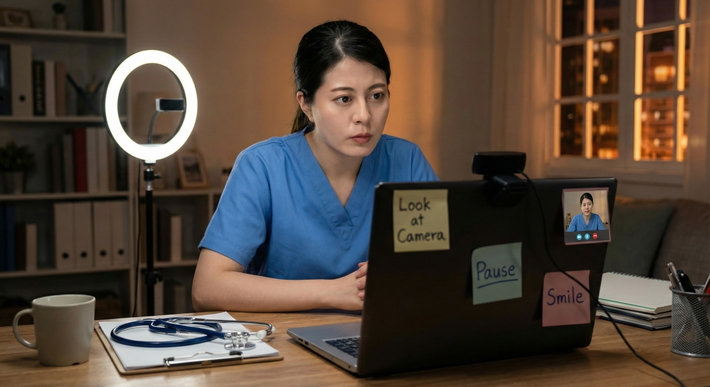
At this point you should treat setup like a pre-op checklist, not a last-minute scramble. Messy bookshelves, ring-light glare, and a dying laptop battery are self-inflicted wounds. Fix them the night before so your brain is free for content, not crisis management.
- Clear every personal item from the camera frame. A plain wall or a single framed diploma is enough. No laundry piles. No half-eaten snacks.
- Run a speed test. Anything under 25 Mbps upload is a red flag; move closer to the router or tether to your phone as backup.
- Angle the camera so your eyes sit in the upper third of the frame. Looking down at a laptop on your desk makes you look tired and small. Stack books if you have to.
- Recite your 60-second elevator pitch once, out loud, while standing. Then sit and say it again. Muscle memory beats last-minute notes.
- Place a full water bottle and a single blank notepad within arm's reach. You will not have time to hunt for either once the call starts.
Then shut everything down and sleep. Residual adrenaline from "just one more run-through" is the enemy of crisp morning delivery.
The 10-Minute Buffer: The Myth of "Just Chilling"
Myth: You have ten peaceful minutes to scroll, hydrate, or panic-breathe. Reality: The host is often already in the waiting room, camera off, watching how you carry yourself.
I have sat in those rooms as faculty. We notice the applicant who checks their phone three times. We notice the one who stares into space with a blank face. We also notice the one who sits upright, eyes soft, ready. That last person starts the actual interview with a quiet advantage.
At this point you should:
- Keep your camera on if the platform allows it. If policy forces it off, maintain the same posture and expression you would use on camera.
- Rest your hands on the desk. No phone. No fidgeting with earbuds.
- Breathe slowly through your nose. Smile once, lightly, as if you already see the host. That micro-expression resets your face into approachable mode.
Checking your phone signals two things the program does not want: disinterest and poor prioritization. Leave it face-down in another room if you have to. The buffer is not downtime. It is the professionalism check that never appears on the scorecard but always influences the rank list.
The 5-Minute Countdown: The Host Joins
The second the host's tile appears, the waiting room ends. Myth number two: "I can wait for them to speak first." Wrong. Silence reads as uncertainty. Your job is to deliver the virtual handshake before they finish adjusting their own camera.
At this point you should look straight into the lens, not at their face on the screen, and say, clearly and warmly, "Good morning, Dr. Smith. Thank you for taking the time today." Smile with your eyes. Then stop talking. Let them respond.
I have seen candidates freeze, mumble "uh, hi," or launch into an apology about their internet. All of that burns the first impression. Fill the silence with clean professionalism instead. That single greeting is the filter that decides whether the rest of the call feels like a conversation or an interrogation.
The First 3 Minutes: The "Tell Me About Yourself" Filter
This is the most unforgiving window in the entire match process. Myth: "I have time to think while they glance at my CV." Reality: They are already deciding whether you sound like someone they want on their team. The greeting plus the next 180 seconds set the ceiling for every answer that follows.
At this point you should deliver your memorized 60-second pitch immediately after the host's opening. Structure it as past → present → future, tied to their program. Example skeleton I coach:
"I grew up watching my mother manage a free clinic in rural Ohio, which pushed me toward primary care. In medical school I led our student-run clinic and published on access barriers. I'm drawn to your program because of the continuity clinic model and the health-equity track, exactly the environment where I want to train and eventually practice."
No rambling. No "um, so yeah." No apologizing for being nervous. Concise and confident. If you need notes for this answer, you are already behind. The host is filtering hard: Can this person think on their feet? Do they own their story? Are they someone residents will want to work with at 2 a.m.?
Everything after minute three is easier if you clear this gate cleanly. Fail it and even perfect answers later feel like damage control.
The Aftermath: The Professional Exit
The interview is not over when the last question ends. Myth: "I can hang up and grab lunch." Reality: the waiting-room standard continues until both parties have left the call.
At this point you should thank them again, "I really appreciate the conversation, Dr. Smith", smile, and wait. Let them click "end" first. Leaving abruptly reads as eagerness to escape. Staying two extra seconds reads as respect.
Then close your laptop, stand up, and walk away from the desk. Do not collapse into your phone or start dissecting every word you said. That energy leaks into the next interview if you have one stacked. Protect the professional bubble until you are fully offline.
Summary: The Timeline That Actually Moves Rank Lists
The waiting room is not a buffer zone; it is the first impression. Do not check your phone during the pre-call buffer; you are being observed. Your greeting and the first three minutes are the filter that determines whether you get the benefit of the doubt on every later question. Professionalism starts the moment you log in and ends only when you log out.
Treat the five-minute window with the same seriousness you give your research abstract or your Step scores. Candidates who do this consistently move up rank lists. Candidates who treat it as dead time stay invisible. You already know how to prepare content. Now prepare the clock.