
It’s July 5th. MS3 just officially ended last week. Your email is starting to fill with ERAS reminders, your school is nagging you about MSPE deadlines, and you’ve got vague plans to “work on interview prep later.”
Here’s the problem: later is when your sub-I is crushing you, your Step 2 score just came back, and interview invites are dropping at 6:01 a.m.
Behavioral interview prep is not a “two days before your first interview” project. If you do it right, it’s a slow build over this MS4 summer. Week by week. Story by story. By the time interviews hit, you’re not scrambling—you’re pulling from a library you built months ago.
Let’s walk that timeline.
Big Picture: Your MS4 Summer Behavioral Story Timeline
At this point you should think in phases, not chaos.
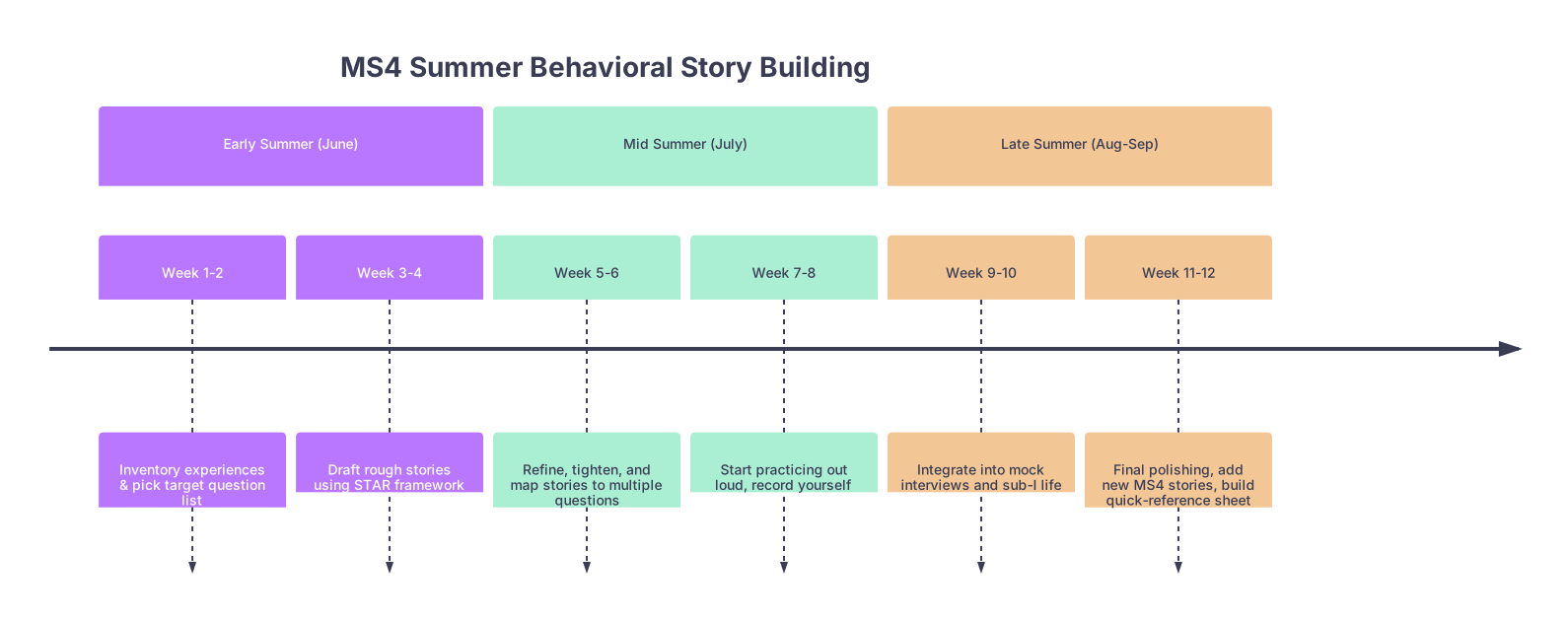
| Period | Event |
|---|---|
| Early Summer (June) - Week 1-2 | Inventory experiences & pick target question list |
| Early Summer (June) - Week 3-4 | Draft rough stories using STAR framework |
| Mid Summer (July) - Week 5-6 | Refine, tighten, and map stories to multiple questions |
| Mid Summer (July) - Week 7-8 | Start practicing out loud, record yourself |
| Late Summer (Aug-Sep) - Week 9-10 | Integrate into mock interviews and sub-I life |
| Late Summer (Aug-Sep) - Week 11-12 | Final polishing, add new MS4 stories, build quick-reference sheet |
At each point in that timeline, your job is very specific. Not “prepare for behavioral questions.” That’s how people procrastinate.
You’ll:
- Build an experience inventory
- Turn experiences into structured stories
- Stress-test and refine those stories
- Practice delivery until they sound natural, not memorized
Let’s go month by month, then week by week.
June: Inventory and Framework (You’re Laying the Bricks)
If it’s early MS4 summer—June-ish—this is your foundation month. You’re not trying to be polished. You’re trying to be complete.
Week 1–2: Build Your Experience Inventory
At this point you should not be “winging it” with vague memories. You need a master list.
Sit down for 60–90 minutes with:
- Your CV/ERAS activities list
- Clerkship evaluations
- Old reflection essays or notes
- Any leadership / research / volunteer logs
Your goal: list 25–40 specific situations you could talk about. Not roles. Situations.
Categories to hit:
Clinical:
- A time you advocated for a patient
- A time you made a mistake or missed something and fixed it
- A difficult patient or family interaction
- A conflict on the team (resident–student disagreement, nursing tension, etc.)
Professionalism / work ethic:
- You stayed late / took extra responsibility
- You received hard feedback and changed something
- You stepped up when the team was short-staffed
Teamwork / leadership:
- You organized something (schedule, sign-outs, teaching session)
- You led or revived a failing project or group
- You handled a lazy or unreliable teammate
Resilience / failure:
- Step exam setback, bad grade, shelf failure
- Personal hardship during training
- Project that collapsed or never published
Dump them in a document. Bulleted, one line each is fine.
Example:
- “ICU night float: advocated to resident to re-evaluate ‘stable’ patient—ended up in rapid response and transfer.”
- “MS2 group project where one member never showed; I had to confront and reassign tasks.”
- “Got a conditional pass in surgery for disorganization—met with clerkship director, built new system, then honored medicine.”
By end of Week 2, you should have:
- 25–40 discrete situations written down
- At least 3–5 examples in each of the major buckets (teamwork, conflict, failure, leadership, communication, ethics)
If you have all leadership and zero failure/conflict stories? That’s a problem. Fix the imbalance now by digging deeper.
Week 3–4: Learn the Structure (and Draft Ugly First Versions)
Now you start turning raw events into behavioral stories. Use a framework. I’d recommend a slightly modified STAR for residency interviews:
- S – Situation (context, where you were in training)
- T – Task (what needed to be done / what was at stake)
- A – Action (what you did, specifically)
- R – Result / Reflection (outcome + what you learned + how it changed you)
Key rule: 70% of your words should be in Action and Result/Reflection. Students overspend on Situation and Task.
Pick 10–12 “anchor stories” from your inventory:
- 4–5 clinical
- 3–4 teamwork/leadership
- 2–3 failure/mistake/resilience
Draft them. Not polished, just structured. For each:
- Write 2–3 sentences for Situation/Task.
- Write 4–6 sentences for Action.
- Write 2–3 sentences for Result/Reflection.
Example (raw, not pretty):
- Situation/Task: “During my medicine rotation at County Hospital as an MS3, our team admitted a patient with uncontrolled diabetes who kept missing follow-up. The team was frustrated and labeled them ‘non-compliant.’ I felt there was more going on and wanted to understand the barriers and help create a sustainable plan.”
- Action: “I asked the resident if I could spend extra time with the patient after rounds. I used open-ended questions to understand their perspective and learned they had lost their job, didn’t have transportation, and were confused about the medications. I coordinated with social work to look into bus vouchers and pharmacy delivery options. I also created a simple, color-coded med schedule, reviewed it with teach-back, and involved their sister who lived nearby in the plan.”
- Result/Reflection: “The patient agreed to follow-up with a clear date and a transportation plan in place. At follow-up, which I later checked in the chart, they actually came, and their sugars were improving. It reminded me that labeling patients doesn’t help—they almost always have real barriers. Since then, I try to pause when I hear ‘non-compliant’ and ask, ‘What’s blocking them, and what can we change?’”
Do this for all 10–12 anchor stories.
By end of June you should have:
- A full experience inventory
- 10–12 rough STAR stories drafted
- A sense of which stories are strongest and which feel forced
Do not aim for memorization yet. That comes later. Right now, you’re building raw material.
July: Refinement and Mapping (You’re Building the Library, Not Just Stories)
July is where this starts to become high-yield. You’re going to map each story to multiple behavioral questions and tighten them so they land in 90–120 seconds.
Week 5–6: Map Stories to Common Questions
You don’t need 50 different stories. You need 10–15 really good ones that flex.
At this point you should:
Pull a realistic list of behavioral questions. Use actual lists from EMRA, NRMP, or program websites. Common buckets:
- Tell me about a time you had a conflict on a team.
- Tell me about a time you made a mistake.
- Tell me about a time you went above and beyond.
- Tell me about a time you received critical feedback.
- Tell me about a time you worked with someone difficult.
- Tell me about a time you failed.
- Tell me about a time you showed leadership.
- Tell me about a time you had to persuade someone.
- Tell me about a time you dealt with an ethical dilemma.
- Tell me about a time you had to adapt quickly or handle uncertainty.
For each anchor story, ask: “Which questions could this honestly answer?”
Put an “X” or tag by each match.
End goal: each question on your list has 1–3 story options. A good story might cover:
- “Conflict with team member”
- “Difficult colleague”
- “Leadership”
Same story, slightly different emphasis.
Here’s how this coverage usually looks if you’re doing it right:
| Theme | Target # of Stories | Minimum Acceptable |
|---|---|---|
| Teamwork | 3–4 | 2 |
| Conflict | 2–3 | 1 |
| Failure | 2–3 | 2 |
| Leadership | 2–3 | 1 |
| Ethics | 1–2 | 1 |
| Patient Care | 3–4 | 2 |
If you see a gap—no ethics story, no real failure—fix it now. July is when you intentionally build or refine those.
Week 7–8: Tighten Stories and Cut the Fluff
Now you start editing like you have a 2-minute shot to prove you’re not a robot.
At this point you should:
- Time yourself telling each story out loud. Not reading. Talking.
- Aim for 90–120 seconds per story. Long enough to be meaningful, short enough to leave space for follow-up.
Step-by-step:
- Record yourself telling one story (your phone is fine).
- Listen once. Brutally. Where did you ramble? Where did you drown in medical detail that doesn’t matter?
- Edit your written version:
- Cut extraneous clinical details
- Clarify what you did (not “we”)
- Sharpen the reflection: what changed in your behavior since?
Red flags I see when I mock-interview students:
- 45 seconds of setting the scene, 30 seconds of what they did, 5 seconds of reflection
- “We did…” with no personal ownership
- Zero acknowledgment of imperfection / learning
Fix those now, not the night before Interview #1.
By end of July you should have:
- 10–12 stories that reliably come out in 90–120 seconds
- Each mapped to 2–4 question types
- At least 2 stories you could confidently use for:
- A “failure” question
- A “conflict” question
- A “leadership” or “initiative” question
August–September: Practice Under Pressure and Integrate New Stories
By late summer, you’re probably on a sub-I or audition rotation. You’re tired. This is where most people stop prepping and “hope for the best.”
This is also where you can quietly pull ahead.

Week 9–10: Mock Interview Integration
At this point you should start testing these stories in realistic conditions.
Schedule 1–2 mock interviews:
- With your school’s career office
- With residents you know
- With a classmate who takes it seriously
Give them a real list of behavioral questions and ask them not to tell you which they’ll use.
Record the session if allowed.
Watch for:
- Do you default to the same 2 stories for everything?
- Do you sound like you’re reading a script in your head?
- Do you choke when they twist the question slightly?
Example twist:
You prepped for “Tell me about a time you had a conflict.”
They ask, “Tell me about a time you had to give someone difficult feedback.”
Same stories can work, but you need to shift emphasis: your communication, not just the conflict itself.
This is also where you start noticing which stories feel fake or weak. Replace them. You’re still having new experiences on your sub-I—grab those and build them out that same week.
Week 11–12: Add MS4 Stories and Build a Quick-Reference Sheet
By early September, two things should be happening:
- You have new, stronger MS4 examples
- You’re getting closer to ERAS submission and interview season
Do this:
Look back at your last 1–2 rotations:
- Did you manage a difficult consult?
- Did you cover for a resident who was overwhelmed?
- Did you teach juniors or pre-meds in a meaningful way?
Promote 1–2 of those into your anchor list if they’re better than your MS2/MS3 examples.
Build a one-page “story map” for yourself. This is not a script; it’s a cheat sheet.
Columns:
- Story Name (short label you’ll remember)
- Core Theme (e.g., failure, conflict, leadership)
- Backup Themes (secondary angles)
- 2–3 bullet words per STAR section to jog your memory
Example snippet:
| Story Name | Core Theme | Backup Themes |
|---|---|---|
| County ICU pt | Patient care | Advocacy, communication |
| Surgery CP | Failure | Feedback, growth |
| M3 Peer Project | Conflict | Leadership, delegation |
You’re training your brain to instantly pull: “OK, conflict question, I can use the M3 project story or the ICU nurse-resident disagreement story.”
By end of September you should have:
- 10–15 stories total, with 8–10 being your “go-to”
- A quick-reference sheet you can glance at the night before any interview
- At least one strong, recent MS4 story showing current competence and responsibility
October and Beyond: Maintenance Mode During Interview Season
Once interviews start, you’re not building from scratch. You’re maintaining.
Weekly During Interview Season
At this point you should:
- Skim your story map the night before each interview
- After each interview, jot down:
- Which questions they actually asked
- Which stories you used
- Where you stumbled or rambled
You’ll notice patterns. For instance:
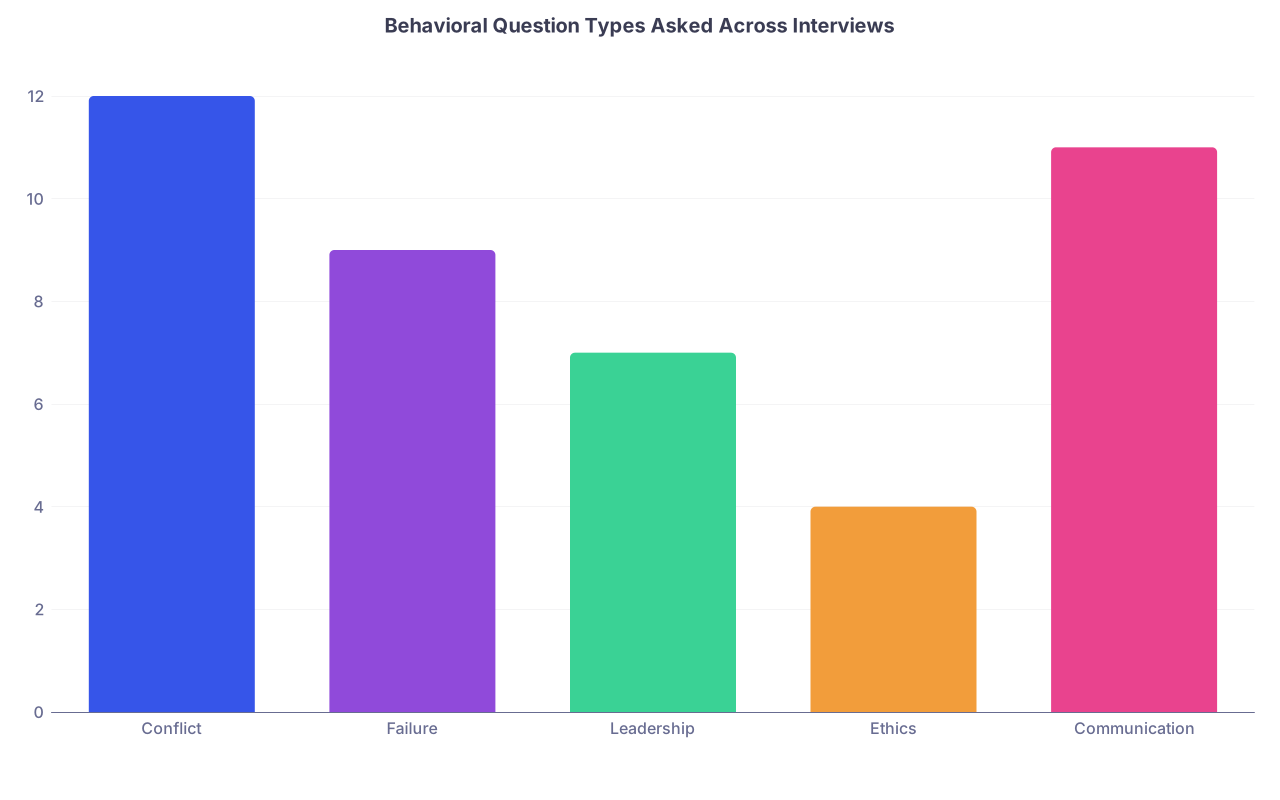
| Category | Value |
|---|---|
| Conflict | 12 |
| Failure | 9 |
| Leadership | 7 |
| Ethics | 4 |
| Communication | 11 |
If you’ve been through 6 interviews and 4 of them asked about conflict and communication, that’s your signal: practice tighter, more varied responses in those categories before the next week’s interviews.
Also, refine in real time:
- If a story feels off, rewrite the reflection portion that same day.
- If they seemed especially interested in one story, deepen your reflection on it—you may get a follow-up somewhere else.
What Good vs. Bad Timing Looks Like
Let me be blunt: I’ve watched students crash and burn on behavioral questions because they tried to “just be honest” with zero structure.
Here’s how the timing trade-offs shake out:
| Start Time | Pros | Cons |
|---|---|---|
| Early MS4 Summer | Calm, thoughtful, flexible | Requires self-discipline without pressure |
| Late Summer | Some real MS4 stories available | You’ll be competing with sub-I fatigue |
| Week before interview | Fresh in mind | Stories shallow, sound rehearsed or panicked |
| Night before | None | Obvious, rambling, misses reflection |
You’re reading this now, which means you still have time to be in the first or second category. Do not voluntarily downgrade yourself to “week before” chaos.
How Many Stories Do You Actually Need?
People love exact numbers, so here’s my honest take:
- Absolute minimum: 8 solid stories
- Ideal: 12–15, with 8–10 you use frequently
Distribution I’d aim for:
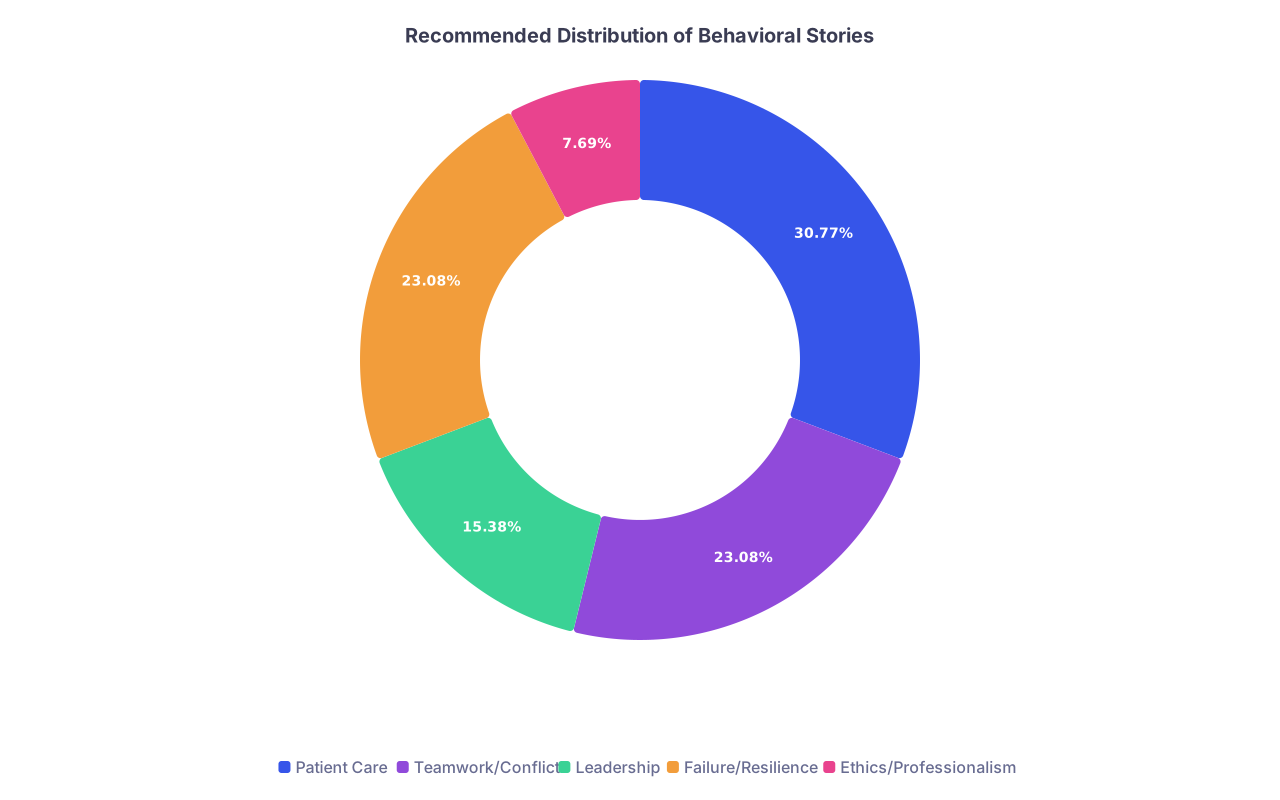
| Category | Value |
|---|---|
| Patient Care | 4 |
| Teamwork/Conflict | 3 |
| Leadership | 2 |
| Failure/Resilience | 3 |
| Ethics/Professionalism | 1 |
You’re not building an encyclopedia. You’re building a sharp, reusable toolkit.
Today: Your Very Next Step
Do not “think about this more.” Do one concrete thing.
Right now:
- Open a blank doc titled:
Behavioral Stories – MS4 Summer. - Set a 25-minute timer.
- Without overthinking, list every specific situation from MS1–MS4 where:
- Something went wrong
- You stepped up
- Someone thanked you
- You were uncomfortable but acted anyway
Shoot for at least 20 bullets before the timer buzzes.
That’s it. That’s your starting line.
Once that list exists, the rest of this timeline—June inventory, July mapping, August practice—becomes execution, not guesswork.
Open the doc. Start the timer. Type the first situation that pops into your head.