
The worst behavioral interviews are not unfair. They’re predictable. And if you’re scrambling the week before, you’re already behind.
This is your eight-week, no-excuses behavioral interview prep timeline for residency. Week by week, day by day, what you should be doing so you walk into interviews with stories that are sharp, polished, and actually memorable.
You’re not “winging it.” Not if you want competitive programs to rank you high.
Big Picture: The 8‑Week Behavioral Prep Roadmap
At this point (eight weeks out), you should stop thinking “I’ll just be myself” and start treating behavioral prep like Step studying: systematic, scheduled, and repetitive.
Here’s the high-level structure before we zoom in.
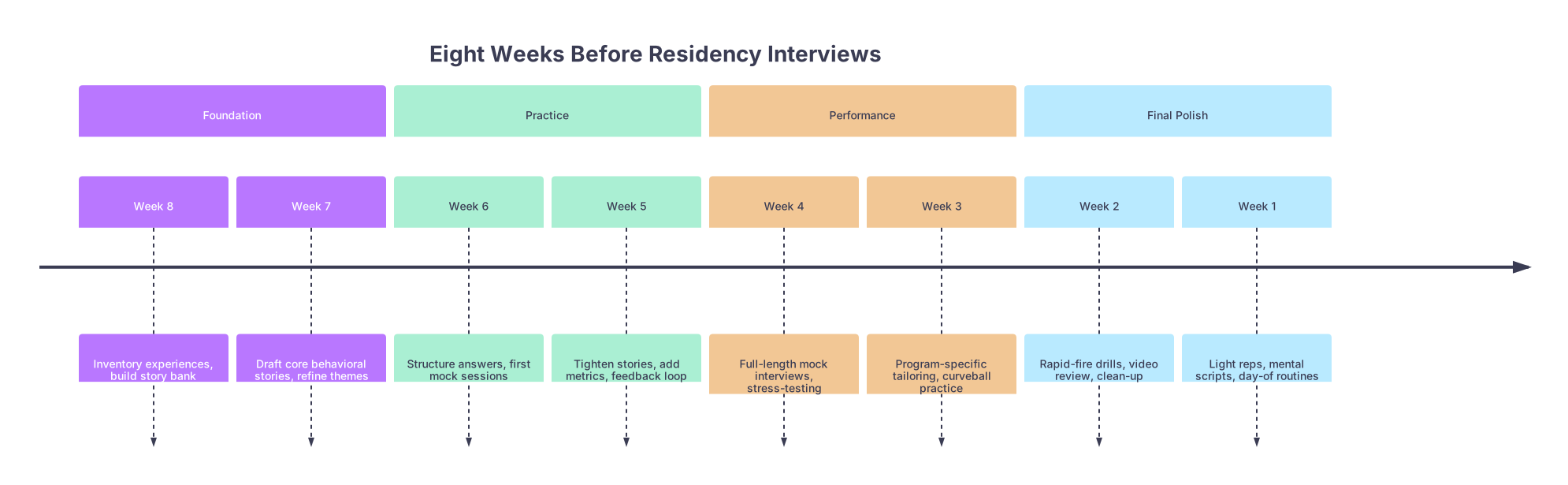
| Period | Event |
|---|---|
| Foundation - Week 8 | Inventory experiences, build story bank |
| Foundation - Week 7 | Draft core behavioral stories, refine themes |
| Practice - Week 6 | Structure answers, first mock sessions |
| Practice - Week 5 | Tighten stories, add metrics, feedback loop |
| Performance - Week 4 | Full-length mock interviews, stress-testing |
| Performance - Week 3 | Program-specific tailoring, curveball practice |
| Final Polish - Week 2 | Rapid-fire drills, video review, clean-up |
| Final Polish - Week 1 | Light reps, mental scripts, day-of routines |
Think of it like this:
- Weeks 8–7: Build the raw material (your stories).
- Weeks 6–5: Shape and tighten those stories.
- Weeks 4–3: Simulate the real thing.
- Weeks 2–1: Polish and protect your performance.
Now we go week by week.
Week 8: Experience Inventory & Story Bank Setup
At this point you should forget about fancy frameworks and just collect data: your actual life.
Early Week 8 (Days 1–3): Dump Everything Out of Your Head
You’re building a “story bank” — 20–30 short, well-defined incidents from med school and life.
Sit down for 60–90 minutes (twice if needed) and list:
- Clinical rotations
- Difficult patient encounters
- Conflicts with residents/attendings/nurses
- Times you got critical feedback
- Leadership roles (clinic, interest groups, QI projects)
- Teaching experiences
- Serious mistakes or near-misses
- Times you were overwhelmed or burned out
- Non-med things that show character (sports, jobs, family stuff)
Use a simple spreadsheet or note app. For each story, create columns:
| Column | Description |
|---|---|
| # / ID | Simple number for reference |
| Situation | 1–2 sentence context |
| Role | MS3 on IM, team lead, etc. |
| Competency | Leadership, conflict, resilience |
| Outcome | What happened / result |
| Lessons | 1–2 key takeaways |
Don’t overanalyze. Capture fragments: “Surgery attending yelled at me in front of team,” “Code blue where communication broke down,” “QI project that stalled.”
You want volume right now, not perfection.
Late Week 8 (Days 4–7): Map to Core Competencies
By the end of this week, you should know which competencies your stories cover — and what’s missing.
Residency interview behavioral questions usually target:
- Teamwork & communication
- Conflict management
- Leadership & initiative
- Resilience & coping with stress
- Ethics & professionalism
- Adaptability / dealing with uncertainty
- Self-awareness & feedback
- Patient-centered care / empathy
Create a second sheet or tab where you track coverage:
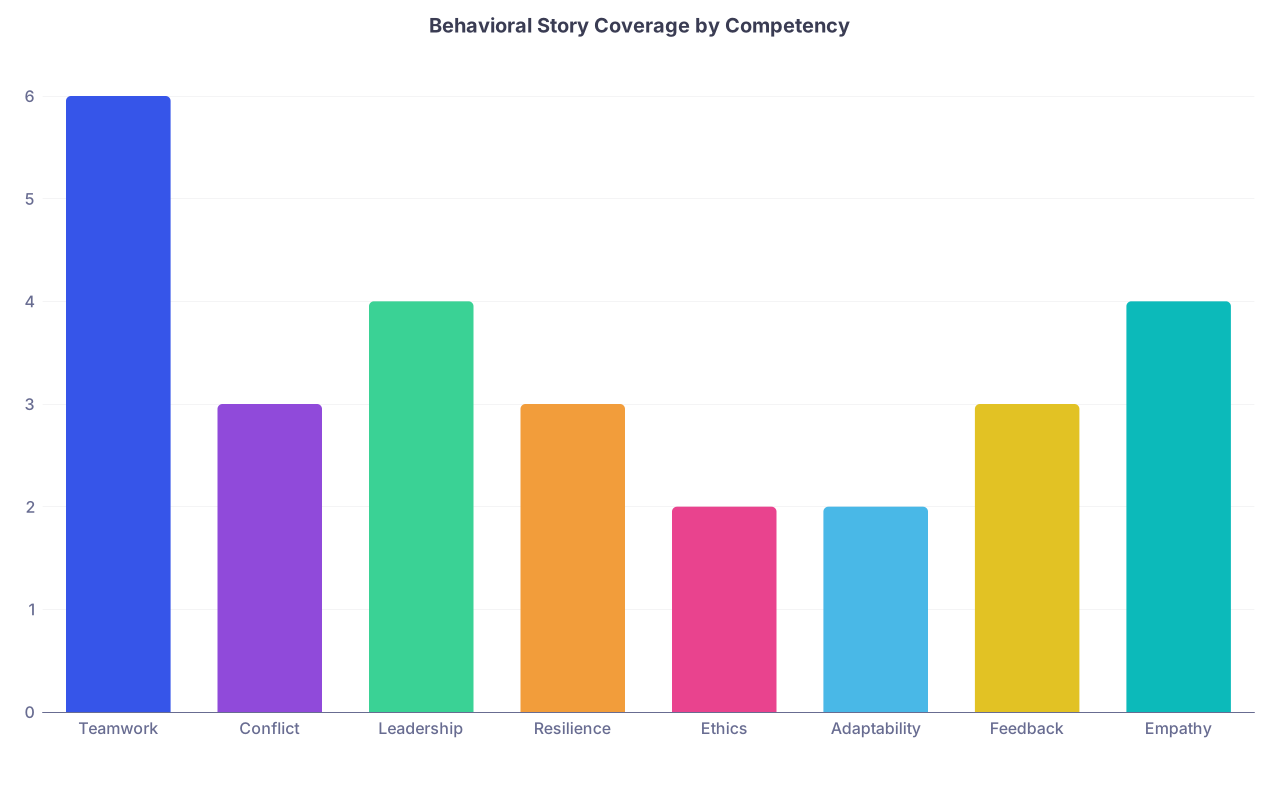
| Category | Value |
|---|---|
| Teamwork | 6 |
| Conflict | 3 |
| Leadership | 4 |
| Resilience | 3 |
| Ethics | 2 |
| Adaptability | 2 |
| Feedback | 3 |
| Empathy | 4 |
By Day 7, you want:
- At least 2–3 solid stories for teamwork, conflict, leadership, resilience, and empathy
- At least 1–2 for ethics, adaptability, and feedback
Gaps are normal. Mark them. We’ll fill them in Week 7.
End of Week 8 checklist:
- 20–30 stories listed
- Each with situation, role, outcome, lessons
- Each tagged with 1–2 competencies
- Clear list of weak or missing areas
Week 7: Drafting Core Stories & Themes
Now you start turning raw stories into usable behavioral answers.
Early Week 7 (Days 8–10): Draft Your “Big 8” Stories
At this point, you should pick your “anchor” stories — the ones you’ll use again and again in different forms.
Choose 8–10 high-yield stories that can flex across multiple questions. Common anchors:
- A conflict with a team member or attending that ended constructively
- A difficult patient/family encounter with strong communication
- A time you made a mistake and took ownership
- A leadership role where you changed or improved something
- A time you were overwhelmed and adjusted your approach
- A conflict between patient care and system limitations (ethics/system-based)
- A teaching moment that went really well (or badly at first)
- A time you advocated for a patient against resistance
For each of these, write a rough version using a simple structure:
- Situation – 2–3 sentences
- Task – what you were responsible for
- Action – what you specifically did (not what “we” did)
- Result – concrete outcome + what you learned
Don’t obsess over word choice. Just get full stories out.
Mid Week 7 (Days 11–12): Tighten the Structure
Now you start cutting. Behavioral answers that drag past 2 minutes lose people.
For each of your Big 8 stories:
- Trim the Situation/Task to 20–30 seconds max
- Make the Action specific: what you said, did, decided
- Make the Result measurable where possible
- “The family agreed to hospice after a 45-minute meeting”
- “Medication errors dropped from 3 per week to 0 in that month”
Time yourself reading each story out loud. Target: 60–90 seconds.
Late Week 7 (Days 13–14): Theme Alignment & Redundancy Check
By the end of this week, you should know what impression your stories give.
Ask yourself:
- Do these stories consistently show me as: calm, collaborative, proactive? Or defensive, passive, conflict-avoidant?
- Are 3 of my main stories basically “I worked really hard and it all turned out fine?” (If yes, fix that.)
- Do I have at least one story that shows actual vulnerability and growth?
You’re building a narrative arc, not just standalone answers.
End of Week 7 checklist:
- 8–10 core stories drafted in STAR format
- Each story under 90 seconds when spoken
- Mix of success, challenge, and “I learned the hard way” stories
- No obvious redundancy (not 5 versions of “I stayed late and it was great”)
Week 6: Structure, Phrasing, and First Mock Practice
Now we turn those stories into flexible tools. At this point, you should start speaking your answers, not just thinking them.
Early Week 6 (Days 15–17): Build Behavioral Question Categories
Most behavioral questions are just rewrites of the same 10–12 prompts.
Create a list and pair each with 2–3 possible stories:
- “Tell me about a time you had a conflict with a colleague.”
- “Tell me about a time you failed or made a mistake.”
- “Tell me about a time you had to deliver difficult news.”
- “Tell me about a time you went above and beyond.”
- “Tell me about a time you had to work with someone difficult.”
- “Tell me about a time you disagreed with an attending.”
- “Tell me about a time you received critical feedback.”
- “Tell me about a time you were under significant stress.”
- “Tell me about a time you advocated for a patient.”
- “Tell me about a time you improved a process or system.”
Notice how many of these are cousins of each other. That’s the point. Each core story should work for 2–3 prompts with small framing tweaks.
Mid Week 6 (Days 18–19): Practice Out Loud, Alone
Set a timer for 30–45 minutes. Go somewhere private.
- Pick a prompt
- Answer it using one of your mapped stories
- Record yourself (audio or video) on your phone
Watch for:
- Do you jump straight into the story, or ramble?
- Are you saying “uh, like, kinda” every other word?
- Are you talking in generalities (“we tried our best”) instead of specifics?
Do not script word-for-word. You’re building beats, not speeches.
Late Week 6 (Days 20–21): First Outside Mock Interview
By now, you should have at least one real person test drive your behavioral answers.
Find:
- A resident you know
- A faculty mentor
- Or worst case, a classmate who’s also interviewing
Ask for a 30-minute Zoom or in-person mock focused only on behavioral questions. Send them 10–15 sample questions ahead of time.
After the session, ask for specific feedback:
- One thing that made you sound strong
- One thing that made you sound weaker or less authentic
- One story that was confusing, too long, or flat
Write their comments into your story bank.
End of Week 6 checklist:
- Behavioral questions mapped to 2–3 stories each
- At least 3–4 stories practiced out loud multiple times
- One mock session done with targeted feedback
Week 5: Sharpening, Metrics, and Feedback Loops
At this point you should stop “kind of knowing” your stories and start tightening them the way you’d tighten an H&P.
Early Week 5 (Days 22–24): Add Specifics and Metrics
Go through each core story and ask:
- Can I add one number?
- Patient load, time frame, survey scores, error rates, whatever is honest
- Can I name the role precisely?
- “MS3 on surgery” vs “student”
- Can I include one concrete detail?
- “Elderly Punjabi-speaking patient whose son was translating”
Specifics make you believable.
Mid Week 5 (Days 25–26): Rework Weak Stories
You almost certainly have 2–3 stories that are fluff. Fix or replace them.
Weak signs:
- Outcome is vague or unimpressive
- You don’t actually look good in the story (you’re passive, not learning)
- It’s basically a humblebrag: “I just care too much and work too hard”
Either:
- Rewrite it with a clearer action and real growth, or
- Swap it out for another story from your bank
Late Week 5 (Days 27–28): Second Mock, This Time Focused
Set up another mock (different person if possible). Give them:
- Your list of common behavioral prompts
- 3–4 specific stories you want stress-tested
Ask them to:
- Interrupt if you go past 2 minutes
- Ask at least one follow-up question per story (“What would you do differently?”)
- Give you an honest rating (1–5) on clarity and impact
Record this one. Painful to watch, very worth it.
End of Week 5 checklist:
- Each core story includes at least one specific, concrete detail
- Worst 2–3 stories have been reworked or replaced
- Second mock done with stricter timing and follow-ups
Week 4: Full-Length Mock Interviews & Stress Testing
We’re now at the midpoint. At this point you should stop isolating behavioral questions and start seeing them in the context of a full interview.
Early Week 4 (Days 29–31): Build a “Standard Behavioral Set”
Create a 12–15 question set that simulates what you might get in a real interview. Mix:
- Conflict, failure, and stress questions
- Leadership and teamwork questions
- Ethics and patient-centered care questions
- “Tell me about yourself” + “Why this specialty/program?” for context
Use this same set across different mocks for consistency.
Mid Week 4 (Days 32–33): Full Mock Interview #1
Run a 30–45 minute mock with:
- A faculty advisor
- Your school’s career office
- Or, if you have nothing else, a brutally honest friend
Ask them to behave like an actual interviewer:
- No constant feedback
- Neutral facial expression
- Normal, professional pacing
Afterward, debrief:
- Which questions made you hesitate or ramble?
- Which stories did you repeat?
- Did you sound defensive on any “mistake/failure” questions?
Document your weak spots.
Late Week 4 (Days 34–35): Targeted Drills on Weak Areas
Spend 30 minutes per day on:
- Only “failure/mistake” stories
- Only “conflict with attending” stories
- Only “stress/burnout” stories
You want to be able to answer any of those with zero defensiveness and clear insight.
End of Week 4 checklist:
- One full-length behavioral-heavy mock completed
- Clear list of weak categories (failure, conflict, stress, etc.)
- 2–3 focused drill sessions done on weak categories
Week 3: Program Tailoring & Curveball Questions
Now you shift from generic prep to targeted, specialty- and program-specific framing.
Early Week 3 (Days 36–38): Tailor Stories by Specialty
At this point, you should start aligning your behavioral stories with your specialty culture.
For example:
- Internal Medicine: emphasize longitudinal thinking, complex problem-solving, communication with consultants, handling ambiguity
- Surgery: focus on ownership, calm under pressure, OR teamwork, direct communication
- Pediatrics: highlight family communication, patience, advocacy, developmentally appropriate care
- EM: triage, rapid decisions, interprofessional communication, comfort with chaos
Pick 2–3 stories and tweak framing for your specialty.

Mid Week 3 (Days 39–40): Practice Curveball + Follow-Up Questions
Now add the questions that catch people off-guard:
- “Tell me about a time you were wrong.”
- “Tell me about a time someone didn’t like working with you.”
- “What’s a piece of feedback you’ve gotten more than once?”
- “Tell me about a time you didn’t handle something well.”
- “What would your co-interns complain about if I asked them a year from now?”
Use existing stories when possible, but don’t sanitize them. Programs hate the fake vulnerability answer.
Late Week 3 (Days 41–42): Third Mock with Emphasis on Follow-Ups
This mock should be with someone who’s willing to push you.
Tell them:
- Ask “why?” or “tell me more” after most answers
- Challenge one of my decisions in a story: “Was that really the best choice?”
- Ask at least two of the curveball self-awareness questions
Your goal: stay calm, reflective, and non-defensive.
End of Week 3 checklist:
- 2–3 stories reframed with specialty-specific emphasis
- Practiced responses to 5–6 curveball/self-awareness questions
- Third mock with heavy follow-ups completed
Week 2: Rapid-Fire Reps and Video Review
At this point, content should be 80–90% set. Now it’s about delivery and consistency.
Early Week 2 (Days 43–45): Daily 15-Minute Drills
Set a strict 15-minute timer each day.
- Randomly pick 5 behavioral questions
- Answer each in under 90 seconds
- No pausing to think more than 5 seconds
This builds fluency and cuts rambling.
Mid Week 2 (Days 46–47): Video Yourself, Then Cringe Productively
Record a 20-minute behavioral-only session. Then watch it with a pen in hand.
Track:
- Filler words (tally them)
- Eye contact (for virtual, are you looking at the camera or the screen?)
- Facial expressions (flat, anxious, overly smiley)
- Posture and fidgeting
You’re not trying to be a TED talker. Just slightly better than your default.
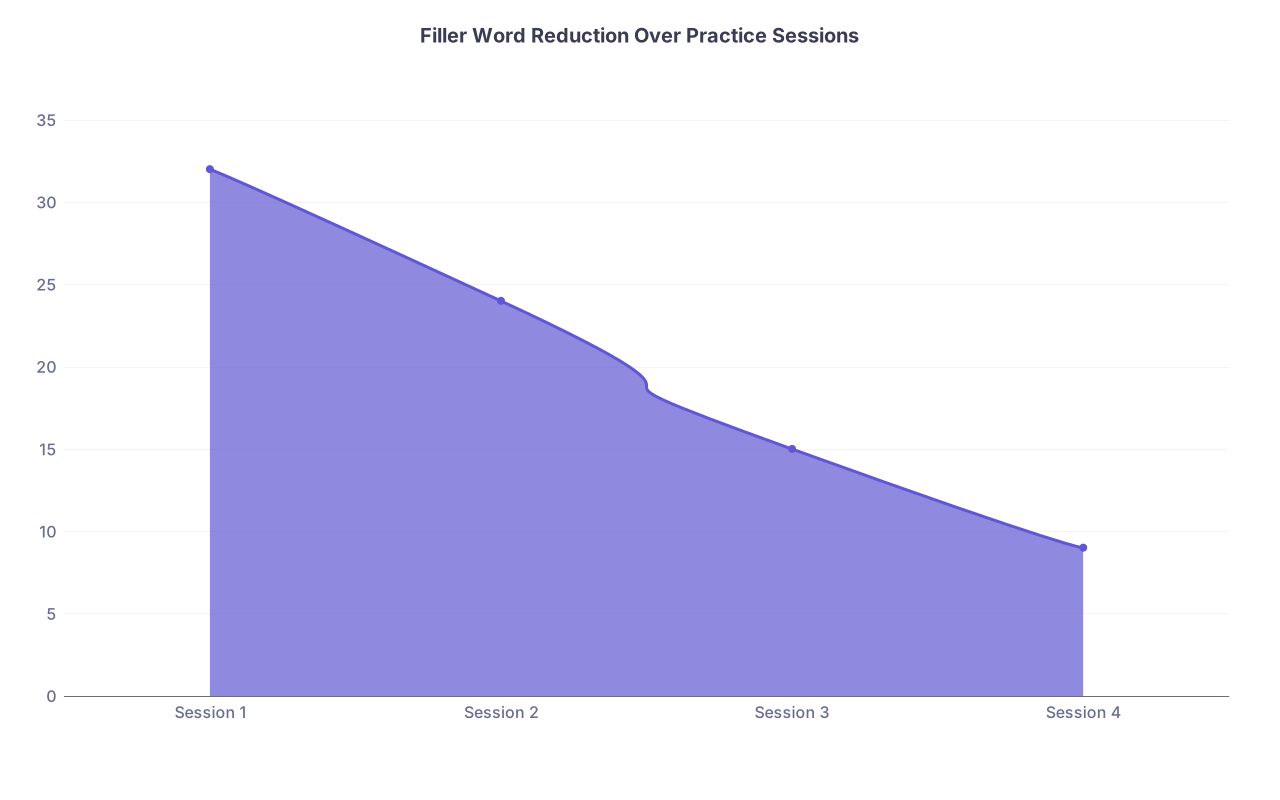
| Category | Value |
|---|---|
| Session 1 | 32 |
| Session 2 | 24 |
| Session 3 | 15 |
| Session 4 | 9 |
Late Week 2 (Days 48–49): Fix Patterns, Not One-Offs
From your recordings, pick 2–3 issues to actively fix:
- If you ramble: practice ending each answer with a clear closing sentence
- If you sound monotone: mark 2–3 key words to emphasize in each story
- If you look away constantly on Zoom: tape a small dot near your camera to focus on
Do another short recording to confirm improvement.
End of Week 2 checklist:
- Daily 15-minute rapid-fire drills completed
- At least one full video reviewed and annotated
- 2–3 delivery habits identified and actively improved
Week 1: Light Reps, Mental Scripts, and Day-of Routines
This is not cram week. At this point you should protect what you’ve built, not rewrite it.
Early Week 1 (Days 50–52): Build Your Mental “Shortcuts”
For each major behavioral category, create a quick mental map:
- Conflict → Story #3 or #7
- Failure → Story #2 or #9
- Stress/burnout → Story #4
- Leadership → Story #1 or #6
- Feedback → Story #5
- Ethics → Story #8
You want a 1–2 second path from question → category → story.
Write these on a small, private prep sheet you review briefly before each interview (not during).
Mid Week 1 (Days 53–55): Light Practice, No New Content
Once a day:
- Answer 3–4 behavioral questions out loud
- Skim your story bank and mental map
- Do a 5-minute breathing or grounding exercise (especially if you’re naturally anxious)
Do not rewrite stories this week unless something is truly awful. Last-minute script changes are how people freeze.
Day Before Interview (Day 56): Final Runthrough
The day before, keep it short:
- 10–15 minutes max of behavioral practice
- Glance at your mental map and key stories
- Prep logistics, clothes, Zoom setup, etc.
Optional but smart: one last low-stakes runthrough with a friend for 15 minutes, focusing only on confidence and pacing.

Day-Of Behavioral Game Plan
On interview day, you’re not “remembering lines.” You’re pulling from well-rehearsed beats.
Right before the interview:
- Skim your mental map (3 minutes)
- Remind yourself of 2–3 key stories you want to use if possible
- Take 5 slow breaths, lengthen your exhale
During behavioral questions:
- Listen fully; don’t jump in early
- Brief pause is fine: “That’s a good question, let me think for a second.”
- Hit Situation–Action–Result, then one clear takeaway sentence
After a rough question, mentally reset. One bad answer doesn’t tank an interview; letting it rattle you does.
Bottom Line: What Actually Matters
Keep it simple:
- By Week 7, you need a real story bank and 8–10 polished core stories, not random memories.
- Weeks 6–3 are for reps and feedback — if you’re not doing mocks and recordings, you’re guessing.
- The last 2 weeks are about delivery, not rewriting; protect your confidence and consistency.
Follow this timeline and you won’t walk into interviews “hoping it goes okay.” You’ll walk in knowing you’ve already done the hard work. The interview is just the performance.