
The biggest mistake residency applicants make one month before interviews is “winging” behavioral questions. You cannot improvise your way through these. You need a system. And a schedule.
You have four weeks. That is enough time to become sharp, consistent, and unshakable in behavioral interviews—if you follow a deliberate, weekly plan.
Below is a structured, week-by-week and day-by-day behavioral interview practice schedule for the month before your first major interview day.
Overview: Your 4-Week Behavioral Interview Blueprint
At this point—one month out—you should stop casually “thinking about answers” and start rehearsing like an athlete before competition.
Here is the high-level structure:
| Week | Primary Focus | Practice Time/Day |
|---|---|---|
| Week 4 | Foundation & Story Bank | 30–45 min |
| Week 3 | Depth, Reflection & Red Flags | 45–60 min |
| Week 2 | Mock Interviews & Timing | 60–75 min |
| Week 1 | Polish, Consistency & Stamina | 30–60 min |
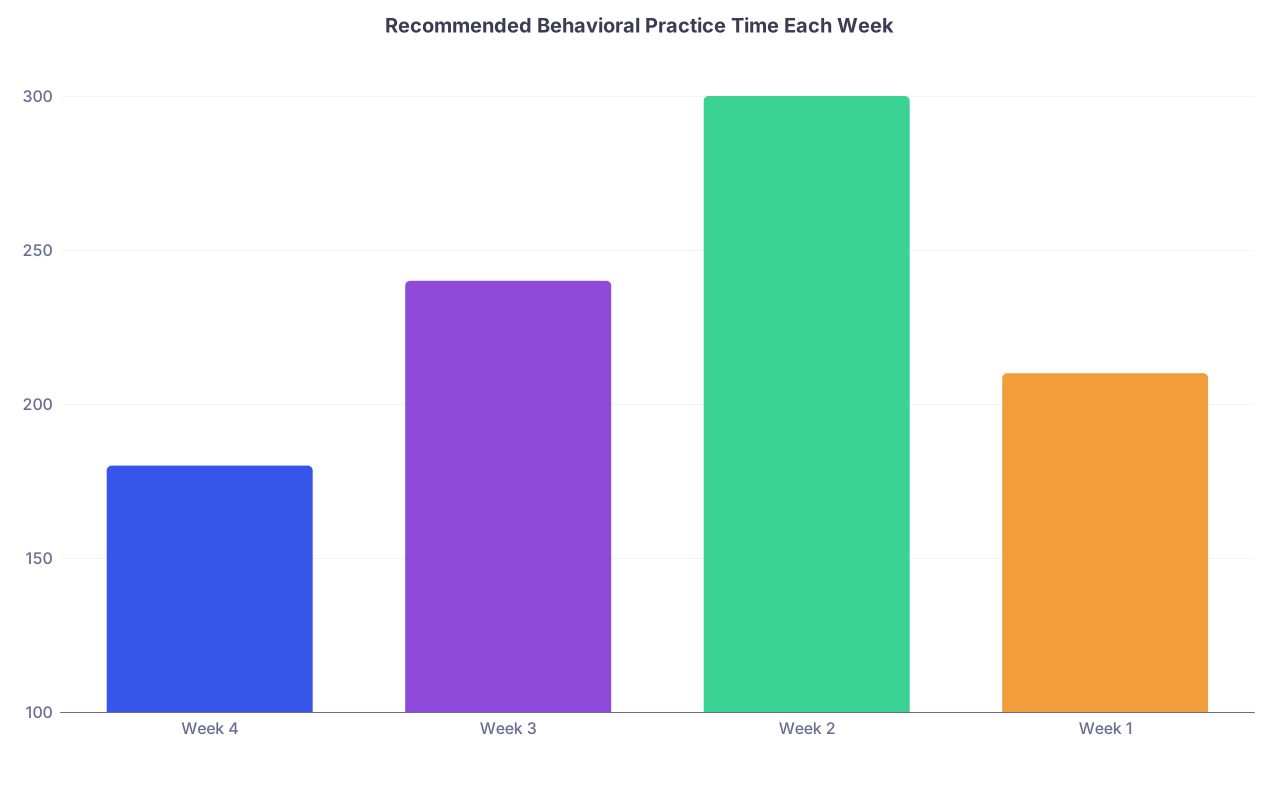
| Category | Value |
|---|---|
| Week 4 | 180 |
| Week 3 | 240 |
| Week 2 | 300 |
| Week 1 | 210 |
You are going to:
- Build a reusable story bank using 8–12 core experiences.
- Map those stories to common behavioral themes.
- Practice out loud, not in your head.
- Add pressure gradually: timer, recording, then live mock interviews.
- Polish your answers for clarity, brevity, and professionalism.
Let us walk through it chronologically.
Week 4: Build the Foundation and Story Bank (28–21 Days Out)
At this point you should stop collecting experiences and start curating them.
Week 4 Goal
Create a structured bank of 8–12 experiences that cover almost every behavioral question you are likely to be asked.
Think: conflict, leadership, failure, feedback, ethical dilemma, difficult patient, mistake, working on a team, going above and beyond, dealing with stress.
Day 1 (28 Days Out): Story Inventory
Time: 45–60 minutes.
You sit down with a blank document titled: “Behavioral Story Bank.”
Create three columns:
- Situation (short label)
- What happened (2–3 sentences)
- Themes (keywords: leadership, conflict, empathy, resilience, etc.)
Brain-dump 15–20 experiences from:
- Clinical rotations (especially in your chosen specialty)
- Pre-clinical years (team projects, leadership roles)
- Jobs (ED tech, scribe, MA, tutoring)
- Volunteering (free clinics, shelters)
- Research (authorship disputes, protocol issues)
Do not censor yet. Dump first, refine later.
Your checkpoint by the end of Day 1:
- 15–20 rough experiences listed, no polishing.
Day 2 (27 Days Out): Narrow and Map to Themes
Time: 30–45 minutes.
Now you prune.
Highlight the strongest 8–12 stories:
- Clear beginning–middle–end.
- Your role is central, not passive.
- Outcome is understandable (even if not perfect).
Map each story to 2–3 behavioral themes. For example:
- “ICU cross-cover code blue” → crisis management, communication, teamwork.
- “Clerkship eval dispute” → professionalism, conflict management, feedback.
Tag each story with:
- Specialty relevance (e.g., psych, EM, peds).
- Setting (inpatient, outpatient, OR, classroom).
You should now see that your 8–12 stories cover most areas programs care about: teamwork, communication, resilience, ethics, conflict, leadership, failure, growth.
Day 3 (26 Days Out): Structure with STAR (Without Sounding Robotic)
Time: 30–45 minutes.
You are going to outline, not script.
For each of your top 8–12 stories, write bullet-point STAR notes:
- Situation – 1 line max.
- Task – 1 line: your responsibility or goal.
- Action – 3–4 bullets (what you did).
- Result – 1–2 bullets (what happened + what you learned).
Example (condensed):
- S: On medicine ward, nurse concerned about new chest pain in my patient.
- T: Evaluate urgently, coordinate care, and communicate with team/family.
- A:
- Went immediately to bedside, obtained focused history and exam.
- Called senior and cardiology after EKG showed concerning changes.
- Updated nurse and family with clear, concise information.
- R:
- Patient quickly transferred to ICU, treated appropriately.
- Learned to trust nursing concerns and close the loop with all parties.
You are not memorizing a monologue. You are memorizing beats so your answer stays clear and efficient under stress.
Day 4 (25 Days Out): First Out-Loud Reps (No Timer)
Time: 30–45 minutes.
At this point you should stop writing and start speaking.
Pick 4–5 generic behavioral prompts:
- “Tell me about a time you had a conflict with a team member.”
- “Tell me about a time you made a mistake.”
- “Tell me about a difficult patient or family interaction.”
- “Describe a time you showed leadership.”
- “Tell me about a time you received critical feedback.”
For each:
- Choose the most relevant story from your bank.
- Answer out loud, using your bullet-point STAR as a guide.
- Aim for 2–3 minutes per answer, but do not use a timer yet.
- Notice:
- Where you ramble.
- Where details are unclear.
- Where you sound defensive or blame others.
No recording yet. This is warm-up.
Day 5–7 (24–22 Days Out): Short Daily Reps
Time: 20–30 minutes per day.
Each day, pick 3–4 new prompts. Rotate through themes:
- Day 5: conflict, teamwork, leadership
- Day 6: failure, mistake, feedback
- Day 7: stress, time management, going above and beyond
Each answer: 2–3 minutes. No script. Glance at your bullet points, then look away and talk.
By the end of Week 4 you should:
- Have 8–12 solid, flexible stories.
- Be able to answer ~10–15 common behavioral questions without freezing.
- Start feeling which stories are your “workhorses.”
Week 3: Depth, Reflection, and Red Flags (21–15 Days Out)
Now you move from “I have stories” to “I can show insight and maturity with those stories.”
Week 3 Goal
Turn decent answers into strong, reflective ones—and fix your weak spots before someone in a suit exposes them.
Day 8 (21 Days Out): Identify Gaps and Red Flags
Time: 45–60 minutes.
You need to anticipate what programs will poke at:
- Any failed exam (Step 1/2, shelf).
- Any LOA (leave of absence).
- Any gap in training.
- Any significant grade trend issue.
- Any professionalism concern whispered behind your back.
Create:
- A list of 3–5 “vulnerable” areas.
- A concise, honest, non-defensive explanation for each. Max 60–90 seconds.
Structure:
- Brief context (no oversharing).
- Ownership (no blaming “the system” or “unfair attendings”).
- Specific changes you made.
- Positive outcome since.
You want to be able to say this calmly without sounding rehearsed or bitter.
Day 9–10 (20–19 Days Out): Reflection Layer
Time: 30–45 minutes each day.
Now you add the “so what” to your stories.
For 4–5 stories each day, answer these out loud after you tell the story:
- “What did you learn from this?”
- “How has this changed your future behavior?”
- “What would you do differently now?”
Practice turning the end of the story into a natural reflection:
- Not: “And I learned communication is important.”
- Better: “Since then, I intentionally close the loop with nursing and families before leaving the floor, because I saw how much confusion and anxiety it prevents.”
By the end of Day 10, most of your stories should have a clean reflective ending.
Day 11 (18 Days Out): Introduce the Timer
Time: 45 minutes.
Now you add pressure.
- Use your phone timer.
- Goal: 2-minute core answer, up to 3 minutes if the story is complex.
- Anything past 3 minutes routinely = you are rambling.
Process:
- Pick 6–8 different behavioral questions.
- For each, start the timer and answer.
- Stop at 3 minutes even if you are mid-sentence. That is your real-life danger zone.
- After each, ask:
- Did I answer the actual question?
- Did I have a clear action and result?
- Did I sound defensive or overly self-congratulatory?
Day 12–14 (17–15 Days Out): Self-Recording and Review
Time: 30–45 minutes per day.
You are going to do what most applicants avoid because it is uncomfortable. Record yourself.
On video if possible. I have watched dozens of these with students and the same issues show up: monotone voice, no eye contact, weird filler phrases (“like,” “you know,” “sort of”).
Each day:
- Record 3–4 answers (2–3 minutes each).
- Watch them once on mute:
- Posture.
- Fidgeting.
- Facial expression (friendly vs anxious vs blank).
- Watch again with sound:
- Speed.
- Filler words.
- Overcomplicated sentences.
Take quick notes: 2–3 things to fix tomorrow. Do not try to fix everything at once.
By the end of Week 3:
- Your stories are structured, reflective, and within time.
- You know your red-flag explanations cold.
- You have seen your own bad habits on camera and started to fix them.
Week 2: Mock Interviews and Realistic Rehearsal (14–8 Days Out)
At this point you should stop practicing purely alone. You need live pressure.
Week 2 Goal
Simulate real interview conditions 3–4 times and refine based on feedback.
Day 15 (14 Days Out): Setup Mock Interview Schedule
Time: 20–30 minutes (logistics).
You schedule:
- 1–2 faculty or advisor mocks (Student Affairs, specialty advisor).
- 1–2 peer mocks (classmates applying in same or different specialty).
- Optional: 1 non-medical friend/family for clarity and jargon checks.
Spread them over the next 7–10 days. Do not cram all in one day.
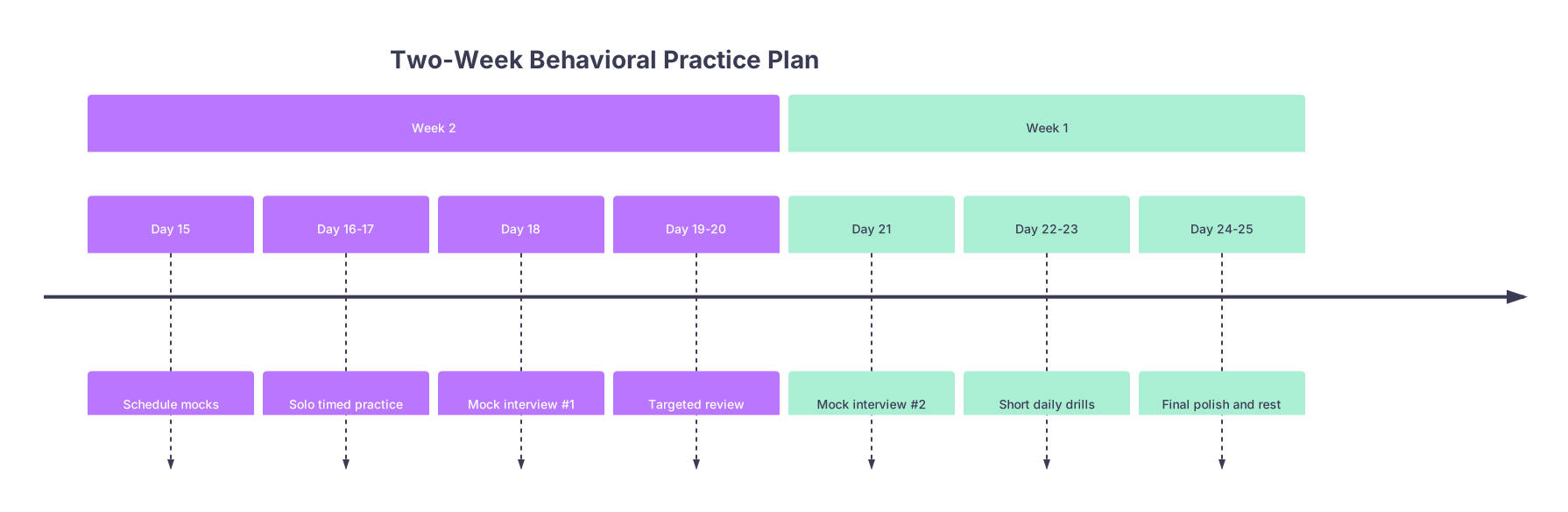
| Period | Event |
|---|---|
| Week 2 - Day 15 | Schedule mocks |
| Week 2 - Day 16-17 | Solo timed practice |
| Week 2 - Day 18 | Mock interview #1 |
| Week 2 - Day 19-20 | Targeted review |
| Week 1 - Day 21 | Mock interview #2 |
| Week 1 - Day 22-23 | Short daily drills |
| Week 1 - Day 24-25 | Final polish and rest |
Day 16–17 (13–12 Days Out): Solo Timed Sets
Time: 45–60 minutes each day.
You run structured practice blocks:
- 6 questions per session.
- 2 minutes per answer.
- 1–2 questions deliberately on your weak areas (e.g., conflict, failure).
Example set:
- Tell me about a time you had a conflict with a supervisor.
- Tell me about a time you disagreed with a medical decision.
- Tell me about a time you failed at something important.
- Tell me about a time you advocated for a patient.
- Tell me about a time you worked with a difficult team member.
- Tell me about a time you had to adapt quickly to a change.
Record audio for at least half of these and spot-check.
Day 18 (11 Days Out): Mock Interview #1 (Formal)
Time: 60 minutes.
Ideal: faculty advisor, program director, or someone with real interview experience.
Structure:
- 20–30 minutes of behavioral questions.
- Immediate feedback on:
- Clarity of stories.
- Professionalism of tone.
- Any red flags or concerning phrasing.
You do not argue with their feedback. You take notes and adjust.
Questions to specifically ask them:
- “Did any answer feel too long?”
- “Did anything feel defensive?”
- “If you were a program director, would any answer worry you?”
Day 19–20 (10–9 Days Out): Targeted Fix Days
Time: 30–45 minutes each day.
You are not redoing everything. You are fixing what broke.
If feedback said your conflict answers sound vague:
- Spend a session on two specific conflict stories.
- Cut unnecessary backstory.
- Clarify what you actually said and did.
If feedback said your red-flag explanation felt weak:
- Rework the structure.
- Practice 3–4 reps of that explanation alone.
- Make sure you can say it calmly, without oversharing or emotion spilling over.
Each day, finish with 2–3 strong “confidence booster” questions you already handle well.
Day 21 (8 Days Out): Mock Interview #2 (Peer or Faculty)
Time: 45–60 minutes.
This time, ask your mock interviewer to focus purely on behavioral/fit questions:
- “Tell me about a time…”
- “Describe a situation where…”
- “Give me an example of…”
Ask them to:
- Interrupt you if you go past 3 minutes.
- Note any phrase that sounds rehearsed or insincere.
- Probe deeper with follow-ups to see if you break under pressure:
- “What was the patient’s name?”
- “How did the nurse respond when you said that?”
- “What did your attending say afterward?”
If your story falls apart under follow-up, it is too vague or you do not remember it well enough. Fix that immediately.
Week 1: Final Polish and Interview Stamina (7 Days to Interview Day)
This is where people panic and add new stories. Do not. At this point you should refine, not rebuild.
Week 1 Goal
Feel calm, consistent, and confident. No new content, just sharper delivery.
Day 22–23 (7–6 Days Out): Daily 20-Minute Drills
Time: 20–30 minutes each day.
Short, sharp sessions, not marathons.
Each day:
- 5 behavioral questions.
- 2-minute answers.
- No recording unless you feel rusty.
Sample rotation:
Day 22 – Core themes
- Leadership
- Conflict
- Mistake
- Difficult patient
- Going above and beyond
Day 23 – Pressure and resilience
- Time you were overwhelmed.
- Working with limited information.
- Managing stress or burnout.
- Receiving harsh feedback.
- Adapting to a last-minute change in plan.
You should feel your answers coming out cleanly now, with minimal hesitations.
Day 24 (5 Days Out): Full Combined Run-Through
Time: 45–60 minutes.
Simulate a partial interview block:
- 5 minutes: mental warm-up, glance at story bank.
- 25–30 minutes: 10–12 mixed questions (behavioral + standard “Why this specialty/program?”).
- 10 minutes: quick review of weak points.
Optional: do this with a peer over Zoom, cameras on, business-casual attire. Make it slightly uncomfortable on purpose.
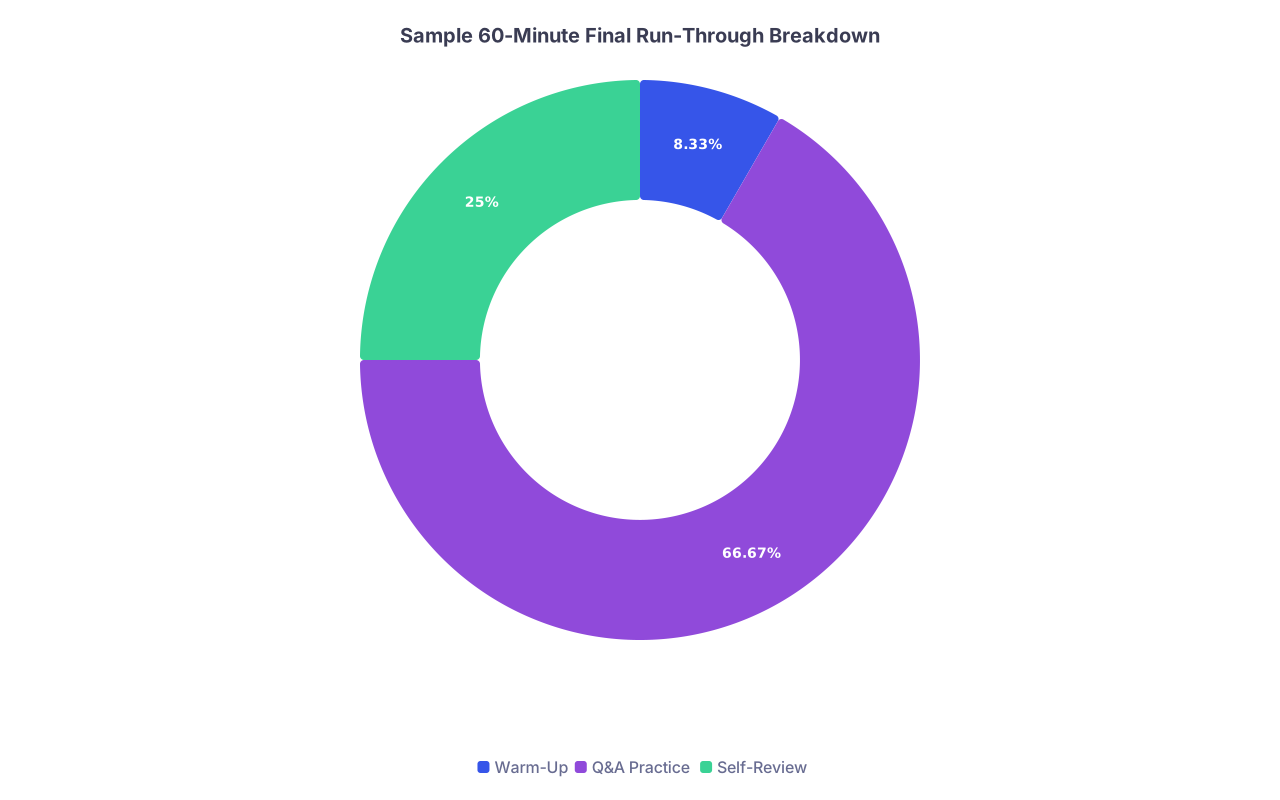
| Category | Value |
|---|---|
| Warm-Up | 5 |
| Q&A Practice | 40 |
| Self-Review | 15 |
Day 25–26 (4–3 Days Out): Micro-Tune and Rest Strategy
Time: 15–20 minutes each day.
You are not going hard now. You are just keeping the circuits warm.
Each day:
- 3–4 questions only.
- One from each bucket:
- Conflict
- Failure/mistake
- Teamwork
- Difficult patient/family
Then stop.
Focus on:
- Sleep.
- Logistics (interview time zones, Zoom links, outfit).
- Light review of your story bank once per day, 5–10 minutes.
Day 27 (2 Days Out): One Last Reality Check
Time: 20–30 minutes.
Two steps:
Self-check with a mirror or front camera:
- Answer 3 questions while looking at yourself.
- Watch for tension in your face, posture, weird eye movements.
Quick content scan:
- Skim your stories. Confirm:
- No patient identifiers.
- No bashing of colleagues, attendings, or prior institutions.
- Reflection focuses on your growth, not others’ mistakes.
- Skim your stories. Confirm:
No new questions. No new stories.
Day 28 (1 Day Out): Shut It Down
Time: 10–15 minutes maximum.
You do not cram behavioral practice the night before.
- Glance once at your story bank.
- Say out loud:
- One conflict story (2 minutes).
- One failure story (2 minutes).
- One patient-centered story (2 minutes).
Then stop. You have done the work. Let your brain rest.

Core Behavioral Themes to Cover in Your Month
If you want a quick checklist to see if your stories are comprehensive, ensure you can handle questions in these themes:
| Theme | Example Prompt |
|---|---|
| Conflict | "Tell me about a conflict with a colleague." |
| Failure/Mistake | "Describe a time you failed." |
| Leadership | "Tell me about a time you led a team." |
| Difficult Patient/Family | "Describe a challenging patient interaction." |
| Feedback | "Tell me about a time you received critical feedback." |
| Ethics/Professionalism | "Describe an ethical dilemma you faced." |
If any theme makes you tense or blank, that is where you focus early in the month—not in the final week.

How to Use This Schedule Starting Today
Do not overthink this. Open your calendar right now and block:
- 30–45 minutes tomorrow to build your story bank.
- Two 1-hour slots next week labeled “Mock Interview – Behavioral.”
- Daily 20–30 minute blocks for the next 10–14 days.
Then today, pick three behavioral questions, set a 2-minute timer, and answer them out loud. That is the first rep.