Away rotations (visiting student rotations) are one of the most powerful tools a US citizen IMG can use to improve their chances of matching into psychiatry. Used well, they can transform you from “another American studying abroad” into a known, trusted applicant with strong US clinical experience and letters of recommendation.
This guide walks you step-by-step through a smart, realistic away rotation strategy for US citizen IMGs in psychiatry—what to prioritize, where to apply, how many away rotations to aim for, and how to make each one count.
Understanding the Role of Away Rotations for US Citizen IMGs in Psychiatry
For a US citizen IMG applying to psychiatry residency, away rotations matter more than they typically do for US MD/DO students. They can:
- Demonstrate you can function well in the US healthcare system
- Provide US-based psychiatry letters of recommendation (LORs)
- Show commitment to psychiatry and familiarity with US psychiatric practice
- Turn you from a “paper application” into a real person programs know
- Help you understand program culture and whether you’d be a good fit
Why Psychiatry Is Relatively IMG-Friendly—but Still Selective
Psychiatry has historically been more welcoming to IMGs than some other competitive specialties. However:
- Interest in psychiatry has grown significantly
- More US MD and DO students are applying
- Many mid- and top-tier programs are more selective with IMGs
This means away rotations are increasingly valuable for US citizen IMGs who want to maximize their chances at:
- Mid-tier academic programs
- University-affiliated community programs
- Programs in more competitive geographic regions (e.g., West Coast, major East Coast cities)
How Away Rotations Fit Into Your Overall Match Strategy
Think of away rotations as one pillar of your psych match strategy—along with:
- Solid USMLE/COMLEX scores (especially Step 2 CK)
- Strong US letters of recommendation in psychiatry
- Documented commitment to the field (research, electives, volunteering)
- A compelling personal statement
- Thoughtful program list and geographic strategy
For a US citizen IMG, away rotations and LORs are often your single most powerful “signal” to residency programs that you can thrive in their environment.
Planning Your Away Rotations: Timing, Number, and Priorities
One of the most common questions is: “How many away rotations?” The answer depends on your profile, finances, and school schedule—but for most US citizen IMGs serious about psychiatry:
- Target range: 2–3 psychiatry away rotations
- Absolute minimum for most IMGs aiming for university programs: 1 rotation
- Upper limit: 3–4 (beyond this, returns diminish and costs get high)
Ideal Timing for Psychiatry Away Rotations
You want your rotations to:
- Happen before residency interview invitations go out, and
- Generate letters of recommendation in time for ERAS
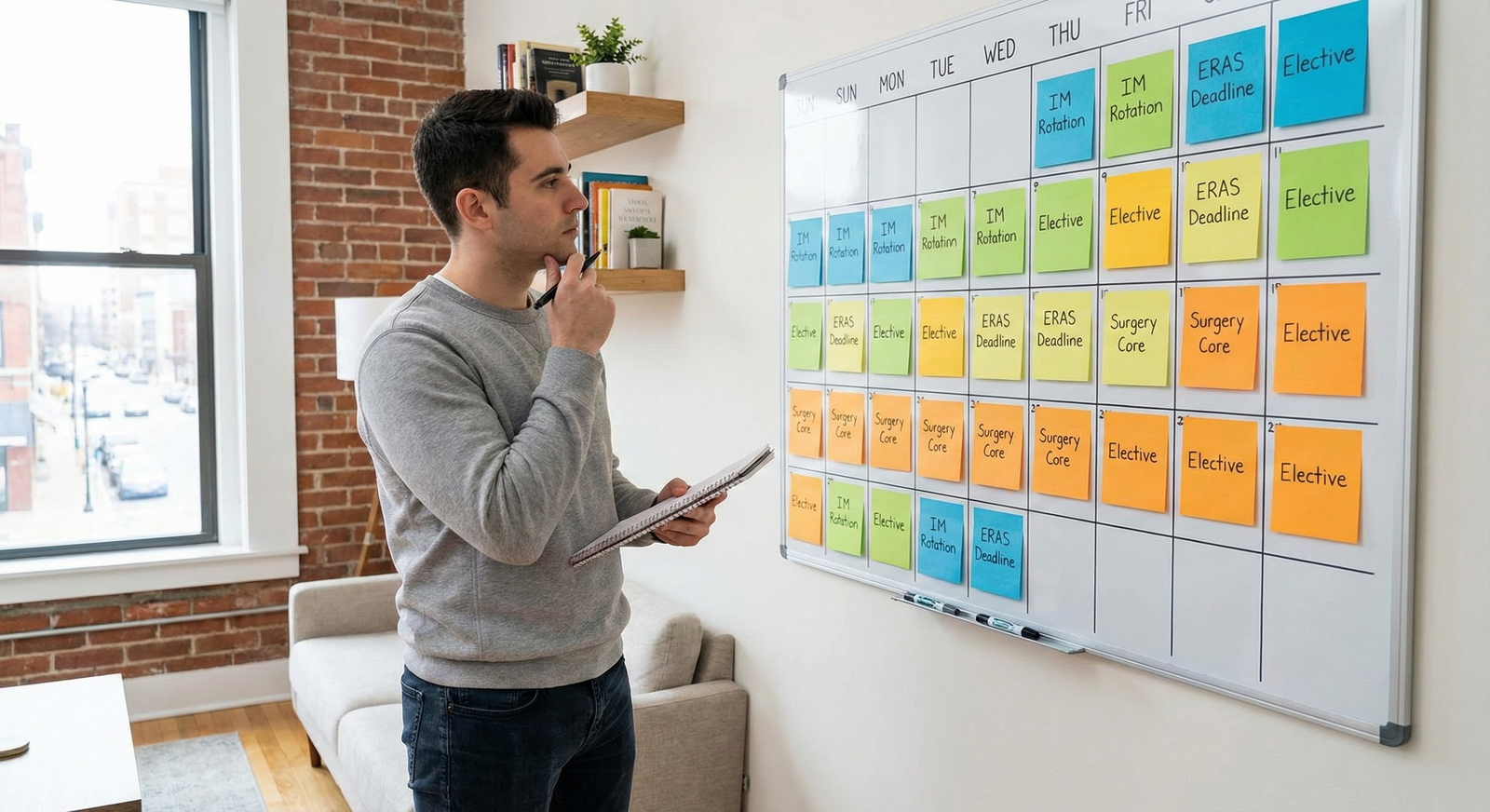
Typical US timeline (for a traditional match year):
- Jan–Mar (prior to application cycle)
- Research programs
- Map your timeline
- Begin checking visiting student portals
- Apr–Jun
- Secure away rotations (often for Jul–Oct blocks)
- Jul–Sep
- Complete core away rotations in psychiatry
- Request letters before the end of the rotation
- Sep
- ERAS opens for application submission
- Oct–Jan
- Interview season (your away rotations and LORs are now in your file)
If your school calendar is different (common for Americans studying abroad), work backwards from the ERAS timeline and prioritize at least one psychiatry rotation in the US before August–September of your application year.
Choosing Clinical Settings Strategically
For psychiatry, consider mixing types of experiences:
- Academic inpatient psychiatry (university hospital or major teaching hospital)
- Community-based inpatient or outpatient psychiatry
- Specialty areas (child & adolescent, consult-liaison, addiction, forensics) – not mandatory, but can be helpful if available
A solid strategy for a US citizen IMG:
- One academic rotation at a university or university-affiliated program that regularly interviews or matches IMGs
- One community or hybrid program where IMGs are more common and which may become your “safety–solid” option
- Optional: a third rotation at a program in your preferred geographic region or at a program where you hope to match strongly
Selecting Where to Rotate: Building a Target List as a US Citizen IMG
Your away rotation choices should be realistic, IMG-aware, and purposeful. Not every “big-name” academic center is IMG-friendly, and not every community program will provide the level of teaching and letters you need.
Step 1: Define Your Goals
Clarify what you want from your away rotations:
- Strong US psychiatry LORs
- Increased chance of matching at specific programs or cities
- Evidence of commitment to psychiatry
- Clinical exposure to particular populations (urban, underserved, etc.)
- Back-up options if your psych match is more competitive than expected
Rank your goals; this helps prioritize which programs to target.
Step 2: Research Programs Systematically
For each potential program, look at:
IMG friendliness
- Check program websites for resident lists—are there IMGs?
- Look for US citizen IMGs in psychiatry at that program
- Use NRMP data and online forums cautiously (they’re imperfect, but can hint at trends)
Visiting student policies
- Do they accept US citizen IMGs for away rotations?
- Some programs only accept LCME- or COCA-accredited students (US MD/DO) via VSLO/VSAS
- Others allow international medical students via separate applications
Geographic and lifestyle fit
- Could you realistically live there for 1–2 months?
- Is it in a region you might actually want to match (midwest vs coastal, urban vs suburban vs rural)?
Program reputation and training scope
- University vs community
- Subspecialty exposure (addiction, child, forensics, CL, etc.)
- Service/education balance—some rotations are heavily service-driven with limited teaching
Step 3: Balance Ambition and Realism
A practical approach for a US citizen IMG:
- 1 “reach” away rotation
- Mid- to higher-tier academic program that has some history of taking IMGs
- Strong teaching, research, and name recognition
- 1–2 “solid/realistic” away rotations
- University-affiliated or strong community programs
- Regularly accept and match IMGs
- Good teaching and supportive environment
Avoid putting all your away rotation effort into places that rarely or never interview IMGs, unless you have very strong metrics or connections.
Step 4: Understand Non-VSLO Pathways
Many Americans studying abroad can’t use VSLO/VSAS directly. You may need to:
- Check each residency program’s website for “visiting student” or “international student” sections
- Email program coordinators or medical education offices asking:
- Whether they accept visiting students from non-LCME schools
- What the application process and deadlines are
- Visa/credentialing requirements (often easier as a US citizen IMG)
Document each program’s response in a spreadsheet to track requirements and deadlines.
Making the Most of Each Away Rotation: Performance, Networking, and LORs
Once you’ve secured away rotations, the quality of your performance matters more than the program’s name. A stellar rotation at a “solid” program often helps more than a forgettable rotation at a “prestigious” one.
Core Expectations on a Psychiatry Away Rotation
On inpatient or consultation-liaison psychiatry, you’ll typically be expected to:
- See new patients and present them clearly and concisely
- Write daily progress notes (or at least draft them)
- Formulate biopsychosocial assessments and treatment plans
- Participate in team rounds and case discussions
- Show professionalism with nursing staff, social workers, therapists, and families
On outpatient psychiatry, you may:
- Conduct initial histories and mental status exams
- Present and discuss diagnoses and treatment options
- Observe psychotherapy sessions (with consent)
- Help with follow-up documentation
How US Citizen IMGs Can Stand Out Positively
Focus on the fundamentals:
Be reliably prepared and on time (or early)
- Understand the patient list and overnight events
- Read about patients’ diagnoses and treatments between days
Communicate clearly and respectfully
- Practice focused, organized presentations
- Be receptive to feedback, and then visibly incorporate it
Demonstrate genuine interest in psychiatry
- Ask thoughtful questions (e.g., “How do you differentiate bipolar II from BPD in this patient?”)
- Read about each case’s condition and bring a brief, relevant point the next day
Be a team player
- Help with simple tasks (organizing collateral information, updating med lists, discharge planning)
- Show respect and appreciation to nurses, case managers, therapists, and support staff
Avoid overstepping
- Never change orders or medications without explicit attending/resident supervision
- Don’t introduce yourself as “Doctor” if you’re still a student, even if you are abroad
Securing Strong Psychiatry Letters of Recommendation
For a US citizen IMG, your US psychiatry LORs might be the most impactful product of your away rotations.
Aim for:
- At least 2 letters from US psychiatrists (ideally at least one from an academic attending)
- Letters that comment on:
- Clinical skills (history-taking, mental status exam, formulation)
- Work ethic and professionalism
- Communication and teamwork
- Fit for psychiatry as a specialty
When to ask:
- Ask in the last week of your rotation, after you’ve established a strong working relationship.
- Use language like:
- “I’ve really valued working with you this month and would be honored if you’d be willing to write a strong letter of recommendation for my psychiatry residency application.”
What to provide to your letter writer:
- Updated CV
- Personal statement (even if it’s a draft)
- USMLE/COMLEX scores (if you’re comfortable sharing)
- A short bullet list of cases or experiences from the rotation that highlight your strengths
- A reminder of specific programs or regions you’re especially interested in (if applicable)

Special Considerations for US Citizen IMGs: Logistics, Red Flags, and Back-Up Plans
As an American studying abroad, you face unique logistical and strategic challenges. Planning ahead can prevent small issues from derailing a strong psych match strategy.
Navigating Logistics as a US Citizen IMG
Common requirements for away rotations residency applications include:
- Immunization records and titers
- Background check and/or drug screen
- BLS/ACLS certification (less critical for psychiatry but sometimes required)
- Malpractice insurance (often provided by your school; verify coverage in the US)
- Health insurance valid in the US
- Proof of COVID vaccination or exemption, and possibly annual flu vaccination
- School transcript and dean’s letter or certification of good standing
Because you are a US citizen IMG:
- You won’t need a visa to rotate in the US
- But you may still face restrictions from schools that only accept LCME/COCA students
Actionable tip: Start collecting and scanning documents early and keep them organized in a cloud folder. This speeds up applications and onboarding.
Managing Costs and Practical Realities
Away rotations are expensive, especially for IMGs who may be traveling from overseas:
- Application fees (VSLO or institutional fees)
- Housing (short-term leases, Airbnb, sublets)
- Local transportation (car rental, public transit, rideshare)
- Food and daily living expenses
- Travel to and from the rotation city
To keep costs manageable:
- Prioritize 2 high-yield rotations over 4 mediocre ones
- Look for:
- Institutional housing
- Resident/medical student listservs for sublets
- Short-term student housing near universities
- Apply for any available visiting student scholarships or stipends, especially those for disadvantaged or underrepresented backgrounds
Avoiding Common Red Flags During Away Rotations
Certain behaviors can damage your chances more than you might realize:
- Repeated lateness or unprofessional absences
- Speaking negatively about your home school or previous rotations
- Complaining about workload or patients in front of staff
- Appearing disinterested, distracted, or frequently on your phone
- Being argumentative or defensive with feedback
- Overemphasizing how things are done “back home” instead of adapting to local practice
Remember: Every attending, resident, and coordinator is a potential advocate—or critic—when it comes to your psych match. Treat each day as part of your long interview.
Building a Safety Net: If Psychiatry Becomes More Competitive
Even with a strong away rotation strategy, it’s wise to:
- Identify IMG-friendly psychiatry programs where you’d be happy training
- Consider applying to a range of program types (university, hybrid, community)
- Maintain some internal medicine or transitional year options if you have significant concerns about scores or application weaknesses (this is case-specific; talk with a trusted advisor)
Your away rotations can still help enormously, even if you end up applying more broadly:
- Strong LORs and evidence of professionalism transfer well across specialties
- Many program directors appreciate applicants who have real psychiatric experience, especially for fields like internal medicine, family medicine, or neurology
Putting It All Together: Example Away Rotation Strategies
Example 1: Strong Applicant, Aiming for Mid-Tier Academic Programs
Profile:
- US citizen IMG at a Caribbean or European school
- Step 1: Pass, Step 2 CK: strong
- Prior psych research at a US institution
- Limited US clinical experience so far
Strategy:
- Rotation 1 (July): University-affiliated inpatient psychiatry in a midwestern or southern city with known IMG presence
- Rotation 2 (August): Academic psychiatry program in a region you’d love to match (e.g., East Coast city) that occasionally takes US citizen IMGs
- Rotation 3 (Optional, Sept/Oct): Community or hybrid program closer to family or a backup geographic region
Outcome goals:
- 2–3 strong psychiatry LORs
- At least 2 programs where you’re a well-known, strong candidate
Example 2: Moderate Scores, Needs Strong Clinical Proof
Profile:
- US citizen IMG with Step 1 pass, Step 2 CK: borderline or moderate
- Good subjective clinical skills, but limited documented US psych exposure
- Highly motivated for psychiatry
Strategy:
- Rotation 1 (July/Aug): Community-based or hybrid program known for teaching and IMG-friendliness
- Rotation 2 (Sept): University-affiliated program that has historically matched multiple IMGs
- Emphasize reliability, professionalism, and teachability; aim for letters that say “despite test scores, this student performs at or above the level of our US MD students.”
Outcome goals:
- 2 very strong, narrative LORs that explicitly endorse you as an excellent residency candidate
- At least one program where faculty strongly advocate for your interview
Example 3: Late Planner, Limited Time
Profile:
- US citizen IMG who realized late they want psychiatry
- Application cycle is approaching, limited flexibility
Strategy:
- Secure at least 1 psychiatry away rotation as early as possible
- If psychiatry spots are full, consider:
- Internal medicine rotation at a program with a psychiatry residency and try to connect with psychiatry faculty
- Electives such as neurology or addiction medicine within institutions that also host psychiatry residencies
- Get at least 1–2 LORs from US physicians who can comment on your suitability for psychiatry, even if not psychiatrists
Outcome goals:
- Demonstrate recent, US-based clinical performance
- Show sincere, well-structured interest in psychiatry in your personal statement and interviews
FAQs: Away Rotations for US Citizen IMGs in Psychiatry
1. As a US citizen IMG, do I absolutely need an away rotation in psychiatry to match?
Not absolutely—but it often makes a significant positive difference.
For US citizen IMGs, especially those without extensive US clinical experience:
- At least one US psychiatry rotation is highly recommended
- Two is better if you’re aiming at competitive regions or academic programs
- Strong US-based LORs in psychiatry can be the deciding factor for some program directors
2. How many away rotations in psychiatry should I do?
For most US citizen IMGs:
- Ideal: 2–3 psychiatry rotations in the US
- Functional minimum: 1 good psychiatry rotation with a strong LOR
- Upper limit: 3–4 total away rotations across all specialties (cost and burnout become issues)
Focus on quality over quantity—a couple of well-chosen, high-yield rotations at IMG-friendly places usually beat 5 scattered, low-impact electives.
3. Should I only rotate at programs where I want to match?
Prioritize programs where you could realistically see yourself matching, but don’t limit yourself strictly to your “dream” locations. Good reasons to rotate at a program include:
- They regularly interview and match IMGs
- They provide strong teaching and exposure to core psychiatry
- They’re in a region you’re open to living in
- They can provide you with robust LORs, even if you don’t ultimately match there
Sometimes, a letter from a well-known academic psychiatrist at a different institution significantly strengthens your application elsewhere.
4. What if my school doesn’t participate in VSLO/VSAS?
Many Americans studying abroad are in this situation. You can:
- Apply directly through individual institutions’ visiting student or international office portals
- Email program coordinators to ask about alternative visiting student routes
- Consider rotations at hospitals that have formal affiliations with your school
- Use IMG-focused rotation services cautiously—ensure they are recognized and accredited, and verify that residency programs will accept LORs from those sites
Being proactive and starting early is crucial when you need to navigate non-standard application pathways.
A deliberate, well-researched away rotation strategy can dramatically boost your chances as a US citizen IMG aiming for psychiatry residency. Think of each away rotation as both a month-long audition and a learning opportunity. By choosing wisely, preparing thoroughly, and performing consistently well, you position yourself not just to match—but to start your psychiatry training in a place where you’ll genuinely thrive.