Understanding Away Rotations in Clinical Informatics
Clinical informatics is rapidly becoming one of the most strategically important fields in medicine. For students and residents interested in health IT, data-driven care, and systems-level improvement, a well-planned away rotation strategy can be a powerful way to stand out for a future clinical informatics fellowship.
Unlike traditional specialties, clinical informatics is a subspecialty that typically follows completion of a primary residency (e.g., internal medicine, pediatrics, EM, pathology, anesthesia). That means your “away rotation strategy” has two overlapping goals:
- Strengthen your base specialty application (e.g., IM, EM, Pediatrics), and
- Build a credible, coherent portfolio that shows you are serious about a future in clinical informatics and health IT.
Because of that dual focus, it’s essential to be strategic about visiting student rotations and elective time, not just reactive. This guide will walk you through how to think about away rotations as a pipeline toward clinical informatics, including how many away rotations to do, what types to prioritize, and how to translate these experiences into a competitive profile for fellowship.
How Away Rotations Fit Into a Clinical Informatics Career Path
The Training Timeline: Where Away Rotations Fit
To design an intelligent away rotation strategy in clinical informatics, you first need to know where these experiences fit into the typical training pathway:
Medical School (MS3–MS4)
- Core clerkships (medicine, surgery, pediatrics, etc.)
- Elective and sub-internship rotations (home vs. away)
- Possible dedicated informatics or health IT rotations (if available)
Residency (Primary Specialty)
- Categorical training for ABMS primary specialty
- Elective blocks that can be used for informatics, quality improvement, or health IT training
- Away or external electives at other institutions (less common but possible in some programs)
Clinical Informatics Fellowship
- 2-year ACGME-accredited subspecialty fellowship after board eligibility in your primary field (or, in some pathways, during the latter part of residency for certain specialties/programs)
- Heavy emphasis on applied informatics, EHR optimization, data analytics, implementation science, and leadership in health IT
Your away rotation strategy should reflect the phase you’re in, and anticipate the next phase:
- As a medical student, visiting student rotations are primarily about matching into your base specialty while signaling an interest in informatics.
- As a resident, your “away” experiences may be more targeted: advanced electives, collaborations with informatics departments, or short-term rotations at institutions with strong clinical informatics fellowship programs.
Why Away Rotations Matter for Future Clinical Informatics Fellows
Away rotations matter because clinical informatics is both competitive and niche. Fellowship directors often look for:
- Demonstrated interest in informatics over time (not just senior-year curiosity)
- Evidence of collaboration with health IT teams (EHR optimization, decision support, data projects)
- Ability to work across disciplines (clinicians, IT staff, data scientists, operations)
- Letters from informatics-minded mentors who can comment on your systems thinking and project follow-through
Strategically chosen visiting student rotations and electives allow you to:
- Experience different EHRs and health IT infrastructures
- Work on small-scale informatics projects or quality improvement initiatives that can become posters or publications
- Network with current clinical informaticians and fellowship leadership
- Evaluate environments where you might later apply for a clinical informatics fellowship
In essence, away rotations are early testing grounds—both for you (Is this really what I want?) and for future mentors (Does this person have potential as an informaticist?).
Choosing Away Rotations: Strategy for Medical Students
Start With Your Base Specialty
Because clinical informatics fellowship requires completion of an ACGME-accredited residency, your first priority is still matching into the right primary specialty at a strong program.
If you’re an M3/M4 asking how many away rotations to do, your answer should primarily be guided by the expectations of your intended base specialty:
Highly competitive specialties (e.g., dermatology, ortho, neurosurgery)
Typically expect multiple away rotations focused purely on that specialty. Informatics may be a secondary theme, if at all.Moderately competitive specialties (e.g., EM, anesthesia, radiology)
Often expect or strongly value 1–2 away rotations in the specialty. You can weave in informatics experiences through electives, projects, or selective choices.Broad specialties (e.g., internal medicine, pediatrics, family medicine)
Visiting student rotations are sometimes optional; 0–1 away rotations may be sufficient. Here you have more flexibility to choose informatics-rich environments.
Your away rotation strategy should never undermine your base specialty competitiveness. Instead, think of clinical informatics as a narrative thread that connects your choices:
“I chose Program X for my away EM rotation because I was impressed by their ED EHR optimization and clinical decision support tools, and I wanted to learn how informatics shapes real-time emergency care.”
You’re still doing an EM rotation—but with an informatics lens.
Types of Away Rotations That Help With Residency Match and Informatics
Within the category of clerkships that help with residency match, consider three main types of away rotations:
Traditional Specialty Away Rotations (Primary Focus: Match)
- Example: Sub-internship in internal medicine at a target residency program
- Informatics angle: Observe how the program uses EHR tools, dashboards, and order sets; ask to participate in any active QI or health IT initiatives; mention these during interviews to show systems awareness.
Informatics-Heavy Clinical Rotations
- Example: EM rotation at a hospital with a robust clinical informatics division, visible ED dashboards, and ongoing CDS (clinical decision support) projects.
- Informatics angle: Ask to shadow a clinical informaticist for a half-day; request to attend informatics committee, EHR governance, or quality meetings if allowed.
Dedicated Clinical Informatics or Health IT Electives
- Example: A structured “Clinical Informatics Elective” listed in the visiting student catalog.
- Activities may include: EHR build meetings, data extraction and analysis, user-testing, problem list optimization, or learning tools like SQL, Tableau, Epic SlicerDicer, or Power BI.
- These rotations are ideal for cementing your commitment to health IT training and building tangible portfolio items.
Not all institutions label these as “clinical informatics,” so search for keywords like:
- “health IT,” “data science in medicine,” “digital health,” “quality improvement and patient safety,” “population health analytics,” or “clinical decision support.”
How Many Away Rotations Should You Do?
There is no one-size-fits-all answer to how many away rotations you should do, but for most students interested in clinical informatics, a reasonable framework is:
1–2 away rotations in your base specialty
To strengthen your residency match prospects and secure strong letters.0–1 away rotation focused on informatics or health IT
If such a rotation exists and doesn’t compromise your specialty expectations.
So a typical M4 year for an aspiring informaticist might look like:
- Sub-I at home institution in your chosen specialty
- 1 away rotation in the same specialty at a “reach” or preferred program
- 1 optional additional away (for some EM/orthopedic applicants) or
- An informatics/health IT elective (home or away) if your specialty allows flexibility
- A research or QI block to complete an informatics-related project
If your specialty is competitive and strongly expects multiple specialty-specific away rotations, do not sacrifice those for informatics. Instead, incorporate informatics through:
- Research during preclinical or early clinical years
- Longitudinal QI projects linked to EHR/health IT
- Targeted home institution electives in informatics
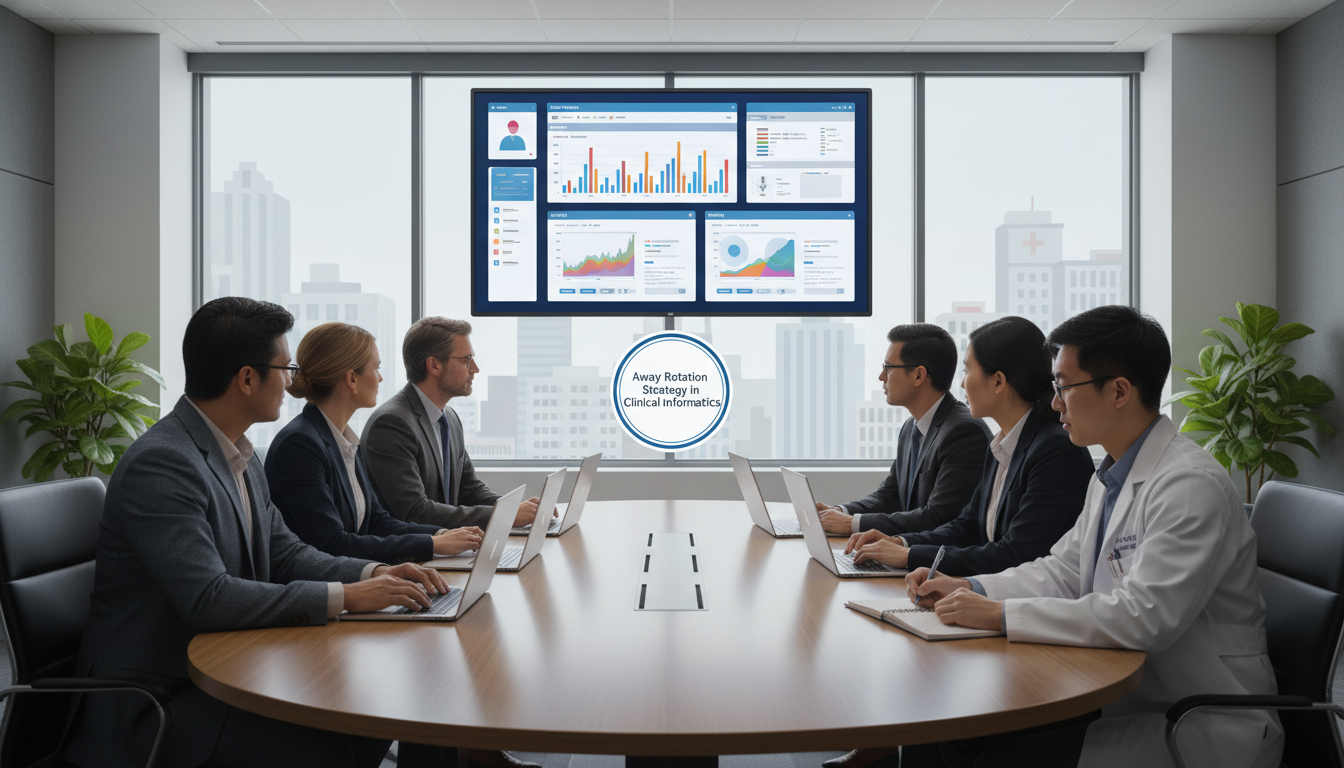
Designing an Informatics-Focused Away Rotation Experience
Once you’ve identified away or visiting student rotations that align with both your specialty and informatics interests, you can actively shape what you get out of them.
Before the Rotation: Set Clear Goals
Two to three months before your rotation:
Identify Mentors
- Look up the institution’s Chief Medical Information Officer (CMIO), clinical informatics fellowship director, and any faculty with “informatics,” “digital health,” “data science,” or “quality and safety” in their profiles.
- Email politely expressing your interest in both the specialty and clinical informatics.
Clarify Learning Objectives Consider goals like:
- Understand how this hospital uses its EHR to support clinical workflows.
- Observe governance processes for order sets, alerts, and documentation templates.
- Participate in a small-scale informatics or QI project if feasible.
Ask About Opportunities In your pre-rotation email, you might say:
- “During my visiting rotation, I would love to attend any clinical informatics meetings or contribute to ongoing EHR optimization or data projects, if appropriate.”
You won’t always get a formal project, but signaling interest sets expectations and can open doors.
During the Rotation: Be Clinically Excellent First
Your performance as a student or resident remains your primary “deliverable.” Fellowship directors talk to residency faculty; residency faculty talk to clerkship directors. The best informatics advocates are your clinical supervisors impressed by your:
- Reliability and work ethic
- Clinical reasoning and patient care
- Communication and teamwork skills
Only after you’ve proven yourself clinically should you expect meaningful informatics opportunities. Once you’re on solid footing, you can:
- Ask your attending about how they use the EHR in clinical decision-making
- Volunteer to help streamline a small workflow issue (e.g., building a standardized note template under supervision, refining a discharge summary checklist, mapping out a problem list clean-up process)
- Request to observe an informatics meeting or sprint planning session with Epic/Cerner analysts, if allowed
Targeted Activities That Build an Informatics Narrative
Use your away rotation as a live laboratory for informatics observation and micro-projects. Some concrete examples:
Workflow Mapping
- Shadow a nurse, physician, or pharmacist through a specific process (e.g., medication reconciliation).
- Diagram the workflow and note EHR pain points or duplicate clicks.
- Discuss your observations with a preceptor or informatics contact.
Small Data Explorations
- If allowed, use reporting tools (e.g., Epic SlicerDicer) to explore basic patterns (e.g., utilization of sepsis order sets, completion rates of discharge med reconciliation).
- Summarize findings in a one-page report with possible next steps.
Decision Support Review
- Track the alerts you see in your clinical work for a few days.
- Identify patterns of alert fatigue or override trends, and discuss whether they align with published best practices.
Any of these can later be transformed into:
- A poster or abstract for AMIA, HIMSS, or a specialty-specific quality conference
- A section of your personal statement for residency or clinical informatics fellowship
- Talking points for interviews: “Tell me about a time you improved a system or process.”
Building a Portfolio for Future Clinical Informatics Fellowship
What Fellowship Directors Look For
When reviewing applications, clinical informatics fellowship directors typically value:
- Sustained interest in informatics and health IT training, not just a last-minute pivot
- Concrete experiences: rotations, projects, QI work, or research with informatics components
- Cross-functional collaboration: interacting effectively with IT staff, data analysts, and operations
- Problem-solving mindset: identifying systems problems and working toward solutions
- Mentorship and letters from informatics-engaged faculty or program leaders
Your away rotation strategy should help you build this portfolio over time.
Turning Rotations Into Tangible Outputs
From both home and visiting student rotations, aim to produce at least one or two of the following by the end of medical school or early residency:
- Abstract/poster on an informatics or EHR-related QI project
- Longitudinal research project involving data extraction or predictive modeling
- A structured “lessons learned” reflection you can draw from in interviews
- Letter of recommendation from a mentor with recognized activity in informatics
For example, you might:
- Use an away rotation to identify an EHR pain point (e.g., delays in discharge due to unclear documentation workflows).
- Collaborate with a preceptor to design and pilot a small intervention (e.g., a note template or checklist).
- Collect pre/post data (even small, descriptive data) and present it locally.
- Expand this into a multi-site or more robust project during residency.
Even if your away rotation itself does not yield a full paper, it can be the spark that leads to more advanced projects.
Aligning Away Rotations With Health IT Training Opportunities
Finally, as you consider specific programs for both residency and future fellowship, look for:
- Existing clinical informatics fellowship at the institution
- Visible CMIO office or informatics leadership structure
- System-wide EHR with active optimization efforts
- Connections to public health, population health, or data science groups
- Opportunities for structured health IT training (e.g., certificate programs, master’s in biomedical informatics, internal courses)
Choosing away rotations at such institutions increases your chances of:
- Getting early mentorship from potential future fellowship faculty
- Plugging into ongoing implementation or analytics projects
- Understanding organizational maturity around informatics
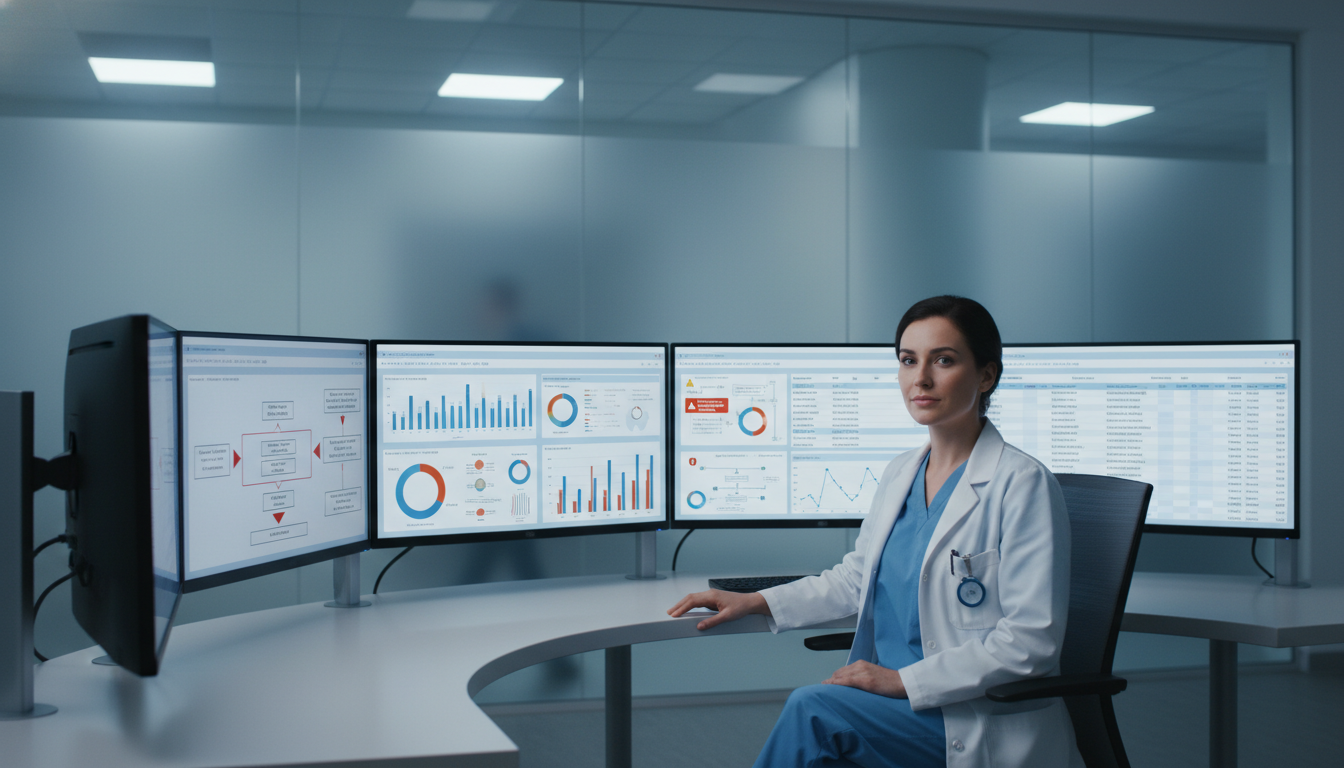
Away Rotations During Residency: Advanced Strategy
Are “Away Rotations” in Residency Common?
Formal “visiting resident rotations” are more restricted than medical student away rotations, but depending on your specialty and program policies, there are paths to spend time at other institutions:
- Elective rotations at affiliated or partner hospitals
- Visiting resident arrangements approved by both home and host programs
- Short-term observerships, especially in non-clinical domains like informatics
These can be powerful for residents who intend to apply for clinical informatics fellowship and want to:
- Work with a specific fellowship director or institution
- Join a more advanced data or implementation project
- Experience different EHR ecosystems (Epic vs. Cerner vs. others)
Crafting a Resident-Level Informatics Elective
If your residency does not have a predefined informatics elective:
Propose One
- Draft objectives focusing on clinical informatics competencies: workflow analysis, clinical decision support, data analytics, governance, and safety.
- Partner with your CMIO or informatics lead to structure activities: meetings, shadowing, mini-project.
Target Fellowship Programs
- If institutional policies allow, arrange a 2–4 week elective at an academic center with a strong clinical informatics fellowship.
- Use this to:
- Meet fellowship faculty
- Sit in on teaching conferences
- Contribute to a small project or case discussion
Document Your Experience
- Maintain a learning portfolio: cases, systems problems observed, interventions considered, readings completed.
- This becomes useful material for your fellowship personal statement and interviews.
Timing Relative to Fellowship Applications
Plan your residency informatics “away” or advanced electives with timing in mind:
- For a traditional pathway (residency → informatics fellowship), meaningful informatics experience by PGY-2 or early PGY-3 is ideal.
- That way, you can:
- Get informatics-related letters
- Demonstrate mature, informed interest
- Speak credibly about health IT training needs during interviews
Residents often underestimate how quickly fellowship application timelines arrive. Building experiences early prevents a last-minute scramble.
Frequently Asked Questions (FAQ)
1. How many away rotations should I do if I’m interested in clinical informatics?
Most students should prioritize away rotations that strengthen their base specialty application. For many, this means:
- 1–2 specialty-specific away rotations (especially for EM, ortho, radiology, etc.)
- Optionally, 1 informatics or health IT-focused elective, if feasible and not detrimental to specialty expectations
Always check norms for your specialty first, then layer informatics interests on top.
2. Do I need a dedicated clinical informatics elective to be competitive for fellowship?
No, a dedicated elective is helpful but not mandatory. Many successful fellowship applicants build their informatics narrative through:
- QI projects involving EHR or CDS
- Data-driven research
- Participation in hospital IT or quality committees
- Informal mentorship from informatics-minded faculty
If a visiting student rotation explicitly labeled “clinical informatics” or “health IT” is available, take advantage—but you can still be competitive without it.
3. What counts as meaningful “health IT training” during medical school or residency?
Meaningful health IT training goes beyond simply using the EHR. Examples include:
- Learning basic data extraction and analysis from clinical systems
- Participating in design, testing, or optimization of order sets, alerts, or documentation tools
- Attending informatics governance or EHR optimization meetings
- Completing formal coursework or certificates in informatics, data science, or digital health
Away rotations and electives that give you exposure to these areas are particularly valuable.
4. If I know I want a clinical informatics fellowship, should I only apply to residencies with existing informatics programs?
Not necessarily. A strong base residency with supportive leadership and opportunities for QI, research, and informatics collaboration can be just as effective. However, programs with:
- An established clinical informatics fellowship
- A visible CMIO and informatics infrastructure
- Access to data warehouses and analytics support
make it easier to build a robust informatics portfolio. As you consider residency options, factor informatics opportunities into your rank list, but don’t sacrifice overall training quality or fit.
By approaching away rotations and electives with both your base specialty and future clinical informatics goals in mind, you can build a coherent, compelling trajectory. The key is strategic planning: use visiting student rotations not just to “audition” for residency, but also to explore how digital tools, data, and systems thinking will shape your career as a physician-informaticist.