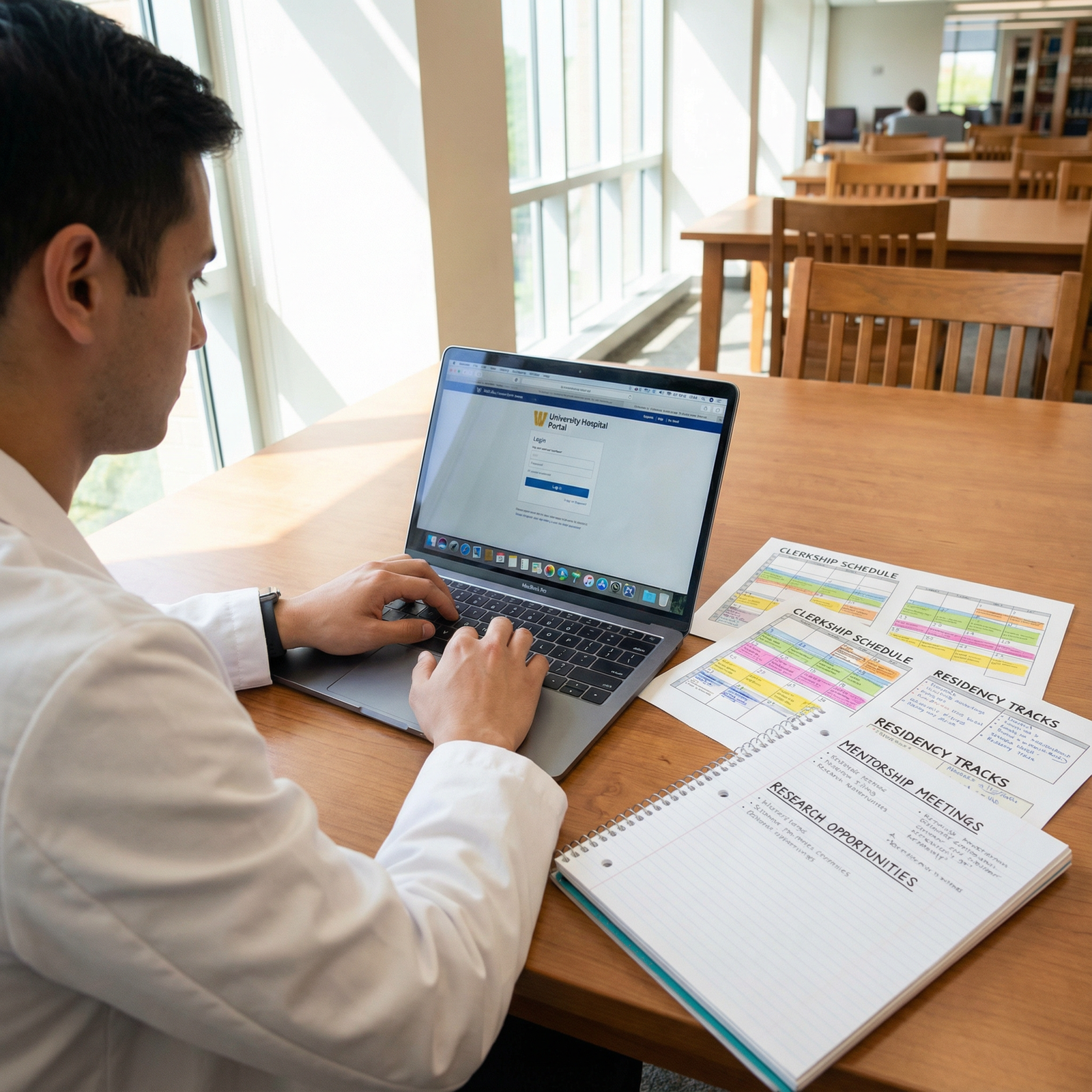
Away rotations can be one of the most powerful tools for a non-US citizen IMG aiming to match into diagnostic radiology. They are also expensive, logistically complicated, and not always necessary at every program. Using them well requires strategy—not just enthusiasm.
This guide walks you through how to design an away rotation strategy tailored specifically to a non-US citizen IMG targeting radiology residency in the US, with particular emphasis on visa realities, institutional filters, and maximizing your impact during short rotations.
Understanding the Role of Away Rotations in Diagnostic Radiology
Away rotations (also called visiting student rotations or audition rotations) are 2–4 week clinical electives you complete at institutions other than your primary medical school. For non-US citizen IMGs and foreign national medical graduates, these can be pivotal in the diagnostic radiology match, but the value depends on your profile and goals.
Why Away Rotations Matter More for Non-US Citizen IMGs
As a non-US citizen IMG, you are often filtered out early at many programs due to:
- Visa requirements (J-1 vs H-1B sponsorship)
- Institutional restrictions on non–US-based medical schools
- Standardized test score cutoffs (USMLE/COMLEX)
- Limited US clinical experience in radiology
Well-chosen away rotations can:
- Demonstrate that you understand the US healthcare system
- Provide strong radiology-specific letters of recommendation (LORs) from US faculty
- Show that you can function as part of a radiology team (communication, reliability, professional behavior)
- Help you bypass initial filters at a program by becoming a “known quantity”
- Allow you to clarify your own interest and fit in academic vs community diagnostic radiology
When Away Rotations Are Most Valuable in Radiology
Away rotations are especially useful if:
- You are a non-US citizen IMG with limited or no US radiology experience
- Your home institution has no ACGME-accredited radiology residency or limited radiology exposure
- You have decent exam scores but lack visibility and connections in US academic centers
- You are targeting competitive academic diagnostic radiology programs that traditionally take few IMGs
They are less critical if:
- You have strong US-based clerkships and multiple US radiology LORs already
- You are applying more broadly to community or IMG-friendly programs that historically interview many foreign national medical graduates
- Financial and visa constraints make multiple away rotations unrealistic, and you already have robust US clinical exposure
Think of away rotations as relationship-building opportunities, not automatic interview tickets. They help most when you use them surgically—at programs strategically chosen to balance your match odds, geographic preferences, and visa needs.
Choosing Where to Rotate: Strategy Before Applications
The biggest mistake non-US citizen IMGs make is asking, “Where can I get any away rotation?” Instead, start by asking, “Where would an away rotation provide maximum leverage for my diagnostic radiology match?”
Step 1: Define Your Constraints as a Non-US Citizen IMG
Before you look at specific institutions, clarify your constraints:
Visa type reality
- Are you aiming for J-1 only (most common)?
- Do you need H-1B sponsorship due to long-term plans or personal reasons?
- Are you currently in the US on a different visa (F-1, B1/B2, etc.) with specific rules?
Graduation timing
- Are you still in medical school and eligible for visiting student rotations?
- Are you already a graduate (foreign national medical graduate) needing observerships or research instead?
Financial limits
- Away rotations can cost $2,000–$5,000 each (fees, housing, travel, insurance, exams, visas).
- Determine how many you can realistically afford before deciding how many away rotations to attempt.
Testing status
- Have you completed USMLE Step 1 (and ideally Step 2 CK) with competitive scores for radiology?
- Some programs will not accept visiting students without USMLE Step 1.
Step 2: Build a Target List of Programs
Create a three-tier list for your diagnostic radiology residency goals:
High-reach academic programs
- Prestigious university hospitals and large academic centers
- Often competitive, but an away rotation can help overcome IMG/visa biases if you impress the faculty
- Example characteristics: strong research, many fellows, NCI-designated cancer centers
Mid-tier academic or hybrid academic–community programs
- May be more open to strong non-US citizen IMGs
- Often provide a good mix of teaching, case volume, and a more holistic applicant review
IMG-friendly and community programs
- Programs with a consistent history of matching non-US citizen IMGs or other foreign national medical graduates
- May be less likely to offer away rotations, but some do; others may be better targeted via virtual electives or observerships
Use tools such as:
- Program websites and resident bios (check how many IMGs, and whether current residents are foreign nationals)
- FREIDA and radiology-specific match outcome resources
- NRMP Charting Outcomes in the Match (Diagnostic Radiology) for general competitiveness
- Personal networking (alumni from your school, mentors who know program cultures)
Step 3: Prioritize Programs where an Away Rotation Has Leverage
Away rotations are most strategic where:
- The program accepts and has matched IMGs before, especially non-US citizens
- The department explicitly welcomes visiting students and values their performance when deciding interview offers
- There is a realistic chance of your performance being communicated to the selection committee (e.g., small-to-medium program, engaged clerkship director)
Avoid burning an away rotation slot at:
- Programs clearly stating “We do not consider IMGs” or “We only accept US seniors”
- Institutions that do not sponsor J-1 or H-1B visas
- Places that treat visiting students as observers with minimal faculty contact or no formal evaluation
Planning Timing, Number, and Types of Away Rotations
Once you know where you want to go, you must decide when to rotate and how many away rotations are appropriate and realistic.
When to Do Away Rotations in the Application Timeline
Ideal timing for diagnostic radiology away rotations differs slightly for non-US citizen IMGs, but general principles include:
- Core window: April–September of the application year
- Best impact: May–July rotations, so your performance can be included in LORs and your application for the September ERAS opening
- August–September rotations: Can still help if letters are submitted early and your performance can be communicated informally to the program
Consider:
- Application deadlines for visiting student rotations (often 3–6 months in advance)
- When your USMLE scores will be available
- Visa processing time, if you need new or extended documentation to participate
If you graduate early or have a gap year, you may have more flexibility, but keep in mind that many visiting student programs only accept current students, not graduates.
How Many Away Rotations Make Sense?
For a non-US citizen IMG targeting radiology residency, a common question is: how many away rotations is optimal?
General guidance:
- 1–2 focused away rotations: Usually enough for most non-US citizen IMGs, if well-chosen and well-executed.
- 3 away rotations: Consider only if
- you can clearly afford it financially and logistically,
- you have specific geographic or program-fit reasons, and
- each rotation offers a distinct strategic opportunity (e.g., different regions or programs with different strengths).
- More than 3: Diminishing returns and risk of burnout. Programs may also question why you needed so many to secure strong letters.
Combine away rotations with:
- One home radiology rotation (if available)
- One research or imaging-related elective (e.g., neuroradiology, oncology imaging research, AI in imaging)
Understanding Types of Rotations You Might Do
You will encounter several types of visiting student rotations:
Formal Visiting Student Rotations (VSLO/VSAS)
- Structured electives with clear objectives and evaluations
- Best for direct faculty contact, formal LORs, and integration into the residency environment
Electives Outside VSLO (direct institutional applications)
- Some programs accept IMGs directly via their websites
- Requirements vary widely (fees, language proficiency, insurance, documentation)
Observerships (especially for graduates)
- More passive, often not hands-on due to institutional policies
- Less impactful than true visiting student rotations but still useful for exposure and letters if faculty are engaged
Prioritize formal visiting student rotations when possible, since they carry more weight in the diagnostic radiology match and are treated like home-student electives.
Applying and Preparing: Maximizing Your Chances of Getting Rotations
Selective radiology departments often have more applicants than rotation spots, especially in summer months. As a non-US citizen IMG, you need to present a compelling, professionally polished application.
Preparing a Strong Visiting Student Application
Typical requirements include:
- Transcript and dean’s letter (MSPE, if available)
- USMLE Step 1 (and sometimes Step 2 CK) scores
- Immunization and health clearance
- Proof of malpractice insurance (often via your school)
- CV and personal statement (short, rotation-specific)
- English proficiency (sometimes TOEFL or equivalent)
Strengthen your application by:
Highlighting radiology interest clearly
- Prior electives in imaging (even if abroad)
- Research or projects related to imaging (case reports, posters, AI/radiomics, public health with imaging components)
- Relevant conferences or radiology interest group activities
Tailoring your short statement
- Explain concisely why this institution and this rotation align with your goals in diagnostic radiology
- Emphasize your status as a motivated non-US citizen IMG seeking exposure to US-style imaging practice, multidisciplinary care, and quality/safety protocols
Clarifying your visa situation
- Be precise and honest
- If you are already in the US legally with valid status, mention it when appropriate
- If you require institutional support for an elective visa or sponsorship for residency, know the institution’s policies before applying
Dealing With Visa and Eligibility Barriers
Many foreign national medical graduates face additional requirements:
- Some institutions only accept students from schools with an existing affiliation agreement
- Others restrict visiting students to LCME- or AOA-accredited schools (which may exclude many IMGs)
- Visa-related obstacles:
- Some hospitals do not assist with student visas at all
- Some allow B1/B2 or ESTA visitors to rotate as observers, but not as hands-on students
Action steps:
- Read program websites carefully before investing time and money
- Email the student coordinator or elective office to confirm:
- Eligibility for non-US citizen IMGs
- Whether you can receive an evaluation and LOR
- Any special documentation or timeline
- Ask specifically if the rotation is observership vs hands-on and how visiting students are integrated into the radiology team
Succeeding on the Rotation: Performance, Relationships, and Letters
Securing a visiting student rotation is only the first step. The real value comes from how you perform, how you are perceived, and what follows.
What Success Looks Like on a Diagnostic Radiology Away Rotation
As a visiting student, you are evaluated not by your ability to read complex CTs independently, but by:
- Professionalism
- Punctuality, reliability, appropriate dress, good communication
- Respect for technologists, nurses, and other staff
- Engagement and initiative
- Showing genuine curiosity about imaging findings and clinical context
- Asking thoughtful, concise questions
- Participating actively in readouts and case conferences
- Teachability
- Responding well to feedback
- Showing growth even within a short 2–4 week block
- Team fit
- Getting along with residents and staff
- Demonstrating that you are someone residents would want on night float at 2 a.m.
As a non-US citizen IMG, evaluators may unconsciously question:
- Your communication skills in English (spoken and written)
- Your adaptability to US-style medical culture
- Your understanding of workflow, documentation, and patient safety practices
Address these proactively through:
- Clear, concise communication
- Asking how local protocols work (contrast safety, critical result communication, radiation dose management)
- Practicing SBAR-style communication when appropriate (e.g., calling results to a referring team with a resident)
Practical Day-to-Day Strategies on Rotation
To get noticed for the right reasons:
Arrive early and stay appropriately engaged
- Be at the reading room at the start of the day
- Volunteer for interesting cases and multidisciplinary conferences
Prepare before each day
- Read about common pathologies seen on the service: acute abdomen CT pearls, chest radiograph basics, neuroimaging emergencies
- Use online resources (Radiopaedia, teaching files) the night before
Document your learning
- Keep a small notebook or digital log of cases seen, questions raised, and feedback received
- This helps you discuss your growth in your personal statement and interviews
Respect the workspace
- Radiology reading rooms can be crowded and high-stress
- Do not take over chairs or computers without permission
- Mute your phone; limit side conversations
Be transparent about your IMG status when relevant
- Occasionally share (briefly) that you are a non-US citizen IMG here specifically to learn US radiology practice
- This contextualizes your questions and demonstrates intentionality
Building Relationships That Lead to Strong Letters
You will likely need at least one strong US radiology LOR for a competitive diagnostic radiology match, especially as a non-US citizen IMG.
To get there:
Identify potential letter writers early
- Attending(s) you work with repeatedly
- Rotation director or clerkship coordinator if they observe your performance
Ask for feedback mid-rotation
- “Is there anything I could be doing differently to contribute more or improve?”
- This gives you time to correct course before the evaluation and LOR
Request letters appropriately
- Toward the end of the rotation, ask:
“Do you feel you know me well enough to write a strong letter of recommendation for diagnostic radiology residency?” - If they hesitate, respect that; look for another faculty member
- Toward the end of the rotation, ask:
Provide supporting materials for the letter writer
- Your updated CV
- A short paragraph summarizing your goals (e.g., diagnostic radiology, interest in neuroradiology, research interests)
- Specific cases or projects you worked on together (to jog their memory)
For non-US citizen IMGs, a detailed LOR that explicitly endorses you as competitive for US residency and comments positively on communication, professionalism, and clinical reasoning can be especially powerful in overcoming program reservations.
Integrating Away Rotations into Your Overall Match Strategy
Away rotations are one piece of a bigger strategy. To maximize their impact on your diagnostic radiology match:
Align Rotations with Your Application Narrative
Your rotations should support the story your application tells:
- If you highlight a passion for neuroradiology, having an elective in neuroimaging or exposure to stroke imaging and epilepsy protocols will reinforce that.
- If you emphasize interest in academic radiology, rotate at locations with strong research and attend conferences, grand rounds, and journal clubs.
- If you present yourself as adaptable and interested in community imaging, a rotation at a high-volume community-affiliated program can show this.
Use your ERAS personal statement and experiences section to tie together:
- Your home radiology rotation(s)
- Away/visiting student rotations
- Any relevant research, quality improvement projects, or case reports
Use Rotations to Clarify Fit and Program Priorities
Away rotations are also your chance to evaluate programs:
- Do residents look overworked or generally satisfied?
- Is teaching prioritized, or is the focus solely on service volume?
- How do they treat visiting students and IMGs—are you included, ignored, or valued?
Take mental notes on:
- Case mix and technology (e.g., advanced MRI, interventional radiology, nuclear medicine)
- Program culture (collaborative vs hierarchical)
- How they talk about IMGs and non-US citizen trainees (this can be very revealing)
These observations will inform your rank list later and can guide where to invest in away rotations vs regular applications without rotation.
Communicate Your Interest After the Rotation
After completing an away rotation:
- Send a brief thank-you email to the program director and key faculty you worked with.
- Express specific appreciation (e.g., “I learned a great deal from participating in your emergency radiology call readouts and tumor boards…”).
- Clarify your interest in applying to their diagnostic radiology residency.
Later, when ERAS is submitted:
- You may send a short, professional update email if appropriate, referencing your time there and ongoing interest.
- Do not overdo communication; 1–2 well-timed, sincere messages are sufficient.
FAQs: Away Rotations for Non-US Citizen IMGs in Diagnostic Radiology
1. As a non-US citizen IMG, do I absolutely need an away rotation to match into diagnostic radiology?
No. Away rotations are helpful but not strictly mandatory. Many non-US citizen IMGs match with strong USMLE scores, solid home or local radiology experience, and excellent letters (even if some are non-US). However, a strategic away rotation can:
- Increase your visibility in competitive programs
- Provide crucial US radiology LORs
- Demonstrate your ability to function in a US academic environment
If financial or visa barriers make away rotations difficult, focus on obtaining radiology observerships, virtual electives, and imaging-related research instead.
2. How many away rotations should I do for radiology residency as a foreign national medical graduate?
For most non-US citizen IMGs, 1–2 well-chosen away rotations are enough. More than 2–3 usually leads to diminishing returns and can raise questions about why you needed so many to secure strong letters. Instead of maximizing the number of visiting student rotations, focus on:
- Programs that are realistic given your visa and academic profile
- Rotations where faculty will actually get to know you
- Delivering excellent performance on the rotations you do have
3. Can I still do visiting student rotations if I have already graduated from medical school?
This is often challenging. Many US institutions limit visiting student rotations to current medical students enrolled at an affiliated or recognized school. As a graduate (foreign national medical graduate), your options may shift toward:
- Observerships in radiology departments
- Research positions with imaging teams
- Non-credit electives arranged through personal contacts
These may still lead to helpful networking and letters, but they typically have less formal structure and may not be listed as “visiting student rotations” in VSLO or official catalogs.
4. Should I prioritize away rotations at top-tier academic centers or at programs more likely to rank IMGs?
It depends on your risk tolerance and profile. A balanced strategy for a non-US citizen IMG is:
- One rotation at a program that is slightly aspirational but not completely out of reach (e.g., solid academic center that has some history of taking IMGs)
- One rotation at a more IMG-friendly or mid-tier program where your chances of an interview and strong letter are higher
If your scores and profile are very strong, you might choose more ambitious programs. If they are more modest, prioritize places where the combination of your performance, letters, and program culture gives you a realistic shot at a diagnostic radiology match.
Designing an away rotation strategy as a non-US citizen IMG in diagnostic radiology is about precision, not volume. By choosing programs deliberately, timing your rotations wisely, and performing at your highest level once you arrive, you can transform a few weeks in a reading room into a powerful asset for your radiology residency application.